
RIYADH — The Public Investment Fund spent five point three billion dollars over four years bankrolling a golf league that the average American Sunday afternoon ignored at a ratio of seventeen point seven eight to one, and on Thursday two sources with direct knowledge told Fox News what the Financial Times had teased a day earlier: there will be no PIF money for LIV Golf beyond the 2026 season, full stop, the line in the budget closed. Bloomberg ran the wider thesis under a headline that does the entire editorial work in five words — “Saudis Now Want Sports to Make Money” — and on the same Thursday, April 16, 2026, Riyadh activated four Special Economic Zones offering a five percent corporate tax rate, zero withholding, zero VAT, and a twenty-year incentive horizon designed to compete head-on with Singapore, Dubai and Ireland for hard capital.
The optics architecture and the transactional architecture changed places in public, on the same day, with no transition statement and no apology, because none of the people in the room felt one was needed. The five-year PIF strategy approved on April 15 by Crown Prince Mohammed bin Salman mentions LIV Golf in none of its three portfolios, in none of its six named domestic ecosystems, and in none of its forward construction commitments — and that absence, on a fund running nine hundred and twenty-five billion dollars in assets under management, is the loudest line in the document.
What this editorial covers
- Why is PIF killing LIV Golf now, when its assets under management are intact?
- The $5.3 billion invoice for Western approval
- What did LIV Golf actually buy Saudi Arabia?
- The Humain–EA–Paramount template: financial exposure, zero soft-power operating cost
- Why did the SEZ activation land on the same day?
- The Khashoggi-era reputation architecture is being decommissioned
- What does PIF optimise for when it no longer needs to perform for Western optics?
- The audience that mattered changed, and the spending followed
- Frequently Asked Questions
Why is PIF killing LIV Golf now, when its assets under management are intact?
The simplest answer is that the function LIV Golf was built to perform — projecting Saudi modernity to the audience of voters, regulators and editorial boards in the United States and the United Kingdom — is a function the Kingdom no longer needs performed at five billion dollars a season, because that audience no longer sets the terms of Saudi Arabia’s international relevance. PIF Governor Yasir Al-Rumayyan, asked by the Financial Times why the priorities were being repositioned, gave the diplomatic version of the same point: “Of course the war would add more pressure to reposition some priorities.”
The fund is not broke. It is not even constrained in any way that would force a portfolio decision of this size on financial grounds alone, because the 2026-2030 strategy approved by Crown Prince Mohammed bin Salman on April 15 confirmed PIF’s assets under management have crossed nine hundred and twenty-five billion dollars, with construction commitments deliberately cut from seventy-one billion to thirty billion as a matter of strategic choice rather than a balance-sheet emergency. What changed is not the size of the cheque-book; what changed is the calculation behind which cheques get written.
Scott O’Neil, the LIV Golf chief executive parachuted in last year to professionalise the operation, sent staff a memo this week reading: “Our season continues exactly as planned, uninterrupted and at full throttle.” The memo did not mention the 2027 season, or the 2028 season, or any season beyond the one that the players had already been paid for, because there is nothing to mention.
The $5.3 billion invoice for Western approval
The cumulative LIV Golf bill, drawn from the disclosures filed by the UK-registered LIV Golf Ltd entity and the Sportico reconstruction of the Saudi-side capital injections, runs to roughly five point three billion dollars as of February 2026, on a trajectory to clear six billion by year-end if the season runs to its scheduled October close. The annual losses moved in the wrong direction every year LIV existed: two hundred and forty-three million dollars across the eighteen months to end-2022, three hundred and ninety-six million in 2023, and four hundred and sixty-one point eight million in 2024 alone, the last full year of audited filings — meaning the UK entity by itself was haemorrhaging at a rate of nearly thirty-nine million dollars a month before the US entity’s private financials were even loaded onto the bonfire.
The Middle East briefing 3,000+ readers start their day with.
One email. Every weekday morning. Free.
On the first of February this year, Al-Rumayyan personally signed off another two hundred and sixty-six point six million dollar capital injection on top of a reported burn rate near one hundred million dollars a month, which means the decision being announced now was made not on the basis that the operation could not be afforded for one more season, but on the basis that one more season was the longest the operation deserved. Front Office Sports tracked the cumulative LIV outlay past five point three billion dollars in the same February reporting cycle.
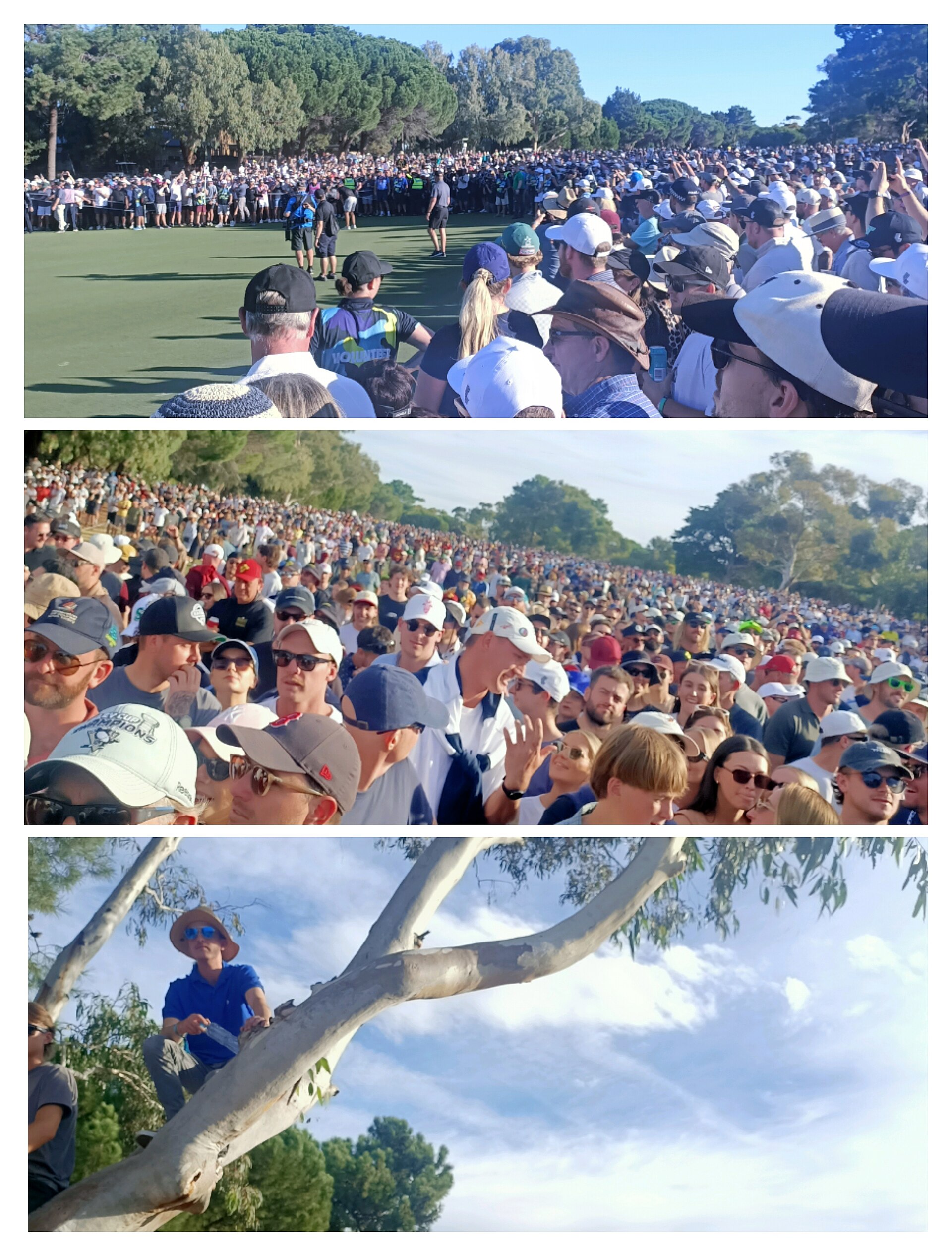
The audience numbers explain the verdict more cleanly than any internal memo. In 2025, head-to-head Sundays put the PGA Tour on CBS and NBC averaging three point one million viewers; LIV Golf, on Fox and FS1 and FS2, averaged one hundred and seventy-five thousand. The ratio — seventeen point seven eight times — held across an entire competitive year, against a tour that had spent five billion dollars trying to close it, and the Saudi side could read the trend line as well as anybody.
“With shotgun starts, initially 54 holes, a team concept that was nothing but laughable and tournaments that meant and continue to mean nothing, and such a paltry number of viewers, losing billions along the way — would it surprise anyone if the Saudis came to their senses and finally euthanized the whole lame-brained tour?”
— Brandel Chamblee, Golf Channel analyst, speaking to Fox News in April 2026
What did LIV Golf actually buy Saudi Arabia?
LIV Golf was meant to buy three things — visibility inside major American media markets, a stable of recognisable Western athletes who would normalise the Saudi name in front of the suburbs that watch professional golf on Sunday afternoons, and a settlement with the PGA Tour that would convert the league from disruptor to legitimate franchise inside the existing American sporting establishment. It bought none of them in the form they were ordered.
The visibility never materialised because the audience never arrived: a one hundred and seventy-five thousand viewer average is not the demographic that moves a US Senator on a sportswashing hearing, and the July 2023 Senate Permanent Subcommittee on Investigations session — the moment when Yasir Al-Rumayyan was asked questions under oath that no PIF Governor had previously answered in public — confirmed that the political price of the operation was rising faster than the cultural payoff. The recognisable athletes were bought, often at sums that have since become legend in the locker rooms (Jon Rahm’s reported three hundred million dollar deal being the headline number), but Brooks Koepka and Patrick Reed and the partial drift back toward PGA Tour eligibility windows by 2025 demonstrated that the loyalties were rented rather than purchased.
The settlement collapsed in stages, and the timeline matters. The June 2023 framework agreement was signed in the offices of Allen & Overy, with Jay Monahan and Al-Rumayyan jointly committing to a merged commercial entity that would have given PIF a structural stake in American professional golf in perpetuity. By January 2024 the Strategic Sports Group consortium — Fenway Sports’ John Henry, the Cohen and Crisp families — had injected three billion dollars into the PGA Tour, removing the financial pressure that had pushed Monahan to the table in the first place. By the time LIV’s investment offer had shrunk to one and a half billion dollars in late 2024, the merger was politely buried, and what was left was a golf league with no path to the Masters, no path to the Open, no path to the US Open, and no path to the PGA Championship — meaning a closed competitive system whose players were paid astronomically to compete against each other for trophies nobody recognised.
The PGA Tour’s own court filings against PIF named the function with brutal economy: the Saudi side, the filings argued, had offered players “astronomical sums of money to use the LIV Players and the game of golf to sportswash the recent history of Saudi atrocities, including the brutal murder and dismemberment of Jamal Khashoggi.” The accusation was the entire commercial model.
The Humain–EA–Paramount template: financial exposure, zero soft-power operating cost
The replacement architecture has been visible for a year if anybody was paying attention to the deal flow rather than the press releases. PIF’s fifty-five billion dollar acquisition of Electronic Arts in September 2025 — the largest take-private in the history of the games industry — bought a company that generates more than seven billion dollars a year in revenue from a catalogue of intellectual property (FIFA-derived football titles, Madden, the Sims, Battlefield) that already sits inside the cultural rotation of every household PIF wanted access to, without PIF being named on any of it. The cultural exposure is structural; the operational risk is zero; the revenue is real. None of those three sentences could have been written about LIV Golf at any point in its existence.
The Paramount-Skydance position taken by PIF as part of a twenty-four billion dollar Gulf consortium, with the Saudi share at roughly twelve billion, refines the same logic one step further. All three Gulf funds in the consortium agreed, before the deal closed, to forgo governance rights — non-voting equity, structured precisely to avoid the Committee on Foreign Investment in the United States review that would have triggered a political firestorm of the LIV-Senate variety. Financial exposure to Hollywood; zero operational soft-power footprint; zero regulatory friction. The exact opposite of the LIV Golf model, designed by people who had spent five years watching what the LIV Golf model produced.
Humain — the AI infrastructure vehicle launched as the new prestige asset on the PIF balance sheet — is the most explicit demonstration. The twenty-three billion dollars in announced strategic technology partnerships (NVIDIA on chip supply, AMD on data centre fit-out, Amazon Web Services committing five point three billion dollars on cloud infrastructure, Qualcomm and Cisco on the network layer, DataVolt at five billion dollars for the Oxagon AI campus, Blackstone at three billion dollars for data centres, Elon Musk’s xAI at three billion dollars for compute capacity) all converge on a target of three to six gigawatts of AI compute by decade-end, rising to six point six gigawatts by 2034. As Dr Minas Lyristis of Strategy International framed it in March: “The next era of Gulf influence will be measured not only in barrels, but in megawatts and model runs.”
Each of those Humain partnerships pays Saudi Arabia in three currencies LIV Golf never delivered — recurring revenue, foreign technology transfer, and structural participation in the supply chain of the next decade’s most strategically important industry. None of them require the Crown Prince to be photographed handing a trophy to anybody.
| Asset | PIF Investment | Cumulative P&L | Operating soft-power risk | Returns logic |
|---|---|---|---|---|
| LIV Golf (2022–26) | ~$5.3 billion outlay | $1.4B+ losses (UK entity alone) | Maximum: PIF as named operator and subject of every sportswashing story | Loss-leader; soft power via visibility |
| Newcastle United (2021) | $396 million for 80%, then 85% by July 2024 | Operating losses through 2024; competing in European football | High but bounded by Premier League rules | Mixed; sport-specific legitimacy outcome |
| Electronic Arts (Sept 2025) | $55 billion (consortium) | $7B+ annual revenue, profitable | None — PIF not in operating role | Cash-generative IP, cultural exposure as by-product |
| Paramount-Skydance (2026) | ~$12B of $24B Gulf consortium | Pre-existing Hollywood revenue base | None — non-voting equity, no CFIUS trigger | Financial-only stake, structural exposure to US media |
| Humain (2025–) | $23B announced technology partnerships | Pre-revenue infrastructure build, anchor contracts in place | None — industrial-policy framing | Compute capacity sold to global AI customers; tech transfer; revenue |
| Four SEZs (April 16, 2026) | Regulatory architecture; minimal capex | Tax revenue forgone for 20-year incentive window | None — competing on price, not optics | Compete with Singapore, Dubai, Ireland for FDI on hard tax economics |
Why did the SEZ activation land on the same day?
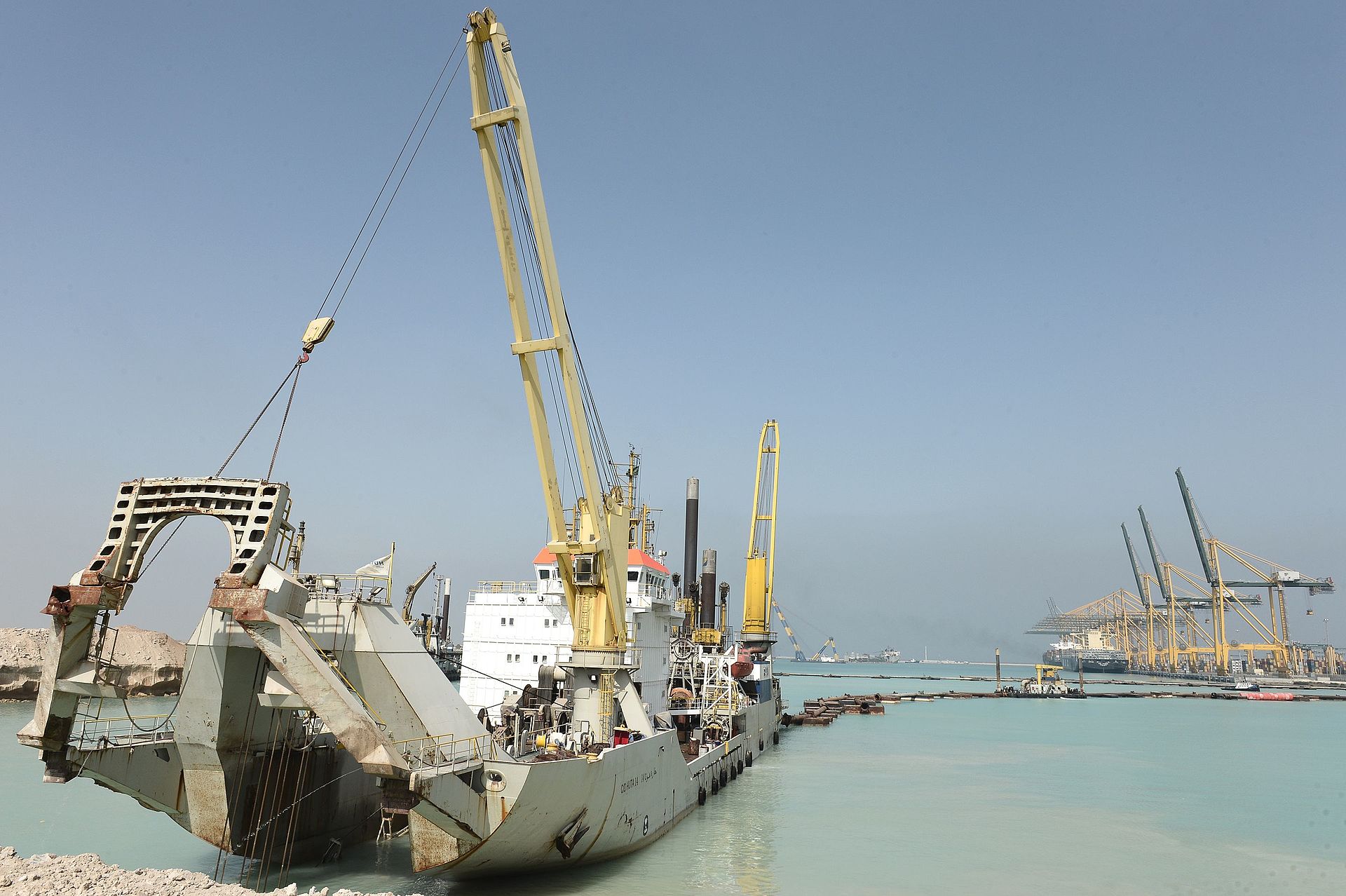
The four Special Economic Zones — King Abdullah Economic City, Ras Al-Khair, Jazan, and the Cloud Computing SEZ — went live on April 16 with an incentive package designed by people who have read the Singapore and Irish playbooks more carefully than anyone in Washington has noticed: zero per cent VAT, zero withholding tax on cross-border payments, a five per cent corporate income tax rate locked in for up to twenty years, and the regulatory carve-outs that allow foreign capital to enter and exit without the friction that has historically sat between Riyadh and the international fund management community. The activation date is not a coincidence with the Bloomberg LIV confirmation; it is, in the most literal sense, the day on which one architecture stopped being funded and the architecture meant to replace it began competing for capital on terms that have nothing to do with how Saudi Arabia is perceived in a green room in Manhattan.
The SEZ package operates on the recognition that international capital allocators — Blackstone, Brookfield, KKR, the sovereign funds of Singapore and Norway, the family offices that move quietly behind them — do not allocate to Saudi Arabia because they have been impressed by a golf tournament. They allocate to Saudi Arabia, or fail to, on the basis of after-tax internal rates of return measured against alternative jurisdictions, the legal predictability of dispute resolution, and the depth of the local supply chain for whatever the project requires. The new architecture prices Saudi Arabia competitively against Dubai’s free zones, against Ireland’s twelve point five per cent corporate rate, against Singapore’s regional headquarters incentives, and asks a question that the LIV Golf model never asked: at this price, on these terms, against these competitors, do you allocate?
Karen E. Young of Columbia University’s Center on Global Energy Policy framed the same restructuring in terms the international investment community is already pricing: “We may see in the new PIF strategy a focus on how to localize projects and drive investment both locally and from foreigners into supply chains and manufacturing of projects.” The locus of activity moves from the destination (a Saudi sporting trophy nobody recognises) to the input (a Saudi tax rate every CFO compares to a Singapore tax rate before signing a board deck).
The Khashoggi-era reputation architecture is being decommissioned
Jamal Khashoggi was killed inside the Saudi consulate in Istanbul on October 2, 2018, and the spending pattern that followed was remarkably specific in its targets: the operations PIF accelerated were the ones designed to be photographed by Western media in front of Western audiences. Newcastle United was acquired in October 2021 for three hundred and ninety-six million dollars, less than three years after Khashoggi’s death. LIV Golf launched in 2022 with two hundred and fifty-five million dollars in prize money in its inaugural season, an opening salvo calibrated against the PGA Tour’s purses to the dollar. Both decisions made financial sense only as components of an integrated reputation strategy whose objective was to produce a different lead paragraph in any future feature on Saudi Arabia by a Times or Guardian or Wall Street Journal correspondent.
The Line, with its original target population of one and a half million inside a one hundred and seventy kilometre linear city in the desert, was the same project rendered in concrete and aspiration rather than turf and fairway. Its function was not housing capacity for Saudi citizens — Saudi housing demand in the relevant decade has never required a one hundred and seventy kilometre desert city — but the production of a globally legible image of futurism that would, like LIV Golf and Newcastle, change the lead paragraph. The official population revision to under three hundred thousand, with Webuild’s roughly five billion dollar Trojena dam contract cancelled and Hyundai’s roughly five hundred and forty million dollar tunnelling contract terminated in March 2026, is the formal retirement of that image, as Vision 2030 without The Line reorganises around projects that pay back rather than perform.
None of these retirements are austerity in any meaningful sense, because PIF has nine hundred and twenty-five billion dollars under management and approved a five-year strategy a day before the Bloomberg LIV confirmation that increases its construction commitments by tens of billions in directions PIF actually intends to follow through on. They are the orderly decommissioning of an architecture whose function — convincing Western elites that Saudi Arabia deserved a seat at a particular kind of table — has ended because Saudi Arabia is now setting its own table, and the same Western elites are calling Riyadh.
The Crown Prince’s own framing on sportswashing remains the clearest articulation of the operating logic that animated the entire decade: “If sportswashing would increase GDP by 1%, then I will continue doing sport washing.” The instrument was always evaluated against the metric. The metric did not change. What changed is the answer to the question of which instruments produce one per cent of GDP and which produce a one hundred and seventy-five thousand viewer Sunday rounding error.
What does PIF optimise for when it no longer needs to perform for Western optics?
The 2026-2030 strategy approved by MBS on April 15 reorganises the fund into three portfolios — Vision (the domestic Saudi build-out), Strategic (national assets including Aramco-adjacent infrastructure), and Financial (global return-seeking allocations) — with six named domestic ecosystems that the construction commitment cuts from seventy-one to thirty billion dollars are meant to discipline rather than abandon. The verb that recurs in the announcement language is “localize,” and the absence in the published documentation that everybody in the relevant industries has noticed is LIV Golf, which is named nowhere in any portfolio. Yasir Al-Rumayyan’s announcement statement — “In the next five years, we will continue to build on our great achievements and strengthen our global leadership to deliver success for PIF and Saudi Arabia” — uses none of the soft-power vocabulary the fund used to deploy in 2022 when the LIV launch was being explained.
The November 2025 New York Times disclosure that PIF had told international investors it was “virtually unable to allocate any additional money for the foreseeable future” after the EA acquisition was, on a charitable reading, an honest description of cash deployment after a fifty-five billion dollar take-private that the fund was determined to integrate cleanly. On a less charitable reading, it was a signal from the fund’s senior management to anybody who was listening that the era of speculative loss-leader deployments — the kind of cheque that gets written with no return model attached because the return is reputational — was already being closed before the war made the closing public.
The Irish Times analysis published on the same April 16 morning landed the verdict in language that would have been unthinkable in the LIV-merger negotiations of mid-2023: “LIV has served its purpose and is about to run its course. The Saudis are still interested in what they can get for buying into sport but their sights are higher now than a second-rate golf league played out with no jeopardy to dismal TV viewing figures.” The interest in sport remains. The willingness to subsidise a sport whose audience never came is finished.
What PIF optimises for, on the evidence of the Humain rollout, the EA take-private, the Paramount non-voting structure and the SEZ activation, is recurring revenue from intellectual property, structural participation in the AI infrastructure layer, financial exposure to American cultural production without the operational risk, and a domestic regulatory environment that competes for global capital on after-tax economics rather than on imagery. None of those targets is incompatible with continuing to acquire trophy assets where the financial case stands on its own; all of them are incompatible with five point three billion dollars on a golf league that one hundred and seventy-five thousand Americans watch on a Sunday afternoon.
The audience that mattered changed, and the spending followed
The deeper editorial point is not about LIV Golf at all. It is about the audience for whose approval the entire post-Khashoggi reputation architecture was built — the editorial boards in Washington and London and New York, the Senators who could call hearings, the regulators who could block deals, the institutional investors who would mark Saudi sovereign exposure to ESG portfolios with a discount — and whether that audience still functions as the gatekeeper to the things Saudi Arabia wants. The war in the Gulf, now in its second month with the Hormuz transit question dominating the price formation of every barrel of oil traded between Singapore and Rotterdam, has provided the answer: it does not.
Washington called Riyadh during the OPEC+ meetings of early April, not the other way around, and the calls were about output decisions and ceasefire architecture rather than about the human rights performance metrics that defined the 2018-2022 conversation — a reversal that Saudi Arabia winning the oil market and being unable to afford the victory has rendered structural rather than circumstantial. The Aramco May Official Selling Price for Asia was set at a record nineteen and a half dollar premium to Oman-Dubai benchmark — a number that would have triggered a sustained editorial campaign in the gatekeeper publications five years ago and that triggered, this April, almost no political reaction in the United States, because the Saudi capacity to set that price is now a fact the system is required to integrate rather than a position the system is invited to debate.
The IMF’s April 14 cut to Saudi 2026 GDP growth — to three point one per cent from four point five — and Brent’s drop to ninety-four point eight nine dollars on April 16, against a Saudi fiscal break-even Bloomberg places at one hundred and eight to one hundred and eleven dollars including PIF spending, would in any other decade have been the pressure point at which the Kingdom became most receptive to Western criticism, as the $50 crude gap Saudi Arabia has to fix before May 5 tightens against an Aramco pricing cycle that has nowhere left to absorb shock. It is, instead, the pressure point at which the Kingdom is most insistent that international capital must come on Saudi terms, because the Kingdom’s leverage on the energy file is now structural rather than rhetorical, and the architecture being built around the SEZs and Humain and the EA-Paramount template is a calculated bet that hard incentives priced against Singapore will recruit more dollars in 2027 than a golf trophy presented in Greenbrier ever did.
Sergio Garcia, asked at a press conference earlier this month what LIV’s players had been told about the 2027 season, answered: “Honestly, we haven’t heard anything other than what Yasir told us at the beginning of the year…that he’s behind us, that they have a long-term project.” The long-term project is real. It is not the one Sergio Garcia is in.
Frequently Asked Questions
Will LIV Golf players’ guaranteed contracts be honoured if PIF withdraws funding after 2026?
The guaranteed contracts signed during the 2022-2024 player acquisition phase — including Jon Rahm’s reported three hundred million dollar deal, Phil Mickelson’s roughly two hundred million dollar package and the smaller eight-figure arrangements held by approximately forty other tour players — are obligations of LIV Golf Investments and the related US operating entity, not direct PIF undertakings, and the contractual language has not been disclosed publicly. Industry counsel familiar with sports league wind-downs in comparable circumstances (XFL 2020, USFL 1986) expect a structured run-off honouring guaranteed money through contract end-dates rather than acceleration, with new endorsement and PGA Tour reinstatement income offset clauses likely to be invoked.
Has the PGA Tour publicly responded to the FT and Bloomberg reports?
PGA Tour Commissioner Jay Monahan has not made a public statement on the April 15 FT report or the April 16 Bloomberg confirmation as of publication. The Strategic Sports Group, which injected three billion dollars into the PGA Tour in January 2024 and effectively ended LIV’s merger leverage, has similarly declined comment. The PGA Tour’s own commercial position improves materially in any scenario where LIV ceases to bid for player services, removing the principal upward pressure on its purses since the 2022 launch.
What happens to the LIV Golf Ltd corporate entity registered in the UK?
LIV Golf Ltd, the UK-registered entity through which the publicly disclosed losses have flowed, would in a wind-down scenario be expected to file for solvent liquidation provided PIF or the parent group covered residual obligations to creditors and players, or for administration if it did not. The UK entity carries the bulk of the disclosed losses (approximately one point four billion dollars cumulative through 2024 filings); the US operating entity’s financials remain private and the structure of any inter-company guarantees has not been disclosed.
Does the new PIF strategy include any continuing sports investments at all?
Newcastle United, in which PIF holds an eighty-five per cent stake acquired in October 2021 and increased in July 2024, remains in the strategic portfolio, and Saudi Arabia’s hosted properties — including the FIFA World Cup 2034 hosting rights, the Formula 1 Saudi Arabian Grand Prix, and tennis and boxing arrangements — continue. The distinction the Bloomberg framing identifies is between sports investments capable of standing on their own commercial terms (Newcastle, World Cup hosting tied to tourism receipts) and loss-leader operations created from scratch to perform a soft-power function (LIV Golf), with the second category being the one the new strategy declines to underwrite.
How does Saudi Arabia’s SEZ tax package compare directly to Dubai, Singapore and Ireland?
Saudi Arabia’s new five per cent corporate rate undercuts Ireland’s headline twelve and a half per cent and the OECD Pillar Two minimum of fifteen per cent, sits below Singapore’s seventeen per cent headline rate before sector-specific incentives, and matches or beats Dubai’s free zone packages once the twenty-year horizon is priced in. The zero withholding tax on cross-border payments — the technical feature most likely to determine where regional treasuries are domiciled — is the SEZ package’s sharpest competitive edge against Singapore and Dubai, both of which apply withholding selectively on certain royalty and interest flows.