
Saudi Arabia’s traditional markets — or souqs — undergo a transformation after sunset. As the daytime heat retreats and the call to Maghrib prayer echoes across city skylines, vendors pull back metal shutters, lanterns flicker on, and the narrow lanes of the Kingdom’s oldest commercial districts fill with the scent of oud, cardamom, and grilled meat. Whether you are building a broader Saudi Arabia travel itinerary or specifically hunting for authentic local crafts and gold, the night souq experience is one of the most immersive ways to connect with Saudi culture. From the century-old alleys of Riyadh’s Souq Al Zal to the UNESCO-listed streets of Jeddah’s Al Balad, these markets reward visitors who arrive after dark with cooler temperatures, livelier crowds, and a sensory atmosphere impossible to replicate in any modern mall.
Best Time to Visit: October to March (pleasant evening temperatures); Ramadan nights offer the most festive atmosphere
Getting There: Major souqs are in Riyadh, Jeddah, Dammam, and Hofuf — all reachable by direct flights or the SAR rail network
Visa Required: Yes — tourist e-visa
Budget: USD 20–150 per evening depending on purchases (entry is always free)
Must-See: Souq Al Zal (Riyadh), Souq Qabil (Jeddah), Share Al Hob (Dammam)
Avoid: Arriving before 7 PM — most stalls do not fully open until after Isha prayer
Why Saudi Souqs Come Alive at Night
There is a practical reason Saudi souqs peak after dark: daytime summer temperatures regularly exceed 45°C, making outdoor shopping uncomfortable for much of the year. Historically, Arabian merchants conducted their most important trade in the cooler hours after sunset, a rhythm that persists today. Most traditional souqs open by late afternoon — around 4 PM — but the real energy arrives after the Isha prayer, roughly 8 PM. From then until midnight or later, the lanes are packed with families, bargain-hunters, and tourists drawn by the atmosphere.
During Ramadan, this cycle intensifies dramatically. Markets remain shuttered through the daytime fast, then erupt into life after Iftar (the sunset meal). Ramadan night markets across the Kingdom run until 2 or 3 AM, with food stalls, cultural performances, and pop-up entertainment adding to the energy. If your visit overlaps with Ramadan season, plan at least one late-night souq outing — it is the most authentically festive shopping experience in the country.
Riyadh’s Night Souqs
Souq Al Zal — The Kingdom’s Antique Heart
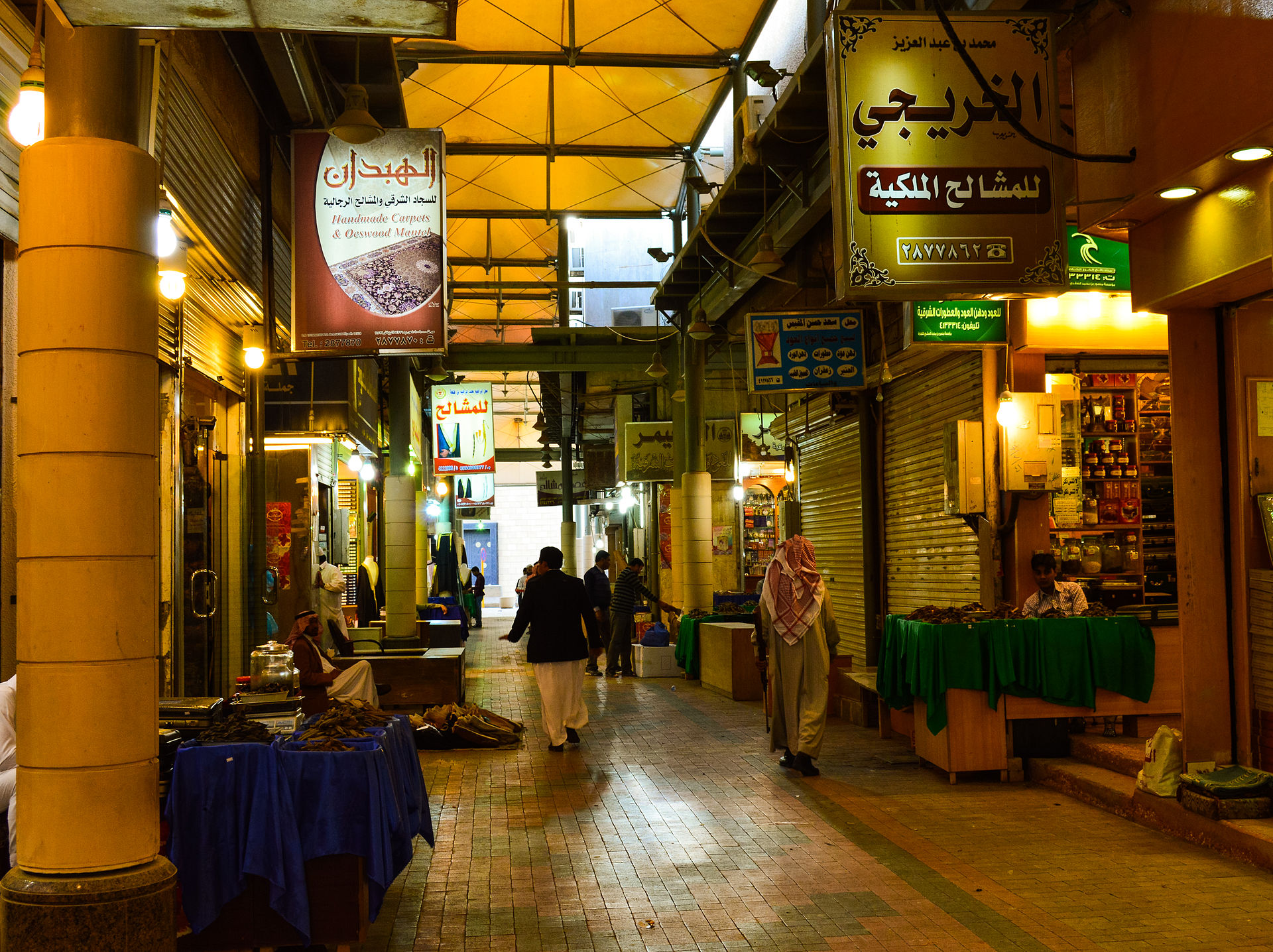
Dating to 1901, Souq Al Zal is one of the oldest continuously operating markets in Saudi Arabia. Located in the ad-Dirah neighbourhood near the historic Al Masmak Palace, this sprawling 38,580-square-metre complex takes its name from zulliya, the Gulf Arabic word for floor rug — a nod to the carpet traders who first established the market over a century ago.
Today Souq Al Zal is best known for its antiques, heritage textiles, and lively public auctions. Evening hours (3:30 PM to 10:30 PM daily) are the prime window. Expect to find:
- Antiques and collectibles — vintage daggers (khanjar), old coins, Bedouin jewellery, brass coffee pots (dallah), and hand-carved wooden chests
- Traditional garments — bisht (ceremonial cloaks), shemagh, and embroidered abayas
- Oriental perfumes and oud — Souq Al Zal’s oud merchants are among the most respected in the capital
- Handwoven carpets — the market’s original speciality, still sold from dedicated carpet halls
- Gold and silver shops illuminate their window displays along the lane
- Perfume vendors offer samples of oud, musk, and amber blends
- Textile merchants display embroidered abayas and traditional Hijazi fabrics
- Street food sellers set up carts with sugar-cane juice, foul (fava bean stew), and shawarma
- Street performers — musicians, live painters, and oud players
- Food sellers — try hot luqaimat (fried dumplings drizzled with date syrup and sesame seeds), a Dammam speciality
- Fabric and textile merchants — selling everything from Bedouin-style sadu weaving to imported silks
- Handcrafted goods — ceramics, incense burners, and carved furniture at prices well below Riyadh or Jeddah
- Boulevard City (Riyadh) — the modern open-air entertainment complex hosts a dedicated Ramadan souq with hundreds of food and retail stalls, live performances, and family activities, running until 2–3 AM nightly
- U-Walk Ramadan Souq (Riyadh) — a modern retail district that adds festive Ramadan pop-ups, with better wheelchair accessibility than historic souqs
- Quba Market Place (Madinah) — near the Quba Mosque, this market combines spiritual atmosphere with local sweets and date vendors
- AlUla Old Town — the mudbrick heritage village hosts Ramadan cultural evenings with traditional music, storytelling, and craft workshops beneath the sandstone cliffs
- Luqaimat — fried dumplings drizzled with date syrup and sesame seeds, a Dammam and Eastern Province favourite
- Foul — slow-cooked fava bean stew, sold from carts in Jeddah’s Al Balad, particularly along Souq Qabil’s side lanes
- Sugar-cane juice — freshly pressed at street-side machines across Jeddah and Mecca-area souqs
- Sambousek — fried pastries filled with spiced meat or cheese, ubiquitous during Ramadan
- Grilled corn and sweet potato — charcoal-roasted by vendors outside most Riyadh souqs in cooler months
- Arabic coffee and dates — offered by many vendors as a hospitality gesture while you browse their goods
- Saudi Arabia Travel Guide 2026 — The complete guide to visiting the Kingdom
- Jeddah Souq Guide — In-depth guide to every souq in Jeddah’s Al Balad and beyond
- Oud Shopping in Saudi Arabia — How to buy authentic oud and Arabian perfumes
- Saudi Handicraft Guide — Where to find traditional crafts, pottery, and weavings
- Saudi Spice Shopping — A guide to the Kingdom’s best spice souqs
- Saudi Arabia Visa Guide — Every visa type explained
Tip: The auctions at Souq Al Zal are a spectacle even if you do not plan to bid. Sellers call out prices in rapid Arabic while assistants hold up items for the crowd. Arrive after 8 PM for the best atmosphere — and bring cash, as many vendors do not accept cards.
Deerah Souq (Dira Market)
Adjacent to Souq Al Zal, Deerah Souq has been Riyadh’s commercial centre for nearly a century. The market operates on a split schedule — mornings from 9 AM to noon, then evenings from 8 PM to midnight (Friday evenings only). The night session is when the gold dealers come alive, and the narrow lanes fill with families shopping for jewellery, perfumes, and spices.
Deerah is particularly strong on gold and silver jewellery, with dozens of shops selling traditional Saudi designs by weight. Prices are competitive — gold is sold close to spot price plus a modest making charge, and bargaining is expected.
Souq Al Thumairi
Tucked into Riyadh’s historical centre, Souq Al Thumairi specialises in dates, spices, and traditional Saudi foodstuffs. During the evening hours it becomes a popular stop for families picking up premium dates — Ajwa, Sukkari, and Safawi varieties — along with Arabic coffee beans, saffron, and dried herbs. The prices are noticeably lower than modern supermarkets, and the quality is often superior.
Jeddah’s Night Souqs
Souq Qabil — Jeddah’s Oldest Market Street
Souq Qabil — also known as Gabel Street or Qabel Trail — lays claim to being Jeddah’s oldest commercial thoroughfare and was the first street in the city to receive electric lighting. Named after the merchant Suliman Qabil, who purchased the market in 1925, this narrow lane runs through the heart of the Al Balad historic district, a UNESCO World Heritage Site.
The market operates from 5 PM to midnight daily, making it a purpose-built evening destination. The atmosphere peaks after 9 PM, when:
A web of alleys branches off Souq Qabil toward landmarks including Nassif House Museum, Al Matbouli House, and the 400-year-old Al Shafie Mosque. Walking these lanes after dark — beneath the carved wooden balconies (rawasheen) and coral-stone facades that earned Al Balad its UNESCO status — is one of Jeddah’s defining travel experiences.
Bab Makkah Souq
Situated beside the historic Bab Makkah gate — the eastern entrance to old Jeddah through which Hajj pilgrims once passed on their way to Mecca — this sprawling market area extends over several blocks. Bab Makkah is more workaday than Souq Qabil, selling fabrics, household goods, electronics, and wholesale spices, but the evening atmosphere is no less electric. The best time to visit is late afternoon to early evening, when temperatures drop and the surrounding streets become a de facto pedestrian zone filled with vendors and shoppers.
Beyond Bab Makkah, the surrounding souqs of Al-Badu, Al-Alawi, Al-Nada, and Al-Khaskiya each specialise in different goods — from handicrafts and pottery to imported textiles — and collectively form one of the largest traditional market complexes on the Red Sea coast.
Souq Al Alawi
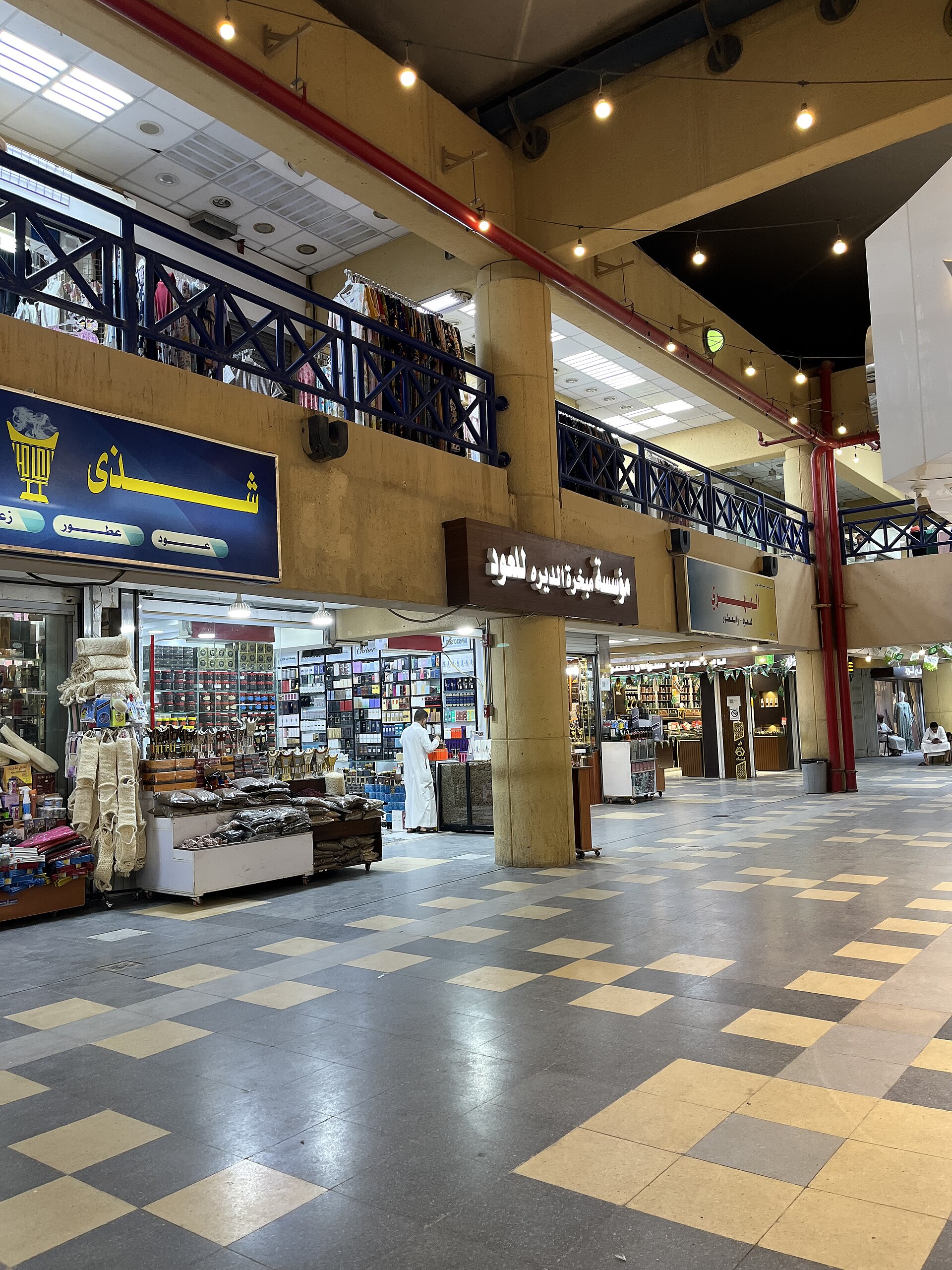
Located inside Al Balad and running parallel to Souq Qabil, Al Alawi is where Jeddahwis go for spices, incense, and dried herbs. The evening air here is thick with frankincense smoke and the shouts of vendors hawking bukhoor blends, saffron, and dried roses. It is also one of the best spots to find traditional Saudi souvenirs — carved incense burners (mabkhara), prayer beads (misbaha), and woven baskets.
Dammam and the Eastern Province
Share Al Hob — The Love Market
Established in 1943, Share Al Hob (literally “Love Street”) on 11th Street in Dammam’s Al Dawasir district holds a unique distinction: it was one of the first commercial spaces in Saudi Arabia where women were permitted to trade as entrepreneurs. Today the market retains that independent spirit, with a mix of established shops and pop-up stalls lining a pedestrianised stretch.
Share Al Hob opens at 4 PM and builds momentum as darkness falls. By evening, the walkways fill with:
Tip: Share Al Hob is one of the few Saudi souqs where live street entertainment is a regular feature, not just a Ramadan addition. Budget at least two hours to explore both the shops and the performers.
Al Jawary Gold Souq — Hofuf
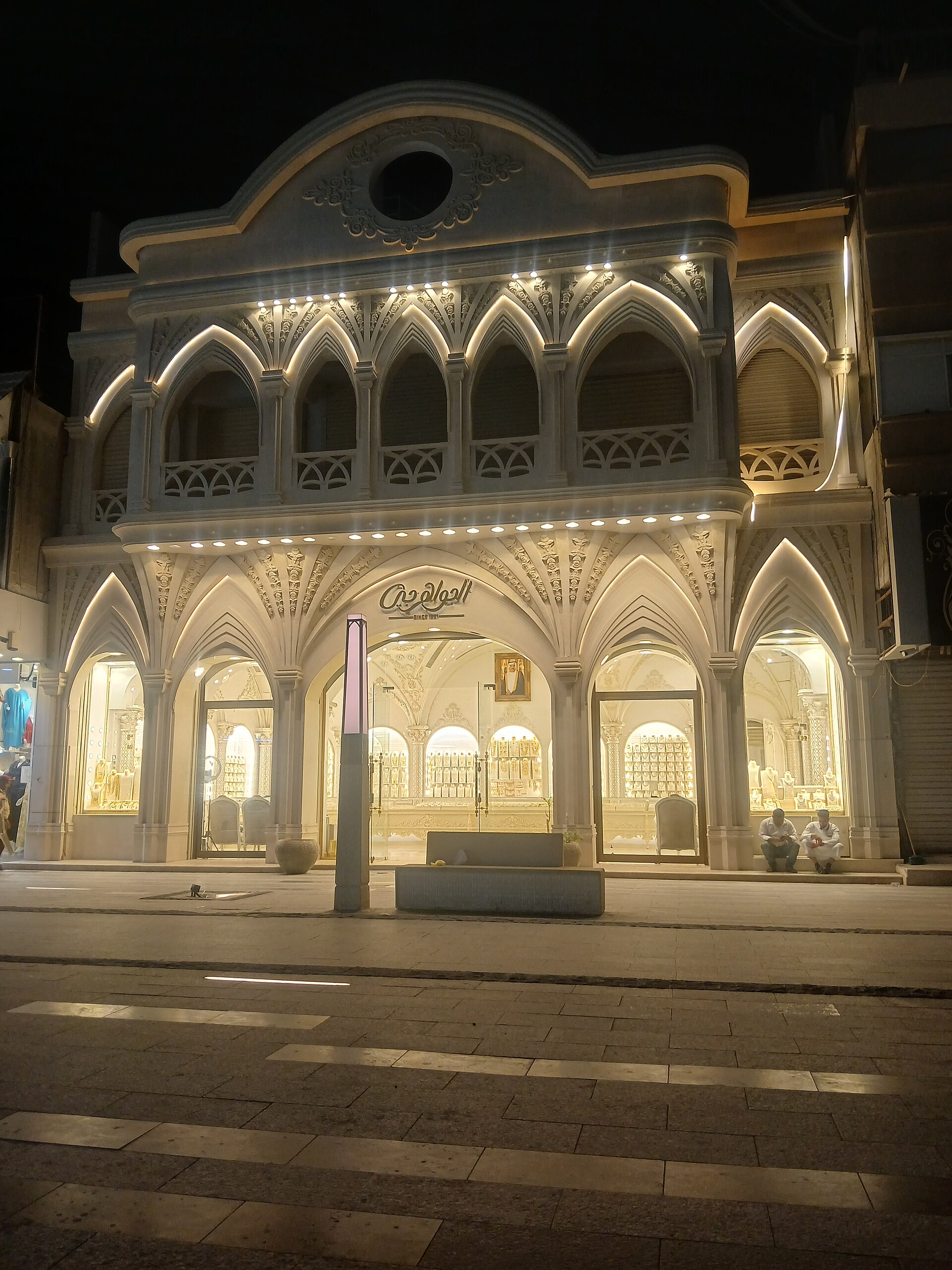
Though technically in Al Ahsa (about 150 km southwest of Dammam), the Al Jawary gold souq in Hofuf deserves mention for its stunning architectural facade and evening gold trade. The ornate white-and-gold building — lit up after dark — houses dozens of jewellers selling both traditional Saudi designs and modern pieces. Al Ahsa itself, a UNESCO World Heritage cultural landscape, makes an excellent day trip from Dammam, and timing your visit for an evening browse through Al Jawary is the ideal way to cap the day.
Other Night Souqs Worth Visiting
Taif — Souq Al Balad
Taif’s traditional market, Souq Al Balad, is the place to shop for the city’s famous rose products — rose water, rose oil, and dried rose petals harvested from the surrounding highlands. The Taif region produces an estimated 300 million roses annually, and much of the output passes through this market. Evening is the best time to visit, especially during the annual Taif Rose Festival (typically March–April), when the souq extends into a night fair with rose-themed stalls and cultural events.
The nearby Souq Okaz — an annual cultural festival on the outskirts of Taif — recreates the pre-Islamic poetry and trade fairs that made Taif a regional commercial centre for centuries. When running (usually summer months), its evening programme of poetry recitals, calligraphy demonstrations, and traditional craft workshops is unmissable.
Yanbu Night Market
The Red Sea port city of Yanbu hosts one of Saudi Arabia’s most vibrant evening markets, blending traditional souq culture with a modern waterfront setting. Open nightly until late, the market is popular with both locals and the diving community visiting Yanbu’s coral reefs. Fresh seafood stalls are a highlight — catch-of-the-day is grilled to order and served with rice on the spot.
AlUla Old Town Market
Set against the dramatic sandstone cliffs that make AlUla one of Saudi Arabia’s most photogenic destinations, the Old Town market occupies restored mudbrick buildings in the ancient settlement. Evening visits — when the cliffs turn amber in the last light before the market stalls take over — combine heritage shopping with one of the Kingdom’s most striking visual backdrops. Look for locally made pottery, woven goods, and AlUla-branded date products.
What to Buy at Saudi Night Souqs
Oud and Perfumes
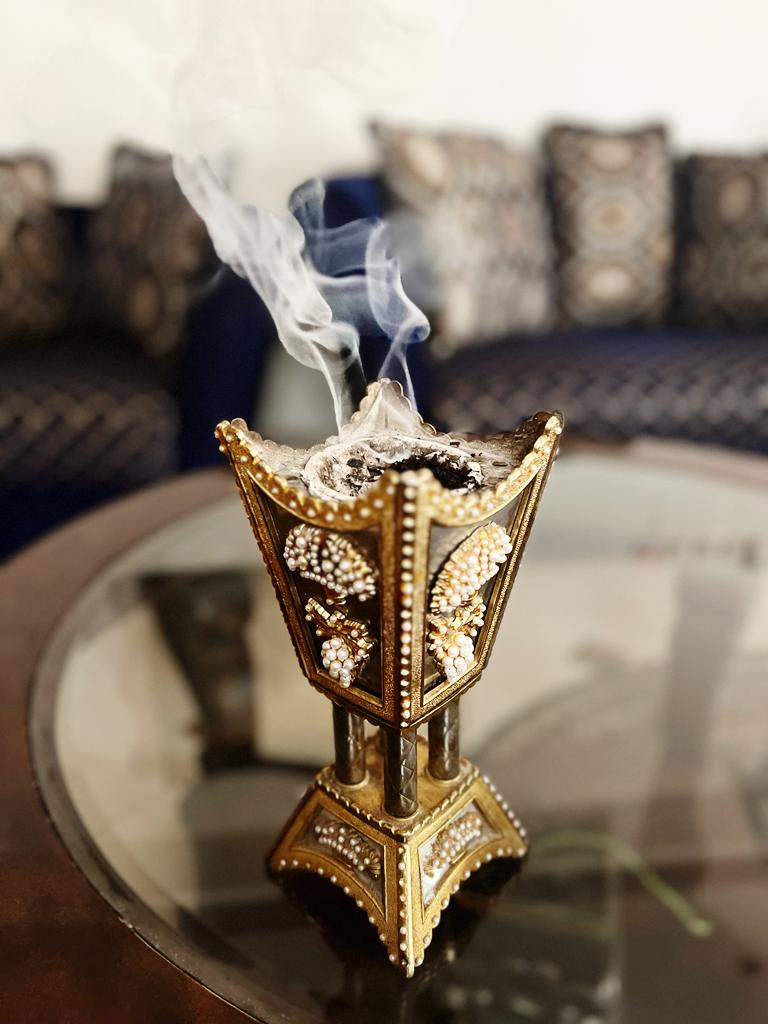
Oud (agarwood incense) is the signature scent of Saudi Arabia, and night souqs are where connoisseurs come to buy. Vendors burn samples at their stalls, so you can smell before committing. Prices range from 50 SAR for blended bakhoor chips to thousands of riyals for pure Cambodian or Indian oud. Arabian perfume oils — concentrated, alcohol-free, and applied from ornate glass bottles — start around 30 SAR and make excellent gifts.
Gold and Jewellery
Saudi Arabia has no import duty on gold, making its souqs among the most competitively priced places in the world to buy gold jewellery. Traditional designs include ornate Bedouin-style necklaces, coin-studded headpieces, and heavy cuff bracelets. Gold is sold by weight at close to the daily spot price, with a modest making charge — always confirm the per-gram rate before purchasing. Our jewellery guide covers what to look for in detail.
Spices and Dates
Saffron, cardamom, dried lemons (loomi), and Arabic coffee blends are sold by weight at every traditional souq. Premium Saudi dates — particularly Ajwa from Medina and Sukkari from Qassim — are significantly cheaper at souqs than at airport shops. Vacuum-sealed boxes designed for travel make ideal gifts.
Textiles and Handicrafts
From handwoven sadu rugs in geometric Bedouin patterns to embroidered Saudi handicrafts and modern abayas, the Kingdom’s textile tradition is extensive. Night souqs often feature artisans working on-site — watch calligraphers personalise items, or see basket weavers at work in Jeddah’s Al Balad.
Practical Tips for Night Souq Shopping
Timing Your Visit
| Souq | City | Evening Hours | Best Arrival Time |
|---|---|---|---|
| Souq Al Zal | Riyadh | 3:30 PM – 10:30 PM | 8 PM |
| Deerah Souq | Riyadh | 8 PM – Midnight | 9 PM |
| Souq Qabil | Jeddah | 5 PM – Midnight | 9 PM |
| Bab Makkah | Jeddah | Afternoon – Late Evening | 6 PM |
| Share Al Hob | Dammam | 4 PM – Late Evening | 7 PM |
| Al Jawary | Hofuf | Evening hours | 7 PM |
Bargaining Etiquette
Haggling is expected at most traditional souqs, but approach it as a friendly exchange rather than a confrontation. Start at roughly 60–70% of the asking price and work toward a mutually agreeable number. Gold shops are the exception — prices are typically fixed to the daily gold rate and posted visibly. In modern retail souqs like Boulevard City or U-Walk, prices are always fixed.
Payment and Cash
While Saudi Arabia is rapidly adopting digital payments (many shops accept Apple Pay and card), smaller stall vendors at traditional souqs still prefer cash. Carry a mix of SAR notes — 50s and 100s are ideal. ATMs are available near most major souqs.
What to Wear
Dress modestly. Souqs are family-oriented spaces, and visitors who respect local norms receive warmer hospitality — and sometimes better prices. Comfortable walking shoes are essential, as souq lanes are often uneven stone or concrete. Evenings are cooler but still warm in summer, so lightweight breathable fabrics work best.
Prayer Time Closures
All Saudi shops close briefly during prayer times (five times daily). Evening shopping is punctuated by Maghrib and Isha prayers — plan around them rather than fighting the rhythm. Most souq vendors will happily invite you to sit and drink Arabic coffee while you wait for the market to resume.
Getting There
Riyadh and Jeddah souqs are accessible by ride-hailing apps (Uber and Careem both operate in Saudi Arabia) or by car. Parking near old-city souqs can be challenging — ride-hailing is often the easiest option. Visitors entering Saudi Arabia will need a tourist e-visa, which can be obtained online in minutes for citizens of 49 eligible countries.
Ramadan Night Markets — A Special Season
Ramadan transforms Saudi Arabia’s souq culture. After the day-long fast ends at sunset, cities come alive with special night markets that blend shopping, food, and entertainment. Several purpose-built seasonal markets are worth highlighting:
Planning note: During Ramadan, arrive after Isha prayers (roughly 9–9:30 PM) for the liveliest atmosphere. Most Ramadan night markets run from after Iftar until 2 AM or later. Non-Muslim visitors are welcome but should avoid eating or drinking in public during daylight fasting hours.
Souq Food — What to Eat After Dark
Night souqs are as much about eating as shopping. Every major market has food vendors serving traditional Saudi fare that is difficult to find in restaurants:
For a deeper dive into the Kingdom’s culinary heritage, explore our guides to kabsa, Saudi coffee culture, and Riyadh street food.