
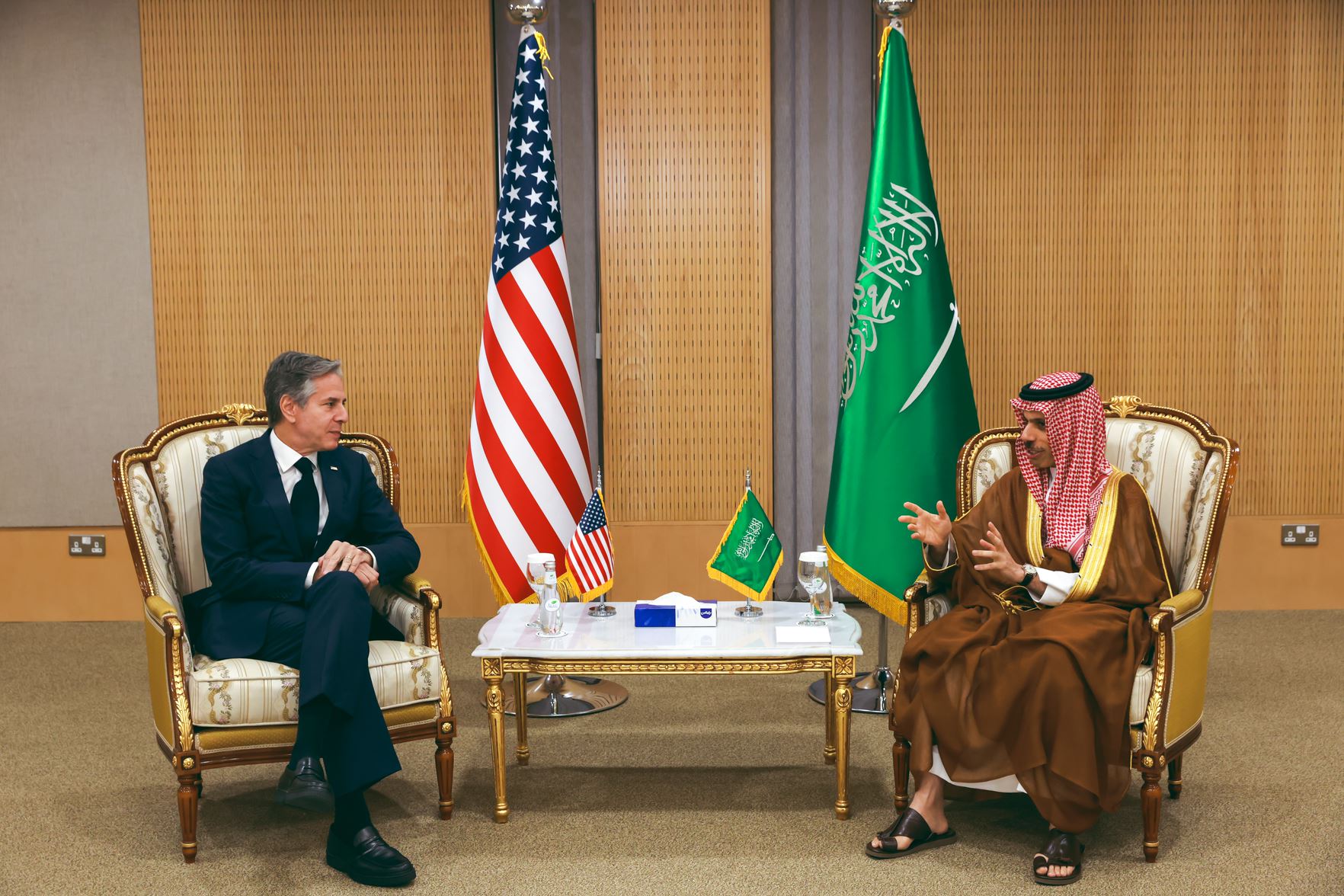
RIYADH — Saudi Foreign Minister Prince Faisal bin Farhan received a telephone call from Iranian Foreign Minister Abbas Araghchi on June 18 — the same day three Bahri-controlled supertankers carrying approximately six million barrels of Saudi crude exited the Strait of Hormuz, the first Saudi crude transit since February 28. The Saudi readout, distributed by the Saudi Press Agency and carried by Arab News and Asharq Al-Awsat, stated that Prince Faisal “expressed the Kingdom’s welcome for the agreement reached between Iran and the United States to end military operations and begin detailed negotiations with the aim of reaching a permanent agreement.” The words “PGSA,” “fee,” “toll,” “Bahri,” and “transit” appeared nowhere in the text.
Iran published a different account of the same call. Araghchi, according to Tasnim News Agency as reported by IranWire, briefed Faisal “on the clauses and final updates regarding the newly minted Islamabad Memorandum,” emphasized “Washington’s responsibility in fulfilling its obligations under the pact,” and raised “the absolute necessity of a total cessation of Israeli attacks on Lebanon.” The two readouts shared almost no substantive content. Neither addressed whether the three vessels — Shaden, Jaham, and Awtad — had paid the $1-per-barrel PGSA corridor fee that Iran’s parliament codified in March and that both OFAC and the EU have since designated.
Table of Contents
Two Readouts from One Call
The Saudi readout ran to two operative sentences. Prince Faisal welcomed the agreement and expressed “the Kingdom’s aspiration to achieve peace that enhances the security of the region and the world.” The two ministers “reviewed regional developments and underscored the importance of continuing joint efforts to achieve lasting and sustainable stability in the region.” That was the full extent of what Riyadh chose to make public.
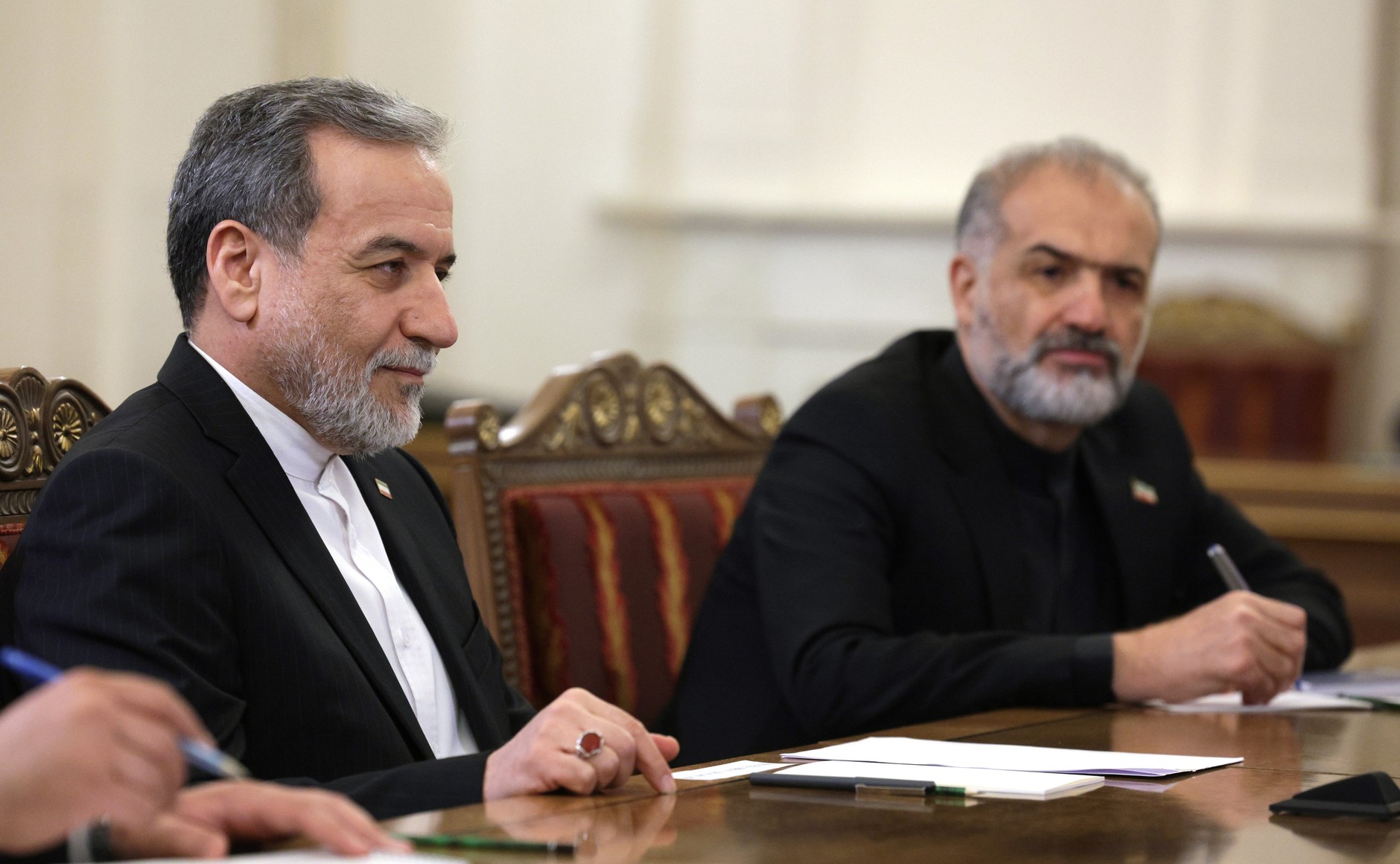
Tehran published more. Araghchi “explicitly expressed his gratitude for Saudi Arabia’s contributions to the diplomatic process that paved the way for the agreement, commending Riyadh’s efforts to bring an end to the active conflict involving Iran, the United States, and Israel,” per Tasnim’s account reported by IranWire. He raised two conditions absent from the Saudi text: full US implementation of the MOU terms, and a “total cessation of Israeli attacks on Lebanon.” Prince Faisal’s readout did not acknowledge either condition.
Iran’s Foreign Ministry website listed the Faisal call alongside outreach to the Turkish, Iraqi, Egyptian, and Japanese foreign ministers conducted on the same day — one of several post-deal “implementation briefings,” per the Tehran Times. The commendation acknowledged Saudi Arabia’s back-channel role without granting Riyadh treaty status, a seat at the Phase 2 nuclear track, or exemption from PGSA fees.
What Was Missing from Both Readouts?
The Saudi readout contained no reference to the PGSA, the Bahri convoy, the GCC-IMO letter of May 21, Hormuz transit fees, or Lebanon. The Iranian readout mentioned none of these either — except Lebanon, which Araghchi raised and the Saudi side did not acknowledge in its published text.
The Middle East briefing 3,000+ readers start their day with.
One email. Every weekday morning. Free.
On May 21, Saudi Arabia co-signed a GCC letter — five of six member states — instructing ships not to pay PGSA fees. Saudi MOFA has issued zero public statements on the PGSA mechanism at any point during the war. Prince Faisal’s “welcome” of the MOU, first delivered to Araghchi on June 15 and repeated June 18, remains the closest Saudi Arabia has come to acknowledging the strait’s new cost structure — without naming it. On June 18, the Kingdom’s own vessels crossed the corridor that letter had told ships not to pay.
Iran’s silence on the convoy was equally complete. No PGSA statement, no IRNA report, no Tasnim dispatch confirmed or denied fee collection from Shaden, Jaham, or Awtad. Araghchi did not claim payment. He did not waive it. The PGSA body itself — OFAC-designated since May 27, EU-designated since June 8 — issued no public comment as of June 18.
The Convoy That Crossed in Silence
The three Bahri-controlled VLCCs — Shaden, Jaham, and Awtad — transited Hormuz on June 18, carrying approximately six million barrels of Saudi crude to Asian buyers, according to Kpler data reported by CNBC and Bloomberg. Shaden’s destination was Kiire, Japan. Awtad was bound for Ulsan, South Korea. Jaham’s endpoint was not confirmed in the tracking data. The transit ended a 110-day blockage of Saudi crude through the strait.
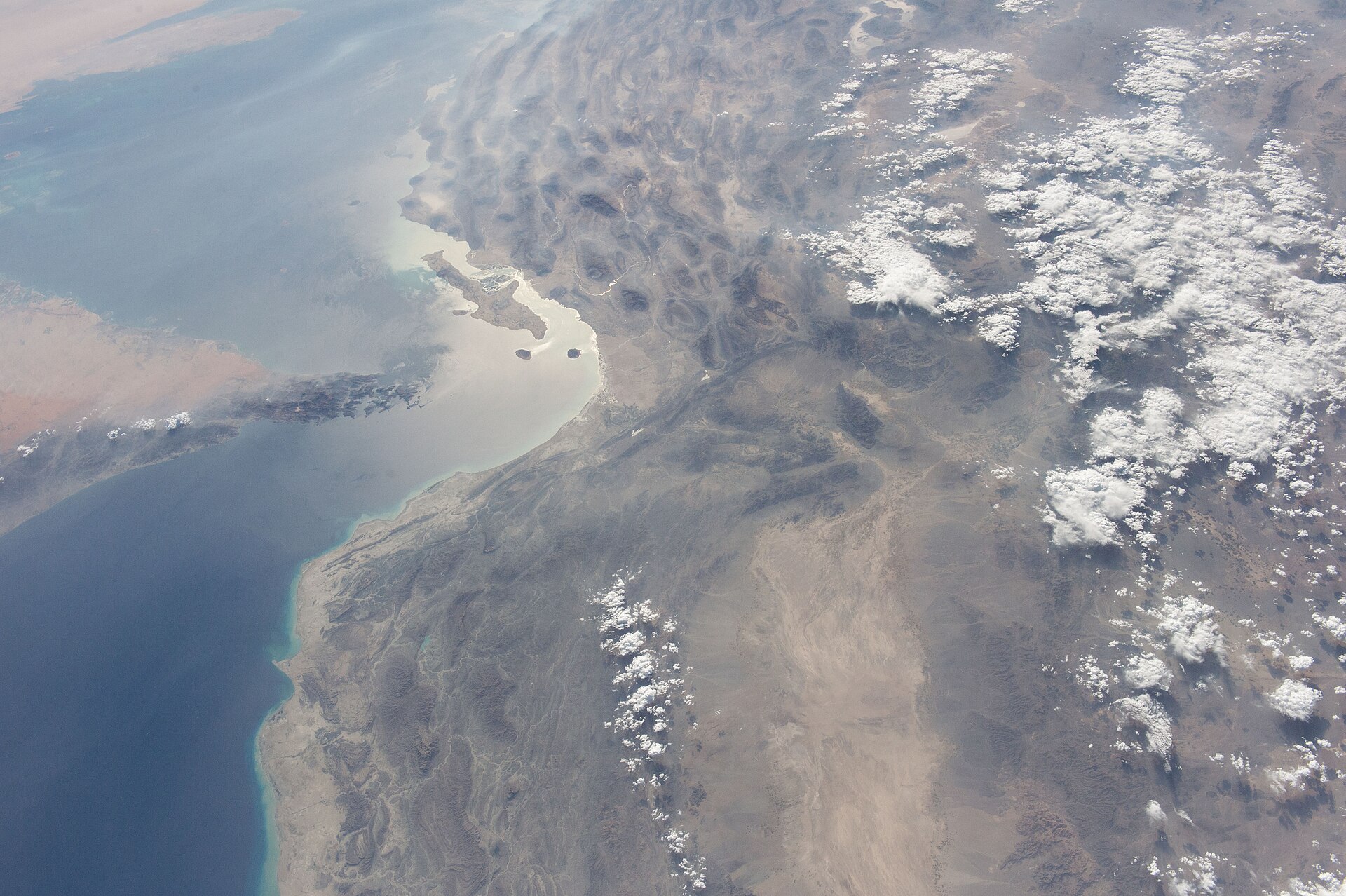
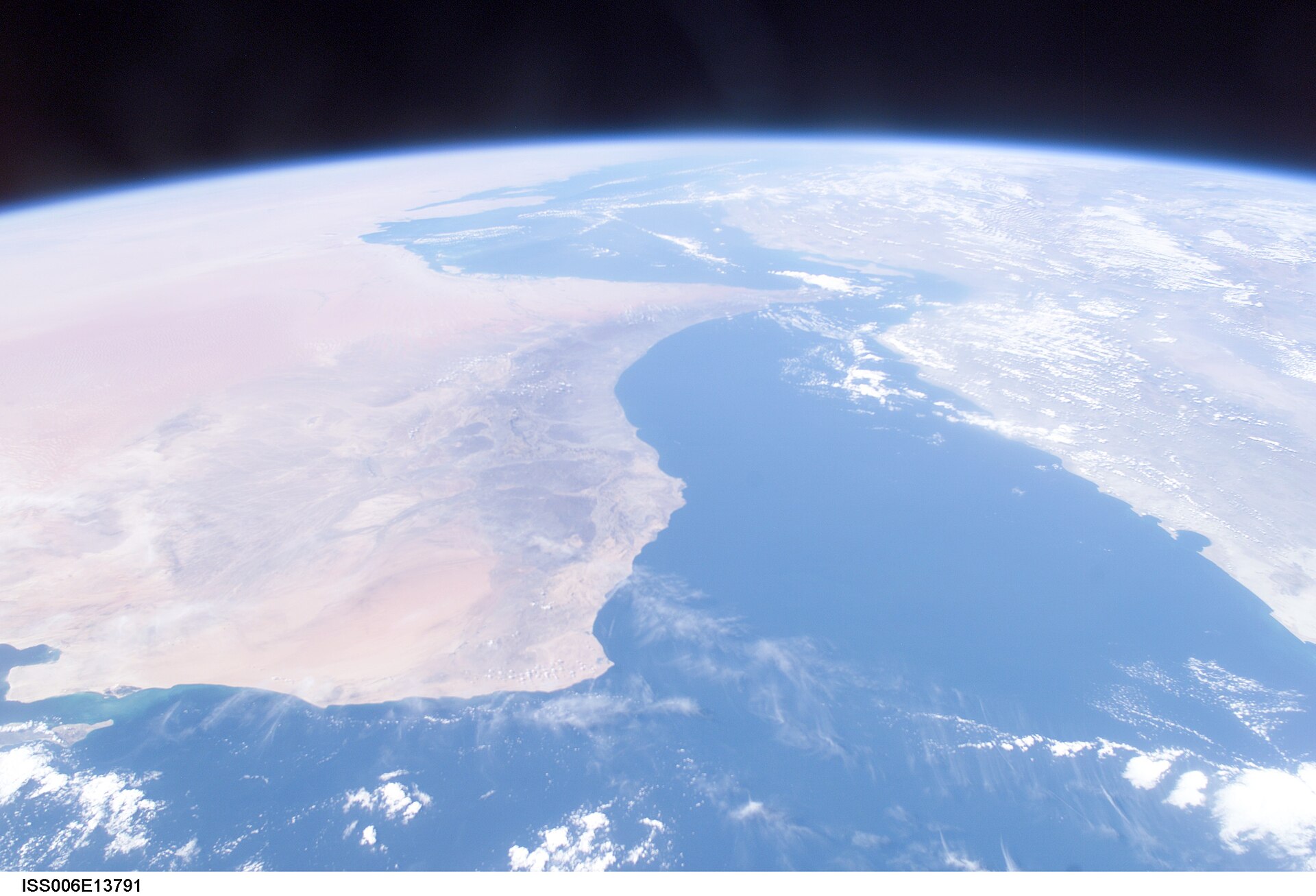
All three vessels went AIS-dark during the Qeshm-Larak corridor transit, according to Windward AI tracking data. The PGSA corridor runs through a five-nautical-mile channel between Qeshm and Larak islands, entirely within Iranian-claimed territorial waters. The dark window — a practice adopted by commercial vessels in contested transit zones — means no publicly available electronic record confirms whether the tankers used the PGSA-designated lane or an alternative routing.
US Vice President JD Vance, speaking on June 18, said “more than 12 million barrels of oil passed through Hormuz overnight,” calling it “a high since the beginning of the conflict.” The Saudi convoy accounted for roughly half that volume. The remainder included non-Saudi traffic. Iranian NITC vessels — VLCCs Diona (IMO 9569695) and Hero 2 (IMO 9362073) — had already established the corridor as operational on June 15–16, transiting under PGSA exemption before the MOU was signed.
Did Iran Collect the Fee?
At $1 per barrel, the PGSA fee on six million barrels would amount to approximately $6 million — roughly $2 million per laden VLCC. Bahri has not disclosed whether any of its vessels submitted transit information to the PGSA or paid the charge. Neither Aramco, Saudi MOFA, nor Iran’s PGSA body has made any statement confirming payment or non-payment, according to Bloomberg.
The payment mechanism creates a secondary problem regardless of intent. PGSA fees are payable in Chinese yuan via Kunlun Bank through CIPS, or in Bitcoin and stablecoins. OFAC designated the PGSA as a Specially Designated National on May 27 under the “Economic Fury” campaign. The EU designated it on June 8 — ten days before the Bahri convoy crossed, per the EU Foreign Affairs Council record. Approximately 95 percent of the global tanker fleet carries EU-based insurance. Any Bahri payment to the PGSA would create dual US-EU sanctions exposure for the company, regardless of the currency used.
Iran’s Foreign Ministry spokesman Esmaeil Baghaei stated on May 25 that Iran charges fees for “navigational services in addition to measures necessary to protect the environment of the Strait of Hormuz, the Persian Gulf and the Sea of Oman,” per Euronews. The framing as “service fees” rather than “tolls” follows a legal distinction under UNCLOS Article 26(2), which permits charges for “specific services rendered to the ship.” The MOU does not mention the PGSA or fees. At pre-war Saudi export volumes of roughly 5.5 million barrels per day, annual PGSA liability would reach approximately $2 billion.
Six Calls in Seventy Days
The June 18 exchange was the sixth confirmed Araghchi-Faisal call during the war, according to records compiled from Al Arabiya, Mehr News Agency, and Arab News. The first, on April 9, was the first publicly announced contact between the two countries since Iran launched strikes against Gulf neighbors, as reported by The National. The sequence — April 9, April 26, May 6, May 11, June 15, June 18 — traces the arc from initial de-escalation to post-deal management.
On April 26, Araghchi phoned Faisal from the air — mid-flight from Muscat to Islamabad — to brief him on Tehran’s two-stage diplomatic proposal, per Xinhua. The Saudi readout did not endorse the framework. By June 15, the Saudi position had shifted — Prince Faisal delivered the Kingdom’s first direct “welcome” of the MOU to Araghchi, three days after Saudi Arabia’s initial endorsement was communicated through Pakistan’s Foreign Minister Ishaq Dar on June 13.
The formal Saudi-Iran FM engagement track predates the war. Prince Faisal met then-Foreign Minister Hossein Amir-Abdollahian in Beijing on April 6, 2023 — the first formal FM meeting in seven years, brokered as part of the Chinese-mediated détente, per Al Jazeera. The war reset the clock, but the six exchanges in roughly seventy days outpace any period in the Beijing-brokered era.
Background
The Islamabad Memorandum — the agreement Prince Faisal “welcomed” — was signed on June 18 after weeks of indirect and then direct US-Iran negotiations mediated primarily by Pakistan. Saudi Arabia participated in none of the formal mediation tracks. The Kingdom’s role, as described by Araghchi’s Tasnim readout, was to provide “contributions to the diplomatic process” — language that acknowledged back-channel support without conferring negotiating-party status.
The MOU leaves several questions unresolved that affect Saudi interests directly. It contains no mention of PGSA fees. It establishes a 60-day window for Phase 2 negotiations covering nuclear issues — a track in which Saudi Arabia holds no seat, as Prince Faisal’s Vienna remarks on verification made clear from outside the room. And it does not address the mine clearance timeline. The PGSA’s domestic legal basis — passed by Iran’s Majlis on March 30–31, weeks before the MOU existed — remains fully operative under the deal’s terms.
Aramco’s fiscal position provides the backdrop. Brent crude traded at $75.49 on June 18. Saudi Arabia’s breakeven price is estimated at $108–111 per barrel, per the IEA surplus projections and Goldman forecasts tracked across the conflict. Aramco cut its July Official Selling Price for Asian buyers by $6 per barrel — the largest reduction since 2022 — published on June 8, before any Saudi vessel had returned to the strait.
Frequently Asked Questions
Did Saudi Arabia have any formal role in negotiating the Islamabad MOU?
No. Saudi Arabia was listed among twelve nations that “approved” the framework but participated in none of the formal mediation tracks — the Pakistan-hosted indirect channel, the Oman-facilitated back-channel, or the June 18 signing. The Kingdom communicated its initial endorsement through Pakistan’s Foreign Minister Ishaq Dar on June 13, two days before confirming it directly to Araghchi. Crown Prince Mohammed bin Salman has declined to attend the last three consecutive G7 summits where Hormuz and the MOU framework were discussed.
What did Prince Faisal say in Vienna the day before the call?
Speaking on June 17, Prince Faisal told US News in Vienna: “Verification is key in US-Iran nuclear talks. How we will have a long-term, sustainable verification regime is what will matter the most.” The statement positioned Saudi Arabia as focused on nuclear verification — a Phase 2 track in which it holds no formal seat. One day later, his published readout from the Araghchi call addressed none of those concerns, defaulting to the broader language of “peace” and “stability.”
How does the GCC-IMO letter interact with the Bahri transit?
On May 21, five of six GCC member states — Oman was the exception — co-signed a letter to the International Maritime Organization instructing vessels not to pay PGSA fees. Saudi Arabia was among the signatories. Twenty-eight days later, Bahri vessels transited the PGSA corridor. Whether those vessels complied with the GCC-IMO instruction — or with PGSA requirements — has not been disclosed by any party. The contradiction between the letter and the transit remains unaddressed in Saudi public communications.
Which states are exempt from PGSA fees?
Russia, China, India, Iraq, and Pakistan are listed as PGSA-exempt states. Saudi Arabia is not. Iranian NITC vessels transit under corridor exemption, as confirmed when VLCCs Diona and Hero 2 crossed on June 15–16 without PGSA charges. The MOU left the fee mechanism intact, and no supplementary exemption for GCC states has been announced by Iran or the PGSA body.
Were the Bahri tankers insured for the transit?
War-risk insurance premiums for Hormuz transit surged approximately 340 percent during the conflict. The UK Joint Maritime Information Centre downgraded its threat level from “severe” to “substantial” on June 17 — one day before the Bahri crossing — but did not move to “moderate,” the threshold at which P&I clubs typically clear standard underwriting. War-risk insurance for a single VLCC transit runs $3–8 million, according to industry estimates. For a three-ship convoy, the insurance cost — $9–24 million — exceeded the $6 million in potential PGSA fee exposure by a factor of at least one and a half.