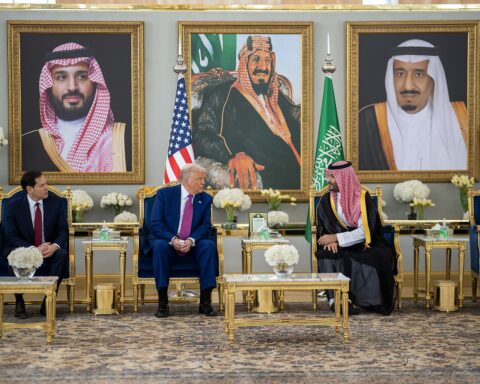
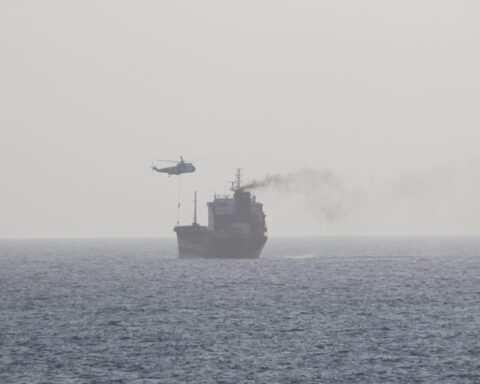
RIYADH — Mohammed bin Salman killed Project Freedom nine days ago. The New York Times reported on May 16 that Washington and Jerusalem are now preparing to strike Iran again “as early as next week” — without him, around him, and almost certainly through him.
That is the reverse co-belligerent trap. The Crown Prince spent April reversing his February 28 neutrality vow, hosted offensive US strike operations at King Fahd Air Base in Taif, then in May vetoed the next American operation by closing Prince Sultan Air Base and Saudi airspace. He has proved he can stop a US plan he sees coming. He has not proved he can stop a US plan he doesn’t. The IRGC’s retaliation lands on Abqaiq, Ras Tanura and the East-West Pipeline regardless of whether Riyadh blessed the trigger — and Saudi PAC-3 stocks sit at 14% of pre-war inventory with no resupply before mid-2027. The confirmed airspace denial — and how Saudi Arabia exercised that veto in under 36 hours — is documented in a companion analysis.
Table of Contents
- The NYT Window: Strikes “As Early as Next Week”
- Why Did the Project Freedom Veto Fail to Protect Saudi Arabia?
- The PAC-3 Math: What Happens at 14%
- Which Saudi Sites Are Inside IRGC Retaliation Doctrine?
- PressTV and the Proxy Framing
- What Are MBS’s Three Options Before Day of Arafah?
- The Fiscal Cliff Under the Trap
- How Much Iranian Capability Is Actually Left?
- The 1988 Lesson Riyadh Did Not Learn
The NYT Window: Strikes “As Early as Next Week”
Two Middle East officials told the New York Times on May 16 that the United States and Israel are “undergoing the most intense preparations since last month’s ceasefire for renewed attacks on Iran, seeking to be ready as early as next week.” The phrasing is operational, not aspirational. The same paragraph names two target categories: Kharg Island — the offshore terminal that handles roughly 90% of Iranian crude exports — and commando extraction of the 440 kilograms of 60%-enriched uranium buried under rubble at Isfahan.
US military officials told the Times the extraction option would need “thousands of supporting forces” and almost certainly produce engagement with Iranian ground troops. They called it a “very risky necessity.” That is the language of an operation already moving from planning to staging.
Donald Trump told Fox News this week what the bomb damage menu now looks like. “We left their bridges. We left their electricity capacity. We can knock that all out in two days.” He sent Iran a new nuclear proposal on May 16 and warned of “serious consequences” if rejected, hours after Foreign Minister Abbas Araghchi said a deal was “just inches away” but blocked by “maximalist demands.” Araghchi also confirmed Iran is talking to Russia about transferring its uranium stockpile out of the country — a move that would close the commando-extraction option and force Washington and Jerusalem to choose between accepting it or hitting Iran before the transfer.
The acceleration matters because of the calendar. The Day of Arafah falls on May 26 — ten days from now. Roughly 1.8 million pilgrims are arriving in the Hejaz. Saudi Arabia hits the moment of maximum civilian exposure and minimum air defense depth in the same week the Pentagon is sequencing its strike package.
The Middle East briefing 3,000+ readers start their day with.
One email. Every weekday morning. Free.
Why Did the Project Freedom Veto Fail to Protect Saudi Arabia?
The Project Freedom veto stopped one US operation Saudi Arabia saw coming. It did not strip offensive US basing from Taif, did not end Saudi co-belligerent status, and did not extract a commitment to defend Saudi infrastructure from retaliation. Process veto is not outcome control, and the next operation may not surface in time for a second one.
Mohammed bin Salman blocked Project Freedom — the US plan to reopen the Strait of Hormuz by force — on May 7, denying Washington access to Prince Sultan Air Base and Saudi airspace. Kuwait pulled its access in the same 36 hours. Trump paused the operation. Riyadh briefed NBC that the Kingdom was “against the operation because it felt it would just escalate the situation and would not work.”
That was a process veto. It is not the same as control over outcomes. The most consequential detail in the NBC reporting was buried near the bottom: Washington launched Project Freedom without notifying its Gulf allies first, and when Gulf states asked how the US would respond to Iranian retaliatory strikes on their infrastructure, American officials made clear “a peace deal was the primary focus and the US would likely not respond to Iranian strikes on infrastructure in the region.”
The operational mechanics of how MBS exercised that veto when Project Freedom was announced — the base geography, the PSAB tanker dependency, and what changed between the two Trump phone calls — are documented in Prince Sultan Air Base and the Price of American Access.
Set that admission against the new NYT window. The US is again preparing major kinetic action against Iran. There is no public indication Riyadh has been consulted on the target set, the timing, or the basing footprint. Saudi Arabia still hosts US offensive strike infrastructure at the co-belligerent trap base in Taif. The veto in May worked because the Crown Prince saw the operation coming and named the price. The May 16 NYT story is a warning that the next operation may not give him that opening — and the same officials who already told him the US would not defend Saudi infrastructure are running the planning.
The Foreign Ministry spent May 11 to May 15 building optics for a regional alternative. Faisal bin Farhan discussed Pakistan mediation with Iranian and Pakistani counterparts. MBS called MBZ on May 13 and the Qatar Emir on May 15. That same Pakistan channel was escalated on May 16 when Islamabad sent Interior Minister Mohsin Naqvi to Tehran — his second visit in a month — even as Araghchi publicly described the Pakistan mediation as “on a very difficult course.” The diplomatic motion is real. The bargaining power behind it is not — and that is precisely why Riyadh vetoed America’s plan rather than negotiate concessions inside it. While Riyadh pursues repair, the UAE has moved in the opposite direction — building the strategic autonomy that renders the MBS-MBZ phone calls increasingly beside the point; that trajectory is mapped in How the Iran War Ended Saudi Arabia’s Gulf Monopoly.
The PAC-3 Math: What Happens at 14%
The Defense Security Cooperation Agency notice in January authorized 730 PAC-3 Missile Segment Enhancement interceptors for Saudi Arabia at a sticker price of $7.2 billion. The Defense Post tracked the consumption curve: Saudi Arabia entered the war with roughly 2,800 PAC-3 MSE rounds and ended Operation Epic Fury with roughly 400. That is 86% of the pre-war stock burned in 38 days of combat.
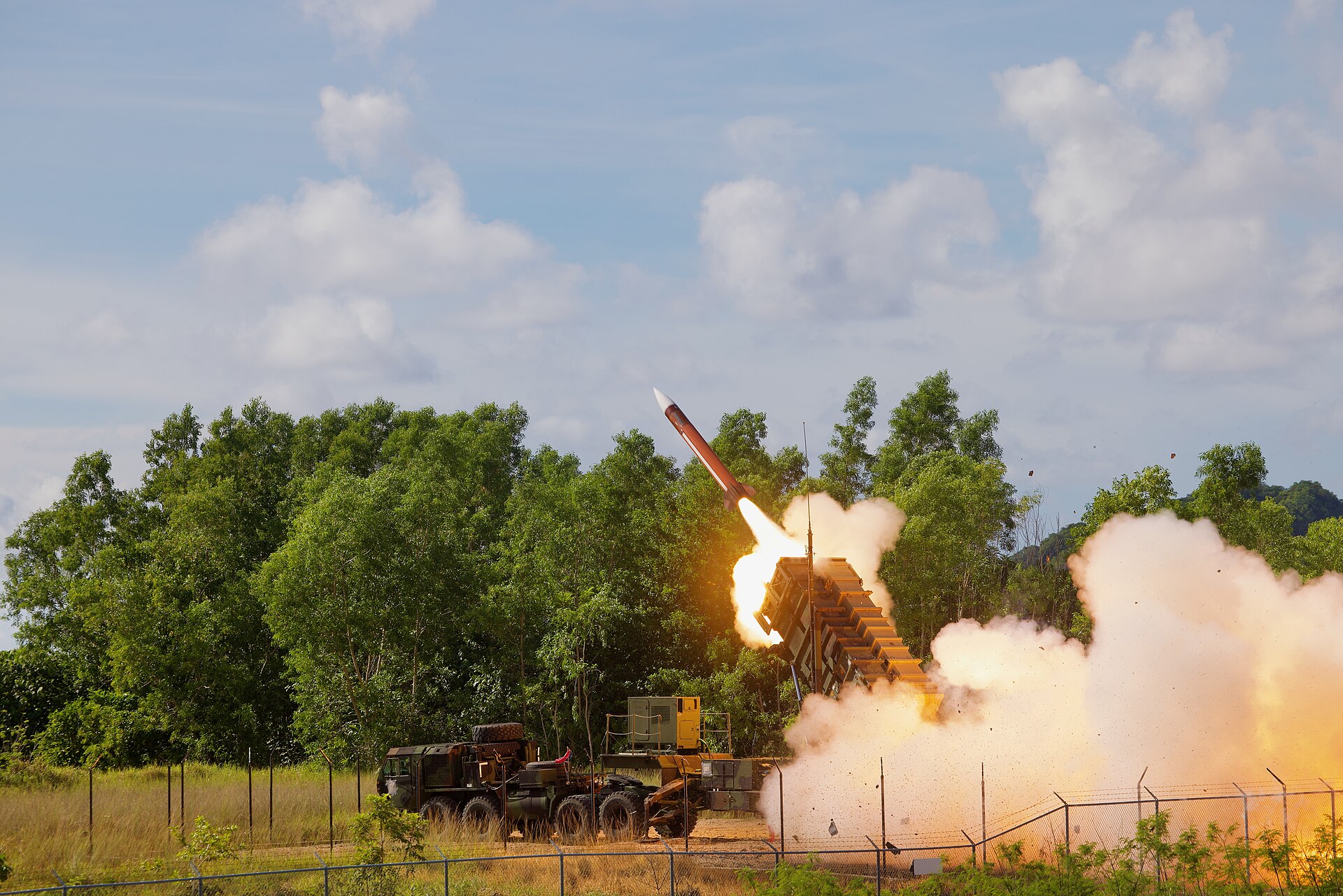
Spread across 108 M902 launchers, 400 rounds works out to 3.7 rounds per launcher. A standard PAC-3 fire unit holds 16. Saudi Arabia is sitting at 23% of launcher capacity heading into the Hajj window — and the Lockheed Martin facility in Camden, Arkansas, produces around 620 PAC-3 MSE rounds per year for all global customers combined. The 730-round Saudi order is 14 months of total world production. Resupply does not arrive in volume before mid-2027.
On May 13, the air defense network intercepted five ballistic missiles and nine drones targeting the Eastern Province — the same 24 hours the $142 billion US-Saudi defense agreement was signed. The strike package was small, the optics were brutal, and the math made clear what every empty cell in the magazine costs in the next escalation cycle. The arithmetic is the same one that runs through the 400 interceptors the Kingdom carries into pilgrim season.
| Indicator | Pre-War Baseline | May 16, 2026 | Source |
|---|---|---|---|
| PAC-3 MSE interceptor stock | ~2,800 rounds | ~400 rounds (14%) | DSCA Jan 30; Defense Post Feb 2 |
| Launcher fill rate (108 M902s) | 16 rounds each | 3.7 rounds each (23%) | HOS calculation |
| Global Camden, Arkansas output | ~620 PAC-3 MSE/year | ~620 PAC-3 MSE/year | Lockheed Martin |
| Saudi crude production | 10.4 million bpd (Feb) | 7.25 million bpd (Mar) | IEA via FDD |
| Q1 fiscal deficit | $3.3 billion (Q1 2025) | $34 billion (record) | Saudi Ministry of Finance |
| War-adjusted deficit/GDP | 3.3% (official) | 6.6% (Goldman) | Goldman Sachs |
| East-West Pipeline capacity | 7M bpd nameplate | 4.0–5.9M bpd Yanbu ceiling | Chatham House May 2026 |
| Iranian PAC-3 resupply window | n/a | Mid-2027 earliest | DSCA delivery schedule |
The numbers in that row about Yanbu loading capacity matter for a reason that has nothing to do with magazines and everything to do with consequence. If Iran hits Abqaiq, Ras Tanura or the East-West Pipeline, Saudi Arabia cannot route around the damage at full pre-war volume. Chatham House put the ceiling at one-quarter of normal Hormuz flows — a structural production crash the Kingdom is still inside.
Which Saudi Sites Are Inside IRGC Retaliation Doctrine?
The doctrine itself is on the record. IRGC Brigadier General Ebrahim Zolfaqari, speaking on April 7, the day before the last ceasefire, removed the deniability layer in one sentence.
Regional American partners should know that, until now we have exercised significant restraint for the sake of good neighbourliness and have taken precautions in selecting retaliatory targets, but from now on, all such precautions have been removed.
— IRGC Brig. Gen. Ebrahim Zolfaqari, April 7, 2026
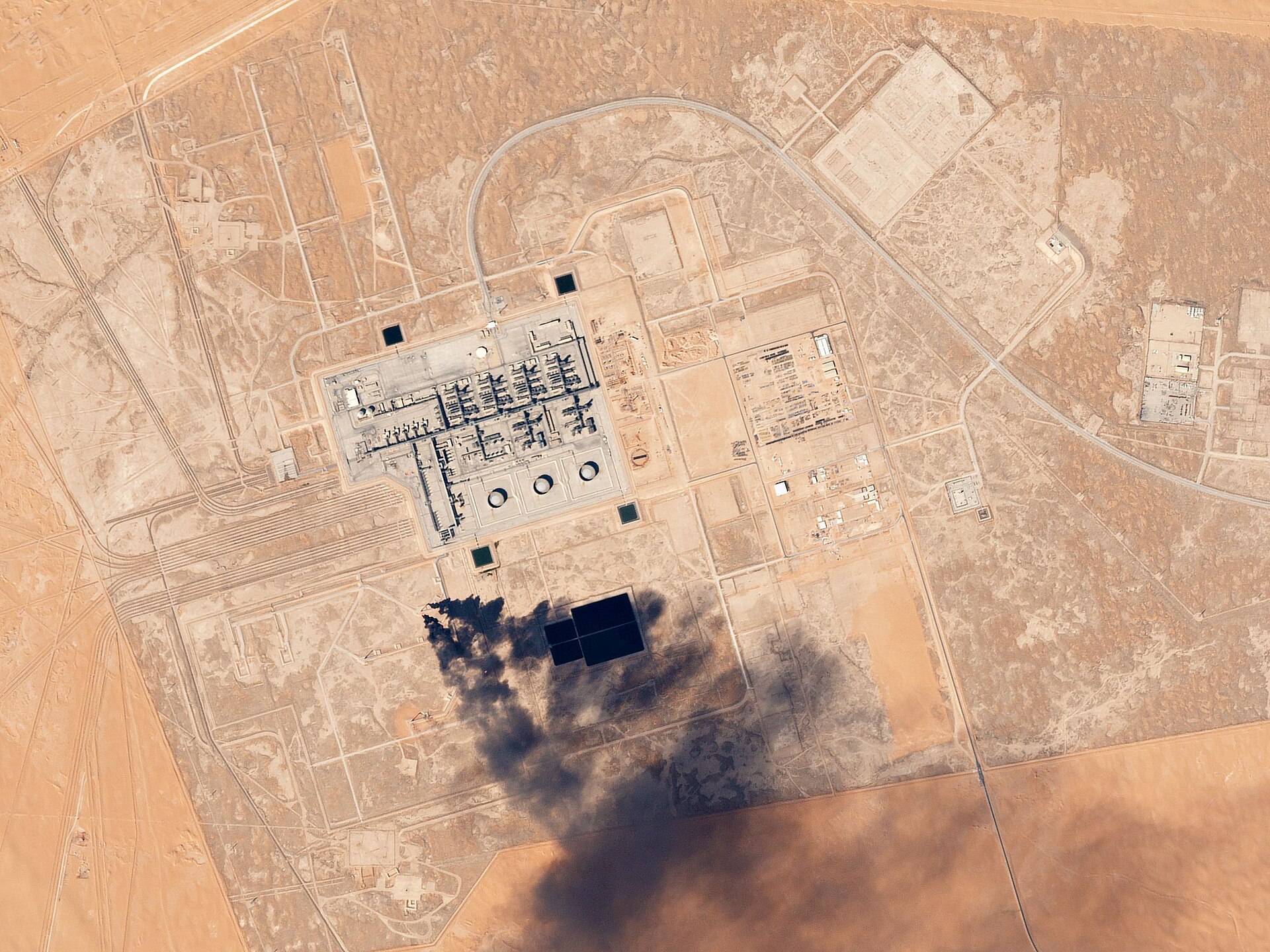
CSIS named the operational target set in May: Abqaiq, which processes more than seven million barrels a day; Ras Tanura, at 3.4 million; and Yanbu, at 1.3 million. The trigger condition CSIS specified is whether Saudi Arabia is “operationally integrated into US economic warfare against Tehran.” That integration happened the day MBS opened King Fahd Air Base in Taif to US offensive strike operations in late March. It deepened when Saudi Arabia covertly struck the Lavan Island refinery — a calibrated message, telegraphed to Tehran in advance, that Iran nonetheless logged as evidence of belligerency. On May 17, Zolfaghari escalated from the April 7 warning to a categorical declaration: Riyadh’s silence on the IRGC base threat — condemning Barakah while saying nothing about the naming of Prince Sultan — is the subject of the companion analysis published the same day.
The doctrine sits on top of a memory. The 2019 Abqaiq strikes took 5.7 million barrels per day offline in a single morning using 18 drones and seven cruise missiles. Saudi Arabia is now operating from a launcher base less than a quarter full, with a fiscal balance sheet that already absorbed a $34 billion quarterly deficit, and with the same IRGC commanders who ran the 2026 campaign still in their chairs. The retaliation envelope is not theoretical. It is the same map, drawn by the same staff, against a thinner shield.
PressTV and the Proxy Framing
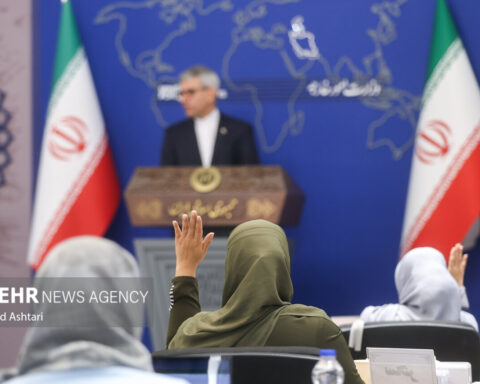
On May 12, PressTV published a piece titled around the claim that Saudi Arabia had “carried out ‘covert’ strikes on Iran amid US-Israeli aggression in March.” The story repackaged the Times of Israel reporting on the Lavan Island operation and added an inferential layer: that Riyadh acted as a US-Israeli proxy. The framing matters because IRGC retaliation doctrine runs through the proxy classification. A neighbour who struck once at low intensity and warned Tehran in advance is one thing. A US-Israeli arm with offensive basing at Taif is another.
Iran’s Foreign Minister sharpened the line two days later. “Test us again, you will repeat your failures,” Araghchi told PressTV on May 14. The grammar is striking. It is addressed to whoever participates in the next strike package, not to whoever ordered it.
That distinction is the editorial point of this entire analysis. The Project Freedom veto separated Saudi Arabia from one specific American plan. It did not separate Saudi Arabia from American basing, American kinetic operations, or American responsibility in the IRGC’s reading of co-belligerency. The covert Lavan strike — explicitly named by Iranian state media as proxy participation — is on the IRGC’s ledger whether or not Riyadh now claims distance, as we documented in Not Our War.
Tehran does not need to relitigate the proxy charge each time it wants to fire. The charge is already filed. What changes between escalation cycles is targeting discipline, not legal predicate.
What Are MBS’s Three Options Before Day of Arafah?
The Crown Prince has ten days. Option one: a public break with Washington, paid in the $142 billion defense deal. Option two: keep quiet basing in place and absorb whatever the IRGC sends. Option three: a private message to Tehran via Pakistan or Oman that Riyadh will not facilitate the next strike — repeating the Project Freedom veto in advance.
The first is public distancing — a televised statement opposing renewed strikes, breaking with Washington in the open. That option carries the highest political cost. It lands the week the $142 billion defense agreement is being processed through Congressional notifications and the $600 billion Saudi investment commitment to the United States is sitting on a Treasury desk. It also forfeits the deniability MBS built in May. The May 13 MBZ call and May 15 Qatar Emir call gave him a regional consensus track that lets him absorb the geometry of distancing without the rhetoric.
The second is to keep doing what he is doing — quiet basing, no public break, absorb whatever the IRGC sends. This is the option with the cleanest US relationship and the dirtiest infrastructure bill. The April record shows what that costs. Iranian missile and drone packages targeted the Eastern Province repeatedly. The May 13 interception of five ballistic missiles and nine drones occurred without renewed US strikes — a baseline reminder that even peacetime tempo eats interceptors Saudi Arabia cannot replace this year or next.
The third is a quiet back-channel — Pakistan mediation through Faisal bin Farhan, plus a private message to Tehran through Muscat that the Kingdom will not facilitate the next strike. This is the most plausible operational play because it repeats the Project Freedom move in advance rather than in reaction. The constraints are real. Pakistan’s enforcement ceiling is fixed — Islamabad cannot adjudicate IRGC violations, only relay text. Oman is currently absorbing Iranian attacks on its own infrastructure and is degraded as a credible interlocutor. The message can be sent. The receipt is not guaranteed. On May 18, Trump removed that option from the set of private choices by naming MBS publicly as the agent of restraint — converting a quiet back-channel into a documented public liability.
What that private bilateral track ultimately produced — a 76 percent attack reduction running in parallel with the Helsinki non-aggression framework Riyadh proposed to the Financial Times — is documented in Saudi Arabia Built a Private De-Escalation Track With Iran. The MOU’s Death Makes It the Only One Left. The Helsinki proposal was not an opening gambit; it was the diplomatic wrapper for a deal Saudi covert pressure had already enforced on the ground.
The three options trade off against the same constraint. The air defense network is shallower than at any point since the war began, and the political calendar is shorter than at any point since the ceasefire was signed. Hajj closes the kinetic window for Iran’s neighbour. It does not close it for Iran.
The Fiscal Cliff Under the Trap
Saudi Aramco’s CEO Amin Nasser told CNBC on May 11 what the oil ministry has been saying privately for weeks. The Hormuz disruption now has a calendar deadline before it locks in a multi-year revenue impairment.
The oil market will not normalize until 2027 if the disruption in the Strait of Hormuz persists past the middle of June.
— Amin Nasser, Saudi Aramco CEO, May 11, 2026
The middle of June is four weeks away. Saudi production in March collapsed from 10.4 million barrels per day in February to 7.25 million — a 30% drop the IEA called “the largest disruption on record” — and the Q1 fiscal deficit hit a record $34 billion. Goldman Sachs put the war-adjusted deficit at 6.6% of GDP against the official 3.3%. The East-West Pipeline can pump seven million barrels nominally, but Yanbu’s loading ceiling sits between four and 5.9 million. Chatham House calculated that Saudi bypass routes cover one-quarter of normal Hormuz flows at full operating capacity — and that capacity is itself “vulnerable to attack by Iran and by Yemen’s Houthis.” The Aramco CEO’s warning is now the operating planning assumption inside the ministry.
Renewed US-Israeli strikes that pull IRGC retaliation onto Saudi infrastructure do not move the bypass math. They harden it. A second Abqaiq event would force Riyadh to choose between drawing down PIF liquidity to plug the fiscal hole — at the exact moment the fund is committed to Neom, the $600 billion US investment vehicle, and giga-project execution — or letting the deficit run wider into 2027. Neither path supports the political schedule Vision 2030 has already absorbed.
The bond market is paying attention. Saudi sovereign CDS spreads widened through Q1 and have not retraced. Each escalation prices in a thicker premium. The cost of money is rising at the moment the Kingdom needs cheap money most.
How Much Iranian Capability Is Actually Left?
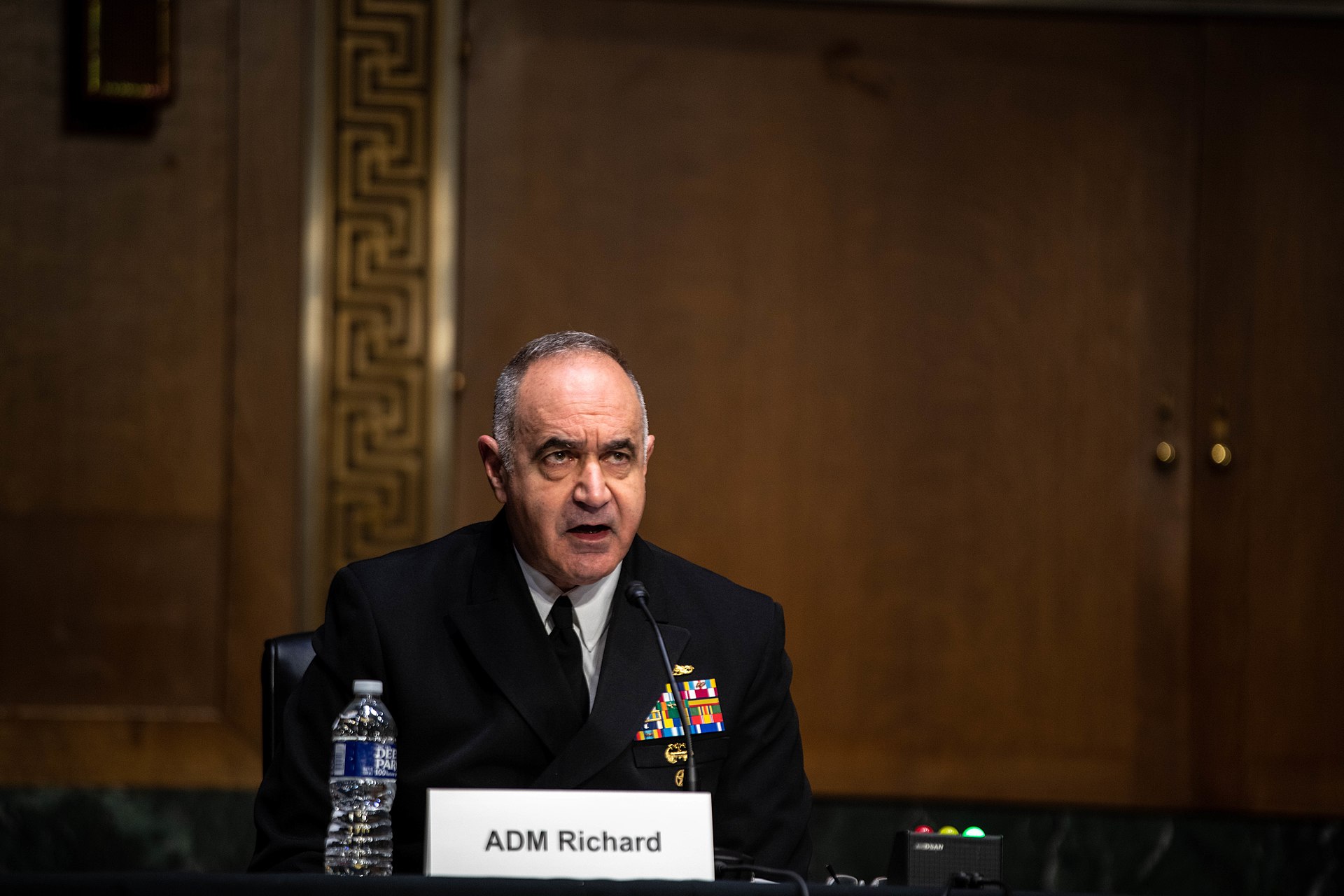
CENTCOM Admiral Brad Cooper told the Senate on May 14 that Iran retains “a very moderate if not small capability.” Operation Epic Fury degraded more than 85% of its missile, drone and naval industrial base. Open-source analysts, including assessments published by RUSI and the Soufan Center, put missile retention closer to 70%. Cooper called those numbers inaccurate.
Cooper’s full testimony went further: Operation Epic Fury sank 161 Iranian vessels and destroyed more than 90% of Iran’s 8,000-mine naval inventory. The Admiral was blunt to The War Zone on the open-source dispute: “The numbers I have seen in open sources are not accurate.”
The dispute is the entire risk equation for Riyadh. If Cooper’s numbers are right, the IRGC retaliation envelope is narrower than the April peak and Saudi Arabia might survive a second cycle with its remaining 400 interceptors. If the open-source estimates are right, Iranian residual capability is sufficient to mount a campaign of the same intensity as Operation Epic Fury, and the PAC-3 deficit becomes structural before the second week of the next round.
Cooper has institutional reasons to project success — degraded Iranian capability is the strongest argument for a renewed strike option, because it lowers the retaliation tax. The open-source analysts have institutional reasons to project residual capability — survivable mobile launchers are the part of the Iranian arsenal hardest to count from satellite. Riyadh cannot adjudicate the dispute and cannot afford to bet the wrong way.
On May 13 the air defense network burned interceptors stopping five ballistic missiles and nine drones from a degraded force on a quiet day. That is the empirical answer Riyadh has to work from. Whatever capability Iran retains, it is enough to keep eating the magazine. Cooper’s Senate testimony on May 14 — including his presentation of the Hormuz seizure option and the diplomatic damage its publication caused — is examined in detail in CENTCOM’s Hormuz Seizure Plan Has Already Done More Damage Than the Operation Could.
The 1988 Lesson Riyadh Did Not Learn
The historical analogue every Saudi staff officer cites is the 1984–1988 Tanker War. Riyadh provided logistical support and financial backing to Iraq through that conflict, hosted foreign forces selectively, and avoided formal belligerency. The Kingdom absorbed Iranian harassment but never received a Silkworm. The US-flagged tanker re-flagging operation took that hit, and Operation Praying Mantis in 1988 finished the Iranian navy as a surface fighting force.
The lesson Riyadh extracted then was that proxy financial support invited some Iranian targeting but stopped short of full belligerent treatment. The lesson Riyadh appears to have ignored in 2026 is that direct offensive basing at Taif is categorically different from financial backing at Aramco. The legal predicate has changed. The targeting predicate has changed. The deniability layer Riyadh used through Yemen is gone, burned through by 24 days of co-belligerent status that started on February 28 with a neutrality declaration and ended in late March with US strike packages launching from Saudi runways.
The 1988 framework cannot be re-imported into 2026. The Project Freedom veto was Riyadh’s attempt to relearn the lesson under fire — to remind Washington that Saudi territory is not a free option and that the next operation requires an explicit conversation about who eats the retaliation. The May 16 NYT report is the answer to that test.
The Receipt
The Crown Prince has been the most active diplomatic actor in the region since the ceasefire — calling MBZ on May 13, the Qatar Emir on May 15, working the Pakistan track through Faisal bin Farhan. The motion is impressive. The bargaining hand behind it is calibrated to one fact: he can say no to Washington at the moment the plan is laid in front of him, and Washington can move faster than he can decide.
The NYT story did not give him that moment this time. Two Middle East officials, “as early as next week,” Kharg Island, commando extraction, “very risky necessity.” That is a plan in motion. The IRGC reads PressTV. PressTV has already named the Kingdom as a proxy. The retaliation envelope is filed. The Day of Arafah is on May 26. There are 400 interceptors in the magazine and 1.8 million pilgrims in the Hejaz.
One sentence from Araghchi, on the PressTV English service, on May 14: “Test us again, you will repeat your failures.” It was not addressed to Washington.
Frequently Asked Questions
Is the NYT report being confirmed by other outlets? The Times of Israel mirrored it on May 16 within hours, citing the same two Middle East officials. The Pentagon has not denied the planning activity, only declined to comment on operational timing. The War Zone separately verified the commando-extraction discussion with US military sources who described the option as a “very risky necessity” requiring thousands of supporting forces. The CBS News report on Trump’s new nuclear proposal to Iran, also dated May 16, aligns with the diplomatic-pressure framing.
What would Iran’s uranium transfer to Russia do to the strike calculus? Foreign Minister Araghchi confirmed on Al Jazeera on May 15 that Tehran is in active discussions with Moscow on moving its 440 kilograms of 60%-enriched uranium out of Iran. If executed, the transfer would eliminate the commando-extraction target at Isfahan and force a binary choice in Washington and Jerusalem: accept the transfer as a non-proliferation outcome under Russian custody, or strike before it is completed. The window between announcement and execution is the most volatile phase.
Why is Kuwait’s airspace withdrawal relevant? Kuwait withdrew Project Freedom access on the same 36-hour timeline as Saudi Arabia in early May. The dual withdrawal stripped the operation of its two most critical Gulf basing options for forward staging and recovery. Replacement basing would have to come from Qatar (politically contested given mediation role), the UAE (already absorbing Iranian missile fire), or Diego Garcia (operationally distant). Each substitute increases tanker burden and reduces sortie generation rate.
Where does the $142 billion US-Saudi defense agreement fit? The agreement was signed on May 13 — the same day Iranian ballistic missiles and drones targeted the Eastern Province. The package includes future-year PAC-3 deliveries that do not arrive in volume before mid-2027, F-35 acquisition pathways with multi-year Congressional notification cycles, and tranches tied to Saudi normalization milestones with Israel. None of the deliverables address the May–July 2026 retaliation window. The agreement is strategic positioning, not tactical reload. The legal architecture the Pentagon has built around this same window — renaming Epic Fury as Operation Sledgehammer to restart the 60-day War Powers clock — and how MBS’s basing access functions as a veto over that clock, is detailed in Operation Sledgehammer Is a War Powers Clock-Reset. The Saudi Veto Is What Decides Whether It Runs.
What does Hajj actually constrain? Saudi Arabia hosts 1.8 million pilgrims through the Day of Arafah on May 26, including the largest single-day concentration of foreign nationals on Saudi soil all year. Indonesian and Pakistani contingents are the two biggest national groups. A mass-casualty event during Hajj — whether from Iranian strikes, friendly-fire interceptor debris, or stampede triggered by air-raid alerts — carries unbounded legitimacy cost for the Custodian of the Two Holy Mosques title MBS inherited from his father. The 1987 precedent, when 402 pilgrims died in Mecca clashes and Iran boycotted Hajj for three years, is the cautionary case Saudi planners cite internally.
The structural constraints examined here — Saudi Arabia caught between US war demands and Iranian retaliation risk — are now operating under additional pressure from depleted interceptor stocks and a production ceiling at Yanbu. Trump returns threatening Iran — Saudi Arabia has no margin for a second round quantifies the operational limits facing Riyadh as the ceasefire nears expiry.
The fragility of the veto architecture is amplified by Trump’s own prior statements: what Trump’s FII Miami remarks reveal about the relationship’s terms — made fifty-two days before MBS exercised that veto — circulates in Tehran and Riyadh as the lasting transcript of how the partnership operates. The same veto architecture has a categorical exception that no MBS phone call can close: Israel’s independent strike track on Iran — and the $34M Elbit contract Netanyahu signed to execute it without Saudi consent.