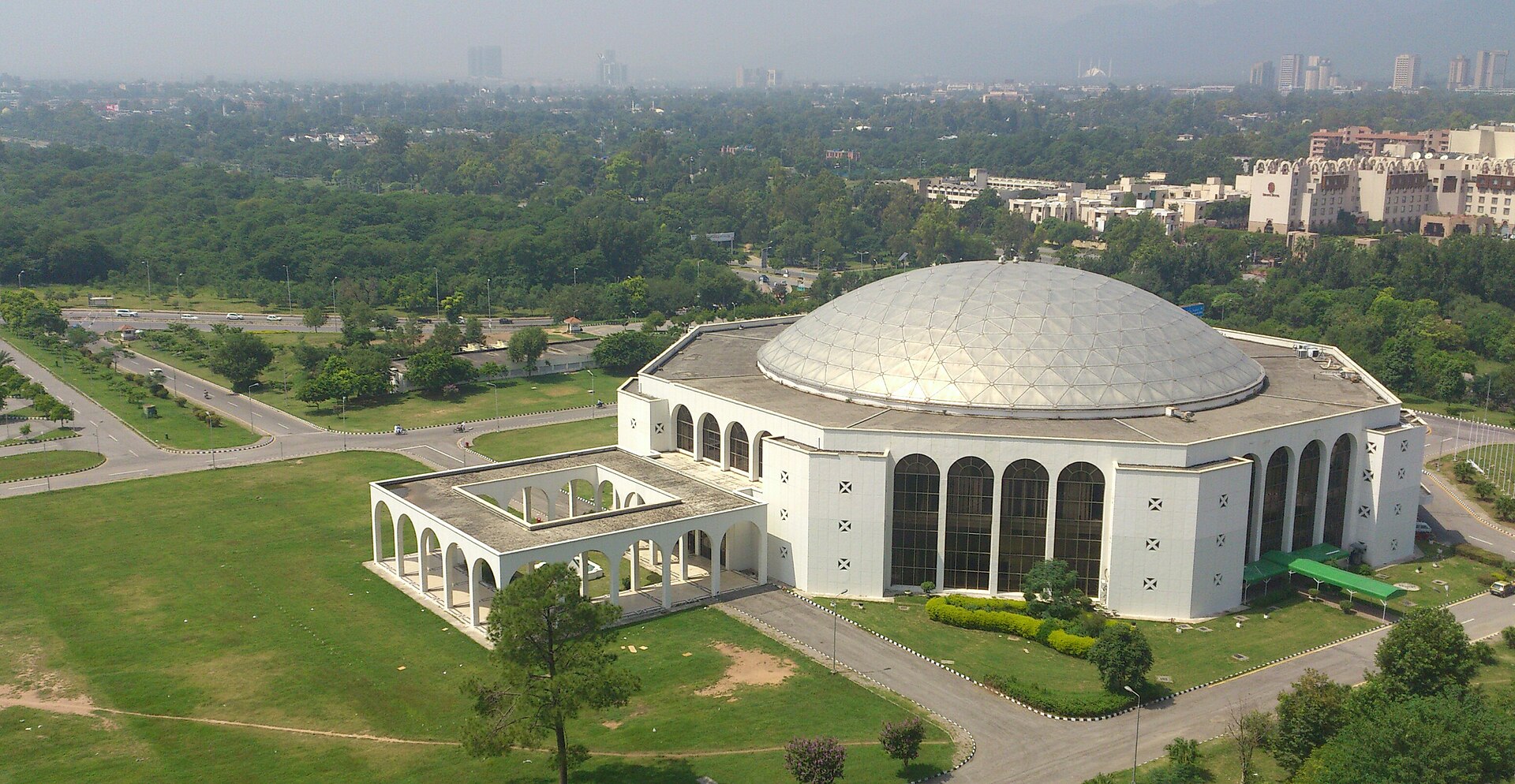
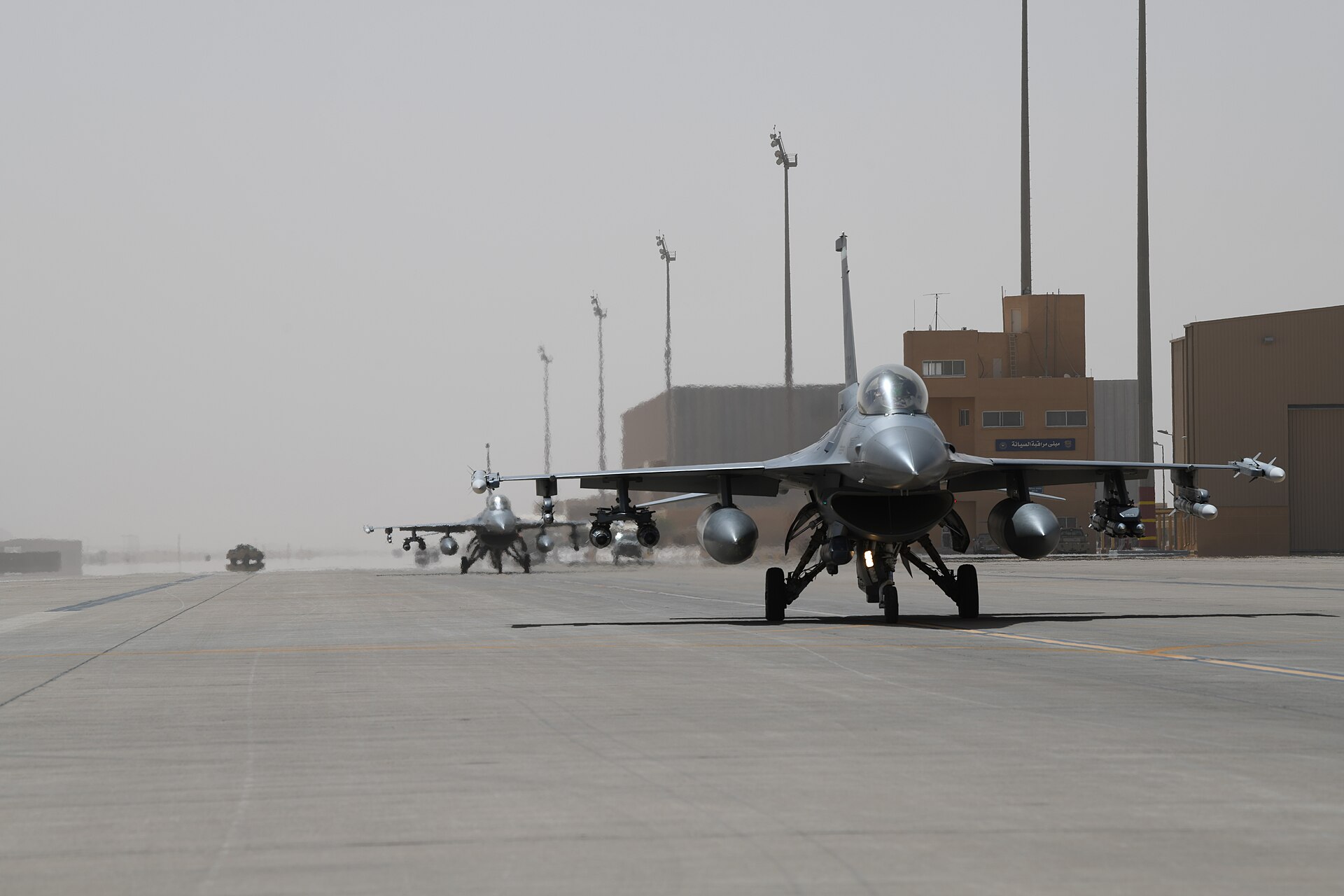
WASHINGTON — The United States is weighing a punitive reduction of its military presence at Prince Sultan Air Base in Saudi Arabia, US officials told the Wall Street Journal on July 1 — a direct consequence of Riyadh’s four-day grounding of 43 American warplanes during Operation Project Freedom in May 2026. The consideration marks a shift from strategic repositioning to active punishment, and threatens to strip away the American personnel without whom Saudi Arabia’s remaining air defense hardware cannot function.
The drawdown under discussion would remove approximately 2,300 US personnel from the base south of Riyadh, along with the IESP contractors, Link-16 operators, and THAAD maintenance crews who form the backbone of Saudi Arabia’s integrated air defense system. Without those Americans, the shield doesn’t degrade — it goes dark.
The proximity of the threatened base to populated Saudi territory acquired new evidence on July 17: the General Directorate of Civil Defense activated alarms at Al-Kharj Governorate — the administrative district that surrounds Prince Sultan Air Base — and at Yanbu on the Red Sea coast, before lifting both without specifying a cause. Saudi Arabia Sounded the Alarms It Cannot Explain documents the alert sequence and the official silence that followed.
Table of Contents
How Did Operation Project Freedom Trigger the Rift?
Saudi Arabia denied airspace and basing to Operation Project Freedom for four days in early May 2026 after President Trump announced the operation on Truth Social on May 3 without prior consultation with Riyadh or Kuwait City. Crown Prince Mohammed bin Salman told Trump the operation was “not well thought-out” and risked dragging Saudi territory into direct Iranian retaliation, according to the Eastern Herald and The Week. Saudi Arabia had previously lobbied Trump against launching the Iran war altogether, warning that military action would trigger Hormuz closure and destabilize the kingdom’s own security perimeter — arguments Trump overrode when he ordered the strikes.
The standoff placed the two countries’ military relationship under the most acute strain it has experienced since the 2003 PSAB withdrawal. Trump’s direct phone call to MBS to reverse the denial failed, according to reporting first published by the New York Times. Washington then resorted to coercion of its own: the White House threatened to withhold Patriot and THAAD air-defense interceptors unless Saudi Arabia restored base access, the Times of Israel reported on July 1, citing US officials. Riyadh relented around May 7, and Project Freedom resumed covertly — but the operational resolution did not repair the relationship.
US officials told the Wall Street Journal that the damage from the standoff “would not be easily undone.” The Pentagon’s subsequent posture — weighing a drawdown and redirecting forces toward “more supportive countries like Israel and Jordan” — suggests Washington views the May episode not as an aberration but as a structural indicator of Saudi reliability under pressure. The kingdom grounded American warplanes; the question Washington is now asking is whether it should ground its presence at PSAB entirely.
The Middle East briefing 3,000+ readers start their day with.
One email. Every weekday morning. Free.
The Withdrawal Consideration
No formal scope or timeline for the drawdown has been set — the consideration remains at what officials described as the “weighing” stage. But the framing carries weight that the ambiguity does not diminish. Previous US drawdowns from PSAB, including the August 2003 withdrawal of approximately 4,500 troops after Operation Iraqi Freedom, were presented as strategic repositioning — a lateral transfer, not a demotion. The current discussion, as sourced by the WSJ, is explicitly punitive, a distinction that implies conditionality but ignores the logistics of reconstitution.
IESP contractors — the entirely American logistics chain that maintains Patriot and THAAD hardware under US security clearances and US legal authority — cannot be reassembled overnight. Once withdrawn, the reconstitution timeline is measured in months, not days. The fire-control software patches, the classified maintenance protocols, the supply lines that keep interceptor batteries at combat readiness — all of it departs with the personnel, and none of it can be performed by Saudi crews under current foreign military sales agreements.
An unnamed US official captured the operational reality for NBC News during the May standoff: “Because of geography, you need cooperation from regional partners to use their airspace along their borders, and in some cases there is no other way around.” The statement cuts in both directions — Washington needs Saudi airspace, and Riyadh needs American technicians. The question now is which dependency breaks first, and the WSJ report suggests Washington has decided it can absorb the airspace loss more easily than Saudi Arabia can absorb the technician loss.
Why Would a PSAB Drawdown Disable Saudi Air Defense?
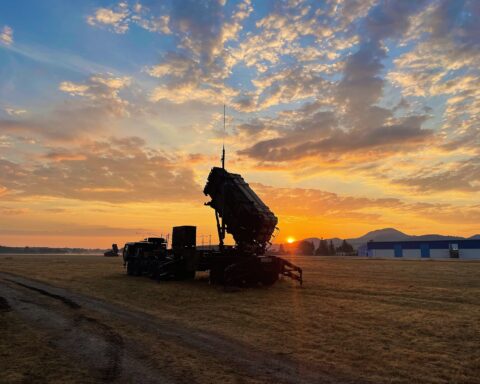
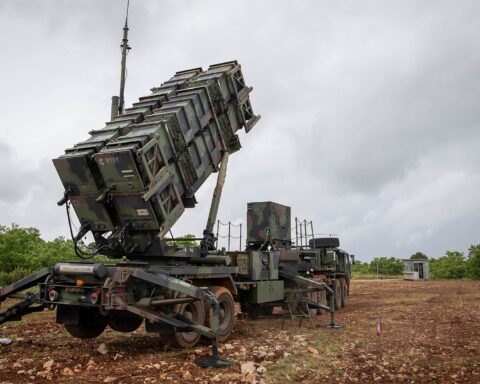
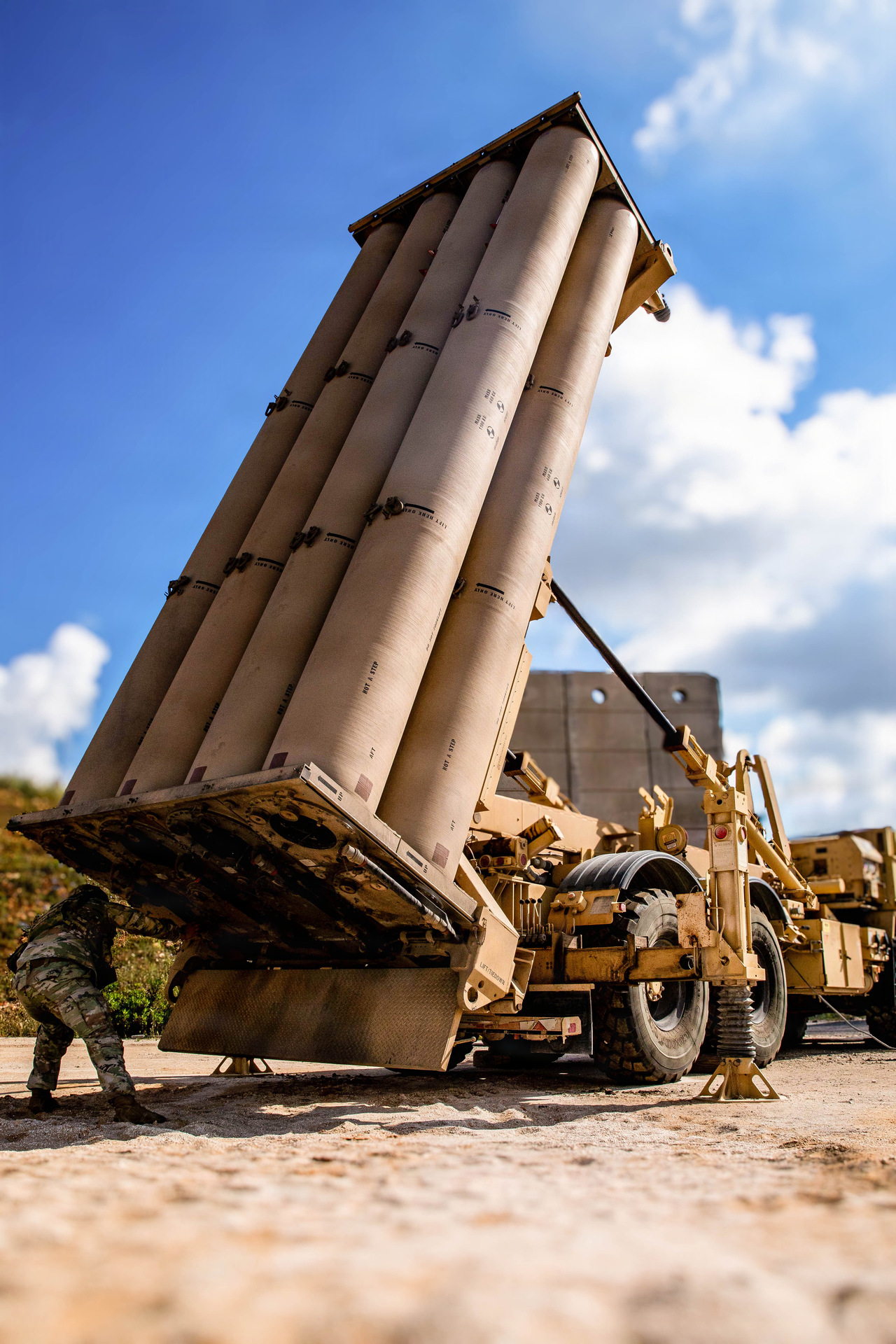
Three interdependent US-operated layers at PSAB form the backbone of Saudi Arabia’s air defense network, and all three collapse if American personnel leave. IESP contractors maintain the Patriot and THAAD batteries using US-origin fire-control software that requires American security clearances to update. Link-16 operators feed engagement-quality targeting tracks into the Patriot Information Coordination Central — the data layer that gives each interceptor its situational awareness. THAAD software and targeting integration remain US-contractor-dependent even after Saudi crews complete independent operation training.
Remove any one layer and the system degrades. Remove all three and it becomes operationally inert — a Saudi officer can press the launch button, but the missile fires without the American data layer that provides engagement range and accuracy. The E-3G Sentry AWACS aircraft that fed airborne targeting tracks into the Patriot chain was destroyed in the March 27 IRGC strike on PSAB — one of only 16 in the US fleet, valued at approximately $500 million. That strike also injured 12 to 15 US troops and damaged multiple KC-135 tankers, with the Arab Center DC estimating total damage to the base at approximately $4 billion.
Saudi Arabia’s PAC-3 inventory has been depleted by 86 percent since the war began — from approximately 2,800 rounds to 400. A $9 billion DSCA foreign military sale package — encompassing 730 PAC-3 interceptors at roughly $3.9 million each, plus fire units, radar sets, and training — was approved on January 30, 2026, but Lockheed Martin’s Camden, Arkansas facility produces only 620 rounds per year for all global customers combined, and the first deliveries are not expected before mid-2027. The procurement gap cannot be closed by alternative systems: South Korea’s $3.1 billion M-SAM-II intercepts at 15 to 20 kilometers, above the terminal phase where IRGC Zolfaghar missiles arrive below 10 kilometers — the altitude band where only PAC-3, operated by American crews, can engage.
That freeze on emergency resupply operates alongside a separate standard arms channel that kept flowing throughout the crisis. Washington’s simultaneous approval of a $1.96 billion APKWS rocket sale illustrates the deliberate two-channel policy: standard munitions on schedule, emergency air-defence interceptors withheld as a coercive instrument. That sale carries a further operational problem: the 20,000 APKWS-II guidance sections approved on July 15 cannot be loaded onto RSAF Typhoons or F-15SAs that have not completed weapon system qualification — and delivery through the standard FMS track will take years, not weeks. The gap Washington left has drawn a modest British response: one RAF Voyager tanker committed to refuel Saudi jets, defensive only and time-limited to weeks — a stopgap, not a replacement for the interceptor pipeline.
The Diplomatic Rupture
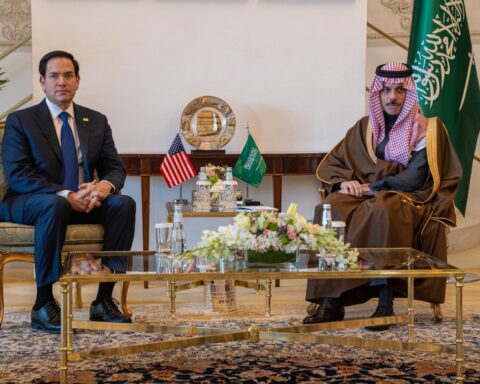
The military withdrawal consideration exists within a broader diplomatic fracture that has widened with each successive incident since May. Secretary of State Marco Rubio’s Gulf tour from June 23 to 25 visited the UAE, Kuwait, and Bahrain — skipping Saudi Arabia entirely in what the Times of Israel described as a deliberate snub. MBS, for his part, declined an invitation to the G7 Summit at Evian-les-Bains in mid-June 2026, a move Saudi officials framed as a direct response to Washington’s handling of the Iran war.
The sequence has left Saudi Arabia in a position where every instrument it deployed produced the opposite of its intended effect. The kingdom denied base access to coerce Washington into reconsidering the Iran operation — and Washington began planning to leave voluntarily. It leaned on interceptor dependency as proof of its indispensability — and discovered the dependency runs in one direction that favors American advantage, not Saudi. It invoked alliance solidarity — and watched Rubio’s Gulf itinerary bypass Riyadh while visiting three smaller partners. Saudi Arabia lobbied Trump against launching the war, then obstructed the war it failed to prevent, and now faces a punishment framework for the obstruction.
A fuller account of MBS’s private position has since emerged: the Crown Prince urged Trump to send American ground forces into Iran and seize its energy infrastructure — a request that, if fulfilled, would have placed Saudi Arabia at the centre of a regional transformation. Instead, the kingdom is at the periphery of a war it neither controls nor can exit.
Max Becker-Hicks of the New Lines Institute flagged the structural vulnerability three months before the WSJ report, writing on April 1 that “the lack of any codified U.S.-Saudi mutual defense treaty raises the risk of a U.S. disengagement or an inadequate settlement with Iran.” A US drawdown without sufficient Iranian security guarantees, Becker-Hicks warned, would “intensify Saudi Arabia’s diversification strategy,” likely including deeper ties with China and Russia — creating “major intelligence risks to U.S. assets.” His assessment anticipated the WSJ’s logic with uncomfortable precision, and the diversification he described is already underway.
What Does Iran See?
Iran views the PSAB drawdown consideration as validation of its combined military and diplomatic strategy — proof that force and negotiation work in tandem. Parliament Speaker Mohammad Bagher Ghalibaf designated PSAB a “legitimate target” on June 7, and Foreign Ministry Spokesperson Esmaeil Baqaei stated on June 9 that “diplomacy and the battlefield are not separate matters; rather, they run alongside and complement each other.” PressTV, Iranian state media, framed the Trump-MBS rift over Project Freedom on July 2 as evidence of “US failure in war on Iran.”
The March 27 IRGC strike on PSAB gave operational substance to that rhetoric. Western media reported what the Eurasian Times described as a “plausible probability of Russian intelligence support” for the attack — Ukrainian intelligence allegedly tracked Russian satellites imaging the base on March 20, 23, and 25, immediately before the strike. The attack inflicted casualties and destroyed irreplaceable surveillance assets on a base that Iran’s parliament speaker had already publicly marked as a military objective. The IRGC’s July 7 Hormuz strikes on two commercial vessels have since put that question in even sharper relief: whether Washington can translate retaliatory intent into operational action from PSAB — given that Saudi Arabia has already demonstrated access is conditional, not guaranteed.
The Islamabad MOU, now at Day 19 of its 60-day window, reportedly includes a path toward US withdrawal from PSAB as part of the broader settlement architecture. If Washington’s own punishment framework accelerates what Iran’s negotiators are already seeking, the August 18 deadline — when the PGSA Hormuz fee resumes at $5.5 million per day against Saudi Arabia’s $253 million outstanding exposure — arrives with Riyadh holding fewer cards than it held when the MOU was signed on June 17. The Islamabad round on July 11, where nuclear issues appear on the agenda for the first time, will proceed without Saudi representation. A parallel instrument sits beyond the reach of any PSAB calculus: the Houthi crew detention doctrine that held the Galaxy Leader’s 25 sailors for 430 days and the Eternity C’s eleven survivors for five months — a coercion mechanism whose resolution depends on Oman’s back-channel, not the coalition’s remaining interceptor inventory. Iran validated that calculus on July 9, when the Artesh struck the MEAD-CDOC sensor network at Al Udeid — the early-warning antenna that feeds targeting data to the CAOC — one day after the IRGC had depleted the interceptors that should have protected it.
The Legal Vacuum
The only governing instrument for the US military presence in Saudi Arabia is the 1977 US Military Training Mission MOU, which covers foreign military sales administration and training advisory services — nothing more. Saudi Arabia remains the only major US partner in the Middle East without a Status of Forces Agreement, unlike Japan, South Korea, or any NATO member. There is no jurisdictional immunity for US troops at PSAB, no mutual defense obligation, and no withdrawal notification clause.
The absence of a SOFA means Washington can reduce or eliminate its PSAB presence without treaty notification — precisely as it did on August 26, 2003, when approximately 4,500 troops departed without formal process. Trump himself stated after the September 2019 Abqaiq-Khurais attacks that “the US had no obligation to defend Saudi Arabia,” a framing that remains legally accurate and politically convenient seven years later. The 2003 precedent established that the US can leave PSAB inside a single logistics cycle; Trump’s own words established that it has no binding reason to stay.
Anna Kelly, a White House spokesperson, offered the administration’s only on-record response to the withdrawal reporting: Trump “listens to a variety of opinions” and “takes seriously the input of our regional partners,” she told the Eastern Herald on July 2. The statement neither confirmed nor denied the drawdown consideration. Saudi officials, speaking anonymously, responded only that the relationship damage from the Project Freedom standoff “would not be easily repaired” — a phrase that, three months after the grounding and one day after the WSJ leak, carries the weight of understatement.
Frequently Asked Questions
Has the US withdrawn from Prince Sultan Air Base before?
Yes. The US first deployed to PSAB in August 1990 for Operation Desert Shield and maintained a continuous presence until August 26, 2003, when approximately 4,500 troops relocated to Al Udeid Air Base in Qatar following the start of Operation Iraqi Freedom. No treaty notification was required because no SOFA governed the deployment. US forces returned to PSAB in 2019 after Houthi drone and missile attacks on Saudi oil infrastructure, including the September 2019 Abqaiq-Khurais strikes that temporarily halved Saudi crude output.
What was the Khobar Towers bombing and does it factor into this decision?
On June 25, 1996, a truck bomb detonated at the Khobar Towers housing complex near Dhahran, killing 19 US Air Force personnel and wounding 498 others. The attack, attributed to Hezbollah al-Hejaz with Iranian backing, was among the deadliest attacks on US military personnel in the Middle East before September 11. The bombing intensified internal debates about force protection at Saudi bases and contributed to the eventual 2003 relocation — a precedent the current drawdown discussion directly echoes.
Could Saudi Arabia operate Patriot batteries without US personnel?
Saudi crews can launch Patriot missiles and perform basic maintenance, but fire-control software updates — delivered by Lockheed Martin under classified protocols requiring US security clearances — cannot be performed by Saudi personnel under current foreign military sales agreements. The PAC-3 MSE system also depends on Link-16, a network-centric data-sharing architecture that requires American operators for engagement-quality track management. Without both software access and Link-16 integration, the batteries can fire but with materially degraded accuracy and reduced engagement envelopes — a gap no Saudi training program currently bridges.
What is the PGSA and how does it connect to the PSAB withdrawal?
The Persian Gulf Security Arrangement is an Iranian-imposed fee regime on commercial shipping transiting the Strait of Hormuz, with Saudi Arabia’s outstanding exposure at $253 million and fees accruing at $5.5 million per day once the current suspension expires on August 18, 2026. A PSAB drawdown would reduce Saudi Arabia’s military deterrent capability precisely as this financial exposure mounts — leaving Riyadh simultaneously less defended against Iranian military action and more vulnerable to Iranian economic coercion through Hormuz shipping fees that no other regional power has the military posture to contest.
The Houthi response confirmed what the capacity gap predicts: two ships sunk and eleven hostages seized in 48 hours during the funeral pause, with no coalition airstrike ordered despite an on-record targeting declaration four days earlier.
Iran has since extended the maritime coercion beyond Hormuz: Reuters reported that Tehran transmitted a conditional directive through Houthi channels instructing the movement to close Bab al-Mandeb if US strikes reach Iranian power infrastructure — a threat that would deny Saudi Arabia its Red Sea oil export corridor at precisely the moment the kingdom faces both PAC-3 depletion and the August 18 PGSA deadline. Iran’s conditional order to close Bab al-Mandeb details the dual-chokepoint exposure that no drawdown calculus currently accounts for.
Could Israel or Jordan absorb forces relocated from PSAB?
The WSJ report cited US officials discussing a shift toward “more supportive countries like Israel and Jordan.” Both countries maintain active Status of Forces Agreements with the United States — the legal infrastructure Saudi Arabia has never established — making force transfers operationally and legally straightforward in a way that PSAB deployments never were. Jordan’s Muwaffaq Salti Air Base has expanded considerably since 2014 and hosted US aircraft during operations against ISIS. The critical difference is institutional: Israel and Jordan offer codified legal frameworks for US basing that Saudi Arabia, after nearly 36 years of hosting American troops, still lacks.
Iran resolved that ambiguity on July 9. The IRGC fired ten ballistic missiles at Muwaffaq Salti — the Jordan base cited in the same WSJ report as a prospective relocation site — while Iran’s regular army simultaneously struck Al Udeid’s satellite communications array in Qatar. Every functional US base in the region outside PSAB was hit within twenty-four hours, narrowing rather than expanding the relocation options Washington had been weighing. Iran Strikes US Bases in Four Countries Within Twenty-Four Hours. Separately, the Bushehr Nuclear Power Plant perimeter was struck in the same July 9 wave — adding a nuclear safety dimension to the PAC-3 depletion calculus that Saudi Arabia’s M-SAM-II procurement does not address.
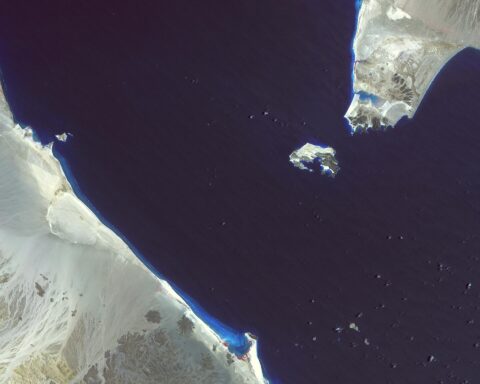
The campaign subsequently extended beyond mainland bases to the islands: on July 16, CENTCOM destroyed cruise missile bunkers on Greater Tunb Island at the western mouth of the Strait of Hormuz — the first US strikes on a Persian Gulf island, targeting the same IRGCN forward infrastructure that makes the drawdown calculus at PSAB more consequential with each degraded coastal node.
The extension of US targeting to Iranian island infrastructure raises a parallel fiscal paradox for Riyadh: the oil price spike from seizing Kharg Island would push Brent above Saudi Arabia’s fiscal breakeven, yet Trump’s Kharg Island threat exposes the oil shock Saudi Arabia cannot endorse — because the same seizure would destroy PGSA enforceability and set a precedent for US control of Gulf energy infrastructure.
A parallel analysis examines why Prince Sultan Air Base remains unstruck in the IRGC’s phased escalation sequence: Prince Sultan Air Base Lost Its Deterrent Before Iran Fired. Iran’s decision to spare PSAB across ten Nasr-2 waves — while striking every other US installation in the Gulf — is examined in Ten Waves In, Prince Sultan Air Base Remains Unstruck.
The punitive drawdown scenario this article examined became more acute on July 18, when the base Washington had been weighing whether to evacuate was struck: Iranian ballistic missiles hit Prince Sultan Air Base on Night Eight of Operation Epic Fury, confronting CENTCOM with a casualties-and-silence calculation it had not publicly gamed.
The sovereignty architecture that a punitive drawdown would have left unresolved — who commands the HQ-9 at PSAB and under what authority it can fire — is examined in Saudi Arabia Paid for the Shield It Cannot Fire. On July 18, that command question became operational rather than theoretical: Iranian missiles struck PSAB, the HQ-9 did not fire, and Saudi Arabia cleared its sirens in six minutes without naming the weapon or the damage. Iran Struck Prince Sultan and No One Was Required to Say So documents how three governments chose silence over disclosure — and why the PAC-3 stockpile is the reason none of them can afford to speak.