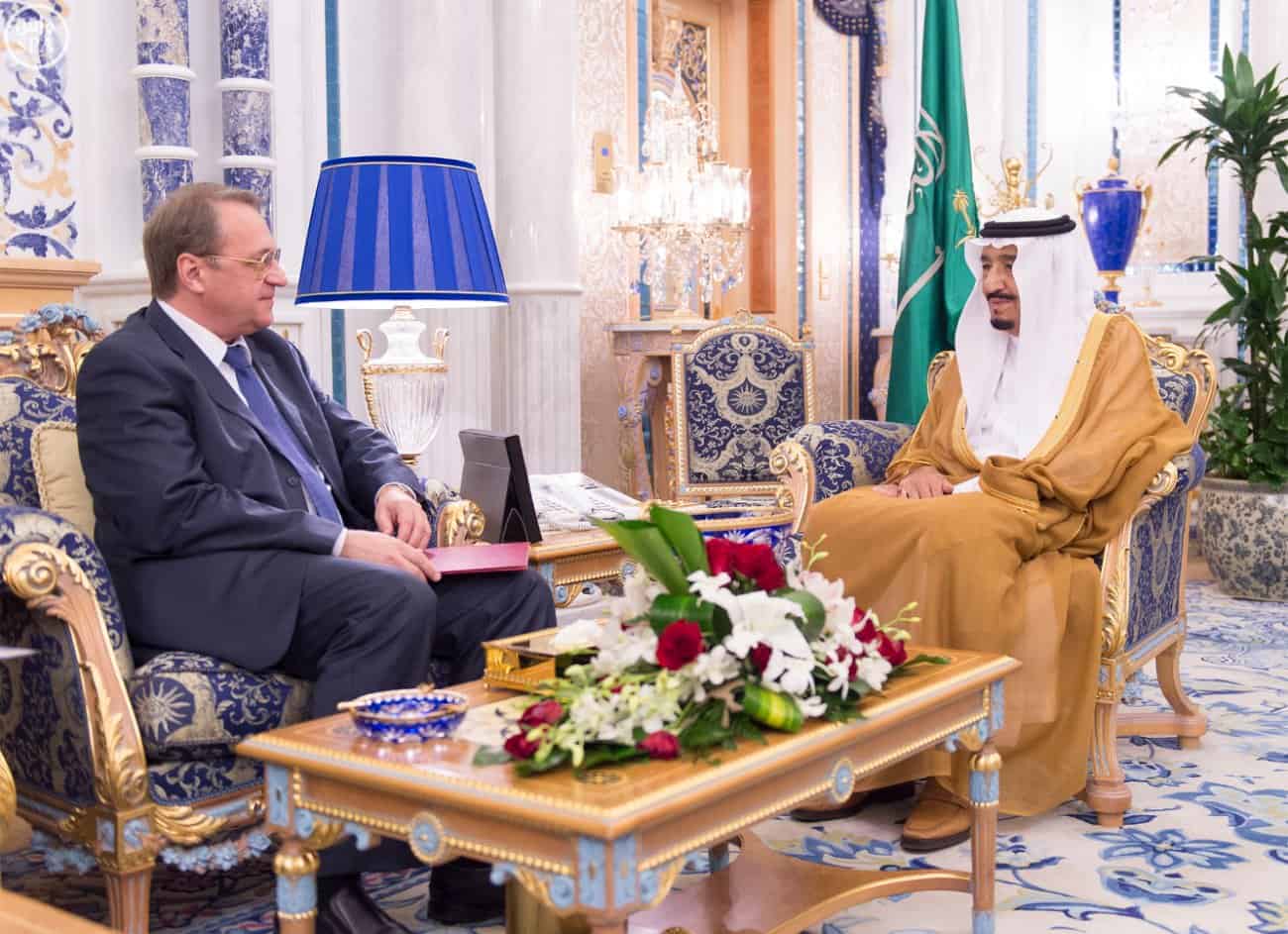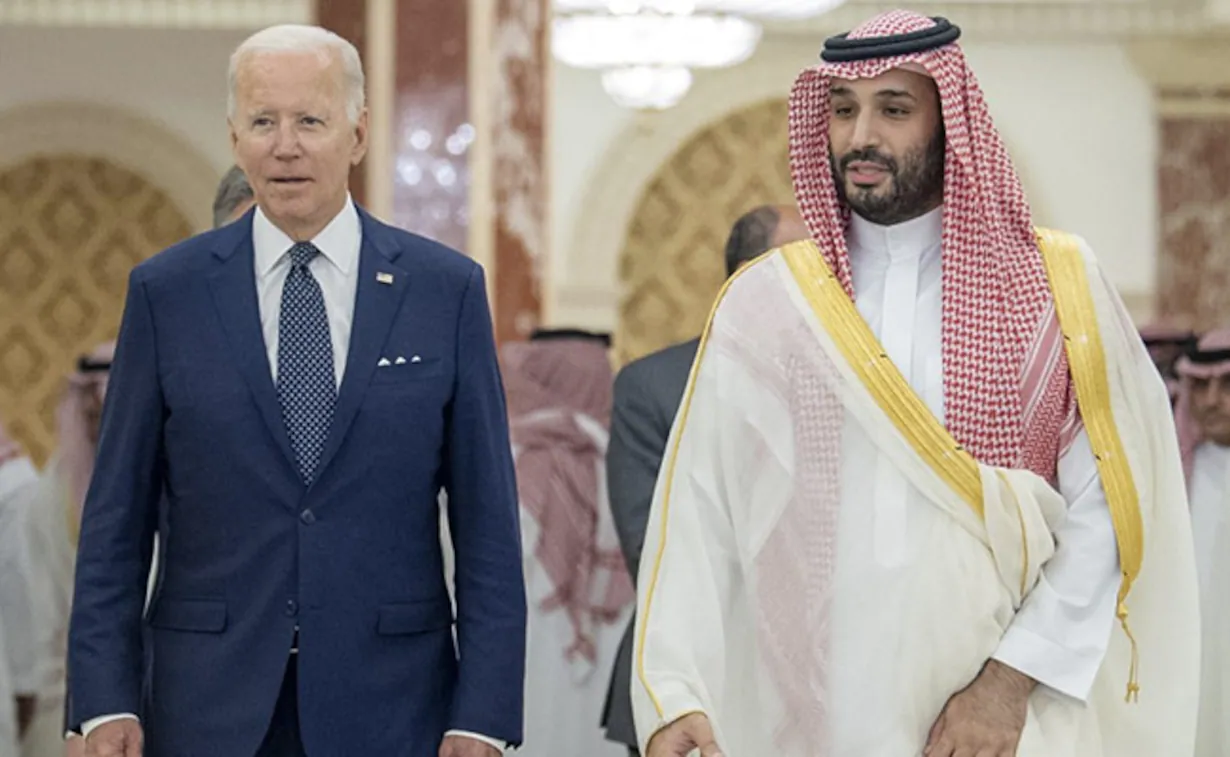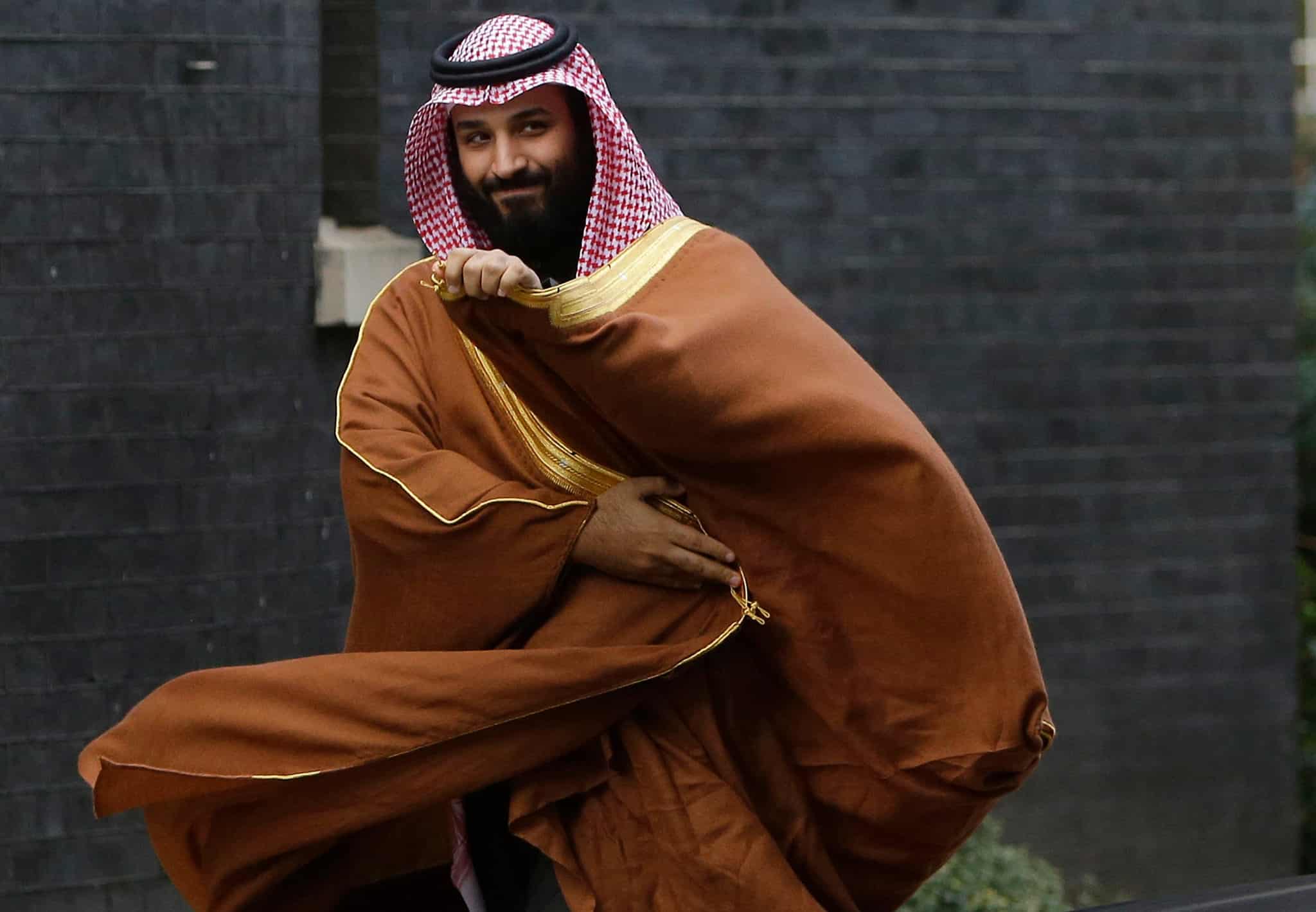

From making headlines worldwide for his stunning political achievements to purchasing a Da Vinci painting for $450M, Crown Prince Mohammed Bin Salman’s position as ruler of Saudi Arabia has made a name himself across the world. Yet, he was born to the sixth son of the 25th son of the former Saudi King, meaning his life was not meant to become the Middle East leader. So, how, in fact, did he reach the de-facto throne that he sits upon today?
Appointed as Saudi Arabia’s Crown Prince in 2017, Mohammed Bin Salman, known to the Western world as “MBS,” spearheaded Saudi Arabia into a new era of prosperity and wealth. The Middle Eastern country is known for two things, as one of the religious centres of the Islamic world and for its richness in oil. The young Saudi Prince assumed a consequential responsibility that gave him an unparalleled level of power in the Kingdom, which led to a mix of both controversy and popularity. His father, King Salman bin Abdulaziz of Saudi Arabia, has played a crucial role in developing his son’s skill in foreign affairs, rank, and stature among world leaders and other Saudi Royals.
Childhood and Education
Saudi Prince Mohammed Bin Salman was born August 31, 1985, in the Saudi capital, Riyadh. His father, King Salman bin Abdulaziz, was governor of Riyadh at the time before becoming King later on. His mother is the King’s second wife, known as Princess Fahda. The princess already had some claim to fame since her grandfather was one of the prominent leaders of the tribes that shaped Saudi history. The Ajman tribe contributed a great deal to the founding of the modern Saudi state, thanks to Princess Fahda’s grandfather Rakan Bin Hithalayn. Fahda bore six sons to the soon-to-be King, meaning the Saudi Crown Prince grew up as the eldest of six brothers, who all play some role in Saudi Arabia’s business and political front. King Salman bin Abdulaziz played a key role in the young Prince Mohammed’s education, ensuring he had the very best educators available. Very little is revealed to the public about his childhood. The Saudi ruler and heir to the throne seldom speak about his upbringing. Luckily those who encountered him as a child have divulged information about his early life. “Mohammed also seemed more interested in spending time with palace guards instead of following my lessons. As the oldest of his siblings, he seemed to be allowed to do as he pleased,” said Rachid Sekkai to BBC Arabic about his experience tutoring the Crown Prince in 1996. Royals and others who knew him early on in his life told stories of Mohammed Bin Salman’s short temper as a child. He often misbehaved and threw fits of rage. Once in his teens, he dressed up as a police officer and went to a mall in Riyadh to boast, yet no one dared to stop him since he was the governor’s son. “As a prince, MBS grew up steeped in inherited and unearned privilege, socializing in palaces, shuttled about in convoys, and fussed over by nannies, tutors, and retainers,” wrote Ben Hubbard in his 2020 biography,” MBS: The Rise to Power of Mohammed bin Salman.”. Though he could have easily left the country to study abroad, Mohammed Bin Salman chose to stay in Riyadh for his studies. He studied Law at King Saud University and focused himself on aspiring to be a leader one day. One of his classmates revealed that the Crown Prince once said he wanted to become the next Alexander the Great. In 2007, he graduated from King Saud University fourth in his class and continued to climb up the ladder of the mass elite in Saudi Arabia. A bachelor’s degree in Law propelled the Prince to work at the Bureau of Experts for two years.
Early Career
Soon, the Kingdom’s future heir to the King began to build his wealth, founding new firms and creating a non-profit organization meant to develop entrepreneurship in the country. He also began a family of his own, marrying Princess Sarah Al Saud in 2008, having three children together. Two years after graduating, the Saudi Prince became an advisor to his father, who still held the role of governor of Riyadh and later became Minister of Defense. His father’s tremendous rise in power and control eventually gave him the title of the Crown Prince in 2012, before his son assumed the role just a few years later. Furthermore, the Prince began to assume far more important roles, becoming appointed the President of the Crown Prince’s court and named a State Minister. In 2015, King Abdullah died at the age of 90 from pneumonia, which meant that they had to choose a successor to the throne. Fortunately, Mohammed’s father was chosen as the next King, which opened the door for his desire to elevate to the top of Saudi royalty. One of King Abdulaziz’s first actions as King was to appoint his son as the Defense Minister, which his father had held a few years earlier. In April of 2015, King Salman appointed his nephew Muhammad bin Nayef as Crown Prince and his son Mohammed bin Salman as Deputy Crown Prince.

The Youngest Minister of Defense in the World
Within weeks of his promotion to Minister of Defense, Prince Mohammed bin Salman launched Operation Decisive Storm, with full backing of his father Kind Salman, providing Yemen’s government and its President Abdrabbuh Mansur Hadi with military support, including thousands of soldiers and weapons. The objective was to crush the Houthi rebels against the current government and wanted to take back control over Yemen. Saudi officials were worried that Houthi victory in the civil war would give Iran a strong influence on the country’s southern border since it is claimed that Iran has consistently backed the Houthi rebels. Iran is considered Saudi Arabia’s rivals in the Middle East, meaning Salman’s plans for involvement were crucial. A coalition was formed with other Muslim countries in the region, such as Kuwait, United Arab Emirates, and Egypt, while also receiving logistical and intelligence support from allied powers like the United States and France. The war between Yemen’s government and rebels lasts to this day, resulting in a stalemate with no end in sight for the Defence Minister and Saudi Kingdom. Both sides are continuing to find ways to hold power in the torn and famished country. Crown Prince Mohammed bin Salman’s position as Defense Minister was only a road stop on his rapid rise to power in Saudi Arabia. Alongside his current position as de-facto leader, he still holds the position to this day, along with his other authoritative duties.
The Middle East briefing 3,000+ readers start their day with.
One email. Every weekday morning. Free.

Becoming the Crown Prince Mohammed bin Salman
On June 21, 2017, Prince Mohammed bin Salman assumed the role he spent working towards as the Crown Prince of Saudi Arabia. After removing his predecessor and MBS’s arch rival, former Crown Prince Mohammed Bin Nayef, King Salman appointed his son to the position. In addition, he still holds the role of Deputy Prime Minister and Defense Minister. Years of preparation and rise to power prepared the newly appointed Crown Prince for the role as the face of the Islamic world, meaning he wasted absolutely no time in bringing a newfound era of transformation to Saudi Arabia. The new position gave the young MBS instant unlimited access to the Kingdom’s resources. On that same day, the White House and the U.S. president, Donald Trump, called Mohammed bin Salman to congratulate him on the achievement. However, other U.S. officials had incited a course of discussion regarding how the United States should approach its relationship with Saudi Arabia. In the years to come, MBS’s relationship with the White House would only grow tenser, as Trump’s U.S. Ambassador to the United Nations Nikki Haley commented right before the Prince’s appointing. “We don’t support Saudi Arabia when it comes to human rights,” said Haley on the American news show Face the Nation. “They know that we don’t condone some of the things that they do. We’ll always be vocal about that.” Haley’s words soon beckoned a foreshadowing of the strain to come in U.S-Saudi relations. These words came into truth as news emerged in November 2017 about an ongoing purge carried out by Saudi Government under bin Salman and his father’s jurisdiction. The newly chosen Crown Prince Mohammed bin Salman showed an unequivocal approach to both domestic and foreign affairs, and vowed to eliminate anyone that posed a potential threat to his power and authority. Throughout a weekend in the first week of November, eleven princes, four ministers, and dozens of former ministers were arrested on corruption charges. One of these arrests produced a shock throughout the world, as many realized that Mohammed bin Salman would not allow anyone to cross his path to power. Renowned Saudi billionaire investor Prince Alwaleed faced the charges of corruption against the Kingdom. He is considered one of the world’s wealthiest men, having owned major shares in companies such as Apple, Twitter, and 21st Century Fox. This became one of the many controversies the Crown Prince involved himself in since assuming his role.

Controversies
In October of 2018, news spread across the world over the death of Saudi journalist Jamal Khashoggi, who was an outspoken critic of the Kingdom and was exiled from the country in 2017 following Crown Prince Mohammed bin Salman’s crackdown. He had found refuge in the United States, working as a columnist for the Washington Post, where he routinely criticized Crown Prince Mohammed bin Salman’s policies. Found dead outside a Saudi consulate in Istanbul, both Turkish and US government officials demanded explanations. Khashoggi was killed in a reported botched attempt to bring back the journalist to Saudi Arabia. The Saudi Crown Prince and Saudi government both claimed to have no involvement in perpetrating the murder. Saudi officials quickly initiated a judicial process, sentencing those responsible to death and sending others to prison for their involvement. Though the Saudi Authorities maintain a zero culpability stance in the killing, the international community is convinced that the Saudi royal family orchestrated, or at least, had a key role, in the crime, with a key US intelligence report contradicting the official palace line. US Secretary of State Antony Blinken announced a travel ban on 76 Saudi individuals, whose names were not released, and who were “believed to have been engaged in threatening dissidents overseas, including but not limited to the Khashoggi killing.”
While this may be the most famed controversy that brought the Saudi Prince’s name to the front covers of world news, and drew criticism from foreign governments, it certainly was not the only one. Mohammed bin Salman convinced allied Middle East powers to begin a trade blockade against Qatar, forced the resignation of Lebanese Prime Minister Saad Hariri, and ordered the alleged hacking of Amazon CEO Jeff Bezos’ phone. He drew further ire when in March 2018, he described Turkey as part of a “triangle of evil” alongside the Iran Muslim Brotherhood.
Wealth and Public Image
Crown Prince Mohammed bin Salman owns the largest shares in the most valuable company globally, Saudi Aramco, also known as Saudi Arabian Oil Company. It’s officially the world’s largest oil producer, at a valuation of $2 trillion. The Prince is no stranger to displaying his wealth to the public, especially in 2015 when he purchased Chateau Louis XIV for $300 million. Considered to be the most expensive home globally, it is located near Versailles, France, and covers 50,000 acres of land. Even the most expensive painting in history, Leonardo da Vinci’s Salvator Mundi, purchased by the Crown Prince for $450 million, is used for his benefit. It hangs inside his superyacht, titled ‘Serene,’ which he bought for $500 million after Bill Gates spent summers leasing the yacht before the Saudi Prince claimed rights to it. Reports estimate the royal family’s wealth at almost 1.4 trillion, and Mohammed bin Salman’s net worth stands at $18 billion, with his earnings varying from $1-5 billion today. In comparison, the U.K. royal family’s wealth only totals around $88 billion. Many members of the royal family, including bin Salman, have become stakeholders in powerful Silicon Valley companies and are owners of famous sports teams around the world.
Modernizing Saudi Arabia
While the 35-Year-Old Crown Prince has been criticized by some human rights activists, he has become revered for his efforts in bringing reforms to Saudi Arabia’s Islamic traditions, and has in fact reduced, if not removed, the Kingdom’s previous human rights abuses. Once known for their backward policies towards gender equality, restrictions have loosened at the will of bin Salman. Women are now allowed to drive, work or study without any male accompaniment. Furthermore, the dress code is now also relaxed as now women are not forced to wear an abaya, a long black cloak, in public. Citizens can now attend the cinema and other forms of entertainment. Flogging as a form of punishment became abolished, meaning the Middle Eastern power was closing in on decades behind in liberalizing society. Lastly, the Crown Prince conceived a future for Saudi Arabia in Vision 2030, which was announced in 2016 that laid out the country’s progress for the next 15 years. The core is meant to promote economic growth and diversification. However, a recent score by Bloomberg Economics revealed that the economy has failed to meet its goals thus far. Nonetheless, Saudi Arabia’s soon-to-be King continues to revel in power as a billionaire and ruler, while only 35 years of age with many years to come as one of the faces of power in the Middle East, if not the world.