
JEDDAH — Two hundred and sixty Iranian pilgrims entered Saudi Arabia on April 25 via the Jadidat Arar land crossing on the Iraqi border — not by air from Tehran, not through any direct bilateral channel, but overland through a third country, because the Kingdom that admitted them as pilgrims has not restored the air links that would have made a direct flight possible. They are the first Iranian civilians on Saudi soil since the war began on February 28, and the route they took to get there is a more precise map of the Saudi-Iran diplomatic relationship than anything either foreign ministry has published.
Iran will send 30,000 pilgrims in total this Hajj season, just 34 per cent of its official quota of 87,550 — the lowest utilisation rate since the 2023 normalisation agreement restored diplomatic ties, according to Tasnim News Agency and Gulf News. The Supreme National Security Council reviewed and authorised the dispatch, and Tasnim attributed the decision to “the command, approval, and viewpoint of Leader of the Islamic Revolution Ayatollah Seyed Mojtaba Khamenei” personally. Those 30,000 Iranians will be on Saudi soil simultaneously with the US forces Saudi Arabia is hosting for naval blockade operations against their country, and on May 4, Major General Ali Abdollahi — commander of Khatam al-Anbiya Central Headquarters — told Mehr News Agency that “any foreign armed force, especially the US military, will be attacked if they attempt to approach and enter the Strait of Hormuz without coordination of the Iranian Armed Forces.”
The land crossing is not a logistical footnote — it is the entire diagnostic, mapping with surgical precision what Saudi Arabia was willing to grant Iran and what it was not. What follows examines what the Arar corridor reveals about the diplomatic ceiling, the Custodian obligation that makes refusal impossible, the hostage geometry that neither government will name, and the single communication channel carrying the weight of everything that follows.
Table of Contents
- What the Arar Route Actually Maps
- Why Does the Road to Makkah Run Through Iraq?
- Can Saudi Arabia Refuse Iranian Pilgrims During an Active War?
- Who Authorized 30,000 Iranians Onto Saudi Soil?
- What Happens When Pilgrims Share Geography With Blockade Forces?
- The Channel That Carries Everything
- A Terminal Built for the Wrong Country
- Frequently Asked Questions
What the Arar Route Actually Maps
The hybrid land-air corridor Iranian pilgrims are using this Hajj season — overland through Iraq to the Jadidat Arar crossing, then a domestic Saudi flight from Arar Airport to Medina’s Prince Mohammad bin Abdulaziz International Airport, and the reverse on return — functions as a diplomatic X-ray, according to ABNA24 and Gulf News reporting on the route logistics. It reveals, with a specificity that neither government’s public statements have matched, exactly which bilateral channels are operational and which have been severed since February 28.
What works: the Saudi-Iraqi bilateral infrastructure, reopened in November 2020 after thirty years of closure following Saddam’s invasion of Kuwait, is fully functional. The Arar crossing’s 9,000-square-metre Hajj terminal can process more than 20,000 pilgrims and 400 buses daily across its 94 passport counters, according to Arab News. The Iran-Iraq transit corridor is operational — Iraq’s Wasit governorate alone is receiving 70,000 returning Iranian pilgrims overland, per 964 Media. And the SNSC-to-Saudi communication channel via Pakistan’s intelligence chief, General Asim Munir, is carrying traffic: the Stimson Center documented that Pakistan’s PM Sharif and General Munir maintained “direct and separate backchannels to relay sensitive messages” between the warring parties, while also hosting talks with Egypt, Saudi Arabia, and Turkey.
What does not work: direct Saudi-Iran air links remain suspended, with Iranian international airspace effectively shut since February 28 and no direct Riyadh-Tehran or Jeddah-Tehran service restored as of May 4, according to ops.group airspace tracking data. The military-to-military channel was severed on March 22 when Saudi Arabia expelled Iran’s military attaché and four embassy staff members with 24 hours’ notice, per Al Jazeera. And there is no bilateral Saudi-Iran diplomatic channel that bypasses Islamabad — Saudi Arabia was explicitly excluded from the April 10 bilateral talks at Pakistan’s initiative.
The Middle East briefing 3,000+ readers start their day with.
One email. Every weekday morning. Free.
The Iraqi ambassador in Riyadh told Asharq Al-Awsat that land transport of pilgrims was “dictated by regional conditions,” which is diplomatic language for the fact that every plausible direct route between Iran and Saudi Arabia has been blocked by the war, the airspace closure, or the deliberate diplomatic choices both governments have made since the conflict began.
Why Does the Road to Makkah Run Through Iraq?
Iranian pilgrims historically flew direct — Tehran to Jeddah or Medina, a three-hour journey that the two countries’ national carriers operated as routine seasonal capacity. The 2026 route adds a minimum of two days and an international land border to each leg: road travel across Iran to the Iraqi border, transit through southern Iraq, the Jadidat Arar crossing into Saudi Arabia, and then a domestic Saudi flight onward to Medina. The complexity is not logistical improvisation — it is a physical map of every channel that remains closed.
The most consequential closure is Saudi Arabia’s refusal to restore direct air links. Iranian domestic flights resumed April 22, according to ops.group and Wego travel data, but no direct international service between the two countries has been re-established. This is a diplomatic choice, not a technical limitation. Restoring air links would require a degree of bilateral normalisation that Saudi Arabia has explicitly withheld, and the military attaché expulsion of March 22 made that withholding structural rather than provisional. Saudi FM Prince Faisal bin Farhan warned after the expulsion that “what little trust there was before has completely been shattered,” per Arab News — language designed to close doors, not open runways.
The Arar route also reveals Saudi Arabia’s tiered approach to the war. Crown Prince Mohammed bin Salman has granted what the Custodian title obliges him to grant — Hajj access for Muslim pilgrims — refused what would signal rapprochement, and routed the remaining diplomatic traffic through Pakistan, which keeps Saudi Arabia’s hands clean while preserving a back-channel Riyadh can deny using at any time. The result is a pilgrimage infrastructure that functions at a pace the Abbasid caliphs would have recognised: the Arar crossing sits on the ancient Darb Zubaydah, the 1,400-kilometre pilgrimage road from Kufa to Makkah named after Zubaydah bint Jaafar, wife of Caliph Harun al-Rashid, according to Arab News — while the geopolitical relationship that produced this detour remains frozen somewhere between hostility and minimal tolerance.
Can Saudi Arabia Refuse Iranian Pilgrims During an Active War?
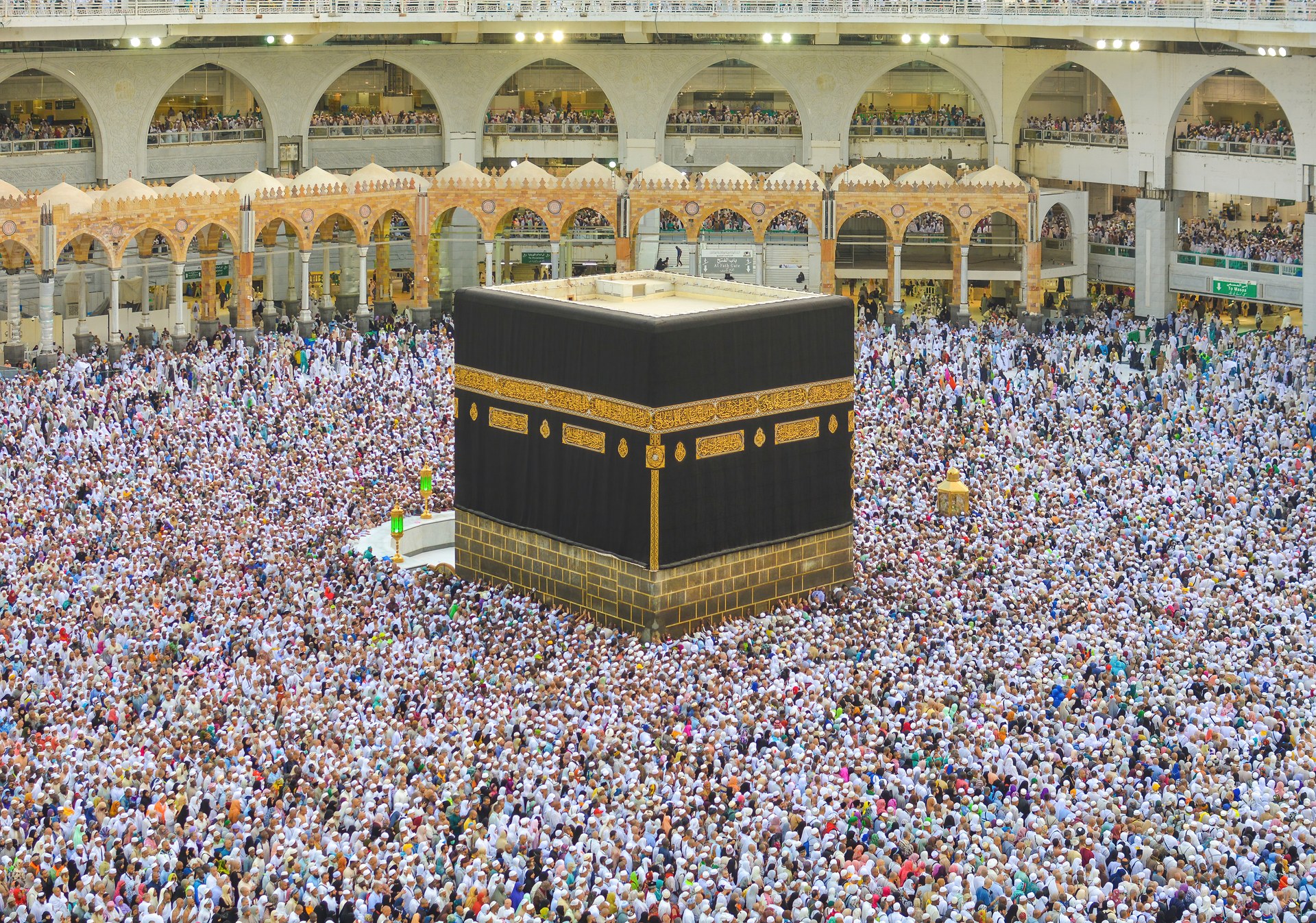
The answer, tested across forty years and two previous conflicts, is that it almost certainly cannot — not because of international law, but because of a title that was engineered to make refusal prohibitively costly. King Fahd adopted the designation “Custodian of the Two Holy Mosques” on October 27, 1986, in direct response to Ayatollah Khomeini’s decade-long charge that the House of Saud was unfit to guard Islam’s holiest sites. The title was designed to anchor Saudi legitimacy in a religious obligation so deep that violating it would damage the monarchy more than any political concession ever could.
The Iran-Iraq War tested this from 1980 through 1987. Saudi Arabia was backing Iraq with billions in loans and intelligence sharing, yet it admitted Iranian pilgrims every single year for seven consecutive years of that war — a precedent that the Washington Institute for Near East Policy referenced in its 2026 analysis, “Ideology Outweighs Diplomacy in Iran’s Hajj Decision.” The rupture, when it came in 1987, was post-incident and triggered by a specific act of political violence at the Hajj itself: Saudi security forces clashed with Iranian demonstrators inside Makkah, killing 275 Iranians, 85 Saudi nationals, and 45 other pilgrims — 402 dead in total by the official Saudi count. Riyadh severed diplomatic ties in spring 1988, and Iran boycotted Hajj for three years.
The precedent is razor-sharp. Saudi Arabia did not bar Iranian pilgrims preemptively during seven years of a conflict in which the two countries backed opposite sides. The Custodian title, designed by Fahd to be so binding that no political crisis could override it, worked exactly as intended — it prevented the crown from using Hajj access as a diplomatic weapon until in-situ violence made continuation untenable. The second rupture, from 2016 to 2022, followed the same pattern: not a preemptive bar but a response to the storming of Saudi diplomatic compounds in Tehran after the execution of Sheikh Nimr al-Nimr.
MBS now sits inside the same institutional trap his uncle constructed. He cannot deny Iranian pilgrims without accepting the Khomeini-era charge that Saudi custodianship is political rather than religious — a charge that Iran’s state media would amplify within hours and that would resonate across the Muslim world in the middle of a war where Riyadh’s moral authority is already under pressure. The seven-year precedent from the Iran-Iraq War and the three-year boycott that followed the 1987 bloodshed both point in the same direction: the Custodian title holds until violence at the Hajj itself forces a rupture, and the current conflict, devastating as it has been to Saudi infrastructure and fiscal planning alike, has not produced that specific trigger.
Who Authorized 30,000 Iranians Onto Saudi Soil?
Tasnim News Agency’s framing of the pilgrim dispatch was the institutional language of military authorisation applied to a pilgrimage: the decision was “carried out under the command, approval, and viewpoint of Leader of the Islamic Revolution Ayatollah Seyed Mojtaba Khamenei” and had been “reviewed by the Supreme National Security Council.” The same SNSC that coordinates IRGC operations and reviewed Iran’s 14-point ceasefire proposal explicitly cleared the entry of 30,000 Iranian civilians onto the territory of a country hosting American forces conducting blockade operations against Iran.
The invocation of Mojtaba Khamenei’s personal approval is a sovereign statement, not a logistical update. Mojtaba’s authority remains contested inside Iran — as documented in reporting on Iran’s Hormuz offer and its legitimacy vacuum — but Tasnim’s decision to attribute the Hajj dispatch to him personally transforms the pilgrim flow into a test of his writ. If the 30,000 arrive safely, return safely, and the Hajj proceeds without incident, Mojtaba can claim credit for protecting Iranian religious rights during wartime. If anything goes wrong — an incident at a Hajj site, a diplomatic rupture, an escalation that strands pilgrims — the personal attribution means the failure belongs to Mojtaba, not the foreign ministry.
The SNSC imprimatur also creates a structural paradox that neither state media has addressed. The same body that authorised pilgrims onto Saudi soil oversees IRGC military operations — including the operations that have struck Saudi territory repeatedly since February 28. President Pezeshkian publicly accused SNSC members Vahidi and Abdollahi of torpedoing the ceasefire, but the SNSC’s formal review of the Hajj dispatch means the institution that wrecked the peace process also authorised the deployment of 30,000 Iranian civilians into the territory of a country it has been attacking for over sixty days.
Iranian state media’s silence on the route’s abnormality is itself a data point worth registering. Neither IRNA, Tasnim, nor PressTV drew attention to what the Arar corridor reveals about the absent bilateral channels. PressTV and Fars News both aired footage of pilgrims arriving in Medina — framing the arrival as evidence of Iran’s international standing and resilience — without acknowledging that those pilgrims had to transit through a third country because Iran’s own diplomatic isolation made a direct flight impossible.
What Happens When Pilgrims Share Geography With Blockade Forces?
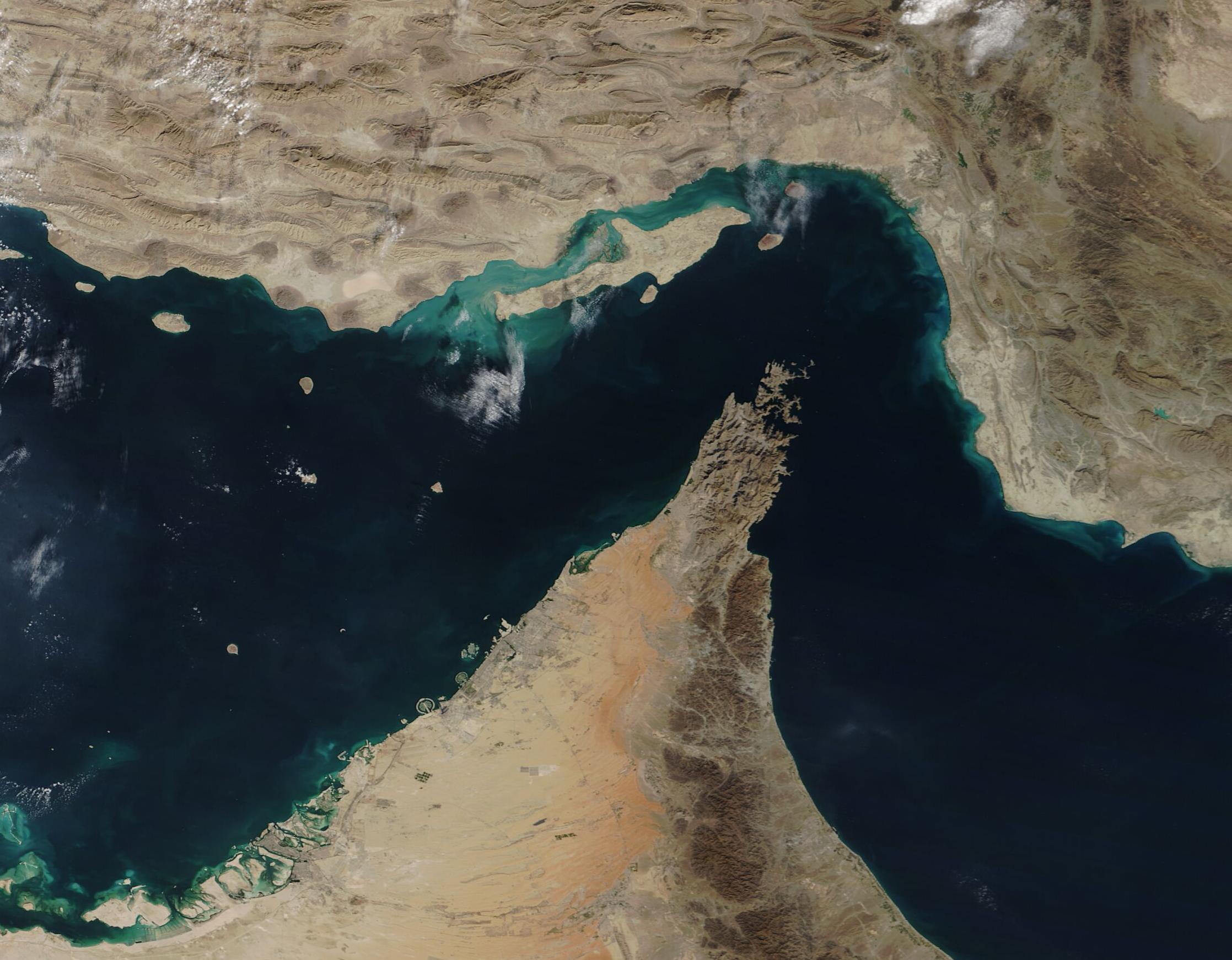
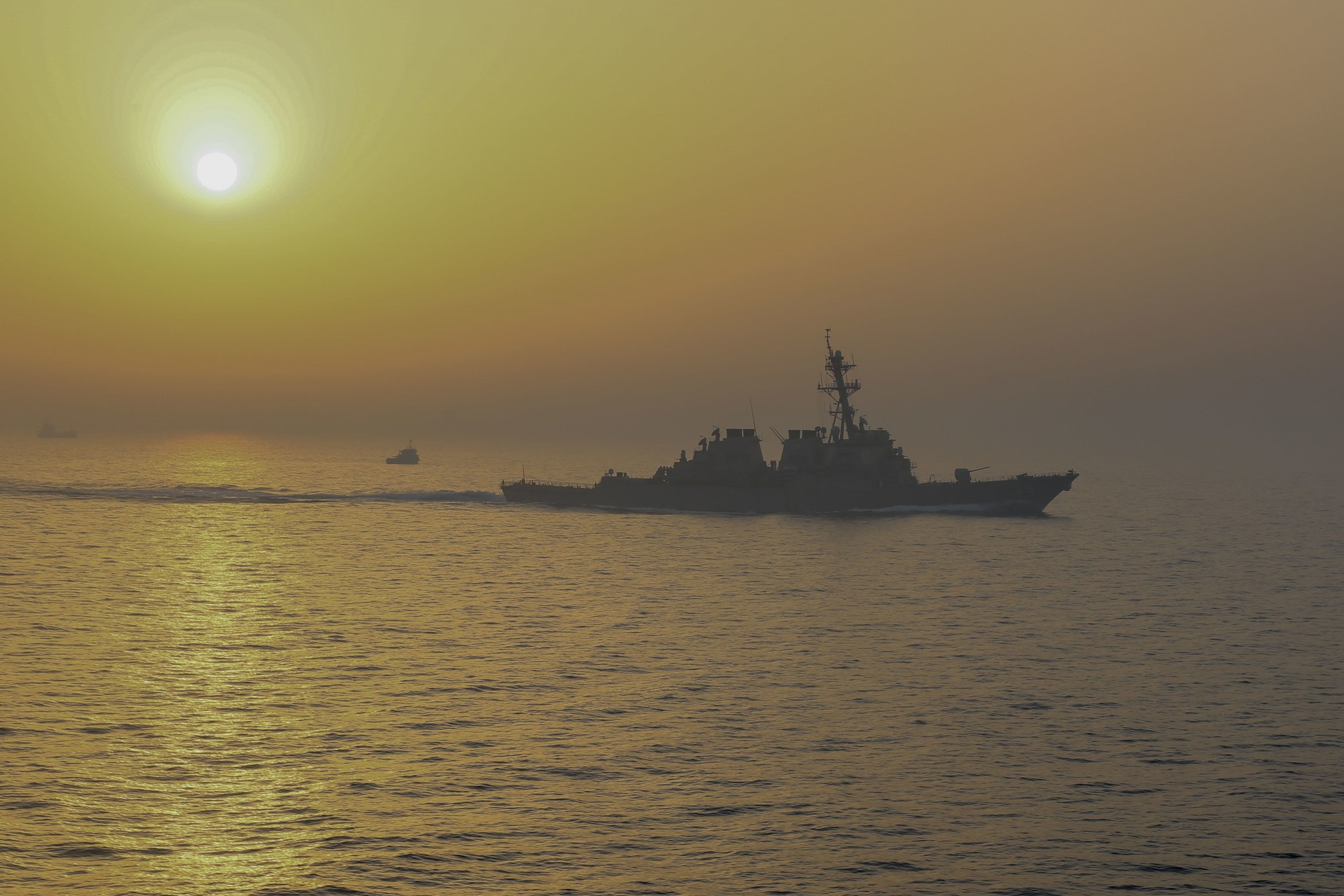
On May 4, Major General Ali Abdollahi declared through Mehr News Agency and PressTV that Iran would protect the security of the Strait of Hormuz “with full strength” and that any foreign armed force approaching without IRGC coordination would be attacked. New IRGC maritime rules issued May 2 — two days before the threat — tightened Hormuz management conditions, per CNN live updates and regional situation tracking, while Iran simultaneously confirmed it was reviewing the US response to its 14-point proposal. Iran’s apex war command had already declared conflict resumption “likely” in the days preceding the Abdollahi statement.
The Abdollahi threat targets US forces, and US forces are operating from Saudi territory — the same Saudi territory where 30,000 Iranian pilgrims are arriving over the coming weeks. The US State Department issued a Level 3 “Reconsider Travel” advisory on April 7 specifically targeting Hajj 2026, the first such advisory in State Department history directed at the pilgrimage itself, according to the Overseas Security Advisory Council. The American government’s own risk assessment concluded that Saudi Arabia during Hajj 2026 is not safe enough for American civilians — a conclusion that applies with at least equal force to the Iranian civilians who will occupy the same geography under the same air-defence umbrella of approximately 400 PAC-3 MSE interceptor rounds, which represent 14 per cent of the pre-war stockpile protecting 1.2 to 1.5 million pilgrims.
The hostage dynamic that neither government has named publicly runs in both directions. For Iran, 30,000 citizens on Saudi soil during a war means 30,000 citizens who could be stranded, detained, or caught in crossfire if escalation occurs — and the SNSC authorisation means that vulnerability was accepted at the highest institutional level. For Saudi Arabia, 30,000 Iranian pilgrims in Makkah and Medina during Hajj season create a population that cannot be expelled without violating the Custodian obligation, cannot be isolated without logistical chaos during the largest managed human gathering on earth, and whose safe return gives Iran a domestic narrative asset regardless of what happens at Hormuz.
If IRGC forces follow through on Abdollahi’s threat and attack US military positions on Saudi soil, the air-defence architecture built to protect the Hajj simultaneously protects Iranian citizens from the consequences of their own government’s military actions. Saudi PAC-3 batteries defending the holy sites do not distinguish between the nationalities of the pilgrims sheltering beneath them — a structural reality that the Custodian title makes inevitable and that every US military option currently on the table must account for. The Chatham House analysis published in May 2026, “How the Iran war is reshaping Saudi strategy,” placed the Hajj within MBS’s broader balancing act between the US alliance and regional de-escalation, but the Abdollahi threat compresses that balancing act into something closer to a binary: Saudi Arabia is simultaneously the host nation for American blockade forces and the custodian of Iranian religious rights during a pilgrimage it cannot cancel.
The Channel That Carries Everything
Every substantive Saudi-Iran communication since February 28 has run through Pakistan — specifically through ISI chief General Asim Munir’s personal back-channel network, which functions as the sole diplomatic relay between Riyadh and Tehran. Saudi FM Prince Faisal’s call to Araghchi on April 13 — the day the US naval blockade took effect — amounted to a parallel diplomatic track that still required Pakistan’s infrastructure to function. Saudi Arabia was explicitly excluded from the April 10 Islamabad bilateral talks, and the broader ceasefire architecture runs entirely through the Islamabad relay.
The Arar route is itself a product of this dependency. The pilgrimage coordination that produced the hybrid land-air corridor had to be negotiated through the Islamabad channel because there is no direct Saudi-Iran diplomatic mechanism capable of arranging something as operationally complex as moving 30,000 people across a war zone through three countries. The military attaché expulsion of March 22 severed the last dedicated bilateral security channel — the Iranian embassy in Riyadh remains open and the ambassador has not been expelled, but the institutional infrastructure for direct negotiation has been reduced to a diplomatic residue that cannot support operational coordination at this scale.
This dependency on a single relay introduces a structural fragility that the Hajj pilgrimage will stress-test over the next three weeks. If an incident occurs — a security event at a Hajj site, an escalation at Hormuz that triggers the Abdollahi threat, a breakdown in the ceasefire framework — the response will have to be routed through Islamabad. Pakistan’s $5 billion Saudi loan matures in June 2026, and the country’s 27th Constitutional Amendment makes ceasefire diplomacy General Munir’s operation rather than the elected government’s, a structural arrangement that gives the channel enormous access but makes it entirely dependent on the personal standing of one intelligence chief.
The pilgrimage season that peaks with the Day of Arafah on May 26 will put approximately 30,000 Iranian nationals under Saudi Arabia’s duty of care for three weeks or more, without either government possessing a direct bilateral channel capable of managing a crisis in real time. Indonesia’s 221,000 pilgrims — the largest national contingent — begin departing on April 22, the same date the existing ceasefire framework expires, and Pakistan’s 119,000 arrive from April 18 onward, compressing the entire diplomatic calendar into a window where the holy cities are at maximum capacity and minimum margin for error. The Islamabad relay was built for diplomatic messages and ceasefire proposals, not for the kind of operational crisis management that the physical safety of tens of thousands of civilians would demand if the IRGC’s escalation timeline and the Hajj calendar collide.
A Terminal Built for the Wrong Country
The Jadidat Arar crossing was not built for this purpose. Saudi Arabia and Iraq reopened it in 2020 as part of the post-ISIS bilateral rapprochement — infrastructure investment and trade facilitation designed to serve Iraqi pilgrims arriving from Basra, Najaf, and Karbala, per Al Jazeera. Iranian pilgrims are piggybacking on a corridor that two other countries built for entirely different strategic purposes, running their wartime transit through a terminal whose capacity was sized for a different population flow altogether.
The operational scale is already stretching that infrastructure beyond its design parameters. Iraq’s 964 Media reported that Wasit governorate alone is processing 70,000 returning Iranian pilgrims overland — pilgrims who need transit visas, bus capacity, road safety, and border processing in two directions for each journey. The logistical burden falls on Iraq, which is hosting an overland migration it never planned for, running through a border crossing it reopened for trade normalisation, serving a population flow that exists only because the war has made every other route impossible.
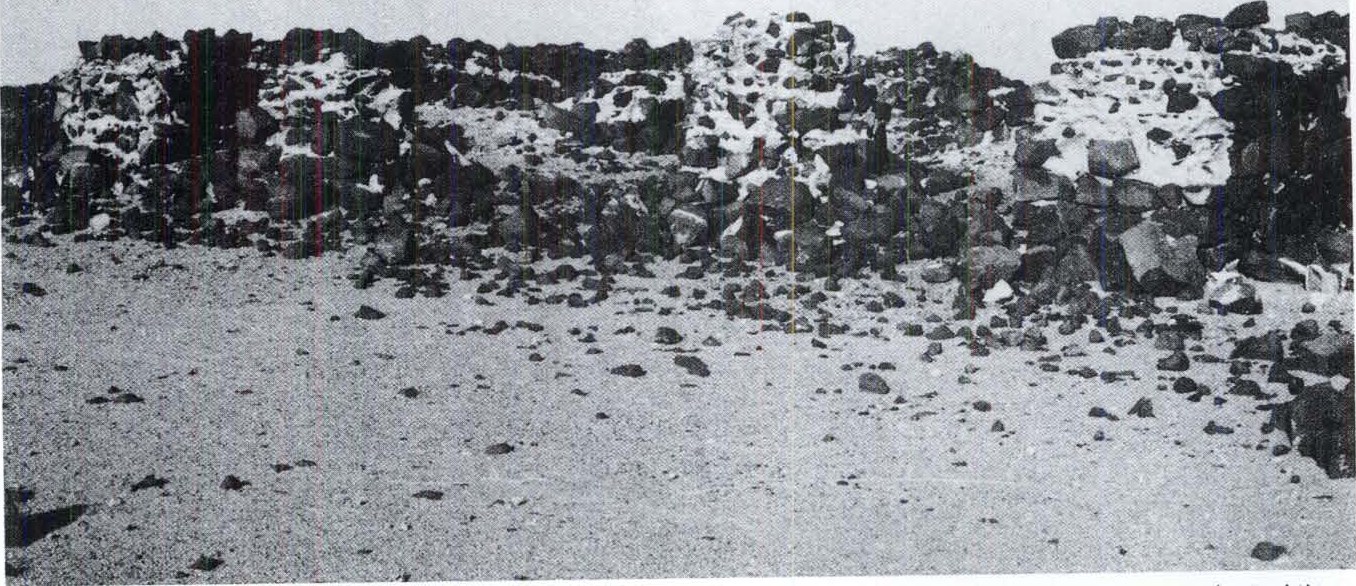
The crossing sits on the Darb Zubaydah, which state media on both sides have been careful to invoke — pilgrims walking the ancient road to Makkah, as pilgrims have walked it since the eighth century, regardless of what governments are doing above them. When the last Iranian pilgrim crosses back through Arar sometime in June, the terminal will return to its designed purpose: Iraqi trade and Iraqi pilgrims, the bilateral it was built to serve.
What will not remain is any illusion that 30,000 pilgrims crossing a land border constituted normalisation — Saudi Arabia admitted them because the Custodian title demanded it, routed them through Iraq because the diplomatic ceiling forbade anything simpler, and will return to the status quo ante when the season ends. The 1,400-kilometre road from Kufa will still be there, as it has been since the Abbasids, but the distance it measured in 2026 was not geographical.
Frequently Asked Questions
How many Iranian pilgrims attended Hajj in previous years?
Iran sent approximately 86,500 pilgrims to Hajj 2024, nearly its full quota of 87,550. In 2023 — the first Hajj after the Beijing-brokered normalisation — Iran sent roughly 87,200 pilgrims. The 2026 figure of 30,000 represents a 65 per cent decline from the 2024 level, driven by logistical constraints imposed by the war and airspace closure rather than any Saudi reduction of Iran’s quota allocation.
What other countries use the Arar crossing for Hajj?
The Jadidat Arar crossing was designed primarily for Iraqi pilgrims, who constitute the largest land-route Hajj contingent from the north. Jordan also processes pilgrims through the Halat Ammar crossing to the west. The use of Arar by Iranian pilgrims transiting through Iraq is unprecedented in modern Hajj operations — no previous season required Iran to use a third country’s land border as its primary entry corridor into Saudi Arabia.
Has Iran used the Hajj as a political instrument before?
Systematically, since 1971, when Khomeini first instructed followers to distribute pamphlets during the pilgrimage, according to historian Martin Kramer. By 1981, organised demonstrations inside the Masjid al-Haram had become annual events, and Saudi police began making arrests during the 1982 Hajj. The SNSC authorisation of the 2026 dispatch represents a distinct kind of political instrumentalisation — not overt protest at the holy sites, but the strategic deployment of a civilian population onto a competitor’s territory during wartime, authorised at the same institutional level as military operations.
What is the IRGC’s Khatam al-Anbiya Central Headquarters?
Khatam al-Anbiya is formally the IRGC’s construction and engineering conglomerate, but its Central Headquarters functions as Iran’s apex military coordination body — effectively the wartime joint command. General Abdollahi, who issued the May 4 Hormuz threat, commands an organisation that manages both Iran’s military-industrial complex and its wartime command-and-control architecture. Pakistan’s ISI chief Munir visited Khatam al-Anbiya HQ on April 16, treating it as the de facto military counterpart in ceasefire negotiations rather than the foreign ministry.
Will Iran’s Hajj quota be affected by the war in future years?
Hajj quotas are set by the Saudi Ministry of Hajj and Umrah based on a formula of approximately 1,000 pilgrims per one million Muslim population, administered through the Organisation of Islamic Cooperation. Iran’s quota of 87,550 reflects its roughly 88 million population, and Saudi Arabia did not reduce the 2026 allocation — the low utilisation was Iran’s operational choice. Historical precedent suggests quotas survive even prolonged bilateral ruptures: Iran’s quota was preserved during the 1988-1990 boycott and the 2016-2022 diplomatic severance, and was restored to full capacity within one Hajj season of each rapprochement.
The air-defence arithmetic behind Iran’s 2026 pilgrim calculus — why Tehran sending 30,000 rather than 87,550 preserves IRGC operational freedom against Saudi territory during Hajj — is examined in detail in 1.8 Million Pilgrims and 400 Missiles.