
{“content”: “
TEHRAN u2014 While CENTCOM destroyers steamed toward the Gulf of Oman on Day 1 of Operation Project Freedom, Iran’s parliament was quietly finishing a different operation. The Majlis National Security and Foreign Policy Committee ratified a 12-article statute on April 21 titled “The Law on Establishing Iran’s Sovereignty over the Strait of Hormuz,” advancing it to the full chamber. Deputy Speaker Ali Nikzad, touring the IRGC port complex on Larak Island on May 3, called the bill Iran’s “atomic bomb” and likened its passage to Mohammad Mossadegh’s 1951 nationalisation of the oil industry.
n
The framing matters. A wartime emergency measure can be lifted by armistice. A law of national sovereignty, equivalent in Iranian political memory to the founding act of postwar economic independence, cannot. Project Freedom is positioned to retake the physical strait. The legal strait is being designed to outlive the war.
n
The Middle East briefing 3,000+ readers start their day with.
One email. Every weekday morning. Free.
Table of Contents
n
- n
- The Fait Accompli Mechanism
- What Does Iran’s Hormuz Sovereignty Law Actually Require?
- Who Controls the Repeal Vote After a Ceasefire?
- Why Can’t International Law Override the Statute?
- The Mossadegh Frame and Why Tehran Chose It
- Azizi’s Red Line and the Coordinated Trio
- What Project Freedom Cannot Reach
- Saudi Arabia’s Position Inside the New Regime
- The Post-War Architecture Iran Is Pre-Building
- Frequently Asked Questions
- n
n
n
n
n
n
n
n
n
n
n
n
n
n
The Fait Accompli Mechanism
n
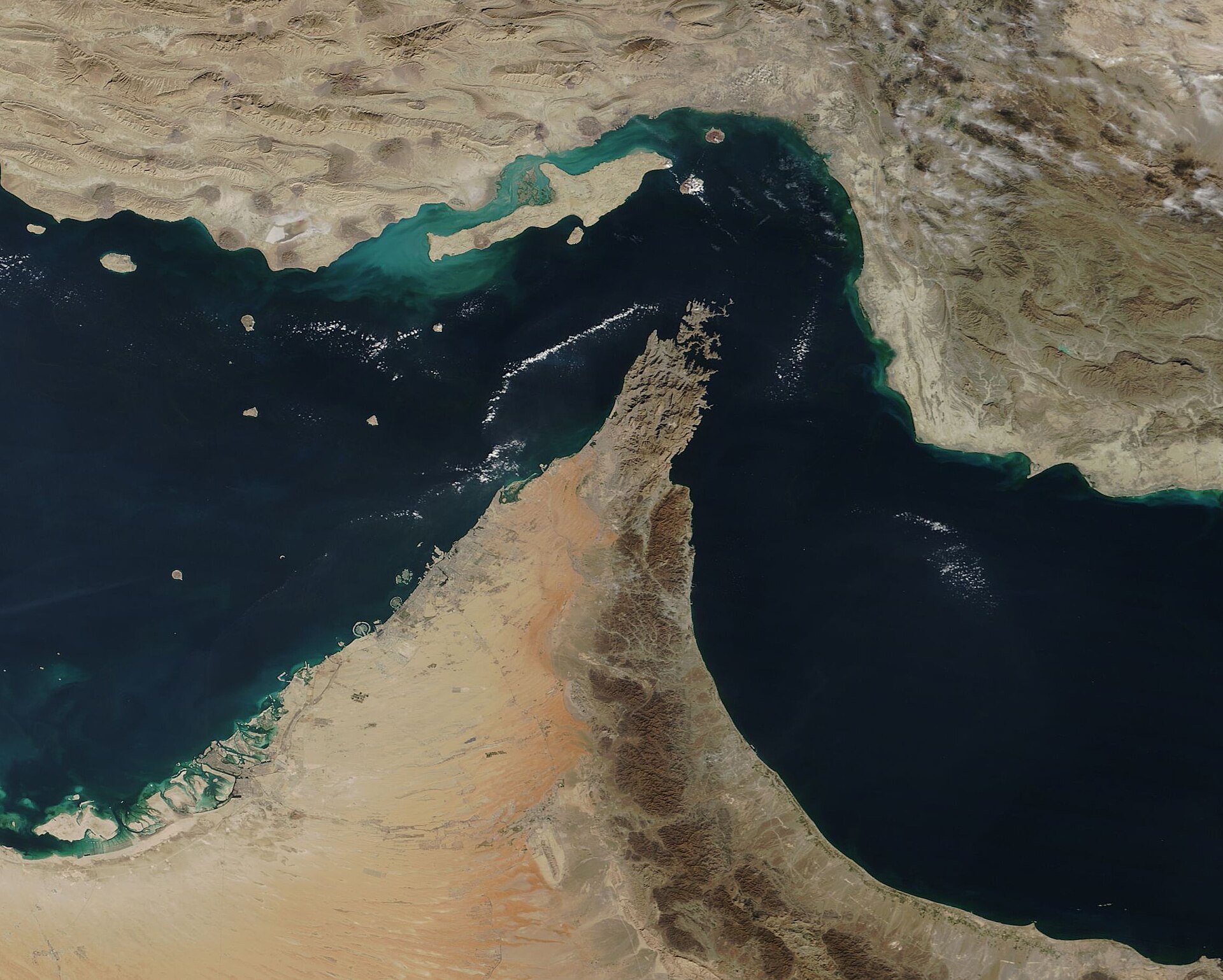
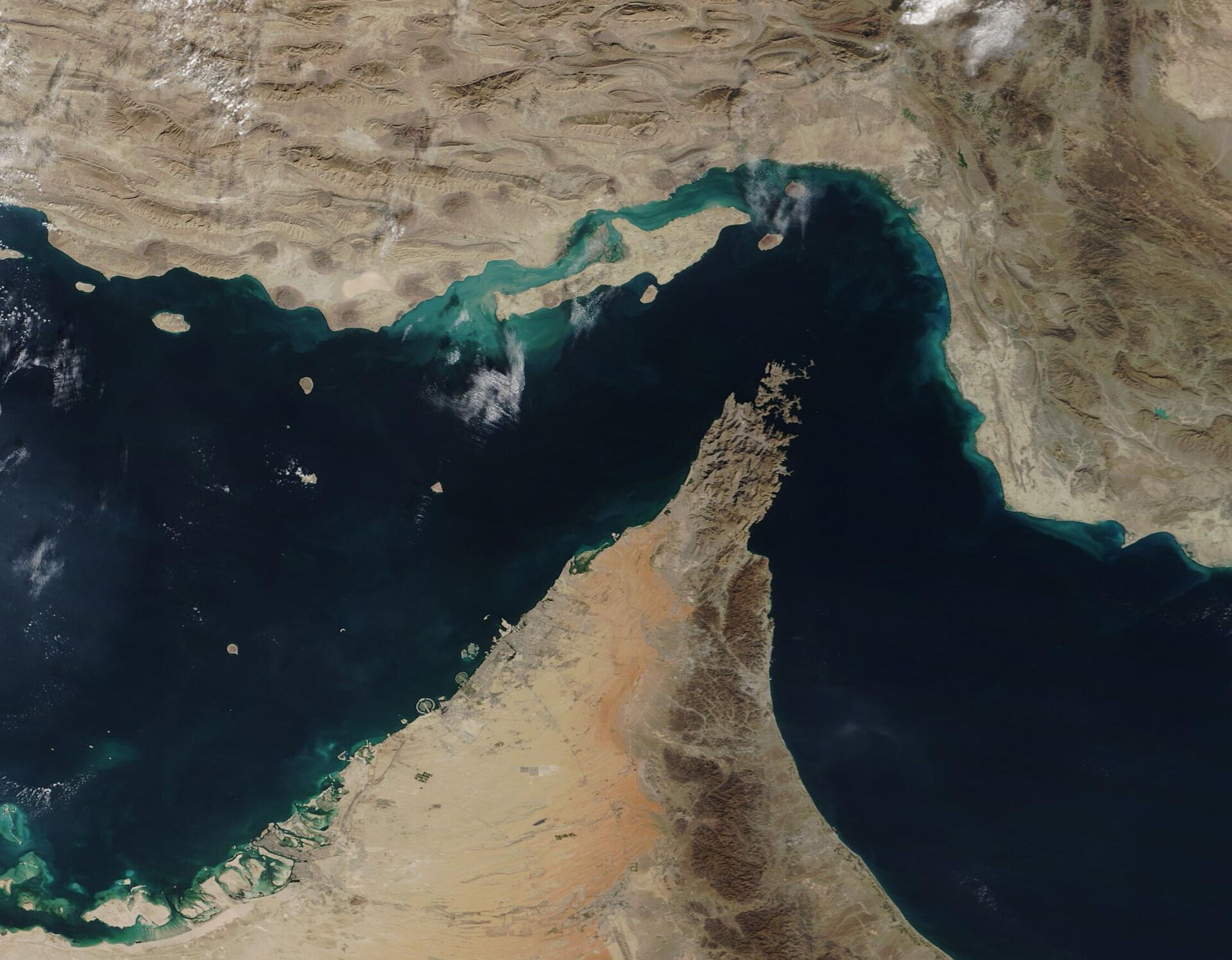
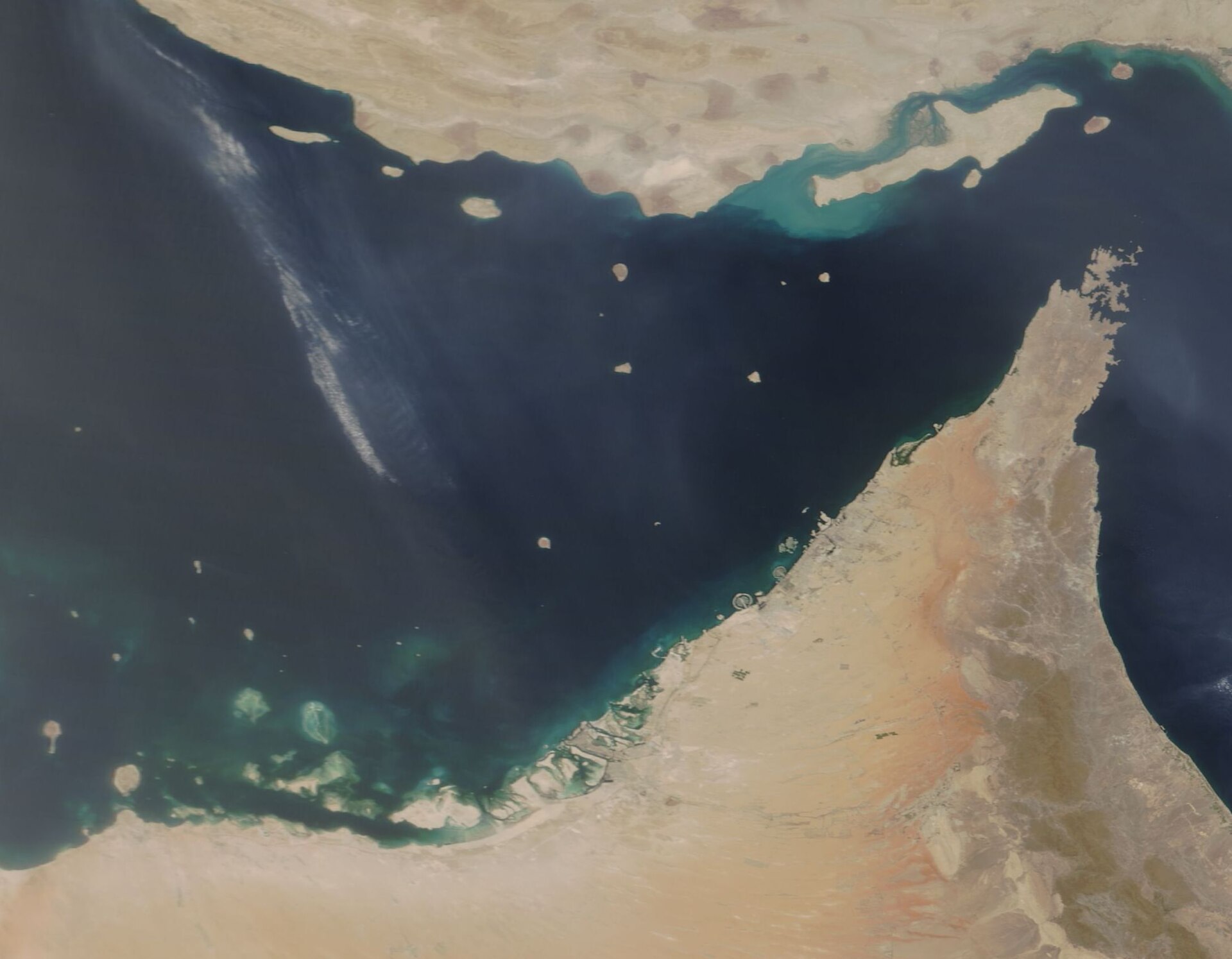
Most readers met this story through the headline number: $2 million per transit, paid in yuan and cryptocurrency to four newly opened Central Bank of Iran accounts. That is the visible part. The structural part is that Iran is converting an IRGC enforcement practice u2014 already operational since mid-March in the 20-mile corridor between Qeshm and Larak u2014 into codified domestic law before any ceasefire architecture is in place to constrain it.
n
The sequencing is deliberate. The Majlis committee approved the bill on April 21. The IRGC seized the MSC Francesca (11,660 TEU) and the Epaminodas (6,690 TEU) on April 22, two days after Foreign Minister Abbas Araghchi declared the strait “completely open.” Project Freedom launches on May 4. Plenary debate on the law is scheduled within the same window. Tehran is racing to land the legal instrument on the books before any external party can credibly demand its absence as a precondition.
n
Ebrahim Rezaei, the parliament national security committee’s spokesman, said publicly Iran “will not agree to extend the ceasefire if it does not include Iranian control of the Strait of Hormuz.” That is not bargaining language. It inverts the diplomatic frame: the law’s recognition becomes a precondition for the talks, not a concession to be traded inside them.
n
n
What Does Iran’s Hormuz Sovereignty Law Actually Require?
n
The law assigns Iran a unilateral regulatory function over the Strait of Hormuz that no coastal state currently exercises over an international strait. Vessels must coordinate transit with Iranian authorities, pay tolls in Iranian rial, use the term “Persian Gulf” u2014 never “Arabian Gulf” u2014 in shipping documents, and follow IRGC-designated corridors. Non-compliant ships are subject to seizure, with 20 percent of cargo value confiscated. Israeli vessels are barred entirely; vessels of the United States and other “hostile” states may pass only after paying war reparations.
n
The bill’s sponsor in the Majlis Construction Commission, Mohammad Reza Rezayi Kouchi, has confirmed the revenue split publicly: 30 percent of receipts to military infrastructure, 70 percent to economic development and public welfare. The Central Bank has already opened four parallel accounts denominated in rials, yuan, dollars and euros u2014 operational financial plumbing pre-installed before plenary passage.
n
| Provision | Operational meaning | Source |
|---|---|---|
| Coordination requirement | Vessels must request Iranian authorisation prior to transit | Rezayi Kouchi, Iran International, May 2 |
| Toll regime | Approx. $2 million per transit, payable in rial (de facto: yuan, crypto) | EJIL Talk, Just Security, April 2026 |
| Naming requirement | “Persian Gulf” mandatory in all shipping documents | PressTV / Tasnim, April 2026 |
| Seizure penalty | 20 percent of cargo value confiscated for non-compliance | PressTV / Tasnim, April 2026 |
| Revenue split | 30 percent military infrastructure / 70 percent civilian | Rezayi Kouchi, Iran International, May 2 |
| Israeli vessels | Permanently barred, no exception | Nikzad, PressTV, May 3 |
| US and allied vessels | Conditional transit subject to war reparations | Nikzad, PressTV, May 3 |
| CBI accounts | Four currencies (IRR, CNY, USD, EUR) already open | EJIL Talk, April 2026 |
n
n
The accounts were opened, the corridor was charted, the IRGC was collecting fees u2014 all before the bill cleared committee. This is the structure of a law written to ratify enforcement practice rather than to authorise it.
n
Who Controls the Repeal Vote After a Ceasefire?
n
Under Iran’s constitutional architecture, statutes passed by the Majlis can be repealed only by the Majlis. The executive branch cannot vacate them through a treaty or diplomatic accord. Even a ceasefire agreement that explicitly references Hormuz freedom of navigation lacks domestic-law force in Iranian courts and inside IRGC chains of command, both of which take their authority from statutes ratified by parliament and the Guardian Council.
n
That ratification body is itself the trapdoor. The Guardian Council is twelve members: six clerical jurists nominated by the Supreme Leader, and six legal experts confirmed by parliament. The position of Supreme Leader has been vacant since Khamenei’s assassination on February 28. Mojtaba Khamenei has appeared only via audio. The clerical seats are therefore filled by hold-over appointees who served the assassinated Leader, and the legal seats are confirmed by the chamber Speaker Mohammad Bagher Ghalibaf controls. There is no constitutional path to repeal that does not pass through the same coalition advancing the bill, as a prior examination of the Mojtaba directive traced in detail.
n
Ghalibaf himself served in the IRGC Aerospace Force from 1997 to 2000 and has publicly accused Foreign Minister Araghchi of carrying water for IRGC commander Ahmad Vahidi. He controls the parliamentary order paper, including whether a hypothetical repeal bill ever reaches the floor. He does not need to defeat repeal u2014 he needs only to never schedule it. His track record, established when he framed Iran’s 14-point proposal as the entry condition for any deal, suggests he will use that procedural latitude.
n
n
“Tehran plans to introduce a new management model for the Strait of Hormuz that excludes any role for the United States, aiming to secure a future for itself and neighbouring states free from American presence and interference.”
n
Mohammad Bagher Ghalibaf, Speaker, Iran Parliament u2014 Middle East Monitor, May 1, 2026n
n
n
Even Pezeshkian, who has named Vahidi and IRGC ground commander Mohammad-Reza Abdollahi as the architects of ceasefire failure, lacks the authority under Article 110 of the constitution to direct IRGC forces or vacate parliamentary law. The presidency was deliberately built to be subordinate on national security questions; on Hormuz, it is subordinate by statute.
n
n
Why Can’t International Law Override the Statute?
n
The American legal position rests on UNCLOS Article 38: transit passage through international straits is non-suspendable, and that rule has reached the status of customary international law binding even on non-parties. Professor James Kraska of the US Naval War College, who has been the most consistent academic voice for the US position, characterises Iran’s toll as “lawfare” with “no legal basis under international law.” The IMO Secretary General confirmed on April 9 that no international agreement authorises tolls on international straits.
n
Tehran’s counter-architecture is older and more carefully assembled than most observers credit. Iran signed UNCLOS in 1982 but never ratified it, and at the moment of signature filed a formal declaration that transit passage was not customary law but a treaty-specific compromise u2014 what international lawyers call the “package deal” objection. Iran has been a consistent persistent objector for forty-four years. Its preferred legal frame is the 1949 Corfu Channel ruling and the 1958 Geneva Convention on Territorial Seas, which recognise innocent passage u2014 a weaker right that can be suspended in defined circumstances.
n
Kazem Gharibabadi, Deputy Foreign Minister for Legal Affairs, set out Tehran’s wartime overlay in late March: “We are now in a state of war, and wartime conditions cannot be governed by peacetime rules.” The new statute converts that circumstantial claim into constitutional principle u2014 a domestic-law fixture that does not expire when the wartime predicate does.
n
n
“If Iran’s wartime framing were accepted, it would imply that any bordering state engaged in armed conflict could suspend or reconfigure the legal regime of an international strait by unilateral fiat.”
n
Safia K. Southey, EJIL Talk, “Codifying Coercion: Iran’s New Legal Regime and the Law of International Straits,” 2026n
n
n
There is a third layer beneath the doctrine. Iran passed the Marine Areas Act in 1993, requiring prior authorisation for warship transit through its claimed territorial sea u2014 a clear conflict with UNCLOS Article 38. The act has been on the books for thirty-three years. It has not been enforced consistently. It has also never been repealed under foreign pressure. The 2026 statute is built to widen that legal patchwork, not resolve it.
n
The Mossadegh Frame and Why Tehran Chose It
n
When Nikzad stood at Larak on May 3 and compared the Hormuz law to the 1951 oil nationalisation, he was not improvising. The Mossadegh act was passed by the Majlis. It was opposed by the Anglo-American powers. It was overturned in domestic political terms only by the 1953 coup that removed Mossadegh from office, and even then the Anglo-Iranian Oil Company never recovered its pre-1951 position. The law itself, as a parliamentary instrument, was never repealed. The 1954 Consortium Agreement that followed worked around it.
n
That is the precedent Tehran is invoking. Not the geopolitics of 1953 u2014 the legal mechanics. A statute on a question of national sovereignty, ratified by parliament, has a half-life that exceeds the political conditions that produced it. The 1979 revolution treated Mossadegh’s nationalisation as the founding moment of Iranian economic independence; the 2026 parliament is positioning Hormuz sovereignty in the same lineage.
n
The “atomic bomb” phrase is the second part of the same argument. Nikzad is signalling that Iran does not need an actual nuclear device when it has a legal one u2014 a permanently asserted sovereignty claim over a chokepoint that 21 million barrels per day flowed through before the war. The Mossadegh parallel is the container for that claim: it survived a coup, a revolution, and a Consortium Agreement that worked around it rather than through it.
n
Azizi’s Red Line and the Coordinated Trio
n
On May 3, the chair of the parliament National Security Commission, Ebrahim Azizi, posted the most consequential single sentence Iran has produced this week. “Any American interference in the new maritime regime of the Strait of Hormuz will be considered a violation of the ceasefire,” he wrote. “The Strait of Hormuz and the Persian Gulf would not be managed by Trump’s delusional posts.”
n
“New maritime regime” is a term of art. By using it, Azizi is asserting that a regime exists u2014 created by Iranian statute and IRGC enforcement practice u2014 that pre-dates whatever Project Freedom does on Day 1. American interference in that regime, on this construction, is not a counter-move to a blockade but a ceasefire violation, carrying the consequence of suspending the Islamabad Accord track that Pakistan has used as its primary diplomatic asset since April.
n
The phrase did not appear in isolation. Foreign Minister Araghchi the same day called Project Freedom “delusional claims.” The IRGC Navy on May 1 stated that “the equations and rules governing the new management of the Persian Gulf have been set, and will be enforced, based on the historic directive of the Leader.” Three institutions, three speakers, one phrase, one frame u2014 in a Tehran of three competing power centres that rarely agree on anything.
n
n
What Project Freedom Cannot Reach
n
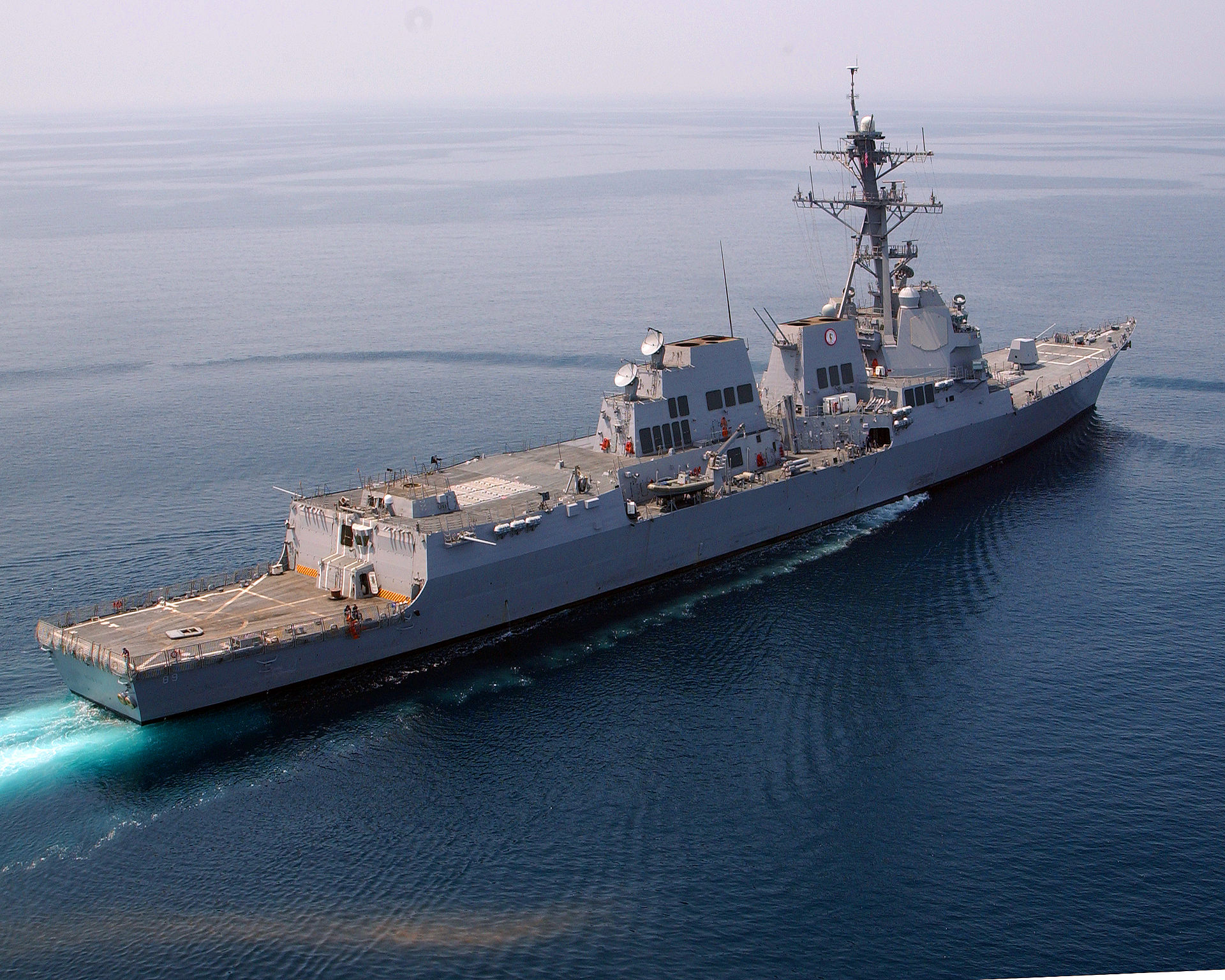
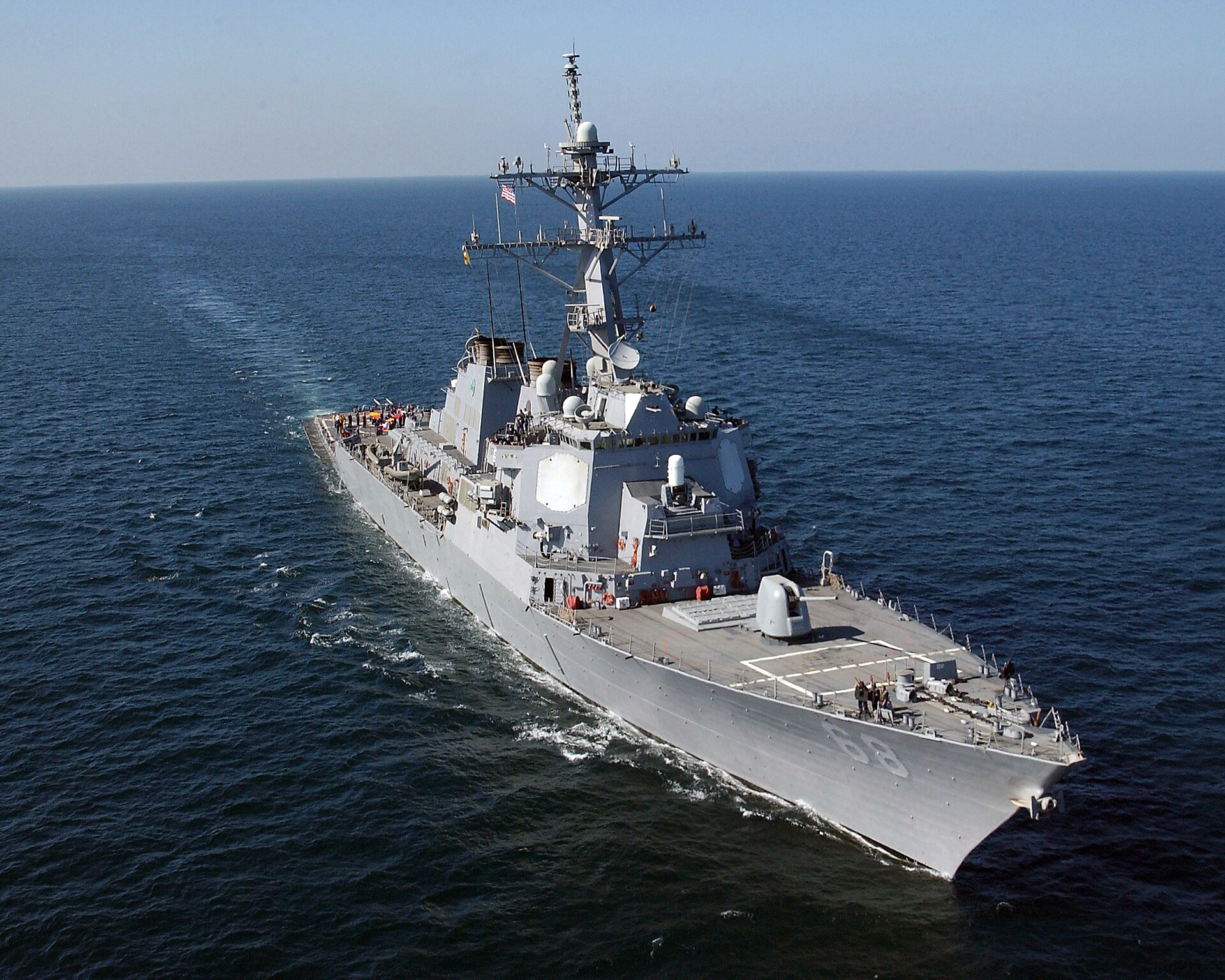
CENTCOM’s opening Project Freedom force structure u2014 guided-missile destroyers, more than 100 aircraft, unmanned platforms, 15,000 personnel u2014 is sized to reopen the strait kinetically and to keep it open while a deal is negotiated. It is not sized, and cannot be sized, to repeal an Iranian statute. As an earlier survey of the Project Freedom convoy set out, the operation can dominate the surface. It cannot enter the Majlis order paper.
n
The asymmetry between physical and legal control matters because Iran’s template is already on display elsewhere in its territorial sea. The 1993 Marine Areas Act has remained in force despite repeated US Freedom of Navigation Operations and persistent Western legal objection u2014 dormant in practice, live in statute, never repealed. The Hormuz statute follows the same template at a higher altitude: live for the duration of the present conflict, dormant after a settlement, available for reactivation without further legislative action.
n
The Sound Dues precedent is instructive in a different way. Denmark levied tolls on the Oresund Strait for roughly four hundred years. The toll regime was abolished in 1857 only by the Copenhagen Convention u2014 a multilateral treaty between fifteen states that paid Denmark a capital indemnity (equivalent by some estimates to roughly $470 million in 2026 dollars) to relinquish the right. A bilateral US-Iran ceasefire would not produce that result. It would, at most, suspend enforcement. The statute itself would still sit on the books, available for reactivation.
n
| Precedent | Year | Mechanism | Outcome |
|---|---|---|---|
| Mossadegh oil nationalisation | 1951 | Majlis statute | Survived 1953 coup; never repealed by Iranian parliament |
| Sound Dues (Denmark) | 1857 | Multilateral Copenhagen Convention, 15 states | Required treaty plus indemnity to abolish ~400-year toll |
| Iran Marine Areas Act | 1993 | Majlis statute | 33 years live without repeal despite US FONOPs |
| Indonesian archipelagic claim | 1957 | Djuanda Declaration, then UNCLOS 1982 | Domestic claim codified internationally after 25 years |
| Montreux Convention | 1936 | Multilateral treaty | The model Iran does NOT have for Hormuz |
n
n
The Montreux line is the absent precedent that explains the present strategy. Turkey reasserted military control over the Bosporus and Dardanelles in 1936 through a multilateral treaty that other powers signed. Tehran has no such instrument and is unlikely to obtain one. Lacking the treaty route, it is using the only route available u2014 domestic law u2014 and is using it with the legal sophistication of a state that has been preparing this argument since 1982.
n
Saudi Arabia’s Position Inside the New Regime
n
For Riyadh, the law is two problems stacked on top of each other. The first is operational: the Yanbu bypass cannot replace Hormuz throughput. The East-West pipeline has a 7 million bpd design capacity but a 4u20135.9 million bpd loading ceiling at Yanbu. Saudi March production was 7.25 million bpd according to the IEA, down from 10.4 million in February. The kingdom can move what it pumps. It cannot move what its market share would otherwise call for at peace-time prices.
n
The second is legal. If Saudi Arabia accepts a ceasefire architecture that does not extinguish the Iranian statute, it has accepted a regime in which Iran retains the statutory right to coordinate, charge and seize in Hormuz on a dormant basis. Insurance underwriters will price the dormant right; reinsurers in London and Singapore have already started to. The Lloyd’s war-risk premium for Hormuz transits did not return to pre-March levels even during the brief April 24 reopening declared by Araghchi, because underwriters distinguish between physical access and legal certainty.
n
The Hormuz exposure directly shapes PIF’s investment calculus. Al-Rumayyan’s formal abandonment of The Line’s 2030 targets and the pivot to Oxagon as NEOM’s sole deliverable is inseparable from the strait’s status u2014 Oxagon’s port function depends on Red Sea access, and its industrial-export thesis requires Hormuz normalization that the sovereignty law is specifically designed to prevent.
n
Saudi diplomacy has been working a UN good-offices track precisely because the kingdom understands a bilateral US-Iran deal does not solve the legal problem. Only a multilateral instrument with the IMO, UNCLOS parties, and the GCC inside it can re-establish the pre-war regime. Such an instrument is not on any visible diplomatic calendar.
n
Iran has named Saudi Arabia among the “hostile” states whose vessels would be subject to reparations payments under the new law’s most expansive reading, after parliament listed six Arab states as co-belligerents on May 2. Saudi-flagged tankers are a vanishing share of Saudi exports u2014 most move on chartered tonnage u2014 but the principle, once written into Iranian statute, can be reactivated against charter parties or insurers with Saudi exposure.
n
The Post-War Architecture Iran Is Pre-Building
n
Strip away the rhetoric and the law is a contingency document. Tehran is preparing for three scenarios in parallel, and the statute is calibrated to operate in all of them.
n
If Project Freedom rolls back the IRGC physically and a US-brokered ceasefire follows, the law is dormant: enforcement halts, but the statute remains, ready for reactivation in any future cycle of escalation. If a negotiated settlement freezes the present positions, the law becomes the operative legal framework on the Iranian side, and any provision in the settlement granting freedom of transit must be reconciled in Iranian courts against domestic statute that takes precedence. If the war continues, the law is the legal architecture for what the IRGC is already doing u2014 converting field practice into ratified policy, with parliamentary cover replacing executive deniability.
n
Chatham House described the Hormuz legal framework in April as one whose “structural ambiguities Iran has, across four decades, exploited with considerable legal sophistication.” The 2026 statute is the latest, most ambitious entry in that exploitation u2014 and the first to put a price on each transit and a reparations clause on each “hostile” flag.
n
The phrase Tehran has chosen to brand all of this u2014 “new maritime regime” u2014 is itself doing structural work. It treats the pre-war UNCLOS-based transit regime as already extinct rather than temporarily suspended. Any future negotiation, on this framing, must choose between the “new” Iranian order and a successor architecture that has yet to be drafted. “Restoring the old regime” is no longer a default option on the menu. It is a position one party would have to argue for against a written statute that exists and a competing legal frame that has been pre-positioned. That shift in default u2014 what diplomats call the “burden of proof” on the negotiating table u2014 is the substantive prize the law delivers regardless of physical outcome.
n
Project Freedom can degrade the missile batteries on Qeshm and Larak and reopen the corridor. It cannot vote in the Majlis. The law passed in committee on April 21 was the first instrument of the post-war Hormuz regime u2014 drafted, ratified, and pre-positioned before the post-war exists.
n
Frequently Asked Questions
n
When does the Iranian Hormuz sovereignty law take legal effect?
n
Committee ratification on April 21 advanced the bill to the full Majlis but does not give it operative force. Plenary debate is scheduled within the May window, after which it requires Guardian Council ratification. Because the IRGC Navy has been operating the toll regime since mid-March, full plenary passage would convert standing enforcement practice into codified statute rather than authorise new conduct.
n
Could Iran’s Guardian Council reject the law?
n
Theoretically yes u2014 the Council screens legislation for compliance with sharia and the constitution. In practice, with the Supreme Leadership position vacant since the February 28 Khamenei assassination, the six clerical jurists are hold-overs from the assassinated Leader’s appointments and the six legal experts are confirmed by Speaker Ghalibaf’s chamber. Council rejection would require a coalition shift that current factional alignment does not produce.
n
How does the law interact with Pakistan’s Islamabad Accord mediation?
n
The Islamabad Accord covers ceasefire mechanics but does not cover repeal of Iranian domestic legislation, which falls outside Pakistani jurisdiction. Foreign Minister Dar has neither raised the law with Tehran nor included it in the bilateral text. Azizi’s May 3 statement that US interference in the “new maritime regime” equals a ceasefire violation appears designed to lock the law into the Accord’s baseline rather than place it on the negotiating table.
n
What are the toll revenue numbers if the law is enforced at scale?
n
At pre-war Hormuz throughput of approximately 21 million bpd and roughly 60u201370 transits per day, a $2 million per-transit toll would generate $120u2013140 million daily, or $43u201351 billion annually u2014 three to four times Iran’s 2024 declared military budget of $12.4 billion. At current ~5 percent throughput, the revenue is closer to $6 million daily, or about $2.2 billion annually; at that depressed level the 30/70 revenue split still produces several hundred million dollars per year for military infrastructure. The dollar accounts at the Central Bank are sanctions-exposed; the yuan and rial accounts are the operational ones, and the cryptocurrency channel remains the IRGC’s preferred fallback.
n
Why haven’t Lloyd’s war-risk premiums fallen even when Iran declared the strait open?
n
Insurance underwriters price legal certainty, not just physical access. When Araghchi declared the strait “completely open” on April 24, Lloyd’s war-risk premiums for Hormuz transits did not return to pre-March levels because the IRGC had seized two vessels that same week and the domestic statute remained in force. Reinsurers in London and Singapore assess the dormant right u2014 Iran’s statutory authority to seize non-compliant vessels u2014 as an unextinguished risk, regardless of whether enforcement is active. A ceasefire that suspends enforcement but does not repeal the statute would not, on this underwriting logic, restore pre-war premium levels.
n
Project Freedom’s first operational day on May 4 confirmed this underwriting logic in practice: zero neutral commercial vessels followed the two US destroyers through the corridor, and the shipping industry’s public refusal to participate was itself a function of the unextinguished legal risk the sovereignty law represents. For analysis of how the May 4 operation hardened the diplomatic deadlock it was built to break, see Project Freedom Made Hormuz Harder to Open.
n
China pressed Iran to reopen the strait from outside on May 6, when Wang Yi told Araghchi directly that Hormuz must be reopened u2014 and Iran’s own foreign ministry readout omitted the demand entirely, revealing that the sovereignty law’s domestic political weight prevents even Beijing’s partners from publicly accepting a demand they have privately acknowledged. That pre-summit signal and Iran’s response are analysed in Beijing Sets the Clock: Wang Yi’s Hormuz Demand Is a Pre-Summit Signal, Not a Peace Plan.
n
Washington’s decision to accept Hormuz-first sequencing in its 14-point MOU — and the structural veto this gives the IRGC over whether nuclear talks ever begin — is analysed in Washington’s Hormuz-First Concession Hands the IRGC a Structural Veto Over Nuclear Talks.
n
n
The executive instrument that converts the sovereignty law from statute to operational architecture—the Persian Gulf Strait Authority, launched May 5 with a domain, email, and permit-code system—is documented in full.
n”}