
RIYADH — Saudi Arabia’s refusal to endorse Project Freedom is not diplomatic hedging. It is the only rational response available to a state sandwiched between two chokepoints it cannot simultaneously defend.
Trump’s May 3 convoy — five supertankers escorted through the Strait of Hormuz by guided-missile destroyers from the USS Abraham Lincoln Carrier Strike Group, backed by more than 100 aircraft and 15,000 service members — forced the eastern passage open. Brent barely moved. The market understood what Washington apparently did not: opening one strait means nothing if endorsing the operation threatens to close the other.
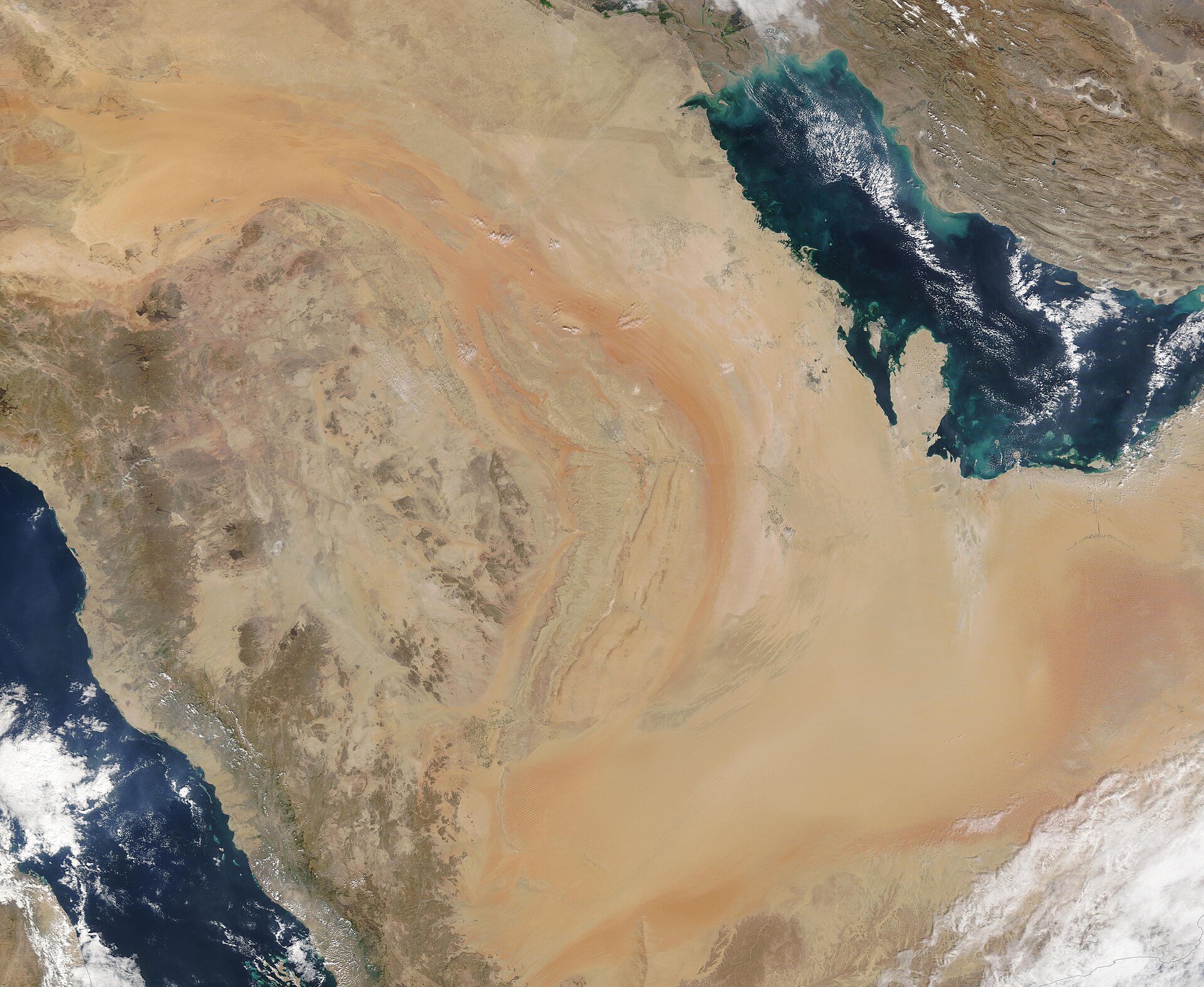
Chatham House formally documented this geometry in May 2026, concluding that Saudi Arabia is “sandwiched between two chokepoints” and that any kinetic response would “increase risks to its energy assets and could draw the Houthis more directly into the conflict.” The kingdom’s entire post-Hormuz survival strategy runs through the East-West Pipeline to Yanbu on the Red Sea — but an estimated 70-75 percent of Yanbu’s exports must transit Bab el-Mandeb to reach Asian buyers (ORF Middle East, April 23, 2026). The Houthis have explicitly warned they will close that strait if any Gulf state joins US military operations.
This editorial maps the two-chokepoint trap, explains why Saudi-UAE divergence is a product of geography rather than politics, and shows why Riyadh’s silence is the most deliberate policy decision of the war.
Contents
- The Geometry of the Two-Chokepoint Trap
- What Has Saudi Arabia Actually Signed — and What Has It Refused?
- Why Does the Yanbu Bypass Fail to Solve the Problem?
- How Do the Houthis Hold the Second Chokepoint?
- The Saudi-UAE Split Is Geographic, Not Political
- Is Saudi Arabia a Platform State or a Partner State?
- What Does Brent’s Non-Reaction Tell Riyadh About Project Freedom?
- The Silence Is the Policy
- Frequently Asked Questions
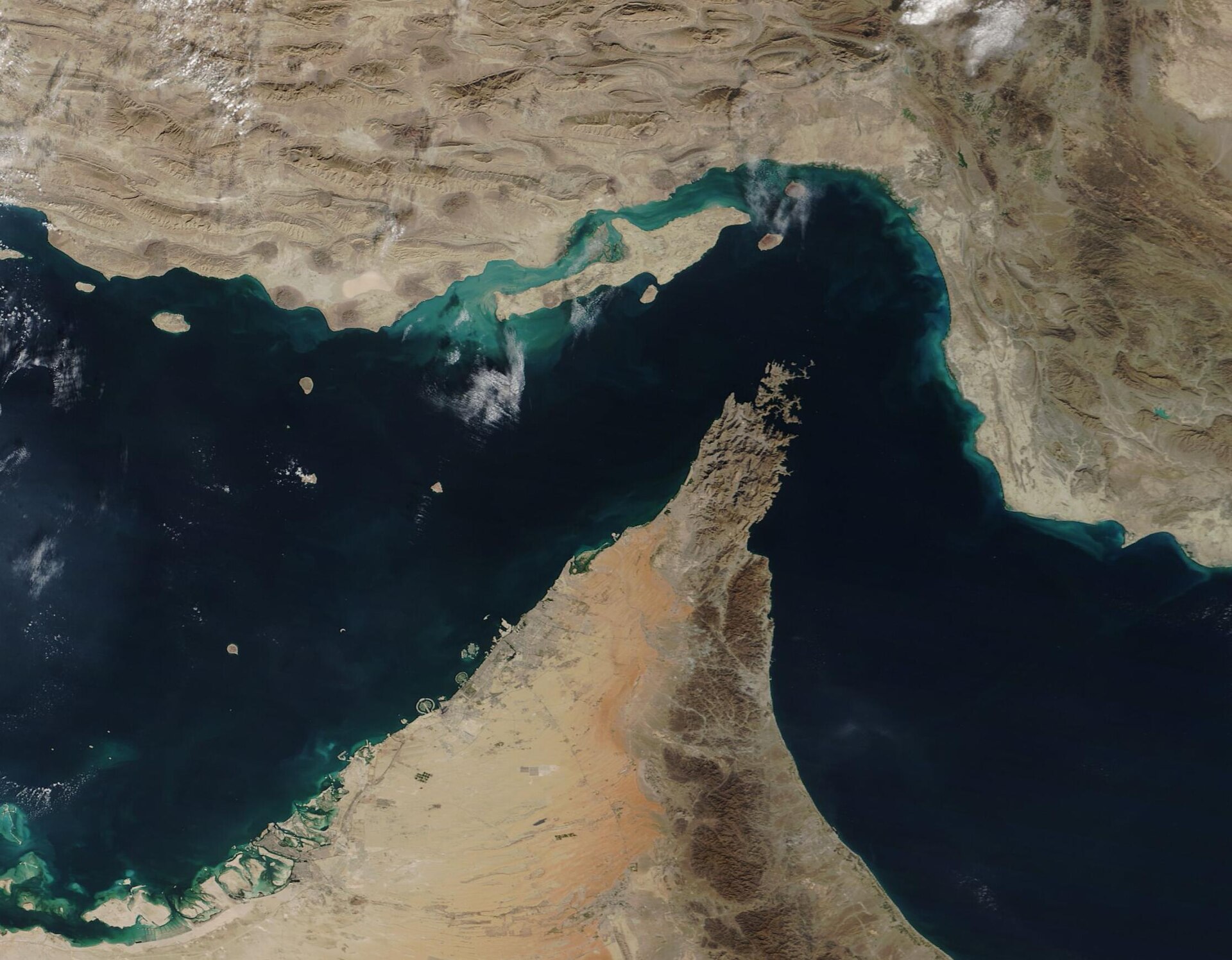
The Geometry of the Two-Chokepoint Trap
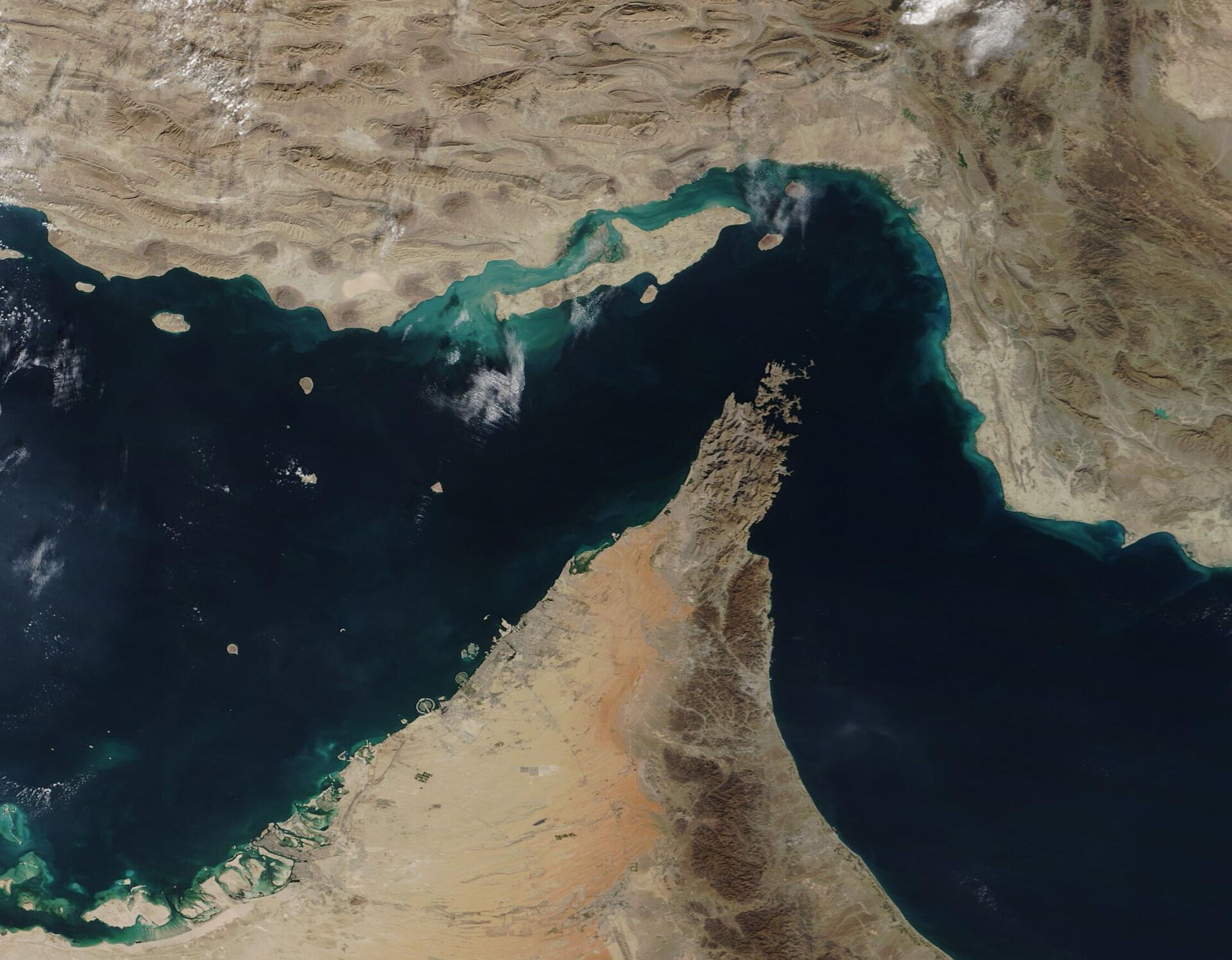
The trap is cartographic before it is political. Saudi Arabia’s hydrocarbon infrastructure feeds two coasts. The Eastern Province — Ghawar, Abqaiq, Ras Tanura, Ju’aymah — historically exported through the Strait of Hormuz, which carried 7-7.5 million barrels per day of Saudi crude before the war began on February 28. The IRGC declared “full authority to manage the Strait” on April 5 and reinforced the claim on April 10, reducing unescorted commercial traffic to a fraction of pre-war levels.
Riyadh’s response was the East-West Pipeline, a 1,200-kilometer conduit that shifts crude from the Eastern Province to Yanbu on the Red Sea coast. Fortune reported in late March 2026 that the pipeline had been restored to its theoretical 7-million-bpd capacity. For a brief period, markets treated this as a solution. It was briefly framed as Saudi Arabia having “solved” its Hormuz exposure.
The Middle East briefing 3,000+ readers start their day with.
One email. Every weekday morning. Free.
It did not. Chatham House’s May 2026 analysis, “How the Iran war is reshaping Saudi strategy,” states that rerouting away from Hormuz “will not eliminate risk, only relocate it.” Samriddhi Vij, an associate fellow at the Observer Research Foundation’s Middle East programme, put numbers on the structural deficiency: the same Asian customers who previously bought Saudi crude at Ras Tanura now receive it at Yanbu — and every tanker bound for Shanghai, Mumbai, or Yokohama must transit the 29-kilometre gap between Yemen and Djibouti. The pipeline does not bypass a chokepoint. It substitutes one for another.
The ORF analysis quantified the combined exposure. A simultaneous closure of both straits would place $10 billion per day of global trade at risk, block 30 percent of global container shipping, disrupt 22-25 percent of global oil and gas supply, and push Brent “very likely” past $150 per barrel (ORF Middle East, April 23, 2026). Saudi Arabia, which depends on both passages for fiscal survival, sits at the exact intersection of both threats.
No major oil-exporting state in modern history has faced simultaneous vulnerability at two maritime chokepoints. Iraq, Iran, Kuwait, and the UAE each depend on one. Saudi Arabia, by virtue of its continental scale and dual-coast infrastructure, depends on both. The East-West Pipeline was designed as redundancy. The war turned it into a lateral transfer of exposure — and the Houthis, by conditioning their restraint on Saudi non-participation, turned the kingdom’s geography into a policy trap with a single escape route: silence.
What Has Saudi Arabia Actually Signed — and What Has It Refused?
Saudi Arabia’s diplomatic record since the war began reveals a precise and consistent boundary. Riyadh will sign statements of general principle. It will not sign anything that implies operational endorsement of military action against Iran.
On March 18, Saudi Arabia joined 11 other nations — including Bahrain, the UAE, Egypt, Jordan, Kuwait, Pakistan, Qatar, and Turkey — in a Riyadh ministerial statement calling on Iran to “refrain from any measures or threats aimed at closing or obstructing international navigation in the Strait of Hormuz or threatening maritime security in Bab al-Mandab” (Turkish MFA, March 19, 2026). The language condemns Iranian threats to navigation. It does not authorize any specific response. It commits no signatory to operational action. This is the furthest Saudi Arabia has publicly gone.
Three days later, on March 21, a second joint statement emerged with a sharper operational edge. Twenty-two nations signed: the UAE, Bahrain, the United Kingdom, France, Germany, Italy, the Netherlands, Japan, Canada, South Korea, New Zealand, Denmark, Latvia, Slovenia, Estonia, Norway, Sweden, Finland, Czechia, Romania, Lithuania, and Australia (UAE Ministry of Foreign Affairs, March 21, 2026). Saudi Arabia did not. The kingdom’s absence from a statement signed by its own Gulf neighbours and its most important Asian customers was not an oversight. It was the line.
The pattern extends to Project Freedom itself. Saudi Arabia is not among the states endorsing the May 3 convoy operation. Arab officials speaking to the Wall Street Journal went further: Riyadh is actively urging Washington to lift its Hormuz blockade and return to negotiations with Iran — the precise opposite of endorsing an escalatory convoy posture (WSJ / Jerusalem Post, April-May 2026). Saudi Arabia has not merely declined to join Project Freedom and the convoy it launched. It is lobbying against the strategic logic that produced it.
The two statements — March 18 and March 21 — are a Rosetta Stone for Saudi positioning. Riyadh will defend the principle of freedom of navigation. It will not associate itself with any instrument designed to enforce it.
Why Does the Yanbu Bypass Fail to Solve the Problem?
The East-West Pipeline moves crude to the Red Sea coast. It does not move it to market. This distinction is the foundation of Saudi Arabia’s vulnerability and the reason Project Freedom’s success at Hormuz does not materially change Riyadh’s calculus.
The pipeline’s theoretical capacity is 7 million barrels per day. But Yanbu’s port terminals — the loading docks, storage tanks, and berth infrastructure — are the binding constraint. Market sources put effective operational throughput at approximately 4.0-4.3 million bpd as of March 2026 (Discovery Alert / IndexBox / Bloomberg). The March 23 record of 4.3 million bpd represented roughly 86 percent of the port’s nameplate combined loading capacity of approximately 4.5 million bpd. Pre-war Saudi exports through Hormuz ran at 7-7.5 million bpd. Even at Yanbu’s absolute ceiling, the kingdom faces a structural throughput gap of 1.1-1.6 million bpd. The UAE’s own bypass route — the Habshan–Fujairah pipeline discharging at the VTTI terminal on the Gulf of Oman coast — was exposed as equally fragile on May 4: Iran’s attack on Fujairah’s bypass infrastructure demonstrated that building around Hormuz does not place a terminal outside Iran’s target set. The second consecutive strike on May 5 confirms a deliberate doctrine: Iran’s thirty-day bypass denial campaign systematically eliminated every alternative to the Strait in sequence, from the East-West Pipeline on April 8 to the Fujairah terminal on May 4-5.
The IEA documented the scale of the disruption. Saudi production fell from 10.4 million bpd in February to 7.25 million bpd in March 2026 — a 3.15 million bpd drop, a 30 percent decline the agency called the “largest disruption on record” (IEA, April 2026). Asia-bound exports fell 38.6 percent over the same period (Kpler data). The pipeline bought survival. It did not restore normalcy.
The bypass depends entirely on Bab el-Mandeb remaining open. Every supertanker leaving Yanbu bound for China, India, Japan, or South Korea must transit the strait between Yemen and Djibouti. If that passage closes, the Yanbu bypass loses the only strait that made it worth building. What remains is the small fraction of Saudi exports destined for Mediterranean and European markets via the Suez Canal — significant, but not sufficient to sustain the kingdom’s fiscal position or its Asian market share.
Chatham House identified the deeper consequence. The Hormuz closure “has revealed a key vulnerability not only for trade, but also for the success of the country’s Vision 2030 strategy.” NEOM, the Red Sea tourism megaproject, the Qiddiya entertainment district — the signature investments of MBS’s economic transformation are Red Sea-oriented developments. A Bab el-Mandeb closure would threaten not just crude exports but the entire westward economic pivot the kingdom has staked its post-oil future on.
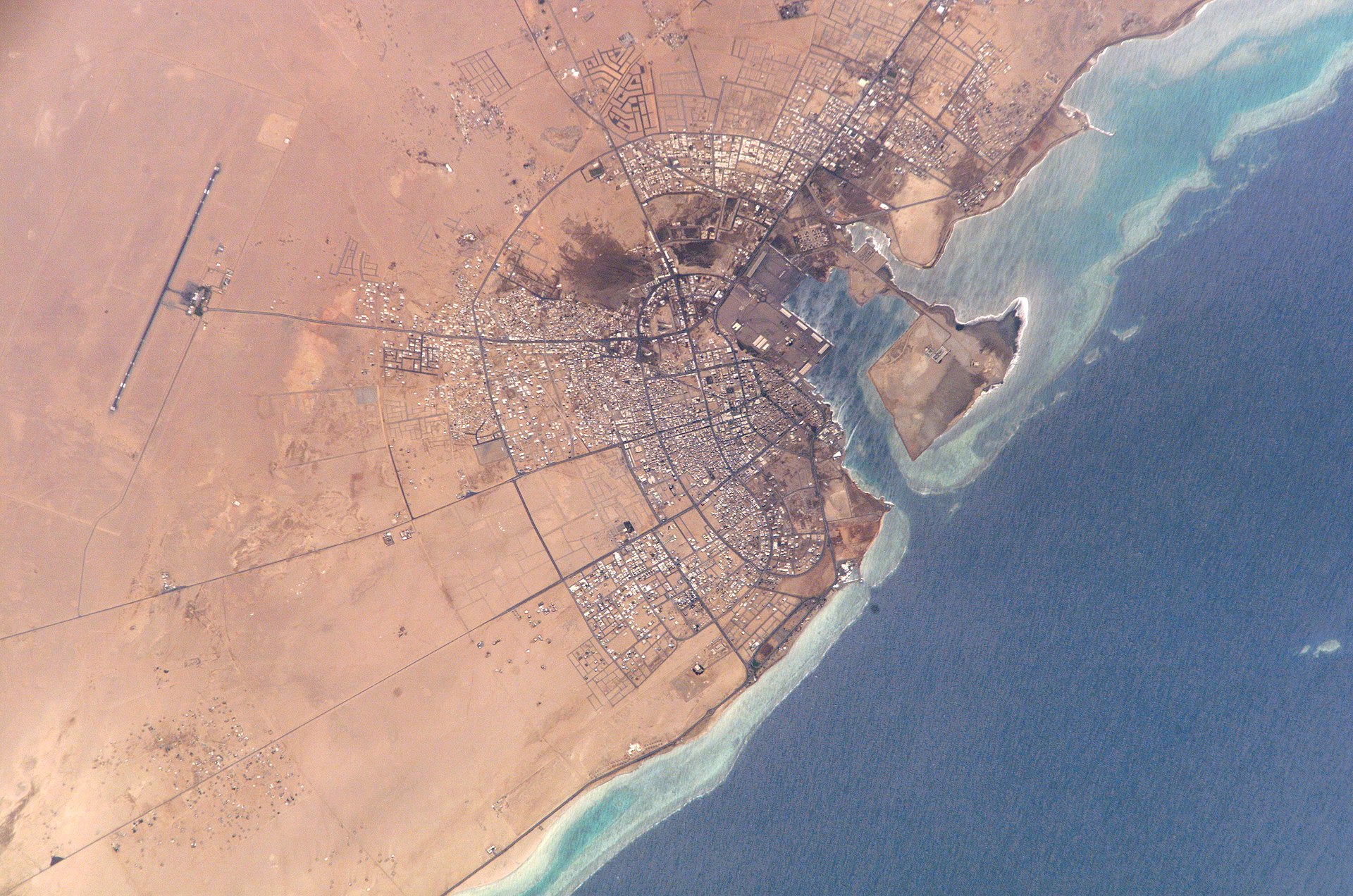
How Do the Houthis Hold the Second Chokepoint?
The Houthis have made the conditionality of their restraint explicit, public, and non-negotiable. Their threat architecture is designed to constrain Saudi Arabia specifically — and it is working.
Senior Houthi leader Mohammed Ali Al Houthi stated the group would “refrain from attacking Saudi Red Sea Ports so long as Riyadh doesn’t join the US and Israel in attacking the country” (Jerusalem Post, 2026). A second senior official spelled out the trigger mechanism: “The option of closing the Bab el-Mandeb Strait is a Yemeni option that can be implemented should the aggression against Iran and Lebanon escalate savagely, or if any Gulf state becomes directly involved in military operations in support of the [Zionist] entity or the United States” (Times of Israel, 2026). Houthi Deputy Foreign Minister Hussein al-Ezzi added the capstone: “If Sana’a decides to close the Bab al-Mandab, then all of mankind and jinn will be utterly powerless to open it.”
CNN reported that Houthi politburo member Mohammed al-Bukhaiti said the group was “considering a naval blockade and would specifically target vessels belonging to ‘aggressor countries’” — a category that would expand immediately to include any Gulf state that endorsed or participated in Project Freedom.
The key word across every Houthi statement is conditionality. The threats are structured to allow Saudi Arabia to host American bases, sign general freedom-of-navigation statements, and maintain diplomatic channels with Washington. What they prohibit is endorsement of or participation in a named US military operation directed at Iran. Project Freedom sits precisely on the wrong side of that boundary.
The Houthis are not bluffing from weakness. Their 2023-25 Red Sea campaign reduced Bab el-Mandeb commercial traffic by approximately 50 percent, rerouting global shipping around the Cape of Good Hope. In August 2025, the group struck an Israeli-associated vessel off Yanbu’s coast — demonstrating the range to threaten Saudi western infrastructure without triggering a Saudi military response. Yemen expert Inbal Nissim-Louvton noted that Houthi control of Bab el-Mandeb “explains why Saudi Arabia and UAE have not responded militarily to Iranian aggression” (Jerusalem Post, 2026).
The restraint itself is more strategically valuable than its execution. As long as the Houthis threaten closure without executing it, Saudi Arabia can keep exporting through Yanbu at its current operational ceiling. The moment Riyadh endorses Project Freedom, the conditionality dissolves and the theoretical threat becomes an operational order. Saudi Arabia’s silence is not merely a diplomatic choice. It is the premium paid to keep Bab el-Mandeb open. Endorsing Project Freedom would not add a barrel of crude to the market. It would subtract every barrel currently flowing through Yanbu under the protection of Houthi forbearance — a loss that dwarfs any gain from escorted convoys through a still-mined Hormuz.
The Saudi-UAE Split Is Geographic, Not Political
The divergence between Riyadh and Abu Dhabi on Project Freedom appears political. It is structural. The two states face different geometries and make correspondingly different calculations.
The UAE signed the March 21 joint statement. Saudi Arabia did not. The UAE has aligned with the US convoy posture, accepted the deployment of Israeli Iron Dome batteries on its soil (Axios, April 26, 2026), and exited OPEC on May 1 after 59 years, stripping Saudi Arabia of its last coordination lever over Emirati production. From Riyadh, the Emirati position looks reckless. From Abu Dhabi, it is rational.
The reason is cartographic. The UAE has no Red Sea coastline. Its crude exports flow exclusively through the Persian Gulf and the Strait of Hormuz. The Houthi threat to Bab el-Mandeb does not apply to a single barrel of Emirati oil. For Abu Dhabi, backing Project Freedom carries a simple calculus: the only chokepoint that matters for Emirati exports is the one being opened. There is no second strait to lose.
Saudi Arabia’s geography is fundamentally different. The kingdom holds 2,640 kilometres of Red Sea coast. Yanbu is loading at 86 percent of capacity. The entirety of its bypass strategy flows through the very strait the Houthis threaten to close. For Riyadh, endorsing Project Freedom secures a chokepoint it has already worked around while jeopardising the one it actually depends on.
Chatham House’s May 2026 analysis captured the resulting strategic divergence. Saudi Arabia has “come to view Israel and its actions as a threat to regional security” and “sees the UAE’s alignment with it in a poor light.” The think tank framed this not as a personality clash between Mohammed bin Salman and Mohammed bin Zayed, but as the structural consequence of asymmetric geographic exposure.
Iran has moved to weaponise the split. In early May, Iranian officials told Saudi — not Emirati — interlocutors that they planned to “crush the Emiratis” (Wall Street Journal / Middle East Eye, May 1-2, 2026). The disclosure was delivered to Riyadh as a diplomatic weapon, not to Abu Dhabi as a warning. The message: Saudi neutrality is worth something to Tehran. The UAE’s alignment with Washington will bring consequences that Saudi Arabia’s diplomatic track can still avoid. Saudi officials, the Journal reported, “disapproved of the language” — but the wedge was already doing its work.
Is Saudi Arabia a Platform State or a Partner State?
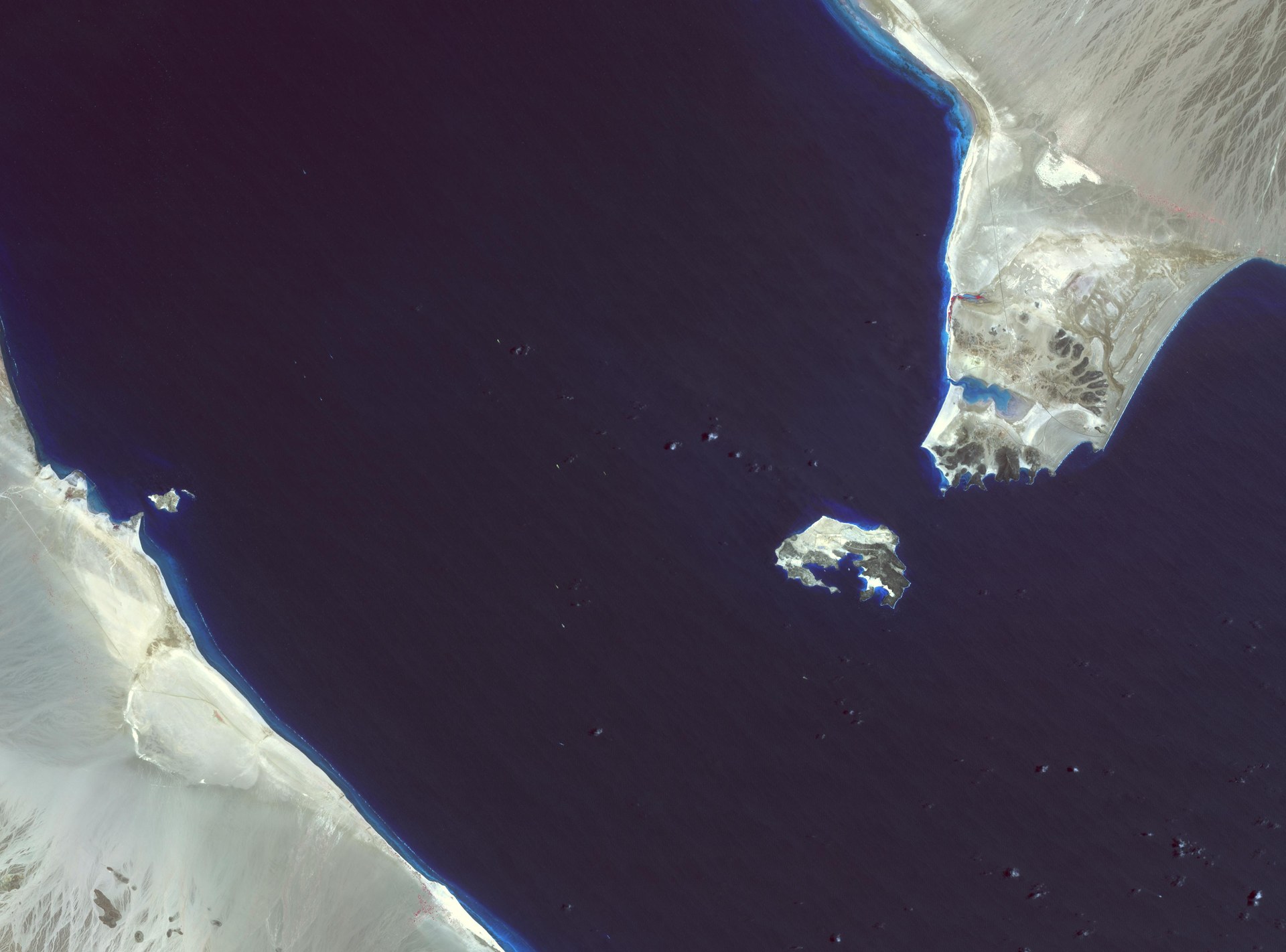
Saudi Arabia hosts the infrastructure from which Project Freedom operates. It has not endorsed the mission those assets are executing. The distinction matters — and whether it survives depends on how Iran and the Houthis choose to read it.
The guided-missile destroyers escorting the May 3 convoy operate from Naval Support Activity Bahrain, the Fifth Fleet headquarters 26 kilometres across the King Fahd Causeway from Saudi Arabia’s Eastern Province. Aircraft supporting the operation fly from Prince Sultan Air Base in central Saudi Arabia. American troops — numbering approximately 15,000 across the theatre according to CENTCOM’s May 3 force disclosure — have been stationed on Saudi soil in escalating numbers since the September 2019 Abqaiq-Khurais strikes, when Patriot batteries and personnel deployed without Riyadh publicly framing the arrangement as authorisation for offensive operations.
The historical parallel is precise. On March 1, 2003, the Turkish Grand National Assembly voted 264-250 to reject an American request to deploy 62,000 troops through Turkey for a northern-front invasion of Iraq — while simultaneously continuing to host US forces at Incirlik Air Base. Turkey did not expel the Americans. It declined a specific operational role. Saudi Arabia is attempting a structurally identical manoeuvre: keep the bases open, sign general principles on freedom of navigation, refuse the specific endorsement that would convert basing into partnership.
Iran and its parliament have signalled they may not accept the distinction. The head of the Iranian parliament’s national security commission declared that “any American interference in the new maritime regime of the Strait of Hormuz will be considered a violation of the ceasefire” (Free Malaysia Today, May 4, 2026). The IRGC framed the convoy as a choice between “an impossible operation or a bad deal with the Islamic Republic.” Whether Saudi Arabia’s platform-but-not-partner status holds depends on whether Tehran and Ansar Allah choose to recognise the difference — or decide that hosting the forces is indistinguishable from directing them. The Pentagon’s May 5 briefing made that calculus more complicated: Hegseth publicly confirmed more than ten Iranian attacks on US forces since April 8 ceasefire, all classified below the threshold for US retaliation — disclosing the exact ceiling Iran needed to calibrate its next move.
Turkey’s 2003 precedent survived because the Iraq war never directly threatened Turkish territory or economic lifelines. Saudi Arabia’s version is more fragile. The kingdom’s oil infrastructure is within range of both Iranian ballistic missiles from the east and Houthi drones from the south. Platform status offers diplomatic cover. It does not offer physical protection if either adversary decides the distinction has expired.
What Does Brent’s Non-Reaction Tell Riyadh About Project Freedom?
Markets delivered their verdict on Project Freedom within hours of the first convoy’s passage. WTI dropped over 8 percent in early trading, falling from approximately $110 to $99.25 per barrel. Brent, the benchmark that actually prices Saudi crude, was “essentially flat” at around $108, with traders seeing “little hope of Trump’s plans resolving” the underlying supply crisis (Al Jazeera / CNBC, May 4, 2026).
The divergence between the two benchmarks contains information. WTI’s drop reflected American domestic market sentiment — a bet that some Gulf crude might soon flow again. Brent’s refusal to decline told a different story: international markets do not believe Project Freedom will restore sustained commercial Hormuz throughput. The first convoy of five supertankers passed without incident, but five supertankers is a demonstration, not a trade route. Pre-war Hormuz handled roughly 20 million barrels per day across all Gulf producers. A single convoy does not replace that flow, and the IRGC’s mine infrastructure — which the US currently lacks adequate mine countermeasure vessels to clear — remains intact beneath the surface.
Saudi Arabia’s fiscal exposure makes the price signal immediately actionable. Bloomberg Economics places the kingdom’s break-even oil price at $94 per barrel, rising to $111 per barrel when PIF domestic spending on Vision 2030 megaprojects is included (Bloomberg, 2025-26). The IMF and Oxford Economics estimate a narrower break-even of approximately $80 per barrel. At $108 Brent — unmoved by Project Freedom — Saudi Arabia is operating below the PIF-inclusive threshold. Every month at this price widens the gap between revenue and the spending commitments MBS has made.
Endorsing Project Freedom would not change the oil price. It would change Saudi Arabia’s threat exposure on the western flank. Brent’s non-reaction is Riyadh’s confirmation that the convoy does not solve the supply crisis. What it would trigger — Houthi activation against Bab el-Mandeb — would make the fiscal position materially worse. The market has told Saudi Arabia that Project Freedom is not worth the trade.
The Silence Is the Policy
Chatham House’s conclusion deserves to be stated without paraphrase. Saudi Arabia’s “reluctance to engage directly in the war against Iran is explained by the threat of maritime insecurity to its Red Sea ambitions, as a kinetic response would increase risks to its energy assets and could draw the Houthis more directly into the conflict, placing Saudi Arabia’s alternative export routes under threat.”
This is not ambivalence. It is the product of a geometric constraint that no amount of diplomatic pressure from Washington can override. Saudi Arabia cannot endorse Project Freedom without converting the Houthi threat from conditional to operational. It cannot denounce Project Freedom without alienating the security guarantor that stations thousands of troops on its soil. It cannot remain silent indefinitely without that silence being read — correctly — as a position.
Riyadh has read the geometry and chosen the only strategy with a positive expected value. It hosts the bases. It signs the general statements. It presses Washington to return to negotiations. It declines every operational endorsement. And it preserves the one asset that keeps Saudi Arabia’s western flank functional: the Houthis’ conditional restraint.
Iran reinforced that geometry on the day Project Freedom launched. Within hours of CENTCOM’s May 4 announcement, Khatam al-Anbiya Central Headquarters commander Aliabadi declared a maritime control zone encompassing the Omani Passage, while Fars News broadcast a fabricated missile-strike claim calibrated to reprice war-risk insurance on Saudi crude — not to hit a ship. The Jask claim’s real target was the landed price of Saudi crude in Jamnagar and Yokohama, and every instrument in the three-part Day 1 probe was designed to make Saudi silence more expensive without requiring Riyadh to speak. Iran combined the information operation with a kinetic one: on the same day that five US-escorted supertankers transited safely, IRGC drones struck ADNOC’s M.V. Barakah 78 nautical miles north of Fujairah — demonstrating, within hours, exactly who Project Freedom protects and who it does not.
The constraint is not temporary. Even if Project Freedom succeeds in establishing a sustained convoy regime through Hormuz, the underlying mine infrastructure remains, the IRGC’s claim to the strait stands, and commercial insurers will continue to price risk at wartime levels. Saudi Arabia would need both straits reliably open and commercially insurable before it could abandon the neutrality posture. No current trajectory delivers that outcome.
Washington may read Saudi silence as ingratitude. Tehran may read it as alignment with the other side. Both readings are wrong. Saudi Arabia’s silence on Project Freedom is not an absence of policy. It is the policy — the only one available to a state that cannot afford to lose two chokepoints at once.
The test will come not from Washington’s frustration but from the adversary’s patience. Iran’s parliament has set a one-month negotiation deadline beginning May 2 — expiring around June 1 — after which Tehran has threatened to enforce its “new maritime regime” without further diplomatic engagement. If that deadline passes without resolution, the pressure on Saudi Arabia to choose a side will intensify from both directions simultaneously. Riyadh’s current strategy depends on a negotiating window that is already narrowing. For now, silence is still the best available option. That may not remain true for long.
The structural reason Riyadh can sustain that silence even as two competing coalitions — CENTCOM’s Project Freedom and the UK-France escort framework — both claim to serve Saudi interests is that neither can succeed without Riyadh’s blessing: how Saudi Arabia’s silence functions as a structural veto over both Hormuz coalitions is examined in full.
That silence broke on May 5, when Saudi Arabia issued its sharpest public condemnation of Iran since February 28 — naming the Islamic Republic explicitly for strikes against the UAE and five GCC neighbours. The condemnation’s own grammar confirms the two-chokepoint trap is still operative: Riyadh offered support for “any measures taken by the UAE” rather than announcing measures of its own. The full constraint analysis is in MBS Breaks Six-Week Silence with MBZ to Condemn Iran’s UAE Strikes.
Frequently Asked Questions
Has Saudi Arabia ever endorsed a US naval operation in the Strait of Hormuz?
Saudi Arabia participated in the International Maritime Security Construct launched in 2019 and has maintained a presence in Combined Maritime Forces patrols in the Gulf. These were multilateral frameworks with defensive mandates and broad international participation. Project Freedom differs structurally: it is a unilateral US operation with an explicitly coercive posture — escorting commercial tankers through waters Iran now claims to administer under a post-ceasefire “maritime regime.” Saudi endorsement would cross from defensive multilateral participation to offensive bilateral alignment, a threshold Riyadh has avoided since the 1991 Gulf War coalition.
Could Saudi Arabia expand Yanbu’s capacity enough to fully replace Hormuz?
The physical gap is approximately 3 million bpd between Yanbu’s operational ceiling (4.0-4.3M bpd) and pre-war Hormuz throughput (7-7.5M bpd). Aramco has initiated terminal expansion at Yanbu, but deep-water berths for VLCCs, additional storage capacity, and loading infrastructure at this scale typically require 3-5 years to construct. Even at full theoretical pipeline capacity, the port remains the bottleneck. And every additional barrel loaded at Yanbu still requires transit through Bab el-Mandeb to reach Asia — the throughput increase would amplify, not reduce, Saudi exposure to the second chokepoint.
What would a simultaneous closure of both straits mean for global energy markets?
The ORF estimated $10 billion per day in disrupted global trade, but this understates the cascading effects. A dual closure would strand an estimated 150-200 laden tankers within 48 hours, trigger force majeure declarations across LNG contracts worth $40-60 billion annually, and eliminate roughly 22-25 percent of the world’s seaborne oil supply. Insurance markets would likely suspend war-risk coverage for the entire Arabian Peninsula, effectively blockading even undamaged ports whose tankers could not obtain transit cover. Goldman Sachs modelled Brent exceeding $150 in a single-chokepoint scenario; a dual closure has no modern precedent and no reliable model.
Why has Iran not retaliated against Saudi Arabia for hosting the US forces executing Project Freedom?
Iran benefits from Saudi neutrality more than it would benefit from punishing Saudi base-hosting. Attacking Saudi infrastructure — Ras Tanura, Abqaiq, or Prince Sultan Air Base — would push Riyadh toward the operational alignment it is currently resisting, potentially unlocking Saudi airspace, logistics, and military assets for direct use against Iran. The IRGC’s calculation appears to be that Saudi passivity, even while hosting American forces, serves Iranian interests better than forcing a Saudi decision. The “crush the UAE” disclosure delivered to Saudi interlocutors reinforces this logic: Tehran is incentivising Saudi inaction by making Emirati alignment look costly and Saudi neutrality look rewarded. That calculus was confirmed on May 7, when Saudi Arabia formally denied Prince Sultan Airbase and airspace access — a binary ABO refusal that ended Project Freedom within 36 hours without Saudi infrastructure ever being tested.