
WASHINGTON — Iran’s first response to Project Freedom was not a missile strike. It was a test — three instruments activated simultaneously within hours of CENTCOM’s May 4 announcement, each aimed at a different audience, none requiring a single warhead to reach its target. Fars News claimed two missiles struck a US Navy “frigate” near Jask. Major General Ali Abdollahi Aliabadi, commander of Khatam al-Anbiya Central Headquarters, declared a maritime control zone encompassing the Omani Passage that Project Freedom convoys must traverse. State television broadcast a direct IRGC warning that any American force approaching the strait “will be attacked.”
CENTCOM denied the strike and confirmed that no US ships had been hit. CNN reported the same day that a US official described Project Freedom as “not an escort mission” — American destroyers will patrol near the strait but will not steam alongside merchant vessels through it. The gap between the force deployed and its rules of engagement is what Iran probed on Day 1.
Table of Contents
- What Does Deterrence-by-Presence Mean Without an Escort?
- The Three-Instrument Probe
- Why Claim a Strike That Almost Certainly Never Happened?
- The Omani Passage Trap
- What Does the Stark Precedent Tell Iran?
- Who Commands the IRGC Navy?
- Saudi Arabia’s Silent Stake
- Washington’s Day One Contradiction
- Frequently Asked Questions
What Does Deterrence-by-Presence Mean Without an Escort?
Project Freedom’s force package is not small. CENTCOM’s May 4 press release listed guided-missile destroyers, over 100 land- and sea-based aircraft, multi-domain unmanned platforms, and approximately 15,000 service members positioned to ensure commercial shipping transits the Strait of Hormuz. The announcement carried the bureaucratic confidence of a Pentagon that had just committed substantial assets to an operational theater. What it did not carry — and what CNN’s reporting made explicit within hours — was a commitment to put those assets between Iranian missiles and the merchant vessels they are supposed to protect.
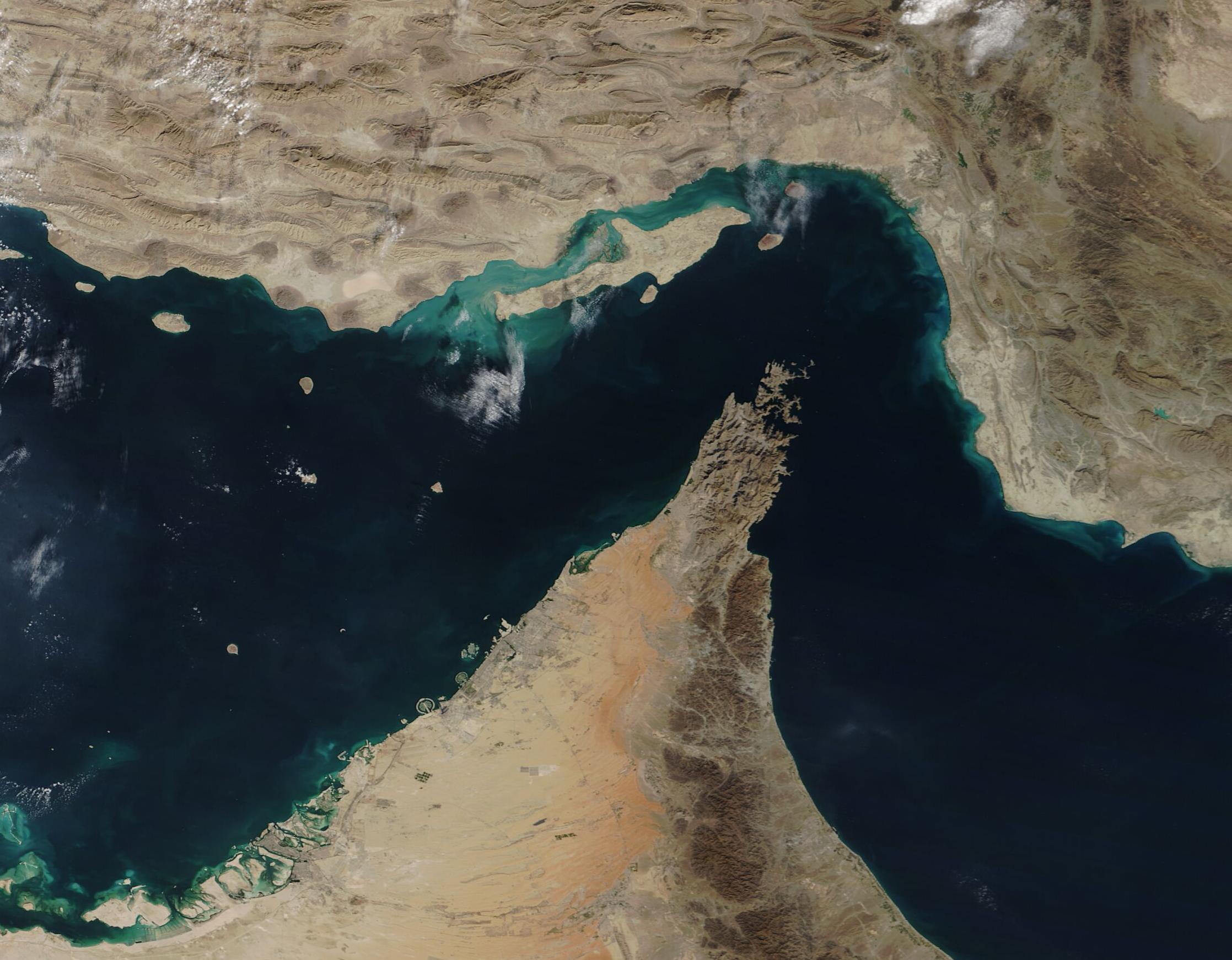
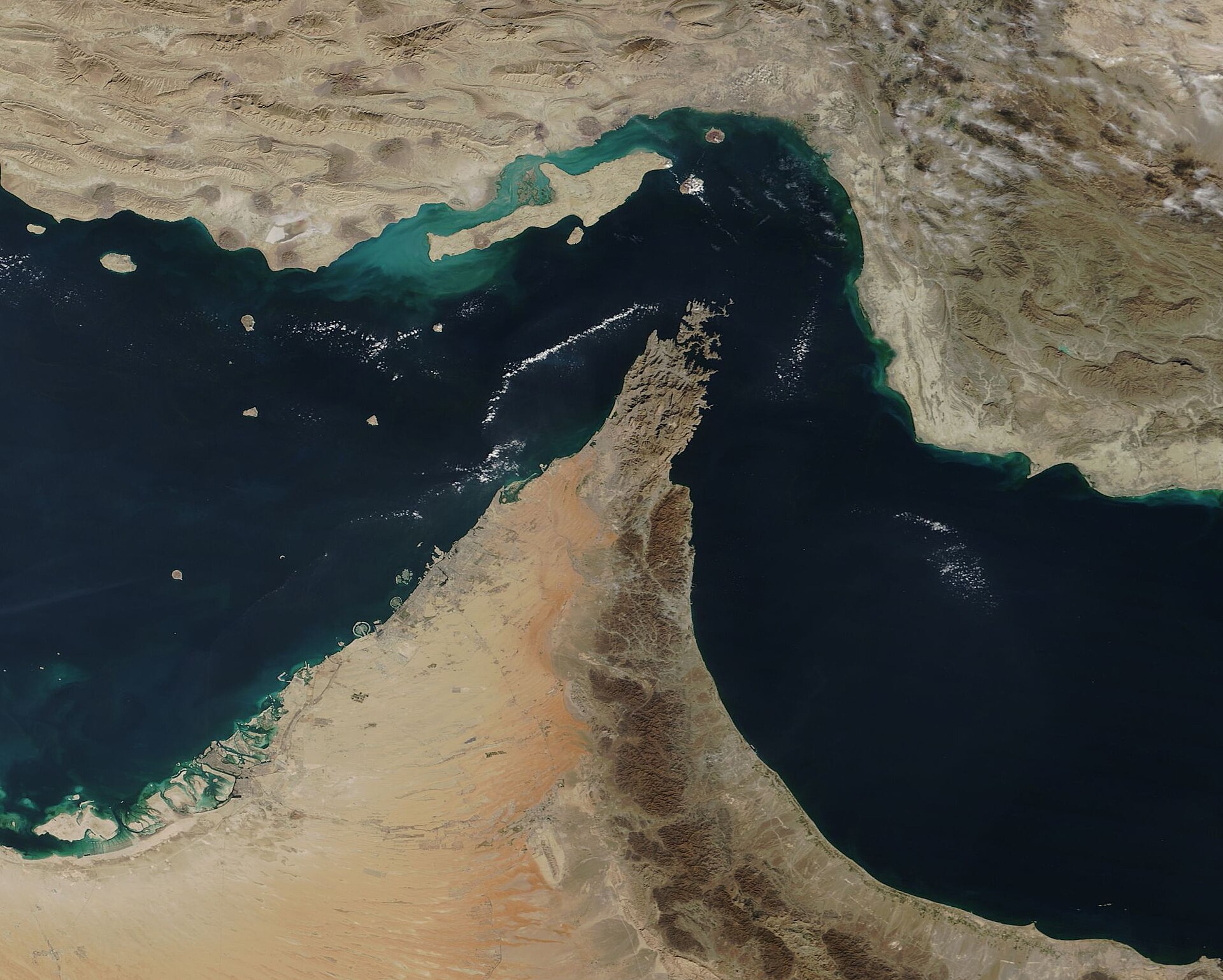
A US official told CNN on May 4 that Project Freedom “is not an escort mission.” The phrasing matters. Destroyers will operate in the vicinity of the strait. Aircraft will fly overhead. But American warships will not sail in formation with tankers through the narrowest and most exposed segment of the transit — the 21-nautical-mile bottleneck where both inbound and outbound traffic separation scheme lanes pass through Omani territorial waters, within range of Iran’s shore-based arsenal.
The range arithmetic explains the reluctance. Iran’s Khalij Fars anti-ship ballistic missile reaches 300 kilometers. The Ghader, a C-802 derivative, covers 200–300 kilometers. The shipping lanes at the strait’s entry point sit approximately 250 kilometers from Bandar-e-Jask — inside the effective envelope of both systems. CENTCOM’s decision to keep destroyers outside that envelope rather than alongside merchant vessels is a rational force-protection calculation. It is also a gap. An escort that maintains standoff distance from the threat it is meant to deter relies on the adversary believing that aircraft overhead constitute a sufficient deterrent even when the warships are not physically present in the kill zone.
The distinction between “overhead deterrence” and “alongside escort” is not semantic. A destroyer sailing in formation with a tanker provides point defense — its Phalanx close-in weapons system, its SM-2 and SM-6 interceptors, its electronic warfare suite — against incoming anti-ship missiles in real time. An aircraft circling at altitude provides a retaliatory threat: if Iran fires, the aircraft can strike the launch site, but the tanker absorbs the first hit before the response arrives. The 1987–88 Tanker War proved that retaliatory threat alone does not prevent attacks on merchant shipping. During Operation Earnest Will — the last US convoy escort through Hormuz — American warships sailed alongside Kuwaiti tankers precisely because overhead coverage from carrier aircraft had failed to deter Iranian mine-laying and small-boat attacks on unescorted vessels.
The Middle East briefing 3,000+ readers start their day with.
One email. Every weekday morning. Free.
Iran’s Day 1 response targeted the gap between those two models. The probe did not require missiles. It required three coordinated instruments, each addressed to a different audience, activated within the same six-hour window.
The Three-Instrument Probe
The three Iranian actions on May 4 were not three separate responses to Project Freedom. They were three instruments of a single probe, each calibrated to a different audience and a different domain of the conflict.
The first instrument was the Fars News missile-strike claim — two missiles allegedly fired at a US Navy “frigate” near Jask, sourced to “local sources in southern Iran,” with no hull number, no ship name, and no coordinates. The target audience was not CENTCOM. It was the war-risk insurance market. Tanker brokers and underwriters process claims through Reuters and Bloomberg terminals before Pentagon press offices can draft denial language. A four-hour window in which the claim is live and undenied is sufficient to freeze convoy scheduling. Premiums that already stand at 2–8 percent of vessel value — effectively $2–8 million per transit for a large tanker — reprice on ambiguity, not on confirmed strikes.
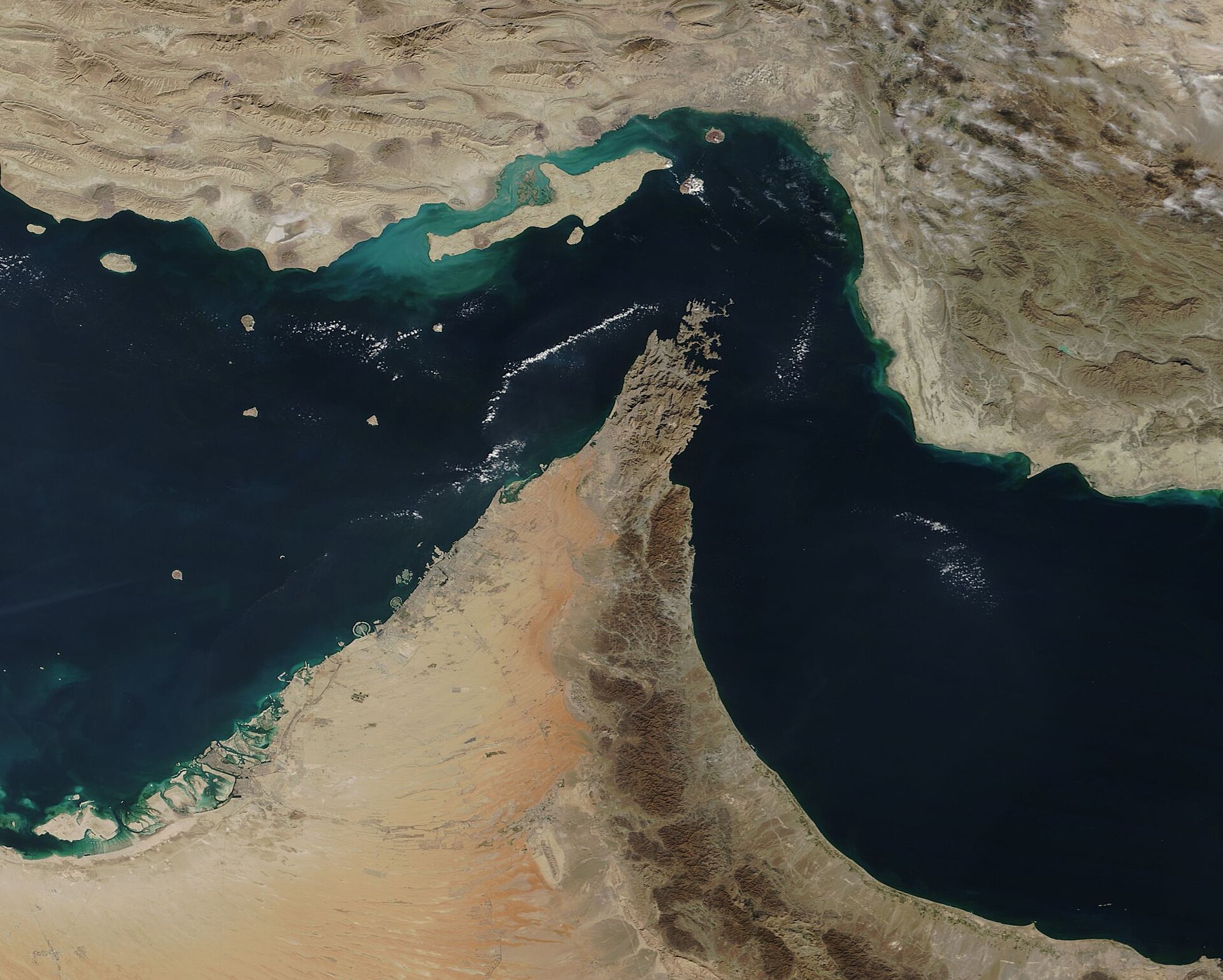
The second instrument was Aliabadi’s maritime control zone declaration, broadcast via Tasnim. The zone’s boundaries — south from Mount Mobarak on the Iranian coast to south of Fujairah in the UAE, west from the end of Qeshm Island to Umm al-Quwain — encompass the entire width of the strait, including the Omani Passage. The target audience was not the United States. It was Oman. Project Freedom’s convoy routing runs through Omani territorial waters. Iran’s zone declaration asserts administrative authority over the specific corridor the US designated for its convoys, forcing Muscat to either validate the claim through silence, reject it publicly and forfeit its role as Tehran’s diplomatic conduit, or pretend it does not exist while Iranian and American naval forces contest the waters off its coast.
The third instrument was the IRGC’s attack warning, broadcast on IRIB: “We warn that any foreign armed force, especially the invading American army, will be attacked if they attempt to approach and enter the Strait of Hormuz.” The target audience was dual — CENTCOM, where the warning calibrates risk calculations for the next convoy, and the IRGC’s domestic constituency, where the statement functions as a commitment device. Ebrahim Azizi, head of Iran’s Parliamentary National Security Commission, reinforced the framing by declaring that “any American interference in the new maritime regime of the Strait of Hormuz will be considered a violation of the ceasefire” (Gulf News, May 3–4). Parliament’s role is legitimation. The IRGC’s role is operational. Aliabadi’s role is strategic-territorial. All three fired on the same day.
Why Claim a Strike That Almost Certainly Never Happened?
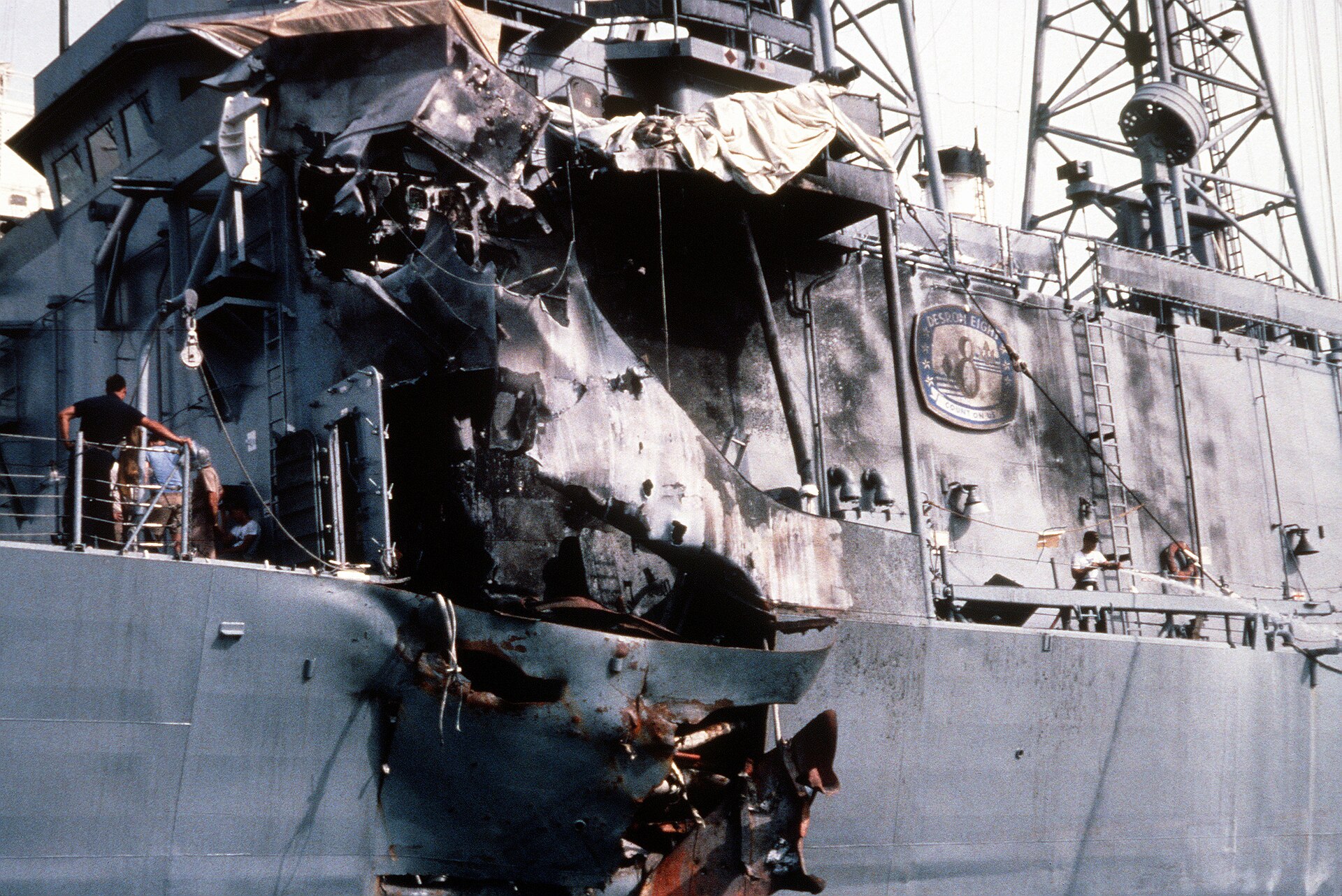
Fars News described two missiles striking a “U.S. Navy frigate” near Jask after the vessel allegedly ignored warnings. The claim carried the hallmarks of a deliberate information operation: attribution to “local sources in southern Iran” rather than an official IRGC spokesman, no hull number, no ship name, no coordinates, and a target classification — “frigate” — that does not match CENTCOM’s force composition. The US Navy operates guided-missile destroyers (DDGs) in the Gulf, not frigates (FFGs). The misclassification was not careless.
The word “frigate” evokes a specific vessel. On May 17, 1987, an Iraqi Mirage F1 fired two AM-39 Exocet missiles at the USS Stark (FFG-31) in the Persian Gulf, killing 37 American sailors. The Reagan administration chose not to retaliate against Iraq — the strategic calculus of the Iran-Iraq War made Baghdad a de facto US partner despite the attack. Iran’s institutional memory of that episode is detailed. The “frigate” terminology in the Fars claim is a compressed historical argument delivered in a single word: the United States has absorbed tactical hits against frigates in the Gulf before and decided that the strategic cost of retaliation exceeded the strategic cost of absorption.
The claim follows a template that NewsGuard documented as 50 false claims in the first 25 days of the war. CENTCOM has now issued at least six flat denials of IRGC combat claims across 65 days of conflict. The template is consistent: dramatic operational claim, sub-official attribution, missing verifiable detail, and a fog-of-war window in which the denial must chase the claim through the same channels the claim already traveled. By the time CENTCOM stated that “no US Navy ships have been struck,” the Fars report had already moved through insurance desk feeds, tanker broker channels, and the PressTV/Tasnim/Mehr three-outlet amplification network — the same synchronized media structure used during the Araghchi reversal on April 17–18.
The functional purpose of the claim is not reputational. It is economic. Strait of Hormuz traffic has collapsed to approximately 45 transits since the April 8 ceasefire — roughly 3.6 percent of the pre-war baseline. Project Freedom’s viability depends on commercial shippers believing that the insurance premium of transit is justified by the military protection offered. A missile claim that is false but unverifiable for four hours degrades that calculation at precisely the moment CENTCOM needs it to hold. The denial corrected the record. The premium had already moved.
The Omani Passage Trap
Aliabadi’s statement, published by Tasnim on May 4, carried the bureaucratic register of a port authority notice and the strategic weight of a territorial claim: “We advise all commercial vessels and oil tankers to refrain from any attempt to pass through the Strait of Hormuz without coordination with the Armed Forces of Iran stationed there in order not to endanger their security.”
The geographic coordinates of the declared zone make the strategic intent explicit. The southern boundary runs from Mount Mobarak on the Iranian coast to a point south of Fujairah in the UAE. The western boundary extends from the end of Qeshm Island to Umm al-Quwain. Together, these lines encompass the entire 21-nautical-mile width of the strait — including the Omani Passage through which the traffic separation scheme channels all eastbound and westbound shipping. Project Freedom convoys are planned for this passage, outside Iranian territorial waters, inside Omani waters. Aliabadi’s declaration asserts Iranian administrative jurisdiction over the specific corridor the United States designated as the operational space for its convoy protection.
The trap is not military. It is diplomatic. Oman has spent 65 days of war maintaining strategic ambiguity — serving as Iran’s primary back-channel for ceasefire negotiations while hosting US military assets and maintaining security cooperation with Washington. Iran’s 14-point proposal, which includes a freeze on enrichment that could extend to 15 years, was transmitted to the United States via the Oman-Pakistan channel. Oman’s Transport Minister, Sayyid Hamoud al-Maawali, publicly stated in April that “no tolls can be imposed for crossing Hormuz.” The control zone declaration forces Muscat past ambiguity. If Oman publicly rejects the zone, it alienates the government whose ceasefire terms it is transmitting. If Oman stays silent, it tacitly concedes Iranian administrative claims over its own territorial waters.
The declaration intersects with an international legal dimension that makes it harder to dismiss as mere posturing. UNCLOS Article 38 guarantees the right of transit passage through straits used for international navigation — Hormuz being the canonical example. Article 26 prohibits charges for transit. Iran’s position has historically challenged the applicability of these provisions, arguing that its 1993 Maritime Zones Act predates UNCLOS ratification and that Iran never ratified the convention. Aliabadi’s control zone is not framed as a blockade, which would be an act of war. It is framed as an administrative “coordination” requirement — vessels must coordinate with Iranian armed forces “in order not to endanger their security.” The distinction is deliberate. A coordination requirement for safe passage sits in a different legal category than a prohibition on passage, and it mirrors the language of Iran’s 10-point Islamabad plan, which included IRGC “coordination” over Hormuz as a treaty requirement.
The legislative track reinforces the lawfare. Iran’s parliament is advancing a 12-article Hormuz sovereignty law, sponsored by legislators Ahmadi and Rezayi Kouchi, that would codify Iranian authority over strait transits as domestic law. Aliabadi’s zone is the operational expression of what the law would formalize. Azizi’s framing — “the Strait of Hormuz and the Persian Gulf would not be managed by Trump’s delusional posts” — positions the control zone not as a military provocation but as an assertion of sovereign jurisdiction. The language is designed for the International Court of Justice as much as for CNN.
What Does the Stark Precedent Tell Iran?
Iran’s calibration on Day 1 operated between two historical thresholds that define American tolerance for tactical losses in the Persian Gulf. The lower threshold is the USS Stark. The upper threshold is Operation Praying Mantis.
The Stark episode established that the United States will absorb a tactical hit against a warship in the Gulf without retaliating when the strategic calculus disfavors escalation. Thirty-seven American sailors died on May 17, 1987, and the Reagan administration responded with diplomatic complaints to Baghdad — not military force — because Iraq was a strategic partner in the containment of Iran during the Iran-Iraq War. The precedent is specific: American lives lost on a Gulf warship did not automatically trigger a military response. Strategic context determined the response.
Operation Praying Mantis established the upper threshold. Four days after the USS Samuel B. Roberts struck an Iranian mine on April 14, 1988, the US Navy executed its largest surface engagement since World War II, destroying two Iranian oil platforms (Sassan and Sirri), sinking the frigate Sahand, and severely damaging the frigate Sabalan. The trigger was clear attribution — a physical mine, traceable to Iranian inventory — combined with a political environment in which the Reagan administration needed to demonstrate resolve after the Stark embarrassment.
The Jask claim is calibrated to stay below the Praying Mantis threshold. No hull number, no coordinates, no official IRGC spokesman, attribution to “local sources,” a target classification (“frigate”) that does not match the force composition — every missing detail is a deniability mechanism. The claim imposes economic costs through insurance repricing without providing the clear attribution that would mandate a kinetic American response. It is the informational equivalent of a Soviet submarine shadowing the quarantine line during the 1962 Cuban missile crisis — close enough to demonstrate capability, ambiguous enough to avoid triggering the response protocol.
Iran’s reading of the Stark-to-Praying Mantis spectrum is not abstract. IRGC-affiliated strategic journals and Iranian military academics have consistently analyzed the 1987–88 Tanker War as a template for calibrating pressure on US forces in the Gulf. The probe’s design — no attribution, no coordinates, a misclassified target — reflects that institutional knowledge directly.
Who Commands the IRGC Navy?
The three-instrument probe was executed on a day when the IRGC’s naval command structure had been headless for 35 days. Rear Admiral Ali Reza Tangsiri, commander of the IRGC Navy, was killed on March 26 and confirmed dead on March 30. No named successor has been announced as of May 4. The operational gap has lasted longer than the command vacancy following the January 2020 killing of Qasem Soleimani, when Esmail Qaani was named within hours.
Aliabadi’s control zone declaration fills part of that vacuum. As commander of Khatam al-Anbiya Central Headquarters — the joint IRGC-Army operational command — his authority sits above the IRGC Navy in the institutional hierarchy. His statement on May 4 elevated the Hormuz question from a naval matter to a strategic-command matter, transferring de facto operational authority over the strait from a headless IRGC Navy to a joint headquarters with broader institutional reach. The shift matters. Khatam al-Anbiya is the same command that President Pezeshkian publicly accused of blocking the ceasefire — the command to which he attributed the “deviation from delegation’s mandate” that triggered the Islamabad walkout in April.
The authorization problem extends above Aliabadi. Under Article 176 of the Iranian constitution, IRGC operational orders of this magnitude require ratification through the Supreme National Security Council, which reports to the Supreme Leader. Khamenei has been absent from public view or non-public for approximately 65 days. His son Mojtaba has communicated only via audio. The SNSC’s deputy, Ali Akbar Ahmadian, has not issued a public statement on Hormuz since the ceasefire. The command structure executing the Day 1 probe is operating in what amounts to an authorization vacuum — the same vacuum that has constrained IRGC action throughout the ceasefire period.
The vacuum cuts both ways. A command structure that lacks authorization to escalate beyond information warfare also lacks authorization to stand down. The probe’s instruments — a false claim, a territorial declaration, a broadcast warning — sit precisely at the level of action available to commanders who can threaten but cannot be authorized to follow through. The data here is thin: there is no way to confirm from open sources whether Aliabadi coordinated the three instruments under SNSC direction or improvised within the gap left by Khamenei’s absence and Tangsiri’s death. Either interpretation produces the same operational outcome on Day 1.
Saudi Arabia’s Silent Stake
The cargo that Project Freedom convoys are designed to move is not abstract. Saudi Arabia’s pre-war Hormuz throughput of 7–7.5 million barrels per day has been replaced by a Yanbu bypass with a loading ceiling of 4–5.9 million barrels per day — a structural gap of 1.1–1.6 million barrels per day that Saudi Arabia cannot close without restoring Hormuz transits. The East-West Pipeline, struck by the IRGC on April 8 within hours of the ceasefire’s nominal start, carries crude to Yanbu but does not reach its pre-war capacity. Asia-bound exports are down 38.6 percent, according to Kpler data.
Saudi Arabia’s fiscal break-even sits at $108–111 per barrel, according to Bloomberg’s PIF-inclusive calculation. Brent trades in the $112–116 range — a margin thin enough that any further disruption to export volumes pushes the Kingdom into deficit territory. Goldman Sachs has estimated a war-adjusted fiscal deficit of 6.6 percent of GDP, against the official projection of 3.3 percent. The Kingdom’s June OSP was reset to +$3.50 per barrel, a $16 drop from May’s war-premium of +$19.50 — an implicit acknowledgment that the pricing overshoot of the war’s first weeks had made Saudi crude uncompetitive in Asian spot markets.
Saudi Arabia cannot publicly endorse Project Freedom. The two-chokepoint trap — Iran’s demonstrated ability to strike both Hormuz and the Yanbu bypass infrastructure — means that MBS cannot validate an American military operation against Iran without inviting IRGC targeting of the very export infrastructure the operation is meant to protect. Riyadh’s silence on May 4 reflected structural exposure, not diplomatic caution. The Kingdom is the primary beneficiary of a mission it cannot name, funded by a government whose regional posture it cannot publicly align with, protecting cargo whose restoration is the single most important variable in Saudi fiscal survival.
The insurance dimension compounds the structural problem. Saudi crude transiting Hormuz carries a war-risk premium that Russian Urals and American WTI do not. Every percentage point added to hull-value insurance translates directly into a competitive disadvantage for Saudi barrels in Asian spot markets — markets where Saudi Arabia has already lost share, with its India market position dropping from 16 to 11 percent since the war began. The Fars missile claim’s real target was not the US Navy — it was the landed price of Saudi crude in Jamnagar and Yokohama.
Iran’s probe was designed to make Riyadh’s silence more expensive. The Fars claim raised premiums on Saudi crude those convoys would carry. Aliabadi’s zone declaration created a jurisdictional challenge to the corridor those tankers must use. The IRGC warning raised the kinetic risk to the escort force that Saudi Arabia depends on but cannot acknowledge. Each instrument increased the cost of the Kingdom’s position without requiring Riyadh to speak.
Washington’s Day One Contradiction
On the same day that CENTCOM launched Project Freedom — the largest US naval deployment in the Persian Gulf since the 1987–88 Tanker War — the United States repatriated 22 Iranian crew members from the MV Touska to Pakistan. Officials described the handover as “a confidence-building measure by the United States of America” (Al Jazeera, May 4). Six additional Touska crew had been transferred earlier to “a regional country.” The Touska had been seized on April 19 after its crew ignored six hours of US Navy warnings while attempting to transit from the Arabian Sea to Bandar Abbas through the blockade. The United States said it was carrying “dual-use military items” (Reuters).
The simultaneous execution of hard coercive operations and soft conciliatory gestures through the same intermediary — Pakistan — produces its own form of incoherence. Pakistan’s General Munir visited Khatam al-Anbiya Central Headquarters on April 16. That is the same command structure now declaring a maritime control zone over the Omani Passage, the same institutional address from which the IRGC warning was coordinated, the same headquarters Pezeshkian accused of blocking the ceasefire. The dual-track assumes that Pakistan can serve as both a channel for confidence-building measures and a restraining influence on the military command issuing the attack orders. On May 4, those two functions collided.
Iran’s own dual track is equally fractured. Tehran is reviewing the US response to its 14-point proposal — which includes a 15-year enrichment freeze, transmitted through the Oman-Pakistan channel — while Aliabadi’s command declares sovereign control over the waters where the proposal’s enforcement would need to operate. Trump called the plan “not acceptable” on May 3. The IRGC issued a 30-day blockade deadline approximately May 2, expiring around June 1. Project Freedom launched two days into that window — not after the deadline, not at its expiration, but at the front end, when the coercive leverage is at its maximum.
The calendar makes the incoherence structural, not tactical. The negotiation track and the escalation track run on the same schedule, through the same intermediaries, toward incompatible endpoints. The Hajj season is underway with 1.2–1.5 million pilgrims inside Saudi Arabia’s air defense perimeter. Pakistan is the crew repatriation recipient, the ceasefire intermediary, and the nuclear-proposal conduit — three roles requiring three incompatible postures toward Tehran. Every one of these timelines converged on May 4.
The MV Touska crew landed in Pakistan on the same afternoon that IRIB broadcast the IRGC’s “will be attacked” warning. Washington’s gesture assumed a Pakistan that could transmit restraint to the IRGC. Iran’s probe assumed a United States whose destroyer gap was visible enough to test on Day 1. Both assumptions operated through the same channels, in opposite directions, on the same afternoon.
Frequently Asked Questions
Has the IRGC actually fired on a US warship during the 2026 conflict?
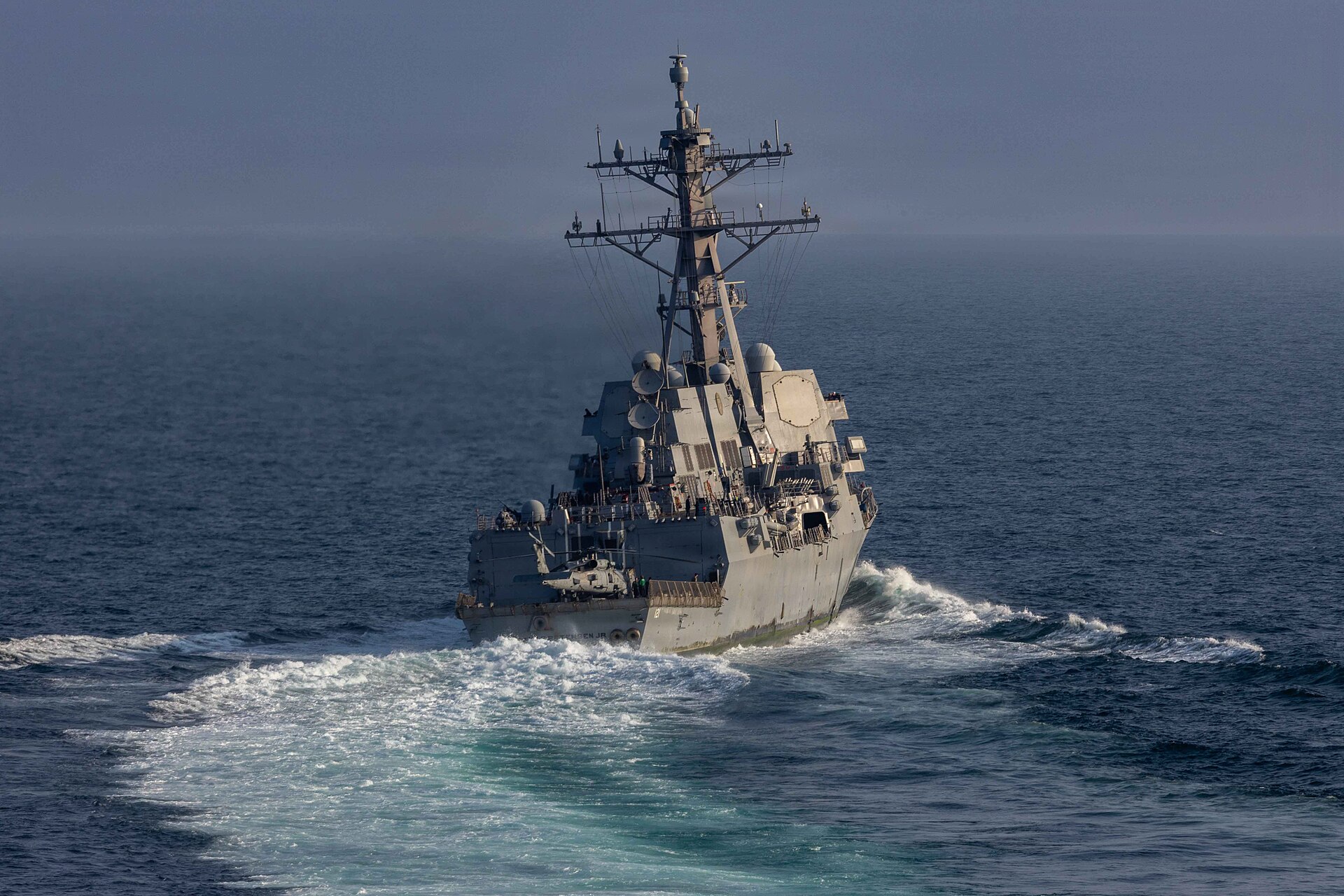
No confirmed kinetic engagement between IRGC forces and a US Navy vessel has been verified through open sources as of May 4, 2026. CENTCOM has issued at least six flat denials of Iranian strike claims across 65 days of conflict. The closest verified confrontation was the April 11 incident involving the USS Frank E. Petersen Jr. (DDG-121), in which the IRGC issued a “last warning” radio call ordering the destroyer to return to the Indian Ocean. The most widely circulated “Day 1 footage” of a confrontation appears to derive from that earlier April 11 episode, not from a new clash on May 4.
What insurance mechanism backs Project Freedom convoys?
Washington is creating federal guarantees to backstop private insurers covering Hormuz convoy transits, according to the World Economic Forum’s April 2026 reporting on Gulf maritime security. The US government would effectively serve as insurer of last resort — absorbing the residual risk that commercial underwriters will not price. The mechanism mirrors Cold War-era government-backed maritime insurance during the 1987–88 Tanker War, when the Kuwaiti tanker reflagging operation required similar federal risk absorption after Lloyds syndicates refused Gulf war-risk coverage at commercially viable rates.
How many mine-clearance vessels does the US have in the Gulf?
Two Avenger-class mine countermeasures ships remain in the theater as of May 2026. Four additional Avenger-class vessels were decommissioned from the US Naval Base in Bahrain in September 2025 — a drawdown completed five months before the war began. Three Littoral Combat Ships with mine countermeasures mission packages are deployed in Asia, not the Gulf. Based on the 1991 Kuwait benchmark, clearing approximately 200 square miles of the strait’s approaches would require an estimated 51 days after any agreement — assuming the full mine-clearance fleet were available, which it is not.
What is Iran’s 14-point nuclear proposal?
Iran’s proposal, transmitted via the Pakistan-Oman channel, includes a complete freeze on uranium enrichment “that could extend to 15 years,” after which Iran would be permitted to resume enrichment at 3.67 percent (reactor-grade). Enrichment infrastructure — including advanced IR-6 centrifuge cascades — would not be dismantled, only mothballed under monitoring. Iran confirmed on May 3 that it had received the US response via Pakistan and was reviewing it. Trump publicly called the plan “not acceptable” the same day (CNBC, May 3). Iran’s current enriched uranium stockpile includes 440.9 kilograms at 60 percent purity, approximately 25 days of further processing from weapons-grade material using its existing IR-6 cascades.