
While the United States currently maintains a strong hold on the AI market, thanks to the dominance of AI models from OpenAI, Google, Microsoft, and Meta, this monopoly may soon be under threat.
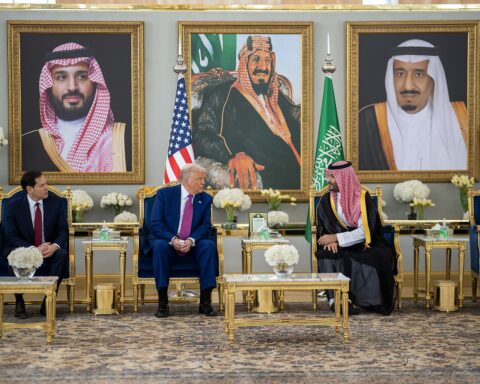
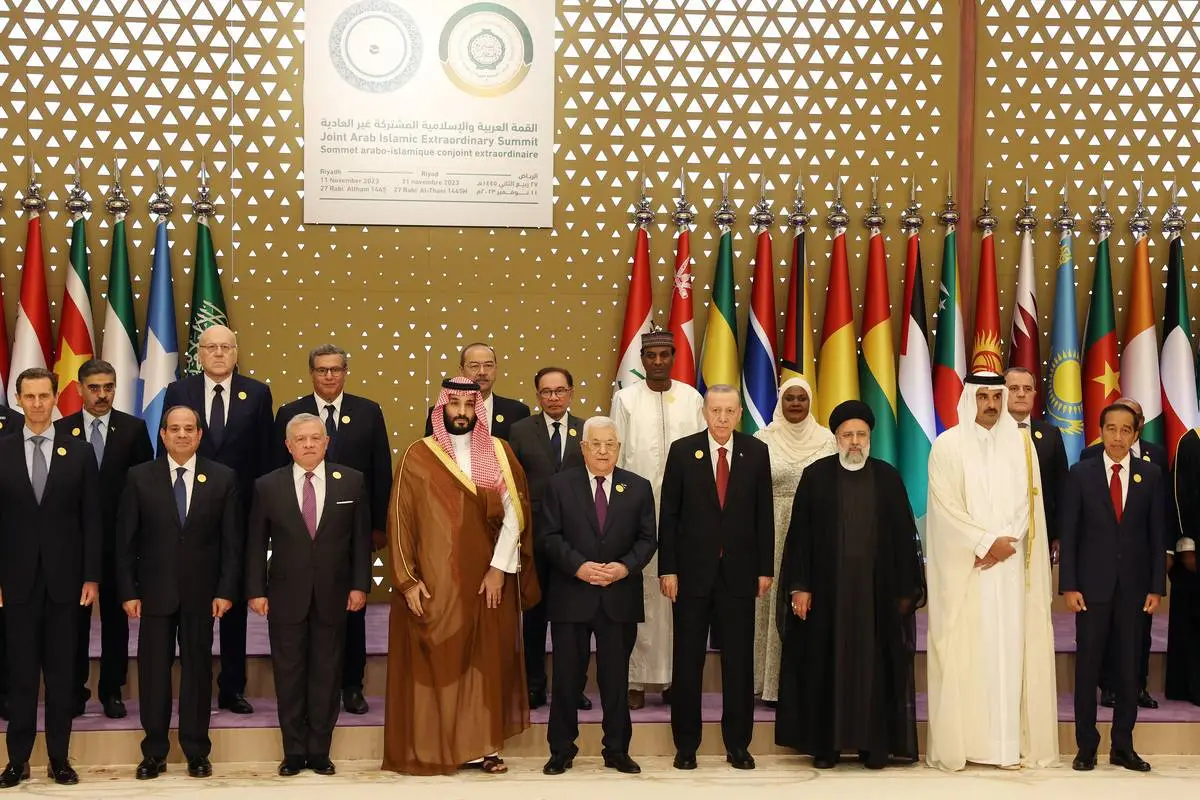
Saudi Arabia’s collaboration with Chinese AI studios and tech companies poses a significant challenge to America’s control over AI in general, including generative AI models. As Saudi Arabia invests heavily in developing its own indigenous AI model, China is more than willing to offer its technical expertise.
The United Arab Emirates (UAE) recently introduced Falcon 180B, a groundbreaking artificial intelligence large language model specifically designed for Arabic. With most major players in the region on the cusp of a major AI breakthrough, as reported by the Digital Watch Observatory, it is clear that the landscape is rapidly evolving.
In an attempt to restrict their domestic tech companies from selling high-end AI-enabling GPUs and Chips to China and West Asia, the US has imposed several restrictions, as evidenced by regulatory filings from NVIDIA and AMD. However, even these measures may not be enough to prevent West Asian countries from developing their own AI models.
Recently, we highlighted the race between Saudi Arabia and the UAE to acquire NVIDIA’s AI GPUs, the A100 and the H100. Analytics Magazine India has since reported that NVIDIA found a workaround to the US restrictions by providing UAE and Saudi Arabia with modified versions of their GPUs. This development underscores the commitment of these countries to advance their AI capabilities.
In a striking display of resilience against US sanctions, China’s Huawei was able to create a highly sophisticated system-on-a-chip (SoC) despite being placed on a trade blacklist in 2019. This success story sends a clear message to the US that their sanctions are merely bumps on the road.
The Middle East briefing 3,000+ readers start their day with.
One email. Every weekday morning. Free.
Moreover, China has been actively showcasing its AI prowess to the world, with companies like Alibaba, Weibo, Tencent, and others launching their own Chat-GPT rivals. Huawei’s recent launch of a cloud data center in Riyadh further highlights China’s commitment to expanding its online services in the Middle East and North Africa while strengthening its relationship with Saudi Arabia.
Saudi Arabia, a country with significant financial resources, is striving to reduce its dependence on US suppliers like NVIDIA and AMD. With ample funds generated by $1 billion in daily oil exports, Saudi Arabia and the UAE have experienced a financial windfall. Both countries oversee substantial sovereign investment funds, enabling them to allocate substantial resources to their AI ambitions.
Saudi Arabia alone has announced plans to invest over $20 billion in AI initiatives by 2030. With China as the perfect partner for their ambitions, Saudi Arabia is poised to make significant strides in the AI race. As the landscape evolves, the US must confront the reality of a formidable collaboration between Saudi Arabia and China, threatening its AI monopoly.