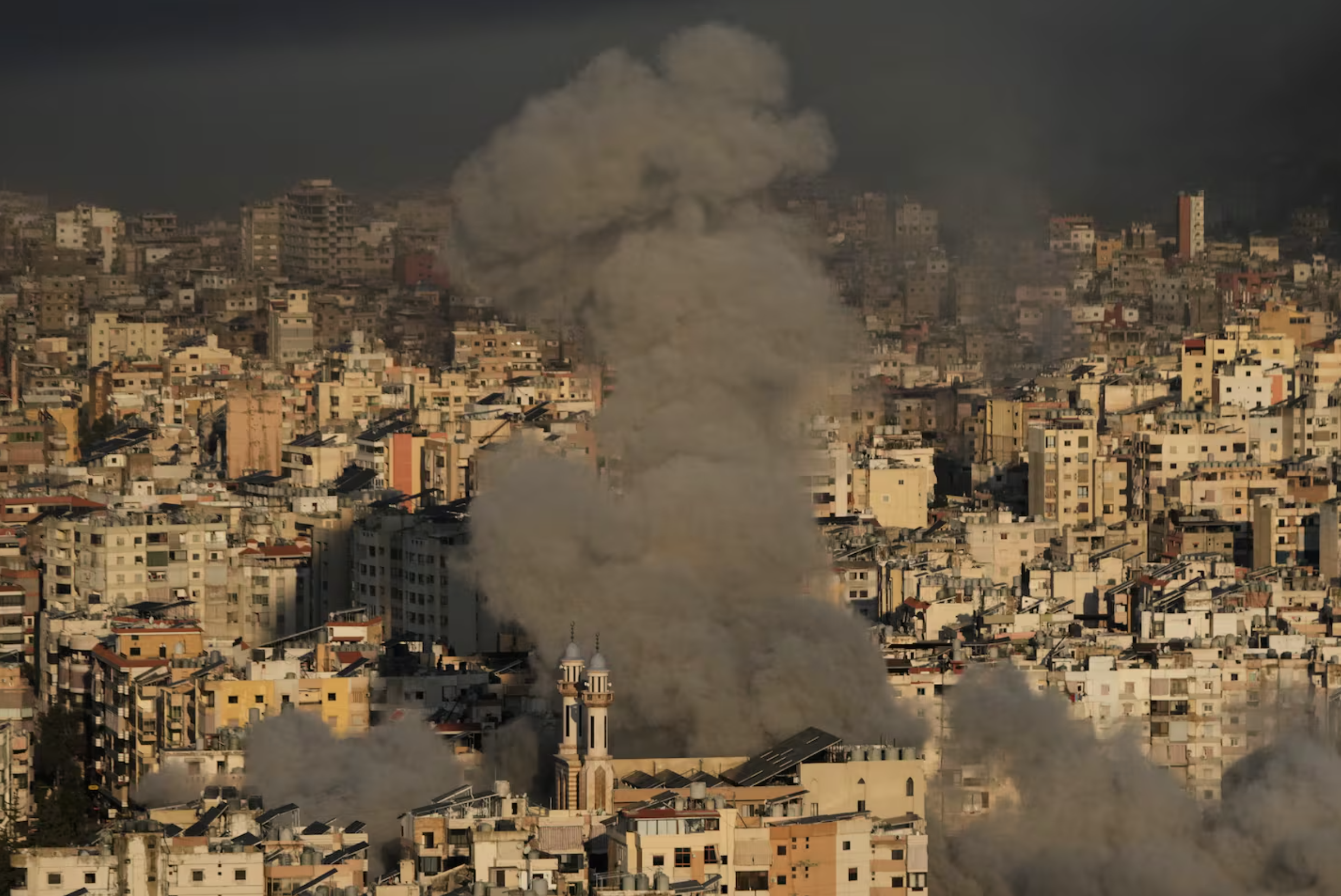

On Saturday, March 1, the Saudi Ministry of Foreign Affairs issued a statement condemning what it called “blatant and cowardly Iranian attacks” on the Kingdom of Saudi Arabia, declaring that Riyadh reserved the right to “take all necessary measures to defend itself, including the option of responding to aggression.” The language was unambiguous. The posture was martial. The Kingdom, which had maintained a posture of declared neutrality toward the US-Israeli strikes on Iran for nearly a week, had crossed a threshold. Saudi Arabia was publicly positioning itself as a nation preparing for war.
On the same day, according to Middle East Eye, Crown Prince Mohammed bin Salman placed a series of phone calls to the leaders of Bahrain, Kuwait, Qatar, and the United Arab Emirates. The message he delivered was the opposite of the one his foreign ministry had just broadcast to the world. MBS told Gulf leaders to avoid any steps that could further inflame tensions with Iran. Senior Saudi officials on those calls reportedly expressed anger not only at Tehran but at the scale and timing of the US-Israeli strikes that had triggered Iran’s retaliation in the first place. The crown prince who had publicly drawn his sword was privately asking everyone around him to put theirs away.
This is the defining contradiction of Saudi Arabia’s position in the Iran conflict as of early March 2026: a Kingdom that speaks the language of confrontation to the cameras and the language of restraint behind closed doors. It is not hypocrisy in the simple sense. It is strategy, the kind of two-track diplomacy that MBS has refined into a governing method across every domain of Saudi policy. But it is a strategy operating under extraordinary pressure, because the gap between public posture and private reality has never been wider, and the forces pressing on both sides have never been more dangerous.
The Architecture of the Double Message
To understand what MBS is doing, it is necessary to separate the audiences he is addressing and the objectives he is pursuing with each. The public condemnation of Iran serves one set of purposes. The private counsel of restraint serves another. Both are rational. Both are deliberate. And both are, at this moment, incompatible in ways that will eventually force a resolution.
The public statement is directed at three audiences simultaneously. The first is Washington. President Trump called MBS after the Iranian strikes and told him that the United States “stands with Saudi Arabia” and supports all Saudi measures to defend itself. That assurance is valuable only if Saudi Arabia is seen to be defending itself. A Kingdom that absorbs missile strikes and drone attacks without a forceful public response risks being perceived in Washington as either weak or ungrateful, neither of which generates the military support and diplomatic cover that Riyadh needs. The condemnation, with its explicit reference to “responding to aggression,” signals to Trump and the American national security establishment that Saudi Arabia is an active partner in the conflict, not a bystander requesting protection.
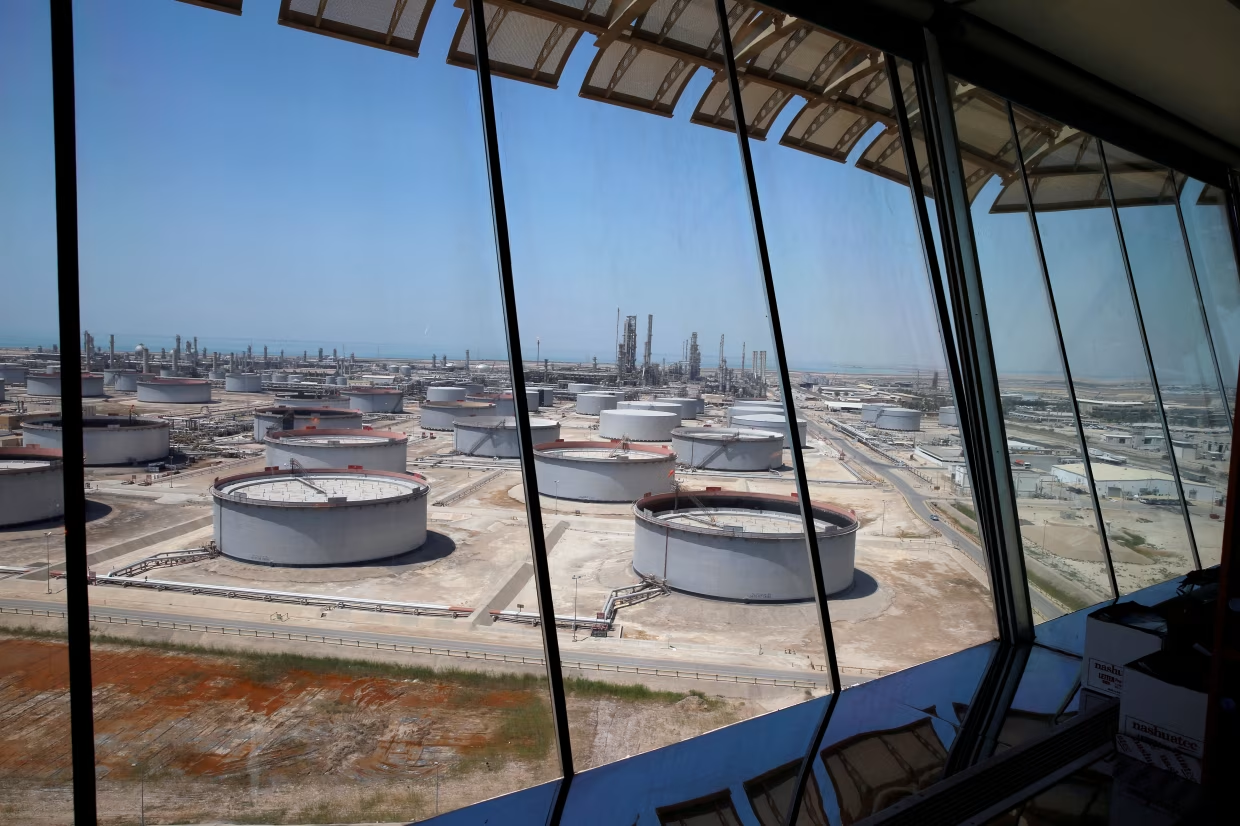
The second audience is the Saudi domestic public. Ballistic missiles targeted Riyadh. Drones struck the Saudi Embassy in Tehran. Iranian projectiles hit Aramco’s Ras Tanura refinery. For a population told their nation is a rising global power, these are humiliating events. The wartime home front crisis affecting 33 million Saudi residents — including 13.4 million foreign workers with no bomb shelters and almost no way to leave — amplifies the gap between the Kingdom’s global ambitions and its domestic vulnerability. The public statement demonstrates that the leadership is not passive in the face of aggression. In a monarchy where legitimacy derives partly from the ability to protect the realm, silence would be more damaging than war.
The Middle East briefing 3,000+ readers start their day with.
One email. Every weekday morning. Free.
The third audience is the broader Sunni Arab world. Saudi Arabia has positioned itself as the indispensable Arab power, the state that sets the terms of regional order. A Kingdom that fails to respond publicly to Iranian strikes on its territory forfeits that claim. The condemnation preserves the narrative of Saudi leadership even as the reality of Saudi vulnerability becomes increasingly apparent.
What the Private Channel Reveals
The private calls to Gulf leaders operate on an entirely different logic. Where the public statement projects strength, the private message manages risk. Where the condemnation addresses perceptions, the phone calls address realities. And the realities, as MBS apparently conveyed them, are considerably more dangerous than the public posture suggests.
The instruction to avoid steps that could inflame tensions with Iran is, at its core, an admission that the current situation is already more volatile than Riyadh can safely manage. If the Saudi position were genuinely as strong as the foreign ministry statement implied, there would be no need to counsel restraint. You do not tell allies to stay calm unless you believe there is a serious risk they will do something that makes things worse. The private message reveals that MBS assesses the region as being on the edge of a wider escalation that he is not prepared to fight, despite having helped create the conditions for it.
The reported anger at the scale and timing of the US-Israeli strikes is equally revealing. It suggests that MBS, who according to Washington Post reporting lobbied for military action against Iran, did not fully anticipate the scope of what Washington and Tel Aviv would deliver, or the ferocity of Tehran’s response. There is a meaningful difference between advocating for surgical strikes against Iranian nuclear facilities and watching a full-spectrum military campaign unfold that leaves Iran wounded, enraged, and looking for soft targets to punish. Saudi Arabia turned out to be the softest target within range.
The Lobbying Trail and Its Consequences
The Washington Post reported that MBS placed multiple private phone calls to President Trump in the weeks before the US-Israeli strikes, advocating military action against Iran’s nuclear program. Senator Lindsey Graham traveled to Riyadh approximately one week before the operation to bring the Saudi crown prince “on board” with the planned campaign. The pattern of engagement leaves little room for the “more nuanced” characterization that Saudi diplomats later offered to reporters.
The strategic logic behind MBS’s advocacy was coherent. Iran represents the primary obstacle to Saudi regional hegemony. A degraded Iranian state cannot fund Hezbollah, cannot arm the Houthis, cannot project power through Iraqi Shia militias, and cannot develop the nuclear capability that has haunted Saudi defense planners for two decades. Eliminate Iran as a strategic peer, and the Kingdom stands as the unchallenged power in the Persian Gulf. Oil markets stabilize under Saudi management. The House of Saud secures its position for a generation.
But the advocacy created a specific vulnerability that is now fully exposed. A crown prince who lobbied for strikes and then absorbs retaliation without having secured adequate protection for his own territory has made a miscalculation that cannot be spun away. The Ras Tanura refinery hit, the embassy drone strikes, the missiles aimed at Riyadh itself, these are the direct consequences of a war MBS helped bring into being. The private anger at the scale of the US-Israeli operation is, in this context, partially misplaced. The scale of the retaliation is a function of the scale of the provocation, and MBS was on the side of provocation.
The consequences extend beyond the immediate military situation. Gulf allies who received MBS’s Saturday phone call counseling restraint are the same leaders who have access to the Washington Post reporting. They know who lobbied for these strikes. The credibility gap between MBS’s role as instigator and his subsequent role as peacemaker is not lost on Abu Dhabi, Doha, or Kuwait City. The crown prince is asking his neighbors to contain a fire that he helped light, and they know it.
Public Statements vs. Private Actions: The Record
The gap between MBS’s public posture and private maneuvering on the Iran conflict is not an isolated incident. It reflects a pattern of dual-track diplomacy that has characterized Saudi foreign policy under the crown prince since he consolidated power. The following comparison illustrates the scale of the divergence during the current crisis.
| Public Position | Private Action | Strategic Purpose |
|---|---|---|
| Condemned “blatant and cowardly Iranian attacks” and reserved right to respond with force | Told Gulf leaders to avoid any steps that could inflame tensions with Iran | Project strength to Washington and domestic audience while preventing Gulf-wide escalation |
| Maintained declared neutrality on US-Israeli strikes for nearly one week | Had previously lobbied Trump in multiple private calls to authorize strikes against Iran | Preserve plausible deniability as bystander while acting as co-instigator |
| Accepted joint statement with Washington condemning Iranian aggression | Senior officials expressed anger at the scale and timing of US-Israeli strikes | Maintain alliance optics while signaling discontent with the operation’s scope |
| Positioned Saudi Arabia as part of a unified Arab front against Iranian aggression | Called each Gulf leader individually to urge caution and restrain independent action | Control the narrative of Gulf unity while preventing allies from escalating beyond Saudi comfort |
| Closed Saudi airspace in response to Iranian threats | Iranian drones still penetrated defenses and struck Ras Tanura refinery | Defensive posture acknowledged vulnerability that public statements sought to mask |
| Shifted from neutrality to anti-Iran stance only after direct attacks on Saudi soil | Had been working toward confrontation for weeks through back-channel lobbying | Frame Saudi Arabia as reluctant participant forced into conflict rather than its architect |
The pattern is consistent: every public position is calibrated for external consumption while the private track pursues a separate, sometimes contradictory, objective. This is not unusual in statecraft. Most governments maintain gaps between public rhetoric and private diplomacy. What makes the Saudi case exceptional is the scale of the contradiction. MBS is not simply moderating his public tone while pursuing tougher private diplomacy. He is simultaneously projecting maximum belligerence outward and maximum restraint inward. The two tracks are not complementary. They are oppositional, and the question is how long they can coexist before reality forces a convergence.
The Death of the China-Brokered Detente
The most consequential casualty of MBS’s double game may be one that neither the public statement nor the private calls addressed directly: the complete collapse of the China-brokered Saudi-Iranian rapprochement of 2023.
That agreement, announced in Beijing in March 2023, was presented as a landmark of Chinese diplomacy and a strategic triumph for Saudi foreign policy. Embassies reopened. Diplomatic relations normalized. Trade delegations exchanged visits. MBS pointed to the deal as proof that the Kingdom could manage its own security environment through diplomacy, reducing dependence on Washington while building a relationship with Beijing as an alternative guarantor of regional stability. The extent to which both Moscow and Beijing have since abandoned Tehran — condemning the strikes verbally while profiting from the war and pressuring Iran to keep Hormuz open — reveals how little that Chinese guarantee was ever worth.
The rapprochement was always more fragile than its architects claimed. Saudi Arabia did not enter the agreement because it trusted Iran. It entered because the agreement gave the Kingdom leverage: a diplomatic channel that could be used to moderate Iranian behavior, a relationship with Beijing that increased Saudi options, and a public commitment to peace that made any Iranian aggression appear unprovoked. The diplomatic framework was dying before the strikes began, eroded by mutual suspicion, proxy conflicts in Yemen and Iraq, and the fundamental incompatibility of Saudi and Iranian regional ambitions. But the strikes killed it definitively.
A Kingdom that privately lobbied for the bombing of the country it had publicly reconciled with has destroyed not just a bilateral agreement but a diplomatic principle. Beijing invested substantial political capital in the 2023 deal, presenting it as evidence that Chinese mediation could succeed where American intervention had failed. The revelation that one signatory was working behind the scenes to facilitate military strikes against the other within three years of the agreement damages Chinese credibility and eliminates Beijing as a future mediator in Saudi-Iranian disputes. MBS may need a Chinese diplomatic channel again someday. He has burned the one he had.
For Iran, the betrayal is existential rather than diplomatic. Tehran entered the 2023 agreement in good faith, or at least in the belief that the agreement served Iranian interests by reducing the risk of Saudi-supported military action. The Washington Post reporting reveals that MBS was simultaneously cultivating the rapprochement and lobbying for the destruction of the Iranian state. From Tehran’s perspective, every diplomatic gesture since 2023 was cover for a military operation. That perception will shape Iranian policy toward Saudi Arabia for a generation, regardless of how the current conflict resolves.
The Gulf Fracture Under Pressure
MBS’s private calls to Gulf leaders were not simply about managing the Iran crisis. They were about preventing the crisis from exposing and deepening the fractures within the Gulf Cooperation Council that have been widening for years.
Each GCC state faces a different risk calculus in the current conflict, and none of them asked for the war that MBS helped instigate. The UAE has invested heavily in its own relationship with Tehran, driven by Dubai’s role as Iran’s primary commercial gateway and Abu Dhabi’s strategic preference for managing competition with Iran rather than seeking confrontation. Crown Prince Mohammed bin Zayed has spent years cultivating a reputation for strategic independence from Riyadh, and the current crisis tests whether that independence extends to refusing involvement in a Saudi-initiated conflict. The Emirati position is further complicated by the Abraham Accords, which align Abu Dhabi with Israel in ways that make UAE territory a potential Iranian target regardless of what MBS counsels privately.
Qatar presents a different challenge. Doha hosts Al Udeid Air Base, the largest US military installation in the Middle East, and maintains open diplomatic channels with Iran partly because the two countries share the North Dome/South Pars gas field. A full-scale Gulf-Iran conflict threatens Qatari LNG exports, which transit the same Strait of Hormuz now under pressure. Qatar’s Emir has every incentive to pursue accommodation with Tehran, and MBS’s phone call asking for restraint aligns with Qatari interests in ways that the public Saudi condemnation does not.
Kuwait and Bahrain occupy the most exposed positions. Both host significant US military installations and are within easy range of Iranian missiles. Bahrain, with its majority Shia population and the US Fifth Fleet headquartered in Manama, faces the dual threat of external attack and internal unrest. Kuwait, which remembers the 1990 Iraqi invasion with institutional clarity, is instinctively cautious about regional wars and deeply skeptical of Saudi assurances that conflicts can be controlled.
The common thread is that none of these states were consulted before MBS lobbied for the strikes that precipitated the crisis. The crown prince made a unilateral decision to encourage a war and is now asking his neighbors to manage the consequences collectively. The Saturday phone calls were an attempt to reassert Saudi leadership over a coalition that has good reason to question whether Saudi leadership serves their interests.
The Trust Deficit
Trust within the GCC has been fragile since the 2017 blockade of Qatar, which Saudi Arabia orchestrated alongside the UAE, Bahrain, and Egypt. That crisis demonstrated that Gulf solidarity was conditional and that Saudi Arabia was willing to use economic and diplomatic coercion against a fellow GCC member to enforce alignment. The blockade was lifted in 2021, but the memory persists. When MBS calls Doha asking for restraint, the Qatari leadership hears the request through the prism of a country that once tried to economically strangle their nation into submission.
The current crisis adds a new layer to the trust deficit. Gulf leaders are being asked to follow the lead of a crown prince whose private advocacy for war has been publicly reported, whose public condemnation of Iran contradicts his private counsel of restraint, and whose strategic judgment is now visibly in question given that the war he wanted has produced consequences he did not anticipate. The double game that MBS is playing with Iran is also, necessarily, a double game with his own allies. They can see both tracks. And they are drawing their own conclusions about the reliability of Saudi leadership.
The Strategic Trap
The deepest problem with MBS’s dual posture is not that it is dishonest. Diplomacy routinely involves saying different things to different audiences. The problem is that it is unstable. The gap between public belligerence and private restraint creates a space in which events can force a choice that the crown prince is not prepared to make.
If Iran launches a second wave of attacks on Saudi territory, targeting not just refineries but desalination plants, power grids, or population centers, the public posture of “all necessary measures” demands a response. But the private posture of restraint requires absorbing the blow. MBS cannot simultaneously be the leader who promised to respond to aggression and the leader who counseled Gulf allies to avoid escalation. The first Iranian strike created the contradiction. A second strike would force its resolution.
The trap is compounded by the uncertainty about Iran’s own decision-making in the current crisis. The US-Israeli strikes have reportedly degraded Iranian command and control, killed senior IRGC commanders, and damaged critical military infrastructure. An Iran operating with degraded leadership and damaged capabilities may be more, not less, prone to escalatory actions that are poorly calibrated or disproportionate. MBS’s assumption that counseling restraint will prevent further strikes on Saudi territory depends on Iranian decision-makers receiving and respecting the signal. A regime under existential military pressure may not be in a position to calibrate its retaliation according to the preferences of the country that helped organize the attacks against it.
The American dimension adds further instability. Trump’s assurance that the United States “stands with Saudi Arabia” creates an expectation of support that may not match the reality. Standing with the Kingdom, in Trump’s framing, means supporting Saudi defensive measures. It does not necessarily mean extending the American air defense umbrella to cover every Aramco facility in the Eastern Province, nor does it mean committing US forces to offensive operations against Iranian targets that threaten Saudi infrastructure specifically. MBS needs American protection but cannot be seen to need it, because a crown prince who depends on foreign military power to defend his own territory is a crown prince whose domestic legitimacy is in question.
The Energy Dimension
The double game has economic consequences that the crown prince cannot manage through phone calls alone. The Ras Tanura refinery shutdown, combined with the broader energy price shock generated by the Hormuz disruptions, threatens the financial foundation of everything MBS has built.
The cruel arithmetic is straightforward. Saudi Arabia requires oil revenue to fund Vision 2030. Vision 2030 requires stability to attract foreign investment. Stability requires the absence of missiles striking Saudi territory. MBS’s lobbying for strikes against Iran created the conditions under which missiles are now striking Saudi territory. The causal chain runs from MBS’s strategic choice directly to the damage it inflicts on his signature domestic program.
The private restraint message to Gulf allies is partially about protecting economic interests. If the Gulf states collectively escalate, the entire region becomes a war zone rather than just a conflict zone. MBS needs the conflict to remain limited in scope not because he is philosophically opposed to confrontation with Iran but because a wider war destroys the economic environment his domestic agenda requires. The restraint is not principled. It is pragmatic. And pragmatism is the crown prince’s native language.
But pragmatism has limits when the adversary is not playing the same game. Iran’s targeting of Ras Tanura was itself an act of economic warfare, a signal that Tehran understands the vulnerability of the Saudi economic model and is willing to exploit it. Every day the refinery remains offline costs Saudi Arabia revenue. Every foreign investor who watches Bloomberg footage of drone strikes on Saudi Aramco facilities is an investor who may redirect capital to safer jurisdictions. The economic damage from the conflict is not hypothetical or future. It is occurring now, in real time, with compounding effects.
The Precedent of the Dual Posture
MBS’s double game on Iran is not without precedent. The Yemen intervention followed a similar pattern: public justifications about restoring legitimate governance paired with private military operations that served Saudi strategic interests. The OPEC+ production cuts involved public commitments to market stability alongside private negotiations with Russia that served Saudi fiscal needs. Even the 2023 rapprochement with Iran was a dual-track maneuver: public reconciliation that served the Kingdom’s image alongside continued proxy competitions that never ceased.
What distinguishes the current situation is the severity of the consequences if the two tracks cannot be reconciled. In Yemen, the dual posture could be maintained for years because the stakes were manageable for Saudi Arabia. In OPEC+, the consequences of inconsistency were economic rather than existential. With Iran, the inconsistency between public belligerence and private restraint operates in an environment where a single Iranian missile can shut down a refinery, close a shipping lane, or kill Saudi civilians. The margin for error is measured in minutes of flight time rather than months of diplomatic maneuvering.
What Comes Next
The sustainability of MBS’s double game depends on three variables that the crown prince can influence but not control.
The first is Iranian behavior. If Tehran interprets the private Saudi message of restraint as an invitation to moderate its own response, the dual posture may hold. The Gulf states de-escalate. The conflict remains between Iran and the US-Israeli coalition. Saudi Arabia repairs Ras Tanura, reopens its airspace, and resumes the business of being a regional power rather than a battlefield. But if Iran interprets the private restraint as weakness, or if Iranian decision-makers are unable to calibrate their response due to degraded command structures, further strikes on Saudi territory will force MBS to choose between the public track and the private one.
Three days after this article was published, Bloomberg confirmed that Saudi Arabia had intensified its direct diplomatic backchannel to Iran, deploying intelligence and foreign ministry channels in a race to broker a ceasefire before the conflict spirals beyond control.
The second variable is American policy. Trump’s support for Saudi Arabia is transactional, conditioned on the Kingdom’s willingness to serve American interests in the region. If Washington decides that the next phase of the Iran campaign requires Saudi Arabian participation, whether through basing rights, overflight permissions, intelligence sharing, or direct military action, MBS will face pressure to align his private position with his public one. The double game works only when Washington is willing to tolerate it. A White House that demands clarity may force the convergence that MBS is trying to avoid.
The third variable is Gulf cohesion. If the GCC states accept MBS’s leadership and follow his private counsel of restraint, the Kingdom maintains its position as first among equals in the Gulf. But the trust deficit described above creates fragility. A single GCC state breaking ranks, whether by pursuing independent accommodation with Iran or by escalating in ways that Saudi Arabia has counseled against, would expose the limits of Saudi influence and demonstrate that the double game has undermined the crown prince’s credibility with the allies he needs most.
The Convergence Problem
Every double game eventually requires resolution. The question is not whether MBS’s public posture and private posture will converge, but when, and which track wins.
If the public track prevails, Saudi Arabia moves toward active participation in the conflict. This means military coordination with Washington, acceptance of escalatory risks, and exposure to sustained Iranian retaliation that would devastate Vision 2030. If the private track prevails, Saudi Arabia quietly steps back from confrontation and focuses on protecting its infrastructure, but risks alienating Washington, appearing weak domestically, and surrendering the regional leadership position that MBS has spent a decade building.
The most likely outcome is neither clean convergence but rather an extended period of ambiguity in which MBS attempts to maintain both tracks simultaneously, modulating the volume on each as circumstances demand. But the Iran conflict imposes constraints that previous crises did not. The distance between belligerence and restraint narrows with every Iranian drone that penetrates Saudi airspace. The space for ambiguity shrinks with every public statement that commits the Kingdom to action it may not take.
The Crown Prince’s Calculation
The essential question about MBS’s double game is not whether it is cynical. It is whether it is correct.
The crown prince is betting that he can thread a needle of extraordinary difficulty: maintain the American alliance by projecting strength and solidarity, preserve the Gulf coalition by counseling restraint, deter Iran by implying willingness to escalate, and protect the Saudi economy by preventing actual escalation. Each of these objectives is rational in isolation. The challenge is that they impose contradictory requirements, and the environment in which MBS is operating, one of active military conflict with a wounded and angry adversary, does not tolerate contradictions indefinitely.
The historical parallel that matters is not the 2019 Abqaiq attack, which occurred in peacetime and could be absorbed without strategic commitment. The parallel is the early months of the Gulf War in 1990-91, when Saudi Arabia had to make a definitive choice about its role in a regional conflict. King Fahd chose alignment with Washington and accepted the presence of half a million American troops on Saudi soil, a decision that resolved the strategic ambiguity of the Saudi position but generated consequences, including the radicalization of Osama bin Laden, that persisted for decades.
MBS is trying to avoid King Fahd’s choice. He does not want to make a definitive commitment because any definitive commitment forecloses options he may need later. The double game preserves optionality. It keeps every door open. It allows the crown prince to pivot in either direction as events unfold. This is smart diplomacy in normal times. Whether it is adequate diplomacy in a shooting war remains to be seen.
What is clear is that the crown prince who pushed for confrontation with Iran is now managing a conflict that has arrived on terms he did not choose, in a form he did not want, and at a pace he cannot control. The public fury and private caution are both genuine expressions of a leader caught between the war he sought and the war he got. The double game continues because MBS has no better option. But the game is played on a board that is shifting underneath him, and the pieces do not always move the way the player intends.
FAQ
What did MBS tell Gulf leaders in his private phone calls?
According to Middle East Eye, Crown Prince Mohammed bin Salman contacted the leaders of Bahrain, Kuwait, Qatar, and the UAE on Saturday, March 1, and told them to avoid any steps that could further inflame tensions with Iran. Senior Saudi officials on these calls also reportedly expressed anger at the scale and timing of the US-Israeli strikes on Iran that had triggered the retaliation against Saudi territory. The private message of restraint was delivered on the same day that the Saudi Foreign Ministry issued its public condemnation of Iranian attacks.
Why did Saudi Arabia shift from neutrality to condemning Iran?
MEMRI reports that Saudi Arabia maintained a posture of declared neutrality toward the US-Israeli strikes on Iran for nearly a week. The shift to an explicitly anti-Iran stance came only after Iranian missiles and drones directly targeted Saudi territory, including Riyadh and the Eastern Province. The Ras Tanura refinery strike and the embassy drone attacks forced Saudi Arabia’s hand by making continued neutrality untenable both domestically and internationally.
Did MBS lobby for the US-Israeli strikes against Iran?
The Washington Post reported that MBS made multiple private phone calls to President Trump in the weeks before the strikes, advocating military action against Iran. Senator Lindsey Graham visited Riyadh approximately one week before the operation to bring the crown prince “on board” with the planned campaign. Saudi diplomats described the communications as “more nuanced” than outright lobbying, but the pattern of private advocacy paired with public restraint is consistent with the crown prince’s established approach.
What happened to the 2023 Saudi-Iran peace deal?
The China-brokered rapprochement between Saudi Arabia and Iran, announced in March 2023, is effectively dead. The agreement restored diplomatic relations and reopened embassies, but the revelation that MBS was privately lobbying for strikes against Iran while publicly maintaining the reconciliation destroyed the diplomatic framework. China’s credibility as a Middle East mediator is also damaged. The loss of this channel eliminates a critical safety valve for managing Saudi-Iranian competition and means that future interactions will be governed by military dynamics rather than diplomatic ones.
How does MBS’s double game affect Gulf allies?
Gulf leaders are being asked to follow a crown prince whose public statements contradict his private counsel, whose lobbying for the strikes has been publicly reported, and whose strategic judgment is under question. Each GCC state faces a different risk profile: the UAE has its own commercial ties to Iran, Qatar shares a gas field with Iran and hosts the largest US base in the region, and Bahrain faces the risk of internal unrest from its Shia majority. The trust deficit within the Gulf Cooperation Council, already fragile since the 2017 Qatar blockade, is deepening as allies question whether Saudi leadership serves their interests.
The pattern of public restraint paired with private hawkishness is not new for the crown prince. The full history of the Trump-MBS alliance reveals that this dual approach has been a defining feature of the relationship since the Khashoggi crisis of 2018, when Trump publicly cast doubt on MBS’s culpability while privately boasting that he had “saved his ass.”