
TEHRAN — Mohammad Jafar Asadi, deputy commander of Iran’s Khatam al-Anbiya Central Headquarters, told Fars News Agency on May 2 that “a renewed conflict between Iran and the United States is likely,” the most senior on-record war warning from Iran’s apex joint operational command since the April ceasefire. The statement landed hours after Axios reported that CENTCOM Commander Admiral Brad Cooper had briefed President Trump on three new military options in a roughly 45-minute session, including a “short and powerful” wave of infrastructure strikes on Iran.
Asadi is not a commentator or a political figure freelancing on social media. He is the second-highest officer in the command structure that coordinates operations between the Islamic Revolutionary Guard Corps and the Artesh, Iran’s regular army. His superior, Ali Abdollahi, is the same official President Pezeshkian publicly named on April 4 as one of two men who wrecked the Islamabad ceasefire talks. Asadi’s choice of outlet — Fars News Agency, the IRGC’s institutional media channel — marks the statement as coordinated command-level signaling, not a personal view.
Brent crude surged above $114 per barrel intraday on the escalation signals, its highest level since June 2022, according to CNBC. It had briefly dipped roughly 5 percent to $108.17 when Iran’s submission of a 14-point counter-proposal via Pakistan was confirmed. The swing captured in a single trading session the tension between two simultaneous tracks: diplomatic exchange and operational preparation for the collapse of that exchange.
Table of Contents
What Asadi Said and Why It Matters
Asadi’s remarks to Fars News, published May 2, carried the cadence of a prepared institutional statement rather than an off-the-cuff interview. He framed the likelihood of renewed conflict as a conclusion drawn from American behavior: “Evidence has shown that the United States is not committed to any promises or agreements.” He dismissed US military posturing as primarily a media strategy “aimed first at preventing a drop in oil prices and second at extricating themselves from the mess they have created.”
The operative sentence was his claim of readiness: “The armed forces are fully prepared for any new adventures or foolishness from the Americans.” He added that “surprise measures are planned for the enemy, beyond their imagination.” The language paralleled, almost to the phrase, a separate warning issued April 28 by the IRGC Navy’s deputy for political affairs on PressTV, who spoke of “surprise tactics” and “new capabilities, including in the field of smart targeting” against US vessels. Two branches of the IRGC, through two separate outlets, delivering the same message within five days.
“A renewed conflict between Iran and the United States is likely. Evidence has shown that the United States is not committed to any promises or agreements.”
The HOS Daily BriefThe Middle East briefing 3,000+ readers start their day with.
One email. Every weekday morning. Free.
Mohammad Jafar Asadi, deputy commander, Khatam al-Anbiya Central Headquarters, Fars News Agency, May 2, 2026
Fars News is not incidental to the message. Throughout the 2026 war, Fars and Tasnim have functioned as the IRGC’s command-level communication channels — the outlets through which operational decisions, deterrent warnings, and policy reversals are first signaled. When the IRGC Navy declared “full authority to manage the Strait” in April, the announcement ran through the same media infrastructure. Asadi’s use of Fars places his statement within that chain.
Where Does Asadi Sit in Iran’s Authorization Ceiling?
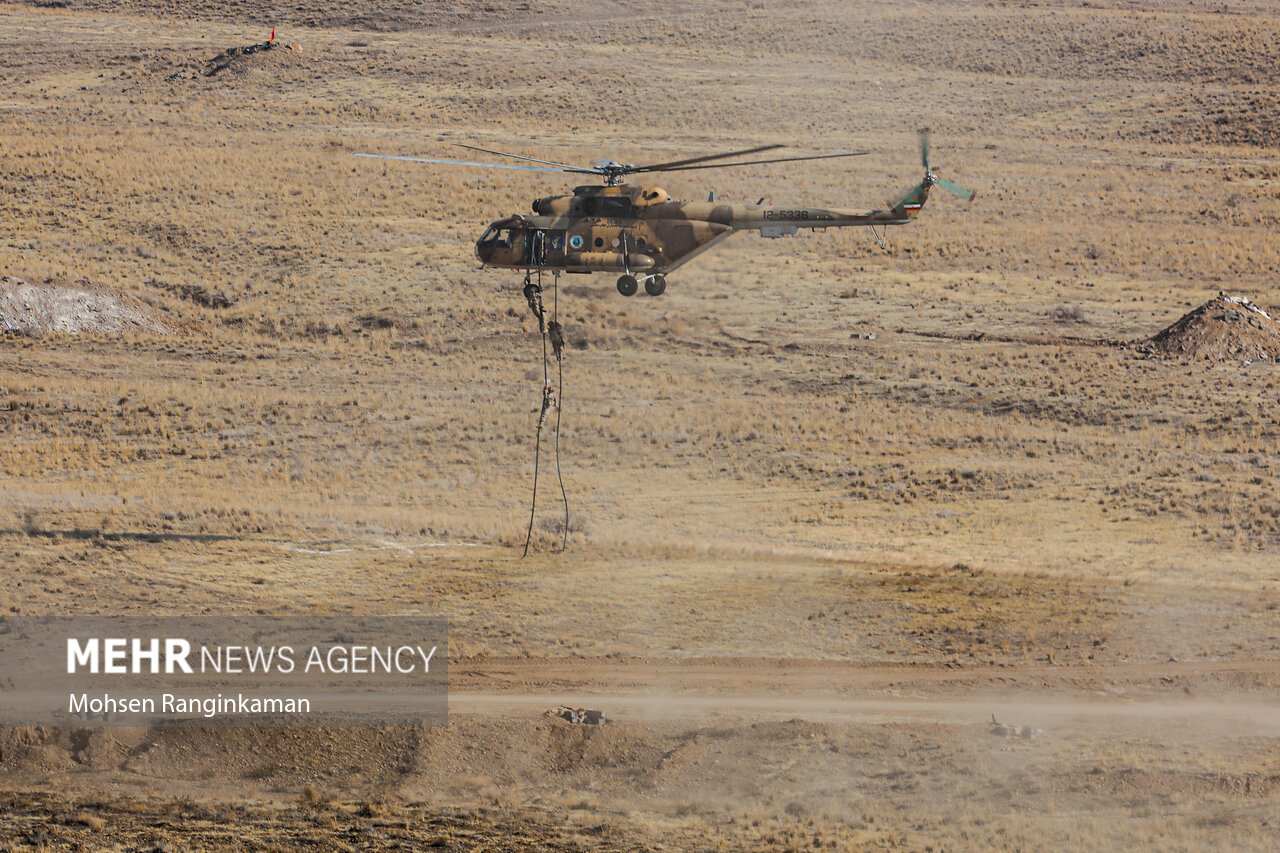
Khatam al-Anbiya Central Headquarters is Iran’s highest joint operational command. Separated from the Armed Forces General Staff in 2016, KACHQ plans and coordinates operations across both the IRGC and the Artesh. Both report through it. KACHQ reports directly to the Supreme Leader as constitutional commander-in-chief under Article 110 of the Iranian constitution.
Asadi’s career tracks the IRGC’s institutional core. An Iran-Iraq War veteran, he commanded the 33rd Al-Mahdi Division, served as IRGC Ground Forces Commander from July 2008 to April 2009, and later commanded IRGC advisory forces in Syria before his elevation to KACHQ deputy, according to IranWire and Fars News archives. His commander, Ali Abdollahi, was appointed after at least two predecessors were killed during the 2026 war, according to IranWire.
The authorization ceiling — the structural gap between what Iranian commanders can signal and what they can authorize — remains the defining feature of Iran’s wartime decision-making. Pezeshkian named Abdollahi and Defense Minister Ahmad Vahidi on April 4 as the officials who derailed the Islamabad ceasefire by deviating from the delegation’s mandate. The Supreme National Security Council, whose secretary Mohammad Bagher Zolghadr triggered the April 12 walkout by reacting harshly to Araghchi’s flexibility on Axis of Resistance support, controls the formal authorization process. Mojtaba Khamenei, the Supreme Leader’s son, has issued what Iranian media described as a “historic directive” on Persian Gulf management, which the IRGC Navy invoked on May 1.
Asadi can declare war “likely.” He can announce that surprise measures are planned. He cannot authorize resumption. That trigger still runs through Vahidi, the SNSC, and Mojtaba Khamenei’s ratification — the same bottleneck that has defined every escalation decision since the ceasefire began. The gap between what KACHQ’s deputy commander says publicly and what the authorization chain permits is itself the signal: the operational command is telling the world, through institutional channels, that it considers the ceasefire track internally exhausted.
Trump’s Three Military Options
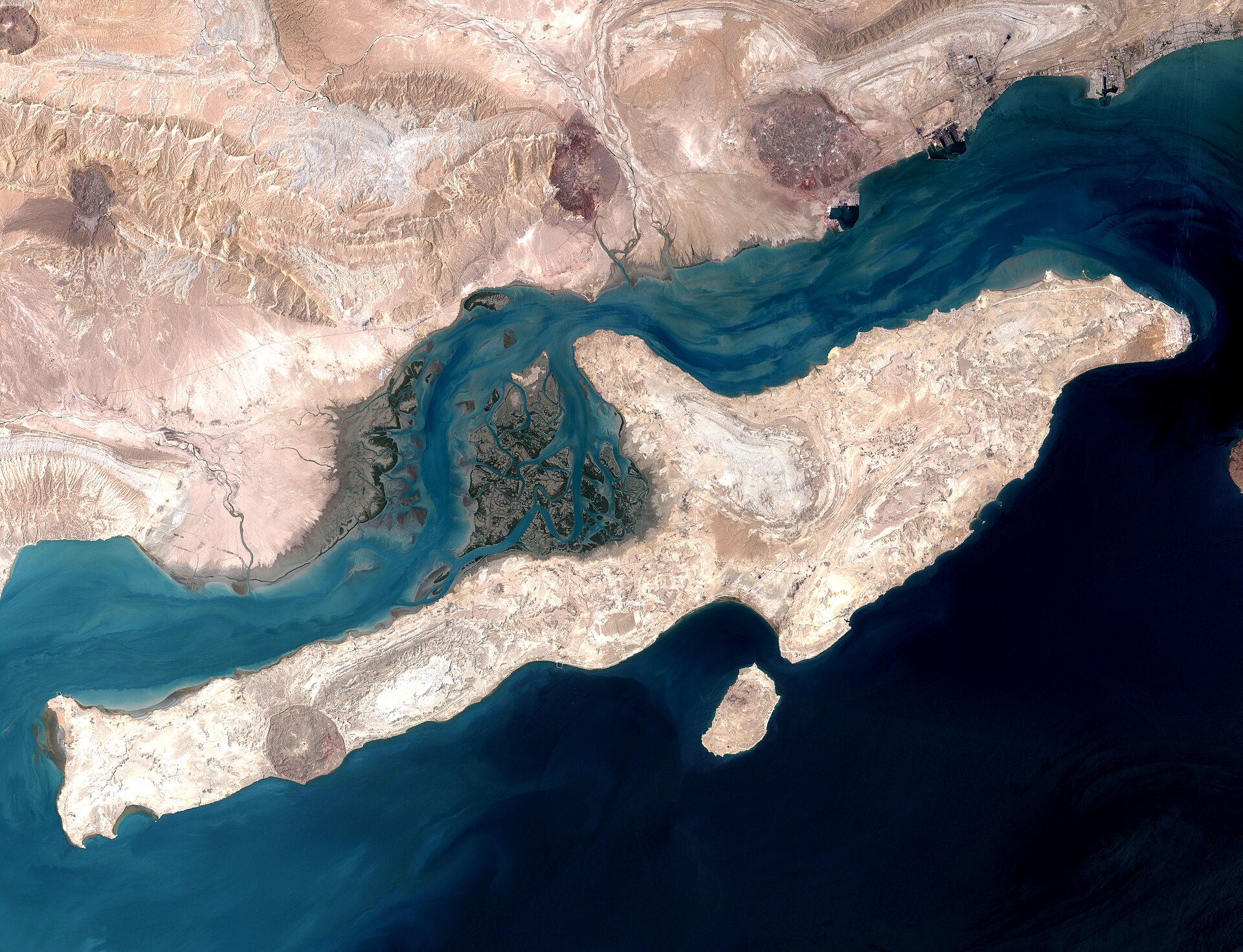
The American side of the escalation ledger arrived via Axios, which reported that Admiral Cooper briefed Trump on or around May 1 in a session lasting approximately 45 minutes. Three options were presented. The first: a “short and powerful” wave of strikes targeting Iranian infrastructure. The second: partial seizure or control of the Strait of Hormuz, potentially involving ground forces. The third: a special forces operation to secure Iran’s highly enriched uranium stockpile.
Trump told Axios he views the naval blockade — in effect since April 13, applying to Iranian ports and toll-collecting vessels — as “somewhat more effective than the bombing,” positioning it as primary leverage. He added he would consider military action if Iran “won’t negotiate.” The framing suggested the briefing was less a decision point than a demonstration of options held in reserve, with the blockade remaining the preferred coercive instrument. The three options and their implications for Saudi territory carry different escalation signatures and different risks of Iranian retaliation against Gulf infrastructure. Treasury’s economic warfare posture was given explicit language on May 3 by Secretary Bessent, who declared Washington is “suffocating” Iran’s economy as CENTCOM confirmed 49 vessels redirected since April 13.
The War Powers Resolution’s 60-day clock hit on May 1. The White House asserted that the war had “terminated” during the ceasefire period, a legal position contested by Senators Susan Collins and Lisa Murkowski from the Republican side, along with Rand Paul. PBS reported private Republican concern about relaunching operations without fresh congressional authorization. The legal architecture around renewed strikes is contested before any order is given.
Trump’s Truth Social response to Iran’s counter-proposal, posted May 2, set a tone distinct from the diplomatic track: “I will soon be reviewing the plan that Iran has just sent to us, but can’t imagine that it would be acceptable in that they have not yet paid a big enough price for what they have done to Humanity, and the World, over the last 47 years.” The phrasing — “can’t imagine that it would be acceptable” before reviewing the proposal — matched Asadi’s own dismissiveness about American sincerity, each side pre-rejecting the other’s offer through public statements while the formal channel remained nominally open.
Iran’s 14-Point Counter-Proposal
Iran submitted a 14-point counter-proposal via Pakistan around May 1-2, responding to a US 9-point proposal, according to NPR and Axios. The central Iranian demand: resolve all issues and end the war within 30 days, roughly half the US proposal’s two-month ceasefire timeline. The 14 points included demands for a new Hormuz mechanism, withdrawal of US forces from Iran’s periphery, an end to the naval blockade, release of frozen Iranian assets, reparations, and sanctions relief, with Lebanon’s inclusion in any settlement.
Secretary of State Marco Rubio’s response, delivered on Fox News, was more measured than Trump’s: the proposal was “better than what we thought they were going to submit.” He then drew a red line that the proposal did not cross: “The nuclear question is the reason why we’re in this in the first place.” Rubio told The Hill that Iran “cannot normalize, nor can we tolerate them trying to normalize, a system in which the Iranians decide who gets to use an international waterway and how much you have to pay them to use it.” The two American voices — Trump’s pre-rejection and Rubio’s conditional acknowledgment — occupied different registers but converged on the same position: insufficient.
Iranian state media, through Tasnim and Fars, framed the 14-point document as Iran’s constructive 30-day end-the-war offer against what they characterized as American dilatory tactics — a two-month ceasefire that would extend the blockade and the military pressure without resolving the underlying conflict. The framing positioned Iran as the party seeking finality while Washington sought to stretch the coercive window. Whether that framing reflects internal conviction or negotiating posture, it provided the institutional context for Asadi’s statement: the diplomatic track, from KACHQ’s vantage point, has already failed.
Can Pezeshkian Fire Araghchi?
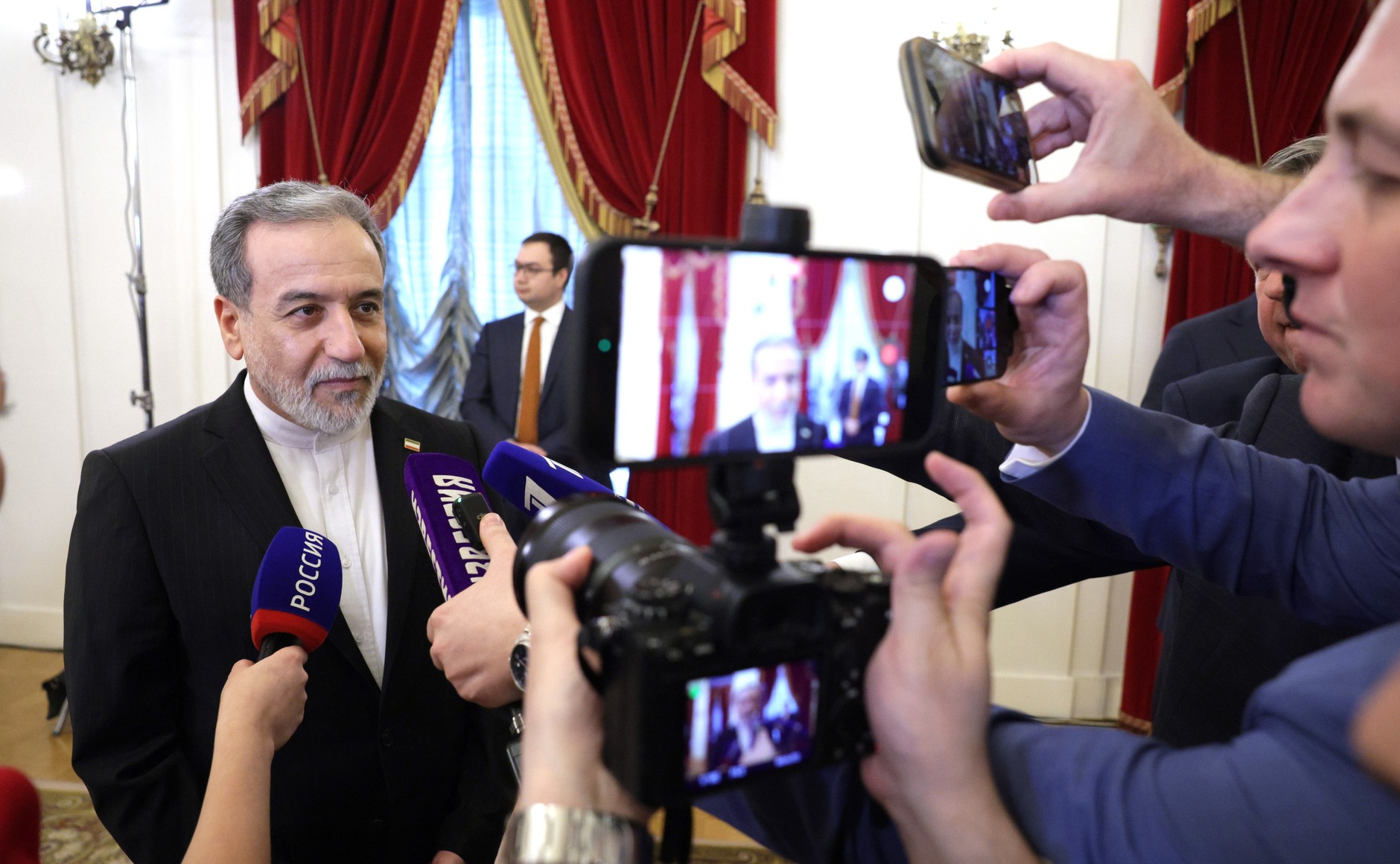
Inside Tehran, the authorization ceiling’s dysfunction was producing its own casualties. Iran International reported on April 30 and May 1 that President Pezeshkian and Parliament Speaker Ghalibaf are seeking to remove Foreign Minister Abbas Araghchi, alleging he has been “acting as little more than an assistant to Ahmad Vahidi” and bypassing the president’s oversight. Pezeshkian reportedly told aides that if Araghchi continued operating outside presidential authority, “he will remove Araghchi from his position.”
The allegation inverts the expected power dynamic. Araghchi — the civilian diplomat nominally responsible for the negotiating track — stands accused not of excessive flexibility (the charge Zolghadr leveled at the April 12 walkout) but of serving as Vahidi’s instrument, the defense minister who controls the IRGC’s authorization chain. If accurate, the foreign minister was simultaneously too flexible for the SNSC and too captured by the defense establishment for the president. The contradiction describes a diplomat operating within an impossibly narrow corridor, unable to satisfy either civilian oversight or hardline command.
The structural problem is that Article 110 of the constitution grants the president zero authority over the IRGC. Pezeshkian can fire his own foreign minister. He cannot redirect the command chain that runs from Vahidi through the SNSC to Mojtaba Khamenei. Removing Araghchi would change the face at the negotiating table without altering the authorization architecture behind it. Pakistan’s role as ceasefire enforcer depends on appeals to the same commanders — Abdollahi at KACHQ, Vahidi at the defense ministry — whose deputy just declared that war resumption is the likely outcome.
No public distancing from Asadi’s statement was found from Araghchi, Pezeshkian, or any civilian government source. The silence itself is data: either the civilian government agrees with the assessment, lacks the authority to contradict it, or has calculated that public contradiction would expose the authorization gap further.
Background
The Iran-US war began in late February 2026 and has produced the largest energy supply disruption on record, with the International Energy Agency’s executive director Fatih Birol describing 13 million barrels per day offline as “the biggest energy security threat in history.” A ceasefire, brokered primarily through Pakistani mediation, took nominal effect in mid-April but has been structurally undermined by IRGC actions on the ground — including the seizure of the container vessels MSC Francesca and Epaminondas on April 22, the same day Parliament Speaker Ghalibaf formally linked Hormuz reopening to the removal of the US naval blockade.
The double blockade mechanism — the US controlling the Arabian Sea entry since April 13, the IRGC controlling the Gulf of Oman exit since early March — has reduced Hormuz transits to 45 since the April 8 ceasefire, or 3.6 percent of the pre-war baseline, according to Bloomberg. Saudi Arabia’s March production fell to 7.25 million barrels per day from 10.4 million in February, a 30 percent drop reported by the IEA. The Yanbu bypass pipeline’s effective ceiling of 4-5.9 million barrels per day leaves a structural gap against pre-war export volumes.
KACHQ has lost multiple commanders during the conflict. Abdollahi’s appointment followed the deaths of at least two predecessors. The IRGC Navy’s commander, Alireza Tangsiri, was killed on March 30, and no named successor has been publicly announced. Pakistani Army Chief General Asim Munir visited Abdollahi’s KACHQ headquarters on April 16 — the enforcement architecture for any Pakistan-brokered settlement rests on the cooperation of the same command whose deputy now publicly anticipates the settlement’s failure.
| Signal | Source | Date | Channel |
|---|---|---|---|
| CENTCOM briefs Trump on three military options | Axios | ~May 1 | US media leak |
| Asadi declares war resumption “likely” | Fars News Agency | May 2 | IRGC institutional media |
| Iran submits 14-point counter-proposal via Pakistan | NPR / Axios | ~May 1-2 | Diplomatic |
| Trump pre-rejects proposal on Truth Social | Truth Social | May 2 | Presidential social media |
| Rubio calls proposal “better than expected” but demands nuclear resolution | Fox News / The Hill | ~May 2 | US broadcast media |
| Brent crude hits $114/bbl intraday | CNBC | May 1-2 | Market |
| War Powers 60-day clock expires | PBS | May 1 | Congressional |
| Pezeshkian/Ghalibaf move to fire Araghchi | Iran International | April 30-May 1 | Exile Iranian media |
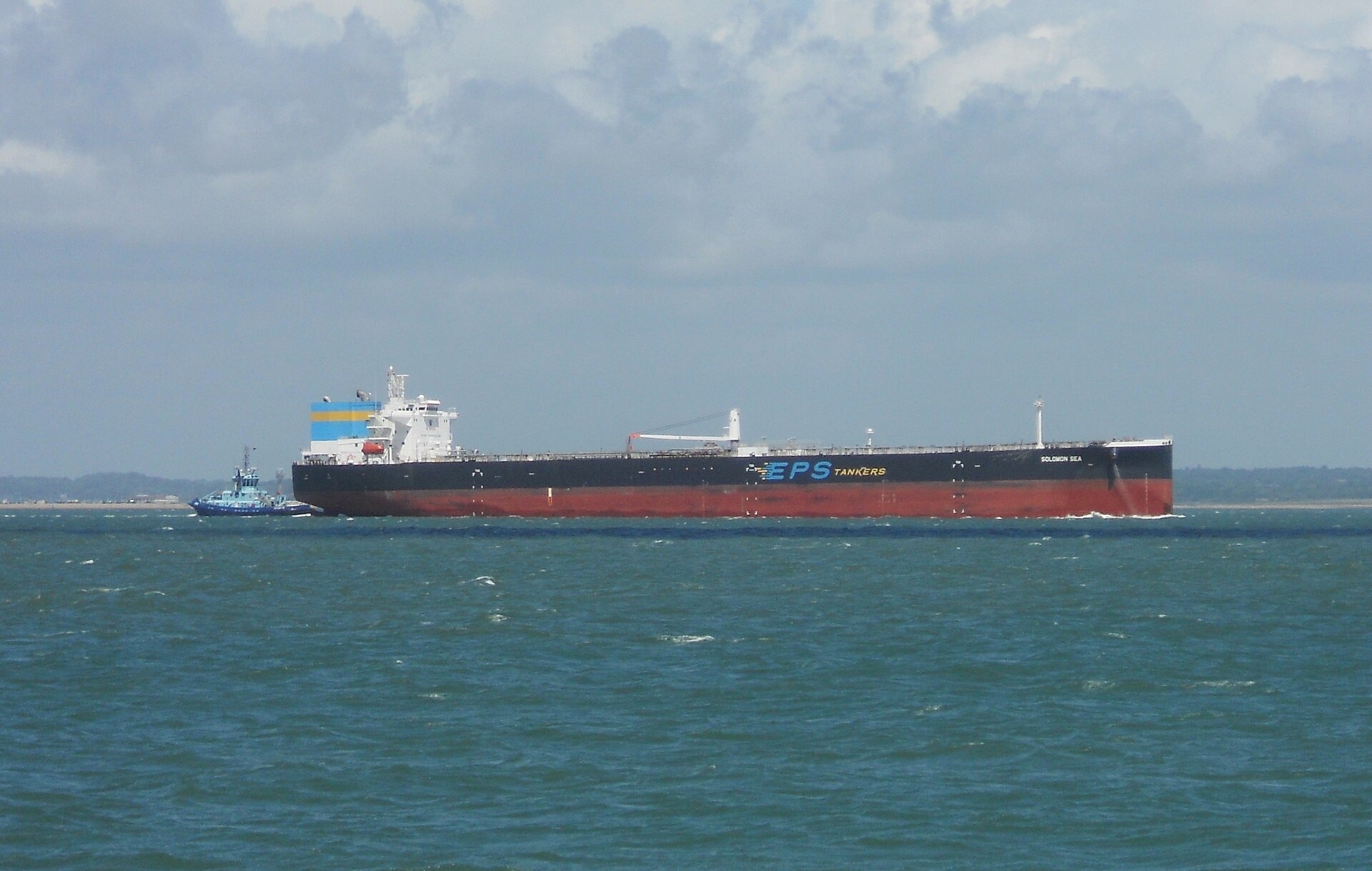
Asadi’s war-resumption warning arrived on the same day Iran submitted its 14-point counter-proposal demanding the US lift the Arabian Sea blockade within 30 days — a deadline that expires June 1–2, just as the Hajj kinetic constraint lifts. Why Iran’s 30-day blockade deadline is structurally undeliverable is analysed in full.
FAQ
What is Khatam al-Anbiya Central Headquarters?
KACHQ is Iran’s highest joint operational command, established as a standing independent body in 2016 when it was separated from the Armed Forces General Staff. It coordinates planning and operations between the IRGC and the Artesh (regular army), and reports directly to the Supreme Leader. During peacetime it oversees IRGC construction and engineering projects — including major infrastructure contracts that make it one of Iran’s largest economic actors. During the 2026 war it has functioned as the apex warfighting coordination body, making its deputy commander’s public assessment of conflict probability an institutional statement, not a personal one.
Has Iran issued similar war warnings before that did not lead to conflict?
IRGC commanders have a documented pattern of issuing escalatory public statements that precede both actual operations and diplomatic maneuvers. IRGC Commander-in-Chief Hossein Salami issued comparable warnings before the April 2024 drone and missile strike on Israel — that operation was executed. Conversely, IRGC Navy commanders issued “last warning” statements to US Navy vessels transiting the Strait on April 11, 2026, which did not escalate beyond radio challenges. The distinction between signaling that precedes action and signaling intended to strengthen a negotiating position is often visible only in retrospect.
What happens if the War Powers 60-day window lapses without congressional authorization?
The War Powers Resolution requires the president to withdraw forces within 60 days of initiating hostilities unless Congress authorizes continued action. The White House has argued the ceasefire period interrupted the clock, a position several Republican and Democratic senators have publicly disputed. If Trump orders new strikes without fresh authorization, legal challenges from Congress are probable, though courts have historically been reluctant to adjudicate War Powers disputes between the executive and legislative branches. The political calculus may matter more than the legal one: bipartisan support for renewed operations is not assured.
How does Iran’s 30-day demand compare to the US two-month ceasefire proposal?
The gap is structural, not merely temporal. Iran’s 30-day framework demands comprehensive resolution — including sanctions relief, asset releases, reparations, force withdrawal, and a new Hormuz governance mechanism — within that window. The US two-month proposal envisions a phased ceasefire with nuclear issues and Hormuz governance deferred to a second phase. Iran views the longer timeline as extending the blockade’s coercive pressure; the US views the shorter timeline as inadequate for verifiable nuclear commitments. Neither timeline accounts for the estimated six months required to clear mines from the Strait, according to benchmarks derived from the 1991 Kuwait mine-clearance operation.
What is the current status of the Strait of Hormuz?
Functionally closed: 45 transits since the April 8 ceasefire represents 3.6 percent of pre-war baseline throughput, according to Bloomberg. Beyond the dual blockade, Iran’s parliament is advancing a 12-article Hormuz sovereignty law that would enshrine IRGC “coordination” authority over the Strait in domestic legislation — creating a legal architecture for permanent control regardless of any diplomatic settlement. Even if a deal were signed today, the physical reopening timeline is constrained by mine clearance: only two Avenger-class mine countermeasure ships remain in theater after four were decommissioned from Bahrain in September 2025, against an estimated six months of clearance work modeled on the 1991 Kuwait benchmark.
That command structure — IRGC operational authority operating above any constitutionally accountable superior — crystallised into a direct threat on May 4: Iran’s joint war commander issued a direct attack warning against US forces at Hormuz on the same day Pakistan confirmed Tehran had received Washington’s counter-proposal to Iran’s 14-point peace plan — simultaneously signaling war and engaging in diplomacy through the same KACHQ command structure.