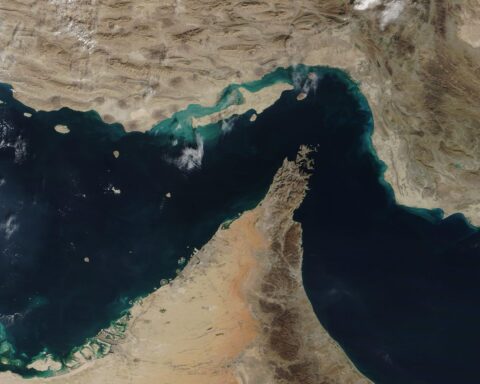

RIYADH — The Iran war has generated a revenue windfall for Saudi Arabia that no budget planner anticipated and no politician will publicly celebrate. With Brent crude surging past $110 a barrel — nearly double the price the Saudi Finance Ministry assumed when drafting its 2026 budget — the Kingdom stands to collect tens of billions of dollars in additional oil revenue even as Iranian missiles strike its refineries and drones buzz its capital. The paradox is striking: every barrel of Iranian oil capacity destroyed by American and Israeli airstrikes makes Saudi crude more valuable, and every day the Strait of Hormuz remains effectively closed reminds the world that the Kingdom controls the only alternative export route capable of sustaining global supply.
Saudi Arabia budgeted for a $44 billion fiscal deficit in 2026. At current oil prices, that deficit could evaporate entirely — replaced by a surplus the Kingdom has not seen since 2022. The question is not whether the war is generating extraordinary revenue for Riyadh. The question is what Mohammed bin Salman does with it.
Table of Contents
- How Much Extra Revenue Is the War Generating for Saudi Arabia?
- The $110 Barrel and the $65 Budget
- Why Are Aramco Shares Surging During a War?
- What Happens When Iran’s Oil Capacity Disappears From Global Markets?
- Saudi Arabia’s OPEC Gambit and the Market Share Land Grab
- Can the Defense Industry Boom Fund Itself?
- The East-West Pipeline’s Second Life
- Is Saudi Arabia Actually Better Off Economically Because of the War?
- The War Revenue Allocation Matrix
- What the 1991 Gulf War Teaches About Wartime Windfalls
- Vision 2030 in Wartime — Acceleration by Subtraction
- The Risks Nobody in Riyadh Wants to Discuss
- Frequently Asked Questions
How Much Extra Revenue Is the War Generating for Saudi Arabia?
The war is generating an estimated $30 billion to $50 billion in additional annual oil revenue for Saudi Arabia above its 2026 budget projections, based on the gap between the assumed oil price of approximately $65 per barrel and actual trading prices that have exceeded $110 per barrel since March 8. Every $10 increase in the average annual oil price adds roughly $27 billion to Saudi government revenue, according to estimates from the International Monetary Fund and independent energy analysts.
The arithmetic is straightforward. Saudi Arabia produces approximately 9 million barrels per day of crude oil. The 2026 budget projected total government revenue of SR1.147 trillion ($306 billion), based on oil prices that most analysts estimated at between $60 and $68 per barrel — the Finance Ministry does not disclose its price assumption. With Brent crude trading above $110, the Kingdom’s daily oil revenue has effectively doubled from its budgeted baseline.
The scale of this windfall becomes clearer when measured against the planned deficit. Saudi Arabia’s 2026 budget anticipated expenditures of SR1.313 trillion ($350 billion) against revenues of SR1.147 trillion — a shortfall of SR165 billion ($44 billion), representing 3.3 percent of GDP, according to the Ministry of Finance. Finance Minister Mohammed al-Jadaan characterized this as a “strategic deficit,” a deliberate policy choice to fund massive non-oil investments. At sustained oil prices of $100 or above, that strategic deficit disappears. At $110, the Kingdom could record a surplus exceeding $20 billion.
Not every dollar of windfall reaches government coffers immediately. Aramco’s dividend structure, tax arrangements, and production costs all create lags between market prices and treasury receipts. Aramco pays a royalty rate that increases with oil prices and a 50 percent corporate tax rate, meaning the government captures approximately 75-80 percent of every additional dollar per barrel above its base case, according to Jadwa Investment analysis. The remaining revenue accrues to Aramco shareholders — of which the government, through direct ownership and the Public Investment Fund, holds approximately 97.3 percent. Aramco’s Q4 2025 earnings call on March 10 provided the first detailed look at how this wartime financial dynamic is reshaping the company’s balance sheet and dividend trajectory.
The Middle East briefing 3,000+ readers start their day with.
One email. Every weekday morning. Free.
The $110 Barrel and the $65 Budget
The divergence between Saudi Arabia’s budget assumptions and current market reality represents the largest oil price gap since the Kingdom’s 2022 windfall following Russia’s invasion of Ukraine. In that year, Brent averaged $99 per barrel against a Saudi budget assumption of approximately $65, producing a fiscal surplus of $27 billion — the first surplus since 2013, according to Saudi Central Bank data.
The current price shock is sharper and more sudden. Brent crude rose from approximately $74 per barrel on February 27, the day before the US-Israeli strikes on Iran began, to above $119 per barrel on March 8 — a 61 percent increase in nine days. WTI crude futures touched $113.30 per barrel, while Aramco raised the official selling price of its flagship Arab Light crude for April shipments to Asia by the largest increment since August 2022, according to Bloomberg.
The mechanics of Saudi Arabia’s oil revenue calculation matter for understanding the windfall’s true size. The Kingdom’s fiscal breakeven oil price — the price needed to balance the budget — was estimated at $96 per barrel for 2026 by the International Monetary Fund, a figure that accounts for both oil and growing non-oil revenue. Banks including JPMorgan and Goldman Sachs had placed their estimates slightly higher, between $98 and $102, reflecting skepticism about the government’s revenue diversification targets. At $110, Saudi Arabia crosses its breakeven threshold with room to spare.
| Oil Price (Brent, $/bbl) | Est. Oil Revenue ($ billion) | Budget Surplus/Deficit ($ billion) | Fiscal Impact |
|---|---|---|---|
| $65 (budget assumption) | ~210 | -44 (deficit) | Planned strategic deficit |
| $80 | ~250 | -4 | Near-balanced |
| $100 | ~310 | +16 | Moderate surplus |
| $110 (current) | ~340 | +34 | Windfall surplus |
| $120 | ~370 | +60 | Record windfall territory |
| $150 (extreme scenario) | ~460 | +110 | 2008-level windfall |
Non-oil revenue provides additional insulation. Saudi Arabia’s non-oil revenue now accounts for 46 percent of total government revenue, up from 10 percent in 2015, according to the Ministry of Finance. This includes value-added tax at 15 percent, expatriate levies, government service fees, and returns from PIF investments. Even if oil prices retreated to $80 — well below current levels — the combined revenue base would be sufficient to fund nearly all budgeted expenditure.
Why Are Aramco Shares Surging During a War?
Saudi Aramco shares climbed 4.9 percent on March 8, the largest single-day gain since April 2023, before closing up 4.1 percent, according to Bloomberg. The stock has risen 13 percent year-to-date, valuing the company at SAR6.3 trillion (approximately $1.68 trillion). The surge reflects a market calculation that higher oil prices will more than offset any infrastructure damage from Iranian attacks, making Aramco the clearest beneficiary of a conflict that has removed millions of barrels of competing supply from global markets.
Investors are pricing in three overlapping tailwinds. The first is the direct revenue effect: every $10 increase in oil prices adds approximately $33 billion to Aramco’s annual revenue, based on 2024 production levels and historical price sensitivities from Aramco’s annual reports. The second is the market share effect: with Iranian exports effectively eliminated and Iraqi production from southern fields down 70 percent — falling from 4.3 million to 1.3 million barrels per day, according to Fortune — Saudi Arabia faces less competition for Asian buyers who need to replace lost supply. The third is the strategic premium: the war has demonstrated that Aramco’s infrastructure, while targeted, has proven more resilient than expected, with Saudi air defenses intercepting the overwhelming majority of incoming missiles and drones.
The broader picture is less encouraging for non-oil equities. Global markets have shed more than $6 trillion in value since the war began, with stagflation fears dragging down indices from Tokyo to London, underscoring the divergence between Aramco’s windfall and the damage being done to the wider global economy.
The market’s reaction stands in sharp contrast to analysts’ pre-war expectations. As recently as January 2026, Goldman Sachs maintained a “neutral” rating on Aramco, citing concern over OPEC+ output discipline and the potential for a global supply glut. The war eliminated the glut narrative overnight. Aramco CEO Amin Nasser had dismissed the oil oversupply thesis as “seriously exaggerated” weeks before the conflict began — a statement that now reads as prescient, according to OilPrice.com reporting from February.
But the revenue picture faces a new complication. On 9 March, Aramco began cutting oil production as the Hormuz blockade filled Saudi storage tanks to capacity, meaning the Kingdom is producing fewer barrels even as prices climb.
Aramco’s upcoming earnings call, scheduled for Tuesday March 10, will provide the first official company commentary on wartime operations. Analysts at AGBI reported that markets are looking to the call for clarity on three questions: the pace of Ras Tanura repairs, the capacity of the Red Sea export alternative, and whether Aramco intends to accelerate the East-West Pipeline expansion that has become the Kingdom’s most critical piece of energy infrastructure.
What Happens When Iran’s Oil Capacity Disappears From Global Markets?
Iran produced approximately 3.3 million barrels per day of crude oil plus 1.3 million barrels per day of condensate and natural gas liquids before the war began, according to OPEC’s February Monthly Oil Market Report. The US-Israeli strikes have targeted refineries, storage facilities, and export terminals, while the effective closure of the Strait of Hormuz has prevented whatever remains of Iranian production from reaching international markets. The result is the largest unplanned supply disruption in petroleum market history — roughly 9 million barrels per day off the market when combined with production cuts from Iraq, Kuwait, and precautionary shutdowns across the Gulf, Fortune reported on March 8. The US strike on Iran’s Kharg Island terminal crystallized this dynamic: by targeting the hub through which 90 percent of Iranian oil exports once flowed while deliberately sparing petroleum infrastructure, Washington signaled that Saudi oil had become untouchable in the new geopolitical order.
For Saudi Arabia, the disappearance of Iranian supply creates a structural opportunity that extends well beyond the current conflict. Iran was Saudi Arabia’s most significant competitor for Asian market share, particularly in China, India, South Korea, and Japan. Chinese imports of Iranian crude had grown to approximately 1.5 million barrels per day by late 2025, according to Kpler tracking data, often sold at discounts of $5-10 below Saudi official selling prices. That discounted supply has now vanished.
Saudi Arabia is positioned to capture the lion’s share of displaced demand. The Kingdom holds approximately 1.5-2 million barrels per day of spare production capacity — the world’s only meaningful buffer — and OPEC+ agreed on March 1 to resume production increases of 206,000 barrels per day starting in April, according to Bloomberg. The timing is notable: the production increase was agreed before the war began but takes effect precisely when global supply is most constrained, giving Saudi Arabia both the political cover and the market opportunity to pump more oil at dramatically higher prices.
Rapidan Energy Group estimated on March 8 that the Iran war has disrupted 20 percent of global oil supply for nine days and counting. If the Strait of Hormuz remains effectively closed — Iranian naval mines and missile threats have deterred commercial shipping — oil prices could test $120 within weeks, and some analysts at Kpler have projected prices reaching $150 by the end of March if conditions persist, according to Fortune’s reporting.
Saudi Arabia’s OPEC Gambit and the Market Share Land Grab
The OPEC+ decision to increase production by 206,000 barrels per day in April was made during a meeting held before the US-Israeli strikes began, but the timing has handed Saudi Arabia a strategic gift. With Iran producing nothing for export and Iraq’s southern fields operating at 30 percent capacity, the production increase does not risk flooding the market — it fills a supply vacuum, and it does so at prices Saudi Arabia has not seen since the Russia-Ukraine shock of 2022.
The market share dynamics have shifted in ways that may prove durable. Saudi Arabia’s wartime OPEC strategy is built on a calculation that transcends the current conflict: every barrel of Saudi oil that replaces Iranian or Iraqi supply creates a new commercial relationship that may persist even after the war ends. Asian refiners who switch to Saudi crude do not easily switch back, particularly if Iran’s export infrastructure requires years to rebuild.
The Kingdom’s pricing signals confirm this strategy. Aramco raised the April official selling price of Arab Light crude to Asia by the largest margin since August 2022, according to Bloomberg — a move that would ordinarily risk losing customers but makes sense when buyers have no alternative supply. Japan, South Korea, and India — three of the world’s largest oil importers — have all increased nominations for Saudi crude, according to industry sources cited by Reuters.
| Metric | Pre-War (Feb 2026) | During War (Mar 2026) | Change |
|---|---|---|---|
| Saudi production (million bpd) | 9.0 | 9.0-9.2 | +0-2% |
| Iranian exports (million bpd) | ~1.7 | ~0 | -100% |
| Iraqi exports (million bpd) | ~3.4 | ~1.3 | -62% |
| Brent crude price ($/bbl) | $74 | $110+ | +49% |
| Saudi spare capacity (million bpd) | ~2.0 | ~1.5-2.0 | Deploying |
| Asian buyers seeking replacement barrels | Low | Very High | Structural shift |
Can the Defense Industry Boom Fund Itself?
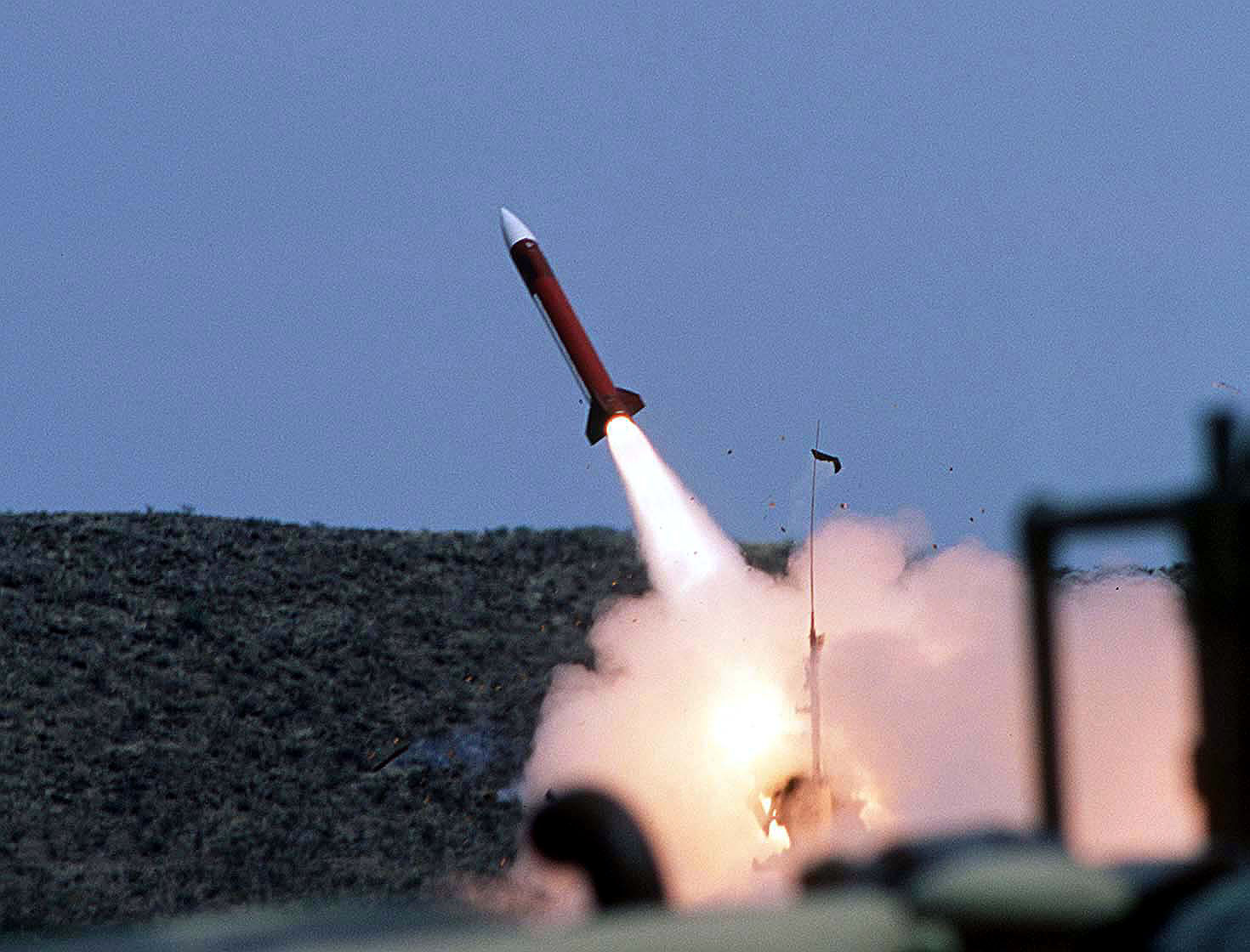
Saudi Arabia’s defense budget for 2026 was projected at approximately $78-80 billion, representing roughly 7.3 percent of GDP, according to figures from the General Authority for Military Industries (GAMI). The Iran war is simultaneously validating the Kingdom’s massive defense investment — Saudi air defenses have intercepted dozens of Iranian cruise missiles, ballistic missiles, and drones — and creating the revenue surplus needed to fund an acceleration of defense spending without borrowing.
The localization of military spending tells a story of a defense industry approaching critical mass. GAMI announced that the Kingdom’s military spending localization rate reached 24.89 percent by the end of 2024, up from approximately 2 percent in 2017 when Vision 2030 first set the target of 50 percent localization by 2030, according to Arab News. Saudi Arabian Military Industries (SAMI), a PIF subsidiary, now operates across five divisions — Aerospace, Land, Sea, Defense Systems, and Advanced Electronics — and at the World Defense Show 2026 in February, the company announced the launch of SAMI Land Co., SAMI Autonomous Co., and the indigenous HEET armored vehicle program, signing over 12 memoranda of understanding with international partners.
Yet the war has simultaneously exposed how far the Kingdom remains from genuine defence sovereignty. A detailed examination of the American kill switch in Saudi Arabia’s arsenal reveals that 74 percent of the Kingdom’s weapons originate from a single country, and that critical systems like Patriot and THAAD cannot be maintained without US technicians.
The war accelerates the localization thesis in ways peacetime could not. The SAMI Land Industrial Complex in Al-Kharj, spanning one million square meters, was scheduled to become fully operational in early 2026 for assembly and maintenance of armored vehicles and artillery systems. The proximity of Iranian strikes to the facility — a military projectile hit a residential area in Al-Kharj governorate on March 8, killing two foreign residents — underscores both the urgency and the risk of concentrating defense production in areas within range of Iranian weapons.
The war revenue windfall creates a unique financing opportunity for defense localization. At $110 oil, the approximately $30-50 billion in surplus revenue exceeds the entire annual allocation for defense spending above the budgeted amount. MBS could theoretically accelerate the 2030 localization target by several years simply by redirecting windfall revenue into SAMI and GAMI programs without increasing the official defense budget.
The East-West Pipeline’s Second Life
The East-West Pipeline — officially the Petroline — has transformed overnight from a Cold War-era backup system into Saudi Arabia’s most strategically valuable piece of infrastructure. The 1,200-kilometer pipeline connects the oil-rich Eastern Province to the Red Sea port of Yanbu, bypassing the Strait of Hormuz entirely. Bloomberg reported on March 3 that Aramco is exploring plans to deliver more cargoes through Yanbu as dozens of tankers remain trapped in the Persian Gulf.
The pipeline’s current capacity of approximately 5 million barrels per day was built for precisely this scenario — a Hormuz closure that would otherwise strangle Gulf oil exports. Saudi Arabia is the only Gulf producer with a meaningful bypass route. Kuwait, Qatar, the UAE, and Iraq all depend on Hormuz for the vast majority of their exports. This geographic advantage translates directly into market power: while competitors are effectively locked in, Saudi crude can still reach European and Mediterranean markets via Yanbu and Red Sea shipping lanes.
The Yanbu pivot also provides a pricing advantage. Shipping costs through Hormuz have become effectively infinite — no insurer will cover a tanker transit at commercially viable rates — while Red Sea shipping, despite elevated Houthi-related risks, remains viable. The cost differential gives Saudi crude a delivered-price advantage in European markets that did not exist before the war.
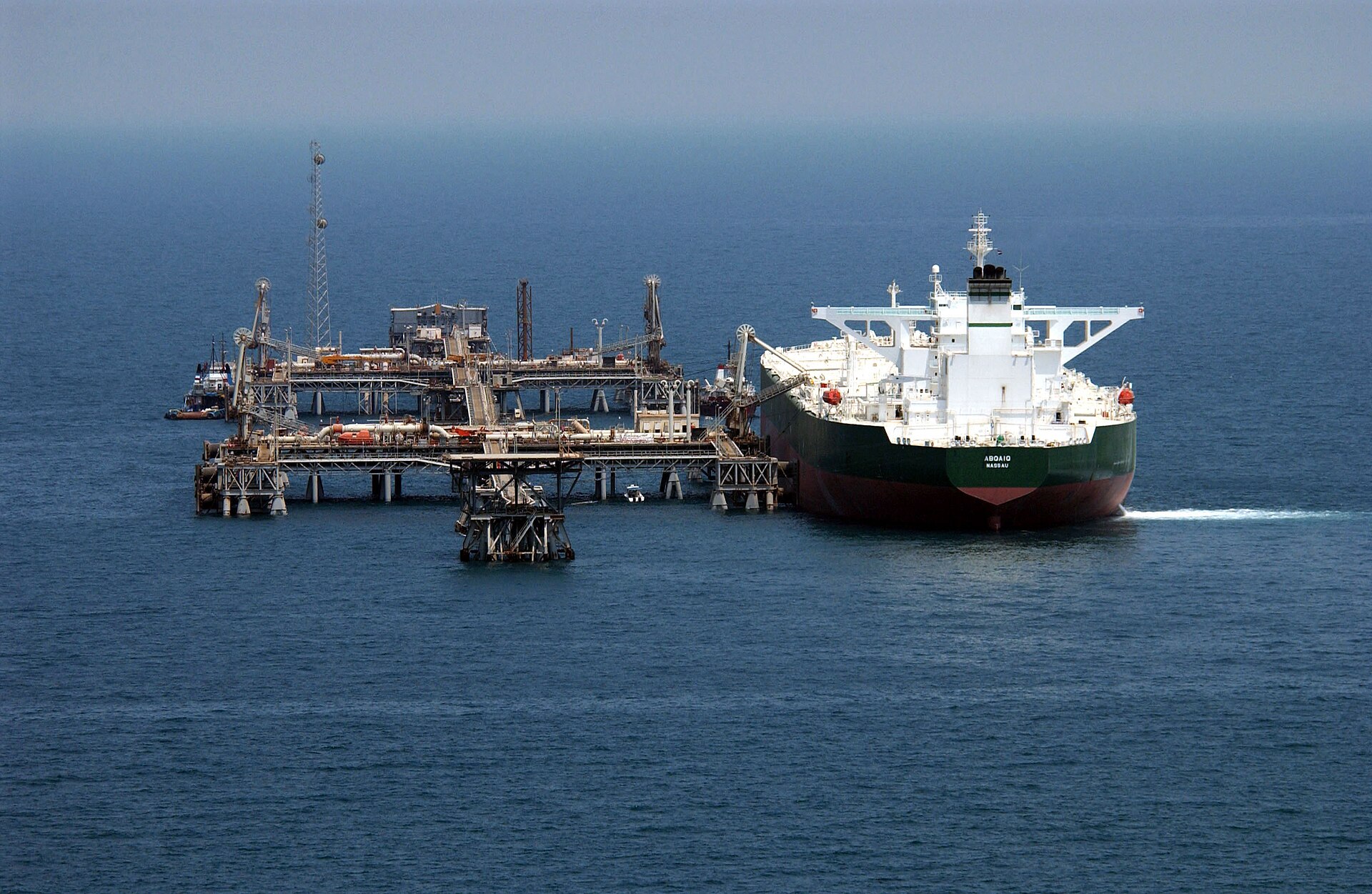
The war is likely to trigger an acceleration of the pipeline expansion that Aramco has considered for years. Increasing capacity from 5 million to 7 million barrels per day would cost an estimated $3-5 billion — a sum that represents less than two weeks of the war-driven revenue windfall. The investment case, always strong on paper, is now overwhelming in practice.
Is Saudi Arabia Actually Better Off Economically Because of the War?
The answer, stripped of diplomatic niceties and humanitarian concern, is that Saudi Arabia’s macroeconomic position has improved significantly since the war began. This is the reality that Riyadh’s leadership will not articulate publicly but is certainly calculating privately. The Kingdom entered the war as a bystander — it did not launch the strikes and has positioned itself as a mediator — and finds itself the primary economic beneficiary of a conflict it did not start.
The ledger is not entirely positive. The Ras Tanura refinery shutdown after an Iranian drone strike has taken Aramco’s largest refining complex offline, reducing domestic fuel production and forcing Aramco to import refined products to meet local demand. Infrastructure repair costs will run into the hundreds of millions. The Al-Kharj projectile strike killed two workers and wounded twelve. Tourist arrivals have collapsed. The Tadawul stock exchange initially dropped 6 percent before recovering on the back of higher oil prices, as documented in reporting on how Iranian missiles cracked Saudi Arabia’s financial markets.
Set against the losses, the gains are disproportionately larger. The revenue windfall dwarfs infrastructure repair costs by a factor of roughly 100 to 1. Saudi Arabia’s $900 billion in foreign reserves provides an enormous buffer. The Tadawul has recovered its losses and, led by Aramco, is trending upward. The Kingdom’s credit default swap spreads — a market measure of sovereign risk — have widened only modestly compared to those of Iraq, Kuwait, and Bahrain, suggesting that international investors view Saudi Arabia as the safest Gulf economy.
Three structural shifts compound the short-term revenue gains. First, the destruction of Iranian oil infrastructure will take years to rebuild, even after a ceasefire, extending Saudi Arabia’s market power into the late 2020s. Second, the war has validated Saudi Arabia’s defense capabilities in real combat, boosting SAMI’s credibility as a potential defense exporter. Third, the crisis has forced an acceleration of infrastructure decisions — the East-West Pipeline expansion, data center diversification, food security investments — that might have languished in committee for years.
Yet the paradox cuts deeper than aggregate revenue figures suggest. The Public Investment Fund may be benefiting from elevated Aramco share prices, but it is simultaneously bleeding from defence reallocations, giga-project deferrals, and rising borrowing costs — a tension explored in depth in an analysis of PIF’s wartime fiscal crisis and the future of Saudi Arabia’s trillion-dollar fund.
The War Revenue Allocation Matrix
The question of how to allocate $30-50 billion in unexpected wartime revenue will define the next phase of Saudi economic policy. Five competing priorities demand attention, each with different risk profiles and time horizons. The optimal allocation depends on assumptions about war duration, post-war oil prices, and the pace of Iran’s reconstruction. The calculus grows more complex as G7 nations weigh releasing up to 400 million barrels from strategic reserves, a move that could suppress the very prices generating the windfall.
| Priority | Allocation | Est. Cost ($ billion) | Time Horizon | Risk Profile |
|---|---|---|---|---|
| Fiscal Reserve Replenishment | Rebuild sovereign wealth buffers depleted by 2020-2024 deficits | 10-15 | Immediate | Low — liquid, reversible |
| Defense Acceleration | Fast-track SAMI programs, replenish interceptor stocks, expand drone defenses | 5-10 | 1-3 years | Medium — high strategic value but irreversible |
| Energy Infrastructure | East-West Pipeline expansion, Yanbu port capacity, refinery repairs | 5-8 | 2-5 years | Low — revenue-generating, strategically essential |
| Vision 2030 Acceleration | Fund productive V2030 projects (tourism, entertainment, tech) while dropping white elephants | 8-12 | 3-7 years | Medium-High — some projects unproven |
| Social Stabilization | Fuel subsidies, food security, public sector bonuses to maintain domestic support during wartime | 3-5 | Immediate | Low — politically essential, economically consumptive |
The optimal allocation — based on analysis of previous Gulf petro-state windfall cycles in Kuwait (1990-91), Saudi Arabia (2003-08 and 2022), and the UAE (2011-14) — favors front-loading fiscal reserves and energy infrastructure, which provide permanent structural value, over consumptive social spending, which creates expectations that are politically costly to reverse when prices eventually decline. Historical precedent suggests that petro-states that save 40-50 percent of windfall revenue during price spikes and invest 30-40 percent in productive infrastructure outperform those that increase recurrent spending.
The defense allocation carries unique characteristics. Replenishing interceptor missile stocks — Patriot PAC-3 rounds cost approximately $4 million each, and Saudi Arabia may have expended dozens since the war began — is both urgent and expensive. Accelerating indigenous drone defense programs, including the low-cost systems profiled in reporting on Saudi Arabia’s military readiness, could yield both defensive capability and export revenue.
The framework suggests that Saudi Arabia’s optimal strategy is paradoxical: spend aggressively on defense and infrastructure, which generate long-term returns, while maintaining fiscal discipline on recurrent expenditure. The war provides both the revenue and the political justification for this approach — wartime austerity on consumption combined with wartime investment in productive capacity.
What the 1991 Gulf War Teaches About Wartime Windfalls
Saudi Arabia’s experience during the 1990-91 Gulf War offers the closest historical parallel to the current situation — and a cautionary tale about windfall management. Oil prices spiked from approximately $20 per barrel in mid-1990 to $46 per barrel in October, a 130 percent increase driven by the Iraqi invasion of Kuwait and fears of broader supply disruption. Saudi Arabia was both a frontline state and a primary beneficiary: the Kingdom increased production to compensate for lost Kuwaiti and Iraqi barrels, capturing market share that persisted for years.
The 1991 revenue story, however, was complicated by enormous military expenditure. Saudi Arabia spent an estimated $60 billion on war-related costs, including payments to coalition partners, equipment purchases, and domestic military mobilization, according to research published by the Brookings Institution. The windfall was consumed almost entirely by the war effort itself, leaving the Kingdom with a fiscal hangover that lasted through the 1990s. Saudi Arabia ran budget deficits from 1992 to 1999.
The 2026 situation differs in critical respects. Saudi Arabia is not bearing the primary military cost of the current conflict — the United States and Israel launched the strikes on Iran, and Washington is funding the bulk of offensive operations. Saudi Arabia’s military expenditure is concentrated on defensive systems, particularly air defense, which is expensive per intercept but far less costly than expeditionary warfare. The Kingdom is spending billions to defend itself but is not financing a ground war.
| Factor | 1990-91 Gulf War | 2026 Iran War |
|---|---|---|
| Oil price increase | +130% ($20 to $46) | +61% ($74 to $119) |
| Saudi military role | Coalition partner, host, funded allies | Defensive only, not aggressor |
| Estimated direct military cost | ~$60 billion | ~$5-10 billion (defensive) |
| Net revenue benefit | Roughly break-even (windfall consumed by war costs) | Strongly positive ($30-50B windfall vs $5-10B cost) |
| Foreign reserves (pre-war) | ~$70 billion | ~$900 billion (including PIF) |
| Non-oil revenue share | ~5% | 46% |
| Post-war fiscal outcome | Deficits 1992-1999 | Potential surpluses if managed |
The lesson from 1991 is not that wartime windfalls inevitably disappoint — it is that they disappoint when consumed by military expenditure and political commitments that create permanent spending baselines. King Fahd used the 1991 windfall to pay coalition costs and increase domestic subsidies, both of which proved irreversible. MBS faces a similar temptation, but with the advantage of a vastly larger fiscal buffer, a diversified revenue base, and a war in which Saudi Arabia’s direct military costs are a fraction of the revenue gain.
Vision 2030 in Wartime — Acceleration by Subtraction
The war has provided MBS with something that no peacetime policy review could deliver: political cover to abandon Vision 2030 projects that were already failing. The NEOM restructuring, announced in January 2026 before the war, transferred major components of the $500 billion megaproject to other government entities — Oxagon to Aramco, Trojena to the Ministry of Sport, Sindalah to Red Sea Global, according to AGBI. The Line, the signature 170-kilometer mirrored city, has been deferred to a “multi-decade timeline” with 2045 now cited as a possible completion date. Kazakhstan replaced NEOM as host of the 2029 Asian Winter Games after Trojena’s construction was scaled back.
The war accelerates this pragmatic restructuring by shifting national priorities toward productive investments — energy security, defense capabilities, food supply chains — and away from prestige projects whose returns were always speculative. The revenue windfall means that the restructuring does not require austerity; MBS can cancel underperforming projects while simultaneously increasing investment in sectors with proven returns.
Several Vision 2030 components stand to benefit from wartime conditions. The entertainment and tourism sector, while suffering from collapsed visitor numbers in March, is positioned for a post-war rebound — the 2030 FIFA World Cup and the 2030 World Expo in Riyadh provide fixed investment deadlines that cannot be deferred. The technology sector benefits from increased demand for cybersecurity and surveillance systems, with the war validating Saudi investments in data center infrastructure and digital sovereignty. The defense sector, as noted, receives both revenue and credibility from the conflict.
The conventional narrative frames the Iran war as a catastrophe for Vision 2030. The evidence supports a more nuanced reading: the war is forcing Saudi Arabia to distinguish between investments that generate returns and monuments that generate headlines. The Kingdom’s most productive economic diversification may emerge not from peacetime ambition but from wartime pragmatism.
Editorial analysis
The Risks Nobody in Riyadh Wants to Discuss
The economic optimism embedded in the wartime windfall thesis rests on assumptions that may not hold. Three risks deserve attention, each capable of converting the current opportunity into a crisis.
The first risk is duration. A short war — ending within weeks through a ceasefire — would collapse oil prices as quickly as they rose, potentially below pre-war levels if Iran’s production capacity remained intact and OPEC+ increases came online simultaneously. Saudi Arabia’s revenue windfall is significant only if oil prices remain elevated for months, not days. Every analyst projection cited in this analysis assumes sustained disruption; a diplomatic breakthrough would invalidate the revenue estimates.
The second risk is escalation beyond the current parameters. If Iran expands its attacks on Saudi oil infrastructure from tactical harassment to strategic destruction — targeting the Shaybah complex in the Empty Quarter, the Abqaiq processing facility, or the East-West Pipeline itself — the revenue calculation inverts. The 2019 Abqaiq attack temporarily removed 5.7 million barrels per day of Saudi production capacity, according to Aramco’s subsequent disclosures, and a determined Iranian campaign could achieve similar results. MBS’s three-front war — military, diplomatic, and economic — becomes unwinnable if the economic front collapses.
The third risk is the Dutch Disease variant that accompanies every oil windfall. Elevated oil revenue strengthens the Saudi riyal (which is pegged to the dollar but faces pressure through capital inflows and government spending), increases domestic wages and prices, and makes non-oil exports less competitive. The very revenue that funds Vision 2030 diversification can simultaneously undermine the competitiveness of the non-oil sectors that diversification is designed to build. The Kingdom’s experience with this phenomenon during the 2003-2008 oil boom — when construction costs doubled and labor markets tightened — offers a warning.
None of these risks is immediately threatening. Saudi Arabia’s foreign reserves, diversified revenue base, and defensive military posture provide substantial buffers. The danger lies not in the current quarter but in the policy choices the windfall enables. History suggests that petro-states make their worst decisions when money is abundant and threats feel distant. The decisions Riyadh makes in March and April 2026 — about saving, spending, and investing — will determine whether the war’s economic legacy is a decade of strength or a repeat of the post-1991 fiscal hangover.
A fourth, often overlooked risk involves the Kingdom’s 13 million expatriate workforce. Foreign workers constitute roughly 75 percent of the private sector labor force, according to the General Authority for Statistics. Security concerns have already triggered departures — embassies from India, Bangladesh, the Philippines, and Pakistan have issued travel advisories, and remittance flows have shifted as workers move savings out of the Kingdom. A sustained exodus would create labor shortages in construction, hospitality, and service sectors at precisely the moment when wartime revenue should be funding accelerated infrastructure development. The paradox compounds itself: the economic windfall requires workers to deploy, and the war that generates the windfall drives those workers away.
The insurance and shipping dimension adds another layer of complexity. War risk insurance premiums for vessels transiting the Persian Gulf have increased by an estimated 500-800 percent since the conflict began, according to Lloyd’s of London market data. Even Saudi cargoes departing from the Red Sea face elevated premiums due to the broader perception of Middle Eastern instability. These costs are ultimately borne by oil buyers, but they can erode Saudi Arabia’s pricing advantage if competing producers — particularly the United States, Canada, Brazil, and Guyana — offer crude from conflict-free basins at lower total delivered costs.
Frequently Asked Questions
How much additional oil revenue is Saudi Arabia earning from the Iran war?
Saudi Arabia is estimated to earn $30-50 billion in additional annual oil revenue above its 2026 budget projections, based on the gap between the assumed budget oil price of approximately $65 per barrel and actual trading prices exceeding $110 per barrel. Every $10 increase in the average annual oil price adds roughly $27 billion to Saudi government revenue, according to IMF estimates.
Why did Aramco shares surge during the Iran war?
Aramco shares rose 4.9 percent on March 8, the largest single-day gain since April 2023, because investors calculated that higher oil prices would more than offset infrastructure damage from Iranian attacks. With Iranian exports eliminated, Iraqi production down 70 percent, and Saudi Arabia holding the world’s only significant spare capacity, Aramco is positioned as the primary beneficiary of the supply disruption.
What is Saudi Arabia’s fiscal breakeven oil price for 2026?
The IMF estimates Saudi Arabia’s fiscal breakeven oil price — the price needed to balance the government budget — at approximately $96 per barrel for 2026. Banks including JPMorgan and Goldman Sachs placed estimates between $98 and $102. At the current Brent price of $110 or above, Saudi Arabia would run a budget surplus rather than the planned $44 billion deficit.
How does the East-West Pipeline help Saudi Arabia bypass the Strait of Hormuz?
The East-West Pipeline (Petroline) runs 1,200 kilometers from the oil-rich Eastern Province to the Red Sea port of Yanbu, with a capacity of approximately 5 million barrels per day. It allows Saudi Arabia to export oil without transiting the Strait of Hormuz, which has been effectively closed by Iranian naval mines and missile threats. No other Gulf producer has a comparable bypass route.
Could Saudi Arabia’s wartime revenue windfall become permanent?
The windfall is unlikely to persist at current levels indefinitely, but structural elements could sustain elevated Saudi revenue for years. Iranian oil infrastructure will take significant time to rebuild after the war. Saudi Arabia’s market share gains in Asia may prove sticky as refiners adjust their supply chains. OPEC+ discipline is easier to maintain with Iranian and Iraqi production constrained. The windfall’s longevity depends primarily on war duration and the pace of post-war reconstruction in Iran and Iraq.
How does the 2026 windfall compare to Saudi Arabia’s 2022 oil revenue surplus?
In 2022, when Brent crude averaged $99 per barrel following Russia’s invasion of Ukraine, Saudi Arabia recorded a fiscal surplus of $27 billion — its first since 2013. The current price environment, with Brent trading above $110, has the potential to generate an even larger surplus if sustained, particularly because Saudi Arabia’s non-oil revenue base has grown from 36 percent to 46 percent of total revenue between 2022 and 2026.