
RIYADH — Saudi Arabia poured more than $100 billion into the most ambitious aviation transformation in modern history. The Kingdom ordered 182 aircraft for its new airline, broke ground on a $30 billion mega-airport, and set a target of 330 million passengers by 2030. For those navigating Saudi visa requirements and transport options, the war has rewritten the rulebook. Then, on February 28, 2026, the sky above the Persian Gulf became a war zone. Ten days later, more than 23,000 flights have been cancelled across the Middle East, over one million passengers remain stranded, and the Gulf aviation model that took three decades to build is haemorrhaging billions of dollars every week. The question confronting Crown Prince Mohammed bin Salman is not whether the damage can be repaired. It is whether the fundamental architecture of Gulf aviation — built on geographic convenience rather than geographic safety — was ever sustainable at all.
Table of Contents
- The Scale of the Aviation Crisis
- What Was Saudi Arabia Building Before the War?
- What Happened to Riyadh Air?
- How Did Airspace Closures Reshape Global Aviation Overnight?
- The Insurance Crisis Nobody Is Discussing
- The Aviation War Exposure Matrix
- Who Wins When the Gulf Goes Dark?
- Can Saudi Arabia Still Hit 150 Million Tourists?
- Jeddah as Strategic Lifeline
- The Contrarian Case for Saudi Aviation Dominance
- What Does Aviation Recovery Look Like After a Gulf War?
- Frequently Asked Questions
The Scale of the Aviation Crisis
The numbers are staggering in their velocity. Within hours of the first US-Israeli strikes on Iran on February 28, eight countries closed their airspace simultaneously: Iran, Israel, Iraq, Jordan, Qatar, Bahrain, Kuwait, and the UAE, according to Al Jazeera. Saudi Arabia imposed partial restrictions on its eastern airspace bordering Iraq and the Persian Gulf, restrictions that remain in effect through at least March 13 according to Safe Airspace, the industry monitoring service. Kuwait’s case is especially stark — the country shut its airspace entirely after Iranian drones struck airport fuel tanks, leaving it dependent on Saudi airports as the primary evacuation gateway.
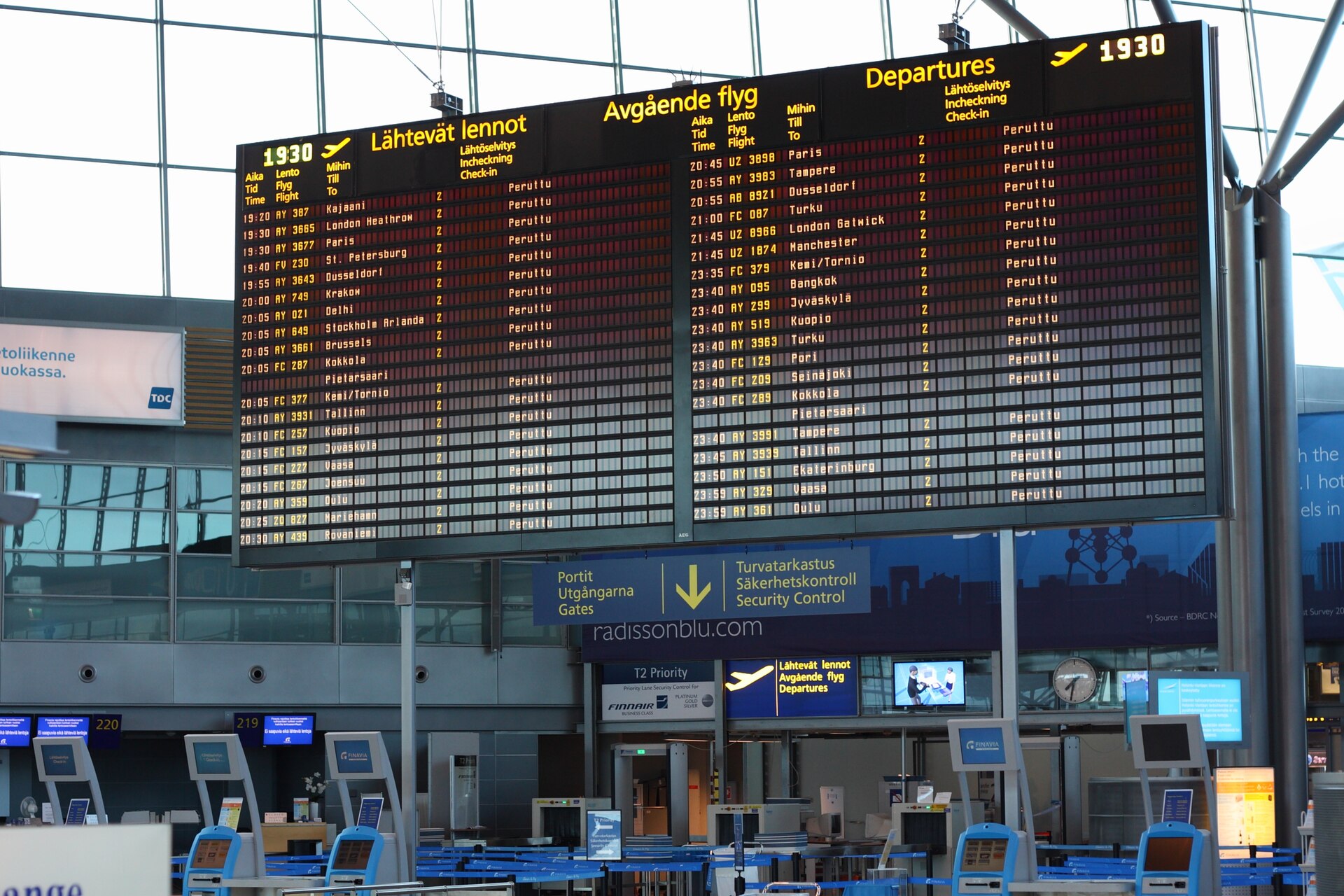
By March 6, Flightradar24 data showed that more than 23,000 commercial flights had been cancelled across the Gulf region. Over 4,000 flights were being cancelled daily at the crisis peak. On February 28 alone, 24 percent of all flights to the Middle East were scrubbed, with cancellation rates exceeding 50 percent for Qatar and Israel and 28 percent for Kuwait. CNBC reported that more than one million passengers were stranded globally within the first five days.
The financial bleeding has been equally swift. Arab airlines lost an estimated $1 billion on the first day of the conflict alone, according to the Pakistan-based Energy Update, citing industry data. Within three days, cumulative losses across the global aviation sector surged past $50 billion. Global airline stocks shed $23 billion in market value. If the conflict continues beyond two weeks, industry analysts project total aviation losses could breach $100 billion — a figure that would exceed the entire decade of losses following the September 11 attacks.
The four largest Gulf carriers — Emirates, Qatar Airways, Etihad, and Saudia — collectively generated more than $70 billion in annual revenue before the war, carried approximately 150 million passengers, and operated fleets totalling over 535 aircraft. Emirates alone, the crown jewel of Gulf aviation, reported revenue of AED 137 billion (approximately $37.4 billion) and carried 53.7 million passengers in the 2024-25 fiscal year. It suspended all operations on February 28, with limited resumption attempts around March 5-7 before suspending again, according to Loyalty Lobby.
These are not minor disruptions. This is an existential stress test for the business model that transformed six desert states into the crossroads of global travel.
The Middle East briefing 3,000+ readers start their day with.
One email. Every weekday morning. Free.
What Was Saudi Arabia Building Before the War?
Saudi Arabia’s aviation ambitions were the most expensive and most audacious in the sector’s history. The Kingdom was not merely expanding an airline or upgrading an airport. It was attempting to build an entirely new aviation ecosystem from the ground up, designed to transform Riyadh into a global hub rivalling Dubai, Singapore, and London within a single decade.
The centrepiece was King Salman International Airport, a $30 billion mega-project funded by the Public Investment Fund. Designed to cover 57 square kilometres with six parallel runways, the facility was targeting 100 million passengers by 2030 and 185 million by 2050, according to Airport Technology. In February 2026 — just six days before the first Iranian missiles flew — KSIA signed seven real estate memoranda of understanding at the PIF Private Sector Forum, according to Zawya. The airport was expected to contribute $7 billion annually to Saudi GDP and create more than 100,000 jobs.
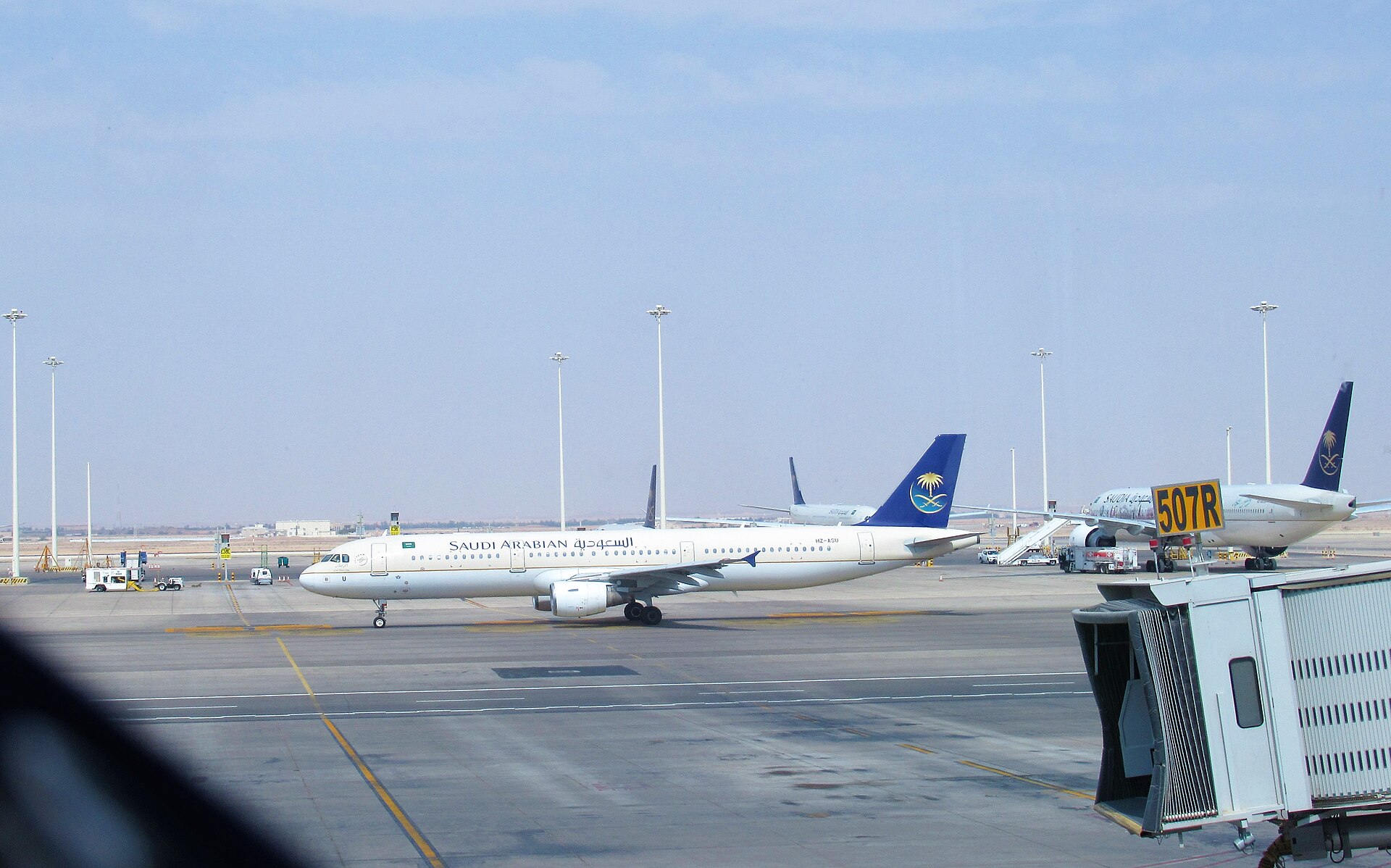
The broader Saudi Aviation Strategy, overseen by the General Authority of Civil Aviation (GACA), envisioned $100 billion in total investment across the aviation sector, according to Aviation Business ME. The targets were precise: 330 million passengers annually from more than 250 international destinations by 2030. Air cargo was targeted at 4.5 million tonnes. In 2025, Saudi airports processed 140.9 million air travellers — a 9.6 percent surge over the previous year — with 76 million international and 65 million domestic passengers, according to Travel and Tour World.
Third runway construction was already underway at King Salman International. A new 40-million-passenger terminal had begun construction, with operations targeted for 2029, according to Gulf News. Saudia, the national carrier, was expanding its fleet to 148 aircraft with 12 new passenger planes on order and new Airbus A321XLR routes planned for 2026, according to Arab News and Simple Flying.
The total investment represented more than aviation infrastructure. It was the connective tissue binding together Vision 2030’s tourism, entertainment, sports, and business ambitions. Every single one of those sectors assumed that people could fly into Saudi Arabia — reliably, safely, and in growing numbers. That assumption shattered on February 28.
What Happened to Riyadh Air?
No casualty of the aviation crisis is more symbolically devastating than Riyadh Air, the Kingdom’s gleaming new national carrier that was supposed to announce Saudi Arabia’s arrival as a first-class aviation power.
Riyadh Air operated its first commercial flight on October 26, 2025, according to Wikipedia’s aviation records. General public flights were expected to begin in the first quarter of 2026, precisely when the war erupted, according to The National. The airline had placed orders for 182 aircraft — 60 Airbus A321neo narrow-bodies, 25 Airbus A350-1000 wide-bodies, and 39 Boeing 787-9 Dreamliners. Its first two public destinations were planned as London Heathrow and Dubai, marquee routes designed to establish the brand internationally.
The timing could not have been worse. Riyadh Air was in the final stages of FAA certification for its Boeing 787 deliveries and needed a minimum of three aircraft for public operations. The war froze everything. With Gulf airspace restricted and war-risk insurance making every flight a commercial calculation, the launch timeline has become impossible to predict. No official statement has been released, but aviation analysts surveyed by Skift described the situation as a “complete strategic reset” for the carrier.
The irony is sharp. Saudi Arabia spent billions positioning Riyadh Air as a premium alternative to Emirates and Qatar Airways. Now all three are grounded by the same missiles, and the competitive dynamics that were supposed to play out over a decade of market competition have instead been compressed into a single, devastating week of shared paralysis.
How Did Airspace Closures Reshape Global Aviation Overnight?
The Gulf airspace is not merely a regional corridor. It is the central nervous system of intercontinental aviation. Approximately 40 percent of all flights between Europe and Asia transit through Gulf airspace or connect through Gulf hub airports. When that airspace closes, the global aviation network does not simply reroute. It fragments.
The scale of closures was unprecedented. Eight countries shut their airspace simultaneously on February 28 — a geographic exclusion zone stretching from the Mediterranean to the Indian Ocean. Saudi Arabia imposed partial restrictions on its eastern sectors, the zones most vulnerable to Iranian drone and missile trajectories. Flights to Abu Dhabi, Amman, Bahrain, Doha, and Kuwait were suspended through at least Tuesday, March 10, according to Time Out Riyadh. Flights to Moscow and Peshawar were cancelled through March 15.
The airline suspension list reads like a directory of global aviation. Emirates, Qatar Airways, Etihad, flydubai, Air Arabia, Saudia, Turkish Airlines, British Airways, Lufthansa, Air France, KLM, Cathay Pacific, Singapore Airlines (Gulf routes), Air India, IndiGo, Japan Airlines, Finnair, Virgin Atlantic, Wizz Air, Aegean Airlines — The National reported that more than 25 airlines suspended or significantly reduced Gulf operations.
Those carriers that continued flying were forced into costly rerouting. British Airways, Lufthansa, Air France, and KLM all shifted their Asia-bound flights away from Gulf corridors, adding 15 to 60 minutes of flying time per sector. According to industry estimates cited by CNBC, each additional hour of rerouting costs airlines $6,000 to $10,000 per flight in fuel, crew time, and operational overhead. For airlines operating dozens of daily long-haul sectors, the cumulative cost runs into millions of dollars per week.
Medina airport, Saudi Arabia’s gateway for Umrah pilgrims and a key link in the Kingdom’s religious tourism infrastructure, experienced a 25 percent traffic decline, according to Aviation Week. Jordan’s Queen Alia International Airport saw traffic fall 50 percent. Even Paris Charles de Gaulle and Delhi reported declines of 5 to 7 percent as connecting traffic through Gulf hubs evaporated.
The Insurance Crisis Nobody Is Discussing
Behind the headline cancellations lies a less visible but equally destructive force: the war-risk insurance market. Every commercial flight into or near a conflict zone requires explicit advance approval from insurers, with premiums assessed on a case-by-case basis, according to GrECo, the European insurance advisory firm. The standard hull war-risk policy includes a seven-day cancellation notice, meaning that insurers can withdraw cover for Gulf operations with just one week’s notice.
For airlines, the calculus is punishing. Small and low-cost carriers are losing $100,000 to $200,000 per day per aircraft from uninsurable disruption costs, according to Skift’s aviation coverage. These figures cover only the direct losses — they do not include the rerouted flight costs, extra fuel, passenger accommodation, or revenue losses from cancelled bookings that insurance policies explicitly exclude.
The maritime insurance market offers a proxy for the aviation premium trajectory. Lloyd’s of London expanded the Gulf war-risk zone to include Bahrain, Kuwait, Oman, Qatar, and Djibouti on March 3, according to the Insurance Journal. Marine war-risk premiums jumped from 0.25 percent to 1 percent of hull value — a fourfold increase — renewable every seven days, according to Caixin Global. For a $100 million tanker, the war-risk premium leapt from approximately $200,000 to $1 million per voyage. For larger vessels valued at $200 to $300 million, premiums reached 3 percent of hull value — approximately $7.5 million per transit, up from roughly $625,000, according to Modern Diplomacy.
Aviation war-risk premiums follow the same logic but with higher stakes per asset. A single wide-body aircraft — a Boeing 777 or Airbus A380 — carries a hull value of $150 to $400 million and transports 300 to 500 passengers. The insurance industry’s tolerance for risk in a shooting war is vanishingly small. Even if airspace technically reopens, the insurance premiums required to fly through it may make commercial operations economically unviable for months or years after the last missile falls.
The fuel cost dimension compounds the insurance crisis. Oil prices have surged above $110 per barrel, a 25 percent increase since February 28, according to Fortune and NBC News. According to Skift Research, US airlines alone face approximately $24 billion in additional jet fuel costs. Approximately 20 percent of global jet fuel exports transit through the Strait of Hormuz, according to OilPrice.com. The near-total closure of the strait has begun to create physical supply constraints at refineries in Asia, pushing jet fuel crack spreads to record highs. Airlines face a compound penalty: they cannot fly through the Gulf, and the fuel required to fly around it costs significantly more.
Gulf carriers face a particular irony in this calculus. Their historic competitive advantage was cheap fuel — operating from the world’s largest oil-producing region meant lower fuel costs per available seat kilometre than any competitor. That advantage has been obliterated. Gulf airlines cannot fly, and the fuel they cannot burn is becoming more expensive by the day. Airlines outside the Gulf, meanwhile, are absorbing the fuel cost increase while capturing the passengers that Gulf carriers can no longer serve. Each additional hour of rerouting costs airlines $6,000 to $10,000 per flight in fuel, crew time, and operational overhead, according to industry estimates cited by CNBC — a burden that will eventually be passed to passengers through fare increases of at least 11 percent, according to Skift Research projections.
The Aviation War Exposure Matrix
The Iran war has revealed a structural vulnerability that the Gulf aviation industry spent three decades ignoring: the airports that powered the hub model are all on the wrong side of the Arabian Peninsula.
Five factors determine an aviation hub’s wartime resilience. Geographic proximity to the conflict zone dictates the immediacy of the threat. Airspace dependency measures how much traffic relies on overflying contested territory. Infrastructure concentration captures whether a state’s aviation assets are clustered in a single location or distributed. Route alternatives reflect whether traffic can be rerouted without abandoning the hub entirely. Military protection infrastructure indicates whether the airport operates under an air-defence umbrella capable of intercepting ballistic missiles and drones.
| Hub | Distance to Iran (km) | Airspace Dependency | Infrastructure Concentration | Route Alternatives | Military Protection | Overall Exposure |
|---|---|---|---|---|---|---|
| Dubai (DXB) | 150 | Critical — 70%+ routes overfly Gulf | Extreme — single city, two airports | Very limited | UAE THAAD + Patriot | Very High |
| Doha (DOH) | 250 | Critical — peninsula geography | Extreme — single airport | None viable | Al Udeid AB (CENTCOM HQ) | Very High |
| Abu Dhabi (AUH) | 200 | Critical | High — one major airport | Very limited | Al Dhafra AB + THAAD | Very High |
| Riyadh (RUH/KSIA) | 600 | High — eastern airspace restricted | High — but Jeddah provides alternative | Moderate — Jeddah backup | Patriot + SAMI systems | High |
| Jeddah (JED) | 1,400 | Low — Red Sea corridor open | Moderate — KSA’s second hub | Strong — Africa, Europe, South Asia routes viable | Less exposed geographically | Low-Moderate |
| Kuwait (KWI) | 150 | Critical | Extreme — single airport | None viable | US military presence | Extreme |
| Bahrain (BAH) | 200 | Critical | Extreme — island state | None viable | US Fifth Fleet HQ | Extreme |
The matrix reveals what should have been obvious but was systematically ignored: every major Gulf aviation hub except Jeddah sits within 250 kilometres of Iran. Dubai International, the world’s busiest airport for international passengers before the pandemic, is just 150 kilometres from the Iranian coast across the Strait of Hormuz. Doha’s Hamad International is 250 kilometres away. These are not abstract vulnerabilities. They are measured in the flight time of a cruise missile — roughly 12 to 20 minutes.
The escalation reached a new level on 16 March when an Iranian drone ignited a fuel tank at Dubai International Airport, grounding all flights for seven hours — the longest unplanned shutdown in the airport’s history.
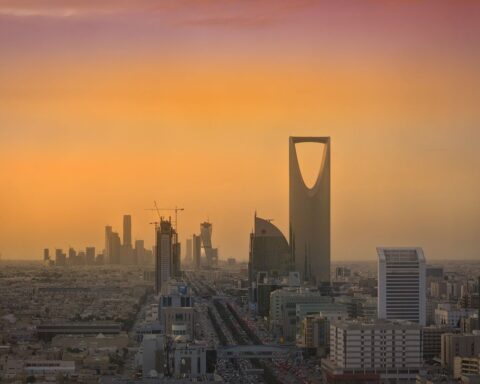
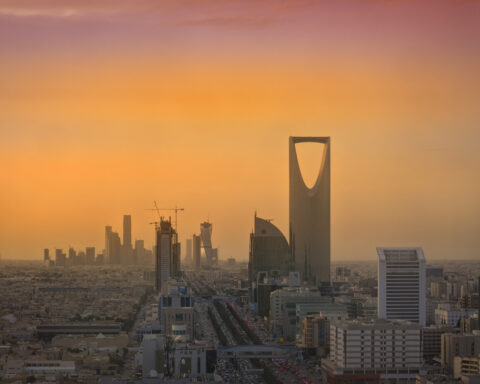
Riyadh occupies a middle position. At 600 kilometres from Iran, it is further from the immediate threat zone than its Gulf neighbours, but its eastern airspace — the corridors connecting it to Asia, the Indian subcontinent, and the Arabian Gulf — passes through the conflict zone. The $30 billion King Salman International Airport under construction north of Riyadh inherits this geographic exposure.
Jeddah stands alone. At 1,400 kilometres from Iran, on the Red Sea coast, it is geographically insulated from the Persian Gulf conflict. Its airspace corridors run west toward Africa and Europe, south toward East Africa and the Indian Ocean, and through the Red Sea toward the Suez Canal. None of these corridors overfly contested territory. This geographic advantage — which was irrelevant in peacetime — has become the most important variable in Saudi aviation strategy.
Who Wins When the Gulf Goes Dark?
The global aviation network abhors a vacuum. When 150 million annual passengers can no longer connect through Dubai, Doha, and Abu Dhabi, they must connect somewhere else. The beneficiaries have emerged within days.
Singapore Airlines became the immediate winner, according to multiple aviation analysts. Its extensive nonstop network between Europe and Asia — routes that bypass the Gulf entirely — became what The Nation Thailand described as a “critical lifeline.” The demand surge was explosive: London-Singapore economy fares jumped from approximately HK$6,600 to HK$66,767, a 900 percent increase. Load factors on Singapore Airlines’ European network are running at capacity levels not seen since the post-pandemic recovery surge of 2022.
Istanbul’s Ataturk successor airport was disrupted itself — Turkish Airlines suspended many Gulf routes through March 31 — but its geography as a bridge between Europe and Asia gives it structural resilience. European airlines rerouting away from Gulf corridors are flying via Istanbul, the Caucasus, and Central Asian airspace. Qantas rerouted its flagship Perth-London service via Singapore. British Airways, Lufthansa, Air France, and KLM all shifted to non-Gulf routing.
The fare increases tell the story. According to Travel and Tour World, airfares on Europe-Asia routes increased by up to 900 to 1,000 percent on some sectors as demand overwhelmed the limited non-Gulf capacity. A business class seat from London to Singapore that cost $3,000 before the war was quoted at $25,000 on March 5. Economy seats on the same route tripled within 48 hours.
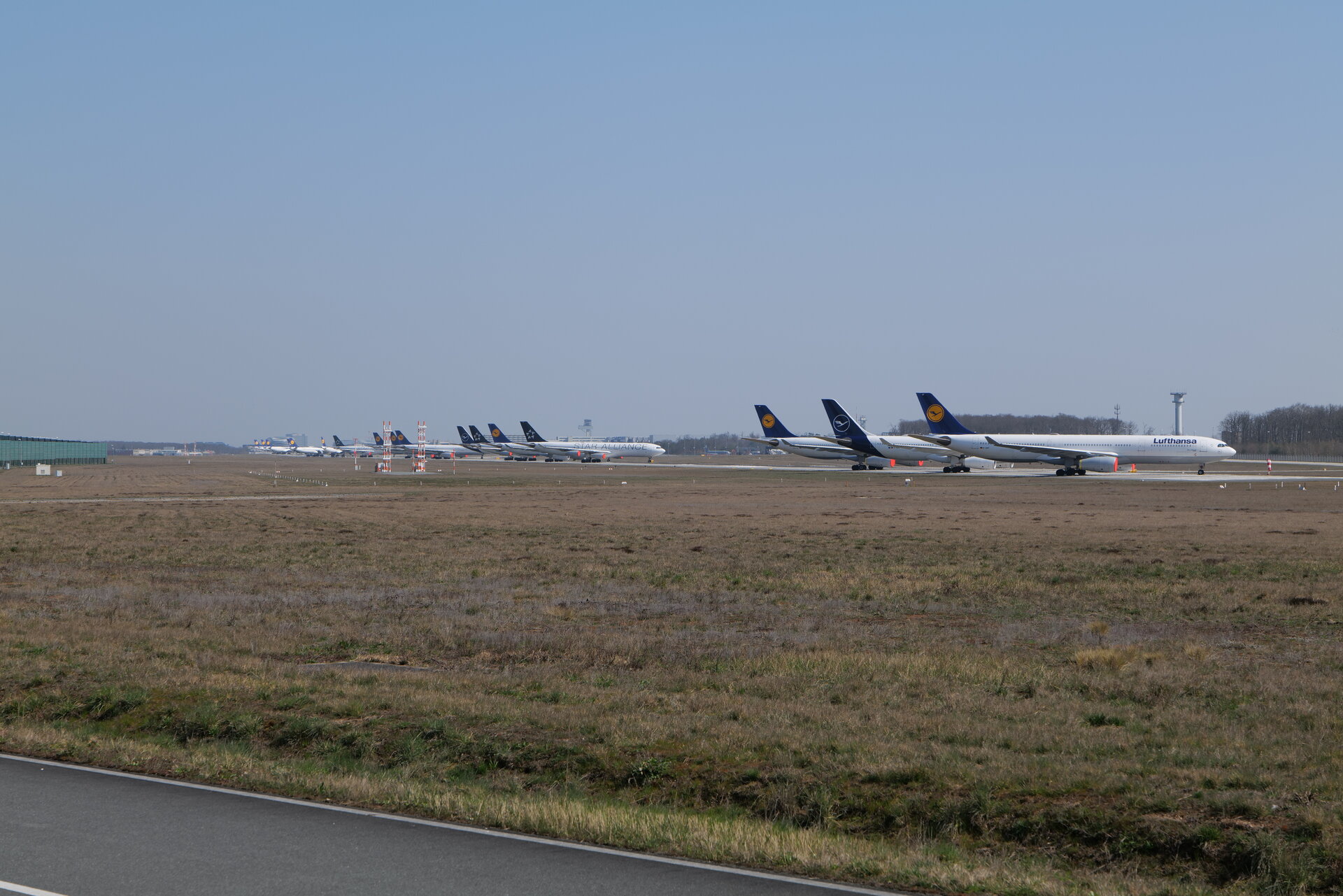
The longer-term competitive implications are severe for the Gulf model. Every week that Gulf airspace remains restricted, airlines and passengers form new habits. Connections through Singapore, Istanbul, and even Mumbai become normalised. Corporate travel policies update. Booking algorithms adjust. The Gulf hub premium — the argument that Dubai and Doha offered the most convenient connections — erodes with every cancelled flight. Airlines that reroute are not eager to reroute back if the security situation remains uncertain, if insurance premiums remain elevated, or if passenger confidence remains damaged.
Can Saudi Arabia Still Hit 150 Million Tourists?
Vision 2030’s tourism targets were already the most aggressive in global history. Saudi Arabia aimed for 150 million annual tourists by 2030, with 70 million international visitors, and tourism contributing 10 percent of GDP. In 2025, the Kingdom achieved 122 million tourists — a record — generating SR 300 billion ($81 billion) in tourism spending, according to Gulf News. The trajectory was on track.
The war has introduced a variable that no tourism strategy can fully accommodate: security perception. Tourism depends not on actual safety but on perceived safety. A single week of footage showing missiles intercepted over Riyadh, drones striking the US Embassy compound, and two civilians killed in Al-Kharj by a military projectile does more damage to tourism branding than a decade of marketing can repair.
The immediate casualties are visible. The Saudi Arabian Grand Prix, scheduled for April 17-19 at Jeddah’s Corniche Circuit, is one of the most prestigious events on the Formula 1 calendar. Previous editions drew tens of thousands of international visitors who required aviation access. Headlining performers including Shakira, Pitbull, and Kygo were announced for the race weekend — events designed to showcase Saudi Arabia’s entertainment ambitions. Whether these events proceed under wartime conditions, and whether international visitors are willing to fly to a country under missile attack, are open questions.
Riyadh Season 2025 surpassed 11 million visitors and created 25,000 direct jobs and 100,000 indirect jobs, according to Travel and Tour World. The entertainment infrastructure that MBS has built — stadiums, concert venues, theme parks, luxury hotels — requires a constant stream of arriving aircraft to function. Without aviation connectivity, these assets become expensive monuments to an interrupted strategy.
Hajj 2026, scheduled for late June, presents a particularly acute challenge. The annual pilgrimage draws approximately 2.5 million foreign visitors who arrive almost exclusively by air. Religious tourism is less sensitive to security concerns than leisure tourism — pilgrims will travel under conditions that holidaymakers will not — but the logistics of receiving millions of arrivals through airports operating under wartime restrictions are formidable.
Jeddah as Strategic Lifeline
The war has transformed Jeddah from Saudi Arabia’s second city into its most strategically important aviation asset. King Abdulaziz International Airport, on the Red Sea coast, is the only major Saudi airport operating without direct Gulf airspace constraints. Its corridors run west, south, and north — away from the conflict zone.
This was not the plan. Saudi Arabia’s aviation strategy centred on Riyadh. The $30 billion King Salman International Airport was designed to be the Kingdom’s primary hub — the facility around which the 330-million-passenger target was built. Jeddah was cast as the religious tourism gateway, handling Hajj and Umrah traffic, while Riyadh would capture the high-value business, connecting, and long-haul leisure traffic.
The war has inverted this logic. Jeddah is operationally viable. Riyadh is operationally constrained. Airlines seeking to maintain Saudi connections are routing through Jeddah. Evacuations are being processed through Jeddah. The Red Sea corridor — Jeddah to Suez, Jeddah to Djibouti, Jeddah to Mumbai — remains open and uncontested.
The infrastructure gap, however, is significant. King Abdulaziz International was designed for approximately 80 million passengers annually, primarily serving Hajj, Umrah, and regional traffic. It was not designed to absorb the hub-connecting traffic that Riyadh was supposed to handle. If the war drives a permanent reconfiguration of Saudi aviation toward the Red Sea coast, Jeddah’s airport will require expansion investment that was never in the original Vision 2030 budget.
The broader strategic lesson extends beyond airports. The war is exposing a dangerous concentration risk across Saudi Arabia’s entire economic geography. Oil infrastructure, aviation hubs, data centres, industrial zones, and the political capital itself are all clustered on the Gulf-facing eastern side of the peninsula. The Red Sea western coast — anchored by Jeddah, extending north to NEOM and south to Jizan — was treated as a secondary development zone. The missiles have revealed it as the primary zone of strategic safety.
The Contrarian Case for Saudi Aviation Dominance
The conventional wisdom holds that the war has destroyed Saudi Arabia’s aviation ambitions. The contrarian reading is more nuanced and, potentially, more accurate: the war may have destroyed the Gulf aviation model while simultaneously accelerating Saudi Arabia’s eventual dominance of whatever model replaces it.
The argument rests on three pillars.
First, Saudi Arabia is the only Gulf state with strategic geographic depth. The UAE, Qatar, Bahrain, and Kuwait are small coastal states with no hinterland. Their airports are their only airports. When Gulf airspace closes, their aviation industries cease to exist. Saudi Arabia, by contrast, spans 2.15 million square kilometres with airports on both the Gulf and Red Sea coasts. The war has damaged Riyadh’s hub potential but has not touched Jeddah’s. No other Gulf state has this option.
Second, the war has permanently discredited the Dubai model. Dubai International became the world’s busiest international airport by exploiting a simple geographic advantage: the UAE sits midway between Europe and Asia, making it an ideal connecting point. That advantage assumed peace. It assumed that the 150-kilometre proximity to Iran was a feature (short flights to a major market) rather than a vulnerability (within cruise-missile range). The war has revealed the vulnerability. Even after a ceasefire, the insurance industry, the corporate travel sector, and the long-memory passenger base will price that risk into future calculations. Dubai will recover — but it may never recover its position of unquestioned dominance.
Third, Saudi Arabia has the financial capacity to accelerate a post-war aviation pivot that no competitor can match. The PIF holds over $900 billion in assets. Aramco’s wartime revenues are surging as oil prices hold above $100 per barrel. If the Kingdom decides to accelerate Jeddah airport expansion, fast-track Riyadh Air’s launch through Red Sea corridors, and offer below-market incentives to airlines to establish connecting hubs on Saudi soil, no competitor in the region has the balance sheet to respond.
The risk in this contrarian reading is timing. Aviation pivots of this scale take years. Passenger habits, once broken, take years to rebuild. And the war’s duration remains unknowable. But the structural argument — that Saudi Arabia’s geographic depth, financial reserves, and dual-coast geography position it better than any Gulf competitor for the post-war aviation landscape — is sound.
There is a darker version of this argument that Saudi aviation planners are unlikely to articulate publicly but are almost certainly considering privately. If the war permanently reduces Dubai’s and Doha’s hub capacity — through infrastructure damage, insurance costs, or passenger avoidance — the traffic that those hubs handled must go somewhere. Saudi Arabia, with two coasts, the largest domestic aviation market in the Gulf, and a tourism sector actively seeking 150 million annual visitors, is the natural recipient. The war may be the most expensive form of competitive advantage in aviation history, but it is competitive advantage nonetheless.
What Does Aviation Recovery Look Like After a Gulf War?
History offers one direct precedent and one indirect one, and neither is comforting for Gulf carriers expecting a rapid bounce-back.
The 1990-91 Gulf War shut down commercial aviation across the region for approximately two months. Recovery was relatively rapid because the conflict was brief, contained, and concluded with a decisive military outcome. Passenger confidence returned within six to twelve months. But the Gulf aviation industry of 1991 was a fraction of its 2026 scale — Emirates carried fewer than 2 million passengers in 1991 compared to 53.7 million in 2025.
The September 11 attacks offer a more relevant comparison for understanding systemic aviation shocks. US domestic carriers lost $9.1 billion in net income in 2001 alone, according to Blue Sky News. The industry did not return to profitability until 2006 — five years later. Total losses exceeded $50 billion over the following decade. Three airlines filed for bankruptcy within 10 days of the attacks. The eventual result was massive industry consolidation: four carriers now control approximately 75 percent of the US domestic market.
The 2026 Iran war combines elements of both precedents with complications unique to its own. Like the Gulf War, it involves direct military conflict in the aviation zone. Like 9/11, it has triggered a global confidence shock that extends far beyond the immediate war zone. Unlike either, it involves sustained drone and missile attacks on civilian infrastructure in multiple states simultaneously — a pattern that fundamentally challenges the insurance industry’s capacity to model risk.
| Factor | Gulf War (1990-91) | September 11 (2001) | Iran War (2026) |
|---|---|---|---|
| Duration of disruption | ~2 months | 4 days closure + years of security | Ongoing — Day 10+ |
| Geographic scope | Kuwait/Iraq | US domestic | 8+ countries |
| First-day losses | Not quantified | ~$500M | ~$1B (Arab airlines alone) |
| Airlines affected | Regional carriers | US carriers primarily | 25+ global carriers |
| Recovery timeline | 6-12 months | 5+ years to profitability | Unknown |
| Structural change | Minimal | Massive consolidation | Potential hub migration |
The fuel cost dimension adds another layer of pain. Oil prices have surged above $110 per barrel — a 25 percent increase since the war began. According to Skift Research, US airlines alone face $24 billion in additional jet fuel costs. Approximately 20 percent of global jet fuel exports pass through the Strait of Hormuz, according to OilPrice.com, meaning that the Hormuz blockade is simultaneously restricting aviation operations and inflating the cost of the fuel required to operate. Airfares would need to rise at least 11 percent to offset fuel costs alone, before accounting for rerouting, insurance, and lost revenue.
No major US airline hedges its fuel costs — all are fully exposed to spot-price movements. European carriers with better hedging programmes are partially insulated but face the same rerouting costs and revenue losses. Gulf carriers, whose fuel costs were historically their competitive advantage (proximity to cheap crude), now face the paradox of operating in the world’s largest oil-producing region while being unable to fly.
The $100 Billion Reckoning
The Iran war has inflicted on the Gulf aviation industry what the pandemic only threatened: a structural challenge to its reason for existing. The pandemic grounded aircraft but did not challenge the geography. Airlines knew that when demand returned, the routes through Dubai, Doha, and Abu Dhabi would still be the most efficient paths between continents. The war challenges the geography itself.
For Saudi Arabia specifically, the reckoning cuts in two directions. The Kingdom’s $100 billion aviation investment was premised on an assumption of regional stability that has been shattered. King Salman International Airport’s $30 billion construction programme continues north of Riyadh, but the airspace above it is constrained. Riyadh Air’s 182 aircraft sit in delivery queues for an airline that cannot currently serve its planned routes. The 330-million-passenger target for 2030 now belongs to a pre-war reality that may not return.
Yet the same war that has exposed these vulnerabilities has also revealed Saudi Arabia’s unique structural advantage. No other Gulf state has a Red Sea coast. No other Gulf state has the financial capacity to pivot an aviation strategy mid-crisis. No other Gulf state will emerge from this conflict with both the capital and the geography to rebuild. The question for Mohammed bin Salman is not whether Saudi aviation can survive the war. It is whether the post-war aviation landscape will reward the state that lost the most or the state that adapts the fastest.
The Kingdom signed seven real estate memoranda for its mega-airport on February 22. Six days later, the sky fell. What matters now is not the plan that existed before the missiles flew but the plan that emerges after the last one lands.
Frequently Asked Questions
How many flights have been cancelled because of the Iran war?
More than 23,000 commercial flights have been cancelled across the Gulf region since the war began on February 28, 2026, according to Flightradar24 data. At the peak of the crisis, over 4,000 flights were being cancelled daily. The cancellations affected at least 25 international airlines and stranded more than one million passengers globally, according to CNBC. Saudi Arabia’s Medina airport alone experienced a 25 percent traffic decline, while Jordan’s Queen Alia airport saw a 50 percent drop.
What is happening to Riyadh Air’s launch?
Riyadh Air, Saudi Arabia’s new national carrier, was planning to begin general public flights in the first quarter of 2026 — the exact period when the war erupted. The airline had ordered 182 aircraft and planned London Heathrow and Dubai as its first public destinations. The war-driven airspace closures, insurance complications, and security environment have made the original launch timeline impossible, though no official delay announcement has been made as of March 10, 2026.
Is Jeddah airport still operating normally?
King Abdulaziz International Airport in Jeddah, located on the Red Sea coast approximately 1,400 kilometres from Iran, is the least affected of Saudi Arabia’s major airports. Its airspace corridors run west toward Africa and Europe rather than east through the contested Gulf zone. Jeddah has become the primary point of entry and exit for Saudi Arabia during the conflict, though the airport was not designed to absorb the hub-connecting traffic that Riyadh’s new mega-airport was intended to handle.
How much money have Gulf airlines lost?
Arab airlines lost an estimated $1 billion on the first day of the conflict alone. Within three days, cumulative global aviation losses surged past $50 billion, according to industry data compiled by Energy Update. Global airline stocks lost $23 billion in market value. If the conflict extends beyond two weeks, industry analysts project total aviation sector losses could exceed $100 billion. The four largest Gulf carriers — Emirates, Qatar Airways, Etihad, and Saudia — collectively generated over $70 billion in annual revenue before the war.
Will the Gulf aviation hub model survive the war?
The Gulf hub model — which depended on the geographic convenience of airports in Dubai, Doha, and Abu Dhabi sitting midway between Europe and Asia — has been permanently damaged by the revelation that these airports sit within cruise-missile range of Iran. Even after a ceasefire, elevated insurance premiums, reduced passenger confidence, and alternative routing through Singapore and Istanbul will erode the Gulf’s connecting traffic share. Saudi Arabia’s dual-coast geography, with Jeddah on the protected Red Sea side, positions it as the most resilient Gulf aviation market in the post-war landscape, though full recovery will take years.
How have airfares changed since the war started?
Airfares on routes that previously transited Gulf airspace have surged dramatically. London-Singapore economy fares jumped from approximately HK$6,600 to HK$66,767, a 900 percent increase, according to The Nation Thailand. Business class seats on similar routes tripled or quadrupled in price within 48 hours. Skift Research projects that airfares globally will need to rise at least 11 percent to offset the 25 percent surge in oil prices, even before accounting for rerouting costs that add $6,000 to $10,000 per flight hour.