NEW YORK — The United Nations Security Council on Wednesday adopted a landmark resolution condemning Iran’s missile and drone attacks on seven neighbouring states, delivering the Gulf Cooperation Council its most significant diplomatic victory since the Iran war began twelve days ago. The Bahrain-sponsored text passed 13-0 with Russia and China abstaining, and carries the backing of 135 co-sponsoring nations — one of the broadest coalitions assembled for a Security Council resolution in recent years.
The vote came as Iran launched its 37th wave of strikes across the Gulf, with drones targeting Saudi Arabia’s Shaybah oilfield in the Empty Quarter and the Islamic Revolutionary Guard Corps claiming responsibility for attacks on three commercial vessels in the Strait of Hormuz. For Riyadh, the resolution transforms what had been a military emergency into a legally documented aggression, strengthening Saudi Arabia’s hand in every diplomatic forum that follows.
Table of Contents
- What Does the UN Resolution Demand From Iran?
- How Did Security Council Members Vote?
- Why Did Russia and China Abstain Instead of Veto?
- Iran Accuses Security Council of Rewarding Aggressors
- The Battle of Two Resolutions
- Strait of Hormuz and Freedom of Navigation
- What the Resolution Means for Saudi Arabia
- Can the Security Council Actually Enforce This?
- Frequently Asked Questions
What Does the UN Resolution Demand From Iran?
The resolution demands the immediate cessation of all attacks by the Islamic Republic of Iran against Bahrain, Kuwait, Oman, Qatar, Saudi Arabia, the United Arab Emirates, and Jordan. It characterises Iran’s strikes as “a breach of international law and a serious threat to international peace and security,” according to the text released by the Security Council on March 11, 2026.
Bahrain’s ambassador to the United Nations, Jamal Fares Alrowaiei, described the resolution as proof that “the Council is committed to maintaining international peace and security.” He noted that the 135 co-sponsoring nations reflected “a collective awareness of the danger of the unjust Iranian attack,” as reported by Anadolu Agency.
The text goes beyond demanding a halt to military strikes. It deplores the targeting of civilian infrastructure that has “resulted in civilian casualties and damage of civilian buildings,” and emphasises support for the “territorial integrity, sovereignty and political independence” of all affected nations. These provisions create a documented legal baseline that the GCC can invoke in subsequent proceedings at the International Court of Justice or other tribunals.
Critically, the resolution imposes obligations on Iran to comply with international humanitarian law. The United Kingdom’s ambassador, Barbara Woodward, stated that it “imposes important obligations on Iran to immediately cease all attacks” and to refrain from “provocation or threats against neighbouring States, including through its proxies,” according to the UK government’s official explanation of vote published on March 11.
The Middle East briefing 3,000+ readers start their day with.
One email. Every weekday morning. Free.

How Did Security Council Members Vote?
The resolution passed with 13 votes in favour and zero votes against, with Russia and China choosing to abstain rather than exercise their veto power. The 13-0-2 result represents an overwhelming endorsement of the Gulf position, particularly given the geopolitical complexities that usually fracture Security Council unity on Middle East issues.
Among the permanent members, the United States, United Kingdom, and France voted in favour. Both Moscow and Beijing, which have historically shielded Iran from the harshest Security Council measures, declined to block the text. This is significant: Russia and China could have vetoed the resolution, killing it entirely. Their decision to abstain signals that even Iran’s closest diplomatic partners recognise the attacks on Gulf civilian infrastructure have crossed a line that is difficult to defend at the United Nations.
The ten non-permanent members on the Council in 2026 all voted in favour. The breadth of support — spanning Africa, Asia, Latin America, and Europe — underscores the degree to which Iran’s attacks on neighbouring states have alienated potential sympathisers. When the General Assembly held an emergency debate on the war in the first week of March, according to Security Council Report, dozens of non-aligned countries expressed alarm at the spread of hostilities beyond Iran’s borders.
The 135 co-sponsoring nations represent roughly 70 percent of the UN’s 193 member states. For comparison, the 2022 General Assembly resolution condemning Russia’s invasion of Ukraine attracted 141 votes in favour. The level of co-sponsorship suggests the GCC’s diplomatic apparatus — led by Bahrain and coordinated across all six member states plus Jordan — executed an unusually effective campaign in the days leading up to the vote.
Why Did Russia and China Abstain Instead of Veto?
Russia and China’s decision to abstain rather than veto the resolution reveals the diplomatic isolation Iran faces after twelve days of escalating attacks on its Arab neighbours. Both countries criticised the text as “unbalanced and confrontational” during consultations, according to Security Council Report, but neither was willing to stand as the sole defender of Iran’s attacks on civilian targets in Bahrain, Kuwait, and the UAE.
China’s representative explained that Beijing “fully understands the significant concerns” of the Gulf Arab states. The Chinese delegation said it participated constructively in negotiations but ultimately abstained because the draft “did not fully reflect the root causes and the overall picture of the conflict in a balanced manner,” according to the Anadolu Agency report. This is diplomatic language for China’s discomfort at voting to condemn Iran — a major oil supplier and strategic partner under the Belt and Road Initiative — while the US-Israeli strikes that provoked Iran’s retaliation go unmentioned in the text.
Russia’s position mirrored China’s complaints. Moscow circulated its own rival resolution (see below) that took a broader approach without naming specific aggressors. When that text failed, Russia chose abstention over the political cost of vetoing a measure backed by 135 countries, including many Global South nations that Moscow has courted assiduously since its own 2022 isolation over Ukraine.
For Saudi Arabia, the abstentions carry a practical benefit that a veto would not have delivered. A vetoed resolution becomes a political statement. An adopted resolution becomes international law — a reference point for future enforcement measures, sanctions discussions, and legal proceedings. Prince Faisal bin Farhan, Saudi Arabia’s foreign minister, had spoken with US Secretary of State Marco Rubio on Wednesday about Iranian aggression, according to the State Department, and the resolution’s passage gives Riyadh the multilateral framework it sought.
Iran Accuses Security Council of Rewarding Aggressors
Iran’s permanent representative at the United Nations, Amir Saeid Iravani, delivered a scathing denunciation of the resolution before and after the vote. He accused Council members of attempting “to reverse the roles and positions of victim and aggressor,” and warned that adoption would be “a stain on the credibility and reputation of the Security Council,” as reported by Anadolu Agency.
Iravani’s central argument rested on the resolution’s silence regarding the US-Israeli strikes that killed Supreme Leader Ayatollah Ali Khamenei on February 28 and triggered Iran’s retaliatory campaign. “If adopted, the aggressor, Israel and the United States, will be rewarded and emboldened to carry out further acts of aggression,” the Iranian envoy stated.
The Iranian delegation cited humanitarian figures to support its case. Iravani reported over 1,300 civilian casualties from US-Israeli strikes inside Iran and claimed the attacks had “destroyed 9,669 civilian sites, including 7,943 residential homes, 1,617 commercial and service centres.” These figures, which have not been independently verified, form the basis of Tehran’s legal argument that its strikes against Gulf states housing US military personnel constitute legitimate self-defence under Article 51 of the UN Charter.
Legal scholars have challenged this interpretation. Al Jazeera’s analysis published on March 7 argued that Iran’s legal case for striking the Gulf “collapses under scrutiny,” noting that Article 51 permits self-defence against an armed attack by a state but does not authorise retaliatory strikes against third-party countries simply because they host foreign military bases. Bahrain, Kuwait, and the UAE did not attack Iran; their alleged offence is permitting American forces to operate from their territory.
Iravani closed with a warning that extended beyond the immediate crisis: “Today, it is Iran. Tomorrow, it could be any other sovereign state.” He called on the international community to “stop this bloody war against the Iranian people.”

The Battle of Two Resolutions
Wednesday’s vote was not a simple up-or-down on a single text. The Security Council considered two competing draft resolutions, reflecting the deep divisions over how to frame the Iran crisis.
The first text, sponsored by Bahrain on behalf of all six GCC member states and Jordan, was the resolution that ultimately passed. It focused narrowly on Iran’s attacks against its Arab neighbours, condemning the strikes as breaches of international law and demanding their immediate cessation. The text was drafted to be legally precise: it names the seven affected states, identifies the specific nature of the attacks (missiles, drones, and threats to maritime navigation), and invokes the Security Council’s authority under Chapter VII of the UN Charter. Crucially, it makes no mention of the US-Israeli strikes that provoked Iran’s retaliation.
Russia circulated a rival draft that took a “broader, more general approach without naming specific countries,” according to Security Council Report’s analysis of the two texts. Moscow’s version mourned the loss of life across all Middle East hostilities, urged all parties to cease military activities, and called for a return to negotiations. It did not single out Iran, and it applied the demand for de-escalation equally to Washington, Tel Aviv, and Tehran.
The Russian text reflected a framework that China and several non-aligned states initially preferred: treating the entire conflict as a single crisis rather than isolating Iran’s behaviour. During consultations, Russia and China argued that the Bahraini draft ignored the “root causes” of the conflict, according to the Security Council Report. But the GCC’s counter-argument proved more persuasive with the wider membership: whatever the origins of the war, Iran’s decision to fire missiles and drones at countries that had not attacked it — killing and injuring civilians in Bahrain, damaging airports in Dubai, and threatening oil infrastructure across the Gulf — constituted a separate and independently condemnable set of actions.
The Russian draft was voted on separately and failed to achieve the nine votes needed for adoption, though the exact tally has not been publicly released as of Wednesday evening. Its defeat cleared the way for the Bahraini text to proceed.
Strait of Hormuz and Freedom of Navigation
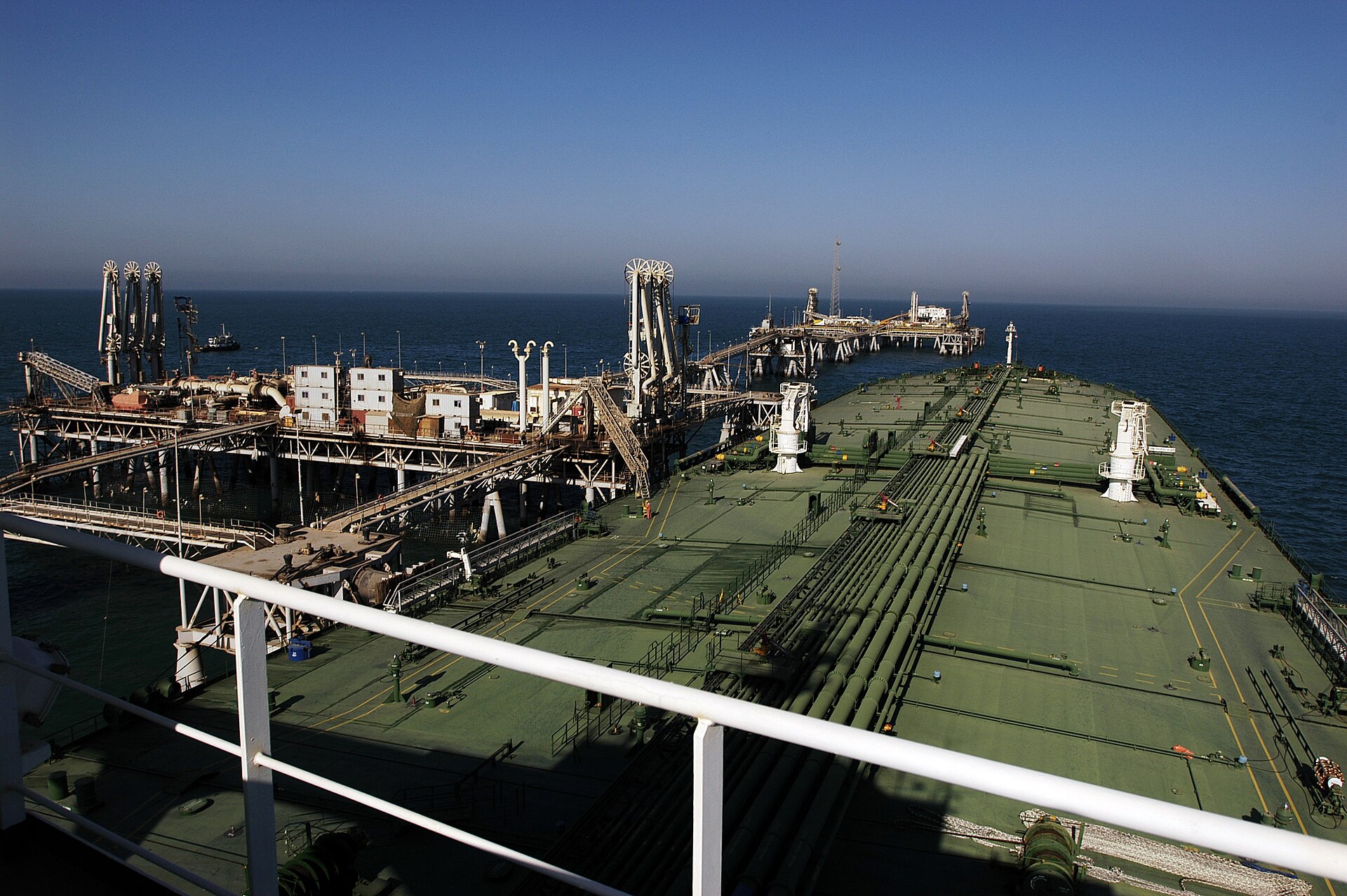
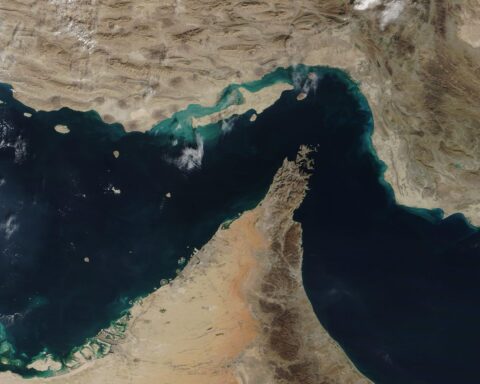
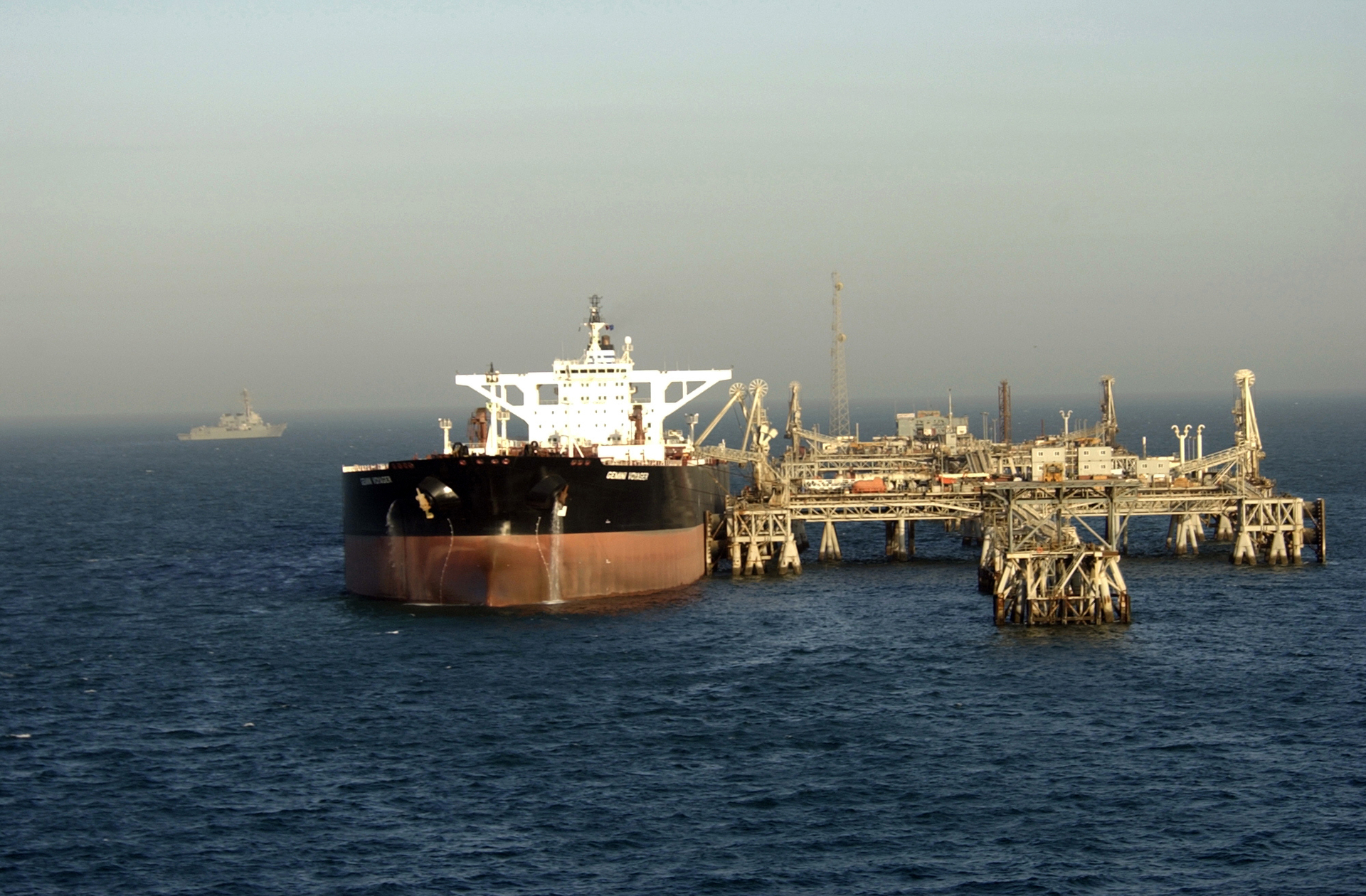
The resolution includes explicit provisions on maritime security, condemning “any actions or threats by the Islamic Republic of Iran aimed at closing, obstructing, or otherwise interfering with international navigation through the Strait of Hormuz,” according to the Jamaica Observer’s report on the full text. The UK’s ambassador reinforced this in her explanation of vote, stating that “Iran’s unacceptable attacks against ships passing through the Strait of Hormuz threaten maritime security and the safety of seafarers.”
This language arrived on the same day that Iran’s IRGC Navy claimed responsibility for attacking two commercial vessels in the Strait of Hormuz. The Thai-flagged cargo ship Mayuree Naree was struck by a projectile and caught fire, with three crew members reported missing, according to CNBC. An IRGC spokesperson said the navy struck the ships because they were “ignoring alerts and warnings from the IRGC Navy,” according to Al Jazeera — effectively admitting to enforcing a unilateral naval blockade in international waters.
The UK Maritime Trade Operations centre reported that three vessels off Iran’s coast had been struck by projectiles on Wednesday, the latest in a pattern of attacks that has pushed oil prices up roughly 20 percent since the war began. The International Energy Agency’s decision to release a record 400 million barrels from strategic reserves reflects the severity of the disruption.
For Saudi Arabia, the Strait of Hormuz provisions carry particular weight. The Kingdom exports approximately 5 million barrels per day through the waterway under normal conditions, though Aramco has rerouted significant volumes through the East-West Pipeline to Yanbu on the Red Sea since the war began. The Security Council’s explicit condemnation of threats to Hormuz navigation establishes an international legal baseline that Saudi Arabia and its partners can invoke to justify future military escorts of commercial shipping — a step that Washington has already signalled willingness to take, according to CNBC’s reporting from March 3.
What the Resolution Means for Saudi Arabia
The resolution delivers Saudi Arabia three strategic advantages that go beyond the symbolic value of a Security Council condemnation.
First, it establishes a documented international consensus that Iran’s attacks on Gulf states are illegal under international law. This matters because Tehran has attempted to frame its strikes as legitimate self-defence under Article 51 of the UN Charter, arguing that Gulf states became combatants by hosting US military assets. The resolution rejects this framing explicitly, and with 135 co-sponsors, the rejection carries substantial diplomatic weight. Should the conflict reach the International Court of Justice — as some GCC members have indicated they intend — the resolution becomes evidence of the international community’s legal interpretation.
Second, the resolution provides political cover for Saudi Arabia’s accelerating arms acquisitions. Riyadh has signed or negotiated weapons deals with China, Ukraine, and South Korea in the past two weeks alone. A Security Council resolution explicitly condemning the attacks Saudi Arabia faces makes these procurements harder to criticise as provocative or destabilising — Riyadh can point to the UN’s own determination that it is under illegal attack.
Third, and perhaps most importantly for Crown Prince Mohammed bin Salman, the resolution validates the GCC’s decision to pursue a diplomatic rather than military response to Iran’s strikes. Saudi Arabia has conspicuously refrained from joining the US-Israeli military campaign against Iran, drawing criticism from some in Washington but earning credibility as a responsible actor seeking de-escalation. The Security Council’s near-unanimous vote rewards that restraint and positions the Kingdom as a victim of aggression rather than a belligerent.
Domestically, the resolution arrives at a sensitive moment. Ramadan began this week, and Iran’s declaration that Gulf financial institutions are military targets has rattled Saudi markets. The international community’s formal condemnation provides reassurance to foreign investors and sovereign wealth fund partners that the Gulf states retain broad international backing.
Can the Security Council Actually Enforce This?
The resolution demands Iran stop its attacks, but the Security Council’s enforcement mechanisms are limited — particularly when two permanent members have already signalled their reluctance to go further by abstaining rather than voting in favour.
Under the UN Charter, Security Council resolutions adopted under Chapter VII are legally binding and can be enforced through sanctions, arms embargoes, or the authorisation of military force. The text of the GCC resolution invokes the Council’s authority and “determines” that Iran’s attacks constitute a threat to international peace and security, language that is typically associated with Chapter VII measures. However, any follow-up enforcement resolution would require nine affirmative votes and no vetoes from the permanent five.
Russia and China’s abstentions on this resolution do not guarantee they would abstain on a sanctions or enforcement measure. Moscow, which maintains a strategic partnership with Tehran and has received Iranian drones for use in Ukraine, would likely veto any sanctions resolution. China, which imports approximately 1.5 million barrels per day of Iranian oil, has similar incentives to prevent economic measures.
The practical enforcement path, according to analysts quoted by The National, lies not in Security Council follow-up but in the resolution’s utility as a reference document. It provides legal justification for individual states and coalitions to take defensive measures. The UK’s ambassador noted that her country has been “participating in coordinated regional defensive operations” and has “strengthened capabilities in the region.” The resolution’s condemnation of threats to the Strait of Hormuz could serve as the legal basis for a multinational naval escort mission — a step that several Gulf states have discussed with Washington and London.
Whether the resolution will actually change Iranian behaviour in the short term is doubtful. Tehran has shown no indication of halting its retaliatory campaign, and the 37th wave of attacks launched Wednesday suggests the IRGC views its operations as a matter of regime survival rather than a negotiable position. But the GCC was likely under no illusion that a resolution alone would stop the missiles. The value lies in the diplomatic and legal infrastructure it creates for the months and years that will follow the fighting.
Frequently Asked Questions
What does the UN Security Council resolution on Iran demand?
The resolution demands Iran immediately cease all missile and drone attacks against Bahrain, Kuwait, Oman, Qatar, Saudi Arabia, the United Arab Emirates, and Jordan. It also condemns threats to navigation through the Strait of Hormuz and calls on Iran to comply with international humanitarian law. The text was adopted on March 11, 2026 with 13 votes in favour and abstentions from Russia and China.
Why did Russia and China abstain on the Iran resolution?
Russia and China argued the Bahraini draft was unbalanced because it condemned Iran’s attacks on Gulf states without addressing the US-Israeli strikes that triggered Iran’s retaliation. However, neither was willing to veto a resolution backed by 135 co-sponsoring nations, which would have exposed them as Iran’s sole defenders while civilian casualties mounted across the Gulf. China said it “fully understands the significant concerns” of the Gulf states.
Is the UN Security Council resolution on Iran legally binding?
Security Council resolutions are generally considered legally binding on all UN member states. The text determines that Iran’s attacks constitute a threat to international peace and security, language associated with Chapter VII of the UN Charter. However, enforcement requires further resolutions that Russia and China would likely veto. The resolution’s practical value lies in establishing a legal framework for defensive measures and future proceedings.
How many countries co-sponsored the resolution condemning Iran?
The resolution attracted 135 co-sponsors, representing roughly 70 percent of the UN’s 193 member states. Bahrain submitted the text on behalf of the Gulf Cooperation Council, with Jordan as a co-author. The breadth of support makes it one of the most widely backed Security Council resolutions in recent years, comparable to the international response to Russia’s 2022 invasion of Ukraine.
What was Iran’s response to the UN Security Council resolution?
Iran’s UN envoy Amir Saeid Iravani called the resolution “a stain on the credibility and reputation of the Security Council” and accused it of attempting to “reward the aggressors and punish the victim.” He argued that Iran’s strikes constitute legitimate self-defence under Article 51 of the UN Charter, citing over 1,300 civilian casualties from US-Israeli strikes inside Iran. Legal scholars have challenged this interpretation, noting Article 51 does not authorise attacks on third-party states.
The resolution’s legal significance extends far beyond its immediate diplomatic impact. The invocation of Article 51 and the condemnation language create the foundation for reparations claims and war crimes proceedings that Gulf states are already preparing, following the precedent set by the UN Compensation Commission after Iraq’s invasion of Kuwait.