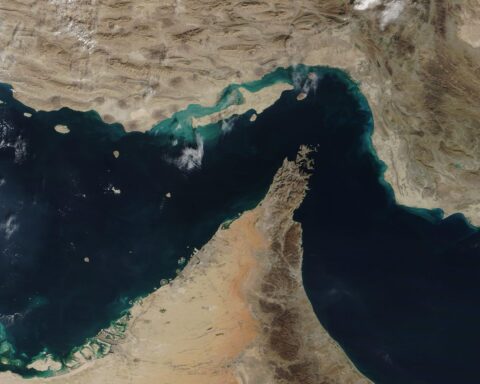
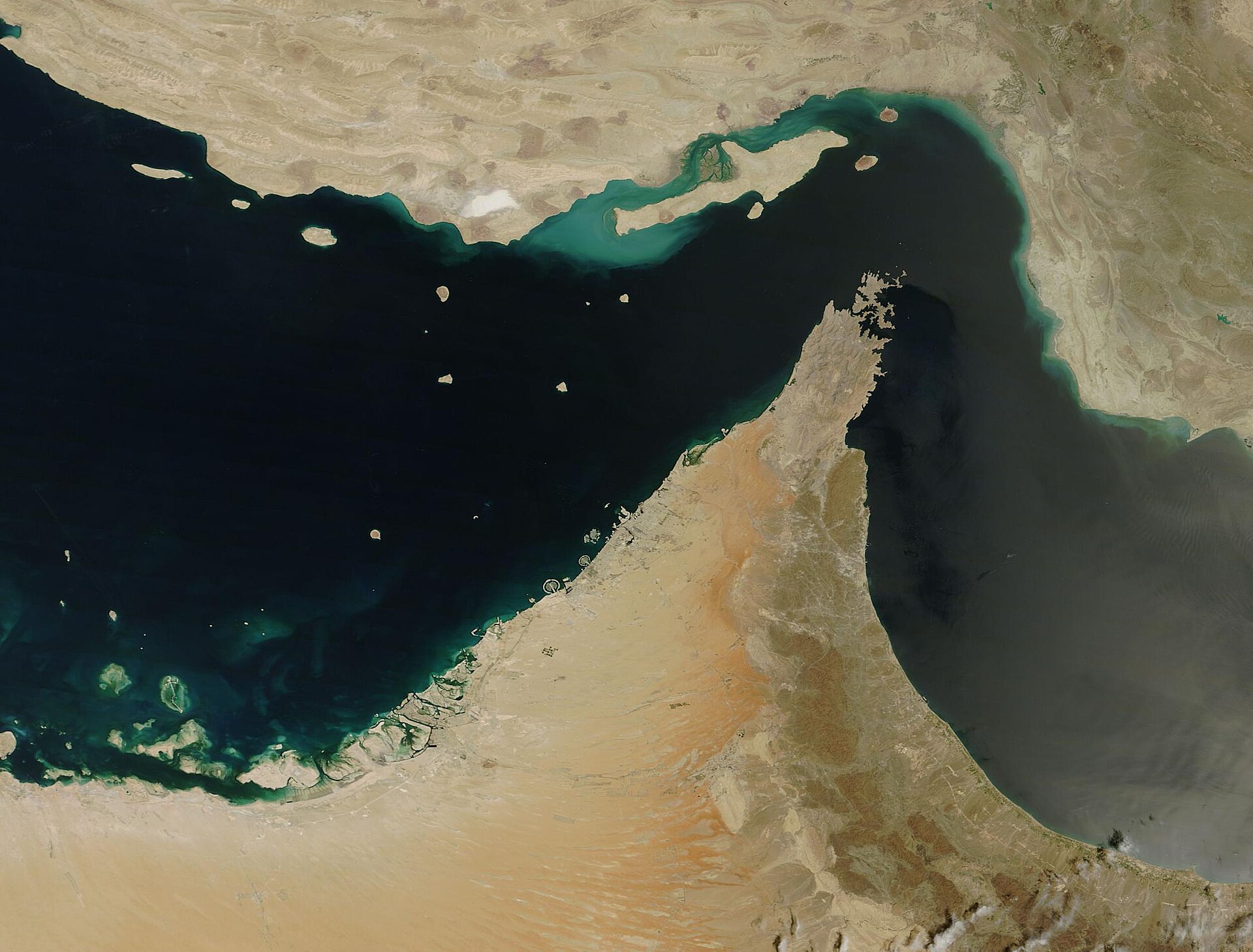
ABU DHABI — Iranian forces struck the United Arab Emirates for the second consecutive day on May 5, launching 15 missiles and four drones that UAE air defenses engaged over the country’s eastern seaboard. The attacks came less than 24 hours after a drone struck the Fujairah Oil Industry Zone — the UAE’s primary Hormuz bypass terminal — and two more hit the ADNOC tanker MV Barakah in the Strait itself.
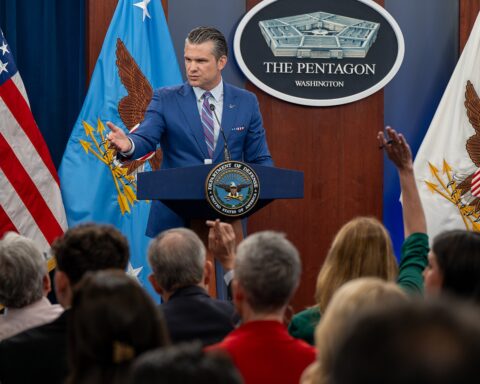
At the Pentagon the same afternoon, Chairman of the Joint Chiefs Gen. Dan Caine read a cumulative tally into the record: since the April 8 ceasefire, Iran had fired at commercial vessels nine times, seized two container ships, and attacked US forces on more than ten occasions. His designation for all of it, including two days of strikes on a US-aligned partner state: “All below the threshold of restarting major combat operations at this point.”
[toc]
Fifteen Missiles, Four Drones, and No Breach Designation
The UAE Ministry of Defense confirmed the May 5 engagement in a statement that offered intercept figures but no damage assessment — 15 missiles and four drones engaged by national air defenses. The ministry did not specify how many were destroyed in flight versus how many reached terminal phase before interception. It did not name the launch origin. It did not claim a ceasefire breach.
Washington did not either. Defense Secretary Pete Hegseth, speaking at the same press conference where Caine delivered his tally, offered three words: “The ceasefire is not over.”
The previous day’s engagement had been larger in composition — 12 ballistic missiles, three cruise missiles, and four UAVs — but smaller in political consequence. Three Indian nationals sustained moderate injuries. ADNOC temporarily suspended crude loading at Fujairah Port. The British military’s United Kingdom Maritime Trade Operations reported three separate vessel strikes across May 4-5: a bulk carrier attacked by small craft 11 nautical miles west of Sirik, Iran; a tanker hit by unknown projectiles 78 nautical miles north of Fujairah at 11:40 p.m. local time; and a cargo vessel struck within the Strait on May 5, environmental impact unknown. Also on May 5, the IRGC struck the CMA CGM San Antonio with a cruise missile — the second hit on a CMA CGM-operated vessel in 18 days — injuring eight crew and suspending the US Navy’s Project Freedom escort program in under 48 hours. The CMA CGM targeting pattern and France’s response with the Charles de Gaulle carrier are examined here.
The Middle East briefing 3,000+ readers start their day with.
One email. Every weekday morning. Free.
None of the three UKMTO incidents produced a vessel name or flag state in the public reporting. The British military confirmed crew were safe aboard the tanker. For the cargo vessel, it could not confirm even that much.
What Exactly Is the “Below Threshold” Doctrine Protecting?
Caine’s formulation at the May 5 press conference was not improvised. He read from what appeared to be prepared remarks, listing each category of Iranian action since April 8 as though entering evidence into a ledger designed to contain it. Nine vessel firings. Two seizures. Ten-plus attacks on US forces. The word “all” — applied to the entire set — carried the designation’s weight. Not “most.” Not “the majority.” All of it, including strikes on UAE sovereign territory that killed no Americans, fell below whatever line Washington had drawn.
The doctrine’s logic became visible in its application. Hegseth and Caine had, in effect, published the rules of engagement in negative space — everything Iran had done so far was permissible, which meant everything short of killing Americans or sinking a US warship remained available to Tehran as a free action. The 2,845 Iranian systems fired at UAE since February 28 — 563 ballistic missiles, 2,256 drones, 26 cruise missiles — had not, in aggregate, constituted a breach.
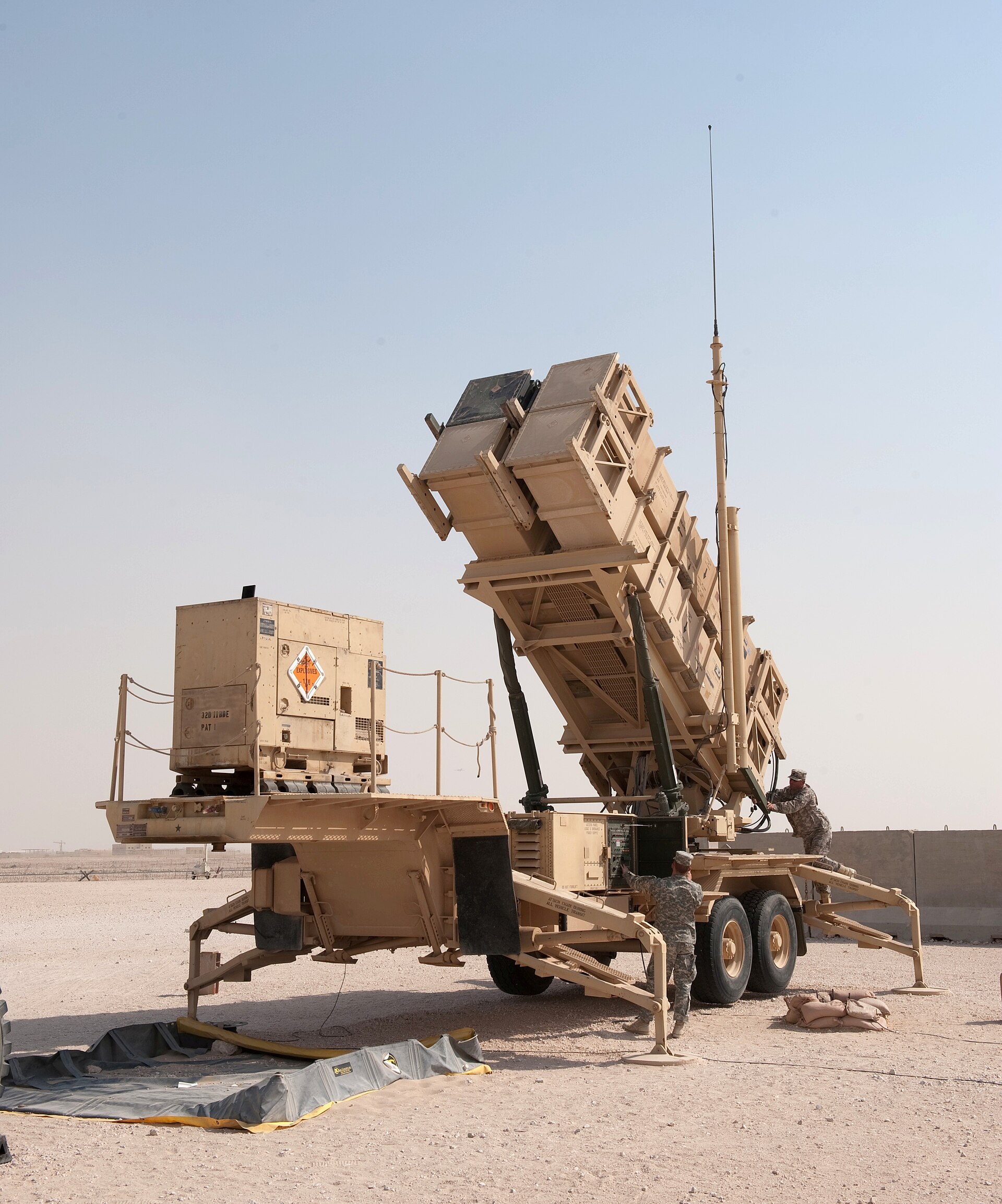
For Riyadh, watching from behind approximately 400 PAC-3 rounds and no delivery schedule before mid-2027, the arithmetic was straightforward. The UAE had expended an estimated 200 of its own PAC-3 missiles — between 20 and 40 percent of its pre-war arsenal — intercepting 132 of 137 ballistic missiles and 195 drones since the war began. Thirty-five drones had penetrated those defenses. A CSIS report updated April 24 found that US forces themselves had burned through more than half of four key munition types in 39 days of pre-ceasefire combat, with rebuilding timelines of one to four years.
Saudi Arabia’s interceptor deficit was not a future problem. It was a present constraint on whether Riyadh could afford to be struck at the rate the UAE was being struck.
Fujairah: The Bypass That Became a Target
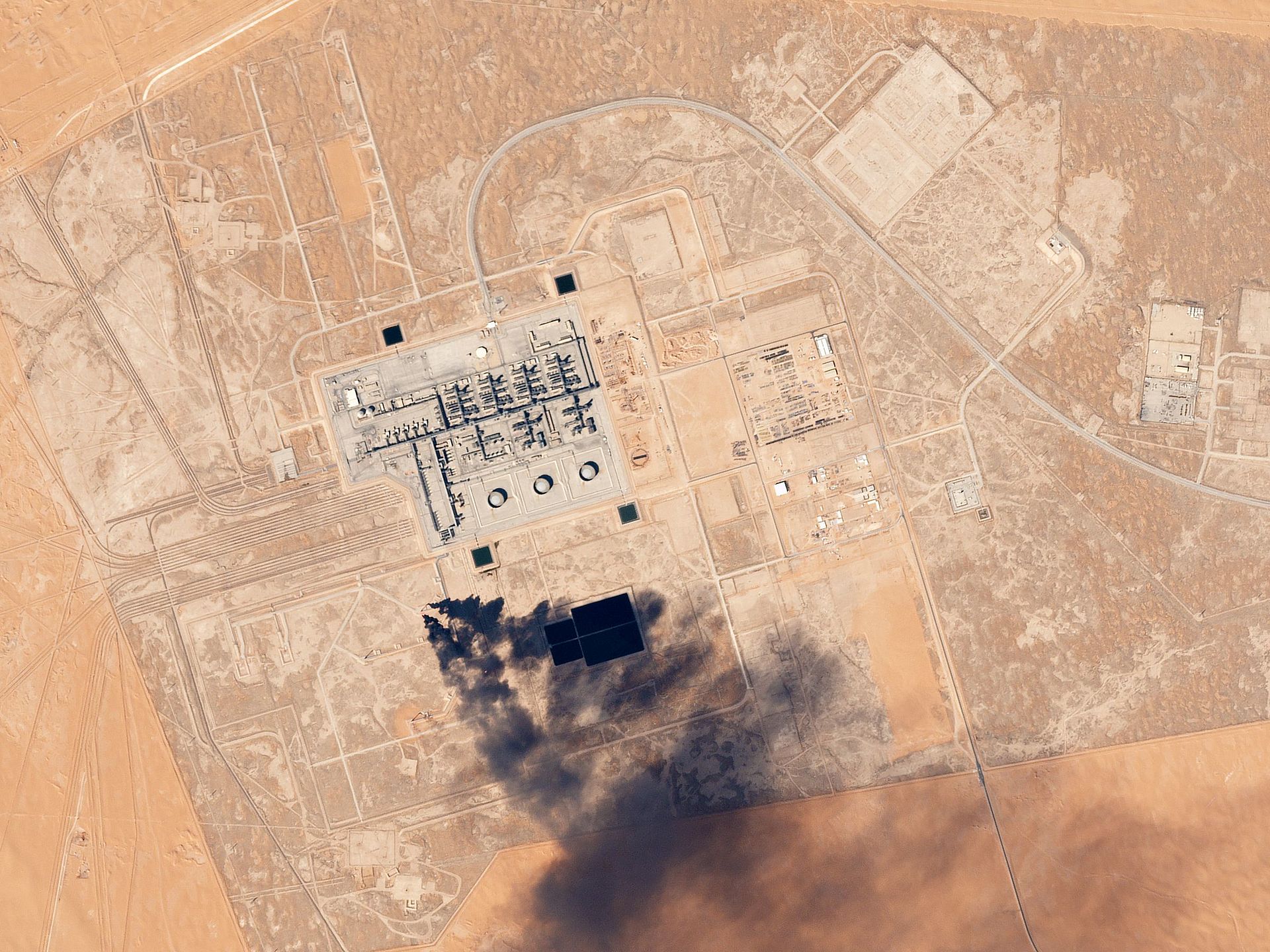
The Fujairah Oil Industry Zone sits on the UAE’s Gulf of Oman coast — the entire point of its existence is that tankers loading there do not need to transit the Strait of Hormuz. When an Iranian drone struck the facility on May 4, triggering what Bloomberg described as a “large fire,” it completed a pattern. Iran had spent thirty days systematically targeting every route that allowed Gulf crude to bypass IRGC-controlled chokepoints.
ADNOC CEO Sultan Al Jaber called the attacks “global economic warfare.” The company suspended crude loading — 922,000 barrels per day taken offline with a single drone that UAE defenses failed to intercept. The MV Barakah, an ADNOC crude tanker struck by two drones in the Strait itself, was empty at the time. No crew were injured. The UAE Ministry of Foreign Affairs called it a “terrorist attack” and a “blatant violation” of UN Security Council Resolution 2817 on freedom of maritime navigation.
The ministry did not call it a ceasefire violation.
The IRGC Denied Everything. The President Called It Madness.
IRGC spokesman Ebrahim Zolfaghari issued a categorical denial on May 5: “Iranian forces have not carried out any missile or drone operations against the UAE in recent days. If any action had been taken, we would have announced it firmly and clearly. Therefore, the report of that country’s Ministry of Defense is absolutely denied and is devoid of any truth.”
President Masoud Pezeshkian, according to Iran International, described the strikes as “completely irresponsible” and “madness” that risks “irreversible consequences.” Sources told the outlet that the strikes were carried out without the civilian government’s knowledge and that Pezeshkian was “incredibly angry.” He reportedly requested an urgent meeting with Mojtaba Khamenei to press for an immediate halt.
The presidential administration chief, Mohsen Haji Mirzaei, denied any rift on state television.
The denial-and-fury pattern had precedent. Pezeshkian had publicly accused IRGC commanders Vahidi and Abdollahi on April 4 of wrecking ceasefire negotiations — naming them by name, invoking Article 110’s clause that gives the president zero authority over the Guards. Nothing changed. The IRGC continued to operate in the Strait as though the civilian government were a foreign entity commenting on Iranian affairs from abroad.
Zolfaghari’s denial created three readings, none of them reassuring. Either a subordinate IRGC command — possibly the Navy, still headless after Tangsiri’s killing on March 30 — had launched without authorization from the IRGC’s own spokesman. Or the denial was information warfare, maintaining deniability while IRGC-aligned media simultaneously published visuals of the Fujairah aftermath. Or the civilian-military fragmentation was genuine and irreversible, meaning no one in Tehran could credibly commit to stopping the strikes even if a deal were signed.
Why Did Trump Pause Project Freedom on the Day of the Second Strike?
Project Freedom — the US military operation launched May 4 with 15,000 troops and more than 100 aircraft — lasted approximately 24 hours as an active combat operation. CENTCOM sank six Iranian fast-attack boats on Day 1. Two commercial vessels transited successfully before the pause.
On May 5, as UAE air defenses engaged the second wave of Iranian missiles overhead, Trump announced Project Freedom was “paused for a short period.” His statement cited “the request of Pakistan and other countries, tremendous military success during the campaign against Iran, and the fact that great progress has been made toward a complete and final agreement with representatives of Iran.” The blockade of Iranian ports remained in force.
The timing produced a specific optic: the US launched an operation to secure Hormuz transit, Iran struck a US partner the same day and the next, and the US paused the operation while declining to designate the strikes as a breach. IRGC-aligned media framed Project Freedom itself as the ceasefire violation, positioning Iranian attacks on UAE as defensive responses — and the Pentagon’s “below threshold” designation, by refusing to call the strikes a breach, left that framing unchallenged in operational terms.
The First Call Since the Rift
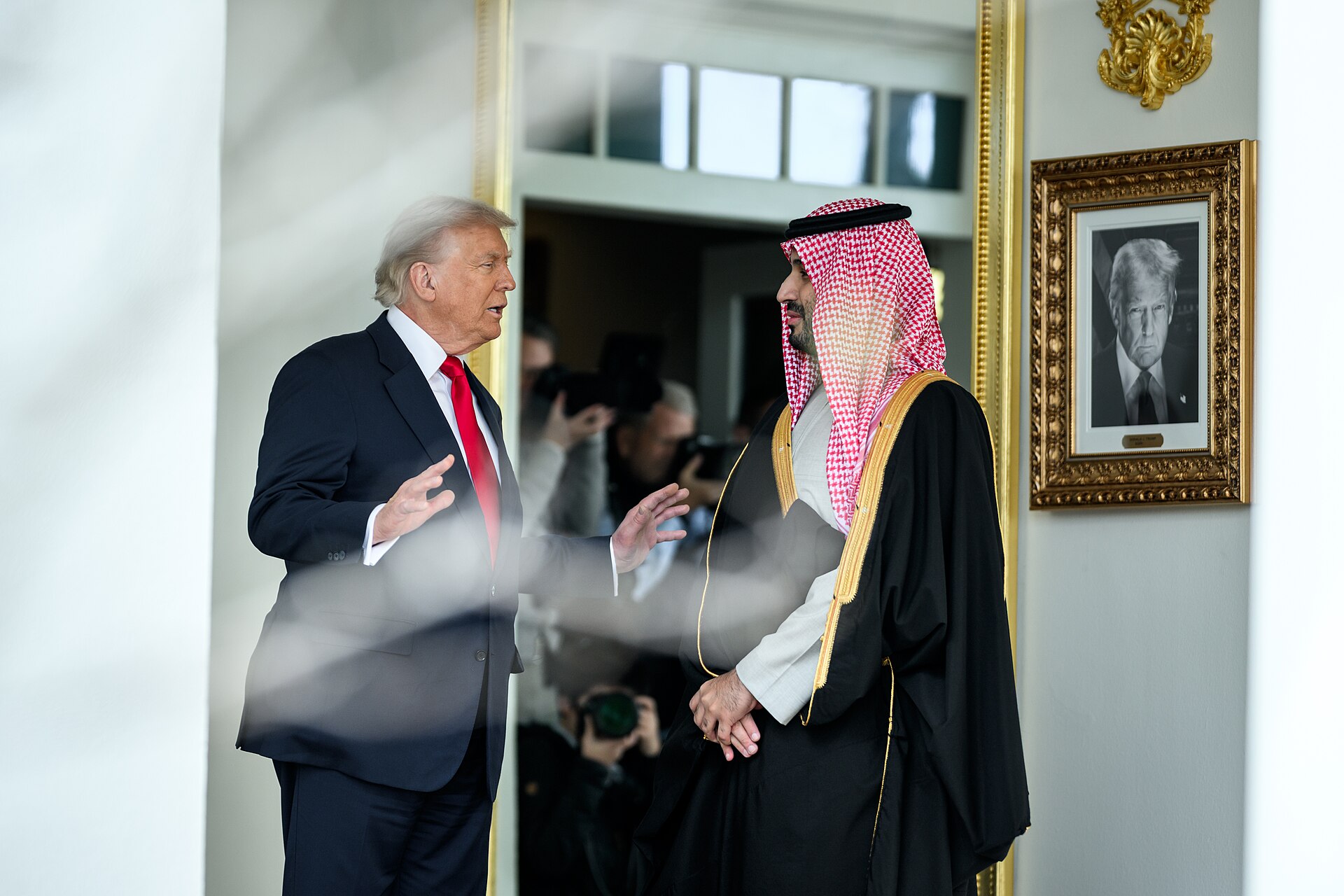
Crown Prince Mohammed bin Salman called UAE President Mohammed bin Zayed on May 5. L’Orient Today described it as the first official exchange between the two leaders since the Saudi-UAE rift — a breach that opened when the UAE unilaterally exited OPEC and OPEC+ effective May 1.
MBS condemned what he called “the unjustified Iranian attacks targeting the sisterly United Arab Emirates” and affirmed Saudi solidarity. He described the strikes as a “dangerous Iranian escalation.” The call’s significance lay less in its content than in its existence — four days after Abu Dhabi walked away from the production alliance that had structured the Saudi-Emirati economic relationship for decades, Riyadh chose Iranian missiles as the occasion to re-establish contact.
The solidarity was real but bounded. With a Yanbu export ceiling of 5.9 million barrels per day against a pre-war Hormuz throughput of 7 to 7.5 million — and interceptor stocks already drawn down — absorbing UAE-level strike rates would deplete Saudi air defenses within weeks. The structural gap between what Saudi Arabia could export through its bypass and what it needed to export was already producing fiscal strain.
MBS’s call to MBZ was an acknowledgment that Iran’s targeting of the UAE was also a message to Riyadh. The “below threshold” doctrine that shielded Washington from responding also shielded it from defending.
Background
The Iran-UAE conflict escalated from the broader Iran war that began February 28, 2026. The 2,845 Iranian weapons systems fired at UAE since that date have struck Dubai International Airport, Jebel Ali Port, and Abu Dhabi population centers.
The April 8 ceasefire, brokered through Pakistan and formalized as the Islamabad Accord, contained no enforcement mechanism. Iran’s civilian government claims no authority over IRGC operations. Supreme Leader Khamenei has been absent from public view for more than 60 days — with his son Mojtaba operating in audio-only mode.
Hossein Shariatmadari, editor of the IRGC-aligned Kayhan daily, escalated rhetoric on May 5 beyond the Gulf theater: “The military bases of those European countries that will be placed at America’s disposal can and should become legitimate and lawful targets for our military strikes.” UAE authorities restricted national airspace for a full week following the May 4-5 attacks.
Iranian strikes against the UAE continued into the following week. On May 8 — the same day the US-Iran memorandum of understanding deadline expired — Iran fired two ballistic missiles and three drones at the UAE; all five were engaged by UAE air defences. President Pezeshkian called the May 8 attacks “madness” and demanded Mojtaba Khamenei intervene to halt them.
Frequently Asked Questions
How does the UAE’s air defense performance compare to the first weeks of the war?
The ballistic missile intercept rate of 96.4 percent exceeds most published benchmarks for Patriot system performance in combat. The drone intercept rate is lower at 84.8 percent — a gap that reflects the saturation problem multiple simultaneous launches create for point-defense systems designed around ballistic threats. The MV Barakah and Fujairah strikes were both drone penetrations, not missile failures. The divergence between the two rates explains why Iran has increasingly shifted its composition toward drone-heavy mixed salvos.
Has Iran formally claimed responsibility for any strikes on UAE since the ceasefire?
No. The IRGC has denied every post-ceasefire strike on the UAE, including the May 4-5 attacks. This stands in contrast to the pre-ceasefire period, when IRGC commanders publicly announced operations and named targets in advance. The shift to deniability — while IRGC-aligned media celebrates the same strikes — mirrors the pattern Iran employed against Saudi Arabia during the 2019 Aramco attacks, which Tehran denied despite extensive forensic and signals evidence.
What is the legal status of the ceasefire if neither side formally declares it breached?
The Islamabad Accord is a memorandum of understanding, not a treaty registered with the United Nations. It contains no breach-designation mechanism, no inspection regime, and no enforcement clause. Pakistan, as guarantor, has no military capacity to compel compliance. The “below threshold” designation is a unilateral US doctrinal category — not a legal status under the accord itself. Both Iran and the US have independent reasons to maintain the fiction of an intact ceasefire: Iran avoids triggering resumed US combat operations; Washington avoids the political cost of admitting the ceasefire has failed while pursuing a deal.
What happened to the two commercial vessels that transited during Project Freedom’s 24-hour window?
CENTCOM confirmed two successful transits on May 4 before the pause was announced. Neither vessel’s identity, flag state, nor cargo was disclosed. The transit corridor that Project Freedom was designed to secure — the same waters where IRGC forces had previously redirected traffic through a 5-nautical-mile channel between Qeshm and Larak islands — reverted to its pre-operation status once the pause took effect. The blockade of Iranian ports continues independently of the transit-security mission.
Does the MBS-MBZ call signal a reversal of the Saudi-UAE rift over OPEC?
The call addressed Iranian strikes exclusively. Neither the Saudi readout nor UAE media reporting mentioned OPEC, production quotas, or the May 1 exit. L’Orient Today characterized it as the first official leader-to-leader exchange since the rift — which means the two had gone at least five days without direct communication during an active war. The call restored diplomatic contact; whether it restored strategic alignment on energy policy remains unaddressed.