
RIYADH — Fifteen days of Iranian missile and drone attacks have done what no domestic opposition movement, no oil price collapse, and no pandemic lockdown managed in a decade of Mohammed bin Salman’s rule: they have fundamentally altered the terms of the bargain between the Saudi state and the thirty-five million people who live under its protection. The Kingdom’s implicit social contract — economic prosperity, entertainment, tourism, and modernization in exchange for political quiescence — assumed a baseline of physical safety that no longer exists. Since February 28, when Iranian ballistic missiles first struck Saudi soil in retaliation for the American and Israeli campaign against Tehran, families in Riyadh have broken their Ramadan fasts to the sound of Patriot interceptors rather than the call to prayer. Two foreign-born residents are dead in Al-Kharj. Over five thousand American workers have left or are preparing to depart. Formula 1 and the Bahrain Grand Prix are cancelled. The question is no longer whether the social contract survives — it already has not, at least not in its pre-war form. The question is what replaces it.
The social contract transformation accelerates as the Kingdom approaches its first wartime Eid al-Fitr. Saudi authorities have tightened security at holy sites for Eid prayers while neighbouring Gulf states cancel fireworks and ban public gatherings for the holiday.
Table of Contents
- The Grand Bargain That Built Modern Saudi Arabia
- What Did Fifteen Days of War Break?
- How Are Saudi Families Living Under the Sirens?
- The Entertainment Economy MBS Built Is Dark and Quiet
- Who Is Leaving and What Does Their Departure Cost?
- The Wartime Resilience Index
- Does War Strengthen or Weaken MBS?
- Can the First Wartime Generation of Saudi Youth Forgive?
- Is the Economic Foundation of the Social Contract Cracking?
- What Does the New Saudi Social Contract Look Like?
- Three Monarchies That Survived Wars and One That Did Not
- Frequently Asked Questions
The Grand Bargain That Built Modern Saudi Arabia
Every modern state operates on an implicit bargain between ruler and ruled. In democracies, the currency of exchange is representation. In the Gulf monarchies, it has always been something different: material prosperity in exchange for political consent. Saudi Arabia elevated this arrangement into an art form under King Abdulaziz and refined it through six subsequent reigns, but Mohammed bin Salman rewrote its terms more radically than any predecessor.
The traditional Saudi social contract, as described by Jane Kinninmont in a landmark 2017 Chatham House study, rested on two pillars: oil-funded public employment and religious legitimacy. Citizens received guaranteed government jobs, free healthcare, subsidized housing, and zero income tax. In return, the Al Saud received unquestioned political authority. The arrangement consumed vast resources — government wage spending in Saudi Arabia reached an estimated 45 percent of total expenditure by the mid-2010s, according to IMF data — but it purchased something invaluable: domestic peace in a region where every neighbouring republic had experienced revolution, civil war, or state collapse.
MBS demolished and rebuilt this contract between 2016 and 2024. The new version was bolder and, its architects believed, more durable. It replaced the religious pillar with entertainment and social liberalization — cinemas, concerts, mixed-gender events, tourist visas, and a women’s right to drive. It replaced the employment guarantee with a harder bargain: Saudization quotas in the private sector, a new value-added tax, and reduced fuel subsidies, offset by the promise that Vision 2030 would create a diversified economy generating millions of private-sector jobs. The entertainment economy alone was projected to contribute $21 billion annually to GDP by 2030, according to Saudi General Entertainment Authority figures.
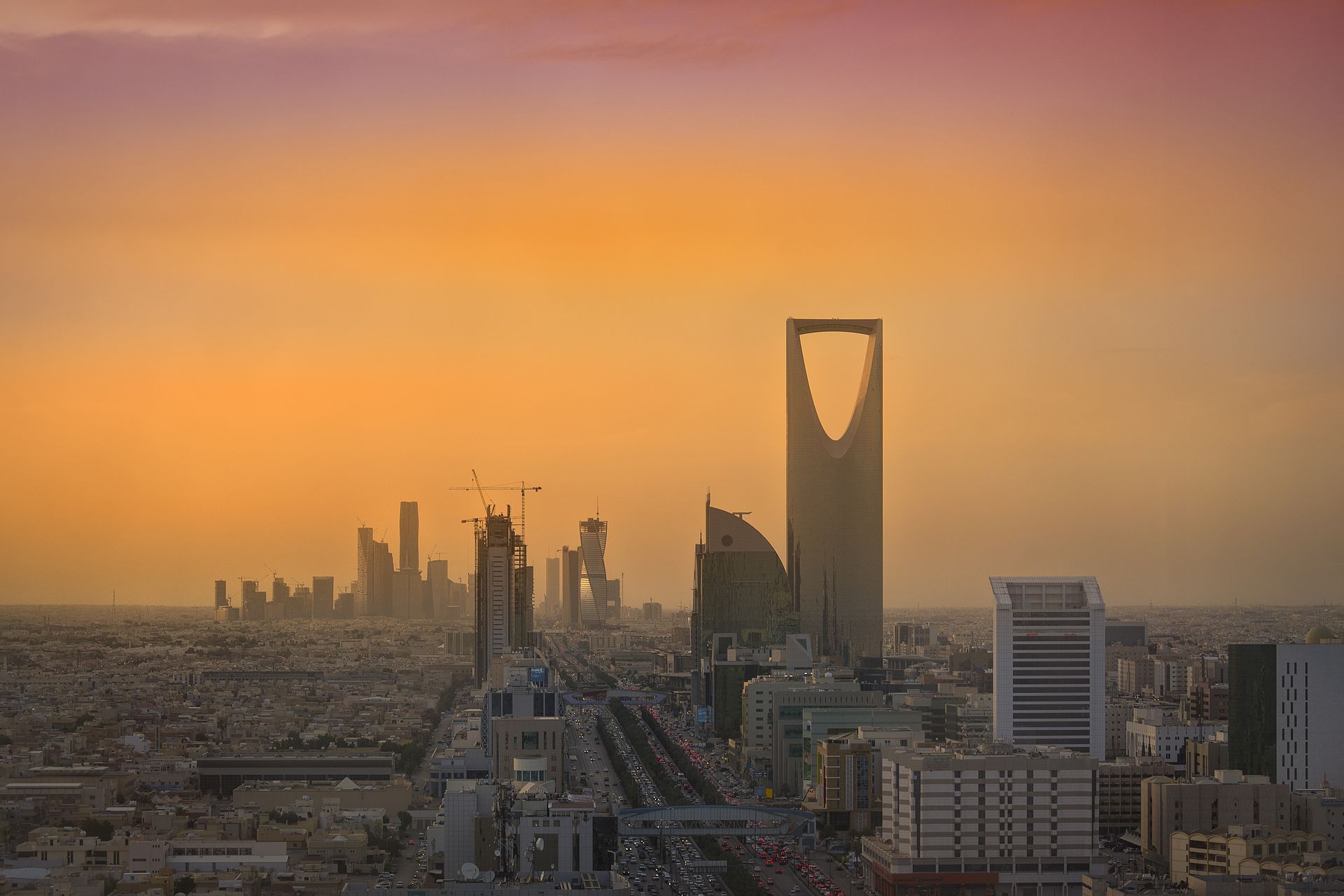
The deal worked, at least on the surface. Riyadh Season drew twelve million visitors in its 2023-2024 edition. The Kingdom hosted the WWE Royal Rumble, brought Cristiano Ronaldo to the Saudi Pro League, and launched a $38 billion gaming push through Savvy Games Group. Foreign direct investment into Saudi Arabia reached $12.3 billion in 2024, according to UNCTAD estimates. The crown prince’s approval ratings, to the extent they can be measured in an absolute monarchy, appeared high. Young Saudis — seventy percent of the population is under thirty-five — embraced the new freedoms with an enthusiasm that surprised even their architects.
The Middle East briefing 3,000+ readers start their day with.
One email. Every weekday morning. Free.
Then the missiles came.
What Did Fifteen Days of War Break?
The Iran war, which began on February 28 when the United States and Israel launched surprise strikes against Iranian nuclear and military facilities, was not Saudi Arabia’s war. Riyadh did not participate in the opening salvoes, did not coordinate the campaign, and publicly maintained what it described as a posture of “positive neutrality.” None of that mattered to Tehran. Within hours of the first American strikes, Iranian ballistic missiles targeted Prince Sultan Air Base south of Riyadh and facilities in the Eastern Province. The Islamic Revolutionary Guard Corps declared that any nation hosting American military assets was a legitimate target.
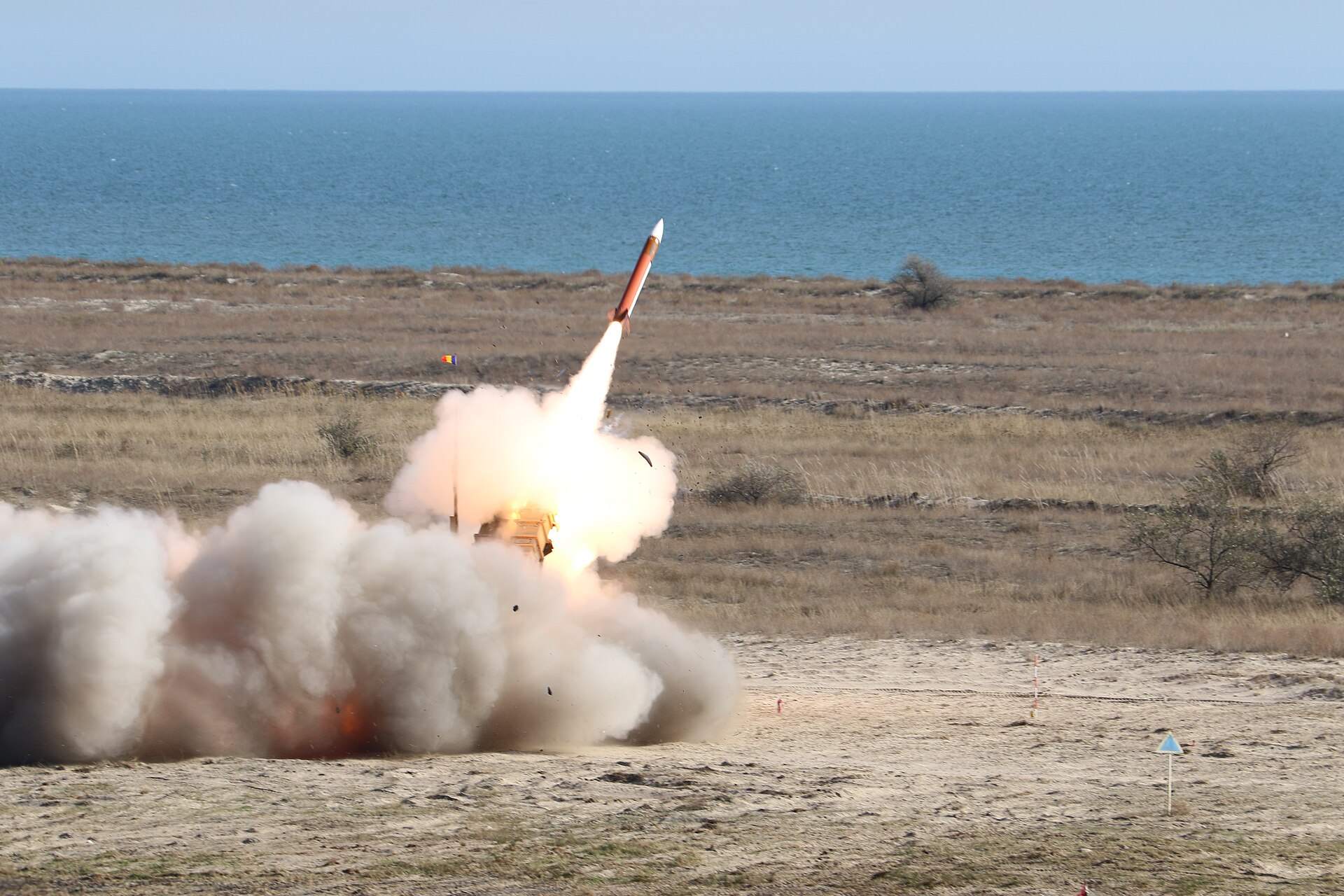
Over the following fifteen days, the Saudi Defence Ministry reported intercepting more than 200 drones and between 75 and 90 ballistic missiles fired at the Kingdom, according to statements compiled by Al Arabiya and Reuters. Saudi air defenses — an $80 billion network of Patriot PAC-3, THAAD, and Shahine systems — destroyed the vast majority of incoming threats. The interception rate for ballistic missiles exceeded 90 percent. For drones, the picture was less reassuring. On March 13 alone, Iran launched approximately 50 drones at Saudi targets in a single coordinated wave, according to The National. Saudi defenses intercepted 31 of them. Several penetrated to the Eastern Province. Others reached the outskirts of Riyadh’s Diplomatic Quarter.
On March 8, the war produced its first Saudi civilian casualties. A projectile struck a residential building in the Al-Kharj governorate, killing two foreign-born residents and wounding twelve others, according to Al Jazeera. The Saudi government confirmed the incident as the first confirmed civilian deaths within the Kingdom since the war began. The dead were not Saudi nationals — they were among the thirteen million expatriate workers who form the backbone of the Saudi economy — but the psychological impact on the broader population was immediate and profound.
The physical damage was limited. The systemic damage was not. In fifteen days, the war shattered three assumptions that underpinned the MBS-era social contract: that Saudi Arabia was physically safe, that the entertainment economy would keep growing, and that foreign capital and talent would continue flowing into the Kingdom. Each assumption was a load-bearing wall. Removing all three simultaneously created a structural problem that no amount of intercepted missiles could solve.
How Are Saudi Families Living Under the Sirens?
The 2026 Iran war is the first major Middle Eastern conflict in more than half a century to unfold entirely during Ramadan. The timing compounds its social impact in ways that are difficult for outside observers to fully appreciate. Ramadan is not merely a period of fasting in Saudi Arabia — it is the organizing principle of social life for an entire month. Commercial activity shifts to the hours between iftar (the sunset meal) and suhoor (the pre-dawn meal). Families gather nightly for prayers and communal meals. Mosques hold extended Tarawih prayers that can last past midnight. The rhythm is ancient, predictable, and deeply comforting.
Iranian drone and missile attacks have shattered that rhythm. Multiple reports from residents in the Eastern Province describe hearing Patriot interceptor launches during Tarawih prayers at local mosques, according to coverage by Arab News and Al Arabiya. The convergence of worship and warfare reached its peak during Laylat al-Qadr, when an estimated two million worshippers gathered in Makkah under a missile shield that turned the holiest night of Ramadan into the starkest demonstration yet of the new protection-for-loyalty bargain. In Riyadh, air defense sirens have sounded at least seven times during the first fifteen days, often during evening hours when families would traditionally be gathering. The Saudi Civil Defense Authority issued advisories urging residents to identify their nearest shelter location — instructions that most Saudi citizens had never previously received or needed.
The wartime experience is defined by what observers describe as Saudi Arabia’s involuntary “night-time economy” collision. The traditional Ramadan commercial surge — shopping malls open until 2 a.m., restaurants serving iftar buffets to hundreds — has contracted sharply. Mall traffic in Riyadh and the Eastern Province fell by an estimated 35 to 40 percent in the first two weeks of Ramadan compared to 2025, according to data cited by Bloomberg. Supermarkets report panic buying of staple goods, despite government assurances that food supply chains remain intact through Red Sea alternative corridors.
The psychological weight is heaviest on children and adolescents. Saudi Arabia’s population is extraordinarily young — the median age is approximately 31, and roughly 37 percent of the population is under 25, according to the General Authority for Statistics. This generation grew up under the MBS social contract. They experienced the opening of cinemas, the arrival of international entertainment acts, and the relaxation of social codes. They did not grow up with the threat of foreign military attack. For millions of young Saudis, the sound of an interceptor missile launch is a first encounter with the reality that prosperity and fun do not guarantee safety — a lesson their parents learned during the 1991 Gulf War but that had faded from collective memory.
The Entertainment Economy MBS Built Is Dark and Quiet
The cancellation of the Saudi Arabian Grand Prix and the Bahrain Grand Prix on March 14, confirmed by Formula 1 management citing security concerns, was the most visible casualty of the war’s impact on the entertainment economy. It was far from the only one. The Saudi Events Calendar, which had been projected to host over 200 major entertainment events in 2026, has effectively frozen. International performers have cancelled or postponed scheduled appearances. The Riyadh Season, which ran from October through March in previous years and drew record attendance, shut down weeks ahead of schedule.
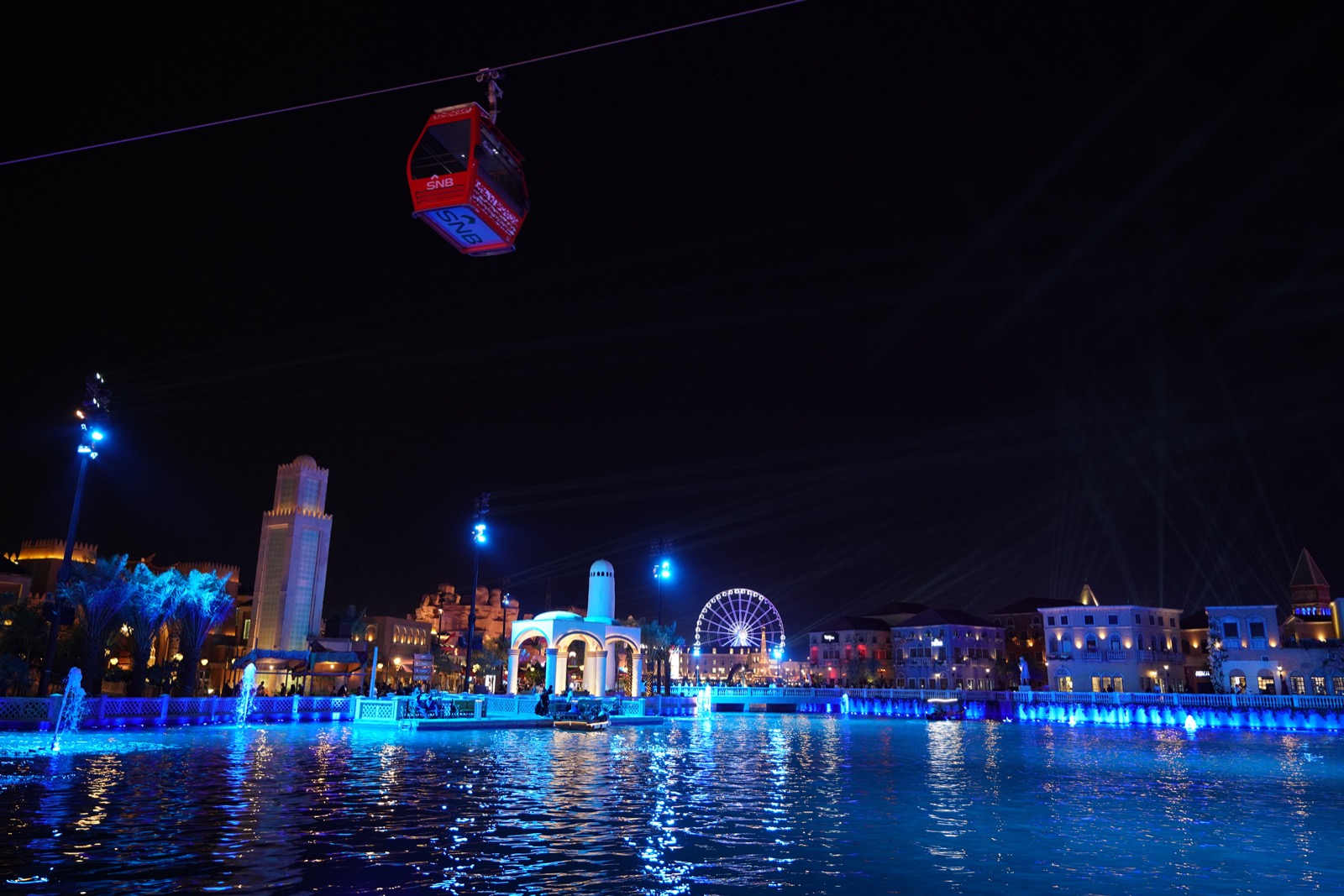
The General Entertainment Authority invested approximately $64 billion in entertainment infrastructure between 2016 and 2025, according to estimates compiled by Oxford Economics. That infrastructure — theme parks, concert venues, sports stadiums, cinema complexes — is not destroyed. It is simply empty. The economic loss is not the destruction of capital but the evaporation of revenue. Hotels in Riyadh reported occupancy rates falling below 30 percent in the first week of March, according to STR hospitality data cited by AGBI. International conference bookings for Q2 2026 were being cancelled or relocated to Dubai, Doha, and Bahrain — though Bahrain itself was also under Iranian attack, complicating the picture.
Gregory Gause, a professor at Texas A&M University and one of the foremost scholars of Saudi politics, captured the economic logic with characteristic bluntness in an interview with AGBI: “Capital is a coward. It doesn’t go into war zones. To the extent that tourists, investors, businesspeople see the Gulf as a war zone, they’ve got other places they can invest.” This assessment applies with particular force to the entertainment economy, which depends entirely on discretionary spending and a sense of safety. Nobody flies to Riyadh for a concert if there is a non-trivial chance of hearing an air raid siren during the encore.
The entertainment shutdown carries a political cost that extends beyond economics. MBS positioned entertainment as the centrepiece of his new social contract with Saudi youth. Cinemas, concerts, and sporting events were not merely economic diversification — they were the tangible proof that the crown prince was delivering a better life. When those venues go dark, the daily evidence of the bargain’s benefits disappears. What remains is the cost side of the ledger: reduced subsidies, value-added tax, and the expectation that young Saudis will compete for private-sector jobs in an economy that is now contracting.
Who Is Leaving and What Does Their Departure Cost?
The U.S. Department of State ordered non-emergency government employees and their families to leave Saudi Arabia on March 8, eight days into the conflict. The U.S. Embassy in Riyadh directed all remaining government employees to shelter in place and recommended that all American citizens in the Kingdom do the same, according to the embassy’s security alert. Estimates compiled by industry sources suggest more than 5,000 American employees and contractors have left or are preparing to depart.
The American departure, while the most visible, is part of a broader exodus that threatens the operational capacity of the Saudi economy. Saudi Arabia hosts approximately 13.4 million foreign workers, according to the General Authority for Statistics — roughly 38 percent of the total population. These workers occupy critical roles across every sector: construction, healthcare, information technology, oil and gas operations, and financial services. Many of those migrant workers are trapped in the conflict zone by debt, visa restrictions, and the kafala system, with no dedicated evacuation plan. Aramco alone employs thousands of foreign engineers and technicians at facilities across the Eastern Province, the region most frequently targeted by Iranian drones. The healthcare sector faces a particularly acute version of this exodus, with foreign-trained doctors and pharmacists departing just as pharmaceutical supply chains through Hormuz have collapsed.
The departure calculus is straightforward and brutal. Foreign workers came to Saudi Arabia for economic opportunity. They accepted the social trade-offs — limited labour rights, restrictive kafala regulations that have only recently been partially reformed, and cultural adjustment — because the financial returns were attractive. Physical danger was never part of the equation. When missiles fly, the calculation changes instantly. Workers with families are the first to leave. Specialist technical personnel, who have the most portable skills and the greatest leverage to demand hazard adjustments, are the most difficult to replace.
The macroeconomic impact is already measurable. Foreign direct investment inflows could decline by 60 to 70 percent in the first quarter of 2026 compared to the same period in 2025, according to a projection cited by AGBI from a major investment bank analysis. Construction activity on Vision 2030 megaprojects has slowed as international contractors reassess security conditions. The Vision 2030 programme, which required an estimated $3.3 trillion in total investment over its lifetime, depended on sustained inflows of foreign capital and labour. Both are now in retreat.

The Wartime Resilience Index
Assessing how well a state’s social contract withstands wartime stress requires examining multiple dimensions simultaneously. Five variables determine whether a wartime government strengthens or fractures under fire: the effectiveness of its military defence, the resilience of its economic base, the cohesion of its population, the credibility of its communications, and the availability of external support. Saudi Arabia’s performance across these dimensions after fifteen days reveals a mixed but instructive picture.
| Dimension | Indicator | Performance | Score (1-10) | Assessment |
|---|---|---|---|---|
| Military Defence | Missile interception rate | 90%+ for ballistic missiles; 60-70% for drones | 7 | High but imperfect — drone gaps erode confidence |
| Economic Base | Oil export continuity | East-West Pipeline operational; Hormuz closed | 5 | Red Sea rerouting preserves some revenue; major disruption |
| Population Cohesion | Absence of protest or dissent | No reported public demonstrations | 8 | Rally-round-flag effect intact through Day 15 |
| State Communication | Government messaging credibility | Defence Ministry updates regular; social media controlled | 7 | Effective but untested under sustained pressure |
| External Support | Allied military assistance | Pakistan deployed troops; Ukraine drone teams; US assets present | 6 | Support real but US reliability questioned |
The aggregate score of 33 out of 50 places Saudi Arabia in a zone of strained but functional resilience — considerably better than the 1990 scenario, when Iraq’s invasion of Kuwait exposed the Kingdom’s near-total dependence on American military intervention, but well below the threshold of comfortable stability. The weakest dimension — economic base — reflects the structural vulnerability that the social contract cannot easily absorb. Oil revenues fund everything. When Hormuz closes and oil flows through alternative routes at reduced capacity, the fiscal buffer shrinks precisely when wartime spending demands expand.
The strongest dimension — population cohesion — may be the most surprising and the most consequential. After fifteen days of drone and missile attacks, there have been no reported public demonstrations against the government, no significant opposition mobilization, and no visible fracturing along regional, tribal, or sectarian lines. This requires explanation, because it defies the assumption that a population under fire will blame its government.
Does War Strengthen or Weaken MBS?
The conventional wisdom among Western analysts holds that war exposes authoritarian weakness. Citizens who cannot vote with ballots will vote with their feet, their silence, or their resistance. The reality in Saudi Arabia after fifteen days suggests something more complex and, for those hoping the war would create political openings, more discouraging.
Three mechanisms are operating simultaneously to reinforce rather than undermine MBS’s position. The first is the rally-round-the-flag effect, one of the most documented phenomena in political science. When a population perceives an external threat, approval of the national leadership rises regardless of the leader’s prior performance or the government’s responsibility for the crisis. This effect has been measured in democracies from the United States after September 11 to the United Kingdom during the Falklands War. In monarchies, where the ruler personifies the state, the effect is amplified. An attack on Saudi soil is an attack on the King and the Crown Prince. Rallying to their defense is not merely patriotic but instinctive.
The second mechanism is information control. Saudi Arabia maintains one of the most tightly regulated media environments in the world. The government does not need to manufacture consent — it needs only to prevent the emergence of alternative narratives. Social media platforms, while widely used, operate under surveillance and legal constraints that make open criticism of the war response personally dangerous. The result is not enthusiasm but compliance, which in wartime produces the same political outcome.
The third mechanism is the most counterintuitive: the war has made the population more dependent on the state, not less. When missiles fly, the government is the only entity that can provide shelter, air defense, food supply assurances, and emergency medical care. Citizens who might have questioned the value of a powerful, centralized state in peacetime now depend on exactly that state for their survival. The social contract has not been broken — it has been rewritten in terms that favour the sovereign more than ever. The currency of exchange is no longer prosperity. It is protection.
Citizens are also likely to wonder why they should bear the risk of hosting U.S. forces when the United States is unable or unwilling to protect the Gulf from Iranian attacks.
Andrew Leber, Carnegie Endowment for International Peace, March 2026
Andrew Leber’s observation in his Carnegie Endowment analysis identifies the one variable that could destabilize MBS’s wartime advantage: the American factor. If Saudi citizens conclude that the war is not Iran’s fault but America’s — that their homes are targeted because American bases sit on Saudi soil — then the rally-round-the-flag effect redirects from supporting the government to questioning its alliance choices. Iran’s Foreign Minister Abbas Araghchi made precisely this argument on March 15, demanding that Gulf nations expel American forces as a condition for de-escalation. The demand is designed to drive a wedge between Gulf rulers and their populations, and its strategic logic is sound even if its immediate prospects are negligible. The pressure on Saudi Arabia intensified further when Trump rejected ceasefire talks and Araghchi declared Iran had never sought negotiations — leaving Riyadh trapped between an ally that refuses to stop fighting and an adversary that refuses to stop retaliating.
Can the First Wartime Generation of Saudi Youth Forgive?
The long-term consequences of the war for Saudi Arabia’s social contract depend less on what happens in the next fifteen days than on what the under-thirty-five generation remembers in the next fifteen years. This cohort — approximately 24 million people, according to population estimates — is uniquely vulnerable to the war’s psychological and economic disruption because they are the primary beneficiaries and believers of the MBS social contract.
These are the Saudis who got their first cinema tickets in 2018, who attended their first concerts in 2019, who saw women driving for the first time in their adult lives in 2018. They enrolled in Vision 2030 job training programmes, applied for positions at NEOM and the Entertainment Authority, and adjusted their expectations for the future around the assumption that Saudi Arabia would become more open, more prosperous, and more connected to the global economy. The war has introduced uncertainty into every one of those assumptions.
The youth employment challenge was already significant before the war. Saudi Arabia’s youth unemployment rate stood at approximately 25 percent for the 15-24 age group in 2025, according to the General Authority for Statistics, though the government disputed some methodological aspects of these figures. Saudization — the policy of replacing foreign workers with Saudi nationals in private-sector roles — was making progress but remained unevenly implemented. Many young Saudis found themselves competing for private-sector positions that paid less and demanded more than the government jobs their parents held.
Steffen Hertog, an associate professor at the London School of Economics and a leading scholar of Gulf labour markets, identified this dynamic even before the war in a March 2023 analysis. In Bahrain, Oman, and Saudi Arabia, he wrote, “young citizens have lost access to the de facto government job guarantee that their parents enjoyed. At the same time, they are faring badly on private labour markets due to acute competition with large numbers of low-wage migrants.” The war compounds this structural challenge by freezing the private-sector growth that was supposed to absorb these workers.
Whether young Saudis blame Iran or their own government for the disruption will determine the political trajectory of the Kingdom for a generation. Early indications suggest that the immediate reaction is nationalist rather than critical — social media sentiment, to the extent it can be measured under censorship conditions, appears broadly supportive of the government’s defensive posture. Whether that sentiment survives months of economic contraction, entertainment shutdowns, and reduced opportunities is the question that should concern Mohammed bin Salman more than any Iranian drone swarm.
Is the Economic Foundation of the Social Contract Cracking?
The fiscal arithmetic of the Saudi social contract depends on oil revenue, which depends on export volume, which depends on shipping routes, which depend on the Strait of Hormuz. This chain of dependencies has been the Kingdom’s central strategic vulnerability since the discovery of oil, and the Iran war has exposed it with brutal clarity.
The closure of the Strait of Hormuz to commercial traffic — enforced by Iranian mines, fast attack boats, and the threat of anti-ship missile strikes — severed Saudi Arabia’s primary export route. Approximately 17 to 20 percent of global oil supply transited Hormuz before the war, according to the U.S. Energy Information Administration. Saudi Arabia redirected much of its Eastern Province output through the 1,200-kilometre East-West Pipeline to the Yanbu terminal on the Red Sea, as Aramco activated emergency export protocols. The pipeline’s capacity of approximately 5 million barrels per day, however, falls short of the Kingdom’s pre-war production capacity of over 12 million barrels per day.
Brent crude prices surged past $100 per barrel — up more than 38 percent from pre-war levels, according to CNBC — but higher prices do not fully compensate for reduced export volumes. The net fiscal impact depends on the duration of the Hormuz closure and the speed at which alternative routes can absorb the displaced traffic. Saudi Arabia is better positioned than its Gulf neighbours because it has the East-West Pipeline; the UAE, Qatar, and Kuwait do not. This relative advantage does not eliminate the absolute cost.
| Indicator | Pre-War Level | Day 15 Level | Change |
|---|---|---|---|
| Brent crude price | ~$72/barrel | ~$100/barrel | +38% |
| Oil export volume (est.) | ~7.5M bpd | ~4.5-5M bpd | -33 to -40% |
| Tadawul (TASI) index | ~11,800 | ~9,200 (est.) | -22% |
| Hotel occupancy (Riyadh) | ~65% | ~30% | -54% |
| FDI inflows (Q1 projection) | ~$3.5B | ~$1.0-1.4B | -60 to -70% |
| Construction activity | Normal | Sharply reduced | Frozen on many megaprojects |
The International Energy Agency’s decision to release a record 400 million barrels from strategic petroleum reserves, announced on March 11, reflects the severity of the global supply disruption but does not restore Saudi fiscal stability. Emergency releases are temporary measures. The Saudi budget, which assumed a Brent crude price of $76 per barrel and full export capacity for 2026, according to the Ministry of Finance, faces a significant recalculation. Higher prices offset some of the volume loss, but the uncertainty alone — not knowing when Hormuz will reopen, when FDI will resume, when construction workers will return — is corrosive to the long-term investment planning that Vision 2030 requires.
What Does the New Saudi Social Contract Look Like?
If the pre-war social contract was prosperity-for-obedience and the MBS revision was entertainment-plus-prosperity-for-obedience, the wartime version is evolving toward something different: protection-for-loyalty. This is not a new model in the history of monarchies. It is, in fact, the oldest one. The sovereign provides security from external enemies; the population provides allegiance and service. What makes the Saudi case distinctive is the speed of the transition and the fact that it is occurring within a society that had been told the future would look entirely different.
The new contract has several observable features already taking shape after fifteen days. The government has assumed a more visible role in daily life through civil defense advisories, food supply assurances, and public demonstrations of military capability. The Saudi Defence Ministry’s daily briefings — modelled on the Pentagon press briefing format — serve a dual purpose: they inform the public and they project state competence. Every intercepted missile is a visible demonstration that the government is doing its job. Every daily briefing is a reminder that the state is the only institution capable of managing the crisis.
The new contract also involves a subtle redefinition of what the state owes its citizens. Before the war, the implicit promise was a good life. During the war, the implicit promise is survival and eventual restoration. This lower bar is easier to meet and harder to criticize. A citizen who complains about the cancellation of a concert when missiles are falling looks frivolous. A citizen who questions the wisdom of hosting American bases looks like a security risk. The war has raised the cost of dissent while lowering the threshold of acceptable government performance — a combination that any political leader would recognize as advantageous.
Whether this wartime contract proves durable depends on the war’s duration. Short wars consolidate power. Long wars erode it. The 1990-1991 Gulf War lasted six weeks and strengthened the Al Saud’s legitimacy despite the embarrassment of needing American protection. The Yemeni intervention, which began in 2015 and dragged on inconclusively for years, gradually drained public patience and fiscal reserves. If the Iran war ends within weeks, MBS will emerge politically stronger than he entered it. If it extends into months, the new contract will face the same stress test that destroyed its predecessor — the gap between what the government promises and what it can deliver.
Three Monarchies That Survived Wars and One That Did Not
History offers instructive precedents for monarchies navigating wartime social contracts, though none maps perfectly onto Saudi Arabia’s situation. The successes and the one spectacular failure illuminate the variables that matter most.
The evolution from physical sirens to personal devices reached a milestone on March 18 when Saudi Civil Defense pushed the Kingdom’s first cell-broadcast air raid alert directly to mobile phones during an eight-missile attack on the capital.
| Monarchy | War | Duration | Social Contract Response | Outcome |
|---|---|---|---|---|
| United Kingdom | World War II (1939-1945) | 6 years | Wartime austerity + promise of post-war welfare state | Survived; monarchy strengthened; post-war reforms delivered |
| Jordan | 1967 Six-Day War / Black September | Months | Rallied tribal base; military loyalty; external threat narrative | Survived; Hashemite legitimacy reinforced through crisis management |
| Kuwait | 1990 Iraqi Invasion | 7 months | Government-in-exile maintained legitimacy; post-liberation rebuilding | Survived; Al Sabah returned with enhanced legitimacy |
| Iran (Pahlavi) | 1979 Revolution (preceded by 1973 oil boom + social disruption) | N/A | Rapid modernization alienated religious base; SAVAK repression | Failed; monarchy overthrown despite enormous oil wealth |
The British precedent is the most instructive positive example. George VI and Winston Churchill navigated six years of total war by explicitly promising that the sacrifices of wartime would be repaid with a better post-war settlement — the welfare state, the National Health Service, expanded education. The monarchy survived because the post-war contract was more generous than the pre-war one. MBS faces a version of the same challenge: when the missiles stop, the Kingdom will need a reconstruction dividend that exceeds the pre-war entertainment dividend.
The Iranian precedent is the cautionary tale. The Shah’s social contract — rapid modernization funded by oil wealth, combined with authoritarian political control and the suppression of religious opposition — bears uncomfortable structural similarities to the MBS model. The Shah fell not because the modernization failed economically but because it alienated powerful social constituencies (the clergy, the bazaari merchant class, and leftist intellectuals) faster than it created loyal new ones. MBS has managed the religious constituency more deftly than the Shah, partly by co-opting rather than confronting the clerical establishment. Whether that management holds under wartime stress, when mosque attendance rises and religious sentiment intensifies during Ramadan, is an open question.
The Jordanian precedent offers the closest regional parallel. King Hussein survived the 1967 defeat, the loss of the West Bank, Black September, and multiple assassination attempts by maintaining tribal loyalty, demonstrating personal courage, and positioning external enemies (Israel, the PLO) as threats to the nation rather than symptoms of royal failure. MBS has adopted elements of this playbook, positioning Iran as the aggressor and himself as the defender. The approach works as long as the defence is visibly effective — a condition that the 90-percent-plus missile interception rate currently satisfies but that a single catastrophic failure could undermine.
The wartime social contract also carries a financial dimension that strengthens MBS’s hand internationally. As the $16 billion cost of the Iran war strains the American defence budget, the Crown Prince’s willingness to share that burden through base access, intelligence cooperation, and oil market management has transformed him from a controversial partner into an indispensable one.
Frequently Asked Questions
What is the Saudi social contract and how has the Iran war changed it?
The Saudi social contract is the implicit bargain between the Al Saud ruling family and the Kingdom’s citizens: economic prosperity, public services, and social stability in exchange for political loyalty and the absence of democratic representation. Under MBS, this contract was updated to include entertainment and social liberalization alongside prosperity. The Iran war has disrupted the prosperity and entertainment pillars by forcing event cancellations, driving away foreign investment, and introducing physical insecurity. The contract is shifting toward a protection-for-loyalty model where the state’s primary obligation is physical security rather than economic enrichment. The approaching Eid al-Fitr will be the most visible test of this wartime solidarity. Analysis of Saudi Arabia’s first wartime Eid suggests the holiday may be strengthening the very social bonds the conflict was expected to fracture.
How many civilians have been killed in Saudi Arabia during the Iran war?
As of March 15, 2026, two foreign-born residents were confirmed killed on March 8 when a projectile struck a residential building in Al-Kharj governorate south of Riyadh, according to Al Jazeera and Saudi government statements. Twelve others were wounded in the same incident. Saudi air defenses have intercepted the vast majority of incoming missiles and drones, preventing what could have been significantly higher casualty figures. The Saudi Defence Ministry reports intercepting more than 200 drones and 75 to 90 ballistic missiles in the first fifteen days of the conflict.
Is MBS’s position stronger or weaker because of the war?
In the short term, the war has likely strengthened MBS’s domestic position through the rally-round-the-flag effect, increased population dependence on the state for security, and the political cost of dissent during wartime. No public protests have been reported. However, this advantage is contingent on the war’s duration. Political scientists observe that short wars consolidate authoritarian power while prolonged conflicts erode it. If the economic costs of the war — reduced oil revenues, FDI flight, entertainment shutdown, and expat departures — persist beyond several months, the calculus could reverse.
How has the war affected Vision 2030 and Saudi Arabia’s economy?
Vision 2030 megaprojects have experienced significant disruption. Construction activity has slowed as international contractors reassess security conditions. Foreign direct investment is projected to decline 60 to 70 percent in Q1 2026. The entertainment economy, projected to contribute $21 billion annually to GDP by 2030, is effectively frozen. Oil revenues face a complex picture: prices are higher (Brent above $100) but export volumes are reduced by the Hormuz closure. The Tadawul stock index has fallen an estimated 22 percent from pre-war levels.
What happened to the expat workforce in Saudi Arabia during the war?
Saudi Arabia’s 13.4 million expatriate workers — approximately 38 percent of the total population — face heightened security risks, particularly in the Eastern Province where drone attacks have been most frequent. The U.S. State Department ordered non-emergency staff to leave on March 8. An estimated 5,000 or more American workers have departed or are preparing to leave. The expat exodus threatens operational capacity across construction, healthcare, technology, and oil and gas sectors. Replacing specialist technical personnel is particularly difficult, as these workers have portable skills and strong leverage to demand hazard compensation or reassignment to safer postings.