
MOSCOW — Russia did not fire a single missile at Iran. It did not deploy a warship to the Persian Gulf. It offered no combat aircraft, committed no ground forces, and placed not one soldier at risk. Yet seventeen days into the deadliest Middle East conflict since 2003, Moscow has emerged with an additional $150 million in daily oil revenue, a temporary reprieve from Western sanctions, a convenient distraction from its own war in Ukraine, and a diplomatic position that every belligerent now needs. European Council President Antonio Costa called it plainly on March 10: Russia is the only country genuinely benefiting from the war between the United States, Israel, and Iran, according to Al Jazeera. The question is no longer whether Vladimir Putin is profiting from the chaos. The question is whether any combatant has gained more.
This analysis examines the seven distinct channels through which Russia has converted a conflict it played no part in starting into strategic advantage across energy, diplomacy, military supply chains, and the battlefield in Ukraine. Drawing on Financial Times revenue calculations, Bloomberg shipping data, CSIS strategic assessments, and Foreign Affairs analysis published in March 2026, the picture that emerges is of a power executing the most profitable act of nonbelligerence since Turkey sat out the early years of the Second World War.
Table of Contents
- The $150 Million-a-Day Windfall
- How Did Russia Get Sanctions Relief From a War It Did Not Join?
- The Seven Dividends of Nonbelligerence
- Is the Iran War Funding Russia’s Offensive in Ukraine?
- The Shahed Paradox — Russia Arms Both Sides
- Why Is Putin Positioning Himself as a Peacemaker?
- What Does Russia’s $2 Billion Arms Deal With Saudi Arabia Mean Now?
- Europe’s Energy Nightmare Just Got a Russian Accent
- The Silent Competition With Beijing
- Can Russia Actually Capitalize on the Windfall?
- The Contrarian Case — Russia’s Gains Are Shallower Than They Appear
- What Does This Mean for Saudi Arabia?
- Frequently Asked Questions
The $150 Million-a-Day Windfall
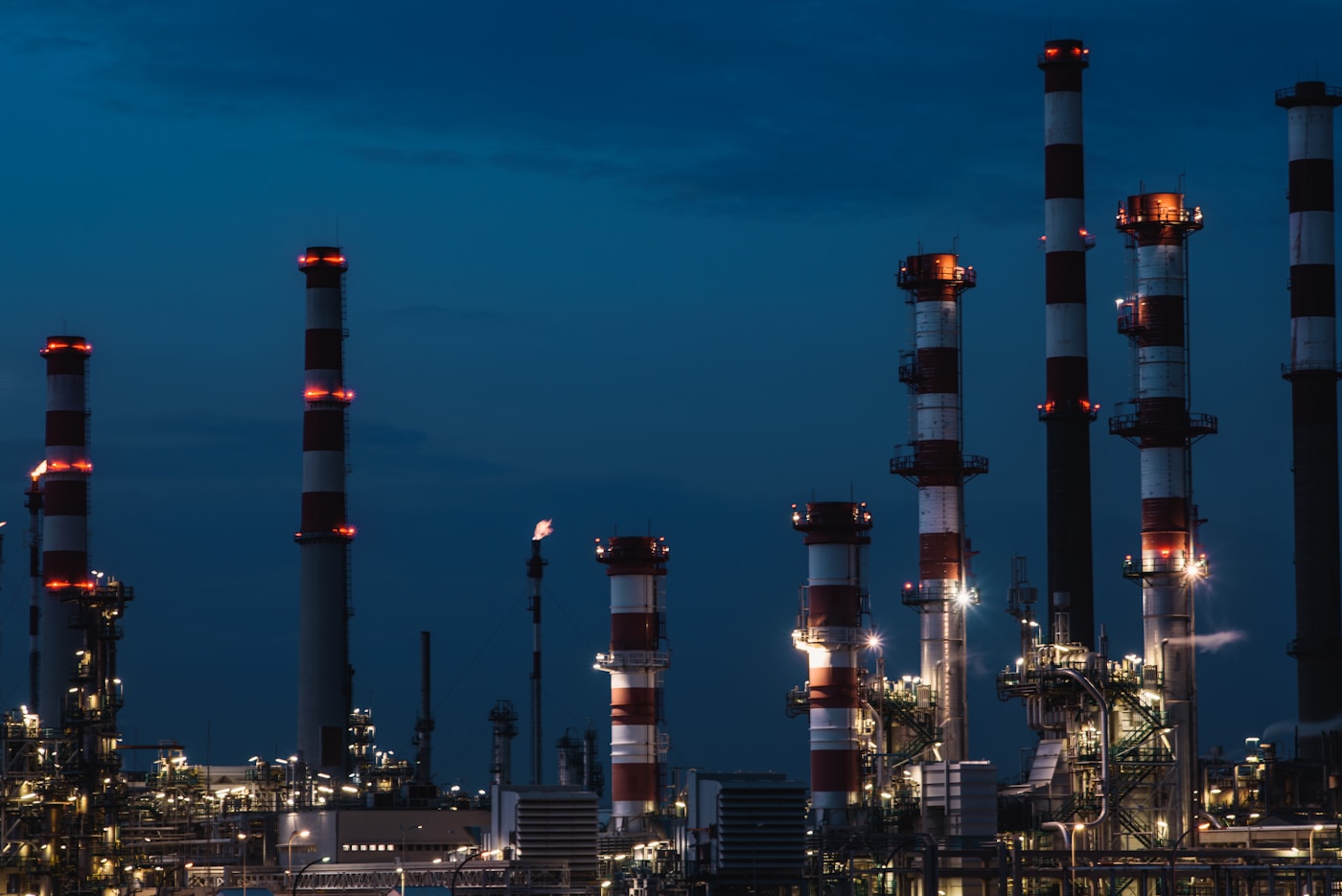
Before a single Iranian missile struck a Gulf target, Russia’s 2026 federal budget was built on an assumption of $59-per-barrel Urals crude. That figure, set during the relative calm of late 2025, now looks like a relic from another era. By mid-March 2026, Urals crude delivered to Indian ports hit $98.93 per barrel, according to Bloomberg. On March 16, trading data from Trading Economics showed Urals closing at $100.67 — a 70 percent surge from its pre-war level of roughly $60.
The revenue implications are staggering. Financial Times calculations, based on industry data and estimates from multiple analysts, found that Russia is earning up to $150 million per day in additional budget revenue from oil sales since the effective closure of the Strait of Hormuz drove up demand for Russian crude from India and China. The Kyiv Independent, citing analysis from the Centre for Research on Energy and Clean Air, reported that Russia had already earned an additional 6 billion euros in fossil fuel revenue in the first two weeks of the war.
The arithmetic is straightforward but the sums are enormous. Russia exports approximately 4.5 to 5 million barrels per day of crude oil. With Urals trading roughly $40 per barrel above the government’s budget assumption, Moscow collects additional revenue on every barrel that clears customs. Borys Dodonov, head of the Energy and Climate Research Unit at the Kyiv School of Economics, told the Financial Times that the current high prices “will help Russia to meet budget indicators this quarter and even start saving some money.” The Moscow Times projected that if prices average $90 per barrel over the full year rather than the budgeted $59, Russia could receive approximately $55 billion in additional revenue.
| Metric | Pre-War (Feb 2026) | War Period (Mid-March) | Change |
|---|---|---|---|
| Urals crude price ($/bbl) | ~$60 | $100.67 | +68% |
| Budget assumption ($/bbl) | $59 | $59 | — |
| Daily surplus revenue | ~$5M | ~$150M | +2,900% |
| Projected annual extra revenue | ~$2B | $55B (at avg $90) | +2,650% |
| Additional revenue to date | — | $1.3–1.9B (taxes) | — |
By the end of March, Financial Times calculations suggest Russia could collect between $3.3 billion and $4.9 billion in additional revenue from the oil price surge alone. That is roughly the cost of several hundred thousand Shahed-136 drones — the very weapons being used to attack the Gulf states whose oil market disruption is financing Russia’s gains.
The Middle East briefing 3,000+ readers start their day with.
One email. Every weekday morning. Free.
How Did Russia Get Sanctions Relief From a War It Did Not Join?
The Trump administration on March 12 temporarily lifted sanctions on Russian oil shipments that were stranded at sea, allowing cargoes to reach global buyers, according to the Washington Post. The exemptions, valid until April 11, represented the most significant relaxation of Russian energy sanctions since they were imposed following Moscow’s 2022 invasion of Ukraine. CNN reported that oil prices remained elevated despite the move, suggesting the measure was too limited to meaningfully cool the market.
The logic behind Washington’s decision was transparent. With Brent crude above $100 and the Strait of Hormuz effectively closed, the global market had lost access to roughly 8 million barrels per day of supply, as reported by multiple industry trackers. Releasing Russian oil onto the market was one of the few levers available to prevent prices from spiralling further. Bloomberg reported on March 16 that Moscow was rushing to capitalize on the window, redirecting tankers and accelerating loading schedules at its Baltic and Pacific ports.
The irony was not lost on analysts. Newsweek headlined its report: “Russia Is Raking In Billions Because of Trump’s Iran War.” MSNBC reported that the Trump administration was offering Russia additional sanctions relief even as Zelenskyy accused Moscow of supplying Iran with Shahed drones for use against American forces. The sanctions pause, intended as a short-term market stabilizer, handed Putin precisely the relief he had been unable to obtain through two years of diplomatic pressure and battlefield leverage.
Russia is the only country genuinely benefiting from the US-Israeli war on Iran.
Antonio Costa, European Council President, March 10, 2026
The Seven Dividends of Nonbelligerence
Russia’s gains from the Iran war are not accidental, nor are they confined to a single domain. They span seven distinct categories, each reinforcing the others in a cascading loop of strategic advantage. This pattern — profiting from a war without joining it — has historical precedent, but rarely has a single power extracted dividends across so many dimensions simultaneously.
| Dividend | Mechanism | Estimated Value | Duration |
|---|---|---|---|
| Oil Revenue | Price surge from Hormuz closure drives Urals above $100 | $55B/year at current levels | War duration + lag |
| Sanctions Relief | US lifts oil sanctions to stabilize markets | $2–4B in stranded cargo value | Until April 11 (likely extended) |
| Attention Diversion | Western focus shifts from Ukraine to Iran | Incalculable — measured in territory | War duration |
| Weapons Demand | Gulf states seek alternatives to depleted US stockpiles | $2B+ (existing Saudi contract) | Multi-year pipeline |
| Diplomatic Leverage | Both Tehran and Riyadh need Moscow as interlocutor | Measured in concessions | War + post-war |
| Drone Proliferation | Russia supplies improved Shaheds back to Iran | Influence + combat testing data | Ongoing |
| European Energy Dependence | Gulf disruption forces Europe back toward Russian gas | $10–15B if sustained | Structural shift |
Each dividend operates on a different timeline. The oil revenue is immediate and quantifiable. The sanctions relief is temporary but precedent-setting. The attention diversion is already visible on the frontlines in Ukraine. The diplomatic leverage will compound over years. The European energy dependence may prove the most consequential of all, reversing three years of deliberate European effort to wean itself off Russian fossil fuels.
Is the Iran War Funding Russia’s Offensive in Ukraine?
The most consequential of Russia’s seven dividends may be the one that receives the least attention in Middle Eastern coverage: the direct impact on the war in Ukraine. The Foreign Policy Research Institute published a detailed analysis in March 2026 titled “From Tehran to Donbas,” arguing that the Iran war’s effects on the Russia-Ukraine conflict could prove more historically significant than the war itself.
Three channels connect the two wars. First, money. Russia’s 2026 military budget was already stretched thin by three years of war. The $55 billion annual windfall at current oil prices exceeds Russia’s entire projected defense-budget deficit for the year, according to Moscow Times analysis. Higher oil prices fund ammunition production, troop recruitment bonuses, and the procurement of the guided glide bombs that have become Russia’s most effective battlefield weapon.
Second, weapons. CNN reported on March 15 that Ukraine’s President Zelenskyy expressed growing concern that weapons deliveries to Kyiv would face “delays” and “reductions in the volume of critical defensive supplies” as Western arsenals were redirected to the Gulf. The most acute shortage is Patriot interceptor missiles. Saudi Arabia and Israel are consuming interceptors at a rate that directly reduces the number available for Ukraine, where Russian ballistic missile strikes reached their highest intensity in four years during February 2026, according to Critical Threats.
Third, attention. The National Interest reported that while the world watched Iran, Ukrainian forces quietly advanced in the south and east, liberating more than 400 square kilometres of territory. But Zelenskyy told CNN he was worried about “losing the Americans,” noting that Washington’s diplomatic bandwidth was “without question, currently more focused on the Middle East.” The paradox is stark: Ukraine is advancing militarily while losing the political attention it needs to sustain Western support.
| Domain | Effect on Ukraine | Effect on Russia | Net Advantage |
|---|---|---|---|
| Funding | Neutral — not directly affected | $55B annual windfall at $90 Urals | Russia |
| Air defense supply | Patriot stocks diverted to Gulf | More missiles get through | Russia |
| Political attention | Zelenskyy fears “losing Americans” | Less pressure on Putin | Russia |
| Drone technology | Ukraine sends experts to Gulf | Loses some drone capability | Mixed |
| Sanctions | Russian oil sanctions eased | More revenue, more trade | Russia |
The Shahed Paradox — Russia Arms Both Sides
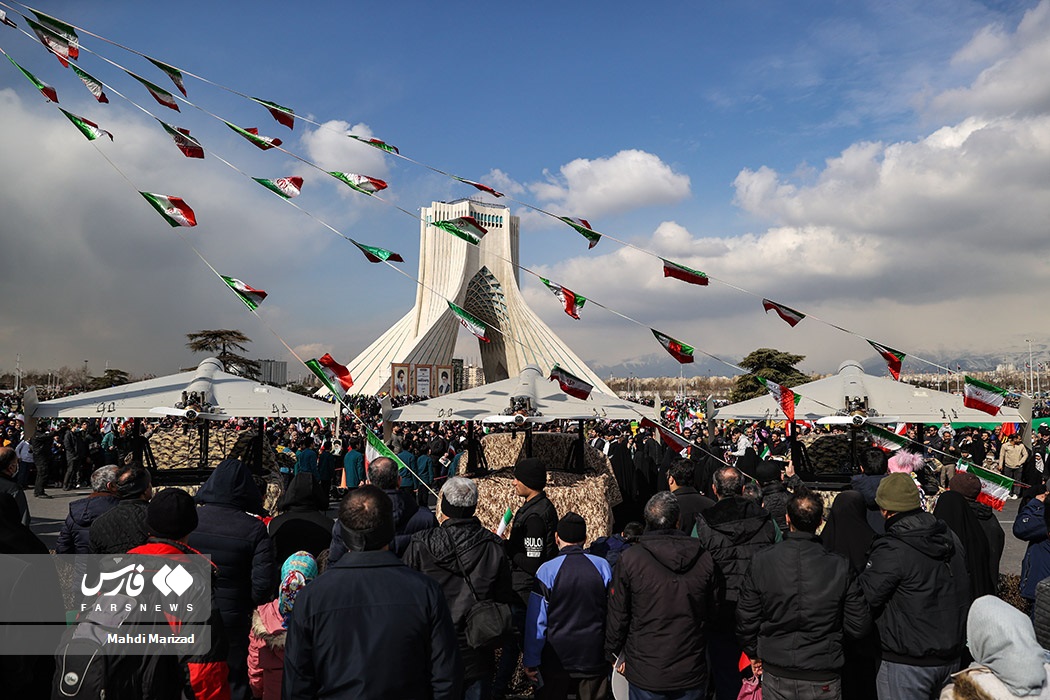
One of the war’s most uncomfortable truths is that Russia is simultaneously supplying weapons to Iran and selling air defense systems to Saudi Arabia. The Shahed-136 drone, originally manufactured by Iran and exported to Russia by the thousands for use against Ukraine, has now come full circle. Ukrainian President Zelenskyy told CNN on March 14 that it is “100 percent facts” that Russia is providing Iran with Shahed drones for use against American bases in the Gulf.
The Jerusalem Post reported that Zelenskyy stated Russia had helped Iran improve its Shahed drones after first using Ukraine as a testing ground. “Russians helped Iranians improve drones, just like Iranians helped Russians at the beginning of the Russia-Ukraine war,” Zelenskyy said. The Hill confirmed that Ukraine’s intelligence community believed Russia was supplying not only drones but also intelligence data to assist Iranian targeting.
The supply chain is circular and cynical. Iran manufactures Shaheds and sends them to Russia. Russia uses them against Ukraine, identifies design flaws, improves the guidance and range, and sends the upgraded models back to Iran. Iran then deploys them against US bases and Gulf infrastructure. The result is a weapon that has been combat-tested on two continents and improved by two military establishments. The FDD (Foundation for Defense of Democracies) published an analysis titled “Russia Helps Iran Attack U.S. and Its Allies. Ukraine Helps Defend Them,” capturing the paradox in a single headline.
On the other side of the ledger, OCCRP (Organized Crime and Corruption Reporting Project) revealed through leaked documents that Saudi Arabia agreed to pay sanctioned Russian arms companies more than 2 billion euros for an air defense system, with initial contract signatures dating to 2021 and deliveries continuing through 2026. The Kyiv Independent investigation showed that Saudi Arabia was actively facilitating Russian arms-export revenue even while Russian-improved drones were being fired at Saudi territory. Saudi Defense Minister Khalid bin Salman has not publicly addressed this contradiction.
Why Is Putin Positioning Himself as a Peacemaker?
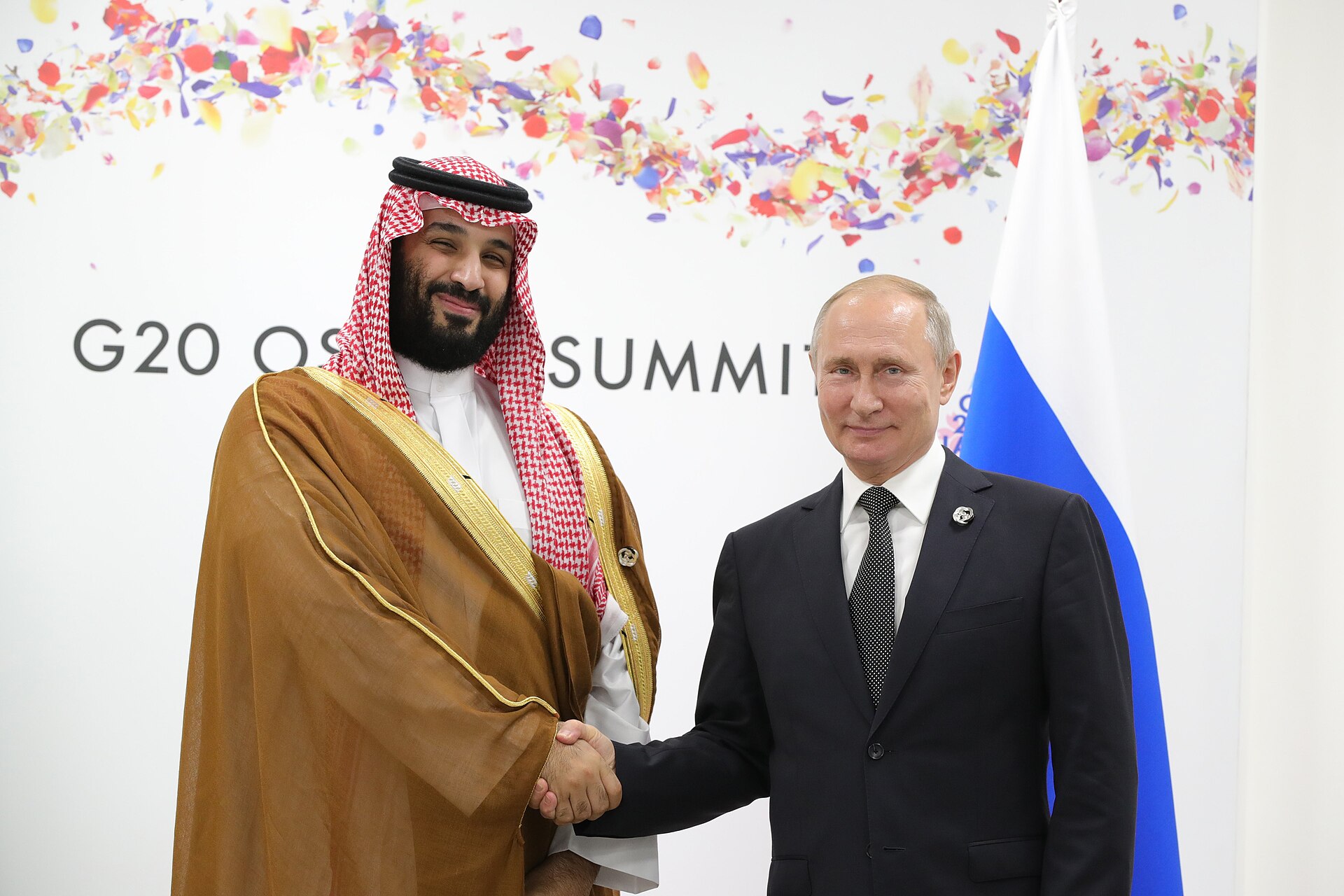
On March 2, the Kremlin reported that Vladimir Putin held four phone calls with Gulf leaders in a single day. The Jerusalem Post reported that Putin offered to mediate with Iran while calling the US-Israeli strikes “unprovoked aggression.” In a call with Crown Prince Mohammed bin Salman, Putin discussed escalation risks, voiced concern about the spread of conflict to other Arab countries, and emphasized the need for political and diplomatic solutions.
MBS responded with a carefully calibrated statement. Saudi Arabia said Russia could play a “positive, stabilizing role” given its ties with both Tehran and Gulf capitals, according to Bloomberg. The phrase was diplomatic — it acknowledged Russia’s unique position without endorsing Russia’s conduct. Russia signed a 20-year strategic partnership treaty with Iran in 2025, maintains a close personal relationship between Putin and MBS through OPEC+ coordination, and has the institutional relationships with both sides that no other major power possesses.
CBC News published an analysis headlined “Putin is trying to pitch himself as peacemaker in Iran, but Russia also sees opportunity,” noting that Moscow’s posture was designed to achieve multiple objectives simultaneously. Putin wants to avoid alienating the Trump administration, which is brokering parallel peace talks on Ukraine. He wants to preserve the OPEC+ relationship with Riyadh that has underpinned Russian fiscal stability. And he wants to maintain enough credibility with Tehran to extract concessions in any eventual ceasefire negotiation.
Fox News, citing the 200-year history of Russian-Iranian relations, described the partnership as “transactional” rather than genuinely strategic. Russia’s limited reaction to Iran’s devastation — condemnation and calls for diplomacy, but no military assistance despite the 2025 treaty — suggests that Moscow’s interest in Iran extends precisely as far as its utility. A weakened Iran is actually advantageous for Russia: it reduces a competitor for oil market share, eliminates a potential future rival for influence in Central Asia, and creates a post-war reconstruction opportunity in which Russian companies could participate.
What Does Russia’s $2 Billion Arms Deal With Saudi Arabia Mean Now?
The leaked documents reported by OCCRP in 2025 revealed that the Saudi-Russian air defense contract, signed in April 2021, was worth more than 2 billion euros and included an advance payment of 326 million euros. Trade data confirmed that some equipment was delivered in 2023, a full year after Russia’s invasion of Ukraine and the imposition of Western sanctions designed to isolate Moscow’s defense industry.
The contract takes on new significance in the context of the Iran war. Saudi Arabia is consuming interceptor missiles at an unprecedented rate, having downed more than 200 drones and missiles in 17 days. American Patriot stockpiles are finite, and European allies are reluctant to part with their own reserves. The existing $2 billion Russian deal — reportedly for S-400 components and associated radar systems — positions Russia as one of the few suppliers capable of delivering air defense hardware outside the Western supply chain.
Russia claimed $15 billion in total arms exports for 2025, with Defense News reporting that Moscow had announced more than 340 joint defense projects with 14 countries. The Iran war has created what defense analysts describe as a seller’s market for air defense systems. Every Gulf state wants more interceptors. Western production lines cannot meet demand. Russia, China, and South Korea are the alternative suppliers, and Russia already has the contractual relationship with Riyadh to build on.
| Supplier | System | Status With Saudi Arabia | Delivery Timeline | Complications |
|---|---|---|---|---|
| Russia | S-400 Triumf | $2B+ contract signed 2021 | Partial deliveries ongoing | Western sanctions, CAATSA risk |
| South Korea | KM-SAM Cheolmae-II | Negotiations reported | 18-24 months | Limited export track record |
| China | HQ-9 / FD-2000 | $5B drone factory deal (March 2026) | 12-18 months | US opposition, tech concerns |
| United States | Patriot PAC-3 MSE | Existing operator | Backlogged 24+ months | Interceptor shortages |
| France | SAMP/T Mamba | No current deal | 24-36 months | Limited production capacity |
Europe’s Energy Nightmare Just Got a Russian Accent
For three years following Russia’s 2022 invasion of Ukraine, European nations invested hundreds of billions of euros in the deliberate project of reducing dependence on Russian fossil fuels. LNG terminals were built at emergency speed. Pipeline contracts with Norway and Algeria were expanded. Renewable energy timelines were accelerated. By early 2026, Europe had reduced its Russian gas imports from roughly 40 percent of total supply to under 15 percent, according to the European Commission.
The Iran war threatens to reverse that progress in weeks. With Gulf LNG shipments disrupted by the Hormuz closure, European spot gas prices have surged. The EU called an emergency energy ministers’ meeting on March 13 as oil pushed past $106 per barrel. Chatham House published an analysis noting that the Iran war “exposes the limits of Russia’s leverage in a fragmenting regional order” — but the energy data tells a different story. As Gulf supplies constrict, Russian pipeline gas and LNG become relatively more attractive to European buyers who face the choice between energy security and geopolitical principle.
The structural shift matters more than the spot price. If European companies sign new medium-term contracts for Russian energy during the war period, those commitments will outlast the conflict. Each contract signed under duress weakens the European consensus on Russian sanctions and creates constituencies — industrial users, municipal utilities, downstream processors — with a financial interest in maintaining Russian energy flows. Putin does not need to win European hearts. He needs to fill European storage tanks.
Germany provides the clearest illustration. Berlin spent roughly 10 billion euros constructing four floating LNG terminals to replace Russian pipeline gas after 2022. Those terminals were sized for a world in which Qatari, American, and Australian LNG flowed freely through global shipping lanes. With the Strait of Hormuz closed and Qatari LNG shipments disrupted, Germany faces the prospect of terminals that cannot source sufficient non-Russian supply. The OPEC+ production increase of 206,000 barrels per day announced for April does little to address the gas shortage, which operates on entirely different infrastructure.
Eastern European states are even more exposed. Poland, the Czech Republic, and the Baltic states reduced Russian gas dependence through diversification contracts routed through Mediterranean terminals and Qatari long-term agreements. Those supply chains now pass through chokepoints that the Iran war has rendered unreliable. The European Council’s emergency measures include activating strategic gas reserves, but reserves buy months, not years. If the Hormuz disruption lasts through summer 2026, European buyers will face a binary choice: Russian gas or rationing.
The Silent Competition With Beijing
Russia is not the only non-combatant power profiting from the Iran war, and its rivalry with China for influence in the Gulf is intensifying. The Wire China reported on March 15 that Beijing was “caught between Iran and the U.S.,” attempting to maintain trade relationships with both sides. Saudi Arabia signed a $5 billion deal to build Chinese combat drones in Jeddah on March 11, according to HOS reporting.
The competition operates across three dimensions. In energy markets, both Russia and China are benefiting from discounted Iranian oil, but they are also competing for market share in Asia as Gulf supplies shrink. In arms sales, both are positioning to fill the gap left by overextended Western defense manufacturers. And in diplomacy, Beijing sent a peace envoy to Riyadh on March 9, directly competing with Moscow’s own mediation efforts.
The critical difference is that Russia has the OPEC+ relationship with Saudi Arabia that China lacks. OPEC+ coordination on production levels gives Putin a direct, institutional channel to MBS that no Chinese leader possesses. In a war whose economic consequences are driven primarily by oil supply disruption, that channel is worth more than any single arms deal or diplomatic initiative.
Can Russia Actually Capitalize on the Windfall?
The bear case against Russia’s windfall is not that the money is imaginary — it is very real — but that Moscow’s capacity to convert short-term revenue into lasting strategic advantage is constrained by structural weaknesses that the oil surge cannot fix.
Modern Diplomacy reported on March 10 that rising shipping costs were devouring a significant portion of Russia’s oil price gains. Insurance premiums for Russian tankers have surged alongside Gulf shipping insurance, creating a squeeze on net export revenues that the headline price does not capture. Russia’s seaborne oil exports actually fell 11.4 percent in February to 6.6 million barrels per day, the lowest level since the 2022 invasion, according to the Centre for Research on Energy and Clean Air.
Infrastructure damage from Ukrainian drone strikes has also limited Russia’s ability to ramp production. Refineries in Ryazan, Tuapse, and other locations have been hit repeatedly, constraining processing capacity even as global demand surges. Bloomberg noted that Moscow was “rushing to reap the reward” of the oil price surge but cautioned that the window might prove narrower than the Kremlin hopes.
| Constraint | Impact | Severity |
|---|---|---|
| Shipping costs | Elevated insurance and freight rates erode margins | Moderate |
| Refinery damage | Ukrainian strikes limit processing capacity | Significant |
| Export volume decline | Fell 11.4% in Feb to 6.6M bpd | Moderate |
| Sanctions architecture | Relief is temporary (expires April 11) | Uncertain |
| OPEC+ commitments | Production caps limit upside | Moderate |
| Ruble appreciation risk | Higher oil could strengthen ruble, hurting budget in ruble terms | Low-Moderate |
The Bloomberg analysis published on March 5 was titled “Iran War Gives Russia Brief Window to Rebuild Reserves,” with the emphasis on “brief.” If the war ends quickly and Gulf oil flows resume, the windfall evaporates. If the war drags on, Western sanctions on Russian energy may tighten rather than loosen as the market stabilizes. Russia’s gain is real but contingent — dependent on a conflict duration and trajectory it does not control.
The Contrarian Case — Russia’s Gains Are Shallower Than They Appear
The prevailing narrative — Russia as the war’s unambiguous winner — deserves scrutiny. Chatham House argued in a March analysis that the Iran war “exposes the limits of Russia’s leverage in a fragmenting regional order.” The FDD published a paper titled “Russia Watches Iran War From the Sidelines — Again,” noting that Moscow’s failure to defend its treaty partner Iran revealed the hollowness of Russian security guarantees.
The argument runs as follows. Russia signed a 20-year strategic partnership treaty with Iran in 2025. When the US and Israel struck, killing the Supreme Leader and devastating Iran’s military infrastructure, Russia offered only rhetoric. The Moscow Times reported that “once a critical partner, the ayatollah’s fall looks to have minimal fallout for Russia’s war” — but the reverse is equally true. Iran’s fall exposes Russia’s unreliability as an ally, potentially complicating Moscow’s efforts to build security partnerships in the Global South.
More fundamentally, Russia’s supposed diplomatic leverage depends on a peace process that may never materialize. If the war ends with a decisive US-Israeli victory and Iran’s capitulation, there will be no mediation for Russia to perform. If it ends with a Chinese-brokered deal, Moscow gets nothing. And if it escalates into a broader regional conflict that disrupts Russian interests in Syria, the Caucasus, or Central Asia, the costs could rapidly overwhelm the oil revenue.
There is also a reputational cost that defies quantification. Russia’s 2025 strategic partnership treaty with Iran was designed to signal that Moscow stands by its partners — a message aimed as much at India, Egypt, and other potential arms customers as at Tehran. When the US and Israel destroyed Iran’s nuclear program and killed its supreme leader, Russia’s response amounted to phone calls and press statements. Every prospective Russian arms buyer in the Global South is now recalculating the value of a Russian security guarantee. If Moscow would not defend a treaty partner against an attack that killed the country’s head of state, what would it defend?
The strongest version of the contrarian case is structural. Russia is spending its oil windfall on a war in Ukraine that shows no sign of ending. Every additional billion dollars in revenue funds more months of attrition warfare against a Western-backed adversary. The windfall does not make Russia stronger in any permanent sense — it merely delays the fiscal reckoning that sanctions were designed to impose. As the RAND Corporation noted in its March Q&A, Russia is “winning a short-term revenue battle while losing a long-term economic war.” The Iran war has given Putin money. Whether it has given him power is a different question entirely.
What Does This Mean for Saudi Arabia?
For Crown Prince Mohammed bin Salman, Russia’s positioning creates a characteristically Saudi dilemma: the Kingdom needs Moscow for oil market coordination through OPEC+ but cannot afford to be seen subsidizing the power that is arming Iran. The relationship between Riyadh and Moscow has always been transactional — built on the shared interest in managing oil prices rather than any ideological affinity — and the Iran war has stretched that transaction to its limits.
Saudi Arabia’s options are constrained. Breaking with Russia in OPEC+ would crash oil prices, eliminating the revenue surplus that is funding Saudi Arabia’s own wartime costs. Maintaining the partnership means indirectly supporting a country that is supplying drones to the enemy attacking Saudi territory. The $2 billion air defense contract compounds the problem: Saudi Arabia needs the Russian systems to defend against the very drones Russia is helping to improve.
The Kingdom’s approach, consistent with its broader wartime strategy of refusing to join the fighting, has been to compartmentalize. OPEC+ coordination continues. The arms contract remains in force. But Riyadh has notably not endorsed Moscow’s mediation efforts, preferring instead to work through Omani and Qatari channels. The message to Putin is implicit: your money is welcome, your weapons are tolerable, but your peacemaking is not trusted.
The deeper Saudi concern is long-term. If the Iran war permanently increases European dependence on Russian energy, it strengthens Moscow’s hand in OPEC+ negotiations for years to come. A Russia that supplies 20 percent of European gas rather than 15 percent is a Russia that can extract greater production concessions from Riyadh. The Iran war may end in weeks or months, but the structural energy shifts it is accelerating will shape the Saudi-Russian relationship for a decade.
There is also the post-war reconstruction calculus. If Iran emerges from this conflict with its infrastructure devastated — refineries, power stations, transportation networks, and military installations destroyed by American and Israeli strikes — the reconstruction bill will run into hundreds of billions of dollars. Russia has extensive experience in exactly this kind of heavy industrial rebuilding, particularly in the energy sector. Russian firms rebuilt Syrian refining capacity after that country’s civil war. They have the engineering expertise, the tolerance for operating in sanctioned environments, and the political relationship with whatever government emerges in Tehran. Post-war Iran could become Russia’s largest infrastructure client since the Soviet-era construction of the Aswan Dam in Egypt.
For Riyadh, this prospect is doubly threatening. A Russia that helps rebuild Iran gains permanent influence over a country that sits across the Gulf from Saudi territory. A reconstructed Iranian energy sector, built with Russian technology and financed by Russian credit, would produce oil that competes directly with Saudi output in Asian markets. The war that is currently enriching both Moscow and Riyadh could end in a way that pits them against each other in the reconstruction phase — a competition for which Russia is better positioned than its current military struggles might suggest.
Frequently Asked Questions
How much additional revenue is Russia earning from the Iran war?
Russia is earning approximately $150 million per day in additional oil revenue, according to Financial Times calculations. With Urals crude trading near $100 per barrel against a budget assumption of $59, Moscow has collected between $1.3 billion and $1.9 billion in additional export tax revenue by mid-March, with projections of $3.3 billion to $4.9 billion by month’s end.
Did the United States actually lift sanctions on Russian oil because of the Iran war?
Yes. The Trump administration on March 12 temporarily lifted sanctions on Russian oil shipments stranded at sea, allowing cargoes to reach global buyers. The exemptions are valid until April 11 and were intended to calm energy markets disrupted by the Strait of Hormuz closure. Bloomberg reported Moscow was rushing to capitalize on the window.
Is Russia supplying Iran with drones during the war?
Ukrainian President Zelenskyy stated on March 14 that it is “100 percent facts” that Russia is providing Iran with Shahed drones for attacks on US bases and Gulf states. Zelenskyy also said Russia helped Iran improve the drones using lessons learned from deploying them against Ukraine. Russia has not officially confirmed these transfers.
How does the Iran war affect the Russia-Ukraine conflict?
The Iran war impacts Ukraine through three channels: additional Russian revenue funding the war effort, diversion of Western air defense systems from Ukraine to the Gulf, and reduced Western political attention on Ukraine. Zelenskyy expressed concern about “losing the Americans” as Washington focuses on the Middle East.
Is Saudi Arabia still buying weapons from Russia while Russia arms Iran?
Leaked documents reported by OCCRP revealed a $2 billion-plus Saudi-Russian air defense contract signed in 2021, with deliveries continuing through 2026. Saudi Arabia has not publicly addressed the contradiction of purchasing Russian air defense systems while Russia allegedly supplies the drones those systems are designed to intercept.
Could Russia’s gains from the Iran war be reversed?
Analysts describe Russia’s windfall as “contingent” on the war’s duration and trajectory. If the conflict ends quickly, oil prices normalize and the revenue surge evaporates. Infrastructure damage from Ukrainian strikes and declining export volumes also constrain Russia’s ability to fully capitalize. The RAND Corporation called Russia’s position “winning a short-term revenue battle while losing a long-term economic war.”