
DHAHRAN — Iran’s March 18 strikes against Ras Laffan, Habshan, and Saudi Arabia’s Jubail Petrochemical Complex marked a threshold that no ceasefire can reverse. Three weeks into the 2026 Iran war, the conflict has crossed from blockade — a reversible act of coercion — into physical destruction of the infrastructure that underpins the global energy order. Qatar’s largest LNG complex, responsible for roughly 20 percent of the world’s liquefied natural gas supply, suffered what QatarEnergy called “extensive damage,” prompting Doha to expel Iranian military and security attachés within 24 hours. The UAE shut down its Habshan gas processing facilities after Iranian ballistic missiles penetrated air defenses. Two Saudi refineries absorbed hits within hours of each other. The targeting of Gulf refining infrastructure — rather than crude production — represents a calculated strategy that exploits the global economy’s most dangerous bottleneck. These are not pipelines that can be reopened or shipping lanes that can be swept for mines. These are industrial assets that took decades and hundreds of billions of dollars to build, and their destruction will reshape energy markets long after the last missile falls silent.
The immediate question is not whether a ceasefire will come — diplomats in Muscat, Beijing, and Ankara are working every channel — but whether a ceasefire can restore what Iran has burned. The evidence from three weeks of escalating infrastructure strikes suggests it cannot. Oilfields forced to shut can take months to restore production. Damaged LNG liquefaction trains require specialized equipment manufactured by a handful of companies with order books stretching years into the future. Europe entered 2026 with gas storage at just 46 billion cubic metres, compared to 60 billion the previous year. Japan sources 90 percent of its crude oil from the Middle East. South Korea holds nine days of LNG inventory at its import terminals. The damage inflicted on March 18 alone may take years to fully repair — and Iran has promised more.
Table of Contents
- What Did Iran Destroy on March 18?
- Why Does the Ras Laffan Attack Change Everything?
- The Anatomy of Gulf Energy Vulnerability
- How Long Will Reconstruction Take?
- The Infrastructure Permanence Matrix
- Europe’s Winter Without Gulf Gas
- Can Asia Survive the Gulf Energy Shock?
- Saudi Arabia’s Jafurah Acceleration
- The Insurance Market That Disappeared
- Who Wins When Gulf Energy Infrastructure Burns?
- What a Ceasefire Cannot Fix
- Frequently Asked Questions
What Did Iran Destroy on March 18?
Iran’s March 18 strikes represented the single most destructive day for Gulf energy infrastructure since the war began on February 28. In a coordinated campaign that spanned less than six hours, Iranian ballistic missiles and drones struck energy facilities across three sovereign nations — Qatar, the UAE, and Saudi Arabia — in what Tehran described as retaliation for an Israeli strike on Iran’s South Pars gas field.
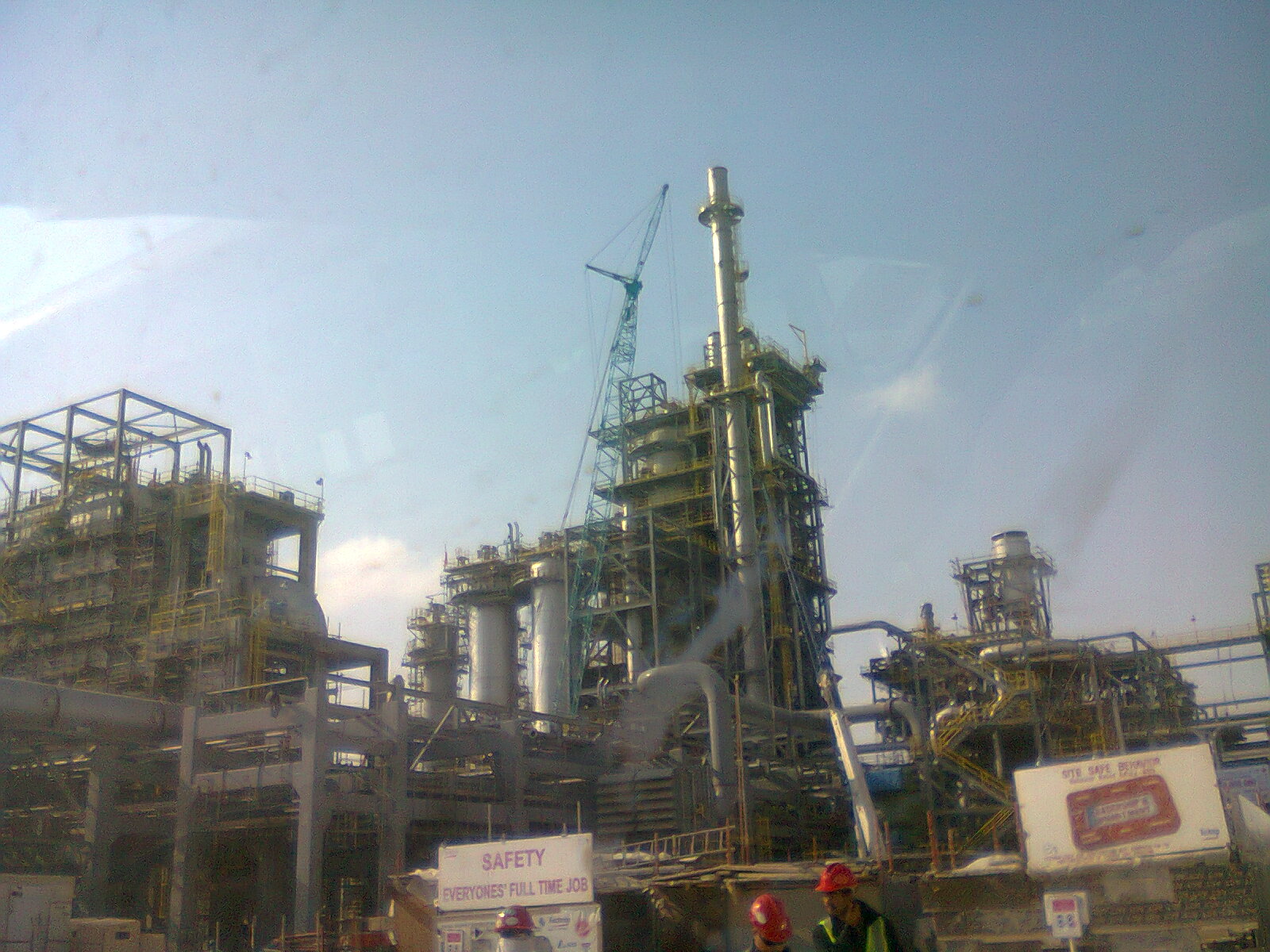
The primary target was Qatar’s Ras Laffan Industrial City, the sprawling complex north of Doha that houses the world’s largest LNG export facilities. According to Bloomberg, an Iranian missile penetrated Qatari air defenses and struck the facility, sparking fires that caused “extensive damage,” according to QatarEnergy. Four other missiles were intercepted before impact, but the single successful strike was sufficient to compound damage from earlier drone attacks that had already forced a production halt and force majeure declaration in the first week of March. The damage to Ras Laffan exposed a structural vulnerability in global gas markets that has no equivalent in oil — while Saudi crude can flow through pipelines to the Red Sea, liquefied natural gas cannot be rerouted.
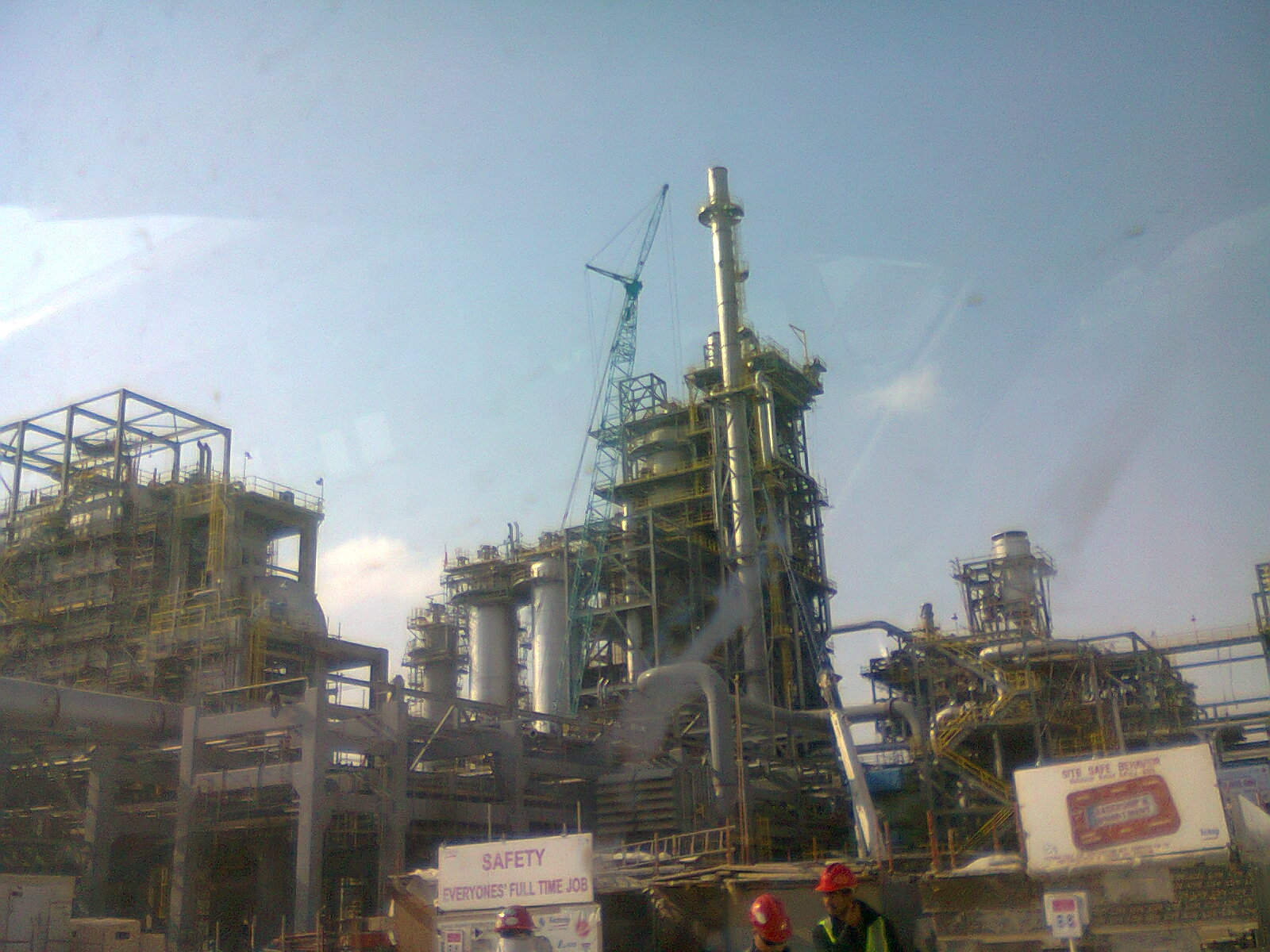
Simultaneously, the UAE’s Habshan gas processing complex and Bab oil field — both operated by ADNOC in Abu Dhabi’s western desert — came under attack. The UAE Defence Ministry reported intercepting 13 ballistic missiles and 27 drones, but falling debris forced the precautionary shutdown of both facilities. Abu Dhabi’s foreign ministry condemned the strikes as a “dangerous escalation” and announced it had summoned its ambassador from Tehran.
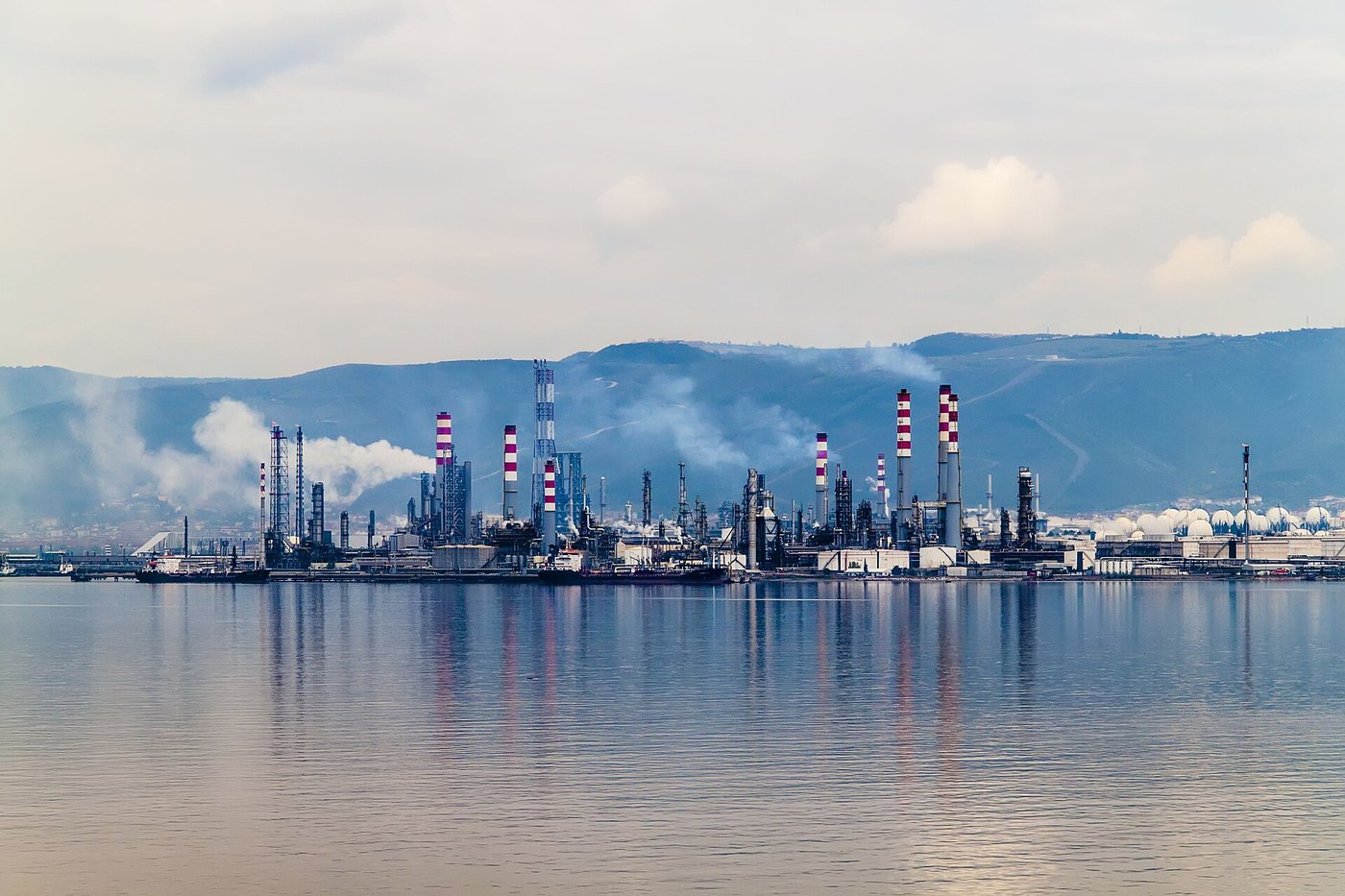
In Saudi Arabia, the Samref Refinery and Jubail Petrochemical Complex both sustained damage from drone strikes. Saudi air defenses intercepted the majority of inbound projectiles, but the cumulative effect of hundred-drone daily barrages has degraded the Kingdom’s eastern industrial zone infrastructure over three consecutive weeks.
The Middle East briefing 3,000+ readers start their day with.
One email. Every weekday morning. Free.
| Facility | Country | Type | Damage Reported | Status |
|---|---|---|---|---|
| Ras Laffan Industrial City | Qatar | LNG complex | Extensive — fires, structural | Shut down (force majeure) |
| Habshan Gas Plant | UAE | Gas processing | Debris damage, precautionary | Operations suspended |
| Bab Oil Field | UAE | Oil production | Debris damage | Operations suspended |
| Samref Refinery | Saudi Arabia | Oil refining | Drone strike damage | Reduced operations |
| Jubail Petrochemical Complex | Saudi Arabia | Petrochemical | Drone strike damage | Reduced operations |
Iran’s state television had named these specific facilities as targets hours before the strikes, issuing what amounted to a public targeting list. According to Bloomberg, Iran warned Gulf nations of a “major response” following the Israeli strike on the South Pars gas field, explicitly identifying Saudi Arabia’s Samref Refinery, the Jubail Petrochemical Complex, and Qatar’s LNG infrastructure as legitimate targets. The warning was unprecedented — and the follow-through was comprehensive.
Why Does the Ras Laffan Attack Change Everything?
Ras Laffan Industrial City is not merely another energy facility. It is the single most consequential piece of energy infrastructure on Earth. The complex processes gas from Qatar’s North Field — the largest non-associated natural gas field in the world — and converts it into LNG for export to Europe, Asia, and beyond. Before the war, Ras Laffan accounted for approximately 20 percent of global LNG supply, according to Enverus, removing roughly 10.2 billion cubic feet per day from world markets when production halted.
The first disruption came on March 2, when Iranian drones struck the complex’s peripheral infrastructure, prompting QatarEnergy to halt production and declare force majeure on all LNG delivery contracts. European benchmark gas prices surged 50 percent in a single day — the largest spike since the 2022 energy crisis triggered by Russia’s invasion of Ukraine, Bloomberg reported. Asian LNG spot prices jumped 39 percent. The total value destruction in a single trading session exceeded anything Russia managed in months of pipeline manipulation.
The March 18 strike compounded the initial damage. QatarEnergy’s CEO told the Financial Times that Qatar cannot restart LNG production until the conflict ends completely — and even then, the physical damage to the complex means a return to full capacity will take months, possibly years. LNG liquefaction trains are among the most complex industrial installations ever built. They operate at temperatures of minus 162 degrees Celsius and require precision engineering that a handful of specialized contractors — Air Liquide, ConocoPhillips, Shell — can provide. Order books for replacement components stretch years into the future even under normal conditions.
The gas war that many analysts warned about has now moved from theoretical risk to physical reality. What was once a supply route disruption — the Hormuz blockade — has become infrastructure destruction. The distinction is critical: a blockade ends when ships resume passage; destroyed infrastructure must be rebuilt.
The Anatomy of Gulf Energy Vulnerability
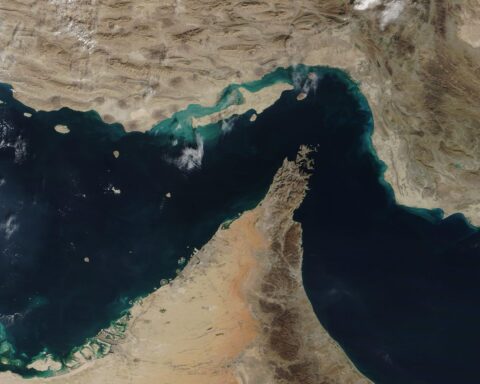
The concentration of global energy infrastructure along a 600-kilometre arc of Persian Gulf coastline represents perhaps the most consequential single point of failure in the world economy. Before the war, the Strait of Hormuz carried roughly 20 percent of global oil supply and 20 percent of global LNG trade. But the vulnerability extends far beyond the chokepoint itself. The production and processing facilities that feed those exports are clustered in a geography that Iran can reach with relatively unsophisticated weapons.
Qatar’s Ras Laffan sits 350 kilometres from Iranian launch sites — well within range of Iran’s Fateh-110 and Zolfaghar ballistic missiles. The UAE’s Habshan complex lies 400 kilometres from Iran’s southern coast. Saudi Arabia’s Eastern Province — home to Aramco’s Ras Tanura terminal, the Jubail industrial zone, and the Abqaiq processing facility — is 250 to 500 kilometres from Iranian territory, depending on the target.
The fundamental problem is that these facilities were designed for efficiency, not survivability. An LNG liquefaction train concentrates billions of dollars of processing capacity into a footprint smaller than a football stadium. A single well-placed missile can disable equipment that processes millions of cubic feet of gas per day. The 2019 Abqaiq-Khurais attack — carried out by Houthi drones with Iranian guidance — temporarily knocked out 5.7 million barrels per day of Saudi production with just ten drones and a handful of cruise missiles. The 2026 campaign has deployed weapons on a scale orders of magnitude larger.
Iran fired nearly 100 drones at Saudi Arabia on a single day in mid-March, far exceeding the previous daily average of 25, according to The National. The air defense systems protecting Gulf infrastructure — Patriot, THAAD, and the emerging network of Korean and Ukrainian interceptor drones — face a mathematics problem that no amount of spending can fully solve. A Patriot interceptor costs between $3 million and $6 million. An Iranian Shahed-136 drone costs approximately $20,000. Iran can afford to lose ninety-nine drones if the hundredth reaches its target.
How Long Will Reconstruction Take?
The reconstruction timeline for damaged Gulf energy infrastructure extends far beyond what most political analysts have incorporated into their forecasts. Three categories of damage carry fundamentally different recovery periods, and the March 18 strikes inflicted all three simultaneously across multiple countries.
The first category — well shut-ins and production curtailments — is the most recoverable. Oilfields that have been shut in as a precautionary measure can typically resume production within weeks to months, depending on the field’s age and the nature of the shutdown. Saudi Arabia’s decision to reduce output at fields served by Eastern Province infrastructure falls into this category. The Yanbu bypass strategy has already demonstrated that Saudi Arabia can reroute significant volumes through its East-West pipeline. Bloomberg reported on March 18 that the Kingdom has revived half its oil exports via the Hormuz bypass to the Red Sea port of Yanbu.
The second category — refinery and processing plant damage — requires months to years. Refineries and petrochemical plants contain specialized catalytic reactors, distillation columns, and heat exchangers that cannot be replaced with off-the-shelf components. The 2019 Abqaiq attack damaged seventeen separate pieces of equipment at a single facility. Full restoration took approximately six months — and that was peacetime, with unlimited access to contractors, parts, and logistics. Wartime repairs face compounding constraints: insurance companies refusing to cover workers in an active conflict zone, shipping routes disrupted, and specialized personnel unwilling to deploy to facilities that remain under threat.
The third category — LNG infrastructure — represents the longest recovery horizon. An LNG liquefaction train is among the most capital-intensive and time-consuming industrial installations to construct. QatarEnergy’s North Field Expansion project, which was adding new capacity before the war, had a construction timeline of five to seven years and a budget exceeding $30 billion. Repairing damaged trains is faster than building new ones, but the specialized cryogenic equipment, compressors, and heat exchangers involved mean even repair timelines are measured in years, not months.
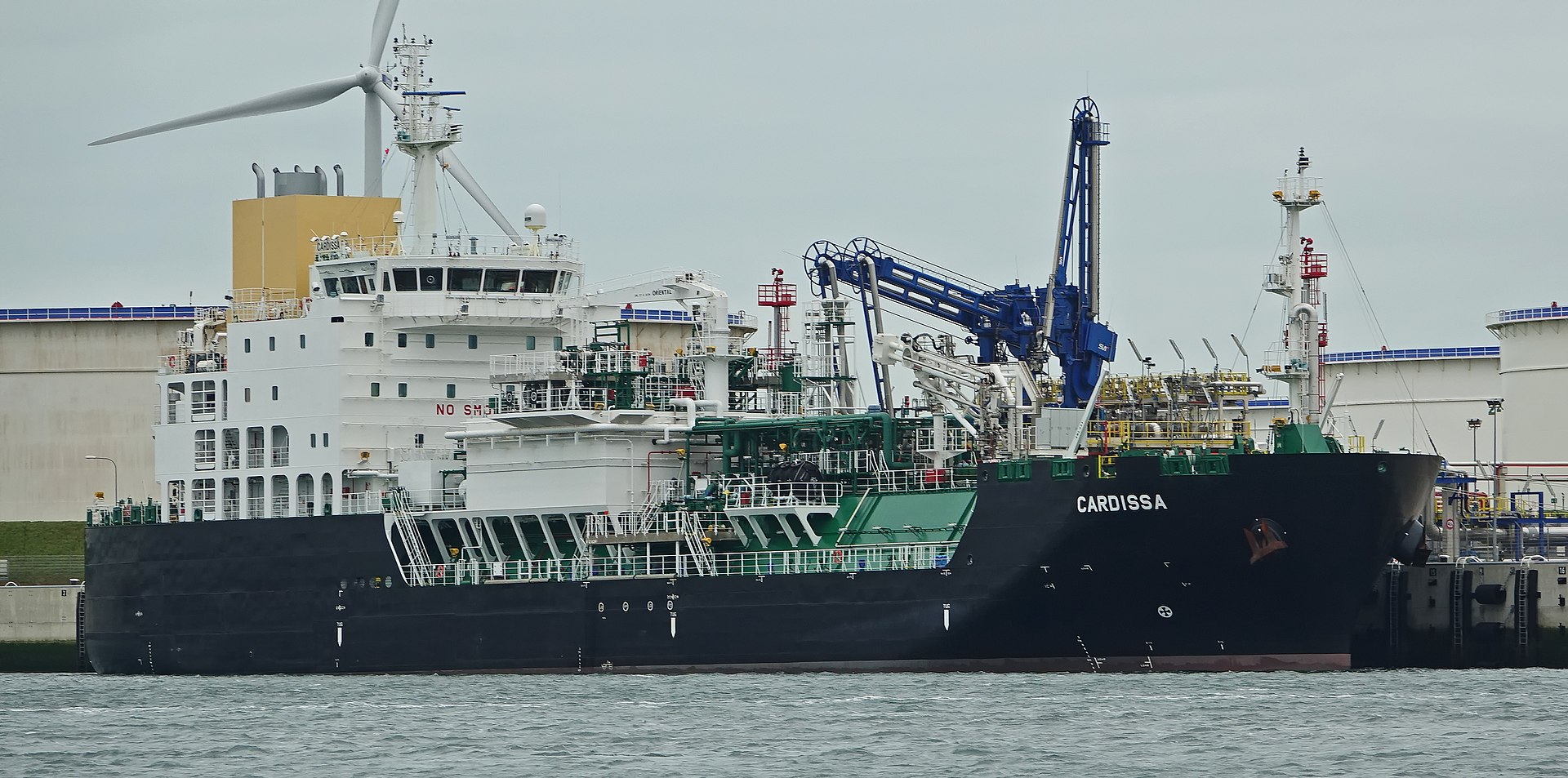
The recovery timeline for damaged refineries, LNG terminals, and export infrastructure will be well beyond what most people expect. You cannot restart an LNG plant the way you restart a car.
Energy industry analyst, speaking to CNBC, March 2026
The Infrastructure Permanence Matrix
Not all infrastructure damage is equal. The critical analytical question is which of the March 18 attacks inflicted temporary disruption and which created permanent structural change in global energy markets. The Infrastructure Permanence Matrix below assesses each category of damage across five dimensions: repair complexity, timeline to restoration, capacity affected, global market impact, and the likelihood that pre-war investment and insurance conditions will return.
| Damage Category | Repair Complexity (1-5) | Timeline to Restore | Capacity Affected | Global Market Impact (1-5) | Investment Recovery (1-5) | Permanence Score |
|---|---|---|---|---|---|---|
| Qatar LNG trains | 5 | 2-5 years | 10.2 bcf/day | 5 | 5 | 25/25 |
| UAE gas processing (Habshan) | 3 | 3-9 months | ~1.5 bcf/day | 3 | 4 | 16/25 |
| Saudi refining (Jubail/Samref) | 3 | 3-12 months | ~800,000 bpd | 3 | 3 | 15/25 |
| Hormuz shipping routes | 1 | Weeks after ceasefire | 20% global oil | 5 | 2 | 13/25 |
| Saudi upstream production | 2 | 1-3 months | Variable | 4 | 2 | 12/25 |
| Insurance/investment confidence | 5 | 5-10 years | All Gulf energy | 5 | 5 | 25/25 |
Two categories score maximum permanence: Qatar’s LNG infrastructure and the insurance and investment environment for Gulf energy. Both will take years to recover under the most optimistic scenarios. The Hormuz shipping lane, by contrast, scores relatively low on permanence — it can reopen quickly once hostilities cease and mines are cleared. This mismatch between the recoverable and the permanent is the central insight that markets have not yet fully priced.
The framework reveals an uncomfortable truth. Most diplomatic and market attention focuses on the Hormuz blockade — the most visible disruption and the one most amenable to political resolution. But the infrastructure destruction inflicted on March 18, which receives far less diplomatic bandwidth, carries the highest permanence scores. A ceasefire reopens Hormuz in weeks. It does not rebuild Ras Laffan in weeks.
The damage extends beyond the physical. Iran has simultaneously waged a cyber campaign against Gulf digital infrastructure — targeting the SCADA systems that manage refinery operations, the GPS navigation that guides tankers through the Strait, and the banking systems that process oil revenue. The digital damage may prove as difficult to remediate as the physical destruction.
Europe’s Winter Without Gulf Gas
Europe’s exposure to the Gulf energy crisis is acute and worsening. The continent entered 2026 in a structurally weaker position than at any point since the 2022 Russian gas shock. According to Bruegel, European gas storage stood at just 46 billion cubic metres at the end of February 2026, compared to 60 billion cubic metres in 2025 and 77 billion cubic metres in 2024. The combination of a colder-than-average winter, the expiration of the last Russian transit gas contract through Ukraine, and lower global LNG availability had already depleted reserves before the first Iranian drone hit Ras Laffan.
The loss of Qatari LNG — which accounted for roughly 15 to 20 percent of European LNG imports depending on the quarter — has pushed the continent into emergency energy management. The Atlantic Council warned that the Iran war could trigger a full-blown European energy crisis exceeding the 2022 disruption in severity. Daily gas injections into European storage are expected to reach just 34 million cubic metres per day in April 2026, representing a 77 percent decline compared to the same period the previous year, according to industry data.
The practical implications for the winter of 2026-27 are severe. Even under an average temperature scenario, European storage may reach only 29 percent capacity by the end of March — far below the 82 percent level achieved in October 2025. A cold winter could deplete storage to 12 percent, according to the European Network of Transmission System Operators for Gas. At those levels, industrial rationing becomes not a contingency but a certainty across Germany, Italy, and Central Europe.
The European Commission’s response has been to accelerate LNG procurement from alternative suppliers — principally the United States, which has become the world’s largest LNG exporter. But US export terminals are already running near capacity, and new projects take three to five years to commission. Australia, the other major LNG supplier, faces its own contractual and capacity constraints. The arithmetic is unforgiving: there is not enough alternative LNG on Earth to replace 20 percent of global supply in the timeframe Europe needs.
Can Asia Survive the Gulf Energy Shock?
If Europe’s situation is dire, Asia’s is existential. The Council on Foreign Relations described the war’s impact on Asian energy markets as “chaos,” and the description is measured. The region’s dependence on Gulf hydrocarbons dwarfs Europe’s, and its strategic reserves are smaller relative to consumption.
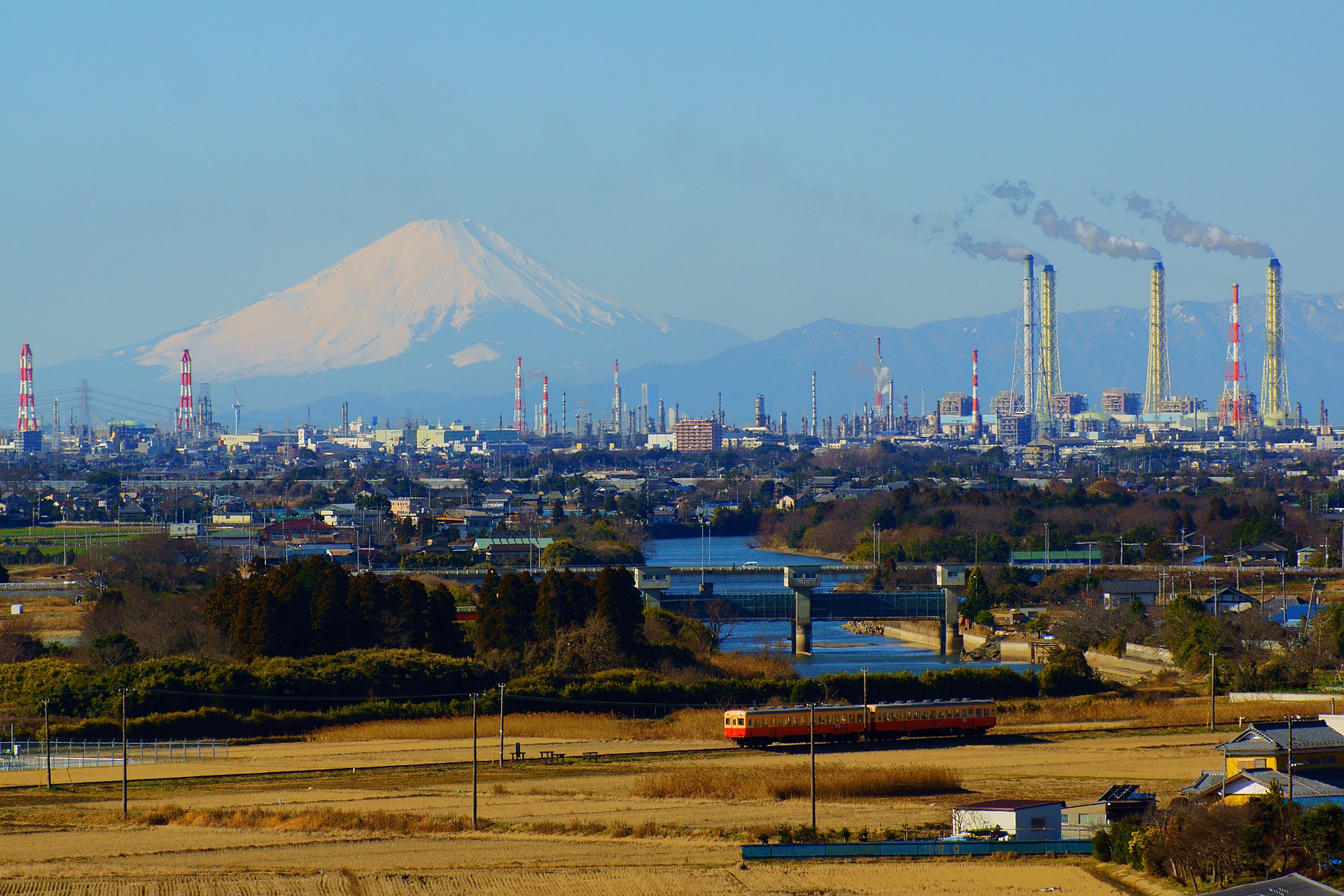
Japan sources more than 90 percent of its crude oil from the Middle East, with approximately 70 percent of those imports transiting the Strait of Hormuz, according to the Middle East Council on Global Affairs. As the world’s second-largest LNG importer, Japan’s exposure to the Qatar shutdown is acute. The Keiyo petrochemical complex visible from Tokyo — one of dozens of LNG-dependent facilities across the country — illustrates the scale of Japan’s vulnerability. Every winter heating season, every summer cooling peak, and every factory shift depends on a supply chain that now runs through a war zone.
South Korea faces an even tighter margin. Gulf crude accounts for roughly 73 percent of the country’s oil supply, and its working LNG inventory at import terminals covers approximately nine days of consumption, according to CFR analysis. South Korea sources 14 percent of its LNG from Qatar and the UAE directly, but the indirect effects — as global LNG prices surge and spot cargoes are redirected — amplify the impact far beyond direct contract exposure.
| Country | Oil from Middle East | Oil via Hormuz | LNG from Gulf | Strategic Reserve (days) | Vulnerability Rating |
|---|---|---|---|---|---|
| Japan | 90% | ~70% | ~20% | ~180 | Critical |
| South Korea | 73% | ~65% | 14% | ~90 | Severe |
| India | ~60% | ~50% | ~15% | ~74 | High |
| China | ~45% | ~40% | ~12% | ~80 | Significant |
China’s position is distinctive. Beijing has maintained a more ambiguous posture toward the conflict, and Iran has selectively allowed Chinese-flagged vessels to transit the Strait of Hormuz. But China’s exposure to global price effects remains substantial — even if Chinese ships pass, the crude they carry costs far more than it did on February 27. India faces a similar calculation, with the added complexity that Iran has allowed some Indian-flagged LNG carriers through while maintaining the broader blockade. As Fortune reported, Asian governments have halted certain exports and begun drawing down stockpiles in what amounts to “energy triage.”
Europe and Japan’s refusal to send warships to help reopen Hormuz has frustrated Washington, but the reluctance reflects a cold calculation: sending naval vessels into an active conflict zone risks escalation without guaranteeing that the physical infrastructure damage can be reversed.
Saudi Arabia’s Jafurah Acceleration
The destruction of Gulf gas infrastructure has created an unexpected accelerant for Saudi Arabia’s own gas ambitions. Saudi Aramco brought the Jafurah unconventional gas field — the largest shale gas development outside the United States — into initial production in December 2025, with the first phase processing 450 million cubic feet per day. The Tanajib Gas Plant commenced operations the same month and is expected to reach 2.6 billion standard cubic feet per day of raw gas processing capacity in 2026, according to World Oil.
Aramco’s long-term target is to increase sales gas production capacity by approximately 80 percent by 2030 over 2021 levels, reaching some 6 million barrels of oil equivalent per day of total gas and associated liquids production. The Jafurah development alone, at a projected cost of $100 billion, is expected to deliver 2 billion cubic feet of gas per day when fully operational, along with 420 million standard cubic feet per day of ethane and 630,000 barrels per day of high-value liquids.
Before the war, Jafurah was primarily a domestic energy story — Saudi Arabia replacing imported gas with domestic production to free up crude oil for export. Yet even freed-up crude faces fundamental delivery constraints at Yanbu that limit how much of that oil the Kingdom can actually sell. The destruction of Qatar’s Ras Laffan and the UAE’s Habshan has transformed Jafurah’s strategic significance. With its regional competitors’ gas infrastructure offline for years, Saudi Arabia’s domestic gas expansion becomes not merely an efficiency play but a potential export platform. The Kingdom’s 319 trillion cubic feet of proven gas reserves, long underexploited relative to its oil wealth, suddenly carry strategic weight they never had before.
The irony is uncomfortable. Iran’s attacks on Saudi Arabia’s neighbors’ gas infrastructure may ultimately strengthen Saudi Arabia’s competitive position in global gas markets — provided the Kingdom can defend its own expanding gas infrastructure against the same threats that destroyed Qatar’s.
The Insurance Market That Disappeared
The financial infrastructure supporting Gulf energy exports has suffered damage as severe as the physical infrastructure, and its recovery timeline may be longer. War-risk insurance premiums for vessels transiting the Persian Gulf have increased by multiples, not percentages. Lloyd’s of London syndicates that once quoted Gulf transit coverage at routine rates have either withdrawn entirely or repriced to levels that make marginal cargoes uneconomic.
The insurance crisis extends beyond shipping. Project finance for new Gulf energy infrastructure — the lifeblood of Aramco’s expansion plans and the broader Vision 2030 industrial agenda — depends on political risk insurance that underwriters are now reluctant to provide at any price for facilities within Iranian missile range. Construction bonds, completion guarantees, and business interruption coverage have all been repriced or withdrawn.
The implications for post-war reconstruction are profound. Even after hostilities cease, insurance markets take years to normalize. The 2019 Abqaiq attack — a single incident, not a sustained campaign — led to a permanent repricing of Gulf energy insurance. The 2026 war, with its sustained three-week campaign of daily strikes against energy infrastructure across multiple nations, will create an insurance scar that persists for a decade or more. International energy companies evaluating new investments in the Gulf will face risk premiums that make projects economically unviable compared to alternatives in more stable geographies. Iran’s formal declaration of Gulf oil and gas facilities as legitimate military targets on March 18 transformed this insurance crisis from temporary uncertainty into a permanent structural repricing.
Goldman Sachs warned that the Gulf faces its worst recession in a generation. The insurance market’s collapse is a leading indicator of why: capital formation — the engine of economic recovery — requires risk transfer mechanisms that no longer function at pre-war levels.
Who Wins When Gulf Energy Infrastructure Burns?
Every barrel of Gulf production lost to Iranian strikes creates a winner elsewhere in the global energy system. The redistribution is already visible, and it will accelerate as the infrastructure damage proves more permanent than markets initially assumed.
Russia is the war’s most obvious energy beneficiary. The Trump administration lifted Russian oil sanctions in March, explicitly to increase global supply in response to the Gulf disruption. Russian crude, which traded at steep discounts to Brent throughout 2023-2025, has closed the gap as buyers desperate for non-Gulf supply accept Moscow’s terms. Russia’s revenues from oil and gas exports have increased even as the volume of those exports has not — a price windfall delivered by an adversary’s war against a third party.
US LNG producers are the second major beneficiary. American export terminals are running at or near full capacity, commanding premium prices from European and Asian buyers who previously relied on cheaper Qatari cargoes. The Foundation for Defense of Democracies described the Qatar shutdown as “opening the door for American energy leadership.” New US LNG export projects that were marginal before the war have become viable at current price levels, though the three-to-five-year construction timeline means new capacity arrives too late to address the immediate crisis.
The renewable energy sector is the war’s most counterintuitive beneficiary. As the war accelerates energy transition dynamics, governments in Europe and Asia that were debating the pace of renewable deployment now face an argument that transcends climate policy. Energy security — the inability to guarantee hydrocarbon supply from the Gulf — has become the most powerful driver of renewable investment since the technology reached cost parity with fossil fuels.
| Beneficiary | Mechanism | Estimated Gain | Duration |
|---|---|---|---|
| Russia | Sanctions lifted, price windfall | $50-80B additional annual revenue | As long as Gulf supply is disrupted |
| US LNG producers | Premium pricing, full capacity utilization | 60%+ revenue increase | 3-5 years (until new capacity built) |
| Renewables sector | Energy security argument accelerates investment | $200B+ additional annual investment | Permanent structural shift |
| Saudi Arabia (Jafurah) | Competitors’ gas infrastructure destroyed | Strategic positioning gain | 5-10 years |
| Norway | European demand for non-Gulf gas | $30-50B additional annual revenue | 2-5 years |
What a Ceasefire Cannot Fix
The diplomatic consensus in Washington, Riyadh, and Beijing holds that the war will end — the only questions are when and on what terms. But the assumption embedded in most post-war planning is that energy markets will return to something resembling their pre-February 28 configuration. The Infrastructure Permanence Matrix above suggests that assumption is wrong.
A ceasefire can reopen the Strait of Hormuz within weeks. Mine clearance operations, while complex, can restore commercial shipping lanes within one to three months. Iranian naval forces can withdraw from the strait under the terms of any realistic peace agreement. These are the recoverable elements — and they are the elements that receive the most diplomatic attention.
A ceasefire cannot rebuild Ras Laffan. Qatar’s LNG complex, already offline since early March, will require years of physical reconstruction, equipment procurement, and safety certification before reaching pre-war capacity. QatarEnergy’s CEO stated that production cannot restart until the conflict ends — and even then, the timeline to full restoration is measured in years. The force majeure on LNG contracts, once lifted, will be replaced by reduced delivery schedules as capacity is gradually restored. European and Asian buyers who depended on Qatari LNG will have already secured alternative long-term contracts by the time Ras Laffan returns to full operation.
A ceasefire cannot restore the insurance market. War-risk premiums, political risk insurance, and project finance terms will remain elevated for years after hostilities end. The precedent is now established: Gulf energy infrastructure is targetable, and the weapons to target it — low-cost drones and ballistic missiles — are proliferating across the region. Every future investment decision in Gulf energy will carry this risk premium. Trump’s threat to destroy Iran’s South Pars gas field in retaliation for the Ras Laffan strike only deepens this calculus — the world’s largest gas reserve is now a declared military target.
A ceasefire cannot reverse the strategic recalculation underway in every energy-importing capital. Japan, South Korea, India, and the European Union are all accelerating diversification away from Gulf hydrocarbons — not because of climate commitments but because of supply security. These decisions, once made, are rarely reversed. Contracts signed with US LNG exporters, Norwegian pipeline operators, and Australian producers will not be cancelled when Qatari supply eventually returns.
The war’s most lasting legacy will not be the missiles that fell but the contracts that were signed while they were falling — long-term energy agreements that permanently redirect supply chains away from the Gulf.
Atlantic Council analysis, March 2026
The oil price trajectory tells the same story in financial terms. Brent crude surged from the low $70s before the war to a peak near $126 per barrel before settling around $110 as of mid-March. The IEA released 400 million barrels from strategic reserves — the largest emergency drawdown in history — and the US committed to tapping 172 million barrels from the Strategic Petroleum Reserve over 120 days. These measures have contained the price spike but not reversed it, because markets understand that the supply destruction is structural, not transitory.
Saudi Arabia’s own position within this transformed energy landscape is paradoxical. The Kingdom’s oil revenues have surged — Brent above $100 generates an estimated $49 to $72 billion in additional fiscal surplus, according to The Middle East Insider. Saudi Arabia’s stock market outperformed global benchmarks in the war’s first weeks. But the destruction of regional energy infrastructure — much of it belonging to allies and GCC partners — has weakened the collective Gulf energy brand that Saudi Arabia depends on for long-term investor confidence.
The pivot to Yanbu and the Red Sea has demonstrated Saudi resilience, but it has also revealed the vulnerability that made it necessary. Saudi Arabia pre-positioned for this crisis — ramping production to 10.882 million barrels per day in February, up from 10.1 million in January, according to OPEC data — but pre-positioning is not immunity. The hundred-drone daily barrages against Eastern Province infrastructure are cumulative, and the cost asymmetry of drone warfare favors the attacker.
The world that emerges from this war will burn the same hydrocarbons but source them differently, insure them differently, and price them differently. That is what Iran’s energy war has accomplished — and it is what no ceasefire, however comprehensive, can undo.
Frequently Asked Questions
How much LNG does Qatar supply to the world?
Qatar supplies approximately 20 percent of the world’s liquefied natural gas through its Ras Laffan Industrial City complex. The shutdown removed roughly 10.2 billion cubic feet per day of LNG from global markets, according to Enverus. QatarEnergy declared force majeure on all delivery contracts in early March 2026 after Iranian drone strikes hit the facility, and further missile damage on March 18 compounded the disruption.
How long will it take to repair Ras Laffan?
Full restoration of Qatar’s Ras Laffan LNG complex is expected to take two to five years after hostilities cease, depending on the extent of damage to liquefaction trains and associated infrastructure. QatarEnergy’s CEO told the Financial Times that production cannot restart until the conflict ends completely. LNG liquefaction trains require specialized cryogenic equipment manufactured by a small number of global suppliers with extended lead times.
What happened to European gas prices after the Qatar shutdown?
European benchmark gas prices surged approximately 50 percent in a single day following QatarEnergy’s force majeure declaration in early March, according to Bloomberg — the largest single-day increase since the 2022 energy crisis. LNG prices have risen almost 60 percent since the war began. European gas storage stood at just 46 billion cubic metres at the end of February, well below the 60 billion cubic metres held at the same point in 2025.
How dependent is Japan on Gulf energy imports?
Japan sources more than 90 percent of its crude oil from the Middle East, with approximately 70 percent of those imports transiting the Strait of Hormuz. Japan is the world’s second-largest LNG importer and depends on Gulf supplies for roughly 20 percent of its gas consumption. The country holds approximately 180 days of strategic petroleum reserves, but LNG storage capacity is more limited.
Will oil prices return to pre-war levels after a ceasefire?
A ceasefire would likely reduce oil prices from current levels around $110 per barrel, but a return to pre-war levels in the low $70s is unlikely in the near term. Physical infrastructure damage, elevated insurance premiums, and the time required to restore full production capacity mean that Gulf supply will operate below pre-war levels for years. The IEA’s release of 400 million barrels from strategic reserves — the largest in history — has not restored prices to pre-war levels.
What is Saudi Arabia’s Jafurah gas field?
Jafurah is Saudi Arabia’s largest unconventional gas development, located in the Eastern Province. Aramco brought the $100 billion project into initial production in December 2025, with phase one processing 450 million cubic feet per day. At full capacity by 2030, Jafurah is expected to produce 2 billion cubic feet of gas per day along with significant volumes of ethane and natural gas liquids, making it the largest shale gas project outside the United States.