
DOHA — The conventional wisdom about this war’s energy toll is wrong. Analysts, traders, and governments have fixated on the Strait of Hormuz oil blockade as the defining disruption — and they are missing the crisis that will outlast it by years. When Iranian ballistic missiles struck Qatar’s Ras Laffan Industrial City, they did not merely damage a gas facility. They eliminated 20 percent of the world’s liquefied natural gas supply in a single night, triggered a force majeure declaration by QatarEnergy, and exposed a vulnerability that no pipeline, no strategic reserve, and no emergency summit can fix: LNG has no bypass. Oil can be pumped west through Saudi Arabia’s Petroline to the Red Sea port of Yanbu. Gas cannot. Rebuilding Ras Laffan’s liquefaction trains, cryogenic storage, and export jetties will take three to five years. The energy order that emerges from this war will not resemble the one that preceded it, and the biggest winner is not who most people think.
Table of Contents
- What Did Iran’s Missiles Destroy at Ras Laffan?
- Why Can Oil Be Rerouted but Gas Cannot?
- How Much of the World’s Gas Supply Disappeared Overnight?
- The Energy Bypass Matrix
- Which Countries Face the Deepest Gas Crisis?
- How Long Will It Take to Rebuild Qatar’s LNG Capacity?
- Is Saudi Arabia the War’s Biggest Energy Winner?
- What Happens to European Energy Security Without Qatari Gas?
- Can American LNG Replace Qatar?
- The Permanent Restructuring of Global Energy Trade
- Frequently Asked Questions
What Did Iran’s Missiles Destroy at Ras Laffan?
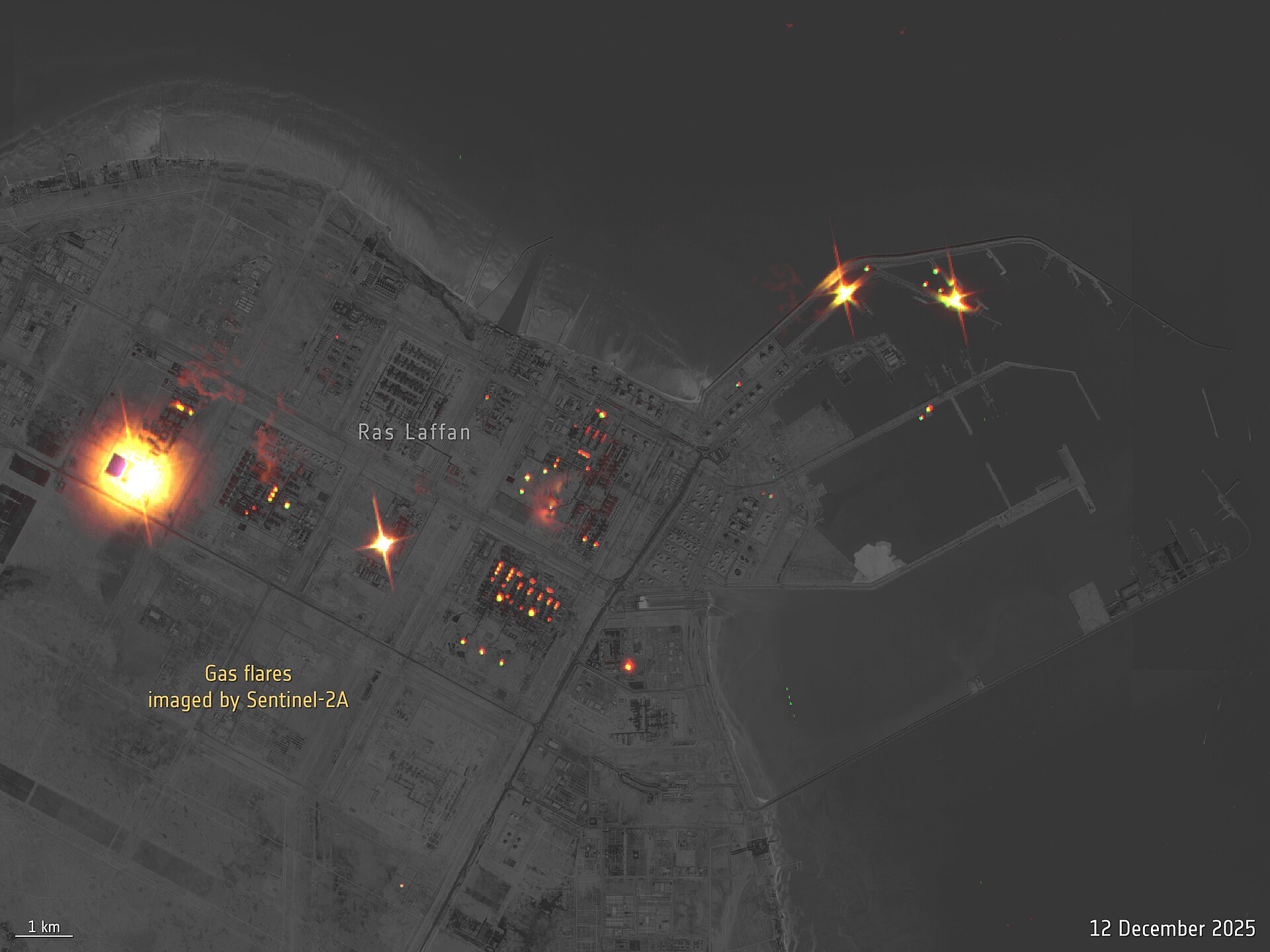
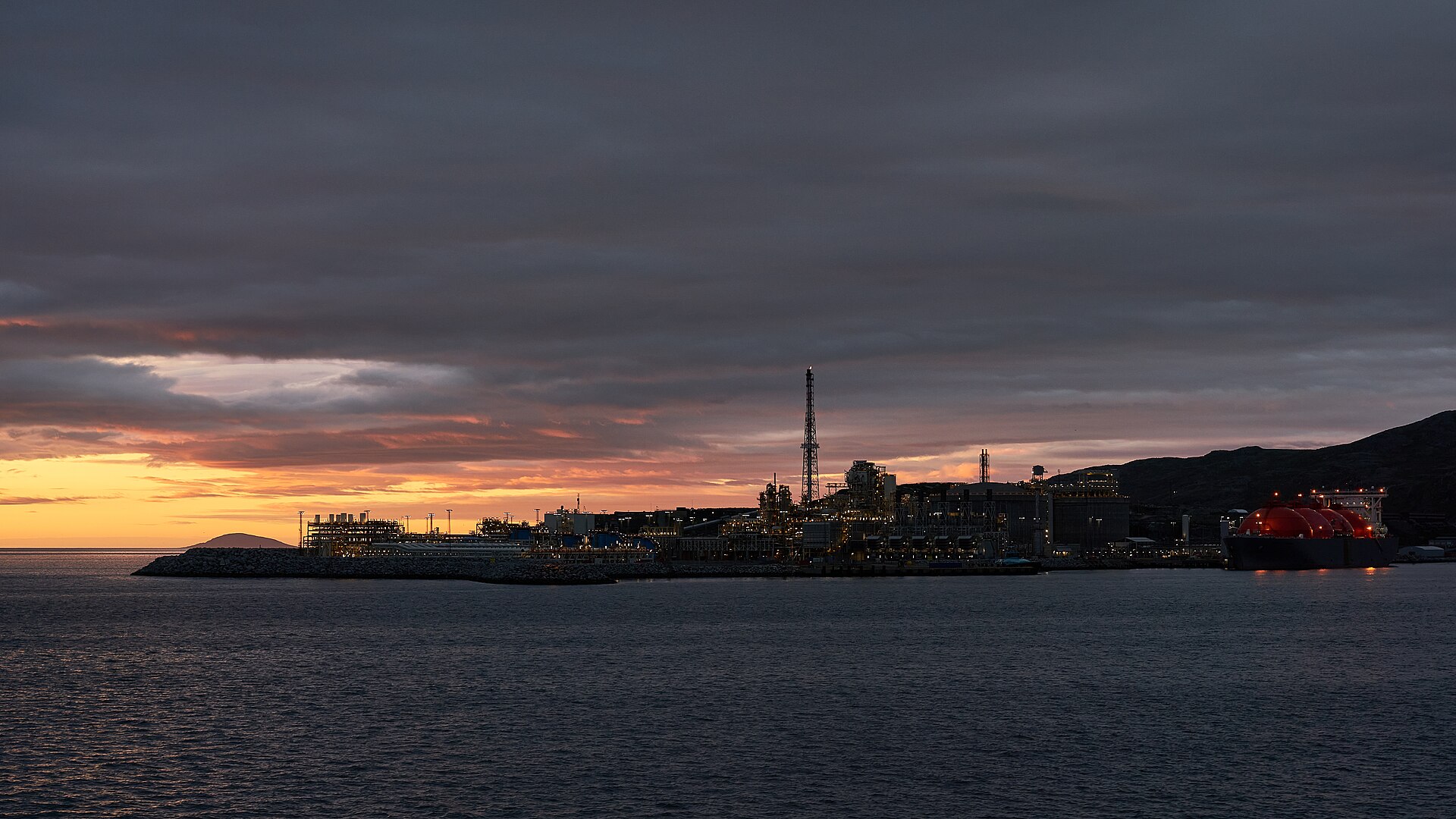
Ras Laffan Industrial City, 80 kilometers north of Doha on Qatar’s northeastern coast, is the largest single-site LNG production complex on Earth. Before the Iranian strikes, it housed 14 operational liquefaction trains with a combined nameplate capacity exceeding 77 million metric tons per annum, with expansion projects underway to push that figure past 126 MTPA by the end of the decade. The facility processed feedstock from the North Field — the world’s largest non-associated natural gas reservoir, shared with Iran’s South Pars — and converted it into supercooled LNG at minus 162 degrees Celsius for export aboard a dedicated fleet of Q-Max and Q-Flex carriers. In 2025, QatarEnergy shipped 80.97 million metric tons of LNG from Ras Laffan, according to Bloomberg terminal data, accounting for roughly one-fifth of all LNG traded globally.
The Iranian missile barrage struck Ras Laffan in two waves on March 18 and 19. QatarEnergy CEO Saad Sherida Al-Kaabi confirmed that LNG Trains 4 and 6 were destroyed, removing 12.8 million tonnes per annum of production capacity — approximately 17 percent of Qatar’s LNG exports. Train 4 is a joint venture between QatarEnergy (66%) and ExxonMobil (34%); Train 6 is a joint venture between QatarEnergy (70%) and ExxonMobil (30%). The attacks also damaged one of two trains at the Shell-operated Pearl GTL facility, which converts natural gas into liquid fuels, base oils, and waxes. Al-Kaabi said the Pearl GTL damage would require a minimum of one year to repair. Associated product losses include 18.6 million barrels of condensate (24% of Qatar’s exports), 1.281 million tonnes of LPG (13%), 594,000 tonnes of naphtha (6%), 180,000 tonnes of sulphur (6%), and 309.54 million cubic feet of helium (14% of Qatar’s exports). QatarEnergy has not disclosed damage to other trains, storage tanks, or loading infrastructure beyond what is described above.
QatarEnergy’s force majeure declaration, issued within 18 hours of the attack, invoked contractual clauses across its entire long-term sales portfolio. As Al Jazeera reported, the declaration covered commitments to buyers in Asia, Europe, and South America simultaneously — an unprecedented move in the history of the global gas trade. Force majeure releases QatarEnergy from delivery obligations under its sales and purchase agreements, but it does not release its buyers from the consequences. Every cubic meter Qatar cannot deliver is a cubic meter that must be sourced elsewhere, from a spot market that was already tight before the war began.
The scale of destruction at Ras Laffan is not analogous to a refinery fire or a pipeline rupture. It is closer, in energy-system terms, to the permanent loss of an entire country’s export capacity. Qatar did not merely lose output. It lost the physical machinery required to produce output — machinery that cannot be fabricated, shipped, and installed in months. The timeline is measured in years.
Why Can Oil Be Rerouted but Gas Cannot?
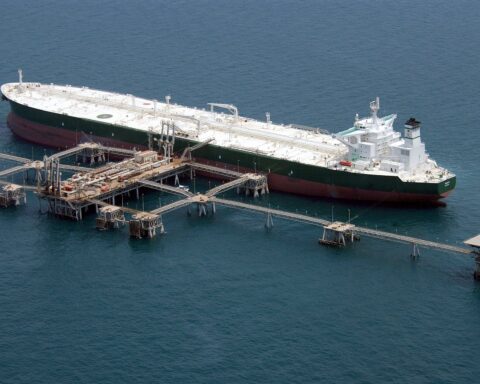
The fundamental asymmetry of this war — the one that markets have been slow to price and policymakers have been slow to grasp — is structural. Crude oil is a liquid at ambient temperature and pressure. It flows through pipelines with minimal processing. When the Strait of Hormuz became impassable, Saudi Arabia activated its East-West Petroline, a 1,201-kilometer pipeline running from the Abqaiq processing complex in the Eastern Province to the Red Sea terminal at Yanbu. The Petroline has a design capacity of 7 million barrels per day, though operational throughput has peaked at approximately 3.8 million bpd under wartime surge conditions. The United Arab Emirates operates a parallel bypass — the Abu Dhabi Crude Oil Pipeline, running 370 kilometers from Habshan to the Indian Ocean port of Fujairah, with a capacity of 1.5 to 1.8 million bpd.
The Middle East briefing 3,000+ readers start their day with.
One email. Every weekday morning. Free.
Combined, these two pipelines can move 3.5 to 5.5 million barrels per day of crude oil around the Hormuz chokepoint. That is insufficient to replace the full 20 million bpd that normally transits the strait, but it is enough to keep major buyers partially supplied and to prevent the total market seizure that would occur if all Gulf oil exports ceased simultaneously. The pipelines existed before the war. They required no new construction. Saudi Aramco and ADNOC had contingency plans and could begin redirecting flows within days of the Hormuz closure.
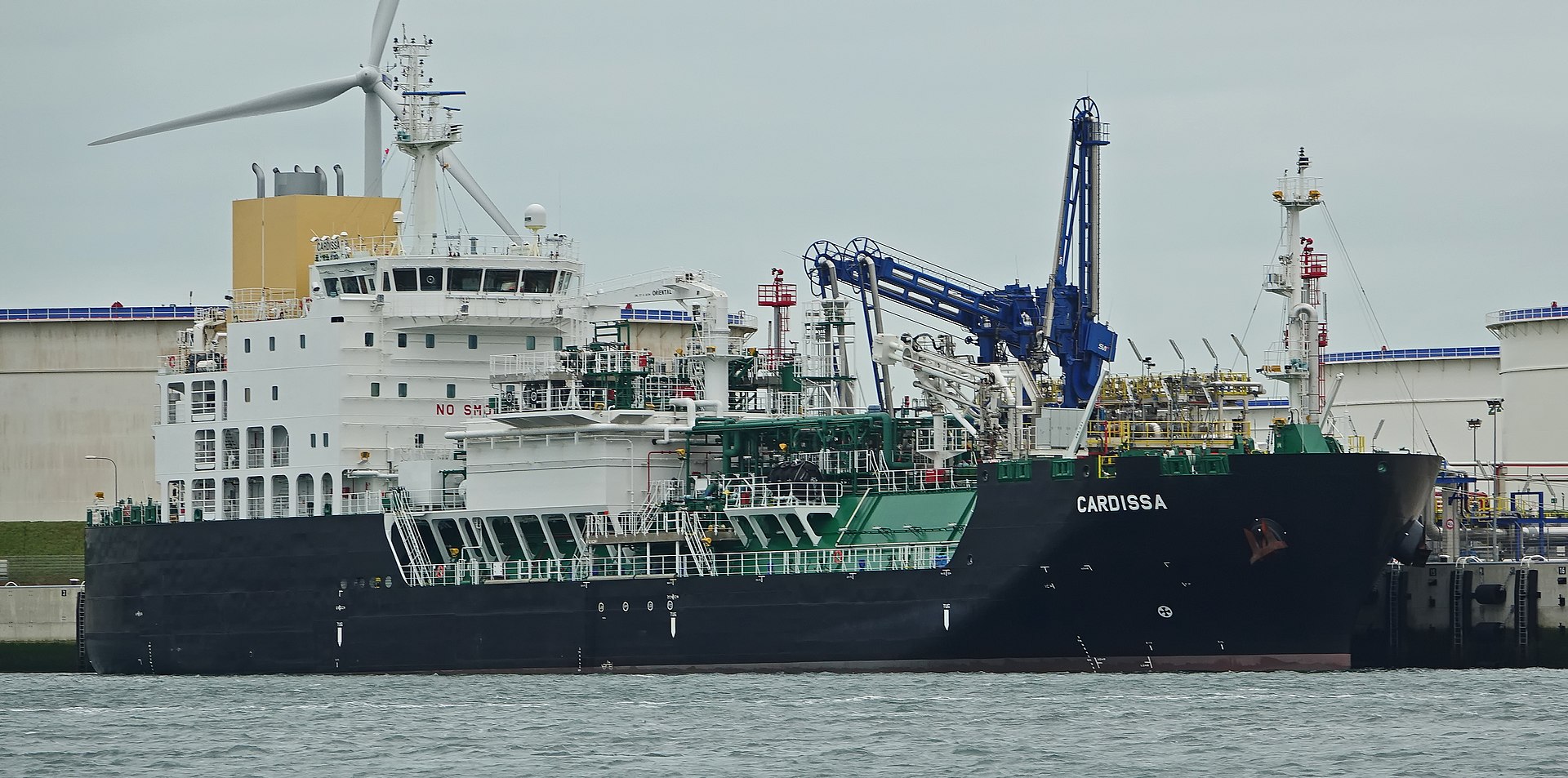
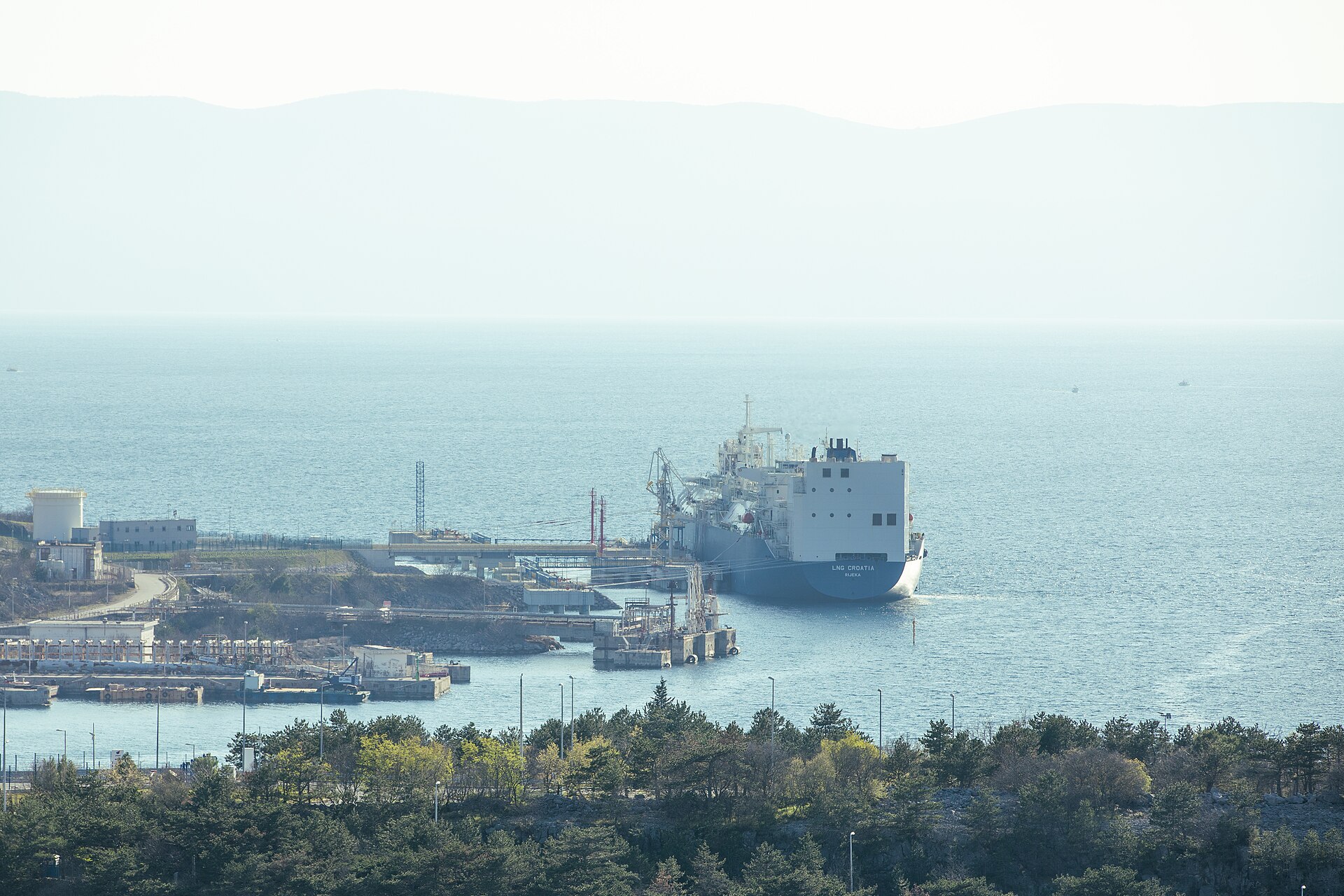
Liquefied natural gas has no equivalent. LNG is not a naturally occurring substance — it is an industrial product. Natural gas must be cooled to minus 162 degrees Celsius, at which point it condenses into a liquid occupying one-six-hundredth of its gaseous volume. This liquefaction process occurs in massive, purpose-built trains that combine compressors, heat exchangers, and refrigerant cycles of extraordinary complexity. The resulting liquid is stored in insulated cryogenic tanks and loaded onto specialized double-hulled carriers fitted with cargo containment systems — either membrane or Moss-type spherical tanks — that maintain the cargo at cryogenic temperatures throughout the voyage. At the destination, the LNG is offloaded into receiving terminal storage tanks and then regasified — warmed back to gaseous form — before injection into the local pipeline grid.
There is no “LNG pipeline” and there cannot be. LNG exists only as a transient state between two industrial processes: liquefaction at the origin and regasification at the destination. You cannot pump it overland the way you pump crude oil. You cannot divert it through a bypass route the way Aramco diverts barrels from Abqaiq to Yanbu. When Ras Laffan’s liquefaction trains were destroyed, the gas in Qatar’s North Field did not stop flowing — it simply had nowhere to go. The wellhead gas can be flared, reinjected, or shut in, but it cannot be turned into an exportable commodity without the industrial infrastructure that Iran’s missiles eliminated.
This asymmetry is not temporary. It is the product of physics. Oil is fungible and transportable in its natural state. LNG is a manufactured product that requires billions of dollars of fixed infrastructure at both ends of the supply chain. The destruction of that infrastructure at the world’s largest production site creates a supply deficit that no policy response can close quickly.
How Much of the World’s Gas Supply Disappeared Overnight?
The numbers are stark. Qatar’s 80.97 million metric tons of LNG exports in 2025 represented approximately 20 percent of all LNG traded globally, according to the International Energy Agency’s most recent Gas Market Report. In a single force majeure declaration, one-fifth of the world’s seaborne gas trade was removed from the market with no scheduled date of return.
The immediate price response was violent. The Dutch TTF — Europe’s benchmark natural gas futures contract traded on ICE Endex — surged 35 percent on March 19 alone, the day QatarEnergy confirmed force majeure. As of this writing, TTF is trading near 50 euros per megawatt hour, up 57 percent from pre-war levels, according to Bloomberg. Asian spot LNG prices, tracked by the Japan-Korea Marker published by S&P Global Commodity Insights, have risen approximately 60 percent. Brent crude briefly touched $119 per barrel on the combined shock of Hormuz closure and LNG destruction, though oil has since partially retreated as pipeline bypass volumes ramped up. LNG, by contrast, has no retreat mechanism. Prices have held at crisis levels because the supply shortfall is physical and ongoing. For a detailed analysis of the oil price whiplash that accompanied these events, see our report on how Brent crude surged past $119 before crashing back below $111 as traders priced in the cascading damage to Gulf energy infrastructure.
LNG carrier charter rates tell an equally alarming story. The cost of hiring a 174,000-cubic-meter LNG carrier has surged more than 600 percent from pre-war levels, according to Clarksons Research, the shipping industry’s benchmark data provider. This reflects not a shortage of ships but a shortage of cargoes to fill them combined with a desperate scramble by buyers to secure whatever non-Qatari supply remains available. Carriers that would normally be loading at Ras Laffan are now repositioning toward Australia, the United States Gulf Coast, and West Africa — adding transit time and cost to every molecule of gas that still reaches market.
The country-by-country impact follows Qatar’s established trade patterns. China absorbed 23 percent of Qatar’s LNG in 2025 — roughly 18.6 million metric tons — making it the single largest buyer of Qatari gas. Japan, South Korea, and Taiwan collectively took approximately 50 percent of Qatar’s output, the backbone of their power generation and industrial heating systems. India was a major and growing buyer, with long-term contracts underpinning its fertilizer and petrochemical sectors. Europe accounted for roughly 10 percent of Qatar’s LNG exports, with Italy taking the largest European share at 22 percent of that allocation, followed by France at 18 percent and Germany at 15 percent, according to shipping data compiled by Kpler.
These flows have not been redirected. They have ceased. And the downstream effects extend far beyond energy prices. Nearly 50 percent of the world’s traded urea — the nitrogen fertilizer that sustains global agriculture — transits the Strait of Hormuz region, much of it produced from the same Gulf natural gas that is now offline. Urea prices have risen roughly 40 percent, from approximately $500 per metric ton to $700 per metric ton, according to CNBC reporting on IFPRI data. The World Food Programme estimates that 45 million additional people are now at risk of acute hunger as a result of cascading disruptions to fertilizer supply chains. The gas crisis is not merely an energy crisis. It is, at its outer edges, a food crisis.
The Energy Bypass Matrix
To understand why the LNG disruption is structurally more dangerous than the oil disruption, it helps to compare the two commodities — and their subcategories — across four dimensions that determine how quickly a supply shock can be absorbed. The framework below assesses crude oil, pipeline natural gas, and LNG on each dimension, with a vulnerability rating from low to critical.
| Dimension | Crude Oil | Pipeline Natural Gas | Liquefied Natural Gas (LNG) |
|---|---|---|---|
| Pipeline Bypass Availability | Moderate — Saudi Petroline (7M bpd capacity) and UAE ADCOP (1.5-1.8M bpd) provide partial bypass, moving 3.5-5.5M bpd around Hormuz | Moderate — Existing pipeline networks (e.g., Trans-Anatolian, TurkStream, Nord Stream remnants) can partially compensate for lost supply routes, but are fixed-path and geopolitically constrained | None — LNG requires liquefaction at origin and regasification at destination; no overland bypass exists or can exist; supply is tied to specific industrial facilities |
| Strategic Reserve Cushion | Significant — IEA members hold ~1.2 billion barrels in strategic petroleum reserves; US SPR alone holds ~395 million barrels; China and India hold additional reserves; current drawdown rate suggests 50-day cushion | Limited — European underground gas storage was ~35% full at war’s start (mid-injection season); no equivalent of SPR for gas; storage can buffer weeks, not months | Minimal — LNG is consumed as received; importing nations hold 2-4 weeks of supply in terminal tanks; no strategic LNG reserve exists anywhere in the world |
| Reconstruction Timeline | Months — Pipeline repairs take weeks to months; refineries can be restored in 6-18 months; wellhead infrastructure is relatively simple | Months to Years — Pipeline repairs vary; compressor station replacement takes 6-12 months; cross-border regulatory approvals add delays | 3-5 Years — A single liquefaction train takes 4-6 years to build from greenfield; even damaged-train repair/replacement requires 2-3 years minimum; specialized equipment (cryogenic heat exchangers, compressors) has 18-24 month lead times |
| Demand Substitutability | High — Oil can be partially substituted by coal, biofuels, or demand reduction (driving less); refinery inputs can shift between crude grades | Low to Moderate — Gas-fired power plants can switch to coal or oil in some markets; industrial gas use has fewer substitutes; residential heating is largely locked in | Very Low — LNG-dependent markets (Japan, S. Korea, Taiwan) have minimal domestic gas production and no pipeline gas imports; switching from gas to coal requires months of logistics and available coal supply |
| Overall Vulnerability Rating | Moderate | High | Critical |
The matrix reveals a pattern that has been obscured by the media’s focus on oil prices and Hormuz headlines. Crude oil scores moderate or better on every dimension: it has pipeline bypasses, massive strategic reserves, relatively short reconstruction timelines, and high demand substitutability. Pipeline natural gas is more vulnerable — fixed infrastructure, limited reserves, moderate reconstruction timelines — but it at least has the advantage of overland connectivity between producers and consumers. LNG scores worst on every single dimension. It has no bypass, no strategic reserve, the longest reconstruction timeline, and the lowest demand substitutability, because the markets most dependent on LNG — Northeast Asia in particular — have no alternative way to import gas.
The implication is counterintuitive but inescapable. The oil disruption, for all its drama, is a crisis with a ceiling. Strategic reserves buy time. Pipeline bypasses keep partial supply flowing. Demand destruction and fuel switching will gradually reduce the shortfall. The LNG disruption has no ceiling. There is no reserve to draw down, no bypass to activate, and no substitute available at the scale required to replace 80 million metric tons of annual supply. The only remedy is reconstruction — and reconstruction takes years.
Which Countries Face the Deepest Gas Crisis?
Japan imported approximately 10.5 million metric tons of Qatari LNG in 2025, making Qatar its third-largest supplier behind Australia and the United States. But Japan’s vulnerability is not merely a function of Qatari volumes. It is a function of total dependence. Japan has no domestic natural gas production of significance, no pipeline connections to any gas-producing nation, and a power grid that derived 37 percent of its electricity from gas-fired generation in 2024, according to the Institute of Energy Economics, Japan. Every molecule of gas Japan consumes arrives by ship. When the global LNG spot market tightens — as it has, violently — Japan must bid against every other buyer for a shrinking pool of available cargoes. JERA, Japan’s largest power generator and LNG buyer, has activated emergency coal and oil switching at several thermal plants, but the Japanese grid’s gas dependency cannot be unwound in weeks or months.
South Korea faces a nearly identical predicament. Korea Gas Corporation, the state monopoly buyer, relied on Qatar for roughly 15 percent of its LNG imports and has been forced into the spot market to cover the shortfall. South Korea generates approximately 30 percent of its electricity from gas and has even less domestic production than Japan. The Korea Energy Economics Institute warned in a March 17 briefing that sustained LNG prices above current levels would add an estimated $12 billion to the country’s annual energy import bill.
Taiwan’s position is arguably the most precarious of any major economy. The island imports 100 percent of its natural gas as LNG — it has no pipeline gas and no domestic production — and Qatar supplied roughly 12 percent of those imports in 2025. Taiwan’s strategic LNG reserve, held in terminal tanks at Taichung and Yung-An, amounts to approximately 11 days of consumption, according to CPC Corporation data reported by Reuters. Compounding the energy crisis is the geopolitical reality: any scenario in which Taiwan seeks emergency supply from mainland China would carry political implications far beyond energy policy.
India’s gas crisis takes a different form. Indian buyers — led by Petronet LNG and GAIL — held long-term contracts for roughly 8.5 million metric tons of Qatari LNG annually. India’s gas consumption is less concentrated in power generation and more concentrated in fertilizer production and city gas distribution. The fertilizer sector is especially vulnerable. India’s urea plants consume enormous volumes of natural gas as feedstock, and the loss of Qatari supply, combined with Hormuz-related disruptions to urea imports, threatens the upcoming kharif planting season. As IFPRI has documented, India’s food security is directly linked to its gas security.
China, the largest single buyer of Qatari LNG, has more options than its Northeast Asian neighbors — but not as many as Beijing would prefer. China receives pipeline gas from Central Asia (via the Central Asia-China Gas Pipeline through Turkmenistan, Uzbekistan, and Kazakhstan), from Russia (via the Power of Siberia pipeline), and from Myanmar. These pipeline imports provide a floor of supply that Japan, South Korea, and Taiwan lack entirely. However, pipeline gas covers only about 45 percent of China’s total gas imports, according to customs data analyzed by Bruegel. The remainder arrives as LNG, and the loss of 18.6 million metric tons of Qatari supply is straining China’s ability to fill its extensive network of LNG receiving terminals. PetroChina and Sinopec have been aggressive buyers on the spot market, outbidding European and South Asian competitors for available cargoes from Australia, Malaysia, and the US Gulf Coast.
How Long Will It Take to Rebuild Qatar’s LNG Capacity?
The honest answer is that nobody knows with precision, because the world has never attempted to reconstruct an LNG complex of this scale after wartime destruction. But the available data points from greenfield LNG construction projects — built in peacetime, with full access to global supply chains — suggest a minimum of three years for partial restoration and five years or more for full recovery.
A single LNG liquefaction train is among the most complex pieces of industrial equipment in existence. The main cryogenic heat exchanger — typically a coil-wound unit manufactured by Air Products and Chemicals or a competing vendor — weighs thousands of tons, stretches dozens of meters in height, and requires 18 to 24 months of fabrication time at specialized facilities in Japan, South Korea, or China. The compressor strings that drive the refrigerant cycle are similarly bespoke, manufactured by a handful of companies (Baker Hughes, Siemens Energy, Mitsubishi Heavy Industries) with constrained order books. Even before the war, lead times for LNG liquefaction equipment were stretching as global capacity expansion — in the US, Qatar’s own North Field Expansion, Mozambique, and elsewhere — consumed available manufacturing slots.
QatarEnergy’s pre-war expansion program — the North Field East and North Field South projects, which were to add six new mega-trains and push Qatar’s capacity to 126 MTPA — had a planned completion date of 2028-2030. Those projects were already in advanced construction when the missiles struck, and their status is unclear. If the expansion infrastructure survived relatively intact, it could potentially be repurposed to restore some export capacity ahead of the timeline required for full reconstruction of the damaged older trains. But this is speculative. QatarEnergy has not disclosed detailed damage assessments, and independent verification via satellite imagery is ongoing.
Beyond equipment, there is the question of labor and logistics. LNG construction projects employ tens of thousands of workers — engineers, welders, pipefitters, cryogenic specialists — and Qatar’s pre-war construction workforce was already operating near capacity. Mobilizing a reconstruction workforce of sufficient scale will require recruiting globally, at premium wartime wages, in competition with every other LNG project under construction worldwide. Shipping heavy equipment to Qatar during an active conflict in the Gulf adds further delays and costs. Marine insurance rates for vessels transiting the Persian Gulf have increased tenfold since the war began, according to Lloyd’s of London data reported by the Financial Times.
The most realistic projection, based on conversations between industry executives and journalists at CNBC and Bloomberg, is that Qatar might restore 30 to 40 percent of its pre-war LNG capacity within three years — roughly 25 to 30 MTPA — assuming a ceasefire holds and reconstruction begins promptly. Full restoration to pre-war levels of 77 MTPA, let alone the 126 MTPA expansion target, is a five-to-seven-year endeavor. The global LNG market will be structurally short for the remainder of this decade.
Is Saudi Arabia the War’s Biggest Energy Winner?
The war has been catastrophic for Qatar, devastating for Iran, and destabilizing for the entire Gulf. But for Saudi Arabia, the conflict has produced a paradox: enormous short-term disruption coupled with a structural strategic windfall that will compound over decades. Crown Prince Mohammed bin Salman’s pre-war investments in energy infrastructure diversification — dismissed by some analysts as vanity projects — now look like the most consequential strategic bets in modern Gulf history.
On the oil side, Saudi Arabia’s Yanbu terminal is exporting at a record pace of approximately 3.8 million barrels per day through the Petroline, according to tanker tracking data compiled by Kpler. These barrels reach the Red Sea and from there the global market — Europe via the Suez Canal, Asia via the Bab el-Mandeb — without transiting the Hormuz chokepoint. While 3.8 million bpd is less than half of Saudi Arabia’s pre-war total export capacity, it represents the only significant volume of Gulf crude reaching market through a non-Hormuz route. The strategic value of being the sole Gulf producer with an operational pipeline bypass is difficult to overstate.
But the oil advantage, significant as it is, may be secondary to the gas advantage that is emerging. Saudi Arabia’s Jafurah gas field — a massive unconventional gas play in the Eastern Province, developed by Saudi Aramco at a projected cost of $100 billion — achieved first gas production in December 2025, months before the war began. Current output is approximately 450 million cubic feet per day, a fraction of the field’s potential. Aramco’s target is 2 billion cubic feet per day by 2030, which would make Jafurah one of the largest gas-producing fields in the Middle East. The field’s total recoverable reserves are estimated at 229 trillion cubic feet, according to Aramco’s investor disclosures.
Jafurah gas was originally intended primarily for domestic consumption — to displace crude oil currently burned in Saudi power plants and to feed a nascent Saudi petrochemical and hydrogen industry. The war has dramatically altered the calculus. With Qatar’s LNG offline for years, global gas demand is unmet, and prices are at levels that make almost any new gas supply economically attractive. Saudi Arabia does not currently have LNG export infrastructure, but the Kingdom has the gas reserves, the capital, and — critically — the Red Sea coastline to build LNG export facilities at Yanbu or other western ports that would bypass Hormuz entirely.
Reuters reported on March 16 that Aramco has accelerated feasibility studies for a Jafurah-to-Red Sea gas pipeline and associated LNG liquefaction facility, though the company has not officially confirmed the timeline. If Saudi Arabia builds LNG export capacity on the Red Sea coast, it would become the only Gulf state capable of exporting both oil and gas without any dependence on the Strait of Hormuz. That is a structural advantage that would persist long after the current war ends.
The Goldman Sachs projection of a Gulf-wide recession is real, and Saudi Arabia is not immune to the war’s economic damage. But within the Gulf, Saudi Arabia’s relative position is strengthening by the week. The permanent damage to regional energy infrastructure is redistributing market share, and the redistribution favors the one Gulf state that prepared for Hormuz disruption before it happened.
What Happens to European Energy Security Without Qatari Gas?
Europe has been here before — or rather, it thought it had escaped. The 2022 energy crisis, triggered by Russia’s invasion of Ukraine and the subsequent cutoff of Russian pipeline gas, forced Europe through a wrenching restructuring of its gas supply. European governments spent hundreds of billions of euros on LNG import terminals, long-term LNG supply contracts, demand reduction programs, and renewable energy acceleration. By 2025, Europe had largely weaned itself off Russian gas and replaced it with a diversified portfolio of LNG imports from the United States, Qatar, Algeria, Norway, and others. Underground gas storage facilities were filled to 85 percent capacity entering winter 2025-2026. European policymakers believed — with some justification — that the continent’s gas security had been permanently improved.
The Iran war has shattered that belief. Qatar accounted for roughly 10 percent of Europe’s LNG imports in 2025, a smaller share than it held before Europe’s post-2022 diversification. But the impact of Qatar’s force majeure is not limited to the direct loss of Qatari cargoes. It is the indirect effect — the tightening of the entire global LNG market — that is hammering European buyers. Every LNG cargo that Japan, South Korea, or China diverts from the spot market to replace lost Qatari supply is a cargo that is no longer available to Europe. The competition for non-Qatari LNG is a zero-sum contest, and Europe is competing against wealthier Asian buyers who can absorb higher prices more readily.
The Dutch TTF’s 57 percent rise from pre-war levels understates the stress, because TTF measures the wholesale price of gas delivered to Northwest Europe. The actual cost of securing LNG cargoes for delivery to European terminals is higher still, once shipping costs and the 600-percent surge in charter rates are factored in. European gas traders at firms including Vitol, Trafigura, and Gunvor are reportedly paying premiums of $3 to $5 per million BTU above benchmark prices to secure spot cargoes, according to S&P Global Commodity Insights.
The policy response in Brussels has been swift but constrained. The European Commission activated its emergency gas demand reduction mechanism on March 18, requesting a 15 percent voluntary reduction in gas consumption across member states — echoing the emergency measures first deployed in 2022. Germany’s Bundesnetzagentur has ordered industrial gas consumers to prepare for mandatory rationing if TTF exceeds 60 euros per MWh for a sustained period. France’s Commission de Regulation de l’Energie has begun negotiations with Algeria’s Sonatrach for emergency pipeline gas deliveries via the Transmed pipeline through Tunisia.
But the structural problem is that Europe solved its 2022 gas crisis in part by locking in Qatari LNG contracts. Those contracts are now worthless — not canceled, but undeliverable — for an indeterminate period. Europe must again find replacement molecules, this time in a global market that is far tighter than it was in 2022, because Qatar’s supply has been physically destroyed rather than merely politically redirected. In 2022, Russian gas still flowed to China and other buyers. In 2026, Qatari gas flows to nobody.
The loss of Qatari LNG is not comparable to the loss of Russian pipeline gas in 2022. Russian gas was redirected — it still existed, it still flowed, it went to different buyers. Qatari gas has been removed from the world. There is no molecule to redirect.
— Simone Tagliapietra, Senior Fellow, Bruegel, quoted by the Financial Times, March 18, 2026
Can American LNG Replace Qatar?
The United States became the world’s largest LNG exporter in 2023, surpassing both Australia and Qatar, and American LNG facilities along the Gulf of Mexico coast — Sabine Pass, Cameron, Freeport, Corpus Christi, Calcasieu Pass, and the newly operational Plaquemines facility — have a combined nameplate capacity exceeding 100 MTPA. With the Trump administration’s aggressive posture toward Iran and its stated goal of energy dominance, there is a natural expectation that American LNG will fill the gap left by Qatar.
The expectation is partly right and mostly insufficient. American LNG facilities are running at or near full capacity. Utilization rates across the major terminals averaged 93 percent in February 2026, according to the Energy Information Administration. The incremental volume that can be squeezed out of existing infrastructure is perhaps 5 to 8 million metric tons per annum — meaningful, but a fraction of the 80 MTPA that Qatar was exporting. New US LNG capacity is under construction — Golden Pass, Rio Grande, and several other projects — but none will come online before 2027 at the earliest, and most are slated for 2028-2029.
Geography compounds the constraint. A laden LNG carrier sailing from the US Gulf Coast to Tokyo via the Panama Canal requires approximately 25 days. The same carrier sailing from Ras Laffan to Tokyo required approximately 12 days. From the US Gulf Coast to Rotterdam takes 10-12 days; from Ras Laffan to Rotterdam took 14-16 days via Suez, making the distance roughly comparable for European buyers. But for the Asian customers who absorbed 80 percent of Qatar’s output, American LNG involves significantly longer voyages, tying up more ships for more days per delivery cycle. In a market where charter rates have surged 600 percent, the additional shipping cost is substantial. An LNG carrier earning $350,000 per day — current spot rates, per Clarksons data — costs $8.75 million more for a 25-day voyage than a 12-day voyage.
There is also the question of contractual structure. Most American LNG is sold under long-term contracts with fixed-destination or flexible-destination clauses. Rediverting US cargoes from contracted European buyers to higher-paying Asian buyers is possible under some contracts (those with “free-on-board” terms) but not others. The spot volumes available for immediate redirection are limited. Cheniere Energy, the largest US LNG producer, told investors on a March 14 call that it has “limited incremental spot availability” through 2026, as reported by Bloomberg.
American LNG will play a larger role in the post-Qatar market. US producers will capture price premiums and lock in new long-term contracts at elevated prices. The US becomes, by default, the world’s swing LNG supplier. But the idea that American exports can replace Qatari volumes at comparable cost and speed is a fantasy. The US is already exporting nearly everything it can. The deficit created by Qatar’s force majeure will persist until either Qatar rebuilds or new global capacity — in the US, Mozambique, Canada, or elsewhere — comes online in the late 2020s.
The Permanent Restructuring of Global Energy Trade
The contrarian case is straightforward, and the evidence for it is accumulating by the day: the war’s damage to the global gas market is more severe, more durable, and more consequential than its damage to the global oil market. This is the opposite of what most commentary assumes. Oil prices are higher, oil makes bigger headlines, and the Hormuz oil blockade is the subject of daily diplomatic negotiation. But oil has structural shock absorbers — pipeline bypasses, strategic reserves, demand substitutability — that gas lacks entirely.
Consider the counterfactual. If a ceasefire were declared tomorrow and the Strait of Hormuz reopened, oil flows would normalize within weeks. Tankers would resume their routes, Hormuz transit volumes would recover to 20 million bpd, and prices would fall sharply. The oil market’s memory of this disruption would be short. But even if the strait reopened tomorrow, Qatar’s LNG would not resume. The liquefaction trains are physically destroyed. The reconstruction timeline is three to five years regardless of the diplomatic situation. The gas crisis is locked in.
This permanence is already reshaping investment flows and strategic calculations across the energy industry. The gas war that began with Ras Laffan has triggered a wave of final investment decisions on LNG projects that were previously marginal or delayed. Bloomberg NEF reported on March 17 that global LNG project developers have received $14 billion in new financing commitments since the war began — a figure that will grow as buyers desperate for long-term supply security lock in contracts at elevated prices. Projects in Mozambique (Total’s Area 1, restarted after years of security-related delays), Canada (LNG Canada Phase 2), Papua New Guinea (Papua LNG), and Tanzania are all being fast-tracked.
But new supply takes time. The fastest any of these projects can deliver first gas is 2028-2029. The global LNG market will be structurally undersupplied for the rest of this decade. That is a duration of deficit that has no precedent in the history of the LNG industry, which has generally operated with comfortable surplus capacity and low spot prices. The era of cheap LNG is over.
The strategic implications extend beyond energy markets. Qatar’s diplomatic response to the attacks — expelling Iranian diplomats and aligning fully with the Saudi-led coalition — reflects the existential nature of the threat to Qatar’s economic model. Qatar’s sovereign wealth, its geopolitical influence, its social contract with its citizens — all rest on the foundation of LNG exports. The destruction of Ras Laffan is not merely an infrastructure setback. It is a challenge to the viability of the Qatari state as currently constituted.
For the broader Iran war, the Ras Laffan strike establishes a precedent that will haunt energy planners for decades. The lesson is that concentrated LNG infrastructure — precisely because it is so expensive, so complex, and so irreplaceable in the short term — is the highest-value target in modern energy warfare. A single missile barrage can remove a significant fraction of global supply for years. The asymmetry between the cost of destruction and the cost of reconstruction is extreme: Iran’s missile strike cost perhaps $50 million to execute; rebuilding Ras Laffan will cost $50 billion or more.
Iran’s broader targeting of energy infrastructure throughout the Gulf confirms that this lesson was not accidental. The war has demonstrated that in an era of precision-guided ballistic missiles, any concentrated industrial facility within range is vulnerable. The response from energy-importing nations will be to diversify supply sources, invest in strategic gas reserves (which currently do not exist in any meaningful form), accelerate renewable energy deployment, and — for the first time — to treat LNG infrastructure as a national security asset requiring missile defense protection.
Oil crises end when the tankers start moving again. Gas crises end when the steel is built, the compressors are installed, and the first cargo is cooled to minus 162 degrees. We are measuring the oil crisis in weeks. We will measure the gas crisis in years.
— Fatih Birol, Executive Director, International Energy Agency, remarks at IEA emergency ministerial, March 18, 2026
The global energy order that emerges from this war will not be a modified version of the old one. It will be fundamentally different. Qatar’s dominance of the LNG trade — built over three decades, underpinned by the North Field’s geology and QatarEnergy’s technical excellence — has been interrupted for years and may never fully recover to its pre-war trajectory, as new producers capture market share during the reconstruction period. The United States, Australia, and eventually Saudi Arabia (via Jafurah) will be the primary beneficiaries. The buyers — Japan, South Korea, Taiwan, Europe, India — will pay more for gas, diversify more aggressively, and invest more heavily in alternatives. The world will burn more coal in the interim, because coal is what you burn when gas is unavailable, and the climate consequences of that substitution will be measurable and lasting.
Iran struck the one Gulf asset that has no bypass, no reserve, and no quick fix. The reverberations will define the global energy system for the rest of this decade and beyond.
Frequently Asked Questions
What is Ras Laffan and why is it so important to global energy supply?
Ras Laffan Industrial City is the world’s largest liquefied natural gas production complex, located 80 kilometers north of Doha, Qatar. It processes gas from the North Field — the world’s largest non-associated gas reservoir — and converts it into LNG for export. In 2025, Ras Laffan shipped 80.97 million metric tons of LNG, approximately 20 percent of all LNG traded globally. Its destruction by Iranian missiles removed one-fifth of the world’s seaborne gas trade from the market, triggering a force majeure declaration by QatarEnergy and causing LNG prices to spike across all major benchmarks.
Why can Saudi Arabia bypass the Strait of Hormuz for oil but Qatar cannot bypass it for gas?
Crude oil is a liquid at ambient temperature and can be pumped through conventional pipelines. Saudi Arabia’s East-West Petroline moves crude 1,201 kilometers from Abqaiq to the Red Sea port of Yanbu, bypassing Hormuz entirely. LNG, by contrast, is a manufactured product that must be cooled to minus 162 degrees Celsius at a liquefaction facility, transported in specialized cryogenic carriers, and regasified at the destination. There is no pipeline that can transport LNG overland, and Qatar has no liquefaction facilities outside Ras Laffan. The physical properties of LNG make a pipeline bypass impossible.
How long will it take to rebuild Qatar’s LNG production capacity?
Industry estimates suggest a minimum of three years for partial restoration (30 to 40 percent of pre-war capacity) and five to seven years for full recovery. LNG liquefaction trains are among the most complex industrial equipment in existence, with key components — cryogenic heat exchangers, industrial compressors — requiring 18 to 24 months of fabrication at specialized facilities. The reconstruction timeline also depends on ceasefire conditions, workforce mobilization, marine insurance costs, and the availability of manufacturing slots that are currently committed to other LNG projects worldwide.
Which countries are most affected by the loss of Qatari LNG?
The most vulnerable nations are those with high LNG dependence and no alternative gas import routes. Japan, South Korea, and Taiwan — which collectively absorbed roughly 50 percent of Qatar’s LNG exports — face the deepest crisis because they have no domestic gas production and no pipeline gas imports. China, Qatar’s single largest buyer at 23 percent of output, has partial pipeline gas supply from Central Asia and Russia but still faces a significant shortfall. India’s fertilizer sector is heavily exposed. European countries are affected both directly (Italy, France, and Germany were the largest European buyers of Qatari LNG) and indirectly through the global tightening of the LNG spot market.
Will this crisis accelerate the transition to renewable energy?
In the medium term, yes — but in the immediate term, the opposite is occurring. Countries facing acute gas shortages are restarting coal-fired power plants, extending the operating lives of coal units scheduled for retirement, and increasing coal imports to replace lost gas-fired generation. Germany, Japan, and South Korea have all announced emergency measures to increase coal burn. The IEA projects that global coal consumption will increase by 3 to 5 percent in 2026 as a direct result of the LNG crisis. Over the longer term, however, the crisis is likely to accelerate investment in wind, solar, battery storage, and nuclear power, as energy-importing nations recognize that dependence on any single fossil fuel supply chain — whether Russian pipeline gas or Qatari LNG — carries unacceptable strategic risk.