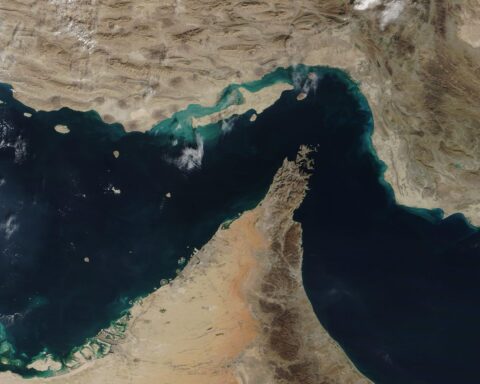

TOKYO — Japan and South Korea confront their most severe energy crisis since the 1973 Arab oil embargo, yet neither country has deployed a single warship to the strait on which their economies depend. Three weeks after Iran began selectively closing the Strait of Hormuz in response to US-Israeli airstrikes, Tokyo has released 80 million barrels from its strategic petroleum reserves and Seoul has drained a record 22.46 million barrels from its own stockpiles. Both nations signed a March 19 joint statement expressing “readiness to contribute to appropriate efforts” to secure the waterway. Neither has backed those words with military hardware.
The paradox is extraordinary. Japan imports 95 percent of its oil from the Middle East, with roughly 70 percent transiting the Strait of Hormuz. South Korea routes approximately 70 percent of its crude and 18 percent of its liquefied natural gas through the same chokepoint. Together, these two economies — the world’s third and fourth largest net energy importers — face a supply disruption more structurally threatening than anything their postwar economic models were designed to absorb. The reserves are draining, the shipping costs are surging, and the factories are starting to shut down.
Table of Contents
- How Dependent Are Japan and South Korea on Gulf Energy?
- What Happens When the Strait Closes for Three Weeks?
- Why Tokyo and Seoul Refuse to Send Warships
- The Shipping Cost Explosion That Nobody Budgeted For
- Is This Worse Than the 1973 Oil Crisis?
- How Are Japanese Industries Coping With the Oil Shortage?
- What Will South Korean Manufacturing Look Like After Three Months?
- Can Strategic Reserves Buy Enough Time?
- Saudi Arabia Becomes Asia’s Indispensable Energy Partner
- The Nuclear Renaissance Neither Country Planned
- The Long-Term Restructuring of Asian Energy Security
- Frequently Asked Questions
How Dependent Are Japan and South Korea on Gulf Energy?
Japan and South Korea share a structural vulnerability that distinguishes them from every other advanced economy: near-total dependence on imported fossil fuels transported through a single maritime chokepoint. Neither country possesses meaningful domestic oil or gas production, and neither has pipeline connections to alternative suppliers. Every barrel arrives by tanker.
Japan’s energy system relies on overseas imports for approximately 87 percent of its total energy supply, according to the Japan Center for Economic Research. Of the crude oil that reaches Japanese refineries — themselves dependent on a Gulf refining network now under sustained Iranian attack — 95 percent originates in the Middle East, and roughly 70 percent of that volume passes through the Strait of Hormuz. Japan consumed approximately 3.3 million barrels per day in 2025, making it the world’s fourth-largest oil consumer and third-largest net importer. LNG dependency compounds the vulnerability — Japan remains the world’s second-largest LNG buyer after China, importing roughly 65 million tonnes annually, with a substantial share sourced from Qatar’s Ras Laffan facility.
South Korea’s exposure runs almost as deep. The country routes approximately 70 percent of its crude oil through the Strait of Hormuz, according to data from the Korea National Oil Corporation (KNOC). LNG imports through the strait account for 18 percent of total gas supply, a figure that understates the systemic risk because South Korean petrochemical plants depend heavily on naphtha and other hydrocarbon feedstocks that transit the same route. South Korea consumed roughly 2.7 million barrels of oil per day in 2025, ranking among the top five importers globally.
| Metric | Japan | South Korea |
|---|---|---|
| Energy import dependence | 87% | 83% |
| Oil from Middle East | 95% | 72% |
| Oil via Strait of Hormuz | ~70% | ~70% |
| Daily oil consumption (2025) | 3.3M bpd | 2.7M bpd |
| Strategic reserve days | 254 days | ~180 days |
| LNG reserve buffer | ~40 days | 14-28 days |
| Emergency release (March 2026) | 80M barrels | 22.46M barrels |
The concentration risk is staggering. A hypothetical disruption to the Strait of Hormuz simultaneously threatens oil, LNG, naphtha, liquefied petroleum gas, and sulfur supplies to both countries. No other pair of major economies faces this degree of single-chokepoint exposure. The European Union, by comparison, sources most of its oil from pipeline connections to Norway, Russia, and North Africa, with Gulf imports constituting a smaller share of total supply. The United States, now a net petroleum exporter, faces no direct supply risk from Hormuz at all.
The Middle East briefing 3,000+ readers start their day with.
One email. Every weekday morning. Free.
What Happens When the Strait Closes for Three Weeks?
Twenty-one days into the Hormuz crisis, the consequences for Japan and South Korea have moved from theoretical risk scenarios to operational reality. Both governments have activated emergency energy protocols not used since the aftermath of the 2011 Fukushima disaster and the 1979 Iranian Revolution, respectively.
Japan’s Prime Minister Sanae Takaichi announced on March 16 a “phased release” of 80 million barrels from the country’s strategic petroleum reserves — the largest single drawdown in Japanese history, according to the Ministry of Economy, Trade and Industry (METI). Japan maintains enough supply to cover 254 days of domestic consumption, but the mathematics of depletion become uncomfortable quickly. At current consumption rates of 3.3 million barrels per day, the 80-million-barrel release covers just 24 days of total demand. If Hormuz remains partially or fully disrupted through April, Tokyo will need to authorize additional releases.
South Korea moved even faster. On March 12, the Ministry of Trade, Industry and Energy ordered the release of a record 22.46 million barrels from KNOC stockpiles, coordinated with the International Energy Agency’s global release of 400 million barrels. Seoul’s LNG buffer is far thinner than its oil cushion — approximately 3.5 million tonnes in storage, enough for roughly two to four weeks of stable demand, according to the Korea Gas Corporation (KOGAS). A prolonged disruption to Qatari LNG shipments, which have been suspended since Iranian strikes damaged the Ras Laffan facility, would force South Korea into gas rationing before its oil reserves approach critical levels.
The gas dimension is particularly acute. Qatar’s Ras Laffan Industrial City, responsible for approximately 20 percent of global LNG production, sustained extensive damage from Iranian missile strikes in the first week of March. The majority of its output — roughly 80 percent — serves Asian customers, with Japan, South Korea, China, and India absorbing the largest volumes. Asian LNG spot prices surged to $25.40 per million British thermal units (MMBtu) by March 4, more than doubling from pre-conflict levels, according to S&P Global Commodity Insights. That price spike ripples directly through electricity generation costs in both countries, where gas-fired power plants supply a significant share of baseload capacity.
Why Tokyo and Seoul Refuse to Send Warships
The most politically charged dimension of the crisis is the refusal of both Japan and South Korea to contribute naval forces to efforts aimed at reopening the Strait of Hormuz. US President Donald Trump has repeatedly demanded that allied nations provide warships for convoy escort operations, invoking the precedent of Operation Earnest Will, the 1987-1988 US Navy mission that escorted reflagged Kuwaiti tankers through the Persian Gulf during the Iran-Iraq Tanker War.
Japan’s reluctance is rooted in constitutional constraints that have shaped its security posture since 1945. Article 9 of the Japanese constitution renounces the use of force as a means of settling international disputes, and while reinterpretations under the 2015 security legislation expanded the scope of collective self-defense, deploying Maritime Self-Defense Force vessels to escort commercial tankers through an active war zone would represent an unprecedented operational commitment. Prime Minister Takaichi stated explicitly on March 16 that Japan had “no plans to deploy its navy to the strait” despite Trump’s appeals. The political calculation is straightforward: any Japanese casualties in the Persian Gulf would trigger a domestic political crisis of a magnitude no prime minister would survive. That restraint may now be yielding diplomatic returns — Iran has offered Japan safe passage through the Strait of Hormuz, effectively rewarding Tokyo’s neutrality with the energy access it desperately needs.
South Korea’s position reflects a different set of constraints. Seoul maintains the Cheonghae Unit, an anti-piracy naval task force that has operated in the Gulf of Aden since 2009, but expanding its mandate to include Hormuz escort operations would require National Assembly approval and risk entanglement in a conflict between South Korea’s security guarantor (the United States) and its largest trading partner’s energy supplier (Iran). South Korea also maintains a careful diplomatic balance with Tehran — it still holds approximately $7 billion in Iranian assets frozen under US sanctions, a persistent irritant in bilateral relations.
The March 19 joint statement from Britain, France, Germany, Italy, the Netherlands, and Japan expressed “readiness to contribute to appropriate efforts to ensure safe passage through the Strait,” but the language was carefully calibrated to avoid any commitment to military deployment. As one unnamed European diplomat told Reuters, the statement represented “a willingness to plan, not a willingness to fight.” Europe and Japan refused warships despite the fact that their economies are hemorrhaging billions of dollars weekly from the disruption.
The Shipping Cost Explosion That Nobody Budgeted For
Even where tanker traffic continues — through Iran’s selective passage program or via Saudi Arabia’s Red Sea alternative routes — the cost of moving oil and gas to Northeast Asia has increased by orders of magnitude. The financial infrastructure of global shipping has fractured alongside the physical infrastructure.
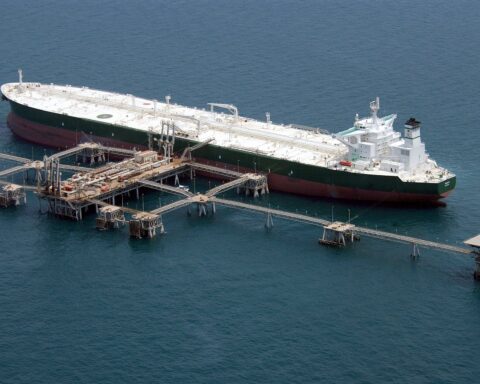
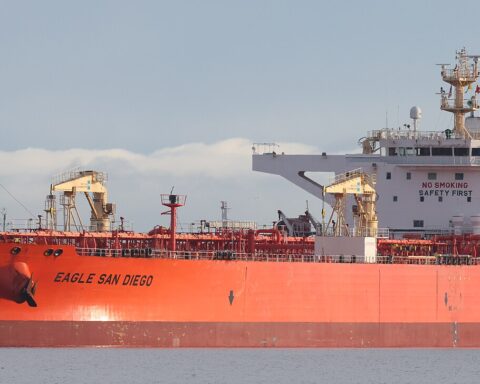
South Korean refiners offer the most granular illustration of the price shock. GS Caltex, one of the country’s largest refiners, is paying $440,000 per day for a very large crude carrier (VLCC) from Saudi Arabia’s Yanbu port on the Red Sea, according to shipping industry data reported by Seoul Economic Daily. S-Oil, majority-owned by Saudi Aramco, secured an emergency charter at $555,000 per day — a rate that would have been considered absurd six months ago, when VLCC spot rates averaged approximately $30,000-50,000 per day on standard Gulf-to-Asia routes.
The rerouting itself adds cost. A tanker sailing from the Persian Gulf through the Strait of Hormuz to South Korea’s Yeosu or Ulsan refineries covers approximately 6,500 nautical miles. The same tanker loading at Yanbu on the Red Sea and sailing around the Cape of Good Hope adds roughly 5,000 nautical miles to the voyage — nearly doubling transit time and fuel costs. For LNG carriers, the additional distance is even more punishing because boil-off losses increase with voyage duration.
| Cost Component | Pre-War (Feb 2026) | March 2026 | Change |
|---|---|---|---|
| VLCC spot rate (Gulf-Asia) | $35,000/day | $440,000-555,000/day | +1,157-1,486% |
| War risk insurance premium | 0.2% of hull | 1-10% of hull | +400-4,900% |
| Container surcharge (per TEU) | $0 | $500-3,500 | N/A |
| Transit time (Gulf to Japan) | ~15 days | ~28-35 days (via Cape) | +87-133% |
| Brent crude price | $67/barrel | $104-126/barrel | +55-88% |
| Asian LNG spot price | $11.80/MMBtu | $25.40/MMBtu | +115% |
War risk insurance compounds the financial burden. Five major protection and indemnity clubs — Gard, Skuld, NorthStandard, the London P&I Club, and the American Club — cancelled war risk coverage for the Persian Gulf effective March 5, according to Al Jazeera. Premiums for the remaining coverage have risen tenfold, from approximately 0.2 percent of a vessel’s hull value to 1 percent or more, renewable every seven days. For a $100 million tanker, that translates to $1 million per voyage in insurance alone — up from $200,000 before the conflict. Marcus Baker, global marine head at Marsh, warned that “insurance rates could rise by 50 to 100 percent, or even more” from current elevated levels. The Persian Gulf insurance crisis has effectively created a second blockade — financial rather than physical — that deters commercial shipping even where naval passage remains technically possible.
Is This Worse Than the 1973 Oil Crisis?
The 2026 Hormuz crisis bears structural similarities to the 1973 Arab oil embargo that triggered the first global energy shock, but several factors make the current disruption potentially more damaging for Japan and South Korea specifically.
The 1973 embargo was a political weapon deployed selectively. The Organization of Arab Petroleum Exporting Countries (OAPEC) targeted the United States, the Netherlands, and other nations perceived as supporting Israel during the Yom Kippur War. Japan, which initially maintained a pro-Arab diplomatic stance, was classified as a “friendly nation” and received partial exemptions. The embargo reduced global oil supply by approximately 5 percent and lasted five months.
The 2026 crisis operates through a different mechanism entirely. Iran’s partial closure of the Strait of Hormuz is not a political embargo but a physical chokepoint disruption exacerbated by military strikes on energy infrastructure. There are no “friendly nation” exemptions for oil transiting the strait — Iran’s selective passage program applies to vessels, not destinations. The disruption has already removed approximately 20 percent of global daily oil supply from traditional routing, far exceeding the 1973 supply cut, according to Time magazine analysis.
| Factor | 1973 Arab Oil Embargo | 2026 Hormuz Crisis |
|---|---|---|
| Mechanism | Political embargo (selective) | Physical chokepoint + infrastructure destruction |
| Supply reduction | ~5% of global oil | ~20% of global oil routing disrupted |
| Duration | 5 months | Ongoing (21+ days as of March 20) |
| LNG impact | Minimal (LNG trade small in 1973) | Severe (20% of global LNG from Ras Laffan) |
| Alternative routes | Available (no physical blockade) | Limited (Yanbu pipeline, Cape of Good Hope) |
| Oil price impact | +300% ($3 to $12/barrel) | +55-88% ($67 to $104-126/barrel) |
| Japan vulnerability | Moderate (exemptions available) | Severe (no exemptions for chokepoint closure) |
| Petrochemical impact | Limited | Severe (naphtha, LPG, sulfur shortages) |
The petrochemical dimension makes the 2026 crisis structurally different from any previous energy shock. Japan and South Korea have built world-leading petrochemical industries — accounting for roughly 15 percent of global ethylene capacity combined — that depend not just on crude oil but on naphtha, condensate, and other Gulf-sourced feedstocks. The Strait of Hormuz also transits approximately 45 percent of global sulfur exports, according to Time, a commodity essential for fertilizer production and metal refining. Hormuz cut off more than just oil — it severed the chemical supply chains on which modern Asian manufacturing depends.
How Are Japanese Industries Coping With the Oil Shortage?
Japanese industry is entering an emergency operational mode not seen since the aftermath of the 2011 Great East Japan Earthquake and Fukushima nuclear disaster. The crisis extends beyond oil supply into the molecular building blocks of the country’s manufacturing base.
Bloomberg reported on March 16 that multiple Japanese petrochemical firms announced production cuts over concerns that the Middle East conflict would strain supplies of naphtha, the primary feedstock for ethylene and propylene production. Naphtha is the essential raw material for plastics, synthetic fibers, solvents, and dozens of intermediate chemicals that feed into automotive, electronics, and consumer goods manufacturing. Japan’s petrochemical sector consumes approximately 45 million tonnes of naphtha annually, with the majority sourced from Gulf producers.
The Japan Petrochemical Industry Association warned on March 14 that naphtha inventories at Japanese terminals had fallen to 18 days of supply, down from the standard 30-day buffer maintained for operational continuity. At current depletion rates, multiple ethylene crackers — the enormous industrial facilities that convert naphtha into base chemicals — face potential shutdown within four to six weeks absent new supply arriving.
The automotive sector, Japan’s largest manufacturing industry by export value, faces cascading disruptions. Toyota, Honda, and Nissan rely on Gulf-sourced naphtha-derived plastics for interior components, bumpers, and electrical insulation. Toyota has publicly acknowledged “monitoring supply chain risks associated with Middle East energy disruptions” but has not announced production cuts as of March 19.
Electricity generation presents another pressure point. Japan’s post-Fukushima energy mix relies heavily on LNG-fired power plants, which generated approximately 32 percent of the country’s electricity in 2025. With Asian LNG spot prices having more than doubled, Japanese utilities face a choice between absorbing massive cost increases or passing them through to industrial and residential consumers. JERA, Japan’s largest power generation company and a joint venture between Tokyo Electric Power and Chubu Electric, has reportedly begun discussions with the government about emergency electricity pricing mechanisms.
The economic arithmetic is severe. The Japan Center for Economic Research estimated that if oil prices remain above $100 per barrel through the second quarter, Japan’s GDP growth would be reduced by 0.4 to 0.6 percentage points, consumer price inflation would accelerate by an additional 1.2 to 1.5 percentage points, and the country’s current account surplus — already narrowing — could flip to deficit for the first time since 2014.
What Will South Korean Manufacturing Look Like After Three Months?
South Korea’s industrial base faces an even more concentrated threat because its manufacturing sector is more energy-intensive relative to GDP than Japan’s, and its petrochemical industry is proportionally larger.
The Seoul Economic Daily reported on March 19 that if the Hormuz blockade persists for more than three months, South Korea’s average manufacturing production costs would rise by 11.8 percent. The sector-by-sector breakdown reveals where the pain will be sharpest: chemical products face a production cost increase of 14.84 percent, non-metallic mineral products 12.09 percent, transport services and primary metal products 8.92 percent each, and mining products 8.45 percent.
Several Korean petrochemical companies have already moved beyond warnings to operational disruption. Yeochun NCC, South Korea’s largest ethylene producer with annual capacity of 2.1 million tonnes, declared supply disruption in the second week of March. Lotte Chemical, LG Chem, and Hanwha Solutions have all issued potential force majeure notices to downstream customers, signaling that contractual supply obligations may become impossible to fulfill.
| Sector | Cost Increase (%) | Key Products Affected |
|---|---|---|
| Chemical products | 14.84% | Plastics, synthetic rubber, pharmaceuticals |
| Non-metallic minerals | 12.09% | Glass, cement, ceramics |
| Average manufacturing | 11.8% | All industrial output |
| Transport services | 8.92% | Shipping, logistics, aviation fuel |
| Primary metals | 8.92% | Steel, aluminum, copper products |
| Mining products | 8.45% | Raw materials, processing inputs |
| Wood, paper, printing | 7.42% | Packaging, paper products |
The macroeconomic projections are sobering. If Dubai crude averages $100 per barrel in 2026, South Korea’s growth rate could fall by at least 0.3 percentage points, consumer prices could rise an additional 1.1 percentage points, and the current account balance could face a negative impact of approximately $26 billion, according to analysis from the Korea Institute for International Economic Policy (KIEP). The Korean won has already depreciated more than 8 percent against the US dollar since the conflict began, amplifying the cost of dollar-denominated energy imports.
Samsung Electronics, SK Hynix, and other semiconductor manufacturers face indirect exposure through electricity costs and petrochemical inputs for chip packaging materials. The semiconductor fabrication process is extraordinarily energy-intensive, and any interruption to stable, affordable electricity supply threatens production yields at facilities that represent billions of dollars in fixed investment.
Can Strategic Reserves Buy Enough Time?
The central question for both governments is whether their strategic petroleum reserves can sustain economic activity long enough for the Hormuz crisis to resolve — or for alternative supply arrangements to materialize at sufficient scale.
Japan’s position is relatively stronger on paper. The country maintains enough supply to cover 254 days of domestic consumption, the highest among major industrialized nations. But the 80-million-barrel release announced March 16 represents only 24 days of consumption at current rates, and the government has signaled it will authorize “phased” rather than continuous releases. The practical constraint is not the total reserve volume but the rate at which oil can be physically extracted from underground storage caverns and moved to refineries — a logistical bottleneck that limits drawdown speed to approximately 4-5 million barrels per day at peak, according to METI technical assessments.
South Korea’s 180-day reserve looks adequate until the LNG dimension is factored in. Oil reserves can sustain refining operations for months, but the country’s gas reserves of approximately 3.5 million tonnes cover only two to four weeks of demand, according to KOGAS. A prolonged shutdown of Qatari LNG exports — which shows no signs of resolving, given the extensive damage to Ras Laffan — would force South Korea into gas-sector rationing even as oil reserves remain above critical thresholds.
The IEA’s coordinated release of 400 million barrels across member nations provides additional cushion, but the mechanism was designed for short-term supply shocks lasting weeks, not months. If the Hormuz disruption persists through April, the coordinated release would need to be renewed — a decision requiring unanimous agreement from 31 member countries, several of which face domestic political pressure to conserve their own reserves. Strategic reserves were designed for sprints, not marathons, and the Iran war is testing whether the global reserve architecture can function during a sustained disruption.
Saudi Arabia Becomes Asia’s Indispensable Energy Partner
The single most consequential shift in Asian energy geopolitics is the elevation of Saudi Arabia from major supplier to irreplaceable supplier. Before the war, Saudi Arabia competed with Iraq, Kuwait, the UAE, and Iran for Asian crude oil market share. The Hormuz crisis has eliminated most of that competition and made the Kingdom’s Red Sea export infrastructure the only large-scale bypass available to Asian importers.
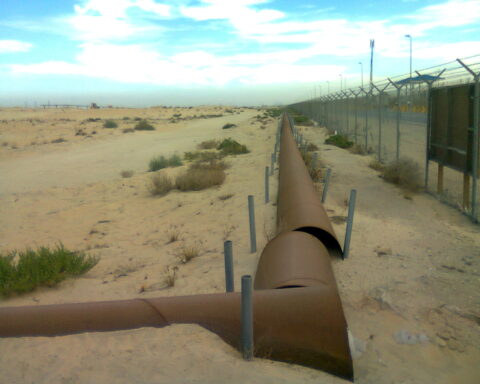
Saudi Aramco’s East-West crude oil pipeline — known as the Petroline — runs 1,200 kilometers from the Abqaiq processing facility in the Eastern Province to the Yanbu terminal complex on the Red Sea. The pipeline’s nominal capacity is 7 million barrels per day when accompanying natural gas liquids lines are converted to carry crude, a conversion that Aramco CEO Amin Nasser confirmed was completed by March 11. However, the Yanbu terminal complex bottleneck limits effective export capacity to approximately 3-4 million barrels per day, with energy consultancy Vortexa estimating the operationally tested figure at roughly 3 million barrels per day under current wartime conditions.
Loadings at Yanbu averaged 2.2 million barrels per day in the first nine days of March, according to S&P Global, up from 1.1 million in February — a doubling that still falls short of replacing the volumes previously shipped from the Gulf. Saudi Arabia produced approximately 9 million barrels per day in February 2026, meaning the Yanbu bypass can handle at most one-third of total output through the Red Sea route.
For Japanese and South Korean refiners, the practical consequence is that Saudi Aramco now exercises de facto allocation power over a critical share of their crude supply. With Iraqi and Kuwaiti exports largely stranded behind the Hormuz chokepoint, and UAE volumes partially rerouted through the Habshan-Fujairah pipeline (capacity approximately 1.5 million barrels per day), Saudi Red Sea crude has become the last reliable Gulf supply available in meaningful volume. Both GS Caltex and S-Oil are paying wartime charter rates — $440,000 and $555,000 per day respectively — to secure VLCCs for the longer Yanbu-to-Asia route, costs that will ultimately be passed through to Korean consumers.
The geopolitical implications extend well beyond this crisis. Saudi Arabia’s control of the only large-scale Hormuz bypass transforms the Kingdom’s relationship with Northeast Asian economies from commercial partnership to strategic dependency. MBS and senior Saudi officials have been strategically restrained in the Iran war, maintaining a defensive military posture while diplomatically positioning the Kingdom as an indispensable partner to both the US-led coalition and Asian energy importers simultaneously.
The Nuclear Renaissance Neither Country Planned
The most consequential long-term effect of the Hormuz crisis may be the acceleration of nuclear energy programs that both countries had been debating for years without resolution. The war has done what climate summits, energy security reviews, and policy white papers could not — it has made the political cost of nuclear inaction higher than the political cost of nuclear expansion.
Japan’s relationship with nuclear energy has been defined by the Fukushima disaster since March 2011. Fifteen years later, only 12 of Japan’s 33 operable reactors have restarted, and public opinion remains divided on nuclear expansion. But the Hormuz crisis has shifted the political calculus. Prime Minister Takaichi, who has long advocated nuclear restarts, faces a public that is simultaneously terrified of energy shortages and wary of nuclear risk. METI fast-tracked restart approvals for three additional reactors in the first week of March, and the ruling Liberal Democratic Party has begun internal discussions about extending reactor lifespans beyond the current 60-year maximum — a policy reversal that would have been politically impossible without the war.
South Korea’s nuclear trajectory is further advanced. President Yoon Suk-yeol reversed the previous administration’s nuclear phase-out policy in 2023, and Korean firms — led by Korea Hydro and Nuclear Power (KHNP) — have won export contracts for reactors in the Czech Republic and are competing for projects in Poland and Saudi Arabia. The Hormuz crisis validates Yoon’s nuclear strategy and accelerates domestic construction timelines. Two new APR-1400 reactors under construction at the Shin-Hanul site are being pushed toward early completion, with the Korea Electric Power Corporation (KEPCO) publicly stating that the energy security case for nuclear has “never been stronger.”
Saudi Arabia’s own nuclear ambitions add a layer of strategic alignment. Riyadh has been pursuing nuclear energy as part of Vision 2030, with plans for two large-scale power reactors. South Korean reactor technology is a leading contender for the Saudi program, and the Hormuz crisis deepens the mutual interest: Seoul needs Saudi oil today, and Riyadh needs Korean nuclear technology tomorrow. The war’s damage to energy infrastructure has made the nuclear argument unanswerable for energy-import-dependent economies.
The Long-Term Restructuring of Asian Energy Security
Even if the Strait of Hormuz fully reopens tomorrow, the crisis has permanently altered the energy security calculations of every major Asian economy. The assumption that undergirded six decades of Asian industrialization — that Gulf oil and gas would flow reliably through Hormuz at predictable prices — has been revealed as a single point of failure in the world’s most energy-dependent region.
Three structural shifts are already underway. First, supply diversification is accelerating. Japan has initiated emergency LNG procurement discussions with Australia, the United States, and Russia — the latter representing a dramatic diplomatic recalibration for a country that imposed sanctions on Moscow over the Ukraine invasion. South Korea is negotiating long-term crude supply agreements with producers in West Africa, Latin America, and Canada that bypass the Middle East entirely. Neither country will accept pre-war levels of Hormuz concentration again.
Second, strategic reserve policies are being fundamentally reconsidered. Japan’s 254-day reserve was designed for a world where short-term supply disruptions could be bridged until diplomacy or market forces restored normal flows. The Hormuz crisis demonstrates that chokepoint disruptions can persist for weeks or months without diplomatic resolution. Both Japan and South Korea are expected to increase reserve targets and expand LNG storage infrastructure — an expensive proposition that will be funded through energy security surcharges on consumers.
Third, the crisis accelerates the transition away from fossil fuel dependence, but not through the mechanisms that climate advocates anticipated. Rather than carbon pricing or emissions regulations driving the shift, it is the demonstrated military vulnerability of hydrocarbon supply chains that is making renewable energy, nuclear power, and hydrogen investments politically compelling. Japan’s hydrogen strategy, which aims to make hydrogen a significant share of the national energy mix by 2050, has received emergency additional funding. South Korea’s wind and solar targets for 2030 have been quietly revised upward.
The war forced the energy transition decision that fifteen years of climate conferences could not. Tokyo and Seoul are not going green because of carbon targets — they are going green because tankers cannot cross the Strait of Hormuz.
Analysis of Asian energy policy responses, March 2026
The geopolitical realignment extends to defense policy. If the Hormuz crisis does eventually prompt Japanese naval deployments to the Persian Gulf — as the March 19 joint statement tentatively signals — it would represent a watershed moment in Japan’s postwar security posture and a fundamental expansion of the US-Japan alliance’s operational scope. South Korea faces similar pressure to extend its naval footprint beyond the Korean Peninsula and Gulf of Aden. The LNG dimension of the crisis makes clear that energy security can no longer be separated from military strategy in the Indo-Pacific, and that the free-rider model — depending on the US Navy to keep global shipping lanes open while contributing no naval forces — has reached its political limit. India and Pakistan have already broken with this model, deploying warships to the Gulf of Oman to escort their own tankers — a step neither Tokyo nor Seoul has matched despite their far greater dependence on Gulf energy.
Frequently Asked Questions
How much of Japan’s oil comes through the Strait of Hormuz?
Japan imports approximately 95 percent of its oil from the Middle East, with roughly 70 percent transiting the Strait of Hormuz. Japan’s total energy import dependence stands at 87 percent, making it one of the most trade-exposed economies to the current Hormuz crisis. The country consumes approximately 3.3 million barrels per day and has released 80 million barrels from strategic reserves.
How large are South Korea’s strategic oil reserves?
South Korea maintains strategic petroleum reserves covering approximately 180 days of domestic consumption, managed by the Korea National Oil Corporation. Seoul released a record 22.46 million barrels in March 2026 in coordination with the IEA. However, South Korea’s LNG reserves cover only two to four weeks of demand, creating a more immediate vulnerability in the gas sector than in oil.
Why won’t Japan and South Korea send warships to the Strait of Hormuz?
Japan faces constitutional constraints under Article 9, which restricts the use of military force in international disputes. Deploying Maritime Self-Defense Force vessels to an active war zone would be politically unprecedented. South Korea balances its US alliance with diplomatic considerations regarding frozen Iranian assets worth approximately $7 billion and the risk of entanglement in the broader US-Iran conflict.
How does the 2026 Hormuz crisis compare to the 1973 oil embargo?
The 1973 embargo was a selective political weapon that reduced global supply by roughly 5 percent. The 2026 Hormuz disruption has removed approximately 20 percent of global oil routing and simultaneously affected LNG, naphtha, sulfur, and other critical commodities. Japan received partial exemptions in 1973 as a “friendly nation” — no such exemptions exist for a physical chokepoint closure.
What is the impact on South Korean manufacturing costs?
If the Hormuz blockade persists for three months, South Korea’s average manufacturing costs would rise by 11.8 percent, according to Seoul Economic Daily analysis. Chemical products face the steepest increase at 14.84 percent. Major petrochemical companies including Yeochun NCC, Lotte Chemical, and LG Chem have already declared force majeure or issued supply disruption notices.
How is Saudi Arabia’s Yanbu pipeline helping Asian oil importers?
Saudi Aramco’s East-West pipeline can carry up to 7 million barrels per day to the Yanbu terminal on the Red Sea, bypassing the Strait of Hormuz entirely. However, terminal bottlenecks limit effective export capacity to approximately 3-4 million barrels per day. South Korean refiners are chartering VLCCs from Yanbu at wartime rates of $440,000-555,000 per day to maintain supply.