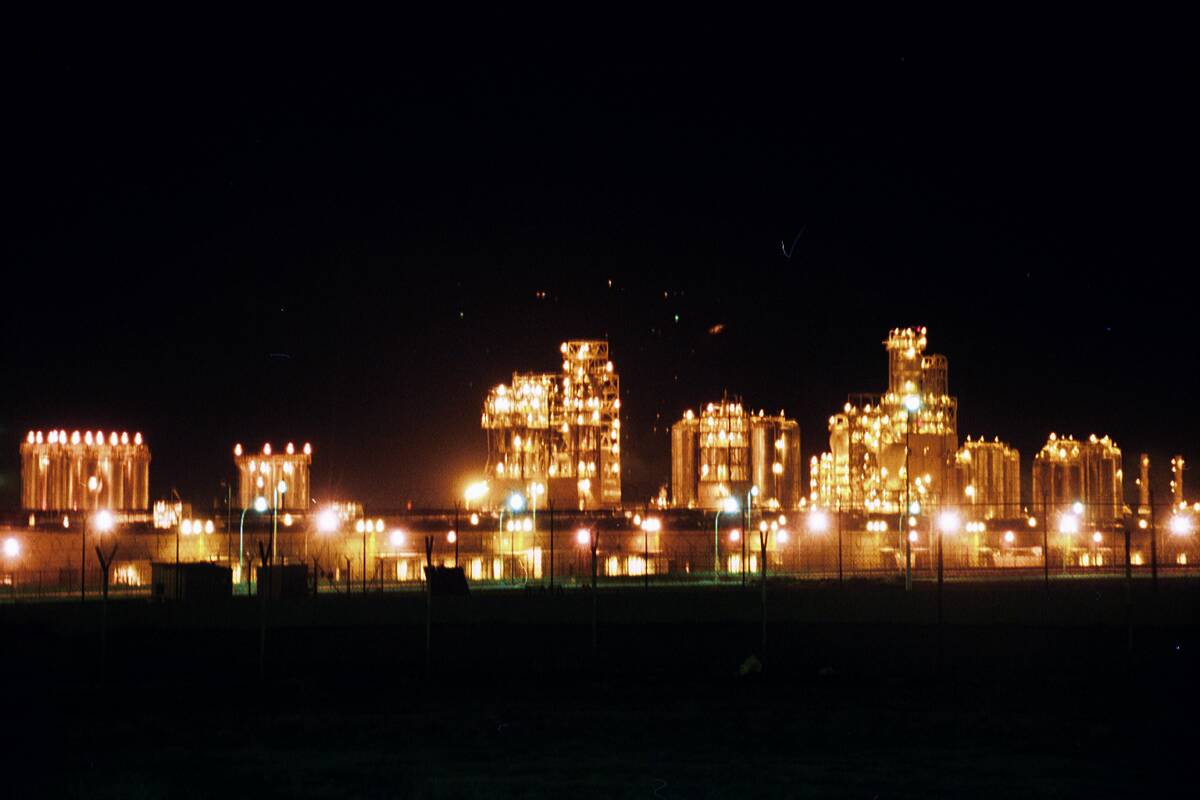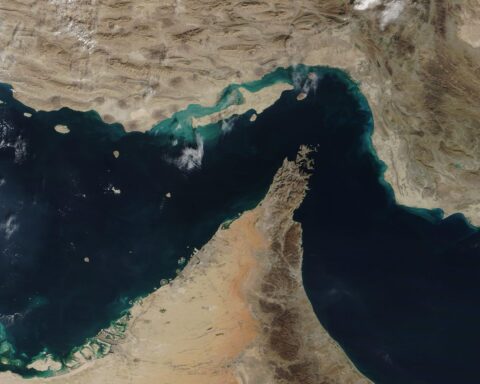

DHAHRAN — The Iran war has destroyed something the world cannot quickly replace, and it is not crude oil. Three weeks of sustained Iranian drone and missile strikes across the Persian Gulf have knocked more than three million barrels per day of refining capacity offline, exposed a structural vulnerability that no strategic petroleum reserve can fix, and revealed that the global energy system’s most dangerous bottleneck was never the Strait of Hormuz. It was the cluster of irreplaceable processing plants on both sides of it. While governments release emergency crude stockpiles and traders fixate on Brent futures, the real crisis is unfolding inside the shattered distillation columns and cracking units of facilities like Saudi Aramco’s Ras Tanura — the kingdom’s largest refinery, shut down on March 2 and only restarted on March 18 after sixteen days of lost output. Crude oil in the ground, or even in a strategic reserve, is economically inert until a refinery converts it into gasoline, diesel, jet fuel, and petrochemicals. Iran’s targeting of Gulf refining infrastructure, rather than just production wells, represents a calculated escalation that exploits the single weakest link in the global energy supply chain.
Table of Contents
- What Makes Refining Capacity Different From Crude Oil Supply?
- Why Did Iran Target Ras Tanura Before Any Other Saudi Facility?
- The Gulf’s Refinery Network Under Siege
- Can Strategic Petroleum Reserves Replace Lost Refining Capacity?
- The Processing Capacity Risk Matrix
- How Long Does It Take to Rebuild a Destroyed Refinery?
- What the 2019 Abqaiq Recovery Got Dangerously Wrong
- The Crack Spread Signal Nobody Is Reading
- Where Does Saudi Arabia Refine Its Oil Now?
- The IEA’s Impossible Math
- The Refinery Gap the World Chose to Ignore
- Frequently Asked Questions
What Makes Refining Capacity Different From Crude Oil Supply?
Crude oil, in its raw form, is essentially useless. It cannot power a vehicle, fuel an aircraft, heat a home, or manufacture plastics. Every barrel must pass through a refinery — a multi-billion-dollar complex of distillation columns, catalytic crackers, hydrotreaters, and reformers — before it becomes the gasoline, diesel, kerosene, and naphtha that the global economy actually consumes. This distinction, between crude supply and refining throughput, is the single most important and most overlooked variable in the current energy crisis.
When a drone strikes an oil well or even a major processing facility like Abqaiq, the damage targets the front end of the supply chain. Crude production can often be rerouted, drawn from reserves, or compensated through spare capacity elsewhere. Saudi Aramco demonstrated this in September 2019, restoring 5.7 million barrels per day of production within two weeks of the devastating Abqaiq-Khurais attack. The world exhaled, and a dangerous assumption calcified: Gulf energy infrastructure is resilient enough to absorb strikes.
Refineries occupy a fundamentally different position. They sit at the midpoint of the supply chain, transforming crude into usable products. Destroying a refinery does not merely reduce crude output — it eliminates the capacity to convert any crude, from any source, into the fuels consumers need. A country can release millions of barrels from strategic reserves, but if refining capacity has been destroyed, those barrels sit in storage with nowhere to go. According to the International Energy Agency, global refining capacity stood at approximately 104.8 million barrels per day before the war began. That figure has since been revised downward by 800,000 barrels per day, the largest single-event reduction the IEA has recorded in a non-pandemic year.
Why Did Iran Target Ras Tanura Before Any Other Saudi Facility?
Ras Tanura was not a random target. It was a calculated first strike against the single most strategically valuable node in Saudi Arabia’s downstream energy infrastructure. The complex, located on Saudi Arabia’s Persian Gulf coast approximately 60 kilometres north of Dhahran, houses the kingdom’s largest oil refinery with a processing capacity of 550,000 barrels per day. It also serves as Aramco’s primary crude oil export terminal, handling a significant share of the approximately 7.5 million barrels per day that Saudi Arabia exported before the war.
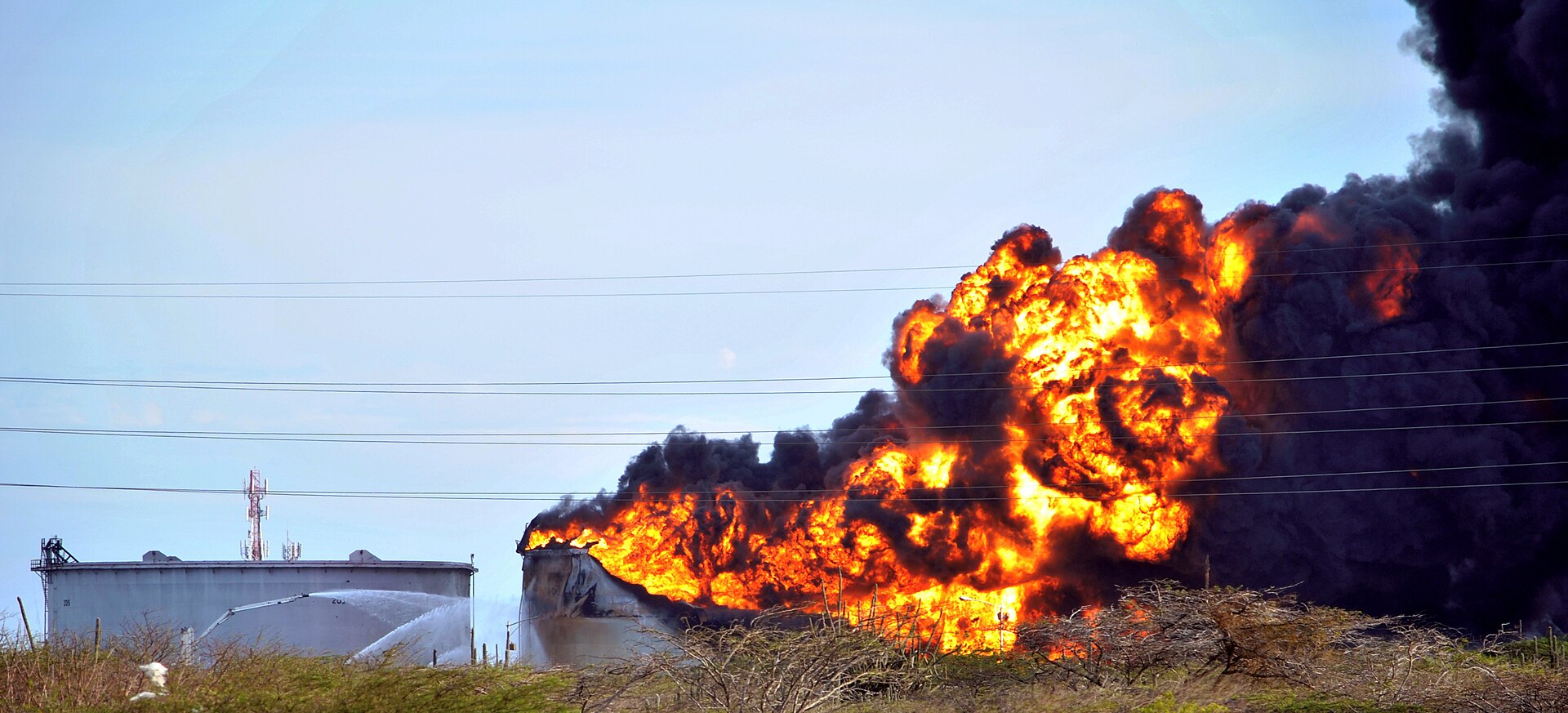
Two Iranian drones targeted the facility on March 2, 2026 — the third day of the conflict. Saudi air defenses intercepted both drones before they reached their targets, but debris from the intercepts caused a fire inside the refinery complex. Aramco contained the blaze within hours and reported only minor structural damage. The physical harm was limited. The strategic damage was not.
The Middle East briefing 3,000+ readers start their day with.
One email. Every weekday morning. Free.
Aramco shut the entire 550,000-barrel-per-day refinery as a precautionary measure and did not restart it for sixteen days, until March 18. During that window, the kingdom lost roughly 16 percent of its total domestic refining capacity — not because of physical destruction, but because of the rational judgment that operating a complex refinery under active drone threat was untenable. This is the asymmetry that defines Iran’s energy war strategy: a drone costing a few thousand dollars can render a multi-billion-dollar refinery inoperable for weeks, not through direct hits, but through the threat of them.
Ras Tanura’s dual role — as both refinery and export terminal — made it the optimal first target. Striking it disrupted both downstream processing and the physical loading of crude onto tankers. Even after the refinery restarted, the export terminal remained constrained by security protocols and the broader disruption to shipping through the Persian Gulf. According to Bloomberg, Aramco rerouted a portion of its exports through the Red Sea port of Yanbu during the shutdown, but Yanbu’s pipeline and terminal capacity is insufficient to absorb the full volume that Ras Tanura normally handles.
The Gulf’s Refinery Network Under Siege
Ras Tanura’s shutdown was the most strategically significant disruption, but it was far from the only one. Three weeks into the conflict, Iran’s drone and missile campaign has damaged, disrupted, or forced precautionary shutdowns at refining and processing facilities across four Gulf states. The scale of the disruption dwarfs any previous conflict’s impact on refining infrastructure.
According to the IEA’s March 2026 Oil Market Report, more than three million barrels per day of refining capacity in the Middle East region has already shut due to direct attacks, debris damage, and operational risk assessments. An additional four million barrels per day is classified as “at risk,” meaning the facilities remain nominally operational but face the same drone and missile threats that shuttered Ras Tanura. Together, that represents more than five percent of global refining capacity either offline or threatened.
| Facility | Country | Type | Capacity (bpd) | Status |
|---|---|---|---|---|
| Ras Tanura | Saudi Arabia | Refinery + Export Terminal | 550,000 | Restarted March 18 |
| SAMREF (Yanbu) | Saudi Arabia | Refinery | 400,000 | Debris damage, reduced operations |
| Jubail Industrial Complex | Saudi Arabia | Refinery + Petrochemicals | 765,000 | Targeted; partially disrupted |
| Ras Laffan | Qatar | LNG + Condensate | 1,400,000 (boe) | Significant damage from missile strike |
| Habshan Gas Processing | UAE | Gas Processing | 1,000,000 (boe) | Debris damage, operational |
| Fujairah Oil Terminal | UAE | Storage + Distribution | N/A | Fire from intercepted drone debris |
| Mina Al-Ahmadi | Kuwait | Refinery | 466,000 | Targeted by drones |
| Duqm Port | Oman | Fuel Storage | N/A | Direct hit on storage tank |
Saudi Arabia’s total domestic refining capacity, according to the U.S. Energy Information Administration, stands at approximately 3.29 million barrels per day spread across nine facilities. The concentrated geography of these plants — eight of the nine sit on or near the Persian Gulf coast — makes them vulnerable to the same maritime-launched drones and short-range ballistic missiles that Iran has deployed throughout the conflict. Only the Yanbu complex on the Red Sea coast operates at meaningful distance from the primary threat axis, which is precisely why Aramco rerouted exports there during the Ras Tanura shutdown.
| Facility | Location | Capacity (bpd) | Share of Total | Coastal Exposure |
|---|---|---|---|---|
| Ras Tanura | Eastern Province | 550,000 | 16.7% | Persian Gulf |
| SATORP (Jubail) | Eastern Province | 460,000 | 14.0% | Persian Gulf |
| YASREF (Yanbu) | Western Province | 430,000 | 13.1% | Red Sea |
| SAMREF (Yanbu) | Western Province | 400,000 | 12.2% | Red Sea |
| Rabigh | Western Province | 400,000 | 12.2% | Red Sea |
| Jazan | Southern Province | 400,000 | 12.2% | Red Sea |
| SASREF (Jubail) | Eastern Province | 305,000 | 9.3% | Persian Gulf |
| Yanbu (NRC) | Western Province | 220,000 | 6.7% | Red Sea |
| Riyadh | Central | 126,000 | 3.8% | Inland |
A striking pattern emerges from the capacity data: 40 percent of Saudi Arabia’s refining capacity sits on the Persian Gulf coast, within range of Iran’s drone fleet. Another 44 percent sits on the Red Sea coast, theoretically safer but now threatened by Houthi forces that have joined the conflict from Yemen. Only the 126,000-barrel-per-day Riyadh refinery — the smallest in the network — operates beyond the reach of maritime-launched drones. Saudi Arabia’s refining geography was optimized for export efficiency, not survivability.
Can Strategic Petroleum Reserves Replace Lost Refining Capacity?
The answer is no, and the distinction explains why the IEA’s record 400-million-barrel reserve release has failed to arrest the price surge. Strategic petroleum reserves, by definition, contain crude oil — unprocessed, unrefined, economically inert liquid. The U.S. Strategic Petroleum Reserve, the world’s largest emergency stockpile, holds approximately 395 million barrels of crude oil in underground salt caverns along the Gulf of Mexico coast. It does not hold a single gallon of gasoline, diesel, or jet fuel.
Releasing crude reserves assumes that refineries are available to process the oil. When the IEA agreed on March 11 to release 400 million barrels across member nations — with the United States contributing 172 million barrels over 120 days — the implicit assumption was that the released crude would flow to refineries operating at normal capacity. It did not account for the possibility that the same conflict driving the release was simultaneously destroying the refineries needed to process it.
The result has been a widening disconnect between crude oil prices and refined product prices. Brent crude surged past $126 per barrel, but gasoline and diesel prices rose even faster in relative terms because the constraint was not crude availability but processing throughput. Refinery margins — measured by crack spreads, the difference between crude oil prices and refined product prices — have widened dramatically. This spread is the market’s way of signalling that refining capacity, not crude supply, is the binding constraint. The oil price spike continued on March 19, when Brent crude surged past $119 per barrel before crashing as Iran targeted energy infrastructure across the Gulf, further widening the crude-to-product gap.
The biggest release of emergency oil stockpiles in history cannot fix a disruption to the physical infrastructure that turns crude into fuel. You cannot drive a car on unrefined crude oil. You cannot fly a plane on Brent futures.
Al Jazeera analysis of IEA reserve release, March 2026
During Hurricane Katrina in 2005, the United States learned a version of this lesson when 30 percent of domestic refining capacity went offline simultaneously. The SPR released crude, but gasoline shortages persisted for weeks because the refineries that normally processed Gulf Coast crude were themselves flooded and damaged. The Iran war has replicated this dynamic on a global scale, with the added complication that the damaged refineries are in a war zone where repairs cannot safely proceed.
The Processing Capacity Risk Matrix
Not all refinery losses carry equal weight. A facility’s strategic importance depends on several intersecting factors: raw processing volume, the complexity of its output slate (whether it produces simple fuels or high-value petrochemicals), the availability of alternative facilities to absorb its throughput, the time required for repair or replacement, and its role in the export supply chain. Assessing these factors together reveals which facilities represent the greatest systemic risk to global energy supply.
| Facility | Capacity (bpd) | Complexity Score (1-5) | Redundancy Score (1-5) | Repair Timeline (months) | Export Dependency | Composite Risk Score |
|---|---|---|---|---|---|---|
| Ras Tanura (Saudi) | 550,000 | 4 | 2 | 6-12 | Critical | 9.2 |
| Ras Laffan (Qatar) | 1,400,000 boe | 5 | 1 | 12-24 | Critical | 9.8 |
| SATORP Jubail (Saudi) | 460,000 | 5 | 2 | 8-14 | High | 8.7 |
| Ruwais (UAE) | 837,000 | 5 | 2 | 10-18 | High | 9.1 |
| Mina Al-Ahmadi (Kuwait) | 466,000 | 3 | 3 | 6-10 | Medium | 7.4 |
| Jazan (Saudi) | 400,000 | 4 | 3 | 6-12 | Medium | 7.0 |
| YASREF Yanbu (Saudi) | 430,000 | 4 | 3 | 6-10 | Medium | 7.2 |
The composite risk score — derived from capacity weight (40%), complexity (20%), inverse redundancy (20%), and export dependency (20%) — reveals that Qatar’s Ras Laffan facility poses the single greatest systemic risk globally, a finding consistent with the market’s reaction when Iran’s missile strike damaged the facility on March 18. Ras Laffan has no functional equivalent anywhere in the world. It produces approximately 77 million tonnes per year of liquefied natural gas — roughly one-quarter of global LNG trade — from a single location. Its destruction or extended shutdown would trigger energy crises in Japan, South Korea, and Europe simultaneously.
Saudi Arabia’s Ras Tanura scores nearly as high, at 9.2, because of its dual function as refinery and export terminal and the limited redundancy in Aramco’s Gulf coast export infrastructure. The SATORP complex in Jubail — a joint venture between Aramco and TotalEnergies with a capacity of 460,000 barrels per day — represents one of the most sophisticated refining operations in the Middle East, producing high-value products including ultra-low-sulfur diesel and polymers. Its complexity score of 5 reflects the fact that replacing its specific output slate would require multiple simpler refineries operating in combination.
The matrix illuminates a counter-intuitive reality: the Gulf’s most modern and efficient refineries are also its most irreplaceable. Older, simpler hydroskimming refineries can be approximated by alternatives elsewhere. Complex refineries with deep conversion capabilities, petrochemical integration, and custom output configurations represent decades of engineering investment that cannot be replicated quickly at any cost.
How Long Does It Take to Rebuild a Destroyed Refinery?
The answer is measured in years, not months — and the timeline has been lengthening. Constructing a new complex refinery with a capacity of 250,000 to 500,000 barrels per day typically requires three to five years from groundbreaking to first operation, according to industry estimates from the American Fuel and Petrochemical Manufacturers. That timeline does not include the two to three years typically needed for permitting, environmental review, detailed engineering, and procurement. End to end, replacing a major refinery takes five to eight years and costs between $5 billion and $15 billion.
Repair timelines for war-damaged facilities are shorter but still significant. The IEA estimates that Gulf refineries that have sustained moderate damage — fire damage to processing units, debris impacts on distillation columns, structural damage to storage tanks — require six to twelve months for full restoration under normal conditions. The critical qualifier is “under normal conditions.” Repair work in an active conflict zone, with ongoing drone and missile threats, faces constraints that peacetime timelines cannot account for. Skilled workers are evacuated. Supply chains for specialized equipment are disrupted. Insurance coverage for construction activities in a war zone is either unavailable or prohibitively expensive.
The pandemic-era closure wave illustrates how reluctant the industry is to build new refining capacity even under favourable conditions. Between 2020 and 2023, global refining capacity declined by approximately 1.1 million barrels per day as at least seven major facilities permanently shuttered, including Lyondell’s 263,776-barrel-per-day Houston refinery (closed February 2026) and Phillips 66’s 138,700-barrel-per-day Los Angeles facility (closing later this year). These closures were driven by thin margins, regulatory costs, and the perceived long-term decline in refined fuel demand from the energy transition. The result was that global refining capacity was already growing at its slowest pace in thirty years before the first Iranian drone crossed the Persian Gulf.
RBN Energy’s Refined Fuels Analytics projects that global net refining capacity will increase by only 2.1 million barrels per day from 2025 to 2029, averaging just 422,000 barrels per day annually — roughly one-quarter of the capacity the Iran war has already taken offline. The math is unambiguous: the war is destroying refining capacity faster than the global industry can build it.
What the 2019 Abqaiq Recovery Got Dangerously Wrong
The September 2019 attacks on Abqaiq and Khurais remain the most frequently cited precedent for Gulf energy infrastructure resilience. Eighteen drones and seven cruise missiles struck the Abqaiq processing facility — the world’s largest crude oil stabilization plant — knocking 5.7 million barrels per day of Saudi production offline. It was the largest single disruption to oil supply in history. Aramco’s response became legend: within 48 hours, two million barrels per day were back online. Within two weeks, full production had been restored. Oil prices, after spiking 15 percent overnight, retreated within days.
The recovery created a dangerous complacency. Policymakers, analysts, and markets internalized a flawed lesson: Gulf energy infrastructure can absorb major strikes and recover quickly. The lesson was wrong for a reason that matters enormously in 2026.
Abqaiq is a processing facility, not a refinery. It stabilizes crude oil — removing hydrogen sulfide and other gases — so that the crude can be safely transported and exported. The equipment involved, while expensive and complex, is fundamentally modular: damaged stabilization trains can be bypassed while alternative units take the load. Aramco’s rapid recovery relied on switching production to other stabilization facilities and drawing on spare upstream capacity that Saudi Arabia maintains precisely for such contingencies.
A refinery is categorically different. Its distillation columns, catalytic crackers, cokers, and hydrotreaters are integrated into a single continuous process flow. Damage to one unit cascades through the entire facility because downstream units depend on the output of upstream ones. A cracking unit cannot operate without the specific distillation cut that feeds it. A hydrotreater cannot process material that has not been cracked. The Abqaiq model — bypass the damaged unit, reroute through alternatives — does not apply to refinery operations where the units are interdependent rather than parallel.
The 2019 recovery also benefited from peacetime conditions. Repair crews deployed immediately without security constraints. Specialized equipment was sourced globally without supply chain disruption. Insurance adjusters arrived within days. None of these conditions exist in March 2026. Ras Tanura’s sixteen-day shutdown — despite suffering only minor physical damage — demonstrated that the operating environment, not the structural damage, is the primary determinant of refinery downtime in a sustained conflict.
The Crack Spread Signal Nobody Is Reading
Crack spreads — the price difference between crude oil and the refined products produced from it — are the market’s real-time indicator of refining scarcity. When refining capacity is abundant, crack spreads are narrow because any refinery can buy crude and produce products competitively. When capacity is tight, spreads widen because refiners command a premium for their limited processing throughput.
In the first three weeks of the Iran war, the 3-2-1 crack spread (the standard benchmark, representing the margin from refining three barrels of crude into two barrels of gasoline and one barrel of distillate) has surged to levels not seen since the post-pandemic refining squeeze of 2022. Diesel crack spreads in Europe have widened even further, reflecting the continent’s particular vulnerability to disruptions in middle distillate supply from the Middle East.
The pattern is diagnostic. If the crisis were purely about crude supply — a Hormuz blockade limiting the volume of oil reaching the market — crude prices and product prices would move roughly in tandem, with crack spreads remaining stable. Instead, product prices are rising faster than crude prices, and crack spreads are widening. This divergence signals that the binding constraint is refining capacity, not crude availability. The market, in its pricing, has already reached the conclusion that policymakers have not yet articulated publicly.
Goldman Sachs warned in its March 17 research note that the Gulf faces its worst recession in a generation, but the bank’s analysis focused primarily on crude oil disruption. The refining dimension adds a multiplier effect: lost refining capacity depresses not only fuel supply but also the petrochemical feedstocks — naphtha, ethylene, propylene — that serve as building blocks for plastics, fertilizers, synthetic fibres, and pharmaceuticals. A refinery does not just produce fuel. It produces the chemical foundations of modern manufacturing.
Where Does Saudi Arabia Refine Its Oil Now?
Aramco’s contingency planning after the Ras Tanura shutdown reveals the kingdom’s strategic thinking — and its limitations. Within days of shutting the Gulf coast facility, Aramco began rerouting crude through the East-West Pipeline to its Red Sea refineries, primarily the YASREF (430,000 bpd), SAMREF (400,000 bpd), and Rabigh (400,000 bpd) complexes near Yanbu. Together, these three Red Sea facilities have a combined capacity of approximately 1.23 million barrels per day — substantial, but insufficient to replace the full Gulf coast refining network.
The East-West Pipeline, originally built in the 1980s as a strategic bypass for exactly this scenario, can transport approximately 5 million barrels per day of crude from the Eastern Province to the western coast. Its capacity is not the bottleneck. The limitation is on the receiving end: Yanbu’s refineries and export terminals were designed for a specific throughput, and surging volumes through them requires operational adjustments that take weeks to implement safely. As Saudi Foreign Minister Prince Faisal bin Farhan signalled on March 19, the kingdom’s patience with Iran’s attacks is wearing thin precisely because the rerouting strategy has limits that Iran’s continued strikes are testing.
The Jazan refinery on the southwestern Red Sea coast, near the Yemen border, presents its own vulnerability. With a capacity of 400,000 barrels per day, it is one of Aramco’s newest and most sophisticated facilities. But its proximity to Houthi-controlled territory in Yemen makes it a potential target if the Iran war’s expansion to proxy fronts continues. Houthi forces have previously demonstrated the ability to strike Saudi energy infrastructure from ranges exceeding 1,000 kilometres, and their March 15 entry into the conflict — firing at Saudi Red Sea shipping routes — has placed the Jazan facility within a plausible threat envelope.
The Riyadh refinery, at just 126,000 barrels per day, is the only Saudi facility effectively beyond both the Gulf and Red Sea threat axes. Its output meets a fraction of the capital’s domestic fuel needs but contributes nothing to exports or the broader supply chain. In the event that both the Gulf coast and Red Sea facilities face sustained attack, Saudi Arabia’s entire refining infrastructure — with the exception of this single small inland plant — would be at risk.
The IEA’s Impossible Math
The International Energy Agency’s response to the refining crisis has exposed the structural inadequacy of existing emergency mechanisms. The March 11 coordinated release of 400 million barrels of crude from strategic reserves — the largest such action in IEA history — was designed to signal resolve and stabilize markets. It has done neither, because the mechanism addresses the wrong variable.
The United States is releasing 172 million barrels over 120 days, equivalent to approximately 1.4 million barrels per day. That volume represents just 15 percent of the estimated 9.5 million barrels per day of crude and refined product flow that normally transits the Strait of Hormuz, according to CNBC’s analysis. Even at full release rate, the SPR drawdown cannot compensate for the Hormuz disruption, let alone the additional loss of refining capacity from direct attacks on processing facilities.
More critically, the IEA has lowered its 2026 global refining throughput forecast by 800,000 barrels per day specifically because of war-related shutdowns in the Gulf. This revision acknowledges that the lost capacity cannot be compensated by releasing crude reserves. The crude exists; the refineries to process it do not. Only five IEA member countries — Japan, South Korea, Germany, the Netherlands, and the United States — maintain meaningful strategic reserves of refined products (gasoline and distillates) alongside crude oil. The total volume of refined product reserves across all IEA members amounts to fewer than 40 days of OECD net product imports. If the refining crisis persists beyond that window, no emergency release mechanism exists.
The math becomes even more challenging when accounting for the refineries that have permanently closed outside the war zone. Lyondell’s Houston refinery and Phillips 66’s Los Angeles facility together represent approximately 402,000 barrels per day of capacity that has left the global system in 2026 for commercial — not military — reasons. These closures were planned before the war but their timing is catastrophic, removing additional capacity from an already constrained system at precisely the moment when every available barrel of processing throughput carries strategic significance.
The Refinery Gap the World Chose to Ignore
The conventional narrative of the Iran war focuses on crude oil supply and the Strait of Hormuz. Analysts debate when shipping will resume, how much crude reserves can offset, and when Brent will peak. These questions, while relevant, obscure the deeper structural crisis: the world entered this conflict with a refining system already running at the tightest margins in decades, and the war has pushed it past the breaking point.
Global refining capacity growth has been decelerating for years. New capacity additions averaged roughly one million barrels per day annually from 2022 to 2024, driven primarily by Asian mega-refineries in India, China, and the Middle East. That growth rate has slowed to an estimated 620,000 barrels per day annually for 2025 through 2027, according to the EIA. Meanwhile, demand for refined products has continued growing at approximately 900,000 barrels per day annually, outpacing new capacity since 2023. The deficit was widening before the first shot was fired.
The refinery gap is a consequence of deliberate policy choices across multiple decades. Environmental regulations in Europe and North America made building new refineries politically untenable. The energy transition narrative discouraged long-term capital allocation to refining, with major oil companies signalling reduced downstream investment. Aging facilities closed rather than undergo expensive modernization. The result was a global refining system operating at high utilization rates with minimal spare capacity — a system optimized for efficiency under normal conditions but catastrophically fragile under stress.
Iran’s strategists appear to understand this vulnerability better than the policymakers defending against it. The pattern of attacks — targeting refineries and processing facilities rather than wellheads or pipelines — suggests a deliberate decision to exploit the weakest link in the supply chain. Pipelines can be repaired in days. Wellheads can be replaced in weeks. But a damaged refinery with its interconnected process units requires months of specialized work that cannot proceed under active threat. Crude oil production is resilient. Refining capacity is not. Iran has calibrated its campaign accordingly.
The longer-term implications extend beyond the current conflict. Even if a ceasefire halts the fighting tomorrow, the refining capacity destroyed or degraded during three weeks of war will take years to fully restore. The IEA’s 800,000-barrel-per-day downward revision to global refining capacity is a near-term estimate; the actual reduction could prove larger as damage assessments continue and repair timelines solidify. The world will emerge from the Iran war with structurally less refining capacity than it entered with, at a time when the capacity deficit was already widening. This is the energy crisis that no strategic petroleum reserve was designed to solve, and it will outlast the war that exposed it.
Saudi Defence Minister Khalid bin Salman faces the task of protecting what remains of the kingdom’s downstream infrastructure while simultaneously managing a conflict that the energy war ensures permanent infrastructure damage regardless of the military outcome. The refineries, in this calculus, matter more than the oil fields. And the world is only beginning to understand why.
Frequently Asked Questions
What is the difference between crude oil supply and refining capacity?
Crude oil is the raw material extracted from underground reservoirs. It has no direct utility until processed in a refinery, which separates it through distillation and chemical treatment into usable products such as gasoline, diesel, jet fuel, naphtha, and petrochemicals. A disruption to crude supply can be offset by releasing strategic reserves, but a disruption to refining capacity eliminates the ability to convert any crude — including reserves — into products consumers can use. The Iran war has disrupted both simultaneously.
How much Gulf refining capacity has the Iran war taken offline?
According to the International Energy Agency’s March 2026 Oil Market Report, more than three million barrels per day of refining capacity in the Middle East has shut due to attacks, debris damage from missile and drone intercepts, and precautionary safety shutdowns. An additional four million barrels per day remains at risk. The IEA has revised its global refining capacity forecast downward by 800,000 barrels per day for 2026 as a direct result of the conflict, the largest non-pandemic reduction on record.
Why did the IEA’s record oil reserve release fail to stabilize prices?
The IEA’s release of 400 million barrels from strategic stockpiles addresses crude oil supply, but the binding constraint in the current crisis is refining throughput. Strategic petroleum reserves contain crude oil, not refined products. Releasing crude is only effective if sufficient refining capacity exists to process it into gasoline, diesel, and other fuels. With more than three million barrels per day of Gulf refining capacity offline, the released crude has nowhere to be processed, which is why refined product prices have risen even faster than crude prices since the release was announced.
How long does it take to rebuild a destroyed oil refinery?
Building a new complex refinery with a capacity of 250,000 to 500,000 barrels per day requires three to five years of construction, plus two to three years of permitting, engineering, and procurement — a total of five to eight years at a cost of $5 billion to $15 billion. Repairing a war-damaged facility typically requires six to twelve months under peacetime conditions, but that timeline extends significantly in an active conflict zone where security threats prevent repair crews from working, specialized equipment cannot be delivered, and insurance coverage is unavailable.
What is the Processing Capacity Risk Matrix?
The Processing Capacity Risk Matrix is an analytical framework for assessing the systemic importance of individual refining facilities based on five factors: raw processing volume, output complexity, redundancy (whether alternative facilities can absorb its throughput), estimated repair timeline, and role in the export supply chain. The matrix reveals that Qatar’s Ras Laffan and Saudi Arabia’s Ras Tanura carry the highest composite risk scores in the Gulf, meaning their loss or extended shutdown poses the greatest threat to global energy stability.
Could Saudi Arabia reroute all of its refining to the Red Sea coast?
Not fully. Saudi Arabia’s Red Sea refineries — YASREF, SAMREF, Rabigh, and Jazan — have a combined capacity of approximately 1.45 million barrels per day. The East-West Pipeline can transport 5 million barrels per day of crude to the western coast, so pipeline capacity is not the constraint. The limitation lies in the receiving infrastructure: Red Sea refineries and export terminals were designed for specific throughput levels, and Jazan’s proximity to Houthi-controlled Yemen introduces a second threat axis. Only the small 126,000-barrel-per-day Riyadh refinery operates beyond both coastal threat zones.