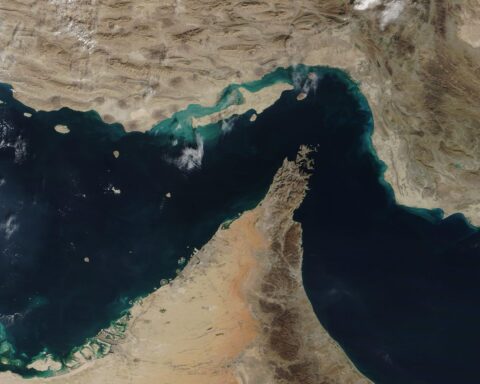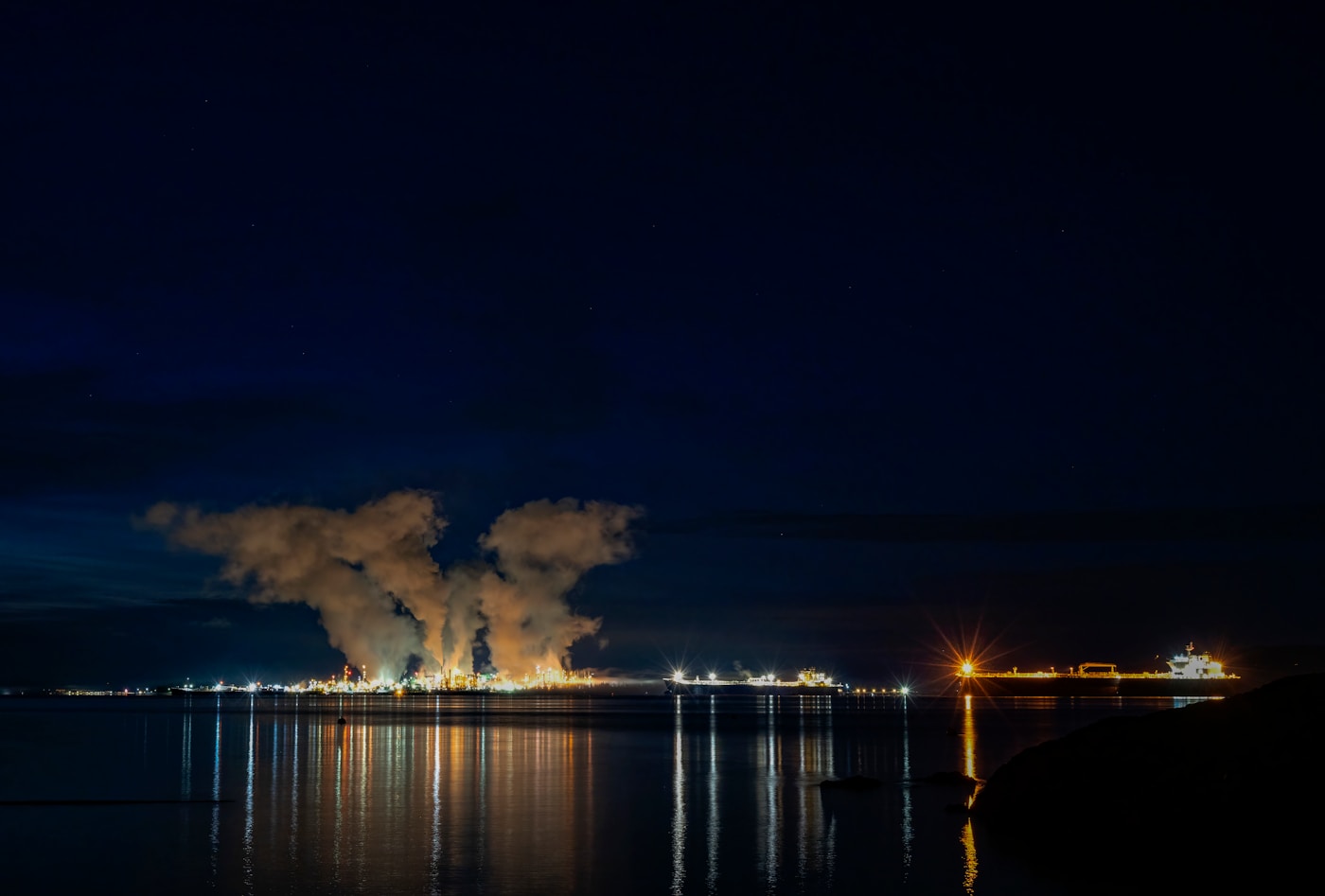

DHAHRAN — Saudi Aramco, the world’s most valuable energy company, is managing the largest operational crisis in its seven-decade history. Twenty-two days into the Iran war, Aramco has shut down two supergiant offshore oil fields, slashed production by 20 percent, rerouted the bulk of its exports through a single 1,200-kilometre pipeline built during the last Gulf war, and watched a drone penetrate the refinery that guards its only remaining export outlet. The disruption dwarfs the 2019 Abqaiq-Khurais attack in scale, duration, and strategic consequence. That earlier strike removed 5.7 million barrels per day for roughly two weeks. The current crisis has removed at least 2 million barrels per day with no end date, while simultaneously blocking the maritime route through which Saudi Arabia shipped more than 80 percent of its crude before February 28. Aramco’s wartime pivot reveals both the fragility of the global oil system and the extraordinary resilience of a company that has quietly transformed itself into the backbone of a nation at war.
Table of Contents
- How Much Oil Has Aramco Lost Since the War Began?
- Why Did Aramco Shut Down the World’s Largest Offshore Oil Field?
- The Petroline Gambit — Aramco’s 1,200-Kilometre Escape Route
- Can Yanbu Handle the Entire Kingdom’s Oil Exports?
- The Drone That Found Saudi Arabia’s Back Door
- The Operational Resilience Matrix
- Aramco’s Wartime Balance Sheet — $104 Billion and a Paradox
- How Does 2026 Compare to the 2019 Abqaiq Attack?
- Who Still Buys Saudi Oil When Hormuz Is Closed?
- What Happens to 70,000 Workers When the Oil Fields Become Targets?
- The Contrarian Case — This War Could Make Aramco Untouchable
- Frequently Asked Questions
How Much Oil Has Aramco Lost Since the War Began?
Saudi Aramco’s daily production has fallen from approximately 10.9 million barrels per day in February to roughly 8 million barrels per day as of mid-March 2026, according to Bloomberg and OPEC data. The 2-to-2.5-million-barrel reduction represents a 20 percent cut — the steepest peacetime or wartime production decline in the company’s history.
The production loss did not stem from physical damage to the Kingdom’s core processing facilities. Aramco chose to shut down output proactively because the closure of the Strait of Hormuz on March 4 eliminated the maritime corridor through which the vast majority of Saudi crude reached global markets. With tanker traffic through the strait reduced to a trickle — just 21 vessels have transited since the war began on February 28, compared with more than 100 ships daily in normal conditions, according to S&P Global Market Intelligence — the crude had nowhere to go.
Storage tanks across the Eastern Province filled rapidly. Aramco’s onshore tank farms at Ras Tanura, Ju’aymah, and Dhahran reached approximately 85 percent capacity within the first ten days of the conflict, according to satellite imagery analysis by Kayrros and industry estimates reported by Bloomberg. Without an export outlet, continued pumping would have risked physical overflow and environmental damage.

The scale of lost revenue is staggering. At the pre-war benchmark of $65 per barrel, 2 million barrels per day in foregone production costs approximately $130 million daily. But the war has pushed Brent crude above $114 per barrel, meaning each barrel that Aramco cannot export carries a far higher opportunity cost. The paradox is sharp: oil prices have surged precisely because Aramco cannot sell enough of it. The disruption has produced the world’s fourth great oil shock, with downstream consequences that extend far beyond Saudi Arabia’s balance sheet.
| Metric | Pre-War (Feb 2026) | Current (Mid-March) | Change |
|---|---|---|---|
| Total production | 10.9M bpd | ~8M bpd | -27% |
| Eastern Province exports | ~7.5M bpd | Near zero | -99% |
| Yanbu (Red Sea) exports | ~0.75M bpd | ~2.5M bpd | +233% |
| Brent crude price | $65/bbl | $114/bbl | +75% |
| Hormuz tanker transits | 100+/day | ~1/day | -99% |
| Storage utilisation (East) | ~55% | ~85% | +30pts |
Why Did Aramco Shut Down the World’s Largest Offshore Oil Field?
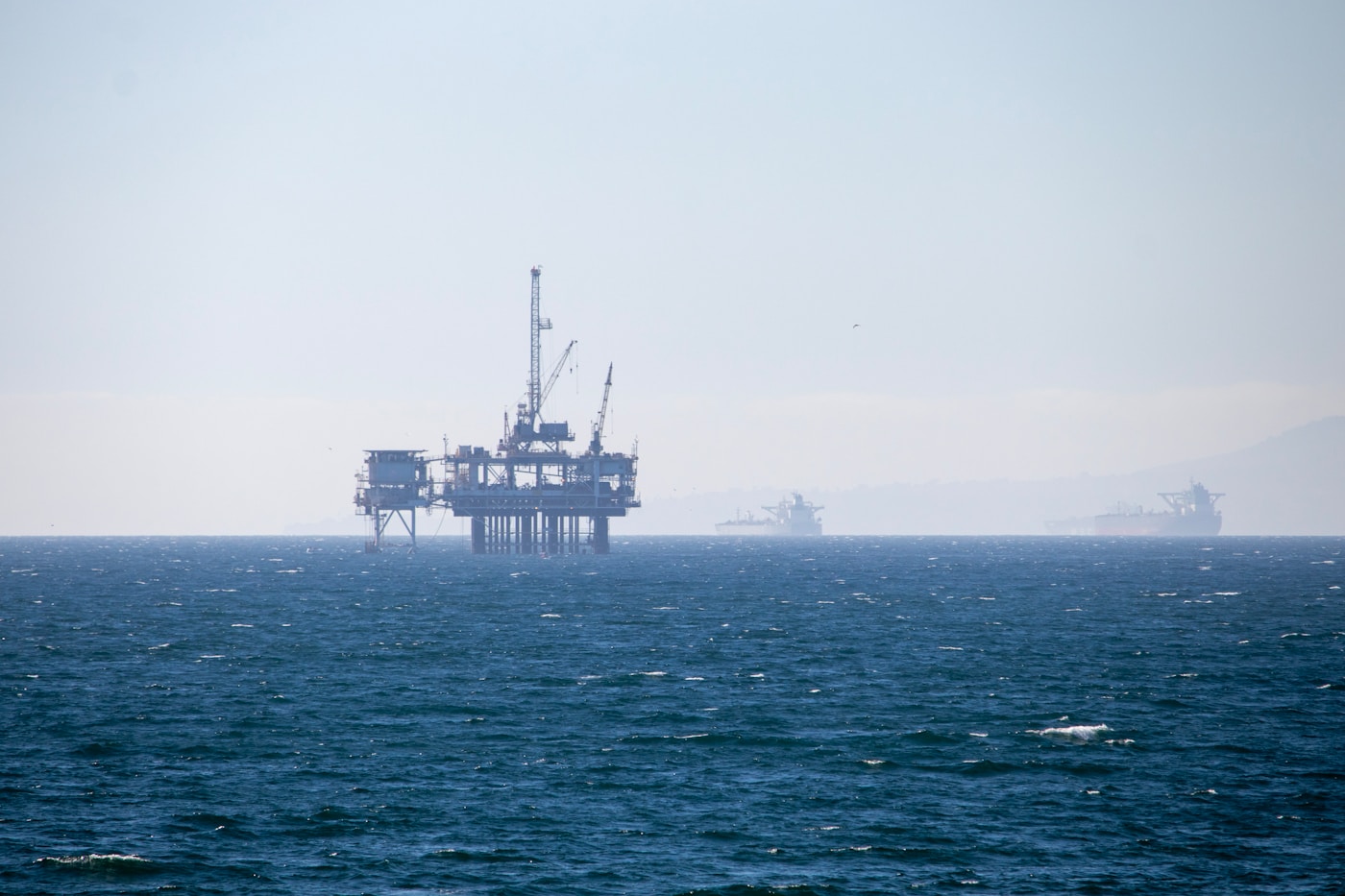
Aramco shuttered the Safaniya and Zuluf offshore oil fields in the first week of the conflict, removing an estimated 2-to-2.5-million barrels per day of mainly heavy and medium-heavy crude from production. Safaniya, located approximately 265 kilometres north of Dhahran in the Persian Gulf, is the world’s largest offshore oil field with proven reserves exceeding 30 billion barrels. Zuluf, positioned nearby, adds another 500,000 barrels per day of capacity.
The Middle East briefing 3,000+ readers start their day with.
One email. Every weekday morning. Free.
The decision was driven by three converging pressures. First, the Hormuz blockade eliminated the tanker route that carried the overwhelming majority of crude from Safaniya and Zuluf to Asian refineries. The heavy crude grades from these fields are processed primarily in South Korea, Japan, and India — customers that can no longer receive shipments through the strait. Second, these offshore platforms sit in waters now contested by Iranian naval forces. The IRGC Navy declared the Persian Gulf a military zone on March 4, and Iranian fast-attack boats and mine-laying operations pose a direct threat to any vessel operating near the Saudi offshore fields. Third, Aramco’s onshore storage for heavy crude reached near-capacity by March 9, according to Bloomberg’s commodity tracking data.
Aramco also suspended operations at the Marjan and Abu Sa’fah fields, which together produced approximately 1 million barrels per day of Arabian Medium and Arabian Heavy grades. Abu Sa’fah is notable because it is jointly operated with Bahrain — a country that has itself absorbed 385 Iranian strikes since the war began.
The shutdowns follow a logic that mirrors Aramco’s response during the 1990-91 Gulf War but at significantly greater scale. During that conflict, Aramco reduced production to roughly 3.3 million barrels per day as Iraqi forces threatened the Eastern Province. The current 8-million-barrel floor is higher in absolute terms but represents a comparable proportional cut from maximum sustainable capacity.
The operational challenge of shutting down a supergiant offshore field is itself a major undertaking, as the subsequent closure of all four supergiant Gulf fields and the suspension of drilling rigs by Arabian Drilling and ADES would demonstrate. Safaniya’s production infrastructure includes more than 30 artificial islands, three central processing platforms, and roughly 260 kilometres of subsea pipeline connecting the field to onshore facilities at Khursaniyah. Placing these systems in a state of “warm shutdown” — preserving the ability to restart within weeks rather than months — requires continuous monitoring, ongoing corrosion prevention, and rotating skeleton crews who commute by helicopter from the mainland. Aramco engineers have estimated that a cold restart of Safaniya after prolonged inactivity could take six months or more due to the need to re-pressurise wells and clear salt deposits from processing equipment.
The Petroline Gambit — Aramco’s 1,200-Kilometre Escape Route
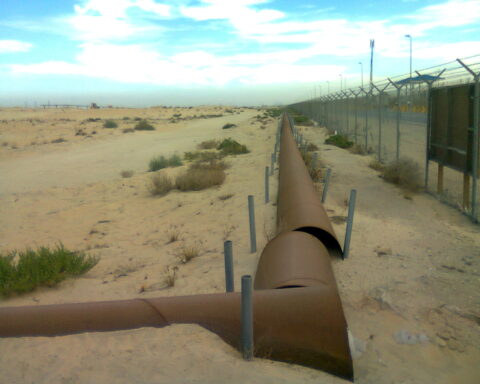
Saudi Aramco’s most consequential wartime decision has been the activation of the East-West Crude Oil Pipeline — known as the Petroline — to its full rated capacity. The pipeline, a dual-pipe system featuring 48-inch and 56-inch diameter lines, runs 1,200 kilometres from the Abqaiq processing complex in the Eastern Province across the Dahna desert to the Red Sea port of Yanbu. It was built in 1981 during the Iran-Iraq War for exactly this scenario.
Aramco CEO Amin Nasser confirmed on March 10 that the Petroline would reach full operational capacity within days, according to S&P Global. The pipeline can theoretically move up to 7 million barrels per day when accompanying natural gas liquids pipelines are converted to carry crude — a conversion Aramco completed by March 11. Yanbu’s oil exports have since surged to approximately 2.47 million barrels per day, a 330 percent increase over pre-war levels, according to MercoPress.
The Petroline’s activation represents a strategic vindication for the planners who insisted on maintaining the infrastructure through decades when it operated at a fraction of its capacity. For most of its 45-year history, the pipeline carried between 500,000 and 2 million barrels per day, primarily serving the two Yanbu refineries. The rest of Saudi crude flowed east to the Persian Gulf terminals at Ras Tanura and Ju’aymah.
But the Petroline has a critical weakness: it runs through 1,200 kilometres of open desert. Every metre of that pipeline is vulnerable to drone or missile attack. The infrastructure was designed to survive localized sabotage, not sustained aerial bombardment from a state adversary with the capacity to launch hundreds of drones per day. Iran’s demonstrated ability to strike Yanbu — at the pipeline’s western terminus — on March 19 proved that the bypass is not beyond reach.
The pipeline’s five major pumping stations — spaced at roughly 240-kilometre intervals across the Nafud and Dahna deserts — are particularly exposed. Each station uses massive centrifugal pumps to maintain pressure across the desert crossing. Knocking out a single station would reduce throughput by an estimated 30 to 40 percent until mobile replacement pumps could be deployed, a process industry engineers estimate would take 72 to 96 hours under wartime conditions. Saudi Arabia has positioned Patriot and Shahine air defense batteries near the two pumping stations closest to Yanbu, but the three interior stations remain protected primarily by terrain — their remoteness is their defence, though that remoteness also makes repair logistics more challenging.
Can Yanbu Handle the Entire Kingdom’s Oil Exports?
Yanbu cannot replace the eastern export terminals at their pre-war volumes. The port’s two terminals — Yanbu North and Yanbu South — have a nominal combined loading capacity of approximately 4.5 million barrels per day, but tested throughput under operational conditions maxes out at roughly 4 million barrels per day, according to Engineering News-Record. In wartime conditions, with additional security inspections and intermittent operational pauses, actual capacity drops to approximately 3 million barrels per day.
This creates a bottleneck that explains why Aramco cut production by 20 percent rather than simply rerouting all output westward. Even at full Petroline capacity of 7 million barrels per day, Yanbu’s port infrastructure cannot load crude onto tankers fast enough to match the flow. The result is a structural mismatch: pipe capacity exceeds port capacity by roughly 3 million barrels per day.
Aramco has attempted to ease the constraint through several measures. Floating storage and offloading vessels have been positioned near Yanbu to serve as temporary buffer capacity. Additional berths are being constructed on an emergency basis, though completion is weeks away at minimum. Aramco has also redirected some lighter crude grades to the two Yanbu refineries — SAMREF (a joint venture with ExxonMobil) and the Yanbu Aramco Sinopec Refining Company (YASREF, a joint venture with China’s Sinopec) — for processing into refined products that can be shipped in smaller tankers.
The Yanbu constraint has broader implications for Aramco’s customers. The challenge is compounded by the failure of the Trump administration’s $20 billion shipping insurance plan to restart tanker traffic, leaving even the Red Sea route commercially constrained. Pre-war, the company exported an average of 7.5 million barrels per day from its eastern terminals, primarily to Asia. The maximum realistic export volume from Yanbu — approximately 3 million barrels per day — means the Kingdom can deliver less than half its pre-war crude volumes even under optimal conditions. This supply deficit is a primary driver of the sustained oil price spike above $100 per barrel. The gap between what Saudi Arabia can produce and what it can deliver has exposed the myth of spare capacity as a meaningful energy security guarantee.
| Facility | Location | Rated Capacity (bpd) | Wartime Status |
|---|---|---|---|
| Ras Tanura terminal | Eastern Province | 6.0M | Near-zero (Hormuz blocked) |
| Ju’aymah terminal | Eastern Province | 3.0M | Near-zero (Hormuz blocked) |
| Yanbu North terminal | Red Sea coast | 2.5M | ~1.5M (surge operations) |
| Yanbu South terminal | Red Sea coast | 2.0M | ~1.0M (surge operations) |
| East-West Pipeline (Petroline) | Cross-country | 7.0M (converted) | ~5.0M (flowing) |
The Drone That Found Saudi Arabia’s Back Door
On March 19, an Iranian drone breached the security perimeter of the SAMREF refinery in Yanbu. The attack set off a fire that emergency teams contained within hours, and the refinery sustained only limited physical damage, according to Saudi Gazette and Al Arabiya. But the strategic significance of the strike extended far beyond the material cost of repairs.
SAMREF, a joint venture between Saudi Aramco and ExxonMobil, processes approximately 400,000 barrels of crude per day. It sits adjacent to the Yanbu port terminals that have become the Kingdom’s primary oil export outlet since the Hormuz closure. Saudi air defences intercepted a ballistic missile targeting the port itself during the same attack, according to Anadolu Agency. The coordinated nature of the assault — a ballistic missile against the port and a drone against the refinery — demonstrated that Iran can target both elements of the Yanbu complex simultaneously.
The Yanbu strike exposed a strategic vulnerability that analysts had flagged but policymakers had dismissed. The entire Saudi oil export apparatus — part of a broader geographic reorientation toward the Red Sea — — which once operated through multiple eastern terminals plus the western Yanbu outlet — now depends on a single geographic chokepoint. Every barrel leaving the Kingdom must pass through either the 1,200-kilometre pipeline or the Yanbu port. Iran’s capacity to reach Yanbu, located more than 1,400 kilometres from its nearest border, suggests that no Saudi oil facility is truly beyond range.
Brent crude spiked 4.2 percent intraday following the Yanbu attack, according to Reuters, before settling as the market absorbed the limited damage report. The episode underscored a new risk calculus: even a small drone that causes minimal physical harm can trigger massive financial consequences simply by demonstrating that the
The environmental consequences of strikes on Gulf energy infrastructure compound the financial risk. The Iran war has produced more than 300 documented environmental incidents across twelve countries in three weeks, with 85 stranded tankers carrying 21 billion litres of crude now representing the largest concentration of oil on water in maritime history.
“safe” bypass is not safe.
The Operational Resilience Matrix
Aramco’s wartime performance can be evaluated through an Operational Resilience Matrix that scores each major facility across four dimensions: vulnerability to attack, criticality to the export system, availability of bypass options, and quality of defensive coverage. Scoring each dimension from 1 (lowest) to 5 (highest), then multiplying vulnerability by criticality and dividing by the product of bypass availability and defense coverage, produces a risk quotient. A higher quotient indicates greater operational risk.
| Facility | Vulnerability (1-5) | Criticality (1-5) | Bypass Options (1-5) | Defense Coverage (1-5) | Risk Quotient |
|---|---|---|---|---|---|
| Abqaiq processing | 4 | 5 | 1 | 5 | 4.0 |
| Yanbu port terminals | 3 | 5 | 1 | 3 | 5.0 |
| East-West Pipeline | 4 | 5 | 1 | 2 | 10.0 |
| Safaniya offshore | 5 | 3 | 2 | 2 | 3.8 |
| Ras Tanura refinery | 4 | 3 | 3 | 4 | 1.0 |
| Ghawar field (onshore) | 3 | 5 | 2 | 4 | 1.9 |
| SAMREF refinery (Yanbu) | 3 | 4 | 2 | 3 | 2.0 |
The matrix reveals that the East-West Pipeline carries the highest risk quotient at 10.0. It is highly vulnerable (1,200 kilometres of exposed desert infrastructure), maximally critical (the only connection between producing fields and the functioning export terminal), has no bypass (the eastern terminals are blocked by Hormuz), and receives minimal defensive coverage (the pipeline is simply too long for continuous air defense). A sustained Iranian drone campaign against the pipeline’s pumping stations — there are five major ones between Abqaiq and Yanbu — could theoretically sever Saudi Arabia’s last functioning export artery.
The Abqaiq processing complex, despite its vulnerability, benefits from the most concentrated air defense umbrella in the Kingdom. After the humiliation of the 2019 drone and cruise missile attack, Aramco and the Saudi Ministry of Defence deployed multiple Patriot PAC-3 batteries, THAAD systems, and short-range air defence around Abqaiq. The March 2026 attacks have not breached this perimeter, though the volume of Iranian drones — averaging nearly 100 per day across the Gulf — tests the system’s capacity to sustain intercepts over weeks rather than hours.
Aramco’s Wartime Balance Sheet — $104 Billion and a Paradox
Aramco reported full-year 2025 net income of $93.4 billion and adjusted net income of $104.7 billion, according to the company’s annual results released on March 10, 2026 — twelve days into the war. Revenue for 2025 totalled $445.7 billion on an average realised price of $64.10 per barrel. The company declared full-year dividends of $85.5 billion and announced a new $3 billion share buyback programme.
The timing of the earnings release was extraordinary. Aramco’s CEO Amin Nasser used the announcement to warn of “catastrophic consequences” for the global oil market if the Hormuz disruption continued, describing a “severe chain reaction” and “drastic domino effect” beyond shipping, according to CNBC. The warning carried particular weight coming from the head of the company that controls more than 10 percent of global oil supply. The IEA has since confirmed that fear, reporting 40 energy assets severely damaged across nine countries in a crisis it says surpasses the 1970s oil shocks.
The wartime financial picture presents a sharp paradox. Aramco’s share price on the Tadawul exchange has risen 13 percent since the start of 2026, reaching SAR 27.06 as of March 22, implying a market capitalisation of approximately SAR 6.3 trillion ($1.68 trillion). Investors are betting that higher oil prices — Brent has surged from $65 to above $114 per barrel — will more than compensate for lower production volumes. At 8 million barrels per day and $114 per barrel, Aramco’s gross daily revenue from crude sales alone approaches $912 million, compared with approximately $709 million at 10.9 million barrels per day and $65 per barrel pre-war. The bet intensified on March 23, with oil surging past $114 a barrel as Trump’s deadline for Iran to reopen the strait expired and Asian equity markets suffered their steepest single-day losses since 2020.
But this calculation understates the cost side. Aramco is absorbing massive wartime expenditures that do not appear in normal quarterly accounts: emergency pipeline conversion costs, floating storage leases, enhanced security at every major facility, insurance premium increases across its global tanker fleet, and the operational expense of maintaining idle facilities in a state of readiness for rapid restart. The company’s 2025 capital expenditure stood at $49.7 billion. The 2026 figure will almost certainly exceed that.
“The longer the disruption persists, the more catastrophic the consequences will be — not just for the market, but for the global economy. We are witnessing the most significant supply disruption in the history of the oil industry.”
Amin Nasser, Aramco CEO, March 10, 2026
How Does 2026 Compare to the 2019 Abqaiq Attack?
The September 2019 Abqaiq-Khurais attack remains the single most disruptive assault on oil infrastructure in history in terms of immediate barrels lost. Eighteen drones and seven cruise missiles struck the Abqaiq processing facility and the Khurais oil field, temporarily removing 5.7 million barrels per day from global supply — roughly 5 percent of worldwide production at the time. But the disruption lasted less than two weeks. Aramco had restored 2 million barrels per day within 48 hours and achieved full recovery by the end of September 2019, according to the U.S. Energy Information Administration.
The 2026 crisis is fundamentally different in character. The production loss is smaller on any single day — 2 to 2.5 million barrels per day versus 5.7 million — but the duration is open-ended. At 22 days and counting, total cumulative production lost already exceeds the 2019 episode. A simple calculation illustrates the disparity: 5.7 million barrels per day for 14 days equals 79.8 million barrels lost. At 2.5 million barrels per day for 22 days, the current total reaches 55 million barrels, and grows by 2.5 million every additional day. By day 32, the 2026 disruption will surpass 2019 in cumulative volume.
| Dimension | 2019 Abqaiq-Khurais | 2026 Iran War |
|---|---|---|
| Peak daily disruption | 5.7M bpd | 2.5M bpd |
| Duration | ~14 days | 22+ days (ongoing) |
| Cumulative barrels lost | ~80M | ~55M and rising |
| Cause | Direct facility strike | Hormuz blockade + facility strikes |
| Export routes affected | Eastern terminals (brief) | All eastern routes (indefinite) |
| Recovery timeline | 48 hours (partial), 14 days (full) | Unknown — depends on Hormuz |
| Oil price impact | +15% spike, fell within weeks | +75% sustained above $100 |
| Aramco stock impact | Pre-IPO (no market data) | +13% YTD |
| Strategic reserves released | None | 400M barrels (IEA record) |
The most critical difference is that Aramco could fix the 2019 damage internally. The Abqaiq processing stabilisation towers were rebuilt by Aramco’s own engineering teams. The 2026 crisis cannot be fixed by Aramco at all. Opening the Strait of Hormuz requires a military operation that is beyond the company’s control — and beyond Saudi Arabia’s control entirely. Aramco’s fate is now tethered to a US-led naval campaign involving A-10 Warthog aircraft and Apache helicopters hunting Iranian fast-attack boats, a mission that CENTCOM acknowledged on March 19 could take weeks or months to complete.
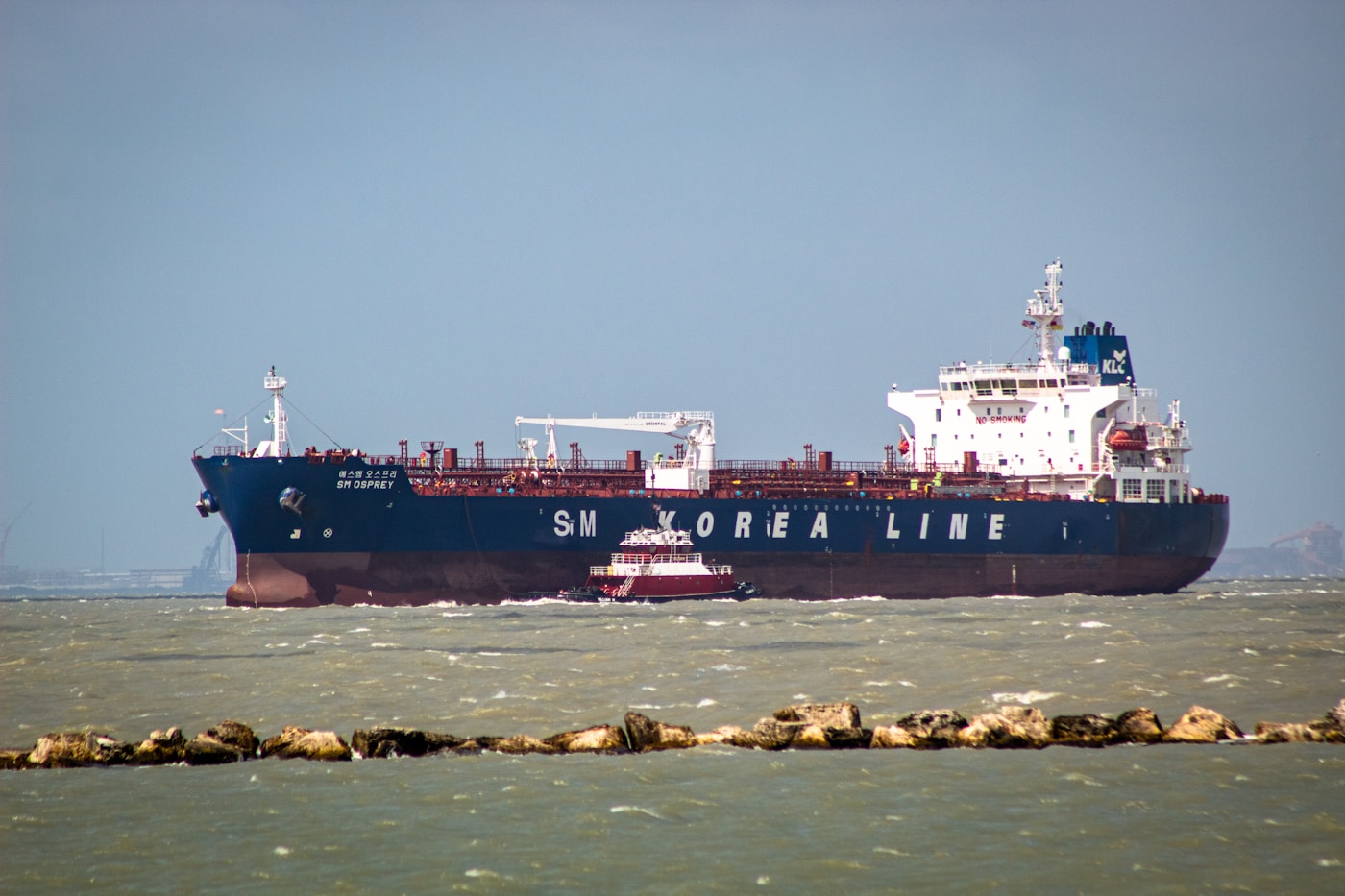
Who Still Buys Saudi Oil When Hormuz Is Closed?
Aramco’s customer base has undergone a dramatic reordering in three weeks. Before the war, the company’s top five crude buyers were China, Japan, South Korea, India, and the United States. Most of these customers received crude through the Strait of Hormuz. With that route effectively closed, only customers accessible via the Red Sea and Suez Canal can receive Saudi crude at scale.
European refineries have emerged as the primary beneficiaries of the Yanbu redirect. Mediterranean refiners in Italy, Greece, Turkey, and Spain — historically secondary customers — are absorbing the available Red Sea crude at premium prices. Aramco has reportedly signed emergency term contracts with at least four European refining groups at prices indexed to Brent plus a war premium of $3 to $5 per barrel, according to Reuters. The shift has reversed a decade-long trend in which Saudi crude flowed overwhelmingly eastward toward Asia. For European refiners accustomed to Russian Urals crude — itself constrained by sanctions — the sudden availability of Saudi Arab Light through the Mediterranean represents a significant reconfiguration of trade flows.
Iran has maintained selective passage through Hormuz for vessels linked to China and, more recently, India. Tehran has allowed some Indian vessels to pass through the strait in a rare exception to the blockade, according to Al Jazeera. China has continued to receive Iranian crude and has been granted effective safe passage. This selective enforcement means that Aramco’s core Asian customers face a perverse situation: they can receive Iranian crude but cannot easily receive Saudi crude that would normally arrive through the same waterway.
Japan and South Korea, which together imported over 2 million barrels per day of Saudi crude before the war, have been the hardest hit. Japan secured a separate safe passage deal with Iran on March 21 for its own vessels, but the arrangement covers only Japanese-flagged ships — a fraction of the tanker fleet that typically serves the trade. South Korea has no such arrangement. Both countries have turned to strategic petroleum reserves and alternative suppliers in West Africa and the Americas. The pain deepened in late March when Aramco confirmed a second consecutive month of crude supply cuts to Asian buyers, with April allocations falling further as the kingdom’s 39 percent export decline showed no sign of reversing.
What Happens to 70,000 Workers When the Oil Fields Become Targets?
Aramco employs approximately 70,000 people directly, with an additional estimated 100,000 to 150,000 contractors supporting operations across the Eastern Province, Yanbu, and offshore facilities. The war has transformed every Aramco installation into a potential target, creating workforce management challenges that the company has never faced at scale.
Workers at the Ras Tanura refinery and the Dhahran headquarters complex have operated under intermittent air raid alerts since March 1. The Saudi Ministry of Defence reported intercepting and destroying 47 drones in a single day over the Eastern Province on March 20-21, including a concentrated barrage of 38 drones within three hours, according to the Qatar News Agency. By March 22, the threat escalated further when three ballistic missiles and sixty drones targeted Riyadh and surrounding areas in the largest combined aerial assault of the conflict. Aramco workers at exposed facilities are conducting operations in what amounts to a combat zone.
The company has implemented tiered operational protocols. Essential operations staff — process engineers, control room operators, and emergency response teams — remain on-site at critical facilities under enhanced security measures. Non-essential administrative and support staff at Eastern Province locations have been relocated to Aramco’s western region offices or placed on remote work. Offshore platform crews at the idled Safaniya and Zuluf fields have been evacuated entirely.
The US Embassy’s March 8 decision to order non-emergency government personnel to leave Saudi Arabia has complicated Aramco’s workforce planning. An estimated 35,000 to 40,000 American citizens live in Saudi Arabia, a significant proportion working in the energy sector. American employees at Aramco joint ventures — including Motiva, the massive Port Arthur refinery that is Aramco’s largest downstream investment outside the Kingdom — have expressed concern about family members remaining in Saudi Arabia, according to industry sources cited by the Financial Times.
Aramco’s residential compounds in the Eastern Province — Dhahran, Ras Tanura, and Abqaiq — have been placed under heightened security. The Dhahran compound, a self-contained community that has housed Aramco employees since the 1930s, now operates with blast-resistant shelters repurposed from construction projects as air-raid refuges. Schools within the compound have shifted to remote learning. Recreational facilities have been converted into medical staging areas. The company has activated its crisis management protocols — originally designed for localised emergencies such as industrial accidents — at a scale that spans the entire Eastern Province.
The psychological dimension of the workforce challenge may prove more consequential than the logistical one. Aramco’s operating culture was built on the assumption that the Kingdom’s energy infrastructure would never face sustained military attack. The 2019 Abqaiq strike was a one-day shock. Three weeks of continuous air raid alerts, the visible presence of Patriot missile batteries outside office windows, and the knowledge that one’s workplace is an explicit military target represent a fundamentally different operating environment. Retention of experienced foreign technical staff — particularly those from Western countries whose embassies have recommended departure — will be a key indicator of Aramco’s ability to maintain operational readiness.
The Contrarian Case — This War Could Make Aramco Untouchable
The conventional narrative frames the war as an existential threat to Aramco’s business model. Iranian drones can reach any facility. Hormuz can be closed at will. The company’s production is at the mercy of geopolitical forces it cannot control.
The contrarian reading inverts every element of that narrative. The war is demonstrating — in the most dramatic possible fashion — that the world cannot function without Saudi oil. The Hormuz closure removed approximately 20 million barrels per day of Gulf oil from global seaborne trade, triggering the largest strategic petroleum reserve release in history (400 million barrels via the IEA), a 75 percent surge in oil prices, and warnings of the worst recession in a generation from Goldman Sachs. No single company has ever been more demonstrably important to the global economy than Aramco is right now.
This proven indispensability translates into long-term strategic value. Aramco’s proven reserves of approximately 260 billion barrels have not been diminished by the war — the fields are shut in, not depleted. When Hormuz reopens, those reserves will command a permanent risk premium. Institutional investors who previously discounted Saudi crude assets because of geopolitical risk may paradoxically now value them more highly, because the crisis has demonstrated that every major oil-consuming nation — from the United States to Japan to Germany — will mobilise military forces to keep Saudi oil flowing.
The war has also accelerated Aramco’s diversification strategy. The company’s $5 billion Chinese combat drone production deal, signed on March 11 in the midst of the conflict, signals that Aramco’s role in the Saudi economy extends well beyond extraction. CEO Nasser has positioned the company as a platform for industrial policy — petrochemicals, hydrogen, renewables, data centres, and now defence manufacturing. A company that produces oil, chemicals, hydrogen, and military drones is a different proposition from a company that merely pumps crude.
Aramco’s wartime share price performance — up 13 percent year-to-date despite a 20 percent production cut — is the market’s verdict on this logic. Investors are pricing the company not as a volume play but as a scarcity play. Fewer barrels sold at much higher prices, combined with a diversifying industrial portfolio, create a business that may emerge from the war more valuable than when it entered. The kingdom’s investment confidence extends beyond the oil sector: Saudi Arabia is pressing ahead with the FII Priority Summit in Miami, where Trump will deliver the keynote and PIF Governor Al-Rumayyan will pitch more than 1,500 delegates on the kingdom’s post-war potential.
The scarcity thesis extends beyond crude oil. Aramco’s downstream and chemicals subsidiaries — SABIC, the integrated refining complexes, and the growing LNG portfolio — are each benefiting from the broader energy supply shock. SABIC’s petrochemical margins have widened as feedstock costs for non-Gulf producers soar. The Jafurah unconventional gas development, which Aramco had positioned as a long-term strategic project, has gained new urgency as the war demonstrates the Kingdom’s vulnerability to maritime disruption of imported LNG. Every argument for Saudi energy self-sufficiency has been validated in blood and fire. The companies and projects pursuing that self-sufficiency now carry a national-security premium that did not exist four weeks ago.
“Aramco’s reserves did not burn. The fields are shut in, not depleted. When the strait reopens, those 260 billion barrels will command a permanent risk premium that did not exist before February 28.”
Energy Intelligence Group analysis, March 2026
Frequently Asked Questions
How much oil is Saudi Aramco producing during the Iran war?
Aramco’s production has fallen from approximately 10.9 million barrels per day in February 2026 to roughly 8 million barrels per day as of mid-March. The company proactively shut down the Safaniya and Zuluf supergiant offshore fields and reduced output at several other facilities after the Strait of Hormuz closure eliminated its primary export corridor.
What is the East-West Pipeline and how is Aramco using it?
The East-West Crude Oil Pipeline, also called the Petroline, is a 1,200-kilometre dual-pipe system running from the Abqaiq processing complex in the Eastern Province to Yanbu on the Red Sea coast. Built in 1981 during the Iran-Iraq War, it has been converted to full capacity of approximately 7 million barrels per day, allowing Aramco to bypass the blocked Strait of Hormuz and export crude through Red Sea terminals instead.
Was the Yanbu refinery seriously damaged by Iran’s drone attack?
The March 19 drone strike on the SAMREF refinery at Yanbu caused a fire that was quickly contained, with limited structural damage. Crude oil loadings at the nearby Red Sea port were briefly stopped but resumed within hours. The strategic significance, however, exceeded the physical damage — the attack demonstrated that Iran can reach Saudi Arabia’s only functioning oil export corridor.
How does the 2026 disruption compare to the 2019 Abqaiq attack?
The 2019 attack removed 5.7 million barrels per day for roughly two weeks, with full recovery by end of September 2019. The 2026 crisis involves a smaller daily cut of approximately 2.5 million barrels per day but has lasted 22 days with no end in sight. Total cumulative production lost will surpass the 2019 episode by approximately day 32 of the conflict. The fundamental difference is that the 2019 damage was repairable by Aramco, while the 2026 disruption depends on reopening a maritime chokepoint through military action.
Is Aramco’s stock price rising or falling during the war?
Aramco shares on the Saudi Tadawul exchange have risen 13 percent since the beginning of 2026, trading at approximately SAR 27.06 as of March 22. The market capitalisation stands at roughly SAR 6.3 trillion (approximately $1.68 trillion). Investors are betting that higher oil prices will more than compensate for reduced production volumes, and that the war has demonstrated the indispensability of Saudi oil to the global economy.
What happened to Aramco’s Q4 2025 earnings?
Aramco reported Q4 2025 net income of $17.77 billion and full-year 2025 net income of $93.4 billion (adjusted net income of $104.7 billion). Revenue for 2025 totalled $445.7 billion. The company declared full-year dividends of $85.5 billion and announced a $3 billion share buyback programme. Results were released on March 10, twelve days into the war, with CEO Amin Nasser warning of catastrophic consequences if the Hormuz disruption continued.