ABU DHABI — Iran struck the VTTI terminal at Fujairah on May 4, the same morning the US Navy launched Project Freedom to escort commercial vessels through the Strait of Hormuz — and the target was not the UAE but the bypass itself. The Habshan–Fujairah pipeline, a $4.2 billion corridor built specifically to move Abu Dhabi crude around the strait without touching it, feeds directly into VTTI’s storage tanks at the Fujairah Oil Industries Zone, and the drone that hit those tanks on Sunday afternoon carried a message that no escort operation can neutralise: if you cannot ship through Hormuz, you cannot ship around it either.
The operational symmetry was precise enough to function as doctrine. Project Freedom opened the front door with guided-missile destroyers, 100-plus aircraft, and 15,000 service members; Iran burned the back door down with a salvo of 15 missiles and four drones before the first escorted tanker had cleared the strait. Two American-flagged vessels transited Hormuz on launch day. The VTTI terminal complex, 90 per cent owned by Western capital — Vitol Group and Australia’s IFM Global Infrastructure Fund — caught fire. Three Indian nationals were pulled from the wreckage and taken to hospital. Hapag-Lloyd, the world’s fifth-largest container shipping line, issued a one-line assessment the same afternoon: Hormuz was “still not possible.”
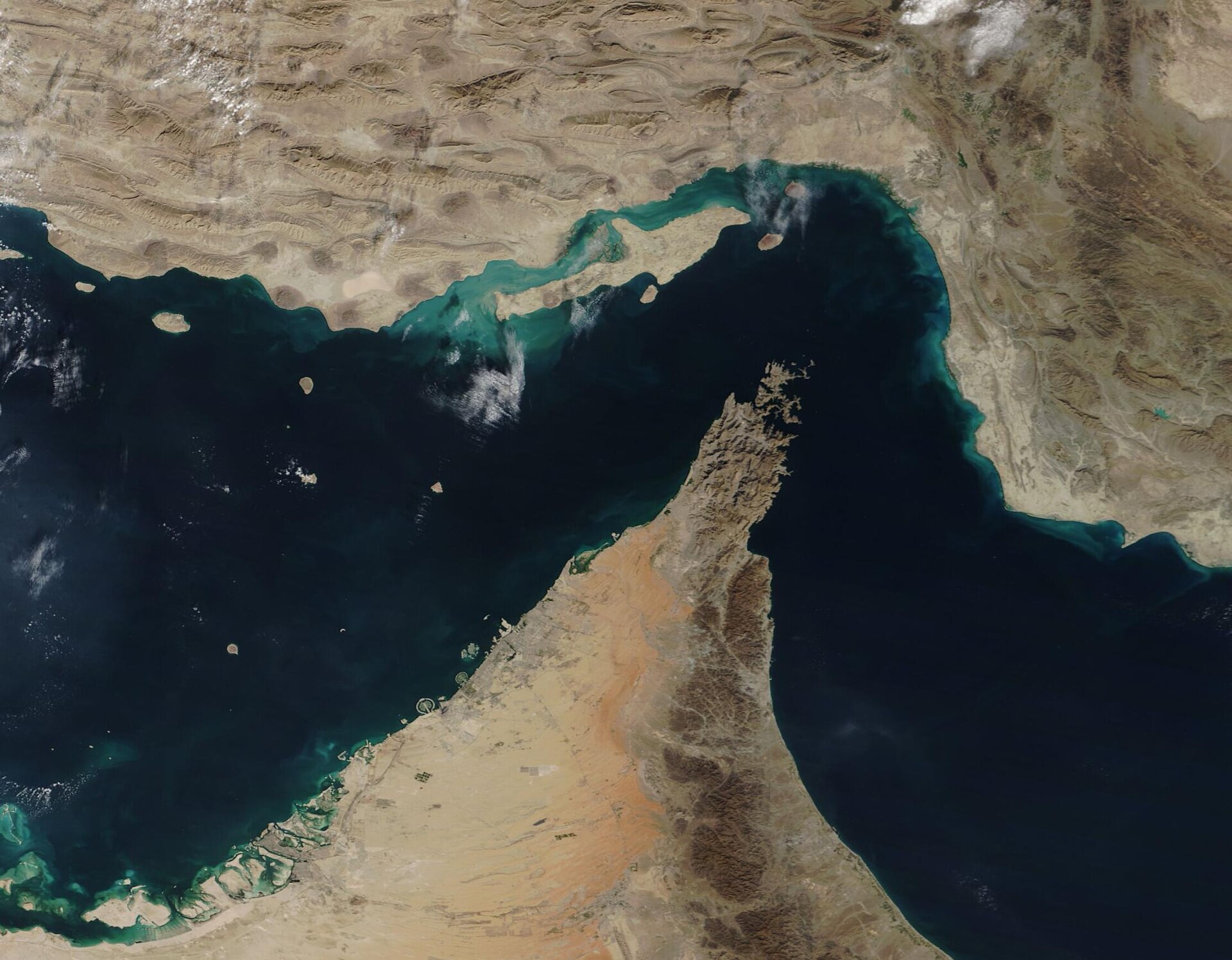
Table of Contents
- Why Did Iran Strike Fujairah Instead of a Military Target?
- Project Freedom’s First Day
- What Does the Habshan–Fujairah Pipeline Actually Bypass?
- Western Capital in the Blast Radius
- How Does the Strike Trap India?
- The Fujairah Targeting Pattern: 2019 to Now
- Can Gulf Bypass Infrastructure Replace Hormuz?
- Iran’s Deniability Architecture
- Frequently Asked Questions
Why Did Iran Strike Fujairah Instead of a Military Target?
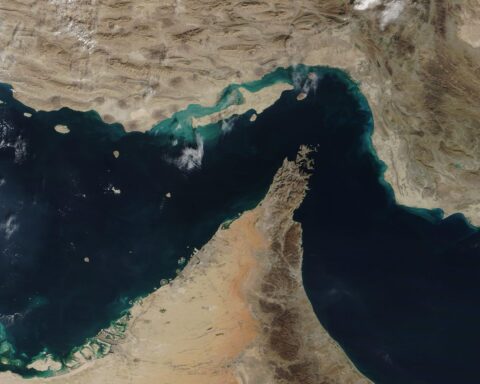
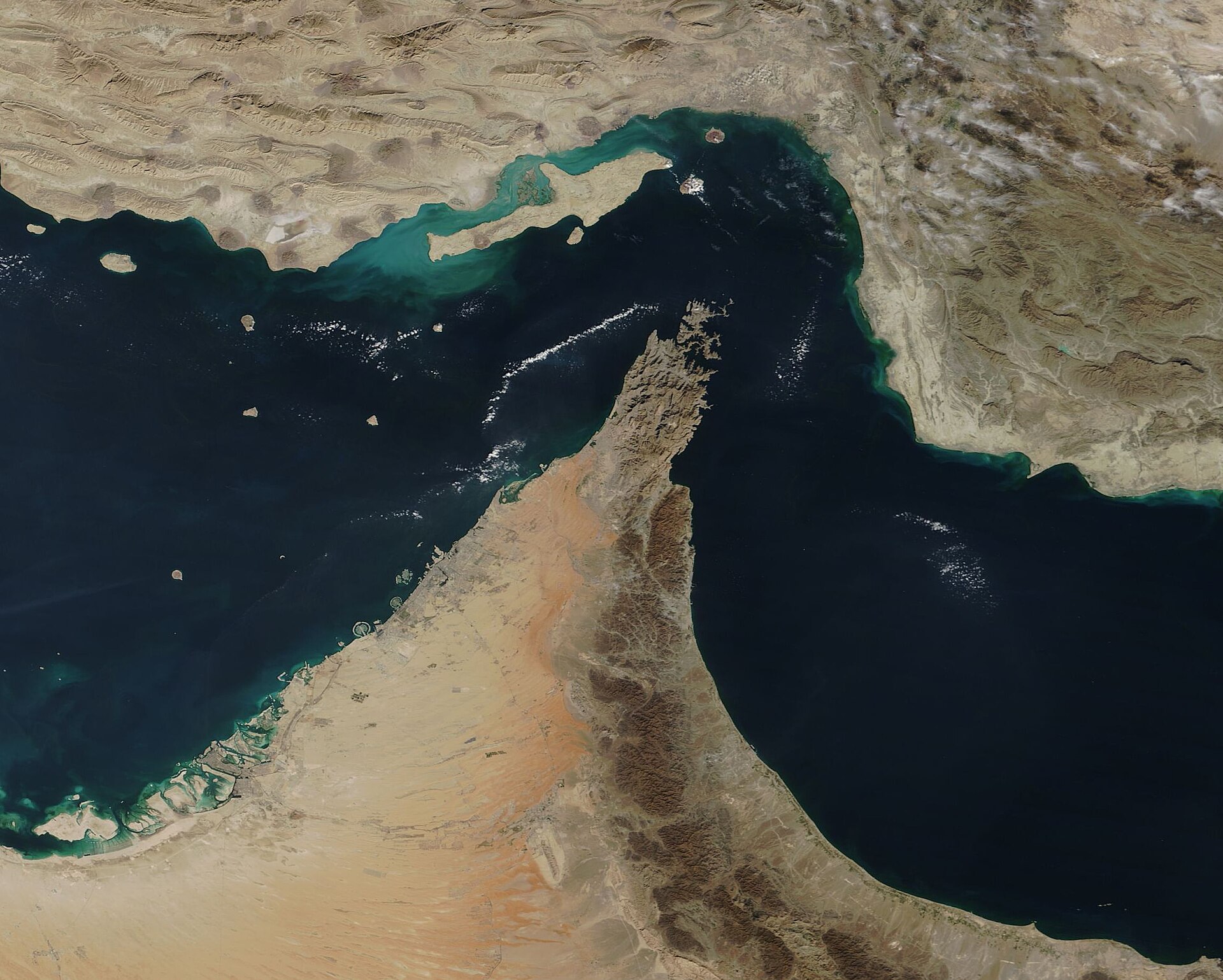
Because Fujairah is not an alternative to Hormuz — it is the alternative to Hormuz. The VTTI terminal sits at the discharge end of the only operational pipeline capable of moving Abu Dhabi crude to tankers waiting in the Gulf of Oman, outside the strait entirely. When Iran launched its drone and missile salvo on May 4, the intended destruction was not a storage tank but a thesis: that the Gulf states had engineered a way to keep exporting even if Hormuz closed. Iran did not need to rupture the pipeline itself, which runs underground across hundreds of kilometres of desert from the Habshan gas field. It needed to destroy confidence in the terminal where that pipeline ends, the loading jetties where tankers take on cargo, and the insurers who underwrite every barrel that moves through them.
The strike followed the announcement of Project Freedom by hours, not days. CENTCOM’s operation deployed guided-missile destroyers, more than 100 aircraft, and multi-domain unmanned platforms to create a secure corridor through the strait — a structure designed for corridor mapping and air-maritime cover rather than traditional convoy escort. Iran’s response was not to contest the corridor directly but to make its destination irrelevant. A tanker escorted safely through Hormuz still needs somewhere to load. The VTTI terminal at Fujairah — the only point where UAE pipeline crude meets deepwater tankers — was burning before the day’s last escort had cleared the strait.
ADNOC holds a 10 per cent stake in VTTI Fujairah. The remaining 90 per cent belongs to Vitol, the world’s largest independent energy trader, and IFM Global Infrastructure Fund, an Australian pension-backed vehicle. Iran hit a facility where Abu Dhabi’s state oil company is the minority partner and Western institutional capital carries the exposure — meaning the insurance and balance-sheet consequences of the strike land in Rotterdam and Melbourne, not just Abu Dhabi.
Project Freedom’s First Day
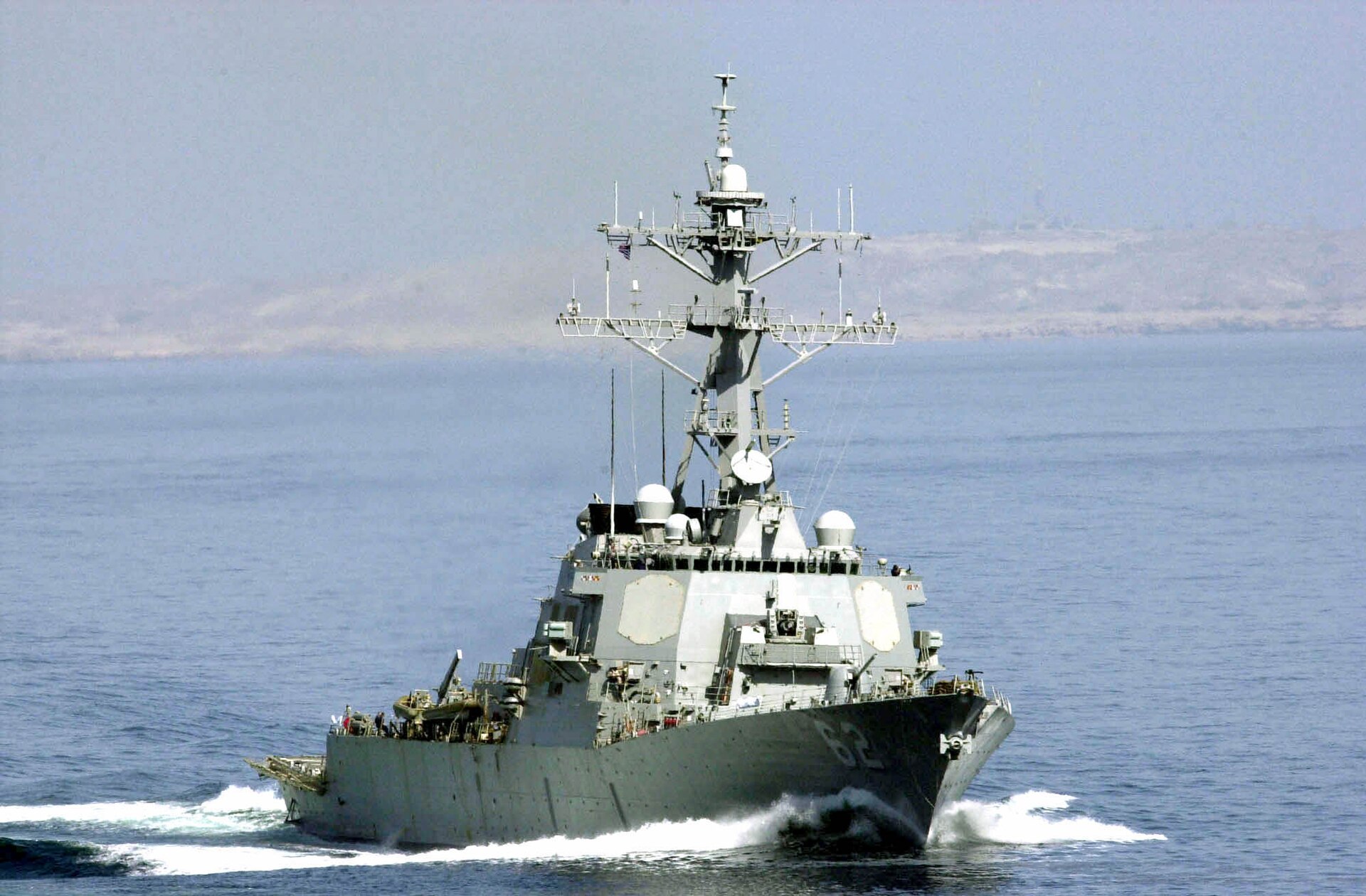
CENTCOM announced the operation on May 4 with the kind of force package that communicates seriousness to domestic audiences and vulnerability to adversaries simultaneously. The deployment included more than 100 land- and sea-based aircraft — F-15s, F-16s, F-35s, EA-18G Growlers for electronic warfare, AH-64 Apaches, and MH-60 Jayhawks — alongside guided-missile destroyers and 15,000 service members. The structure was not a Second World War–style convoy with warships flanking merchant vessels but a multi-domain corridor: mapping safe passage, providing air cover, and maintaining surveillance across the strait’s narrowest points.
The Middle East briefing 3,000+ readers start their day with.
One email. Every weekday morning. Free.
Two American-flagged vessels transited Hormuz successfully on launch day, which CENTCOM presented as proof of concept. The achievement was real but contained its own limitation. At pre-war throughput rates, roughly 60 to 70 laden tankers transited Hormuz daily. Project Freedom’s first day moved two. Saudi Arabia, which cannot endorse Project Freedom without exposing its own infrastructure to retaliation, watched from Riyadh without comment.
The timing of the Fujairah strike converted Project Freedom’s launch into a split-screen event. On one half, the US Navy demonstrating that it could push two vessels through the strait under heavy escort. On the other, black smoke rising from the terminal complex that was supposed to make the strait irrelevant. IEA Director Fatih Birol has already described the Hormuz disruption as “the biggest energy security threat in history,” with 13 million barrels per day offline globally. Project Freedom’s answer to that threat, on its opening day, was two ships and a burning bypass terminal 150 kilometres down the coast.
“What happened was a product of the US Army’s adventurism to create a corridor for the illegal passage of ships through the prohibited waterways of the Strait of Hormuz.”
— Senior Iranian military source, via PressTV, May 4, 2026
What Does the Habshan–Fujairah Pipeline Actually Bypass?
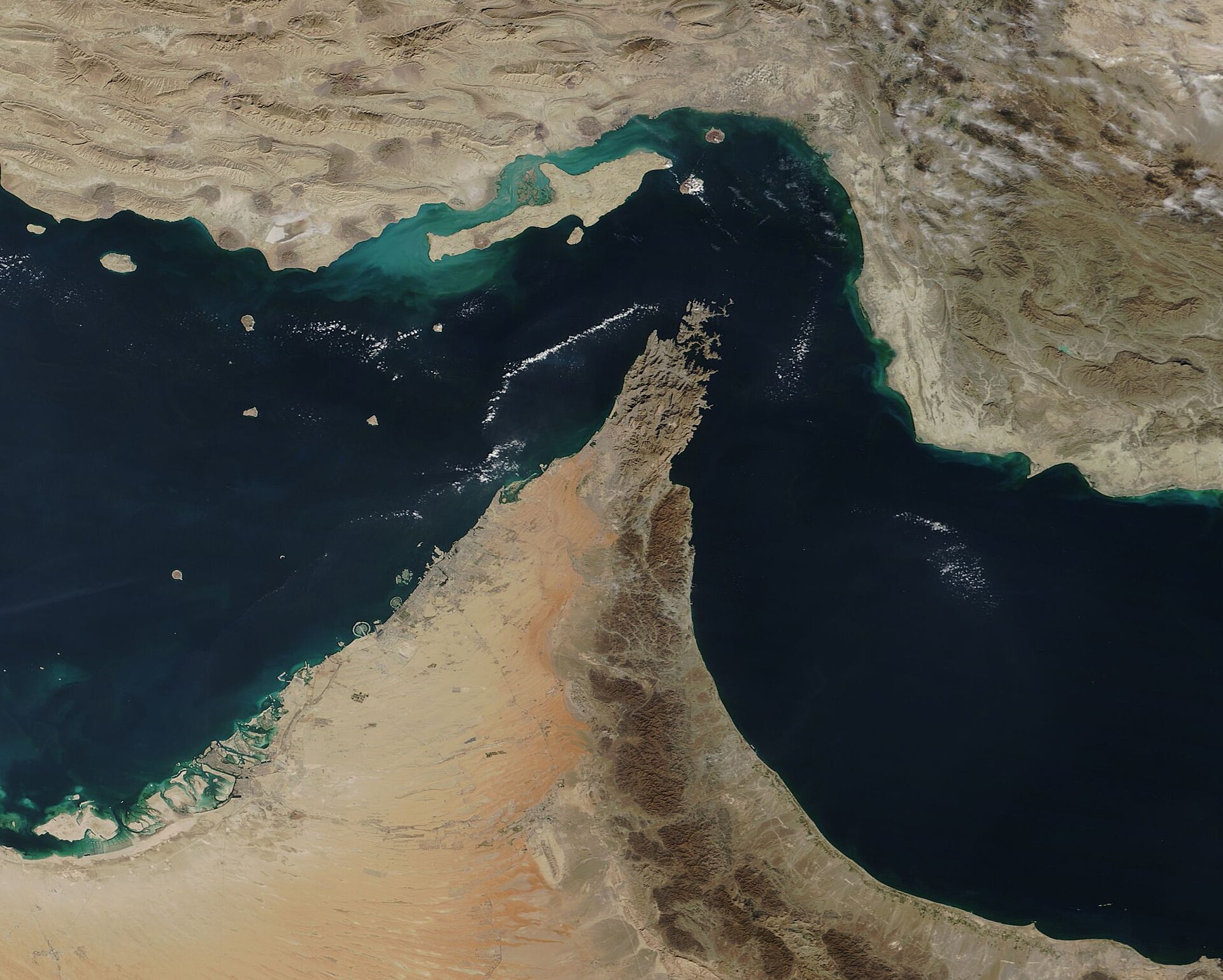
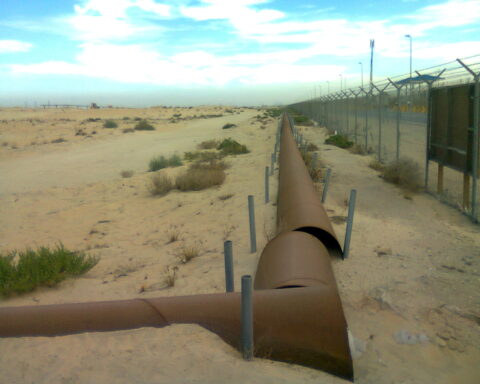
The Abu Dhabi Crude Oil Pipeline — ADCOP — runs 406 kilometres from the Habshan gas-processing complex in Abu Dhabi’s western desert to the Fujairah Oil Industries Zone on the Gulf of Oman coast, entirely bypassing the Strait of Hormuz. The pipeline is 48 inches in diameter, built by China Petroleum Engineering and Construction Corporation at a cost of $4.2 billion, and became fully operational in June 2012. Its nameplate capacity is 1.5 million barrels per day, with engineering provisions to upgrade to 1.8 million bpd. Under current war conditions, with Hormuz functionally closed to most commercial traffic — only 45 transits since the April 8 ceasefire as of late April, representing 3.6 per cent of the pre-war baseline — the pipeline has been running at or above design capacity.
The pipeline was conceived in the aftermath of the 1980s Tanker War, when Iranian attacks on Gulf shipping demonstrated that Hormuz dependency was an existential vulnerability for every Gulf exporter. The logic was elegant and, for three decades, untested: build a physical alternative that removes the strait from the export chain entirely. Abu Dhabi crude enters the pipeline at Habshan, arrives at Fujairah, loads onto tankers in the Gulf of Oman, and reaches Asian refineries without ever approaching Iranian-controlled waters. WorleyParsons designed the system; Chinese state engineering built it. The UAE celebrated its completion as proof that strategic planning could neutralise geographic chokepoints.
What the pipeline’s designers did not engineer for was a sustained, full-scale closure in which the bypass itself became the primary target. At 1.5 million bpd, ADCOP moves roughly 60 per cent of the UAE’s normal export volume — meaningful but not sufficient to replace the country’s total pre-war throughput. Combined with Saudi Arabia’s East-West pipeline capacity through Yanbu — itself operating under a ceiling of 4 to 5.9 million bpd — total Gulf bypass capacity reaches approximately 3.5 to 5.5 million bpd against pre-war Hormuz throughput of 20 million. The structural gap is 14.5 to 16.5 million barrels per day with no pipeline, no escort, and no workaround. Engineering News-Record noted earlier this year that this bypass infrastructure was sized for a short disruption. The disruption is in its tenth week.
| Route | Capacity (bpd) | Status (May 2026) | Operator |
|---|---|---|---|
| Habshan–Fujairah (ADCOP) | 1.5M (upgradeable to 1.8M) | Terminal struck May 4; pipeline intact | ADNOC |
| Saudi East-West (Petroline to Yanbu) | 4–5.9M ceiling | Operational; pumping station struck April 8 | Aramco |
| Combined bypass total | ~3.5–5.5M | Both under attack | — |
| Pre-war Hormuz throughput | ~20M | 3.6% of baseline transiting (as of late April) | — |
| Structural gap | 14.5–16.5M | No alternative route exists | — |
Western Capital in the Blast Radius
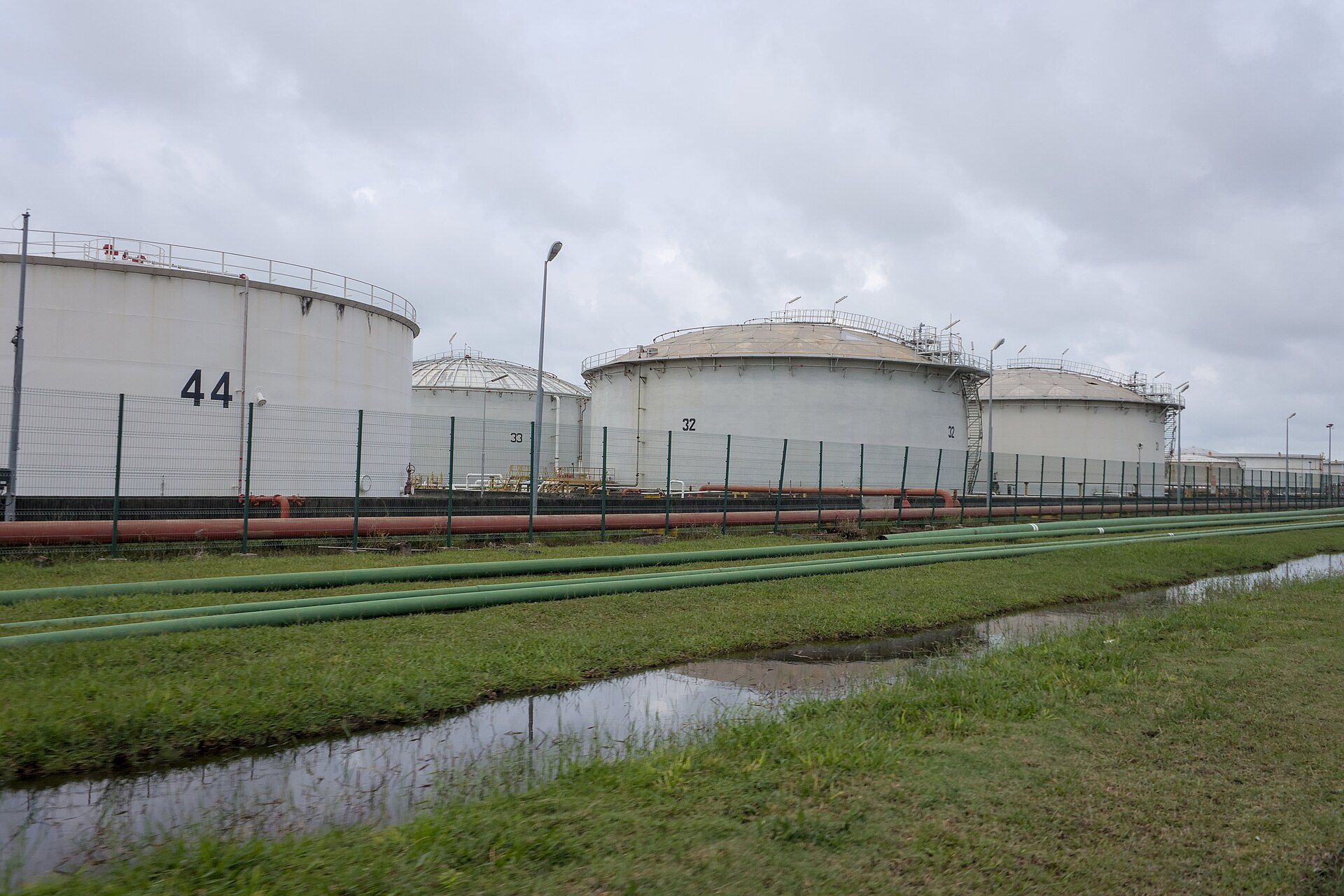
The VTTI terminal is not a state-owned facility with a national flag and a defence ministry budget line. It is a commercial joint venture in which Vitol Group, headquartered in Rotterdam, holds 45 per cent; IFM Global Infrastructure Fund, an Australian vehicle backed by industry superannuation funds — pension money from construction workers, nurses, and firefighters — holds another 45 per cent; and ADNOC, Abu Dhabi’s state oil company, holds the remaining 10 per cent. VTTI operates over 1.9 million cubic metres of storage capacity at Fujairah, making it the second-largest terminal operator at the port. The drone that struck on May 4 hit infrastructure owned predominantly by a commodity trader and a pension fund, neither of them based in the Gulf.
That ownership structure is the message. Iran did not strike a military base or a government installation where the targeting could be absorbed into a conventional military exchange. It struck a facility where the losses flow through to commercial balance sheets, insurance claims, and institutional investor risk committees. Vitol trades more than 8 million barrels of oil per day globally; its exposure at Fujairah is now a board-level conversation about whether the terminal can be insured, restaffed, and reopened under ongoing threat. IFM’s infrastructure fund markets itself on the stability and predictability of its assets — pipelines, ports, toll roads. A drone strike on a terminal it co-owns in a war zone tests that thesis in a way that quarterly earnings calls cannot absorb quietly.
ADNOC’s 10 per cent stake means Abu Dhabi bears the smallest direct financial exposure among the three owners but the largest strategic one. Murban crude — the UAE’s benchmark — was priced at $110.75 per barrel for May delivery, confirmed by ADNOC on April 29. Every day the VTTI terminal remains offline or operates at reduced capacity, Abu Dhabi crude that was destined for the bypass backs up into storage or simply stays in the ground. Iran’s private disclosure to Saudi interlocutors that it intended to “crush the Emiratis” was not metaphor — it was a targeting list, and VTTI was on it.
How Does the Strike Trap India?
Three Indian nationals were moderately injured in the VTTI drone strike and taken to hospital in Fujairah. The Indian Embassy in the UAE confirmed it was “in touch with local authorities to ensure adequate medical care.” New Delhi issued no broader diplomatic statement condemning Iran, no demand for accountability, and no public reassessment of its diplomatic posture. The silence was not an oversight but a calculation, and it is a calculation that cannot hold much longer.
India’s exposure in the Gulf is not abstract. Approximately 9 million Indian workers live and work across the Gulf states, and the UAE alone contributes 19.2 per cent of India’s total inbound remittances — second only to the United States. Total Gulf remittances to India run at approximately $51 billion annually, a flow that supports household consumption in states from Kerala to Uttar Pradesh and functions as a structural input to India’s current account. On January 19, 2026, India signed a strategic defence partnership letter of intent with the UAE, a document that was supposed to deepen military cooperation and signal alignment. Three months later, an Iranian drone injured Indian workers on Emirati soil, and Delhi’s response was a consular statement about hospital visits.
The diplomatic impossibility compounds when you add the expired waiver. OFAC General License U, issued on March 20, authorised Indian imports of Iranian crude loaded on or before that date, through April 19 — the first Iranian oil to reach Indian refineries in seven years. Approximately 4 million barrels arrived under that window, with Indian Oil Corporation purchasing roughly 2 million of them. US Treasury Secretary Scott Bessent confirmed the US would not renew the one-month general licences for Iranian crude. GL U is dead. India bought Iranian oil under a US waiver that no longer exists, signed a defence partnership with the UAE, has 9 million citizens working in a region under Iranian missile and drone attack, and still will not publicly name Iran as a threat to its nationals’ safety. The neutrality that served Delhi through the first weeks of the war — buying Iranian crude while deepening ties with Abu Dhabi — has been punctured by shrapnel from an Iranian drone in a terminal jointly owned by Western pension capital.
The first Hormuz convoy sent Brent below Saudi break-even, which matters to Riyadh’s fiscal arithmetic, but it matters to Delhi’s strategic arithmetic for a different reason: if Project Freedom succeeds in reopening even partial Hormuz throughput, India benefits enormously as a net importer. If it fails and Iran continues to strike bypass infrastructure, Indian workers remain in the blast radius of a war that Delhi refuses to acknowledge as a war. Roughly 170 million barrels sit on approximately 166 stranded tankers as of late April, according to Kpler, and every one of those barrels represents a refinery somewhere — many of them Indian — waiting for crude that is not arriving.
The Fujairah Targeting Pattern: 2019 to Now
The May 4 strike was not the first Iranian attack on Fujairah, nor the second, nor the third. It was the latest in a targeting pattern that began seven years ago with limpet mines and has escalated through drones to combined missile-and-drone salvos — a progression that tracks almost exactly with Iran’s growing confidence that Fujairah’s bypass function makes it a permanent strategic target rather than an occasional one.
On May 12, 2019, four commercial ships were damaged off Fujairah’s coast by limpet mines — two Saudi tankers, one Norwegian, one Emirati. The UK Foreign and Commonwealth Office attributed the operation to “a sophisticated state actor.” The United States accused the IRGC directly. Iran denied responsibility. The attack was treated as an isolated provocation, a signal flare rather than a doctrine. Oil markets reacted for 48 hours and then forgot. Fujairah’s role as a bunkering hub and bypass terminal continued without structural change to its defences or its risk profile.
The 2026 war turned that signal flare into a sustained campaign. On March 14, Iranian drones struck Fujairah port, triggering fires and suspending oil-loading operations entirely. Two days later, on March 16, a second drone strike hit the port again, extending the disruption. Oil loading resumed only in the days before the May 4 attack — meaning the VTTI strike caught the terminal at precisely the moment it had returned to something approaching normal operations. Iran waited for the restart, then struck the restart. The interval between the March 16 attack and the May 4 salvo was 49 days.
The escalation curve is legible. In 2019, Iran used covert methods — limpet mines, deniable operatives — against vessels offshore. In March 2026, it used drones against port infrastructure. By May 4, it deployed a combined salvo of 15 missiles and four drones against a specific, named terminal within the Fujairah Oil Industries Zone, with the UAE Ministry of Defence confirming interception of three missiles and a fourth falling into the sea. The zone holds approximately 70 million barrels of total storage across all operators, and Fujairah exported more than 1.7 million barrels per day of crude and refined fuels before the war. Each successive attack has been more overt, more destructive, and more precisely aimed at the bypass function rather than at shipping generally. The Hormuz sovereignty law advancing through Iran’s parliament — 12 articles that would codify IRGC control over strait transit as domestic legislation — is the legal scaffolding for a targeting doctrine that is already operational.
Can Gulf Bypass Infrastructure Replace Hormuz?
The short answer is no, and the arithmetic is not close. Combined bypass capacity — Saudi Arabia’s East-West pipeline to Yanbu plus the UAE’s Habshan–Fujairah pipeline — reaches approximately 3.5 to 5.5 million barrels per day, a figure that already assumes both routes are fully operational. Pre-war Hormuz throughput was approximately 20 million bpd. The structural deficit is 14.5 to 16.5 million barrels per day, and there is no infrastructure on earth that can close that gap in the timeframe of this war.
Both bypass routes are now under active Iranian attack. The East-West pipeline’s pumping station was struck on April 8, the day of the ceasefire — an IRGC commander had declared “all restraint removed” the day before, and the strike came after the ceasefire’s nominal start. The VTTI terminal at the Fujairah end of ADCOP was hit on May 4. Iran has demonstrated the ability and willingness to target both ends of the bypass architecture: the pumping infrastructure that keeps crude moving through the Saudi pipeline, and the terminal infrastructure where the UAE pipeline discharges. The pipeline itself — buried underground across hundreds of kilometres of desert — is harder to strike, but the facilities at either end are fixed, visible, and targetable with the drone and missile capabilities Iran has used repeatedly since February. Iran executed a second strike on Fujairah on May 5, completing a pattern that is documented in full in Iran’s thirty-day bypass denial campaign — the first comprehensive account to trace all three actions as a single operational doctrine.
The bypass was designed for a specific scenario: a short-duration disruption to Hormuz transit, lasting weeks rather than months, during which Gulf states could maintain partial export volumes to key Asian customers while diplomatic or military action reopened the strait. The current disruption is in its tenth week and shows no sign of resolution. The IRGC has issued a 30-day deadline — expiring approximately June 1 — for the US to end its Hormuz blockade, while a senior Iranian lawmaker warned on May 4 that “any American interference in the new maritime regime of the Strait of Hormuz will be considered a violation of the ceasefire.” The ceasefire itself is functionally inoperative, as the Fujairah strike demonstrates. The bypass infrastructure was sized for a short disruption. This war has long since stopped being that.
“Any American interference in the new maritime regime of the Strait of Hormuz will be considered a violation of the ceasefire.”
— Senior Iranian lawmaker, via WION/Al Jazeera, May 4, 2026
Iran’s Deniability Architecture
Iran did not claim the Fujairah strike as a deliberate IRGC operation. It did something more useful: it framed the attack as an automatic consequence of American provocation. IRIB, Iran’s state broadcaster, stated that the Fujairah fire was “a direct consequence of American adventurism in the Strait of Hormuz.” The senior military source quoted by PressTV described the event as “a product of the US Army’s adventurism to create a corridor for the illegal passage of ships through the prohibited waterways.” IRNA, the state news agency, called Trump’s Hormuz effort “delirium.” At no point did any official Iranian source say the IRGC targeted the VTTI terminal, selected it for its bypass function, or intended to destroy Fujairah’s export capacity.
The framing is a threat wrapped in a disclaimer. By positioning every strike on Gulf infrastructure as a reactive consequence of US escalation rather than an Iranian initiative, Tehran establishes a doctrine of automatic retaliation that requires no individual targeting decision to be defended or acknowledged. Every Project Freedom transit, under this logic, generates a proportional infrastructure cost somewhere in the Gulf of Oman — and the Gulf states, not the United States, absorb it. The ADNOC tanker struck while US-escorted ships transited Hormuz followed the same pattern: Iranian action, American provocation cited, no formal claim. The deniability is not meant to be believed; it is meant to be sufficient for the ceasefire’s paperwork.
This framing also traps the UAE specifically. The UAE’s exit from OPEC on May 1, three days before the Fujairah strike, already signalled Abu Dhabi’s willingness to break from the collective Gulf architecture when its interests diverged. Iran’s response — striking the UAE’s most valuable non-Hormuz export infrastructure — demonstrated that independence from OPEC does not confer independence from Iranian targeting. Abu Dhabi can set its own production quotas now, but it cannot produce what it cannot export, and it cannot export through a terminal that is on fire.
The 30-day deadline — expiring around June 1 — functions as the temporal boundary of Iran’s current posture. If the US withdraws from Hormuz escort operations by that date, the IRGC’s declared “maritime regime” remains intact and the Gulf states negotiate from a position of demonstrated dependency. If the US maintains or expands Project Freedom, Iran has pre-authorised itself to continue striking bypass infrastructure as a defensive response to American aggression. In either scenario, the targeting doctrine survives. Iran believes Project Freedom cannot reopen the strait at scale — Hapag-Lloyd’s “still not possible” assessment on launch day supports that belief — and retains the ability to impose costs on Gulf infrastructure faster than the US can create benefits through escort corridors.
The same day Fujairah burned, Saudi Arabia issued its sharpest public statement of the war — condemning “the blatant Iranian aggression” against the UAE and five GCC neighbours in a formal MFA communiقué accompanied by MBS calling MBZ directly, their first exchange in six weeks. The condemnation and why the Hajj constraint prevents any follow-through are examined in MBS Breaks Six-Week Silence with MBZ to Condemn Iran’s UAE Strikes.
Frequently Asked Questions
What is the VTTI Fujairah terminal and why was it targeted?
VTTI Fujairah is a petroleum storage and export terminal within the Fujairah Oil Industries Zone on the Gulf of Oman coast, operated as a joint venture between Vitol Group (45 per cent), IFM Global Infrastructure Fund (45 per cent), and ADNOC (10 per cent). It holds over 1.9 million cubic metres of storage capacity and serves as the discharge point for the Habshan–Fujairah pipeline (ADCOP), the UAE’s only operational crude oil bypass route around the Strait of Hormuz. The terminal’s function as the physical endpoint of the bypass — where pipeline crude meets tankers — made it a higher-value target than the pipeline itself, which runs underground and is harder to strike. The broader Fujairah Oil Industries Zone holds approximately 70 million barrels of storage across all operators and exported more than 1.7 million bpd before the war began.
Did Iran formally claim responsibility for the May 4 Fujairah strike?
No. Iran attributed the strike to “American adventurism” through state media channels including IRIB and PressTV, framing the attack as a reactive consequence of Project Freedom’s launch rather than a deliberate IRGC targeting decision. This framing — consistent with Iran’s approach to the ADNOC tanker strike and previous Fujairah attacks in March 2026 — serves a dual function: it preserves nominal ceasefire compliance while establishing that every US escort operation will generate a proportional infrastructure cost in the Gulf of Oman. The UAE Ministry of Defence confirmed the attack involved 15 missiles and four drones, intercepting three missiles with a fourth falling into the sea — a salvo scale that indicates pre-planned military operations, not spontaneous retaliation.
What happened to the Indian workers injured at VTTI?
Three Indian nationals sustained moderate injuries in the drone strike and were hospitalised in Fujairah. The Indian Embassy confirmed it was coordinating with local authorities on medical care. New Delhi did not issue a broader diplomatic statement condemning Iran, impose any diplomatic consequences, or publicly reassess India’s position on the conflict. India has approximately 9 million workers across the Gulf states and receives approximately $51 billion annually in Gulf remittances, creating a structural dependency that constrains Delhi’s ability to take sides — even when its citizens are physically harmed by Iranian strikes on the infrastructure of a country with which India signed a strategic defence partnership in January 2026.
How does the Fujairah strike affect oil prices and global supply?
Murban crude — the UAE benchmark — was already at $110.75 per barrel for May delivery before the strike. The VTTI fire directly threatens the 1.5 million bpd flowing through the Habshan–Fujairah bypass, which along with Saudi Arabia’s East-West pipeline represented the last functional export routes circumventing Hormuz. With approximately 170 million barrels stranded on 166 tankers globally as of late April, and IEA Director Fatih Birol already characterising 13 million bpd offline as “the biggest energy security threat in history,” the elimination or degradation of bypass capacity removes the floor under supply projections that were already at crisis levels. The insurance implications for Fujairah-loaded cargoes — given VTTI’s third attack in under two months — may prove more disruptive than the physical damage itself.
What is the IRGC’s 30-day Hormuz deadline?
Iran issued a 30-day deadline for the United States to end its Hormuz operations, expiring approximately June 1, 2026. The deadline was accompanied by the senior lawmaker’s warning that any American interference in Iran’s self-declared “maritime regime” would constitute a ceasefire violation. This deadline overlaps with the 12-article Hormuz sovereignty law advancing through Iran’s parliament, which would codify IRGC control over strait transit as a matter of domestic legislation rather than wartime improvisation. The convergence of a legislative framework, a military deadline, and demonstrated willingness to strike bypass infrastructure on the same day as an American escort launch suggests Iran is building toward a June confrontation point, regardless of whether Project Freedom scales up or draws down.
The first operational test of that confrontation point arrived on May 4, when Project Freedom’s initial transit produced zero commercial follow-on participation and gave Iran’s parliament the “foreign aggression” predicate needed to accelerate the sovereignty law. For the full post-firefight analysis, see Project Freedom Made Hormuz Harder to Open.