
TEHRAN — Iran has roughly three weeks of unused oil storage capacity remaining before its export-blockaded crude inventories saturate, according to Wood Mackenzie and Kpler estimates published over the past five days, as the United States on May 2 sanctioned a Chinese terminal operator that handled tens of millions of barrels of Iranian crude in 2025. An IRGC-linked senior security source the same week threatened “practical and unprecedented action” if the U.S. naval blockade in place since April 13 is not lifted.
The two May 2 developments — the State Department’s designation of Qingdao Haiye Oil Terminal Co., Ltd. and the closing arithmetic of Kharg Island’s tank tops — compress Iran’s decision window into a physical deadline that arrives ahead of the political one. The Witkoff–Araghchi negotiating track in Muscat has been working on a 45-day phased framework. The storage ceiling does not.
Table of Contents
- How close is Iran to running out of storage?
- The Qingdao Haiye sanction and the closing of the teapot relief valve
- Reservoir damage and the cost of an uncontrolled shut-in
- “Practical and unprecedented action”: the IRGC signal
- The blockade’s running tally: $4.8 billion and 53 million barrels
- Beijing’s narrow defence and the company it did not name
- Background: how the supply chain was squeezed in five waves
- Frequently Asked Questions
How close is Iran to running out of storage?
Kpler analytics, cited by Bloomberg on April 27, places Iran’s remaining unused storage at between 12 and 22 days. The lower figure assumes the standard 80% utilisation ceiling that oil operators observe for safety, vapour-emission, and operational-flexibility reasons; the upper figure assumes Iran fills tanks to theoretical capacity. Usable onshore storage stands at roughly 26 million barrels — about 14 days of cover at pre-blockade throughput rates — rising to 41 million barrels with floating storage included.
Wood Mackenzie has put the headline figure at “about three weeks.” Alexandre Araman, the consultancy’s director of Middle East upstream, told Foreign Policy on April 28 that Iran will “first reduce production rates to buy time and minimize reservoir damage,” and that “if the blockade persists, cuts become inevitable.” Gregory Brew of Eurasia Group offered Axios a similar window on May 1, putting Iran “probably several weeks, or perhaps as much as a month, away from running out of storage.”
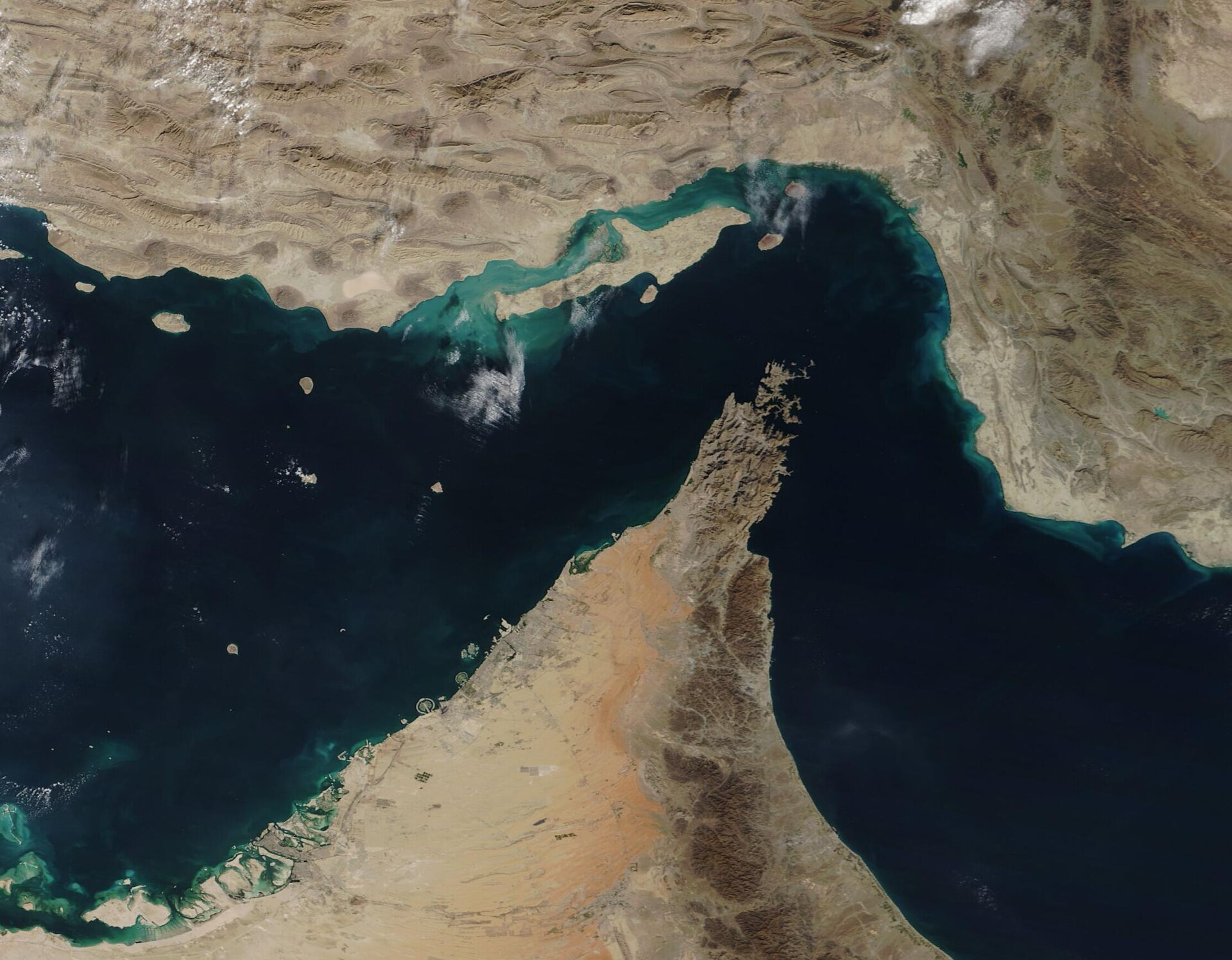
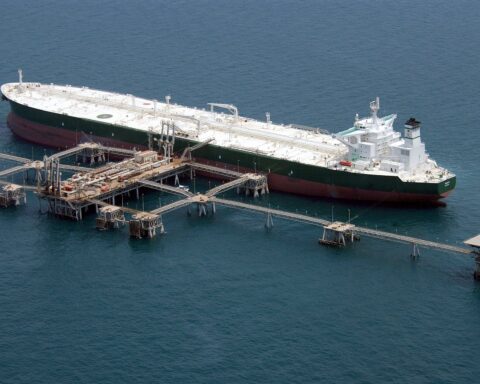
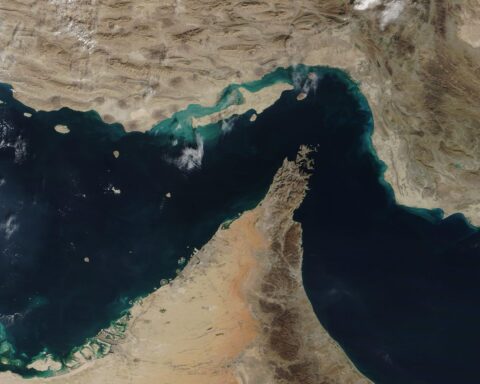
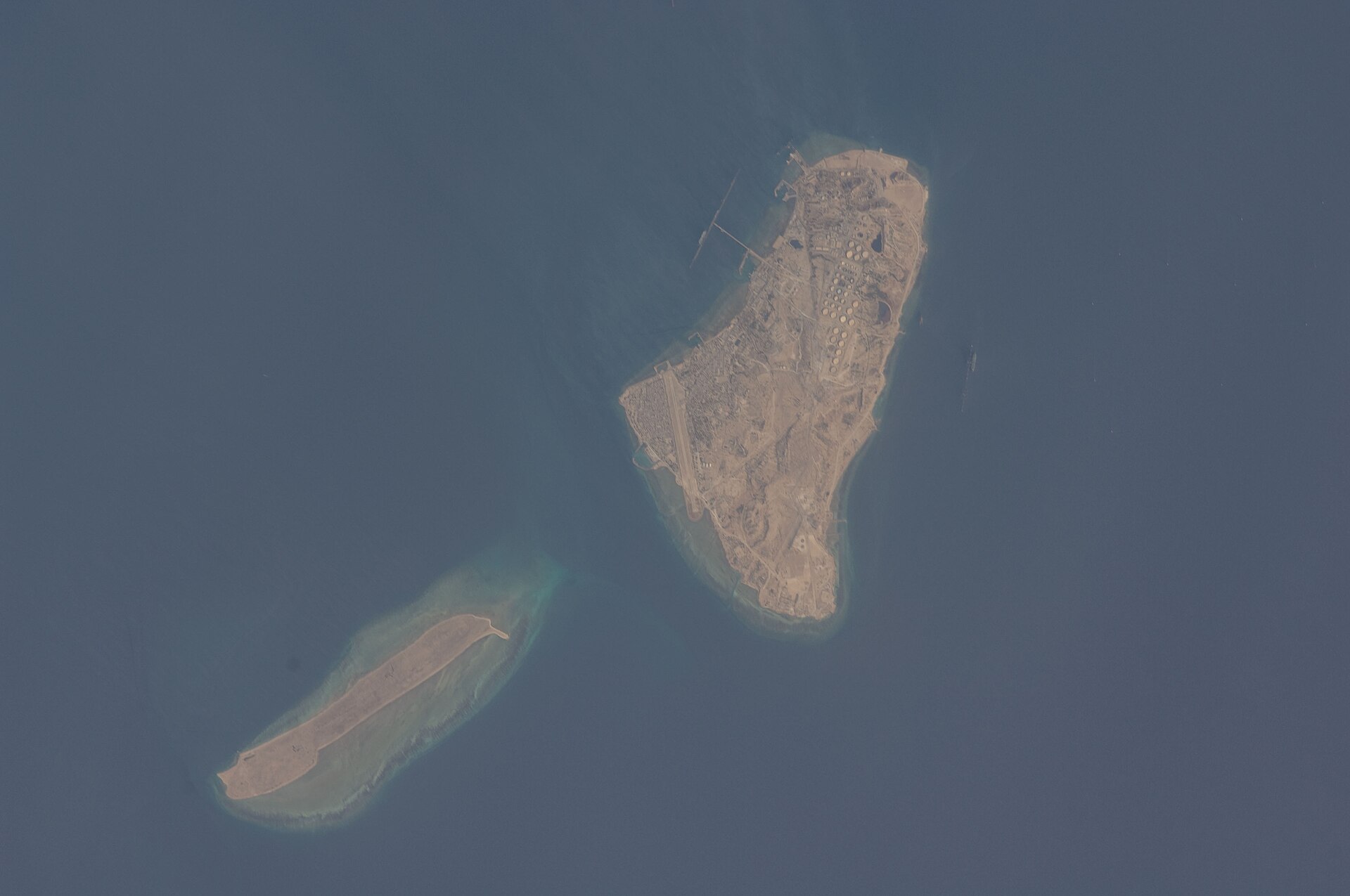
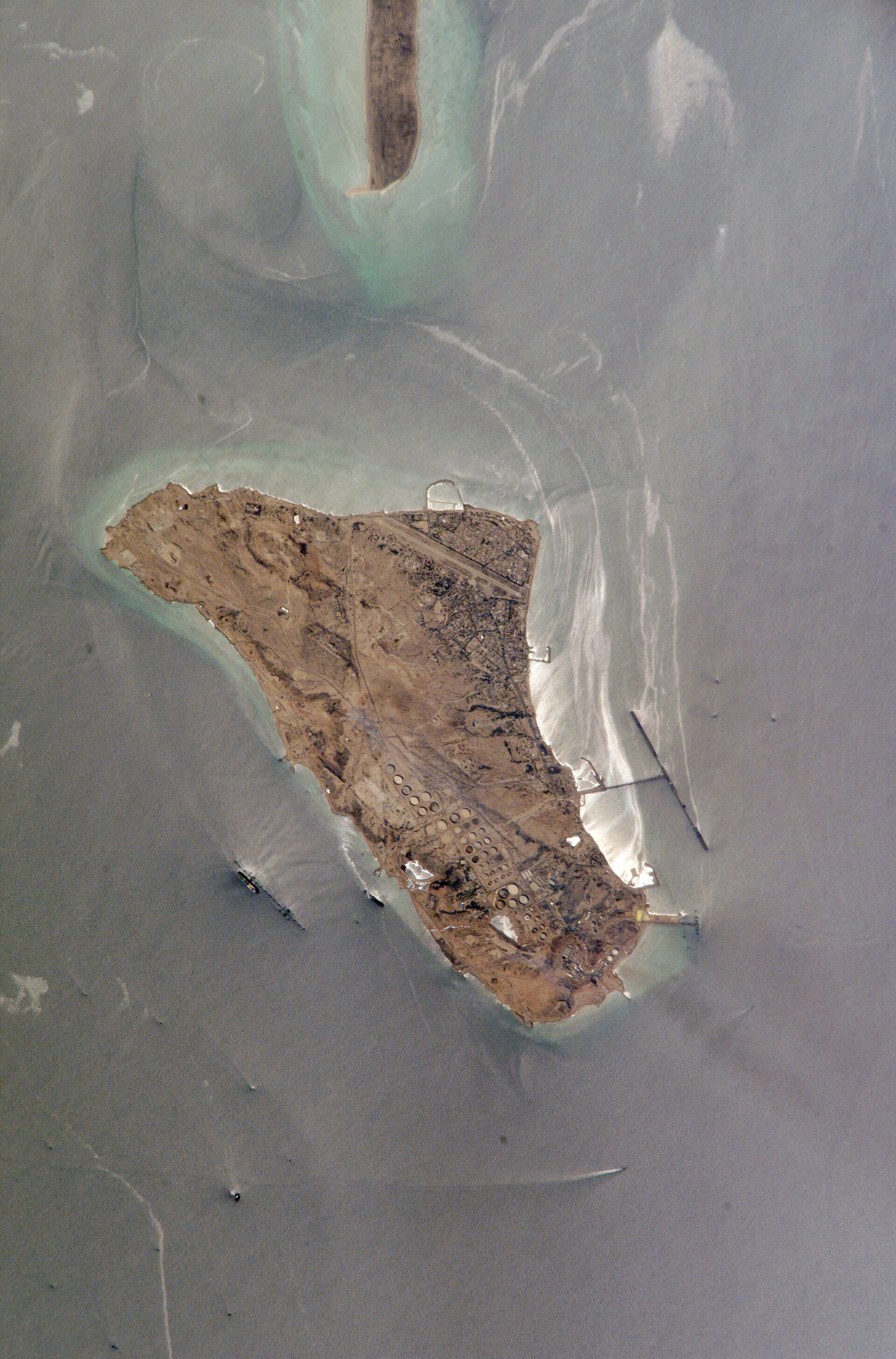
The squeeze is visible at Kharg Island, the export terminal that processes around 90% of Iran’s energy shipments. Foreign Policy reported it was 74% full as of April 20, having absorbed roughly three million barrels of crude that could no longer be exported. With net inflow estimated at 1.0 to 1.1 million barrels per day and approximately 13 million barrels of spare onshore capacity remaining, the maths places saturation at the end of the first week of May. Iran responded by towing M/T Nasha — a 30-year-old VLCC built in 1996, with capacity of around two million barrels — to the Azarpad jetty on Kharg’s western side, where Iran International identified it via satellite imagery on April 26 as emergency floating storage.
| Source | Estimate | Methodology | Date |
|---|---|---|---|
| Kpler (lower bound) | 12 days | Onshore + floating, 80% utilisation ceiling | April 27 |
| Kpler (upper bound) | 22 days | Onshore + floating, full theoretical capacity | April 27 |
| Wood Mackenzie | ~21 days | “About three weeks” from late April | April 28 |
| Eurasia Group | 21–30 days | “Several weeks, or perhaps as much as a month” | May 1 |
The methodologies converge on a window that closes between mid-May and the end of May. Bloomberg’s Kpler-derived forecast puts the additional daily output cut Iran may be forced to make by mid-May at 1.5 million barrels per day, on top of an export collapse from 1.85 million bpd in March to roughly 567,000 bpd after the blockade — a 70% drop already on the books before any production-side adjustment.
The Middle East briefing 3,000+ readers start their day with.
One email. Every weekday morning. Free.
The Qingdao Haiye sanction and the closing of the teapot relief valve
The State Department’s May 2 designation of Qingdao Haiye Oil Terminal Co., Ltd., a crude-handling facility in the Qingdao Huangdao port area of Shandong province, removes the partial relief valve that Iranian crude had relied upon for most of the past year. The release identified the terminal as having received “dozens of shipments, totaling tens of millions of barrels of Iranian origin crude oil in 2025,” routed through illicit ship-to-ship transfers off Singapore in the Eastern Outside Port Limits zone.
The designation lands as the fifth in a six-day escalation. Treasury sanctioned Hengli Petrochemical (Dalian) Refinery Co. on April 25; OFAC issued an advisory to international banks warning of exposure to Shandong teapot refineries on April 29; another major Chinese refinery and 40 shipping firms tied to Iran’s shadow fleet were sanctioned on May 1; the Qingdao Haiye terminal followed a day later. Two State Department releases on May 2 — one targeting the Qingdao Haiye network, the other titled “U.S. Sanctions Tighten Grip on Iran-China Oil Trade” — were rolled out the same day Iran formally rejected the latest American proposal in Muscat, in what appears to be a deliberate dual-message sequence.
Shandong’s teapot refineries account for the majority of China’s roughly 90% share of Iranian crude exports, according to OFAC’s April advisory. Kpler’s October 2025 report found that more than 60% of vessels that loaded Iranian crude over the prior twelve months were already OFAC-sanctioned. The full supply chain — shadow-fleet tankers, STS transfer hubs, teapot refineries, and now terminal infrastructure — is being designated in sequence, removing each successive workaround.
“The equations and rules governing the new management of the Persian Gulf have been set, and will be enforced, based on the historic directive” of the Leader.IRGC Navy Command statement, May 1, 2026
Reservoir damage and the cost of an uncontrolled shut-in
The risk Wood Mackenzie’s Araman flagged — that Iran will reduce production rates “to minimize reservoir damage” — refers to a specific physical hazard. Iranian oil fields are dominated by the Asmari and Bangestan carbonate formations, which are mature, fractured, and dependent on pressure support. Antoine Halff, a nonresident fellow at Columbia University’s Center on Global Energy Policy, told Al Jazeera that fields can be “permanently damaged if they are shut down in a sudden, disorderly and uncontrolled fashion.”
Reservoir engineers cited in Reuters and ABC analyses on May 1 noted that forced shut-ins after as little as four days can break pressure balance, drive water and gas intrusion into productive intervals, and trigger paraffin buildup in wellbore tubing. Iran’s older fields decline at four to twelve percent annually without active pressure management. A disorderly shut-in could permanently eliminate 300,000 to 500,000 bpd of production capacity — the equivalent of $9 billion to $15 billion in annual revenue at current prices — even after a blockade is lifted.
Iran has already begun preserving field stability through flaring. NOAA’s VIIRS Nightfire satellite instrument recorded an 84-megawatt net increase in summed flare radiative heat at Iranian upstream sites, with a step change concentrated in March 2026, according to data analysed by the Payne Institute at the Colorado School of Mines. Flaring is the visible signature of associated gas being burned off rather than processed, the simplest stop-gap when downstream takeaway is constrained.
Halff also offered a counter-framing that has anchored the more cautious U.S. wire coverage. He said it may be “some time” before the blockade forces Iran to shut production “in a big way,” and that any aggressive halt would be “more by choice than by necessity.” That reading underpinned skeptical pieces in CNBC and the Washington Post on April 30 arguing the data suggests a longer runway than the headline three-week figure implies. The disagreement centres on how strictly Iran observes the 80% safety ceiling and how quickly the M/T Nasha and other floating-storage workarounds can be activated.
South Pars, the Iranian half of the world’s largest gas field, adds a second pressure point. CGEP noted in a late-April brief that condensate processing at South Pars was already damaged by an Israeli strike in March, cutting 100,000 to 120,000 bpd of condensate output. If condensate and natural gas liquids cannot be exported because storage is full, Iran would have to cut gas production — threatening power generation, city gas distribution, and industrial supply, particularly for petrochemicals.
The NGL disruption is not confined to Iran. On the Saudi side, the Juaymah NGL terminal in the Eastern Province — the world’s seventh-largest LPG export facility — has been offline since February 23, with its suspension extended through the end of May. While Iran’s gas-liquids constraint tightens its storage runway, Saudi Arabia’s LPG shutdown compounds its crude export crisis into a dual-artery failure with no historical precedent.
“Practical and unprecedented action”: the IRGC signal
The threat that an unnamed senior Iranian security source delivered through PressTV — that the blockade will soon be met with “practical and unprecedented action,” and that “patience has limits” — is calibrated in two ways. The phrasing escalates without specifying an actor or a vector, allowing the civilian government plausible deniability. And by routing through state media rather than an IRGC spokesperson, it hews to Tehran’s pattern of signalling intent before acting.
The signal sits underneath a publicly visible operational command. Mojtaba Khamenei, acting on behalf of his absent father, issued a directive on April 30 stating that foreigners with “ominous” plots targeting the Persian Gulf had no place in the region “except at the bottom of its waters,” and underlined the implementation of a “new management” structure for the Strait of Hormuz. The IRGC Navy Command endorsed the directive a day later, with deputy for political affairs Mohammad Akbarzadeh telling PressTV that the naval force’s “surprise tactics” awaited the United States in the event of any fresh “miscalculation.”
Fars News, citing an “informed source close to the SNSC,” had reported in mid-April that Iran would close Hormuz again if the blockade was not lifted. The chain of public statements — SNSC source on closure, Mojtaba’s seabed warning, the IRGC Navy endorsement, the senior security source on “practical and unprecedented action” — has run for two weeks without a counter-statement from Pezeshkian’s office. Foreign Minister Araghchi on May 2 characterised U.S. “destructive habits,” “unreasonable demands,” and “frequently changing positions” as reasons for Iran’s rejection of the latest proposal.
The blockade’s running tally: $4.8 billion and 53 million barrels
The Pentagon disclosed to Axios on May 1 that 31 tankers laden with 53 million barrels of Iranian crude are currently stuck in the Gulf, a cargo book worth at least $4.8 billion at recent prices. The U.S. military has redirected more than 40 vessels attempting to pass through the blockade since it took effect on April 13. Treasury Secretary Bessent’s “suffocating” declaration on May 3 confirmed CENTCOM’s updated figure at 49 vessels redirected, extending the documented operational record.
The export collapse — from 1.85 million bpd in March to approximately 567,000 bpd after the blockade — represents around 70% of Iran’s pre-blockade flow. Iran’s record floating-storage position before the war had been 191 million barrels at sea in February 2026, a stockpile built up to absorb maximum-pressure sanctions in earlier rounds. The current blockade severs that buffer entirely: floating storage cannot be relocated to buyers when buyers cannot be reached.
| Date | Action | Target layer |
|---|---|---|
| Dec 2025 | 29 shadow-fleet tankers sanctioned | Vessels |
| April 13, 2026 | U.S. naval blockade activated | Transit |
| April 25 | Hengli Petrochemical (Dalian) sanctioned | Refinery |
| April 29 | OFAC advisory on Shandong teapot exposure | Refinery |
| May 1 | Major Chinese refinery + 40 shipping firms | Refinery + vessels |
| May 2 | Qingdao Haiye Oil Terminal Co. | Terminal infrastructure |
The sequence is the squeeze in legible form. Each designation removes one downstream option Iran had previously used to convert blockaded crude into revenue. The Qingdao Haiye sanction is the first strike at terminal-side reception infrastructure, the layer that had survived earlier waves because it was the hardest to attribute and the most legally protected by Beijing.
Beijing’s narrow defence and the company it did not name
China’s commerce ministry rejected the U.S. sanctions on Chinese companies over alleged Iran oil links, citing the existing injunction against cooperating with U.S. extraterritorial measures. The ministry named five Chinese companies covered by its protective injunction in a May 2 statement, according to the South China Morning Post. Qingdao Haiye was not among them.
The omission leaves the terminal legally exposed within the Chinese system. Banks and insurers handling Qingdao Haiye payments lack the cover the named-five enjoy. The terminal handles physical infrastructure — pipelines, jetties, blending tanks — assets that cannot be moved or renamed quickly. The May 2 designation therefore creates compliance friction inside China’s own financial system that the named-five do not face, even as Beijing rhetorically rejects the sanction.
Free Malaysia Today’s wire summary on May 2 quoted the commerce ministry’s standard formulation: China “rejects” the U.S. measures, will “take necessary measures to safeguard the legitimate rights of Chinese companies,” and considers the sanctions an interference in normal trade. The formulation does not, on its face, commit Chinese state-owned banks to processing Qingdao Haiye-linked transactions in defiance of OFAC.
Background: how the supply chain was squeezed in five waves
The blockade activated on April 13 was the kinetic instrument. The sanctions waves that have followed are the economic instrument designed to ensure that any Iranian crude that does slip the cordon cannot be monetised. Each wave targeted the next available workaround in sequence, closing off escape routes as they were identified.
Iran’s storage architecture was built for a different kind of pressure campaign. During the 2019–2020 maximum-pressure period, the country relied on a large floating-storage fleet that could be repositioned to buyers as opportunities emerged. The blockade severs that option: a tanker that cannot pass the cordon delivers nothing to a buyer regardless of what is in its tanks.
The diplomatic track in Muscat and the storage track at Kharg are running on different clocks. The Witkoff–Araghchi 45-day phased framework was designed around political milestones — ceasefire calendar, IAEA access, sanctions sequencing. The Kpler clock is running on tank gauges. Whichever ticks down first sets the binding constraint.
Coverage of the storage ceiling has tracked Iran’s earlier crisis points — the Yanbu bypass ceiling on the Saudi side, the enforcement gaps in the Larak corridor, and the licensing dynamic for non-Iranian crude. The directive architecture from Tehran was set out in the Mojtaba Khamenei dual-track framing. The diplomatic context for Iran’s May 2 rejection is captured in the Rubio “better than expected” assessment and the Trump warning post on the same day. The multilateral track was foreclosed earlier by the Russia–China UNSC double veto.
Frequently Asked Questions
What happens to Iranian production if storage hits the ceiling?
Iran has two operational responses. The first is to throttle production rates at well-head, accepting reduced output to maintain pressure balance and avoid water or gas intrusion into productive zones. The second, more damaging, is a forced shut-in if storage saturates faster than rates can be cut. Wood Mackenzie’s Araman expects the throttle response first; Halff at CGEP argues Iran has more flexibility than the headline numbers suggest. The third option — flaring associated gas — is already visible in the Payne Institute’s NOAA VIIRS data, with an 84-megawatt net increase in upstream flare heat concentrated in March.
Why does the Qingdao Haiye sanction matter more than earlier designations?
It is the first U.S. designation to target terminal-side physical infrastructure rather than vessels or refineries. Vessels can be reflagged and refineries can be intermediated, but a port terminal is a fixed asset with named operators, jetties, and tank farms that cannot be relocated. The May 2 designation also exposes the terminal inside China’s own financial system: Beijing’s protective injunction names five companies, and Qingdao Haiye is not on the list, leaving Chinese banks without the legal cover they retain for the named-five.
How does Iran’s 2026 storage position compare with the 2019–2020 sanctions period?
Iran’s pre-war floating-storage peak of 191 million barrels in February 2026 was substantially larger than the comparable 2019–2020 inventory, reflecting deliberate buffer-building ahead of the war. But the 2019–2020 strategy depended on the ability to reposition tankers to buyers as opportunities emerged. The current naval blockade, in place since April 13, severs that ability entirely. The buffer has been converted from a maneuverable asset to a stranded inventory.
What is the EOPL zone and why does it appear in the State Department release?
The Eastern Outside Port Limits zone, a stretch of international water off Singapore, has been the primary hub for ship-to-ship transfers of Iranian crude into the Chinese shadow-fleet supply chain. Kpler’s October 2025 analysis found that over 60% of vessels that loaded Iranian crude in the prior twelve months were already OFAC-sanctioned, with the EOPL zone serving as the relabeling point for cargoes destined for Shandong teapots. The May 2 designation cited Qingdao Haiye specifically for receiving STS-transferred barrels routed through the EOPL.
What does “practical and unprecedented action” most plausibly mean?
The phrasing is deliberately ambiguous. The IRGC Navy’s reference to “surprise tactics” via Akbarzadeh and Mojtaba Khamenei’s seabed-of-the-Gulf warning bracket the most plausible vectors: asymmetric harassment of vessels in the Strait, a renewed closure announcement, or escalation against a regional asset. Iran’s record over the past 18 months — IRGC seizures of MSC Francesca and Epaminodas, the Selen turn-back, the Larak corridor declaration — suggests escalation through maritime pressure rather than direct military strike. The senior security source’s framing through PressTV rather than an IRGC spokesperson preserves civilian-government deniability.