FAIL – trying alternate
‘The broader earnings picture — how a 57 percent Q1 profit surge coexists with a production collapse that threatens Saudi fiscal solvency — is examined in The Profits Saudi Arabia Cannot Celebrate, which maps the war-price paradox and the Q2 cliff the Juaymah shutdown accelerates.
n’
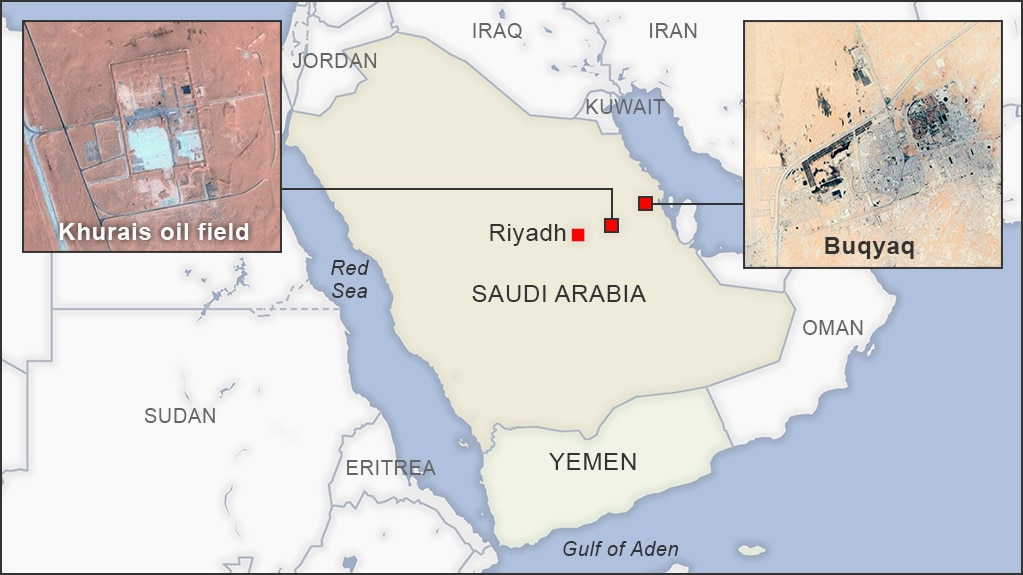
DHAHRAN — Saudi Aramco’s Juaymah NGL terminal — the world’s seventh-largest LPG export facility, responsible for 3.5 percent of global seaborne LPG supply per Kpler — has now been offline since February 23, with the suspension extended through the end of May. Combined with the Khurais production shutdown and Ras Tanura loading disruptions, Juaymah’s outage creates the first compound crude-and-LPG export failure in Saudi Arabia’s history, a dual-artery problem that no single analysis has yet examined.
The timing demands attention. Aramco reports Q1 2026 results on May 10. Analyst consensus compiled by Argaam projects net income of SAR 108.8 billion — approximately $29 billion — a 57 percent surge over Q4 2025, driven by war-inflated crude prices against a 30 percent production collapse. That paradox has been examined. What has not: the company’s downstream and gas segment, the one CEO Amin Nasser identified in March as the engine of $17–20 billion in future cash flow, is the segment most directly impaired by Juaymah’s prolonged closure. The LPG story has been siloed from the crude story. They belong together. Compounding the downstream pressure: when Project Freedom’s first convoy completed May 4, Brent fell to $107.80 — at Saudi Arabia’s PIF-inclusive fiscal break-even — as markets priced five tankers as a supply signal despite the Yanbu export ceiling remaining structurally unchanged.
Table of Contents
What Happened to Juaymah’s Trestle?
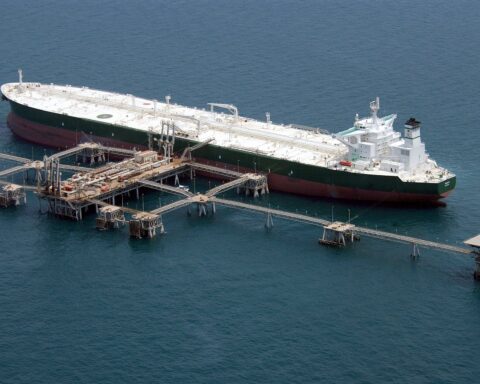
The damage at Juaymah predates the war. On February 23, 2026 — five days before the February 28 escalation that launched the US-Israel-Iran conflict — structural damage was identified on the facility’s trestle delivery system, the 10-kilometer offshore pier that carries propane and butane pipelines from the onshore NGL fractionation plant to two marine loading berths equipped with four 16-inch cargo loading arms. Bloomberg reported the damage on February 25. Aramco told buyers repairs would take three to five weeks.
Then the war began. The Saudi Energy Ministry later confirmed that Juaymah “suffered fires during Iran’s retaliatory strikes on its US-aligned neighbors,” per Bloomberg’s April 28 reporting. Whether the fires compounded existing structural damage or created new damage is unclear — Aramco has not provided a public engineering assessment. What is established is that a facility already requiring weeks of repair was hit by the same Iranian strike campaign that disabled Khurais and disrupted Ras Tanura.
The Middle East briefing 3,000+ readers start their day with.
One email. Every weekday morning. Free.
The trestle is specialized infrastructure: a purpose-built cryogenic and pressure-vessel marine loading pier designed for liquefied petroleum gas, not crude or refined products. A 2013 peacetime turnaround at Juaymah — a scheduled event — generated $9.2 million in business interruption costs, per NDT.net. The current shutdown is neither scheduled nor scoped. Aramco has offered no public cost estimate.
The IEA confirmed in its March 2026 Oil Market Report that the Juaymah outage removed approximately 180,000 barrels per day of LPG exports from global markets beginning February 23. This makes Juaymah among the single largest LPG supply disruptions in the modern commodity market — and, per available records, the first wartime LPG export suspension in Aramco’s history.
Three Weeks Became Three Months
Aramco’s initial estimate — three to five weeks, with a return to operations by late March — failed. The company extended the suspension through April. On approximately April 28–29, Bloomberg reported that Aramco notified buyers it could not complete repairs by May-end, extending the shutdown through the entire month.
Three to five weeks has become three-plus months. The original estimate, made before the war’s kinetic phase, assumed damage limited to the trestle’s structural integrity. The fire damage from Iranian strikes may have expanded the repair scope — Aramco has not said so explicitly, but the timeline progression speaks plainly. A facility that was supposed to return in March will now have been shut for the entirety of Q1 2026 and most of Q2.
For buyers, the repeated extensions have forced emergency procurement. OPIS analyst Tyler reported that approximately 76 percent of Juaymah’s exports — 102,000 barrels per day — flow to India, with 18 percent (30,000 bpd) to China and the remainder to Japan and South Korea. Indian buyers have been bidding up US spot cargoes to replace Saudi contract volumes. Chinese buyers face a structural disadvantage: US LPG carries an 11 percent tariff, making American replacement volumes commercially unattractive. Both are exploring Australian, Qatari, and West African alternatives — all at higher freight costs and longer transit times.
Seoul Economic Daily reported on April 28 that South Korean buyers were actively seeking West African LPG cargoes, a routing that adds 15–20 days of transit compared to the Arabian Gulf origin. The freight premium alone represents a cost increase that will persist through at least May-end — and, given Aramco’s track record on this particular timeline, likely longer. Each extension resets buyer procurement cycles. Each procurement cycle locks in higher-cost alternatives for weeks beyond the extension itself, creating a cost tail that outlasts the shutdown.
Why Can’t Yanbu Handle LPG?
The East-West Pipeline bypass through Yanbu has been Saudi Arabia’s primary answer to Hormuz disruption, rerouting crude and refined products to Red Sea loading terminals. But Aramco itself has told buyers that LPG shipments cannot resume through Yanbu even if Hormuz fully reopens. The bottleneck is infrastructure, not routing.
Yanbu’s port facilities handle crude oil and refined product loading. LPG requires cryogenic handling, pressure-vessel containment, and dedicated loading arms — none of which exist at Yanbu in the scale needed to absorb Juaymah’s throughput. The East-West Pipeline carries crude. Juaymah’s onshore fractionation plant separates natural gas liquids into propane, butane, and ethane — a process tied to the Eastern Province facility, not to any Red Sea terminal.
The distinction matters for Aramco’s exposure. The Yanbu bypass, operating at 4–5.9 million bpd against a pipeline capacity of 7 million, provides partial recovery for crude exports. For LPG, there is no bypass. Juaymah’s output is gone until the trestle is rebuilt — an engineering timeline Aramco has repeatedly underestimated.
Argus Media confirmed this structural limitation. Aramco’s own notifications to buyers make the point explicitly: repairs must be completed at the facility itself. Yanbu’s role as Saudi Arabia’s strategic safety valve covers crude. It was never designed for — and cannot be converted to — LPG.
The Tax Rate Nobody Mentions
Aramco’s fiscal architecture creates an underappreciated wrinkle. Upstream crude production is taxed at 50 percent by the Saudi government. Downstream and gas operations — the segment encompassing NGL fractionation and LPG exports — carry a 20 percent tax rate.
The lower rate cuts two ways. Each dollar of downstream revenue lost at Juaymah transfers less to the Saudi government budget than a dollar of crude revenue lost at Ras Tanura or Khurais. Simultaneously, each dollar of downstream revenue Aramco retains carries higher after-tax margins for shareholders. The Juaymah shutdown hurts the sovereign budget at a lower ratio per dollar than crude disruptions — but it hurts Aramco’s own retained earnings at a higher ratio. Different losses, different victims, both from the same Eastern Province strike campaign.
Amin Nasser flagged this exposure on Aramco’s 2025 earnings call on March 10, 2026, identifying downstream and gas operations as the source of an expected $17–20 billion in additional cash flow by 2030. That projection was delivered seventeen days after Juaymah went offline. The segment Nasser marked as Aramco’s growth engine is now the segment where Iran’s infrastructure campaign has inflicted the most direct and sustained damage.
Analyst consensus compiled by Argaam projects Q1 downstream revenue up 6.8 percent quarter-over-quarter. Whether that forecast was modeled before or after the Juaymah shutdown is not clear from the public consensus. If modeled on pre-shutdown throughput, the actuals will diverge. If modeled on shutdown conditions and downstream revenue still rose, the question shifts: where is the compensating revenue coming from?
Who Is Absorbing the Missing LPG?
When Juaymah went offline in late February, Asian LPG spot swaps spiked above $600 per tonne — the highest level in almost a year, according to Ginga Petroleum price data reported by Bloomberg on February 26. March propane futures on the Far East Index rose more than 5 percent to approximately $598 per tonne. Butane reached $612.
India absorbs the largest share of the pain. Saudi Aramco alone represents approximately 15 percent of India’s total LPG supply, and LPG is India’s primary household cooking fuel — not an industrial feedstock in the Indian market, but a welfare commodity distributed through a government subsidy system that reaches hundreds of millions of households. Indian buyers have been forced to bid up US spot cargoes at premium freight rates to cover the shortfall.
The cost distribution is asymmetric across Asia. China, which takes 18 percent of Juaymah’s output, faces the 11 percent US tariff on LPG imports that effectively closes off the most readily available alternative. Japan and South Korea have diversified toward Australian and Qatari volumes, but every substitute carries higher cost than the Saudi contract barrels it replaces. The premium is not speculative. It is logistical: longer voyages, spot rather than term pricing, and competition among buyers who are all chasing the same replacement volumes simultaneously.
| Buyer | Volume Lost (bpd) | Share of Juaymah | Primary Substitute | Constraint |
|---|---|---|---|---|
| India | 102,000 | 76% | US spot cargoes | Freight premium, subsidy strain |
| China | 30,000 | 18% | Qatar, Australia | 11% US tariff blocks cheapest alternative |
| Japan / South Korea | ~10,000 | ~6% | West Africa, Australia | +15–20 days transit time |
The price signal from this displacement benefits competitors — US shale LPG producers, Qatari gas operations, Australian terminals — not Saudi Aramco. Higher LPG prices mean nothing to a seller with no product to sell. The war-price paradox that has boosted Saudi crude revenues does not extend to a shuttered LPG terminal.
The Compound Disruption
No competing analysis has framed Juaymah alongside Khurais and Ras Tanura as a single compound disruption. Bloomberg covered the LPG extension. Reuters covered the initial trader notifications. The IEA quantified the barrels offline. But the crude story and the LPG story have been siloed — one set of reports for crude production, another for gas liquids. The compound picture is worse than either alone.
Saudi March 2026 production fell to 7.25 million bpd, per the IEA — down 3.15 million bpd from pre-war levels of 10.4 million bpd, a 30 percent collapse. Khurais accounts for 300,000 bpd of offline capacity with no announced restoration timeline. The Yanbu bypass handles crude at 4–5.9 million bpd against a 7 million bpd pipeline ceiling, leaving a structural gap of 1.1–1.6 million bpd even under the best-case routing scenario.
Layer Juaymah on top of that gap and the picture shifts. Saudi Arabia has not merely lost crude production. It has simultaneously lost its primary LPG export channel — a facility serving a different product market, feeding a different income statement segment, taxed at a different rate, and carrying zero bypass options.
| Facility | Product | Capacity Offline | Duration | Bypass |
|---|---|---|---|---|
| Khurais | Crude (upstream) | 300,000 bpd | Since March 2026, no timeline | Partial via Yanbu |
| Ras Tanura | Crude/refined (loading) | Variable | Intermittent since February 28 | Partial via Yanbu |
| Juaymah NGL | LPG (loading) | ~180,000 bpd | Since Feb 23, through May-end | None |
The Soufan Center assessed Iran’s targeting of Saudi energy infrastructure as a “deliberate effort by Tehran to spark volatility in the global oil market” and a strategy to “raise the costs of this war for US allies in the Middle East.” Juaymah fits that assessment exactly. The pattern — Khurais (upstream production), Ras Tanura (crude loading), Juaymah (LPG loading) — represents a campaign against the entire Eastern Province export chain. Each facility sits within the same geographic cluster on the Arabian Gulf coast, exposed to the same Iranian ballistic missile and drone threat envelope.
Tehran gets the economic damage of disabling a facility that supplies household cooking fuel to Indian consumers without the diplomatic cost of claiming a civilian target. The Saudi Energy Ministry’s own confirmation that Juaymah “suffered fires during Iran’s retaliatory strikes” handles the attribution. Iran does not need to.
The 2019 Abqaiq-Khurais drone strike — the previous benchmark for infrastructure disruption in the Eastern Province — temporarily removed 5.7 million bpd of crude processing capacity. It did not touch LPG export infrastructure. Juaymah continued loading throughout the 2019 crisis. That precedent shaped the market’s assumption that Saudi gas liquids exports were structurally more resilient than crude. The current war has disproven that assumption, and the market has been slow to update. Abqaiq was a one-facility, one-product disruption that was repaired within weeks. The Eastern Province campaign of 2026 has hit three facilities across two product categories with repair timelines measured in months — and counting.
What Should Analysts Ask on May 10?
Aramco’s Q1 2026 results cover January through March. The Juaymah shutdown from February 23 means Q1 captures five weeks of zero LPG loading. The full sustained impact lands in Q2 — April and May in their entirety. The May 10 earnings call is the last scheduled public forum before Q2 numbers quantify the extended damage.
Several questions remain publicly unaddressed.
On the engineering scope: Aramco’s initial three-to-five-week estimate was made before Iranian strikes added fire damage. The current timeline — through May-end, more than three months later — implies either a repair far more extensive than initially assessed or a deliberate decision to deprioritize the facility while the war continues. Neither explanation has been offered.
On downstream revenue: the consensus projects growth in the segment most directly exposed to Juaymah. If those forecasts were modeled on pre-shutdown throughput, the actuals should diverge downward. If modeled on shutdown conditions and the segment still grew, the compensating revenue source needs identification.
On force majeure: reporting indicates buyers were “notified” of extensions, but no public force majeure declaration has been confirmed. The distinction matters for contract penalties, buyer obligations, and the signal Aramco sends to its term-contract customer base about reliability of supply.
On return to service: “through May-end” leaves open whether June 1 is realistic or another extension is probable. A facility that has exceeded every prior estimate by months deserves a credible timeline or an honest acknowledgment that one cannot yet be given.
And the question Nasser’s own March 10 commentary invites: does the Juaymah shutdown alter the downstream/gas segment’s $17–20 billion additional cash flow projection for 2030? The CEO identified this segment as Aramco’s growth vector seventeen days after the facility anchoring its LPG export capacity went dark. The question is straightforward. The answer may not be.
The Strategic Silence
Iran has not specifically claimed Juaymah as a deliberate strike target. The facility’s initial structural damage predates the war by five days. The subsequent fire came during the broader retaliatory campaign against Eastern Province energy infrastructure — area-effect strikes, not a precision operation against a named facility.
This ambiguity serves Tehran’s purposes. Iran’s strategy of imposing costs through energy disruption achieves its economic objective at Juaymah without requiring a claim of responsibility that would carry diplomatic weight — particularly given that the facility’s output serves Indian household cooking fuel demand. The damage speaks for itself.
Aramco’s silence is different in kind. Three-plus months of the longest LPG export shutdown in the company’s history, and the public record contains buyer notifications, a single Energy Ministry confirmation of fire damage, and a series of timeline extensions. No detailed engineering assessment. No force majeure declaration. No public revised estimate for return to service beyond “through May-end.” For a company that reports earnings to public markets, this informational gap is itself a data point.
The absence of Saudi Arabia from the $8.6 billion US emergency arms package adds a dimension the earnings call cannot address but investors will internalize. If the Eastern Province remains within Iran’s targeting envelope — and the Juaymah timeline suggests the damage from previous strikes has not been fully repaired, let alone defended against — the risk premium on Saudi downstream assets extends beyond Q2.
Saudi Arabia’s fiscal break-even sits at $108–111 per barrel on a Bloomberg PIF-inclusive basis. Brent has traded in the $108–116 range. But that calculation is built on crude prices alone. The LPG dimension sits outside the Brent benchmark. Saudi government revenue from Aramco flows through two channels: the 50 percent upstream tax and dividends from Aramco’s consolidated earnings, which include the 20-percent-taxed downstream segment. Juaymah’s shutdown reduces both. Goldman Sachs projected a war-adjusted Saudi deficit of 6.6 percent of GDP against the official 3.3 percent forecast — a gap built on crude assumptions. The LPG dimension, to the extent Goldman modeled it at all, has not surfaced in the published estimates.
IEA Executive Director Fatih Birol described the aggregate disruption as the “biggest energy security threat in history,” citing 13 million bpd offline across the conflict zone. Juaymah’s 180,000 bpd is a fraction of that total. But fractions matter when they carry no bypass, serve inelastic demand, and feed a tax segment the CEO just called the company’s future.
Saudi Arabia is simultaneously pursuing a civilian nuclear programme that would, over decades, reduce domestic energy consumption and free hydrocarbons for export. That timeline is measured in years. The Juaymah repair timeline was measured in weeks and is now measured in months that keep extending. May-end is four extensions removed from “three to five weeks.” The gap between strategic aspiration and operational reality is where Aramco’s Q1 call will be tested — if the right questions are asked.
Frequently Asked Questions
When will Juaymah LPG terminal reopen?
Aramco’s most recent notification to buyers, issued approximately April 28–29, extends the suspension through the end of May 2026. No specific return-to-service date has been announced. The original three-to-five-week repair estimate has been exceeded by more than two months across four separate timeline extensions. Previous scheduled Juaymah maintenance events — including the 2013 turnaround documented by NDT.net — were pre-announced with firm return dates. The current shutdown has produced only rolling extensions. Aramco has not indicated whether a fifth extension into June is under consideration, and no port authority filing or regulatory disclosure detailing the repair scope has appeared publicly.
How does the Juaymah shutdown affect LPG prices in Asia?
The immediate impact was a spike to above $600 per tonne in Asian LPG spot swaps in late February, the highest in nearly a year per Ginga Petroleum data. The sustained effect extends beyond spot markets. Annual LPG term contracts for 2027 delivery — typically negotiated in the second half of the calendar year — will be set against a backdrop of proven Saudi supply fragility. Buyers who relied on Juaymah term contracts are now aware that a single infrastructure failure can remove 3.5 percent of global seaborne supply for months with no substitute. That awareness will price into forward curves and contract premiums, potentially resetting the floor for non-Saudi LPG supply permanently upward. The March Far East Index for propane settled at approximately $598 per tonne; butane at $612.
Is Juaymah’s damage from the Iran war or a pre-existing incident?
Both. Structural damage to the 10-kilometer trestle delivery system was identified on February 23, 2026 — five days before the February 28 war escalation. Bloomberg reported the initial damage on February 25. The Saudi Energy Ministry subsequently confirmed that the facility “suffered fires during Iran’s retaliatory strikes,” per Bloomberg’s April 28 reporting. Whether the fires compounded the pre-existing structural damage or created independent new damage has not been publicly distinguished by Aramco or the Ministry. The practical outcome — a repair timeline that has grown from weeks to months — suggests the two events are not easily separable in their combined engineering impact.
What is Juaymah’s role in India’s energy supply?
Saudi Aramco represents approximately 15 percent of India’s total LPG supply, and Juaymah is the single largest terminal in that relationship, with approximately 102,000 bpd — 76 percent of the facility’s total exports — flowing to India, per OPIS analyst Tyler. LPG is India’s primary household cooking fuel, distributed through a government subsidy programme reaching hundreds of millions of families. Bloomberg reported in late April that the sustained Juaymah outage had triggered a surge in firewood use and conflicts over scarce alternative fuel supply in affected Indian communities — an outcome with humanitarian and domestic political dimensions that extend well beyond commodity market analysis.
Will Aramco’s Q1 2026 earnings reflect the Juaymah shutdown?
Partially. Q1 covers January through March, capturing five weeks of the shutdown (February 23 to March 31). The full Q2 impact — April and May in their entirety — will not appear until the next reporting cycle. Consensus from Argaam projects Q1 net income of SAR 108.8 billion (~$29 billion) with upstream revenue up 13.1 percent QoQ and downstream up 6.8 percent. The downstream forecast is the one most directly affected by Juaymah, but it is not clear whether consensus models incorporated the shutdown. Aramco’s fourth NGL train at Juaymah — added to handle 270,000 bpd of ethane/NGL and 100,000 bpd of propane/NGL — represents the facility’s most recent capacity expansion, making the idle capacity figure potentially larger than the historical throughput numbers suggest.
The broader earnings picture — how a 57 percent Q1 profit surge coexists with a production collapse that threatens Saudi fiscal solvency — is examined in The Profits Saudi Arabia Cannot Celebrate, which maps the war-price paradox and the Q2 cliff the Juaymah shutdown accelerates.