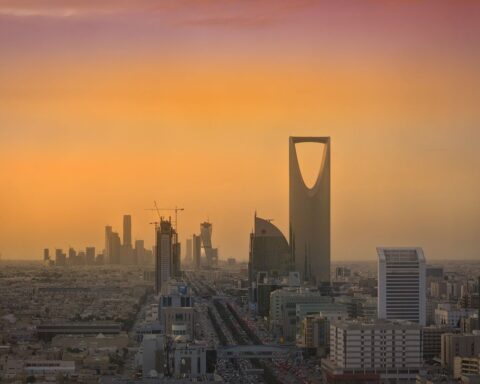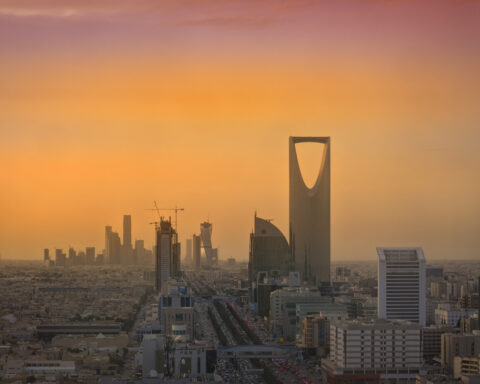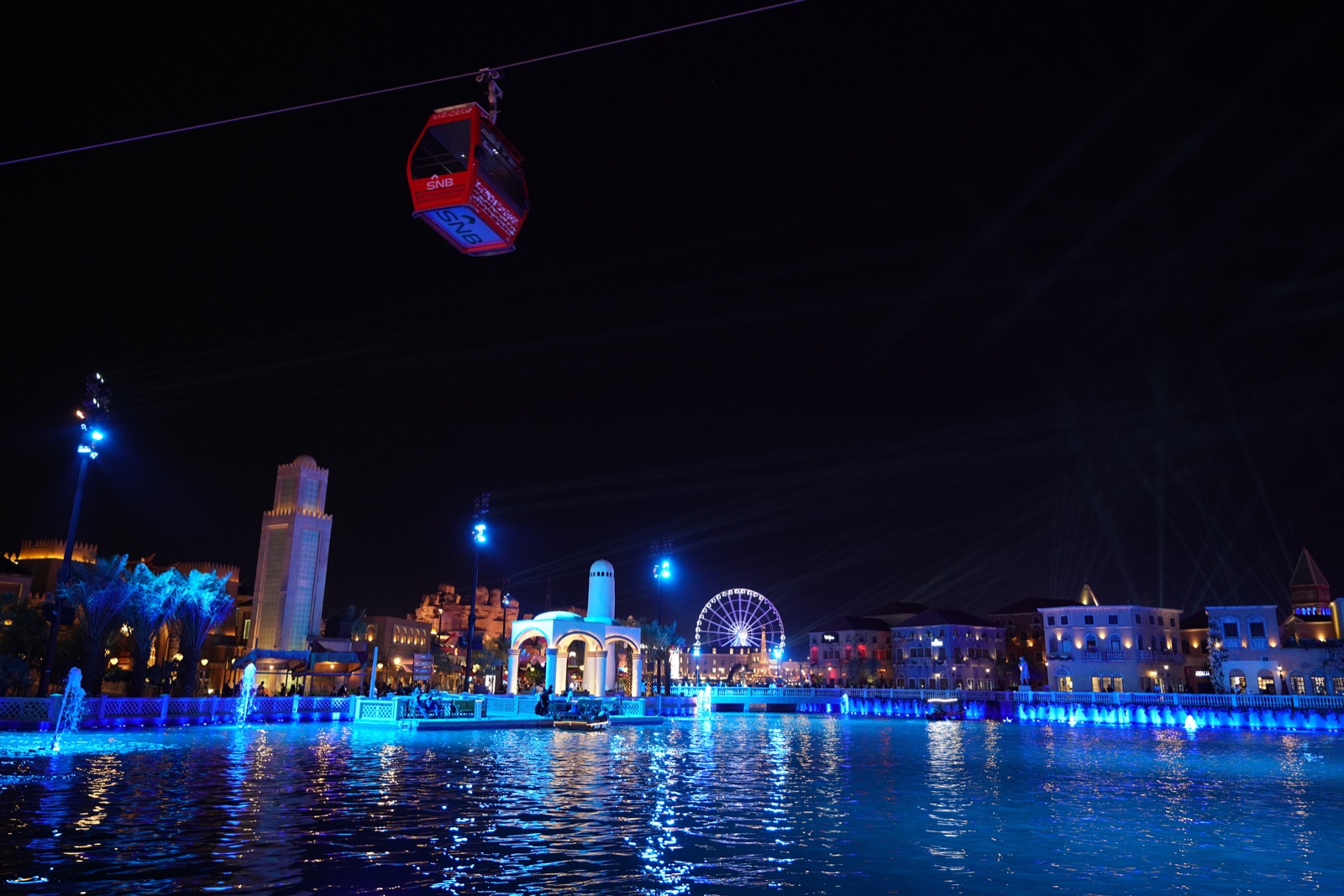

RIYADH — Eight years ago, Saudi Arabia had zero cinemas, zero public concerts, and a religious police force that shut down restaurants playing background music. In December 2025, the Kingdom opened the world’s tallest, fastest, and longest roller coaster at Six Flags Qiddiya City. In February 2026, it hosted the world’s richest horse race. In the same month, Riyadh Season surpassed twenty million visitors — more than the entire population of the Netherlands — across fourteen entertainment zones stretching over seven million square metres. The transformation is not incremental. It is civilisational.
Saudi Arabia has invested more than $150 billion in entertainment, tourism, sports, and cultural infrastructure since Crown Prince Mohammed bin Salman launched Vision 2030 a decade ago. The results defy every prediction made by sceptics who dismissed the entertainment push as royal vanity. International tourist arrivals reached 30 million in 2024, up from 20 million in 2019. Total visitors — domestic and international combined — hit 122 million in 2025, exceeding the original 2030 target of 100 million seven years early. Tourism now contributes 11.5 percent of GDP, a share that rivals Spain and exceeds the United Kingdom. The sector employs more than one million people, and the government has raised its 2030 target to 150 million annual visitors.
Yet the entertainment revolution faces its most serious test. The Iran war that erupted on 28 February 2026 has cancelled the Saudi Arabian Grand Prix, disrupted 23,000 flights, and raised the spectre of missile strikes on the very venues that anchor Vision 2030’s post-oil economy. The question is no longer whether Saudi Arabia can entertain the world. It is whether the world will come.
Table of Contents
- How Did Saudi Arabia Go From Banning Cinemas to Hosting WrestleMania?
- What Is Qiddiya and Why Does It Matter?
- The Riyadh Season Phenomenon
- Can Saudi Arabia Really Attract 150 Million Tourists by 2030?
- Al-Ula and the Heritage Tourism Gamble
- The Sports Hosting Strategy
- How Much Has Saudi Arabia Spent on Entertainment?
- The Social Transformation Behind the Numbers
- What Does the Iran War Mean for Saudi Tourism?
- The Entertainment Diversification Matrix
- Entertainment as National Security
- Frequently Asked Questions
How Did Saudi Arabia Go From Banning Cinemas to Hosting WrestleMania?
The speed of the transformation has no modern precedent. In December 2017, Saudi Arabia lifted a 35-year ban on cinemas. On 18 April 2018, the first screening — Marvel’s Black Panther — took place at an AMC theatre in Riyadh’s King Abdullah Financial District. By October 2023, the country had 69 cinemas, 628 screens, and 65,000 seats. The cinema market was valued at $590 million in 2024, with projections reaching $1.29 billion by 2033. The target is 300 cinemas and 2,000 screens by 2030.
Cinemas were the opening act. The General Entertainment Authority, established by royal decree in May 2016, became the regulatory engine driving the revolution. By mid-2023, the GEA had licensed 14,000 entertainment events, issued 4,500 facility licences across 120 cities, and attracted 135 million cumulative visitors. In 2024 alone, the authority oversaw 8,500 entertainment events — 85 international concerts, 240 sports tournaments, and 1,200 local cultural festivals — drawing 68 million attendees.
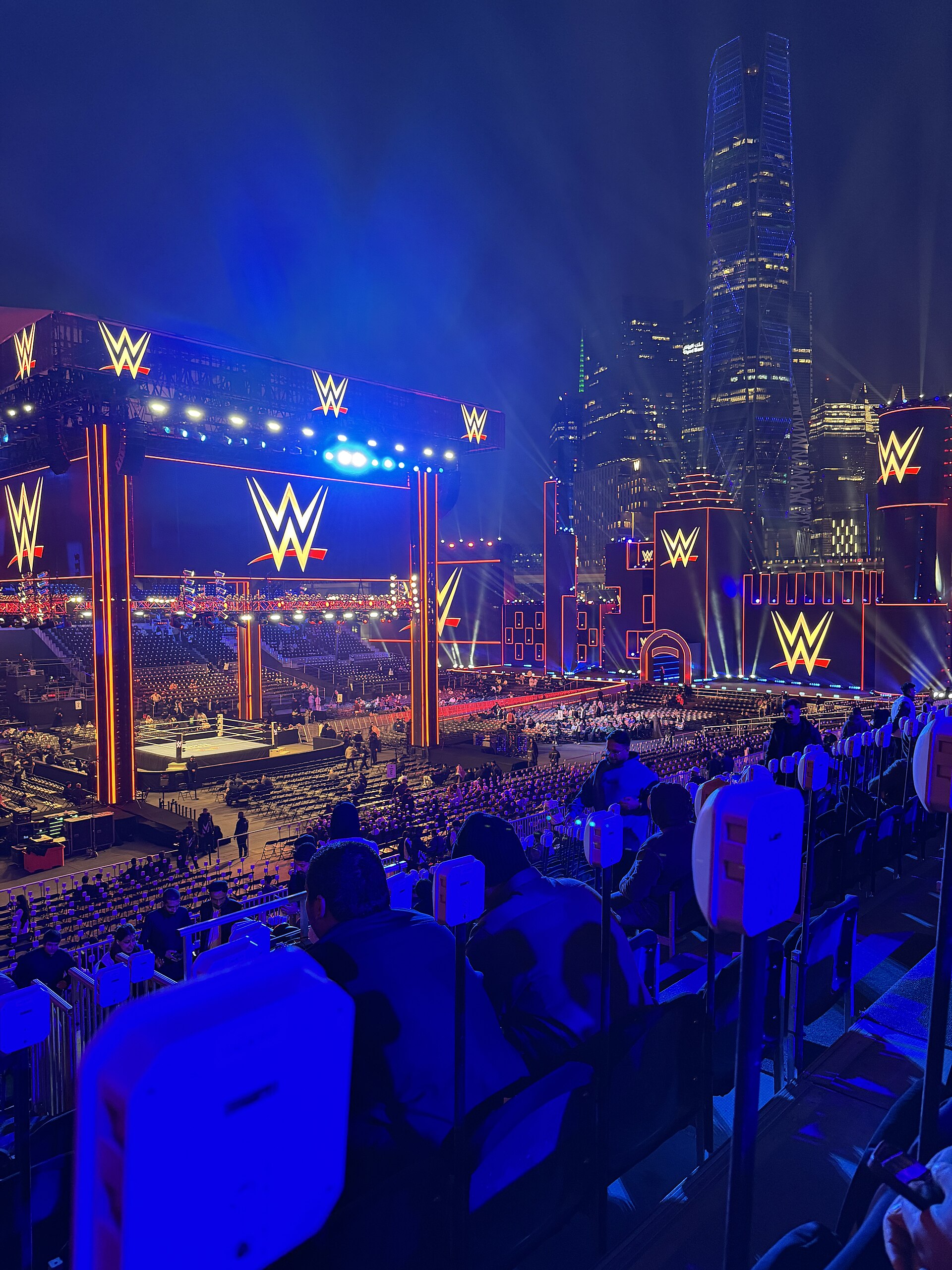
The trajectory from banned cinemas to WrestleMania is not metaphorical. The WWE signed a 10-year deal with Saudi Arabia in 2018 worth an estimated $1 billion. Crown Jewel has been held annually in Riyadh since 2018. The Royal Rumble came to Riyadh in February 2026 — the first Royal Rumble held outside North America in the event’s history. And WrestleMania 43, confirmed for 2027, will mark the first time the premier wrestling spectacle has ever left American soil. Saudi Arabia is not merely hosting events. It is acquiring them.
The Middle East briefing 3,000+ readers start their day with.
One email. Every weekday morning. Free.
What Is Qiddiya and Why Does It Matter?
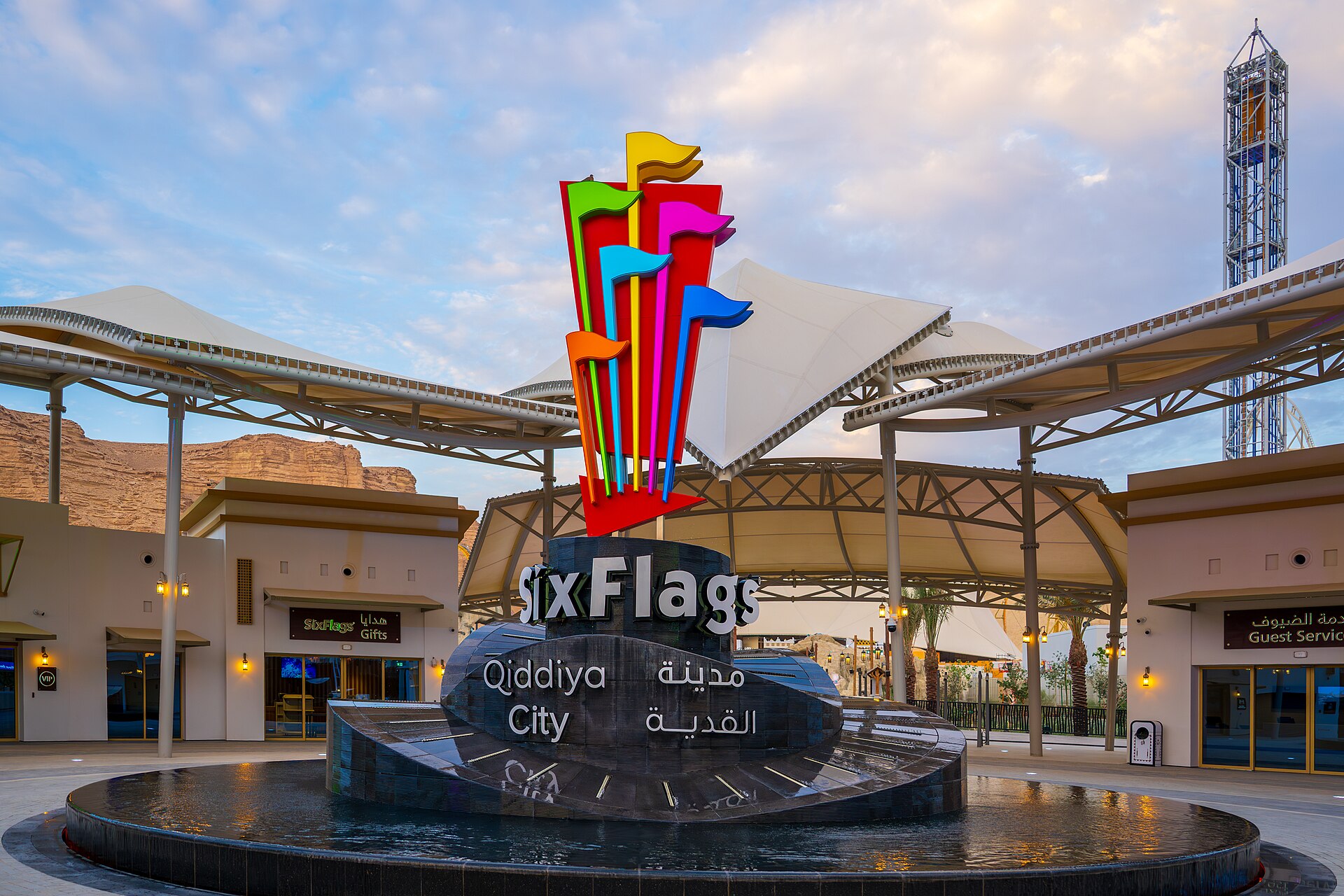
Qiddiya is a $40 billion entertainment megaproject on the outskirts of Riyadh, owned by the Public Investment Fund and master-planned by Bjarke Ingels Group. It is designed to become Saudi Arabia’s capital of entertainment, sports, and the arts — a permanent infrastructure of leisure in a country that had almost none a decade ago. Phase 1, costing $9.8 billion, opened in late 2025.
The headline attraction is Falcon’s Flight, manufactured by Intamin and opened on 31 December 2025. At 163 metres tall, it is the world’s tallest roller coaster, surpassing Top Thrill 2 at Cedar Point. At 250 kilometres per hour, it is the fastest, exceeding Ferrari World’s Formula Rossa. At 4,250 metres of track, it is the longest, overtaking Japan’s Steel Dragon 2000. The elevation change of 195 metres qualifies it as the world’s first “exa coaster” — a category that did not exist before Qiddiya required one.
Six Flags Qiddiya City, operating across 79 acres with 28 rides, is the first Six Flags park in the Middle East. But the theme park is only one component. Qiddiya’s master plan includes a FIA Grade One racetrack capable of hosting Formula 1 and MotoGP, estimated at $1.9 billion in infrastructure. A water park — set to be the largest in the region — received a $750 million construction contract in 2022. Jack Nicklaus-designed dual golf courses, a multipurpose stadium, an aquatic centre, and a motorsport academy complete the first phase.
The strategic logic is straightforward. Riyadh has 8.5 million residents and no year-round entertainment destination comparable to what Dubai, Abu Dhabi, or Doha offer. Qiddiya fills that gap while creating permanent employment and reducing the estimated $20 billion that Saudi families spend annually on entertainment travel abroad. Every riyal spent at Qiddiya is a riyal that does not leave the Kingdom.
The Riyadh Season Phenomenon
If Qiddiya represents permanent infrastructure, Riyadh Season represents the power of programming. Launched in October 2019 under the direction of Turki Alalshikh, chairman of the General Entertainment Authority, the annual festival has grown from an experimental cultural programme into a $3.2 billion entertainment franchise that generates 187,000 jobs per cycle.
| Edition | Period | Visitors | Milestone |
|---|---|---|---|
| 1st (2019) | Oct-Dec 2019 | 600,000+ at opening | Launch edition |
| 3rd (2022-23) | Oct-Mar | 20 million | 10 million in 50 days |
| 4th (2023-24) | Oct-Mar | 16 million in 3 months | Steady growth |
| 5th (2024-25) | Oct 2024-Mar 2025 | 20 million (record) | 1 million in 13 days; +47.6% YoY |
The 2024-25 edition sprawled across fourteen entertainment zones covering 7.2 million square metres — an area larger than Gibraltar. Programming included the Soundstorm music festival, MrBeast’s Beast Land activation, boxing undercards, international concerts, and cultural exhibitions. Twenty million visitors in a single season means that more people attended Riyadh Season than visited Portugal or Norway in an entire year.
Jeddah Season operates as a summer counterpart. The 2024 edition drew 1.7 million visitors over 52 days with 5,000 events across five zones, including a Warner Bros. Discovery experience and the Motosurf International Cup. The 2025 edition expanded to 85 days.
The seasons model has become Saudi Arabia’s most effective tool for converting entertainment spending into measurable economic data. Each visitor generates hotel bookings, restaurant revenue, retail spending, and transport demand. The Riyadh Season alone creates enough economic activity to justify the construction of permanent entertainment districts — Boulevard Riyadh City, Boulevard World — that operate year-round after the season ends.
Can Saudi Arabia Really Attract 150 Million Tourists by 2030?
The original Vision 2030 target was 100 million annual visitors. Saudi Arabia hit that number in 2023, seven years early. The revised target — 150 million visitors by 2030, split between 70 million international and 80 million domestic — is aggressive but grounded in trajectory data.
| Year | International Arrivals | Total Visitors | Tourism Revenue |
|---|---|---|---|
| 2019 | 20.3 million | — | $16.4 billion |
| 2020 | Collapsed (COVID) | — | $4.0 billion |
| 2023 | 27.4 million | 100+ million | SAR 141.2 billion |
| 2024 | 30 million | — | SAR 168.5 billion ($45 billion) |
| 2025 | — | 122 million | SAR 300 billion ($81 billion) |
Tourism revenue reached SAR 300 billion ($81 billion) in total travel spending in 2025, representing a 6 percent increase year on year. The sector now accounts for 11.5 percent of GDP — SAR 444.3 billion — and employs more than one million people. The government targets 3.6 million tourism jobs by 2030, meaning one in five Saudi workers would be employed in the visitor economy.
The infrastructure pipeline supports the ambition. Red Sea Global is constructing 16 ultra-luxury resorts with 3,000 rooms along a pristine coastline. The first resort — Six Senses Southern Dunes — opened in November 2023. The St. Regis Red Sea Resort became the first island property in January 2024. Nujuma, a Ritz-Carlton Reserve, charges approximately $3,431 per night and earned Forbes Travel Guide’s Hotel of the Year in 2024. AMAALA, the luxury wellness destination, began opening its first phase — nine resorts, 1,267 rooms — in early 2026. Powered entirely by renewable energy, the project targets a 30 percent net conservation benefit to local ecosystems by 2040.
The challenge is not capacity but perception. Saudi Arabia’s tourism brand is being built from scratch. France had centuries to cultivate its reputation. Dubai had three decades. Saudi Arabia is attempting to establish itself as a premium destination in under a decade — and the speed of investment reflects the urgency. The Saudi Tourism Authority launched campaigns in 50 markets simultaneously, opened 28 international offices, and introduced the eVisa system that grants tourists from 63 countries entry within minutes. Hotel room supply is projected to reach 500,000 keys by 2030, up from approximately 300,000 in 2024, with 130,000 new rooms currently under construction. But no amount of hotel rooms can compensate for the security dimension that the Iran war has introduced — a risk no marketing campaign can fully overcome.
Al-Ula and the Heritage Tourism Gamble
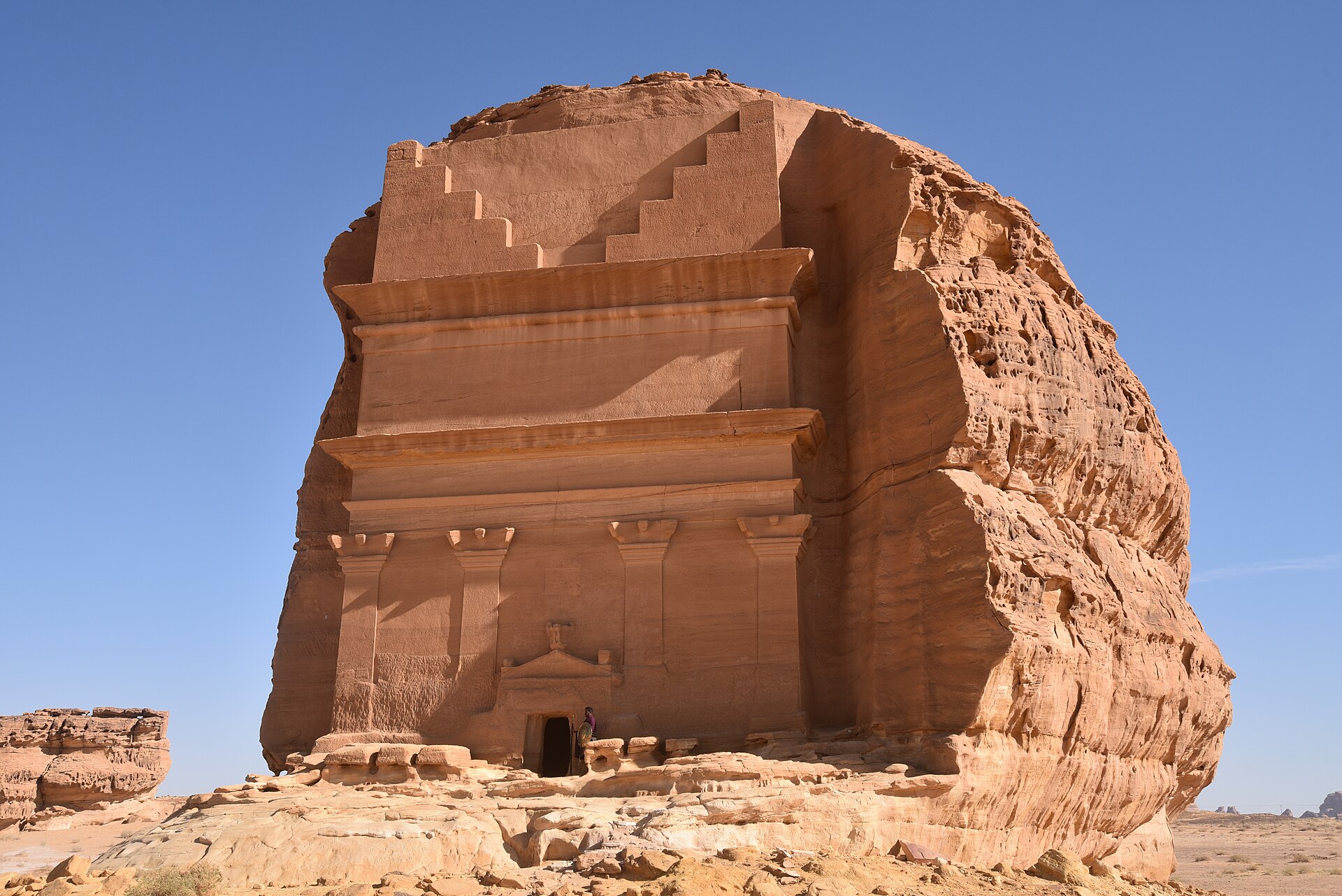
Al-Ula represents a fundamentally different proposition from the theme parks and sports spectacles that dominate headlines. Located in the Hejaz region of northwestern Saudi Arabia, the area contains Hegra — the Kingdom’s first UNESCO World Heritage Site — a Nabataean necropolis with more than 100 preserved tombs featuring intricate carvings. Built by the same civilisation that constructed Petra in Jordan, Hegra has been called one of the most significant archaeological sites in the Middle East.
The Royal Commission for AlUla, established to develop the area as a heritage and cultural destination, has taken a deliberately measured approach. Rather than mass tourism, the strategy prioritises high-value visitors willing to pay premium prices for an experience that combines archaeology, desert landscapes, and contemporary culture. The Maraya concert hall — a Guinness World Record holder as the largest mirrored building in the world, with 9,740 panels reflecting the desert — hosts performances by artists including Andrea Bocelli, Alicia Keys, John Legend, and Usher in a 500-seat venue that feels closer to an art installation than an arena.
Al-Ula attracted 286,000 visitors in 2024, a 20 percent increase from the previous year. The target is 1.2 million annual visitors by 2030. Airport capacity is expanding from 400,000 to 600,000 passengers in the short term, with a long-term target of six million. An international marketing campaign spanning ten countries — the United Kingdom, Germany, the United States, China, India, and Australia among them — launched a UNESCO “Live Museum” experience for the 2025-26 season.
The heritage strategy serves a dual purpose. It positions Saudi Arabia as a culturally serious destination rather than merely a playground for the wealthy. And it develops tourism assets that cannot be replicated elsewhere. Dubai can build a taller building. Qatar can construct a newer stadium. Nobody can build another Hegra.
Al-Ula also demonstrates how Saudi Arabia is using entertainment to build diplomatic bridges. The Royal Commission for AlUla partnered with the French Agency for AlUla Development — a bilateral initiative signed by Crown Prince Mohammed bin Salman and President Emmanuel Macron in 2018 — giving France’s leading archaeologists, museum designers, and cultural planners a direct stake in the project’s success. The partnership produced the Kingdoms Institute, a centre for archaeological research and conservation that trains Saudi and international scholars. Hegra’s excavation programme has uncovered more than 800 inscriptions in Nabataean, Dadanitic, and Thamudic scripts, rewriting the pre-Islamic history of the Arabian Peninsula. For a Kingdom often accused of erasing history, Al-Ula is the counterargument — a $15 billion investment in preserving it.
The Sports Hosting Strategy
Saudi Arabia has pursued sports hosting with a strategic intensity that no other country has matched in the twenty-first century. The approach combines direct ownership, hosting rights acquisition, and prize money inflation to establish the Kingdom as the world’s default venue for premium sporting events.
The boxing programme, managed by Turki Alalshikh through Riyadh Season, has become the sport’s global centre of gravity. The Fury versus Usyk undisputed heavyweight championship — the first undisputed bout in 24 years — took place in Riyadh on 19 May 2024. The rematch followed in December 2024. Anthony Joshua fights have become regular Riyadh fixtures. Canelo Alvarez is confirmed for September 2026. A new multi-year boxing promotion entity, partnering with TKO Group and Sela, aims to institutionalise Riyadh as boxing’s permanent home rather than a rotating host.
The Esports World Cup, hosted in Riyadh, generated numbers in 2025 that dwarf most traditional sporting events: 3 million live visitors, 750 million online viewers worldwide, 350 million hours watched, and a peak concurrent viewership of 7.98 million. The $70.45 million prize pool attracted 2,500 players from 89 countries. The 2026 edition has expanded to a multi-week format with a $75 million prize pool — the largest in competitive gaming history.
| Event | Sport | Deal Value / Prize Money | Status |
|---|---|---|---|
| WWE Crown Jewel / Royal Rumble / WrestleMania | Wrestling | ~$1 billion (10-year deal) | Annual since 2018; WrestleMania 2027 |
| Saudi Cup | Horse Racing | $35.35 million (2026) | World’s richest race |
| Esports World Cup | Esports | $75 million (2026 prize pool) | Annual in Riyadh |
| Formula 1 Jeddah | Motorsport | $500 million economic impact (2025) | Cancelled 2026 (Iran war) |
| WTA Finals | Tennis | $15.25 million (2024) | 3-year deal (2024-2026) |
| LIV Golf | Golf | $5.3 billion PIF investment | Ongoing; PGA merger talks |
| Riyadh Season Boxing | Boxing | Undisclosed (multi-fight deals) | Fury, Usyk, Joshua, Canelo |
LIV Golf, funded entirely by the PIF at a cost now exceeding $5.3 billion, represents the most expensive single sports investment ever made by a sovereign wealth fund. Tournament purses increased to $32.3 million per event in 2026. Advanced discussions with the PGA Tour for a merger that could value PGA Tour Enterprises at approximately $12 billion would transform Saudi Arabia from a disruptor into a co-owner of professional golf’s institutional structure.
The Saudi Cup, held annually at King Abdulaziz Racetrack in Riyadh, offered a record total prize purse of $35.35 million in February 2026 — making it the richest horse racing meeting on earth. The WTA Finals moved to Riyadh on a three-year deal starting in 2024, with record prize money of $15.25 million.
The Newcastle United acquisition by PIF in October 2021 followed by the purchase of four Saudi Pro League clubs in June 2023 extended the sports strategy into club ownership. The PIF is now the world’s most active sovereign wealth fund in sports investment, deploying capital across football, golf, boxing, MMA, tennis, baseball, snooker, darts, esports, and motorsport. The FIFA Club World Cup 2026 counts Saudi Arabia as an official partner.
The cumulative effect is strategic capture. Saudi Arabia now hosts the world’s richest horse race (Saudi Cup), the world’s richest esports tournament (Esports World Cup), one of the richest golf tours (LIV Golf), and the world’s most lucrative boxing promotions (Riyadh Season). When a sport’s richest prize, most prestigious venue, or most-watched event is consistently in Saudi Arabia, the country ceases to be an exotic host and becomes a permanent fixture. The 2034 FIFA World Cup — awarded to Saudi Arabia as the sole bid — is the ultimate expression of this strategy. The Kingdom is not renting sports prestige. It is buying the freehold.
How Much Has Saudi Arabia Spent on Entertainment?
The total investment defies easy summation because it spans sovereign wealth fund deployments, government allocations, private sector licensing, and mega-project construction budgets. A conservative accounting produces a figure north of $150 billion committed or spent since 2016.
| Project / Programme | Investment | Status |
|---|---|---|
| Qiddiya | $40 billion | Phase 1 open; ongoing |
| Diriyah Gate | $63 billion | Under construction; completion 2027-2030 |
| AMAALA (Phase 1) | $13.6 billion (SAR 51B) | Opening early 2026 |
| Red Sea Global (total) | Est. $10-15 billion | 16 resorts by 2026 |
| LIV Golf (PIF) | $5.3 billion+ | Ongoing; merger talks |
| Entertainment sector (govt) | $71.2 billion allocated | Through 2030 |
| WWE (10-year deal) | ~$1 billion | Through 2028 |
| Qiddiya Speed Park | $1.9 billion | Under construction |
Diriyah Gate, a $63 billion giga-project built around the At-Turaif UNESCO World Heritage Site on the outskirts of Riyadh, adds another dimension. Featuring 450 international retail brands, 100 traditional artisan souks, museums, and cultural centres, Diriyah targets 27 million visitors by 2030. When operational, it will be one of the largest cultural destinations built from scratch in modern history.
Consumer spending data suggests the investment is shifting behaviour. Saudis now spend 6.2 percent of household income on entertainment — above the United Kingdom’s 4.2 percent. Entertainment and culture sector spending reached SAR 15 billion in 2023, a 33 percent increase from SAR 11.2 billion in 2019. The entertainment market was valued at $2.46 billion in 2024, with projections reaching $6.1 billion by 2033 — a compound annual growth rate of 10.6 percent.
The Red Sea International Film Festival, held annually in Jeddah’s historic Al Balad district, illustrates how cultural programming converts spending into soft power. The 2025 edition screened more than 100 films from 70 countries, with a jury led by Sean Baker and guests including Johnny Depp, Anthony Hopkins, Juliette Binoche, and Uma Thurman. The 2024 edition drew 40,000 attendees and 61 world premieres. A decade ago, Saudi Arabia had no film industry. Now it is building one — and subsidising its growth. The Red Sea Film Foundation has distributed more than $100 million in grants to Arab filmmakers since 2020, funding 350 projects across development, production, and post-production. Saudi Arabia’s Film Commission issued 1,300 filming permits in 2024, and the Kingdom has signed co-production treaties with France, Italy, South Korea, and Jordan to embed itself in international film networks.
The Social Transformation Behind the Numbers
The entertainment revolution is inseparable from the social revolution it both reflects and accelerates. Understanding the scale of change requires understanding the baseline. Before 2016, Saudi Arabia had no public concerts, no cinemas, no mixed-gender entertainment venues, and a Commission for the Promotion of Virtue and Prevention of Vice — the religious police — empowered to shut down any gathering deemed inconsistent with Islamic propriety. Restaurants could be closed for playing background music. Women could not attend sporting events. A population of 35 million had fewer legal entertainment options than a medium-sized European city.
The dismantling of these restrictions was not gradual. In September 2017, women were granted the right to drive and admitted to sports stadiums. In December 2017, the cinema ban was lifted and Lebanese singer Hiba Tawaji became the first female musician to perform publicly in Saudi Arabia. In 2018, the first mixed-gender concert took place. In 2019, women over 21 gained the right to apply for passports and travel without male guardian permission. Abaya requirements were relaxed. By 2024, Saudi Arabia was hosting 85 international concerts annually, and the Soundstorm music festival — part of Riyadh Season — drew hundreds of thousands of attendees to see Cardi B, Post Malone, and Swedish House Mafia.
The social transformation matters economically because it unlocks domestic demand. A population of 35 million — 70 percent under the age of 35 — that was previously denied access to entertainment, cinema, concerts, and mixed-gender social spaces now constitutes a consumer market with enormous pent-up demand. The GEA estimates that the entertainment sector will create 450,000 jobs by 2030, disproportionately employing young Saudis in event management, hospitality, content creation, and technical production.
Eighty-three percent of Saudi participants now recognise music and entertainment as a viable career path — a figure that would have been unimaginable before 2016.
MDLBEAST Socio-Economic Impact Study, 2024
The MDLBeast Soundstorm festival alone created 14,000 part-time jobs. The 2025 edition featured over 200 artists across 14 stages over three days, with headliners including DJ Snake, Metro Boomin, Halsey, and Armin van Buuren. Attendance was targeted at 500,000. In 2021, the festival drew 730,000 — making it one of the largest music events held anywhere on earth.
What Does the Iran War Mean for Saudi Tourism?
The Iran war poses the most significant threat to Saudi Arabia’s entertainment economy since the COVID-19 pandemic. The immediate damage is quantifiable. The 2026 Saudi Arabian Grand Prix and Bahrain Grand Prix were both cancelled after security assessments determined that the Jeddah Corniche Circuit falls within range of Iranian ballistic missiles and drones. The 2025 Jeddah GP had generated an estimated $500 million in total economic activity.
Across the region, the conflict costs Middle East travel and tourism an estimated 515 million euros per day, according to Euronews analysis. International arrivals to the Middle East are projected to drop 11 to 27 percent in 2026 — 23 to 38 million fewer visitors. Saudi Arabia faces potential tourism revenue losses of $15 to $30 billion over two to three years. More than 23,000 flights have been cancelled since the escalation began on 28 February 2026.
The damage extends beyond direct revenue. Foreign direct investment in tourism infrastructure has decelerated. Insurance costs for events have risen sharply. The Asian Winter Games at Trojena — originally planned for 2029 within NEOM — were postponed indefinitely in January 2026, with the Games moved to Almaty, Kazakhstan. The Arabian Travel Market was delayed by three months. The cascade of cancellations reached the business conference circuit as well: the World Economic Forum postponed its April gathering in Jeddah, depriving the Kingdom of one of its most prestigious platforms for attracting foreign investment into the very entertainment and tourism sectors the war has disrupted.
The deeper risk is reputational. Saudi Arabia has spent a decade building the narrative that the Kingdom is safe, modern, and welcoming. Iranian missiles striking Riyadh — where Riyadh Season’s twenty million visitors gathered — directly contradicts that narrative. High-value tourists and international event organisers will require sustained security before returning at pre-war levels. Industry analysts project that full tourism recovery from the conflict could take two to three years, echoing the timeline Dubai experienced after the COVID-19 pandemic shutdowns — and that conflict carried no physical damage to infrastructure.
The Hajj pilgrimage adds a unique dimension to Saudi Arabia’s wartime tourism challenge. Approximately 1.8 million pilgrims are expected in 2026, and the Kingdom bears a religious obligation to ensure their safety regardless of regional security conditions. The Saudi royal family’s legitimacy rests partly on its role as custodian of the Two Holy Mosques. Cancelling or restricting Hajj because of Iranian attacks would represent a strategic defeat that transcends economics.
Yet the restructuring of Vision 2030 that the war has accelerated may ultimately benefit the entertainment sector. Crown Prince Mohammed bin Salman’s decision to break up NEOM and redirect PIF capital toward projects with clearer returns — including the 2034 World Cup infrastructure, Expo 2030 preparations, and the Diriyah Gate development — concentrates resources on entertainment assets that generate immediate economic activity rather than speculative megaprojects that may take decades to produce returns.
The Entertainment Diversification Matrix
Saudi Arabia’s entertainment strategy is not a single bet. It is a portfolio of bets spread across seven distinct verticals, each with different risk profiles, investment requirements, and economic multipliers. Evaluating each vertical across four dimensions — capital deployed, employment intensity, international appeal, and revenue resilience — reveals where the strategy is strongest and where it remains vulnerable.
| Vertical | Capital Deployed | Employment Intensity | International Appeal | Revenue Resilience | Overall Score |
|---|---|---|---|---|---|
| Theme Parks (Qiddiya) | 10/10 | 8/10 | 7/10 | 6/10 | 31/40 |
| Sports Hosting | 9/10 | 6/10 | 10/10 | 5/10 | 30/40 |
| Seasonal Festivals | 5/10 | 9/10 | 7/10 | 8/10 | 29/40 |
| Luxury Resorts | 8/10 | 7/10 | 8/10 | 7/10 | 30/40 |
| Heritage Tourism | 4/10 | 5/10 | 9/10 | 9/10 | 27/40 |
| Esports / Digital | 3/10 | 4/10 | 9/10 | 8/10 | 24/40 |
| Film Industry | 3/10 | 6/10 | 6/10 | 7/10 | 22/40 |
Three patterns emerge from the matrix. First, heritage tourism scores highest on revenue resilience — Hegra and Al-Ula will still attract visitors regardless of regional instability because their appeal is timeless and non-replicable. Second, sports hosting scores highest on international appeal but lowest on revenue resilience — events can be cancelled, postponed, or relocated at short notice, as the F1 cancellation demonstrated. Third, seasonal festivals achieve the best balance of employment generation and capital efficiency — Riyadh Season generates 187,000 jobs annually with a fraction of Qiddiya’s capital investment.
The optimal strategy — which Saudi Arabia appears to be pursuing, whether by design or by adaptation — diversifies across all seven verticals while accepting that some will underperform in any given year. A war may cancel the Grand Prix but will not close Six Flags. A pandemic may empty the resorts but will not diminish Hegra. An economic downturn may reduce luxury spending but will not stop Saudis from attending local festivals. The portfolio approach reduces the vulnerability of any single vertical’s failure.
Entertainment as National Security
The conventional critique of Saudi Arabia’s entertainment spending treats it as soft power at best and vanity at worst — a rich kingdom buying concerts and football clubs to improve its international image. This reading is fundamentally wrong. Entertainment and tourism are not accessories to Vision 2030’s economic diversification. They are its most advanced pillar, and arguably its most strategically important.
The Iran war has made this argument with a clarity that no policy paper could match. When Iranian drones struck Saudi oil infrastructure in the Eastern Province, they demonstrated that the Kingdom’s oil wealth — still 60 percent of government revenue — can be physically destroyed in an afternoon. When the Strait of Hormuz closed, Saudi Arabia lost the ability to deliver the oil it produced. Oil revenue, the foundation on which the Kingdom was built, proved to be the most fragile form of national wealth imaginable.
Entertainment revenue is different. It cannot be blockaded. It does not flow through a strait that a hostile navy can close. It does not deplete with extraction. It grows with investment. A theme park, once built, generates revenue for decades. A sports hosting reputation, once established, compounds over time. A tourism brand, once credible, attracts visitors even during regional turbulence — as Dubai demonstrated by maintaining tourist arrivals during multiple Gulf crises.
The contrarian case is this: Saudi Arabia’s entertainment spending is not a distraction from economic seriousness. It is the most serious economic policy the Kingdom has pursued since the discovery of oil at Dammam No. 7 in 1938. The $150 billion deployed in entertainment infrastructure is not a bet on fun. It is a bet on survival — a calculated wager that the post-oil economy must be built on experiences, services, and cultural capital rather than on a commodity that the world is actively trying to stop burning and that an adversary can destroy with a $20,000 drone.
Saudi Arabia learned this lesson the hard way. The entertainment revolution that began as a social experiment in 2016 may prove to be the Kingdom’s most consequential strategic decision of the twenty-first century — not because it entertains the world, but because it means the Kingdom can pay its bills when the oil runs out or the tankers cannot sail.
The comparison to the Crown Prince’s other investments is instructive. NEOM’s The Line — a $500 billion linear city in the desert — was paused in late 2025 and its completion date extended to 2045. The PIF recorded an $8 billion write-down on giga-projects. By contrast, Qiddiya Phase 1 opened on schedule, Riyadh Season set a visitor record, and tourism revenue continued growing. The entertainment pillar delivered while the construction megaprojects faltered. That is not a coincidence. It is a lesson about what diversification actually requires: not just spending differently, but earning differently.
Frequently Asked Questions
Does Saudi Arabia allow concerts and entertainment?
Saudi Arabia lifted its ban on public entertainment in 2016 and held its first public concert in 2017. By 2024, the Kingdom hosted 85 international concerts, 240 sports tournaments, and 1,200 cultural festivals annually. The General Entertainment Authority has issued more than 14,000 entertainment licences across 120 cities, and events now feature mixed-gender audiences without restrictions.
What is Qiddiya in Saudi Arabia?
Qiddiya is a $40 billion entertainment megaproject located outside Riyadh, owned by the Public Investment Fund. Phase 1 opened in December 2025 and includes Six Flags Qiddiya City, the world-record-breaking Falcon’s Flight roller coaster, a FIA-grade racing circuit, golf courses, and a water park. The project is designed to be Saudi Arabia’s permanent entertainment, sports, and arts capital.
How many tourists visit Saudi Arabia each year?
Saudi Arabia recorded 122 million total visitors in 2025, including approximately 30 million international tourists. Tourism revenue reached SAR 300 billion ($81 billion), contributing 11.5 percent of GDP. The Kingdom exceeded its original 2030 target of 100 million visitors seven years ahead of schedule and has revised the goal upward to 150 million annual visitors by 2030.
Is Saudi Arabia hosting the FIFA World Cup?
Saudi Arabia will host the 2034 FIFA World Cup after being awarded the tournament as the sole bid. The event is expected to drive tens of billions of dollars in stadium construction, transport infrastructure, and hospitality investment. Saudi Arabia is also hosting WrestleMania 43 in 2027 — the first WrestleMania outside North America — and regularly hosts the Saudi Cup, the world’s richest horse race, with a $35.35 million prize purse in 2026.
What is Riyadh Season?
Riyadh Season is an annual entertainment festival running from October through March across fourteen zones in the Saudi capital. The 2024-25 edition attracted a record 20 million visitors — a 47.6 percent increase from the previous year. The festival, valued at $3.2 billion, features concerts, sports events, cultural exhibitions, food festivals, and immersive experiences, generating 187,000 direct and indirect jobs annually.
How has the Iran war affected Saudi tourism?
The 2026 Iran war has disrupted Saudi tourism significantly. The Formula 1 Saudi Arabian Grand Prix was cancelled due to security concerns, and more than 23,000 flights were cancelled region-wide. Middle East tourism losses are estimated at 515 million euros per day. However, Saudi Arabia’s diversified entertainment portfolio — including permanent theme parks, heritage sites, and domestic festivals — provides resilience that single-event venues cannot match.