
RIYADH — Saudi Arabia’s economy grew 2.8% year-on-year in the first quarter of 2026, according to flash estimates published by the General Authority for Statistics (GASTAT) on May 1, with non-oil activities contributing 1.7 percentage points of the headline figure. In the same quarter, the Ministry of Finance reported a deficit of SAR 125.7 billion ($33.5 billion) — what AGSI described as the largest quarterly deficit on record — driven by a 20% surge in government expenditure to SAR 387 billion.
The growth figure arrives three days before Crown Prince Mohammed bin Salman hosts President Trump in Riyadh on May 13. But the composition of the 2.8% complicates any claim of diversification success: military spending rose 26% to SAR 64.7 billion, subsidies surged 170%, and real private-sector non-oil GDP grew just 0.2% quarter-on-quarter, according to AGSI analysis. The Q1 deficit alone has already nearly doubled the SAR 65 billion full-year shortfall projected in December 2025’s budget.
Table of Contents
What Does 2.8% Growth Actually Measure?
GASTAT’s flash estimate breaks the 2.8% year-on-year growth into four components: non-oil activities contributed 1.7 percentage points, oil activities 0.7 points, government activities 0.3 points, and net taxes on products 0.2 points.
The non-oil component — the number Saudi officials cite as evidence of Vision 2030 diversification — grew 2.8% year-on-year in Q1. But that figure includes defence procurement contracts, emergency logistics operations, and crisis-related government consumption, all of which are classified as non-oil economic activity in national accounts.
AGSI’s analysis of the Ministry of Finance data, published May 5, found that military spending rose from SAR 51.4 billion in Q1 2025 to SAR 64.7 billion in Q1 2026 — a 26% increase. “Military spending was 26% higher in Q1 2026 than Q1 2025,” AGSI noted. “Increased military and subsidy spending is unsurprising given the security and economic effects of the U.S.-Israeli war with Iran.”
Government spending on goods and services rose 52% year-on-year. Subsidies increased 170%. Capital spending on investment projects jumped 56%. Together these categories — all counted within the non-oil economy — accounted for the bulk of the expenditure increase, which rose SAR 64.5 billion above Q1 2025 levels.
The Middle East briefing 3,000+ readers start their day with.
One email. Every weekday morning. Free.
The quarter-on-quarter picture strips out the year-on-year base effects. GDP fell 1.5% on a seasonally adjusted basis from Q4 2025 to Q1 2026, according to GASTAT. Oil GDP contracted 7.2% quarter-on-quarter, compared with an average expansion of 2.6% through 2025, per AGSI.
Has the Private Sector Already Contracted?
The headline GDP number obscures what is happening in the non-government economy. The S&P Global Saudi Arabia Purchasing Managers’ Index made the position explicit: the non-oil PMI fell to 48.8 in March 2026, the first reading below the 50-point contraction threshold in 66 months. Before the war, the index had averaged above 57 for more than five years. AGSI’s reading of the underlying national accounts data puts private-sector non-oil GDP growth at just 0.2% quarter-on-quarter — a rate indistinguishable from stagnation.
Foreign direct investment inflows fell an estimated 60-70% in Q1 2026 compared with Q1 2025, according to an investment bank estimate cited by the Clingendael Institute in April. Dr Neil Quilliam, Senior Research Fellow at Chatham House, identified the mechanism: “The issue for Saudi Arabia beyond the immediate crisis is the impact it will have on the country’s ability to attract and retain expatriate senior executives, persuade international businesses to establish their regional headquarters in Riyadh and continue to implement Vision 2030.”
Oil production — still the foundation of the fiscal position — dropped from 10.4 million barrels per day before the war to 7.25 million bpd in March, a 30% decline, according to the International Energy Agency. AGSI projects Q2 2026 oil GDP will contract a further 19-25% quarter-on-quarter.
The Spending Surge
Total Q1 expenditure reached SAR 387 billion, a 20% increase over Q1 2025 and the highest quarterly government spending on record. Military spending is the one line where the Ministry of Finance released absolute figures for both periods; for goods and services (+52%), subsidies (+170%), and capital investment (+56%), the ministry published only year-on-year percentage changes.
| Category | Q1 2025 | Q1 2026 | YoY Change |
|---|---|---|---|
| Military spending | SAR 51.4B | SAR 64.7B | +26% |
Against this spending, revenues barely moved. Total Q1 revenues came in at SAR 261 billion, down 1% year-on-year. Oil revenues fell 3% to SAR 144.7 billion. Non-oil revenues rose 2% to SAR 116.25 billion — a modest gain that did almost nothing to close the gap.
The resulting Q1 deficit of SAR 125.7 billion was financed entirely through debt issuance: public debt rose from SAR 1.52 trillion to SAR 1.67 trillion during the quarter — an increase of SAR 150 billion in 90 days. Reserves held at SAR 400.9 billion, according to the Ministry of Finance.
The contrast with Saudi Arabia’s previous fiscal crisis is worth noting. During the 2015-2016 oil price collapse, when the deficit reached approximately 16% of GDP, the government cut spending 14% — including reductions to defence and subsidies — and drew down reserves by 20% to $587 billion by March 2016. That austerity triggered the introduction of VAT and launched Vision 2030.
In Q1 2026, the response has been the opposite: spending is rising 20% into a revenue decline, with the entire shortfall financed through borrowing rather than reserve drawdowns.
A Deficit Twice the Annual Budget
The Q1 deficit of SAR 125.7 billion is already nearly double the SAR 65 billion shortfall the Ministry of Finance projected for all of 2026 in its December budget statement. The full-year 2025 deficit came in at an estimated SAR 245 billion ($65 billion, or 5.3% of GDP), according to Bloomberg and Semafor — already far above the ministry’s projections at the time.
Goldman Sachs’ MENA team estimated in April that the war-adjusted deficit will reach 6.6% of GDP for the full year, roughly double the official 3.3% figure and equivalent to approximately $80-90 billion. The divergence reflects Goldman’s inclusion of PIF’s obligations and off-balance-sheet sovereign commitments that the ministry’s headline number does not capture.
The fiscal arithmetic turns on the gap between the oil price and the break-even. The IMF’s central government fiscal break-even sits at $86.60 per barrel for 2026. Goldman’s PIF-inclusive estimate — the price at which the entire sovereign position balances — ranges from $108 to $111 per barrel. Brent crude traded between $91 and $99 for most of April.
The IMF revised Saudi Arabia’s 2026 GDP growth forecast from 4.5% to 3.1% in its April World Economic Outlook, citing the Hormuz disruption and production losses. Aramco’s own Q1 earnings reflected the same production constraints, with the company reporting conditions that will tighten further through Q2.
What Remains of Vision 2030?
The war has accelerated a reassessment of Saudi Arabia’s mega-project pipeline that was already underway before the first missiles flew. The Line, NEOM’s centrepiece, has been suspended at 2.4 kilometres of a planned 170 kilometres, with the population target cut from 1.5 million to under 300,000, according to Middle East Briefing and the Clingendael Institute.
PIF capex awards fell from $71 billion in 2024 to below $30 billion in 2025, per Clingendael’s estimates. The fund’s 2026-2030 strategy, approved in April, commits 80% of future allocation to domestic projects with a 15% reduction in total capital expenditure. PIF Governor Yasir Al-Rumayyan told Al Arabiya on April 15 that “no NEOM projects” had been cancelled, describing the shift as a reassessment of “spending priorities.”
Chatham House offered a different reading. “The Saudi leadership is using the war to reprioritize its spending under the cover of crisis, with a re-evaluation of its mega projects providing a justifiable reason to make further, significant changes to its investment strategy,” Chatham House analysts wrote in their May assessment.
The Clingendael Institute’s April report reached a similar conclusion: “Implementing Vision 2030 successfully has become much more difficult, regardless of the future of the ceasefire of 8 April 2026.” The institute found that “the drive for ‘spectacle’ was replaced by a more realistic and focused approach that prioritises a handful of sectors: AI and technology, mining and manufacturing, and tourism.”
The Number MBS Brings to Trump
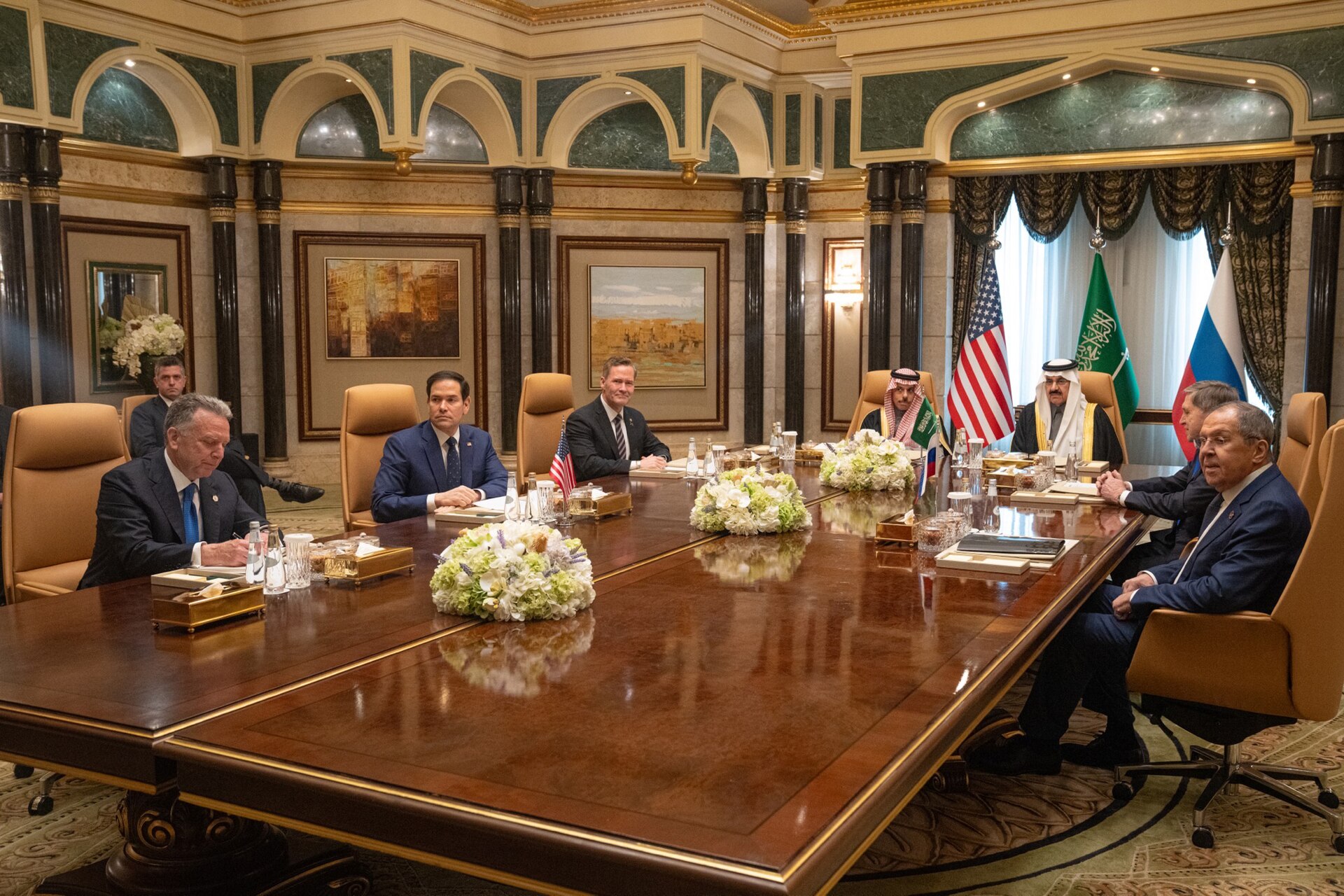
When Crown Prince Mohammed bin Salman meets President Trump in Riyadh on May 13, the 2.8% GDP figure will be part of Saudi Arabia’s wartime economic case. Saudi-aligned media has already set the frame: Asharq Al-Awsat headlined the Q1 spending data as “Strategic Spending of $103 Billion Strengthens Economic Resilience.”
The visit has been structured around a reported $100 billion Saudi commitment in direct war financing and defence procurement, alongside a $142 billion US-Saudi defence framework in active negotiation. MBS’s position requires demonstrating that the kingdom can absorb this spending without fiscal collapse — a case that rests on the growth headline rather than the deficit detail.
The Q1 data complicates that presentation. A $33.5 billion quarterly deficit run-rate implies a full-year shortfall of roughly $130 billion — more than twice the December budget projection. Oil revenues are declining, not stabilising, and AGSI projects the Q2 oil GDP contraction will deepen further as production losses compound through the summer.
Al Jazeera led its May 6 coverage with “Saudi Arabia posts $33.5bn budget deficit amid drop in oil sales” — a framing Saudi adversaries will amplify through the Trump visit and beyond. Bond investors and credit-rating agencies are reading the same Ministry of Finance reports.
Background
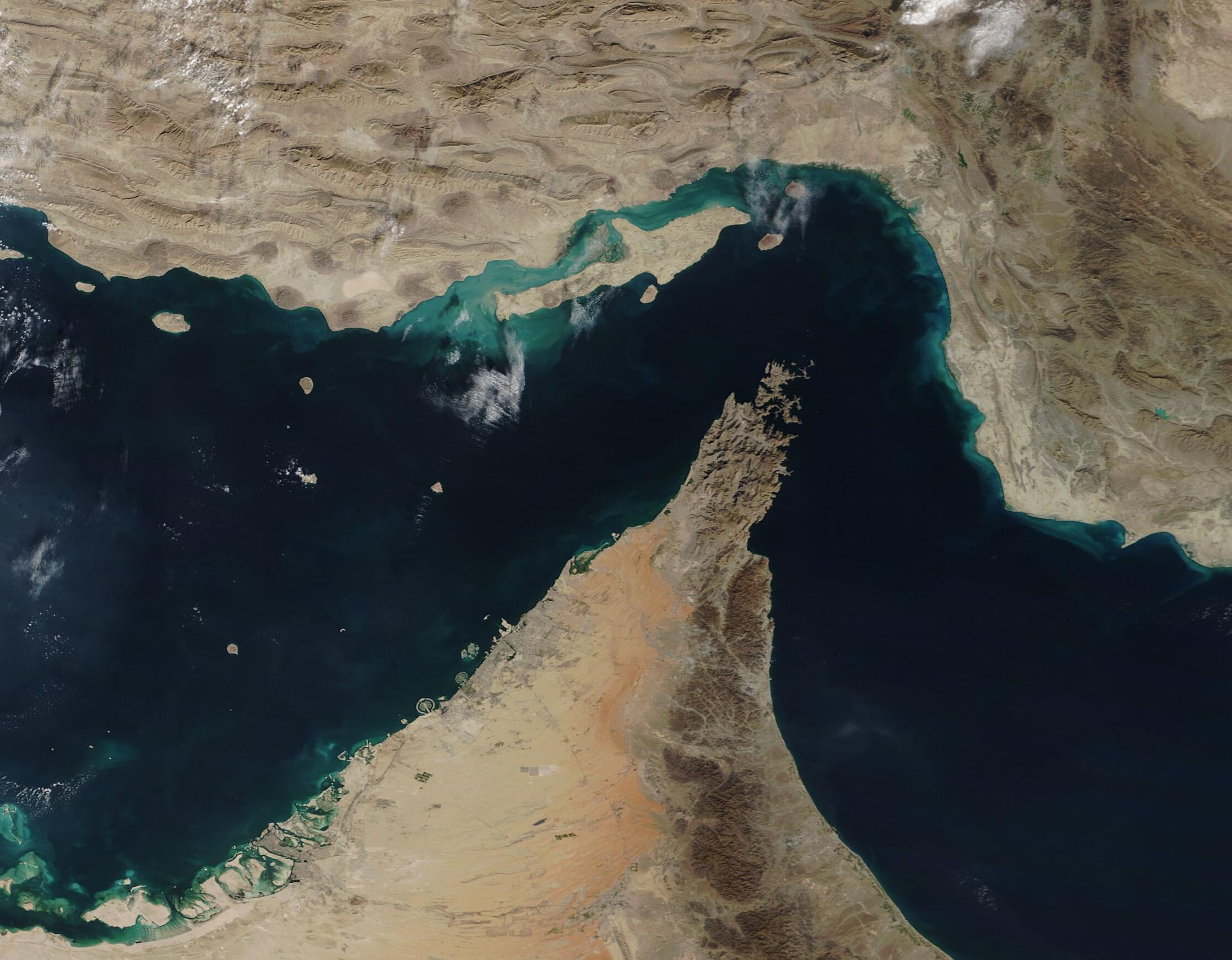
Saudi Arabia’s fiscal position has been under sustained pressure since the US-Israeli war with Iran began in late February 2026. The Hormuz closure reduced Saudi oil exports to Asian markets by approximately 38.6% in Q1, according to Kpler data, forcing the kingdom to reroute volumes through the East-West Pipeline to the Red Sea port of Yanbu — a bypass that handles 4-5.9 million bpd against a pre-war Hormuz throughput of 7-7.5 million bpd.
The Q4 2025 deficit already exceeded $25 billion — more than double Q4 2024 — according to Bloomberg and Semafor, indicating the fiscal deterioration was underway before the full Hormuz disruption took effect in March.
The March PMI reading ended the longest expansion streak in the index’s Saudi history. The previous sub-50 print came in September 2020, during the combined effect of Covid-19 and the OPEC+ price war.
Frequently Asked Questions
How does Q1 military spending compare to the approved budget?
Saudi Arabia’s 2026 budget, approved in December 2025, allocated SAR 195.8 billion for defence and security for the full year — roughly SAR 49 billion per quarter. The Q1 actual of SAR 64.7 billion exceeded that quarterly rate by 32%, implying unbudgeted procurement that will require either supplementary appropriations or sustained over-spending against the approved ceiling for the remaining three quarters.
Why does the IMF fiscal break-even differ from Goldman Sachs’ estimate by $22 per barrel?
The IMF’s $86.60 figure covers only the central government budget as reported by the Ministry of Finance — tax and oil revenues against ministry expenditures. Goldman’s $108-111 estimate adds PIF’s domestic spending commitments, the fund’s debt-servicing costs on its own borrowings (PIF issued $5.5 billion in green bonds in 2024 alone), and sovereign guarantees backing giga-project financing. The gap between the two figures — roughly $22-25 per barrel — represents the scale of Saudi Arabia’s off-balance-sheet sovereign obligations.
What is the Houthi calculus on Saudi economic pressure?
The Middle East Council on Global Affairs assessed in April 2026 that Houthi forces have chosen to pause Red Sea attacks rather than resume them. The logic runs counter to their pre-war pattern: by withholding attacks, the Houthis preserve Saudi Arabia’s economic exposure as diplomatic bargaining power rather than triggering a kinetic escalation that might unify Gulf states against Yemen. Saudi Arabia’s Yanbu exports — now routed through the Red Sea to reach European markets — remain subject to this calculation.
How does the current deficit trajectory compare to 2015?
The 2015 deficit reached approximately $118 billion, or 16% of GDP, during the oil price collapse to below $30 per barrel. The Q1 2026 run-rate of $33.5 billion — annualised to roughly $130 billion — would exceed 2015 in absolute terms if sustained, though as a share of GDP (approximately 12-13%) it would remain below that peak. The policy divergence matters more than the comparison: in 2015-2016, the government cut spending 14% and drew reserves down by approximately $150 billion. In 2026, spending is rising 20% and the entire deficit is being financed through new debt, leaving reserves untouched at SAR 400.9 billion — a choice that preserves the buffer but builds a debt stock that rose SAR 150 billion in a single quarter.
What does the PIF strategy shift mean for international investments?
PIF’s April 2026 strategy moves from an approximate 60/40 domestic-international allocation to 80/20, with a 15% cut to total capital expenditure. In practice, this deprioritises international portfolio positions — the SoftBank Vision Fund stakes, Newcastle United, Lucid Motors — in favour of domestic industrial projects with nearer-term returns. The Clingendael Institute identified three replacement priority sectors: AI and technology, mining and manufacturing, and tourism. PIF’s total assets under management stand at $913 billion, but deployable capital is constrained by existing commitments, the sovereign’s rising debt-service burden, and the 80% domestic mandate that limits the fund’s ability to pursue opportunistic international acquisitions.