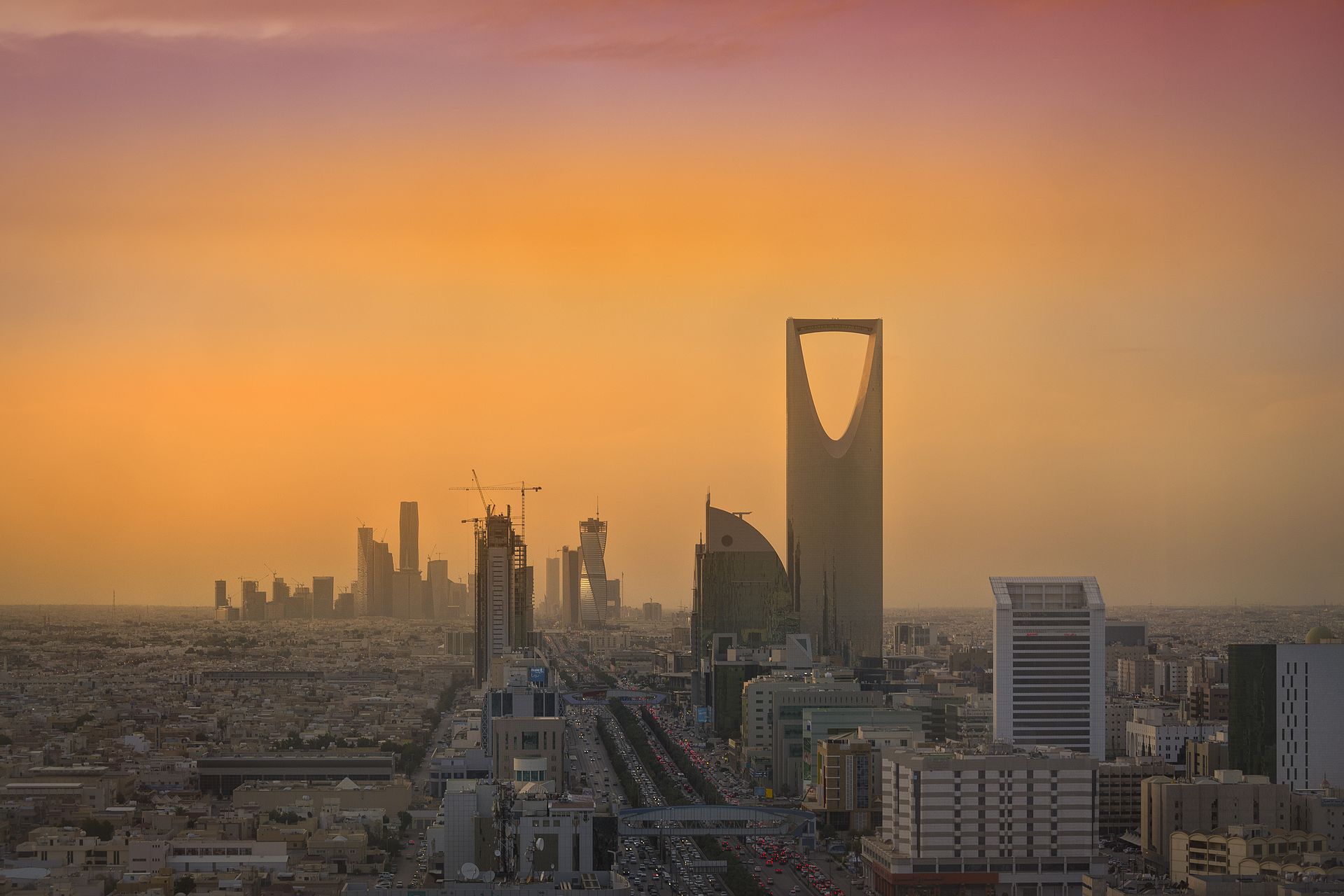

JEDDAH — The World Economic Forum on Monday postponed its Global Collaboration and Growth Meeting scheduled for April 22-23 in Jeddah, citing “current regional developments” as the Iran war entered its fourth week with no ceasefire in sight. The postponement adds the highest-profile international business gathering yet to a growing list of cancelled or delayed events across the Gulf, disrupting a pillar of Saudi Arabia’s economic diversification strategy at the precise moment the Kingdom needs international investment most.
The decision, taken after consultations between the WEF and Saudi Arabia’s Ministry of Economy and Planning, strips the Kingdom of what was to be its premier platform for global economic diplomacy in 2026. More than 1,000 participants — senior government officials, chief executives of WEF partner companies, and international policy experts — had been expected to convene under the theme “Building Common Ground and Reviving Growth.” No replacement date has been announced.
Table of Contents
- What Was the Jeddah Meeting Supposed to Achieve?
- Official Statements and Diplomatic Language
- The Cascade of Cancelled Events Across the Gulf
- What Is the Economic Cost of the Gulf Events Shutdown?
- How Does the Postponement Threaten Vision 2030?
- Flight Restrictions and Insurance Barriers
- What Happens Next for Saudi Arabia’s Events Calendar?
- Frequently Asked Questions
What Was the Jeddah Meeting Supposed to Achieve?
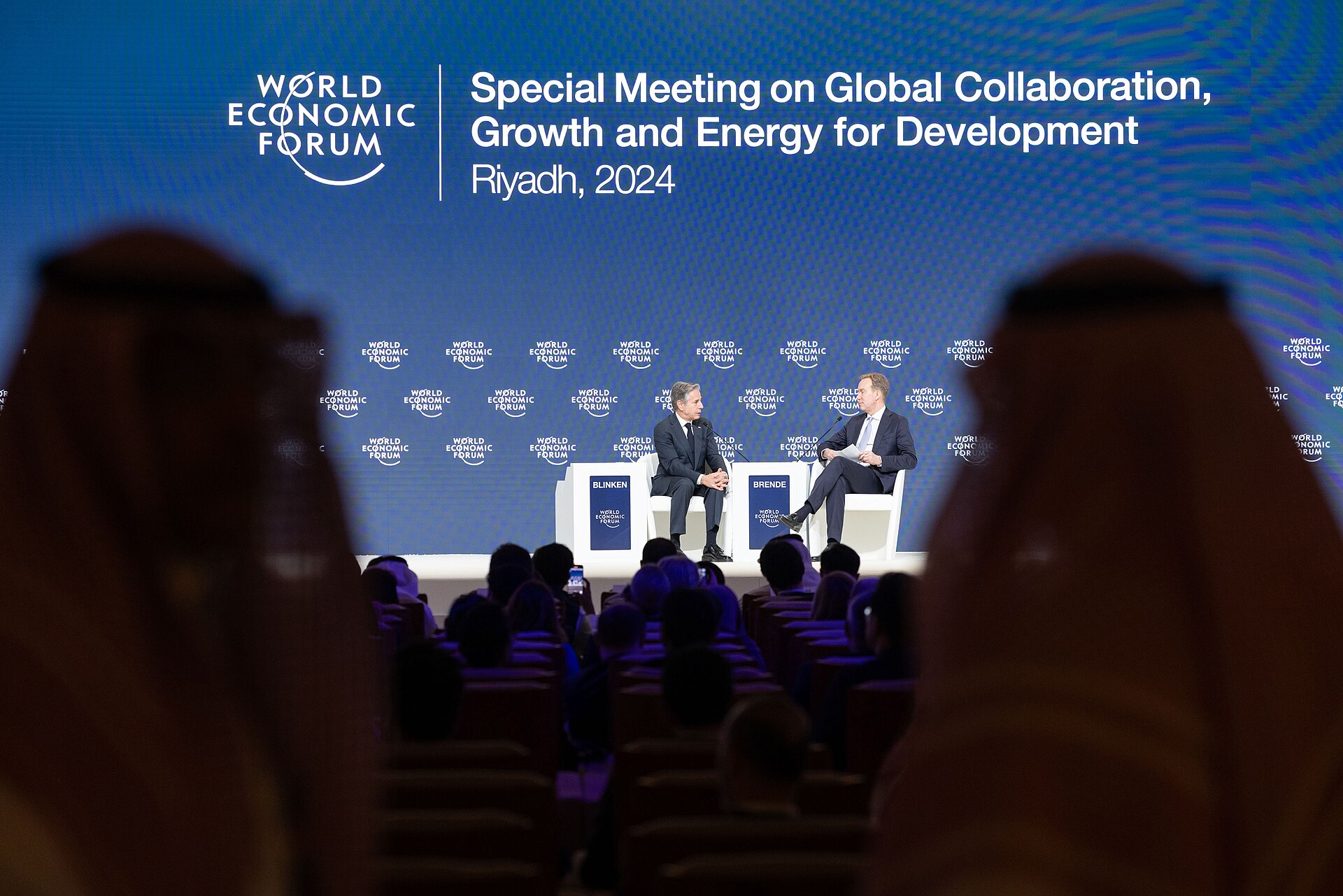
The Global Collaboration and Growth Meeting was designed as the successor to the WEF Special Meeting on Global Collaboration, Growth and Energy for Development held in Riyadh in April 2024, which drew heads of state and Fortune 500 chief executives to discuss trade fragmentation, energy transitions, and artificial intelligence governance. The 2026 edition was intended to cement Saudi Arabia’s status as a permanent host of regular high-level WEF gatherings — a distinction shared only with Davos, Switzerland and a handful of other locations worldwide.
The announcement that Jeddah would host the meeting came on the closing day of the 56th Annual Meeting in Davos in January 2026. Saudi Minister of Economy and Planning Faisal Alibrahim stressed at the time the importance of “sustained dialogue to accelerate global growth,” signalling Riyadh’s ambition to position itself as a neutral convening ground for international economic cooperation.
The meeting’s three thematic pillars — building common ground, reviving growth, and transforming industry through innovation — were structured to appeal to a global audience fatigued by geopolitical fragmentation. With Saudi Arabia projecting itself as a bridge between the Global South and the industrialised West, the Jeddah gathering represented more than a conference. It was a statement of diplomatic capability and economic maturity that would have showcased the Kingdom’s ability to convene the world’s most powerful economic actors on its own soil.
Official Statements and Diplomatic Language
The WEF issued a carefully worded statement on March 24, noting the decision “reflects a commitment to convening the meeting under conditions that ensure its full strategic impact.” The organisation said it “remains committed to facilitating a forward-looking agenda for the region and beyond” and promised to “provide updates about the rescheduled meeting in due course.”
The Middle East briefing 3,000+ readers start their day with.
One email. Every weekday morning. Free.
Neither the WEF nor the Saudi Ministry of Economy and Planning named the Iran war directly. The phrase “current regional developments” served as diplomatic shorthand for a conflict that has produced ballistic missile strikes on Riyadh, closed the Strait of Hormuz to most commercial shipping, and prompted the United States to pursue emergency diplomatic channels through Pakistan.
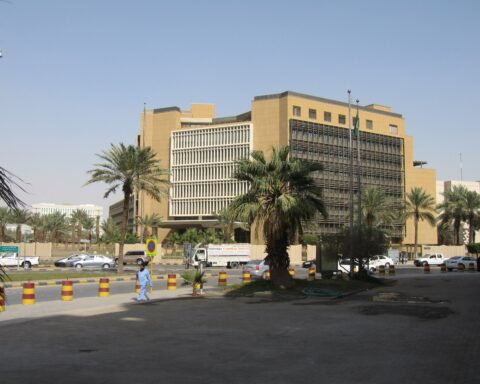
The Saudi Ministry responded by noting the Kingdom “remains fully equipped to convene” the meeting, describing Saudi Arabia’s “continued role as a global platform for dialogue and agenda setting.” The statement appeared designed to separate the postponement — framed as a mutual decision to maximise impact — from any suggestion that Riyadh was incapable of hosting an international event under wartime conditions.
Bloomberg reported the postponement as directly linked to the Iran war, which began on February 28 when the United States and Israel launched strikes against Iran’s nuclear and military infrastructure. Iran retaliated with waves of missile and drone attacks against Gulf states, including Saudi Arabia, the UAE, Bahrain, Kuwait, and Qatar.
The diplomatic framing matters because it establishes the conditions under which the meeting might return. By characterising the postponement as a joint decision to “maximise global impact” rather than a security-driven cancellation, both parties preserved the option of rescheduling without admitting the event was pulled due to risk. Asharq Al-Awsat, the pan-Arab daily, carried the Saudi Ministry’s insistence that the Kingdom remains “fully equipped” — language that pushed back against any implication of incapacity.
The Riyadh 2024 edition of the WEF special meeting had been a diplomatic coup for Crown Prince Mohammed bin Salman. It brought then-U.S. Secretary of State Antony Blinken onto a Saudi stage alongside WEF President Borge Brende, with Saudi officials in the audience. Losing the follow-up event is not merely a scheduling inconvenience. It interrupts a deliberate multi-year strategy to make Riyadh and Jeddah permanent fixtures on the global governance calendar alongside Davos and Singapore.
The Cascade of Cancelled Events Across the Gulf
The WEF postponement is the latest and arguably most significant entry on a lengthening roster of events pulled from the Gulf calendar since the war began. The cancellations span sport, technology, energy, finance, and tourism — the precise sectors Crown Prince Mohammed bin Salman has targeted as pillars of Saudi Arabia’s post-oil economic transformation.
| Event | Original Date | Location | Status | Expected Attendance |
|---|---|---|---|---|
| WEF Global Collaboration Meeting | April 22-23 | Jeddah | Postponed (no new date) | 1,000+ |
| Formula 1 Saudi Arabian GP | April 2026 | Jeddah | Cancelled | 150,000+ |
| Formula 1 Bahrain GP | April 2026 | Sakhir | Cancelled | 100,000+ |
| LEAP 2026 (tech conference) | April 2026 | Riyadh | Moved to Aug 31-Sep 3 | 200,000+ |
| Arabian Travel Market | May 4-7 | Dubai | Moved to Aug 17-20 | 55,000 |
| Middle East Energy | April 7-9 | Dubai | Moved to Sep 1-3 | 50,000 |
| TOKEN2049 Dubai | 2026 | Dubai | Postponed to 2027 | 15,000+ |
| Fanatics Flag Football Classic | 2026 | Riyadh | Relocated to Los Angeles | N/A |
| AIM Congress | April 2026 | Dubai | Moved to Sep 2026 | 12,000+ |
| World Triathlon Championship (elite) | Late March | Abu Dhabi | Postponed (juniors only) | N/A |
| Megacampus Summit | March 6-7 | Saudi Arabia | Moved to September | 5,000+ |
The pattern is unmistakable. Every major international gathering planned for the Gulf between March and May 2026 has been either cancelled, relocated, or pushed to the second half of the year. Organisers have cited flight restrictions, insurance barriers, and the inability to guarantee attendee safety as primary factors.
Formula 1’s cancellation of both the Saudi Arabian and Bahrain Grands Prix in mid-March marked the first time Middle Eastern races had been pulled from the calendar due to an active military conflict. LEAP 2026, Saudi Arabia’s flagship technology conference that drew more than 200,000 visitors and generated over $15 billion in investment announcements in 2025, was shifted from April to late August by organiser Informa.
Senior executives have also withdrawn individually. Saudi Aramco Chief Executive Amin Nasser cancelled his appearance at CERAWeek in Houston to remain in the Kingdom during the conflict, according to Reuters. Other Gulf energy leaders followed suit, leaving the world’s most important energy conference without its most consequential participants.
What Is the Economic Cost of the Gulf Events Shutdown?
The MICE (meetings, incentives, conferences, and exhibitions) sector was valued at $3.22 billion in Saudi Arabia alone in 2025, according to Mordor Intelligence, with projections of growth to $5.65 billion by 2031 at a compound annual growth rate of 9.82 percent. Saudi Arabia had set an explicit target of increasing the MICE sector’s contribution to national GDP from 3.8 percent to 8.8 percent by 2030.
LEAP 2025 alone generated $15 billion in investment announcements across its four days. The Arabian Travel Market typically produces around $2.5 billion in reported industry deals. The combined direct economic impact of the postponed and cancelled events listed above likely exceeds $20 billion in lost investment commitments, deal flow, and associated tourism spending.
The indirect costs may be larger still. Saudi Arabia welcomed 122 million visitors in 2025 — a 5 percent annual increase — with total tourism spending reaching an estimated 300 billion Saudi riyals ($81 billion), according to Arab News. The Kingdom targets 150 million visitors by 2030. Every cancelled conference erodes the momentum needed to reach that figure.
Saudi Tourism Minister Ahmed Al Khateeb had emphasised that “Riyadh is positioning itself as a global hub for exhibitions and conferences.” The WEF postponement undercuts that positioning at the highest possible level. The World Economic Forum brand carries weight that no technology conference or sporting event can replicate — it signals to chief executives and heads of state that a destination is stable, connected, and worth their time.
Hotel occupancy rates across Saudi Arabia’s primary business destinations have also suffered. Riyadh and Jeddah hotel operators had anticipated strong bookings through the spring conference season. According to industry data, Saudi Arabia’s hotel sector added more than 30,000 rooms between 2023 and 2025 in anticipation of growing demand from business travellers and event attendees. Those rooms now face a gap in demand that could persist through the summer if the conflict continues. The Kingdom’s Ministry of Interior has since extended all expired visas to April 18 and waived overstay fines for visitors stranded by the airspace shutdowns.
The Tadawul exchange reopened after an eight-day suspension in mid-March, but the hospitality and entertainment sectors listed on the Saudi market have underperformed broader indices. Investors are pricing in the reality that revenue from conferences, exhibitions, and tourism — once considered among the most promising growth segments of the post-oil economy — faces an indefinite interruption.
How Does the Postponement Threaten Vision 2030?
Vision 2030’s entire economic diversification thesis depends on Saudi Arabia becoming a destination — for tourists, for investors, for conferences, for sporting events, and for talent. The $800 billion infrastructure pipeline that includes NEOM, the Red Sea Global resorts, Diriyah Gate, and the King Salman Park was predicated on a region at peace, or at least one where conflict remained distant enough not to deter international visitors.
The Iran war has shattered that assumption. With ballistic missiles striking Riyadh Province, Iranian drones targeting residential areas, and Gulf airspace intermittently restricted, the risk calculus for international attendees has shifted fundamentally. Corporate travel policies at major multinational companies typically prohibit employee travel to active conflict zones or countries with elevated security alerts.
The U.S. Embassy in Riyadh issued security alerts on both March 20 and March 23, urging American citizens to monitor local media and maintain updated emergency plans. The UK Foreign Office raised its Saudi Arabia travel advisory. These designations trigger automatic cancellation clauses in corporate insurance policies, making it functionally impossible for many executives to attend Gulf-based events regardless of personal willingness.
Saudi Arabia’s 2034 FIFA World Cup hosting rights are not in immediate jeopardy — the tournament is eight years away — but the current disruption demonstrates the fragility of the events-based economic model. A single regional conflict can empty a calendar that took years to fill.
Flight Restrictions and Insurance Barriers
The practical obstacles to hosting international events in the Gulf extend beyond security concerns. The Iran war has disrupted Gulf airspace, with 293 flights disrupted across Saudi Arabia in a single 24-hour period as portions of Gulf airspace have been intermittently closed or rerouted. Major airlines have suspended or rerouted flights over the Persian Gulf, adding hours to journey times and reducing seat capacity into Saudi airports. By the end of March, the Saudi aviation shutdown had grounded more than 11,000 flights and left no major international carrier with a published return date.
The Strait of Hormuz crisis has compounded the disruption. Maersk, the world’s second-largest container shipping line, announced emergency freight surcharges for all shipments to and from Gulf states on March 2, citing the strait’s effective closure. Event organiser Informa specifically cited “flight restrictions” as a factor in postponing LEAP 2026.
Insurance markets have responded accordingly. Lloyd’s of London war risk premiums for Gulf maritime and aviation operations have reached levels not seen since the 1980s tanker wars. Event cancellation insurance, which typically covers organisers against force majeure disruptions, has become either prohibitively expensive or unavailable for Gulf events during the conflict period. This makes it commercially unviable for organisers to proceed — even if the physical security environment were to improve — unless insurance markets ease their terms.
The UK Maritime Trade Operations has maintained a “critical” threat level across the Gulf, Strait of Hormuz, and Gulf of Oman since early March, with 21 confirmed attacks on commercial vessels and offshore infrastructure since March 1, according to its latest advisory.
For event organisers, the combination of restricted airspace, elevated war risk premiums, and corporate travel bans creates a triple barrier. Even organisations willing to accept the security risk face practical obstacles: reduced airline schedules mean fewer seats available for delegates, freight disruptions complicate the logistics of staging exhibitions that require heavy equipment and display materials, and the reputational risk of holding a gathering that is poorly attended outweighs the cost of postponement.
Danielle Curtis, director of the Arabian Travel Market, said in a statement that “the safety and well-being of our customers, partners, and colleagues remains our highest priority.” That formulation — common across the postponement announcements — reflects both genuine concern and a legal imperative. Organisers who proceed with events in conflict zones without adequate duty-of-care provisions expose themselves to significant liability.
What Happens Next for Saudi Arabia’s Events Calendar?
The WEF said it will announce a new date for the Jeddah meeting “in due course,” but no timeline has been provided. Several postponed events have already rescheduled to the August-September window, suggesting organisers are betting that the conflict will have subsided — or at least stabilised — by late summer.
LEAP 2026 is now set for August 31 to September 3 at the Riyadh Exhibition and Convention Centre. The Arabian Travel Market has moved to August 17-20 in Dubai. Middle East Energy has been rescheduled to September 1-3. These dates cluster in a narrow window, creating potential competition for attendees, sponsors, and media attention.
The Saudi government has signalled no intention of scaling back its events ambitions. The inaugural WTM Spotlight Riyadh is still scheduled for September 29 to October 1, positioning Saudi Arabia as a major player in the global MICE industry. Expo 2030 preparations continue. The 2034 World Cup planning infrastructure remains on track.
Whether these events proceed as planned depends entirely on the trajectory of the Iran war. Crown Prince Mohammed bin Salman’s broader strategic positioning — maintaining distance from the US-Israel military campaign while securing Saudi territorial defence — aims in part to preserve the Kingdom’s reputation as a stable investment destination once hostilities end.
The clustering of rescheduled events into late August and September creates its own risks. If the war extends into the summer months — a possibility given the absence of active ceasefire negotiations — organisers may face a second round of postponements. TOKEN2049, the cryptocurrency conference, has already pushed its Dubai edition to 2027 rather than gamble on a late-2026 window, suggesting some organisers have concluded the conflict’s timeline is too uncertain to plan around.
For Saudi Arabia, the path forward involves a difficult balancing act. The Kingdom must maintain its events infrastructure, honour contracts with international organisers, and project confidence that the disruption is temporary — all while its eastern provinces remain within range of Iranian ballistic missiles and its shipping lanes carry wartime insurance premiums.
The WEF postponement demonstrates that reputation alone is insufficient when missiles are falling. The international business community has made a collective judgement that the Gulf is not safe for large gatherings — and that judgement will persist until the security situation changes materially, not merely diplomatically. Saudi Arabia spent billions building the infrastructure for a global events economy. The Iran war, in four weeks, took away the calendar that was supposed to fill it.
Frequently Asked Questions
Why did the World Economic Forum postpone the Jeddah meeting?
The WEF cited “current regional developments” following consultations with Saudi Arabia’s Ministry of Economy and Planning. The postponement is a direct consequence of the Iran war, which has produced missile strikes on Saudi territory, closed Gulf airspace intermittently, and triggered corporate travel restrictions that would have prevented many executives from attending.
When will the WEF Jeddah meeting be rescheduled?
No new date has been announced. The WEF said it would “provide updates about the rescheduled meeting in due course.” Other postponed Gulf events have rescheduled to the August-September 2026 window, suggesting that timeline as a likely target if the conflict subsides.
How many events have been cancelled in the Gulf since the Iran war began?
At least 11 major international events have been cancelled, postponed, or relocated since the Iran war began on February 28, 2026. These include the Formula 1 Saudi Arabian and Bahrain Grands Prix, LEAP 2026, the Arabian Travel Market, TOKEN2049 Dubai, and the WEF Global Collaboration Meeting. Combined expected attendance exceeded 600,000 visitors.
What is the economic impact of the Gulf events shutdown?
Saudi Arabia’s MICE sector was valued at $3.22 billion in 2025. The postponed events collectively represented over $20 billion in expected investment announcements and deal flow. Total Saudi tourism spending reached $81 billion in 2025, and every cancelled event diminishes the momentum toward the Kingdom’s 150 million visitor target for 2030.
Will the 2034 World Cup be affected?
Not immediately — the tournament is eight years away. However, the current disruption demonstrates that Saudi Arabia’s events-based economic model remains vulnerable to regional instability. The Kingdom’s ability to host the World Cup depends on the broader security trajectory of the Middle East over the coming decade, not just the outcome of the current conflict.