
RIYADH — Twenty-six days into the most destructive conflict the Persian Gulf has witnessed since 1991, Saudi Arabia faces a paradox that no economic textbook anticipated: the Kingdom is simultaneously getting richer and poorer. Oil prices have surged past $114 per barrel, fattening Aramco’s revenue by billions. Yet the Saudi Arabian Monetary Authority’s foreign reserves, the fortification wall behind the riyal’s four-decade peg to the dollar, are being drawn down at rates not seen since the 2014-2016 oil price crash — except this time, the drain comes not from collapsing prices but from interceptor missiles that cost $12 million each, fired at Iranian drones worth less than a used Toyota.
The financial architecture sustaining Saudi Arabia through this war rests on four pillars: SAMA’s $475 billion in foreign reserves, the Public Investment Fund’s $941 billion portfolio, the Tadawul stock exchange’s surprising resilience, and a fiscal position that entered the conflict with a manageable 3.3 percent deficit. Each pillar is absorbing stress in different ways, and together they form a financial shield as important as any Patriot battery. Whether that shield holds depends not on the next Iranian barrage but on a question that haunts every war economy in history — how long.
Table of Contents
- The $475 Billion Fortress
- Can the Saudi Riyal Survive Its First War?
- The PIF’s Wartime Pivot
- What Does It Cost to Shoot Down a $20,000 Drone?
- The Oil Revenue Paradox
- How Is Saudi Arabia Exporting Oil Without Hormuz?
- Why Has the Saudi Stock Market Not Collapsed?
- The Fiscal Stress Test
- The Wartime Financial Resilience Matrix
- Will the Credit Rating Agencies Downgrade Saudi Arabia?
- What the War Is Costing Vision 2030
- The Gulf War Comparison Saudi Arabia Dreads
- Frequently Asked Questions
The $475 Billion Fortress
Saudi Arabia entered the Iran war with its strongest financial position in half a decade. SAMA’s foreign reserve assets stood at SAR 1.78 trillion ($475 billion) in February 2026, a six-year high that had climbed SAR 58.7 billion ($15.6 billion) in January alone, according to data published by the Saudi central bank. Foreign currency reserves, which constitute approximately 95 percent of SAMA’s total holdings, increased by roughly 10 percent year-on-year, reaching SAR 1.68 trillion.
The composition of these reserves matters as much as their size. Approximately 60 percent sits in foreign securities — overwhelmingly US Treasuries and high-grade sovereign bonds — providing both yield and immediate liquidity. The remainder is held in foreign currency deposits at international banks and in the Kingdom’s reserve position at the International Monetary Fund. Monetary gold, though a small share, has appreciated substantially as investors worldwide flee to safe-haven assets.
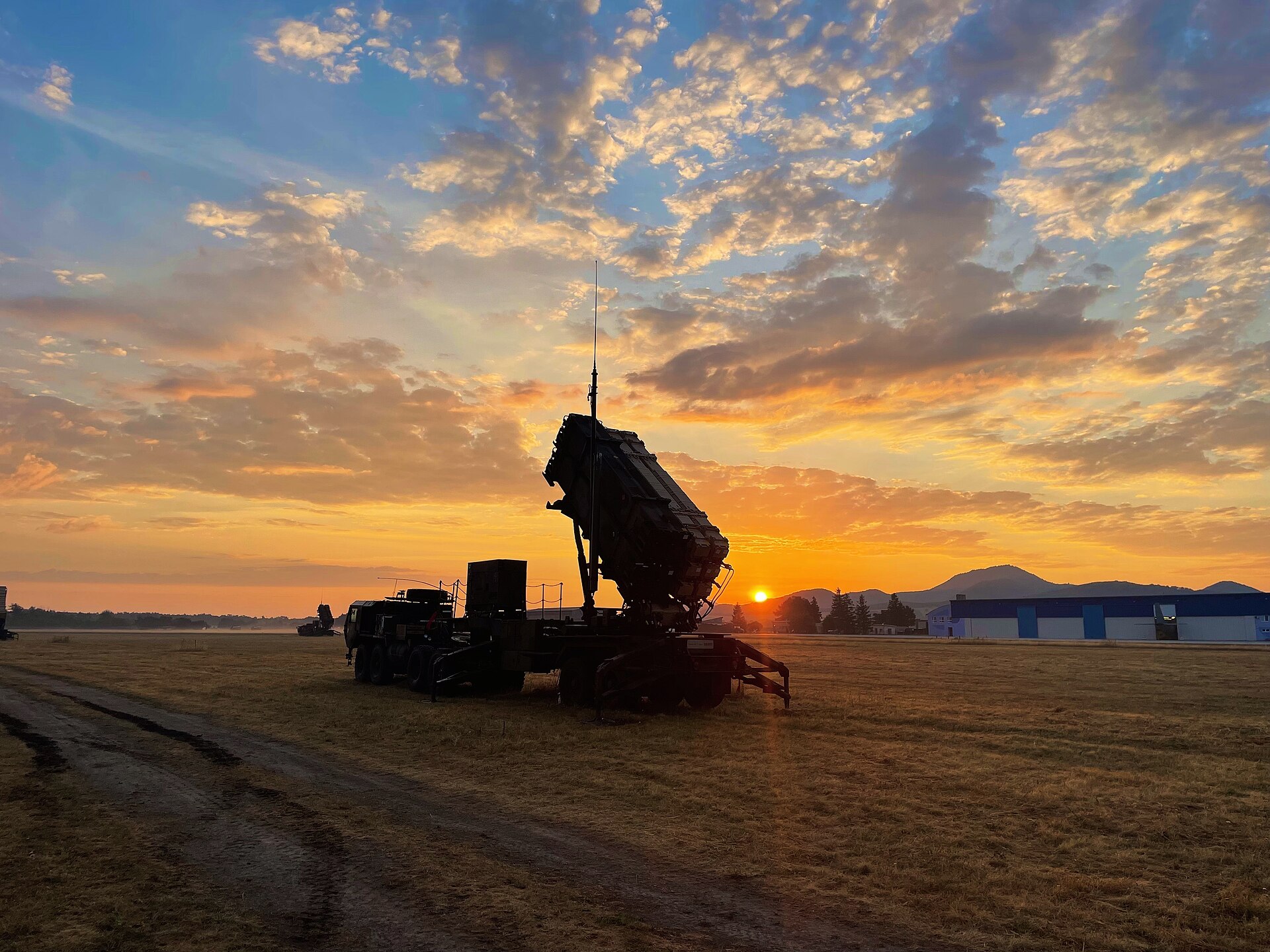
Yet the reserves face simultaneous pressure from three directions. First, the defence procurement surge: Saudi Arabia committed $9 billion for 730 PAC-3 MSE interceptors from the United States in January 2026, according to the Defense Security Cooperation Agency, with additional billions flowing toward Ukrainian interceptor drones and French missile systems. Second, the PIF’s emergency pivot from megaproject spending to food and energy security purchases requires dollar-denominated outlays. Third, the routine cost of defending the riyal peg — maintaining the 3.75 exchange rate — demands continuous dollar supply in forward markets where speculators test the central bank’s resolve during every geopolitical crisis.
The question is whether $475 billion is enough. During the 2014-2016 oil price collapse, SAMA burned through more than $150 billion in reserves over 18 months, falling from $732 billion to $536 billion. The current drawdown is faster in absolute terms because of the extraordinary military expenditure, but starting from a higher relative position in terms of months of import cover. At current burn rates — estimated by Goldman Sachs at $8-12 billion per month if the conflict continues beyond April — Saudi Arabia has roughly three to four years of reserve runway before reaching the $300 billion floor that most analysts consider the minimum for maintaining the dollar peg with confidence.
The Middle East briefing 3,000+ readers start their day with.
One email. Every weekday morning. Free.
Can the Saudi Riyal Survive Its First War?
The Saudi riyal has been pegged to the US dollar at SAR 3.75 since 1986 — a 40-year anchor of macroeconomic stability that has never been tested by a shooting war. The peg survived the 1990-91 Gulf War, the 2003 Iraq invasion, the 2008 financial crisis, the 2014-2016 oil crash, and the Covid pandemic. Each crisis brought speculation that SAMA would be forced to devalue. Each time, the central bank held firm.
This crisis is different in one critical respect: unlike previous shocks, the Iran war simultaneously pressures both sides of Saudi Arabia’s external balance. The Kingdom’s primary revenue source — oil exports via the Strait of Hormuz — has been physically disrupted, while defence-related dollar expenditures have surged. The twin squeeze creates a current account dynamic that no previous stress scenario combined.
SAMA Governor Ayman Al Sayari stated in February 2026 that the riyal-dollar peg “maintains domestic price stability” and that reserves were “more than sufficient” to defend it. The data, so far, supports his confidence. Saudi Arabia’s average annual inflation has remained below 3 percent over the past five years, according to the General Authority for Statistics, and the forward market — where currency speculators have historically tried to break Gulf pegs — shows no significant divergence from the spot rate.
The critical variable is duration. Saudi Arabia’s foreign reserves, at $475 billion, provide roughly 40 months of import cover at pre-war import levels, according to IMF data. War-related imports — ammunition, food stockpiling, construction materials for damaged infrastructure — have compressed that runway. If the conflict extends beyond six months, and if Hormuz remains partially closed, reserve depletion could accelerate to a rate that tests market confidence in the peg for the first time since the brief 1993 speculation episode, when SAMA intervened decisively in forward markets to crush a minor devaluation bet.
SAMA’s doctrine, as outlined in a Bank for International Settlements paper, is to intervene “on a discretionary basis in the forward market, given speculators’ preference to target the forward market” — a strategy that has deterred every speculative probe to date. The central bank last intervened in 1998, during the Asian financial crisis. Whether the 2026 war forces a reprise of that intervention remains the single most consequential financial question in the Gulf.
The PIF’s Wartime Pivot
The Public Investment Fund entered the war managing approximately $941 billion in assets, according to the Sovereign Wealth Fund Institute, making it the world’s fifth-largest sovereign wealth fund. Governor Yasir Al Rumayyan had spent the previous five years transforming PIF from a dormant holding company for state assets into an aggressive global investor and the financial engine of Vision 2030. The war has forced the most dramatic strategic recalibration in the fund’s 53-year history. The Kingdom’s financial reserves face additional strain from the deepening economic rivalry with the UAE, which is competing for the same corporate investment and sovereign wealth dominance.
Construction contracts awarded by PIF subsidiaries collapsed from $71 billion in 2024 to below $30 billion in 2025 — a 60 percent decline, according to MEED project tracker data — even before the first Iranian drone crossed Saudi airspace. PIF’s share of those awards fell from 38 percent to 14 percent. The war accelerated a retrenchment that was already underway, redirecting capital from megaprojects toward three wartime priorities: food security, defence manufacturing, and strategic commodity reserves.
The food security pivot is the most consequential. Through its subsidiary SALIC (Saudi Agricultural and Livestock Investment Company), PIF has accelerated grain and protein acquisitions from Ukraine, Australia, Brazil, and Argentina. Saudi Arabia imports approximately 80 percent of its food, according to the Ministry of Environment, Water and Agriculture, and the Hormuz closure has forced emergency rerouting of grain shipments through the Suez Canal to Jeddah rather than through the Gulf to Dammam. The additional shipping costs and longer delivery times have inflated food import bills by an estimated 15-20 percent.
On the defence side, PIF’s subsidiary Saudi Arabian Military Industries (SAMI) signed its first-ever foreign arms procurement deal in March 2026 — purchasing Ukrainian interceptor missiles to supplement dwindling Patriot inventories. EDGE Group, PIF’s UAE counterpart’s defence subsidiary, secured a similar arrangement, and the two Gulf funds are now coordinating defence procurement for the first time in their history.
The portfolio adjustment represents what the Financial Times described as “the largest involuntary rebalancing in sovereign wealth fund history.” PIF’s publicly traded international holdings — including stakes in Lucid Motors, Nintendo, Starbucks, and Uber — have experienced mixed performance, with defence-related positions outperforming and consumer discretionary positions underperforming. Al Rumayyan indicated in early March that PIF was finalising a revised 2026-2030 strategy aimed at becoming “a more efficient and returns-driven investment vehicle” — language that analysts at Capital Economics interpreted as a permanent scaling back of the giga-project ambition that defined the MBS era.
What Does It Cost to Shoot Down a $20,000 Drone?
The financial mathematics of air defence in the Iran war represent the most extreme cost asymmetry in modern military history. Saudi Arabia spent an estimated $600 million to $1 billion in interceptor ammunition during the first 96 hours of the conflict to neutralise Iranian weapons worth approximately $75 million to $250 million, according to analysis by the International Institute for Strategic Studies (IISS). The cost-exchange ratio — running between 4:1 and 8:1 in Iran’s favour for missile-on-missile engagements — deteriorates to between 80:1 and 200:1 when a PAC-3 MSE interceptor costing $4 million to $12 million is fired at a Shahed-136 drone costing $20,000 to $50,000. The combat performance matrix assessing Saudi military capability rates interceptor sustainment as the Kingdom’s most critical vulnerability, scoring just 2.5 out of 5.
The $9 billion emergency Patriot sale approved by the State Department in January 2026 provided Saudi Arabia with up to 730 PAC-3 MSE interceptors. At the engagement rates observed in the first three weeks — an average of 40-100 drones and missiles intercepted daily over Saudi territory, as reported by the Saudi Ministry of Defence — those 730 interceptors could be exhausted within 30 to 60 days. The mathematics leave no room for ambiguity: Saudi Arabia is burning through its interceptor inventory faster than global production lines can replace it.
Raytheon’s PAC-3 production facility in Tucson, Arizona, manufactures approximately 500 interceptors per year for all global customers combined. Even at maximum surge capacity, annual output cannot match monthly consumption rates in the Gulf theatre. The production bottleneck, not the dollar cost, is the binding constraint — a reality that has driven Saudi Arabia toward Ukrainian interceptor drones that cost a fraction of the price and can be manufactured in weeks rather than years.
The daily cost of air defence operations — including interceptor expenditure, radar operations, maintenance, and personnel — runs between $150 million and $250 million, according to estimates compiled by defence analysts at the Brookings Institution. Annualised, that represents $55-91 billion — potentially exceeding Saudi Arabia’s entire pre-war defence budget of approximately $78 billion. The war has not merely stressed the defence budget; it has rendered the existing budget framework obsolete.
The Oil Revenue Paradox
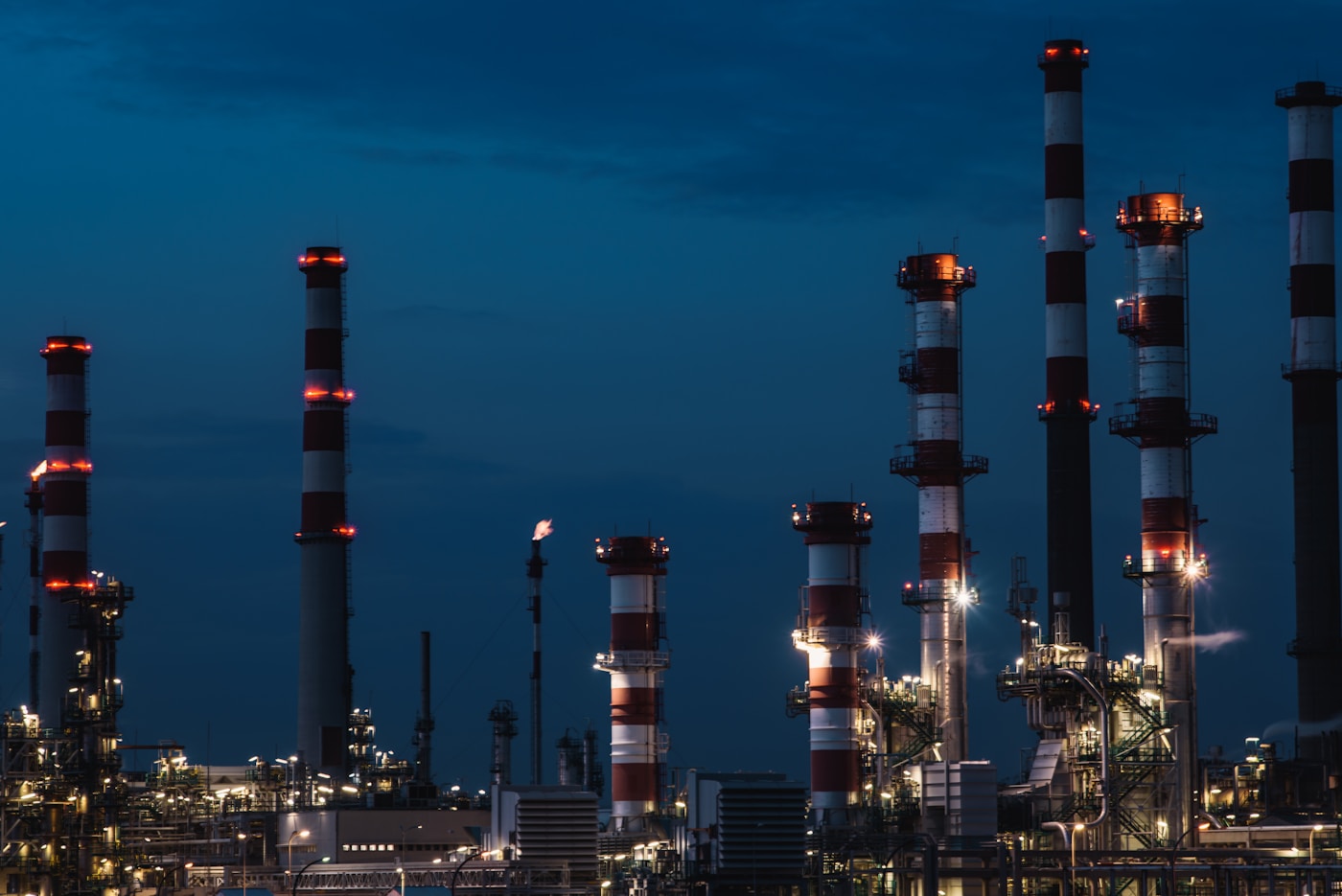
The Iran war has produced the most counterintuitive fiscal dynamic in Saudi Arabia’s modern history: the conflict that threatens the Kingdom’s economic infrastructure is simultaneously generating the revenue to defend it. Brent crude surged past $119 per barrel in mid-March 2026 before correcting to approximately $114, according to ICE Futures data — a 45-55 percent increase from the pre-war baseline of approximately $78. That premium began to unravel on March 25, when Brent fell below $100 for the first time since the war began on reports of a formal ceasefire proposal.
At $114 per barrel, every barrel Saudi Arabia manages to export generates roughly $36 more than the government’s fiscal breakeven oil price of approximately $78 per barrel, which the IMF estimated in its October 2025 Article IV consultation. On a pre-war export volume of roughly 7.5 million barrels per day, that surplus would have generated an additional $270 million daily in revenue — approximately $98 billion annualised — enough to fund the entire wartime rearmament programme with room to spare. But export volumes have collapsed to 4.355 million barrels per day, and the OECD now warns the disruption has pushed global inflation past 4 percent while erasing a year of projected growth.
The catch is volume. Aramco cut production by 25 percent in early March after Iranian strikes damaged loading facilities at Ras Tanura and threatened the broader Eastern Province infrastructure, according to Bloomberg. Actual export volumes through both Hormuz and the Red Sea alternative averaged approximately 5.2 million barrels per day in the first three weeks of March — down from the pre-war average of 7.5 million barrels per day. The revenue calculation at reduced volumes: roughly $5.2 million x $114 = $593 million per day, compared with a pre-war average of approximately $585 million at $78 per barrel.
The arithmetic reveals the paradox in full: Saudi Arabia is generating roughly the same daily revenue from exporting 30 percent less oil at 45 percent higher prices. The net fiscal effect is approximately neutral — a remarkable equilibrium that no financial planner could have anticipated but that the structure of the oil market has imposed organically.
The risk to this equilibrium is entirely on the volume side. If further Iranian strikes force additional production cuts — or if the Red Sea route faces disruption from Houthi escalation, which Ansar Allah has threatened — revenue would fall below the fiscal breakeven point even at elevated prices. The war premium is real, but it is also precarious.
How Is Saudi Arabia Exporting Oil Without Hormuz?
The East-West Pipeline, known as the Petroline, is a 1,200-kilometre system connecting the Abqaiq processing facility in the Eastern Province to Yanbu on the Red Sea coast. Built in the 1980s during the Iran-Iraq War precisely for the scenario now unfolding, the pipeline has a design capacity of approximately 7 million barrels per day following recent expansions, according to Aramco CEO Amin Nasser.
Ship-tracking data compiled by Kpler and UANI shows crude exports from Yanbu surged to a five-day rolling average of 3.66 million barrels per day by mid-March — roughly half of Saudi Arabia’s pre-crisis export levels. Loadings averaged 2.2 million barrels per day in the first nine days of March, up from 1.1 million in February, representing the fastest ramp-up in the pipeline’s operational history.
The bottleneck is not the pipeline itself but Yanbu’s port capacity. The two terminals at Yanbu have a nominal loading capacity of approximately 4.5 million barrels per day but a tested actual throughput of roughly 4 million barrels per day. Beyond this ceiling, physical infrastructure — jetties, single-point mooring buoys, storage tanks — becomes the constraint. Aramco has deployed floating storage vessels offshore to buffer the gap between pipeline flow and tanker loading schedules.
The IEA estimated that in early 2026, the Saudi system was using about 2 million barrels per day of bypass capacity, leaving 3-5 million barrels per day of theoretical spare capacity. Closing this gap requires not just pipeline flow — which can be increased relatively quickly by activating pumping stations — but port infrastructure that takes months to expand and tanker availability in the Red Sea, where shipping insurance premiums have quadrupled since the war began.
Yanbu’s vulnerability is its own: the Red Sea route passes near the Bab el-Mandeb Strait, where Houthi forces have previously disrupted commercial shipping. A simultaneous disruption of both Hormuz and Bab el-Mandeb — while militarily improbable — would effectively strand Saudi oil entirely. The Ministry of Energy’s contingency planning, according to industry sources cited by Reuters, includes activating mothballed pipeline capacity to Jordan’s Aqaba port and the long-dormant IPSA pipeline through Iraq, though neither option offers near-term viability.
Why Has the Saudi Stock Market Not Collapsed?
The Tadawul All Share Index (TASI) closed at 10,848 on February 25, 2026 — three days before the war began. By the following Sunday’s open, it had plunged 5 percent to 10,214, its lowest level since March 2023. Net foreign selling exceeded $8 billion in the first week, according to Saudi Exchange data. The conventional expectation was a prolonged rout.
Instead, the TASI rebounded 4.4 percent between March 1 and 11, outperforming every regional market, according to a TradingView analysis published in partnership with Zawya. By March 20, the index had recovered to approximately 10,600 — still below pre-war levels but substantially above the initial panic low. The recovery defied the war-zone discount that typically punishes equities in active conflict zones.
Three structural factors explain the resilience. First, Saudi Aramco — which constitutes 12-16 percent of the TASI’s total market capitalisation — surged 3.4 percent on expectations of higher oil revenue, acting as a ballast against broader index weakness. Second, Saudi Arabia’s geographic advantage allows its Red Sea terminals to bypass the Strait of Hormuz, positioning the Kingdom as the Gulf producer least disrupted by Iran’s maritime blockade. Third, the TASI’s deeper liquidity pool — with a daily trading volume roughly ten times that of Abu Dhabi Securities Exchange — has attracted regional capital rotating out of UAE and Qatari markets that face greater direct exposure to Iranian strikes.
The rotation dynamic is historically unprecedented. Investors are moving money into a market located in an active war zone because it is viewed as relatively safer than its regional peers — a development that the financial sector has embraced with visible enthusiasm. Goldman Sachs and JPMorgan both upgraded Saudi banking stocks in early March, citing the oil revenue windfall and SAMA’s reserve cushion.
The Fiscal Stress Test
Saudi Arabia’s 2026 budget, approved in December 2025, projected revenues of SAR 1.147 trillion ($306 billion) against expenditures of SAR 1.313 trillion ($350 billion), yielding a planned deficit of SAR 165 billion ($44 billion) — approximately 3.3 percent of GDP, according to the Ministry of Finance. The budget was constructed on an assumed oil price of approximately $78 per barrel and pre-war export volumes.
The war has invalidated both assumptions, but in opposite directions. Oil revenue per barrel has increased substantially, while export volumes have decreased. Defence expenditure, meanwhile, has surged beyond any budgetary provision. Bloomberg reported that Saudi Arabia posted its largest quarterly budget deficit since 2020 in Q4 2025, with the trend accelerating into Q1 2026 as war-related spending compounds the pre-existing structural deficit.
The Ministry of Finance has not published revised fiscal projections since the war began, but Jadwa Investment — Riyadh’s most prominent independent economic advisory — estimated in a March 15 note that the war could add SAR 80-120 billion ($21-32 billion) in unbudgeted defence and emergency expenditure over the remainder of 2026. If the conflict resolves quickly and oil prices remain elevated, the additional revenue could partially offset these costs. If the conflict persists beyond three months with Hormuz partially closed, the deficit could widen to 6-8 percent of GDP — still manageable by emerging market standards but the widest gap since the 2020 pandemic deficit of 11.2 percent.
Public debt provides additional fiscal room. Saudi Arabia’s government debt stands at approximately 25 percent of GDP — well below the emerging market average of over 60 percent, according to IMF data. The Kingdom successfully issued $12 billion in international bonds in January 2026, before the war, at yields that reflected its A+/Aa3/A credit ratings. Post-war bond issuance would carry a premium, but access to international capital markets remains open.
The Wartime Financial Resilience Matrix
Six dimensions determine whether a state can sustain a protracted conflict without fiscal collapse: foreign reserves, fiscal capacity, currency stability, export diversification, sovereign wealth, and debt capacity. Scoring Saudi Arabia against each reveals an uneven but broadly resilient position.
| Dimension | Indicator | Pre-War Baseline | Day 26 Status | Score (1-10) | Risk Level |
|---|---|---|---|---|---|
| Foreign Reserves | SAMA reserves | $475B (6-year high) | Drawdown $8-12B/month | 8 | Low |
| Fiscal Capacity | Deficit as % of GDP | 3.3% planned | Trending toward 6-8% | 6 | Medium |
| Currency Stability | Riyal-dollar peg | SAR 3.75 (40 years) | Holding, no forward pressure | 9 | Low |
| Export Diversification | Red Sea bypass capacity | ~2M bpd via Yanbu | 3.66M bpd and rising | 7 | Medium |
| Sovereign Wealth | PIF assets | $941B AUM | Pivoting to food/defence | 8 | Low |
| Debt Capacity | Government debt/GDP | 25% (EM avg: 60%+) | Headroom for $150B+ issuance | 9 | Low |
The aggregate score of 47 out of 60 places Saudi Arabia in the top quartile of wartime financial resilience among comparable middle-income states. The only dimension scoring below 7 — fiscal capacity — reflects the structural dependence on oil revenue that rating agencies have consistently flagged as the primary constraint on Saudi Arabia’s sovereign creditworthiness.
The matrix reveals a pattern that distinguishes Saudi Arabia from most war economies: the binding constraint is not money but materiel. Saudi Arabia can afford to buy interceptors indefinitely; it cannot acquire them because global production capacity is insufficient. The war is testing the limits of the global defence-industrial base more acutely than it is testing the limits of the Saudi treasury.
Historical comparison underscores this distinction. Russia entered its 2022 war with Ukraine with approximately $640 billion in reserves — more than Saudi Arabia’s current holdings — but faced immediate sanctions that froze $300 billion. Saudi Arabia faces no sanctions risk. Its reserves are fully liquid, held in jurisdictions aligned with the Kingdom’s military alliance, and accessible on demand. The financial shield is intact. The question is whether the physical shield behind it can be resupplied fast enough to matter.
Will the Credit Rating Agencies Downgrade Saudi Arabia?
Saudi Arabia holds investment-grade sovereign credit ratings from all three major agencies: Moody’s at Aa3, Fitch at A+, and S&P at A, all with stable outlooks as of March 2026. These ratings place the Kingdom among the highest-rated emerging market sovereigns globally, one notch below China (Moody’s A1) and three notches above Turkey (B1).
No agency has placed Saudi Arabia on negative watch since the war began. The methodology that drives sovereign ratings — fiscal buffers, external position, institutional strength, governance — moves slowly and tends to lag military events by quarters rather than weeks. The 2019 Aramco drone attacks, which temporarily halved Saudi oil production, produced no rating action from any agency. The current conflict, while far more severe, benefits from the same institutional inertia.
The factors that would trigger a downgrade, according to Fitch’s published rating criteria, include: a sustained decline in foreign reserves below $350 billion, a fiscal deficit exceeding 8 percent of GDP for more than two consecutive years, a material disruption to oil export capacity that appears permanent rather than temporary, or a breakdown in institutional governance. None of these thresholds has been breached, and all remain distant under central-case war scenarios.
A more immediate concern is the credit default swap (CDS) spread — the market’s real-time assessment of sovereign default risk. Saudi Arabia’s 5-year CDS spread widened from approximately 50 basis points pre-war to 95 basis points in the first week of March, before settling at around 78 basis points by mid-March, according to data compiled by IHS Markit. The widening is significant in relative terms but modest in absolute terms — still well below the 150+ basis points that typically accompany a formal credit warning.
The rating agencies’ restraint reflects a calculation that the war, however destructive, is a temporary shock to a structurally sound fiscal position. Saudi Arabia’s debt-to-GDP ratio of 25 percent provides enormous headroom for emergency borrowing. Even a $100 billion debt issuance — enough to fund nearly two years of additional war expenditure — would leave the ratio below 40 percent, still conservative by international standards.
What the War Is Costing Vision 2030
Crown Prince Mohammed bin Salman’s Vision 2030 economic transformation programme entered 2026 with $1.3 trillion in announced megaproject investments. The war has not cancelled these projects — MBS has been explicit that Vision 2030 remains the Kingdom’s strategic direction — but it has fundamentally altered their timeline and scale.
NEOM, the $500 billion flagship, was already being restructured before the war. PIF scaled back The Line from a planned 170 kilometres to approximately 2.4 kilometres for the initial phase, according to Bloomberg reporting in April 2025. The war has frozen construction spending further, with project tracker MEED reporting that no new NEOM contracts were awarded in March 2026. Workers at the site have been partially reassigned to infrastructure repair at damaged Aramco facilities in the Eastern Province.
The entertainment and tourism sectors — central pillars of the non-oil economy — have experienced near-total revenue collapse during the conflict. The Riyadh Season entertainment festival, which generated an estimated SAR 20 billion in economic activity in 2024, was suspended indefinitely on March 5. International tourist arrivals through King Khalid International Airport in Riyadh fell by more than 90 percent in the first two weeks of March, according to the General Authority for Tourism. The World Economic Forum postponed its planned Jeddah conference. WrestleMania, scheduled for Riyadh, was relocated.
The financial cost of Vision 2030 delays compounds over time. Every quarter of postponement adds financing costs to projects funded through PIF-backed debt instruments. Supply chain disruptions — construction materials that previously arrived through Gulf ports now must be rerouted via the Red Sea at higher cost — inflate project budgets by an estimated 8-15 percent, according to construction cost consultants Faithful+Gould. The cumulative impact, if the war extends beyond three months, could add $50-100 billion to the total Vision 2030 price tag.
Yet the war has also accelerated certain Vision 2030 objectives. Defence localisation — SAMI’s transformation from a holding company into an active arms manufacturer — was a Vision 2030 target that the war has compressed from a 10-year timeline to a 10-month imperative. The non-oil revenue diversification that Vision 2030 promised is being tested under the most extreme conditions possible, and some elements — particularly digital services, fintech, domestic food production, and the $2.5 trillion mining sector — are demonstrating resilience that peacetime never tested. The asymmetry is striking: Saudi Arabia’s reserves can sustain the current burn rate for years, while Iran’s economy is collapsing under 62 percent inflation and a currency worth less than one US cent per unit.
The Gulf War Comparison Saudi Arabia Dreads
The 1990-91 Gulf War cost Saudi Arabia an estimated $60-65 billion — approximately 65 percent of GDP at the time — in direct military spending, coalition contributions, economic disruption, and post-war reconstruction, according to research published by the Congressional Research Service. The fiscal shock forced the Kingdom into its first modern experience with sustained deficit spending, producing a debt-to-GDP ratio that peaked at 103 percent in 1999 and took nearly two decades to unwind.
The 2026 war is structurally different in both favourable and unfavourable ways. Saudi Arabia’s economy is roughly four times larger in dollar terms ($1.1 trillion GDP versus approximately $117 billion in 1990), and the fiscal starting point — a 25 percent debt-to-GDP ratio — provides dramatically more headroom than the 45 percent ratio that preceded the Gulf War. SAMA’s reserves are also substantially deeper, both in absolute terms and as a proportion of GDP.
The unfavourable comparison is duration risk. The Gulf War lasted 42 days of active combat. The Iran war, on Day 26, shows no sign of imminent resolution. MBS’s push for ground troops in Iran suggests Riyadh anticipates a conflict measured in months, not weeks. A six-month conflict at current expenditure rates would cost Saudi Arabia approximately $90-150 billion — roughly 8-14 percent of GDP — a burden that falls between the Gulf War’s proportional cost and the manageable losses of the 2014-2016 oil price crash.
Yet the financial burden may prove less decisive than the political one. An analysis of the political sustainability of American military commitment to Saudi Arabia reveals that Congressional opposition and public opinion may impose a deadline no budget surplus can extend.
| Metric | Gulf War (1990-91) | Iran War (2026, projected) | Assessment |
|---|---|---|---|
| GDP at time of conflict | ~$117B | ~$1,100B | 9.4x larger economy |
| Conflict cost (estimated) | $60-65B | $90-150B (if 6 months) | Higher absolute, lower % GDP |
| Cost as % of GDP | ~55-65% | ~8-14% | Substantially more manageable |
| Pre-war debt/GDP | ~45% | ~25% | Greater fiscal headroom |
| Foreign reserves | ~$20B | ~$475B | 24x deeper buffer |
| Combat duration | 42 days | 26+ days (ongoing) | Duration unknown |
| Oil export disruption | Minimal (Iraq, not Saudi) | ~30% volume decline | More severe disruption |
| Non-oil revenue share | ~10% | ~35% | More diversified |
The table reveals the fundamental difference between the two wars: Saudi Arabia in 2026 is a substantially wealthier, more diversified, and better-buffered economy than the Kingdom that nearly bankrupted itself contributing to the liberation of Kuwait. The war can be sustained financially. Whether it should be — and at what cost to the broader economic transformation that MBS has staked his reign upon — is a question the numbers alone cannot answer.
Saudi Arabia has precisely one advantage that no other war economy in history has enjoyed: the commodity that funds the war is the same commodity whose price the war has inflated. The longer the conflict persists, the more expensive oil becomes, and the more revenue flows into the treasury that is spending it on interceptors. It is a self-funding war — until the moment it is not.
Analysis based on SAMA and Aramco data, March 2026
The financial equation grows more complex still when the costs of peace are factored in. An analysis of Saudi Arabia’s five demands for any ceasefire — a binding US defense pact, nuclear enrichment rights, F-35 fighters, Iranian reparations, and permanent missile degradation — reveals that Riyadh is pricing the peace as aggressively as it is funding the war.
Frequently Asked Questions
How large are Saudi Arabia’s foreign reserves in 2026?
SAMA’s foreign reserve assets stood at approximately SAR 1.78 trillion ($475 billion) in February 2026, a six-year high. Foreign currency reserves constitute roughly 95 percent of total holdings and increased approximately 10 percent year-on-year. These reserves provide an estimated 40 months of import cover at pre-war levels, though war-related expenditure has compressed this runway to an estimated 36-38 months.
Will the Saudi riyal be devalued because of the war?
The riyal-dollar peg at SAR 3.75 remains firmly intact with no significant pressure visible in forward markets. SAMA’s reserves are more than sufficient to defend the peg for three to four years at current drawdown rates. The central bank has successfully defended the peg through every crisis since 1986, including the 2014-2016 oil crash that depleted $150 billion in reserves. A devaluation would require a scenario where the war lasts years and oil revenue collapses simultaneously — a combination that current dynamics do not support.
How much is the Iran war costing Saudi Arabia per day?
Direct air defence operations cost an estimated $150-250 million per day in interceptor expenditure alone, according to defence analysts at the Brookings Institution. Total war-related expenditure — including military operations, emergency procurement, infrastructure repair, food security measures, and economic stabilisation — likely ranges from $300-500 million daily. Over a six-month conflict, total costs could reach $90-150 billion, or 8-14 percent of GDP.
Has the war affected Saudi Arabia’s credit rating?
No rating agency has placed Saudi Arabia on negative watch. The Kingdom holds ratings of Aa3 (Moody’s), A+ (Fitch), and A (S&P), all with stable outlooks. Saudi Arabia’s 5-year credit default swap spread widened from 50 to approximately 78 basis points in March 2026 — a moderate increase that remains well below distress levels. The low debt-to-GDP ratio of 25 percent provides significant headroom for emergency borrowing without threatening the sovereign credit profile.
What is the PIF doing differently because of the war?
The Public Investment Fund has executed the largest involuntary portfolio rebalancing in sovereign wealth fund history, pivoting from megaproject investment to food security, defence manufacturing, and strategic commodity reserves. Construction contract awards by PIF subsidiaries fell 60 percent from $71 billion in 2024 to below $30 billion in 2025, with further cuts in March 2026. Governor Al Rumayyan indicated the fund is finalising a revised 2026-2030 strategy focused on returns-driven investment rather than transformational megaprojects.
Can Saudi Arabia afford a prolonged war with Iran?
Financially, Saudi Arabia can sustain the current conflict for two to three years before facing binding fiscal constraints. The combination of $475 billion in SAMA reserves, $941 billion in PIF assets, a 25 percent debt-to-GDP ratio, and the oil revenue windfall from elevated prices provides a financial buffer that few war economies in history have enjoyed. The binding constraint is not fiscal but industrial — the global inability to produce interceptors at the rate Saudi Arabia consumes them is a more immediate threat than any balance-of-payments crisis.
The question of affordability becomes even more urgent when viewed alongside the near-impossibility of a negotiated settlement. The ceasefire arithmetic between fifteen American demands and five Iranian conditions suggests Riyadh should prepare for a longer war than oil markets currently expect.