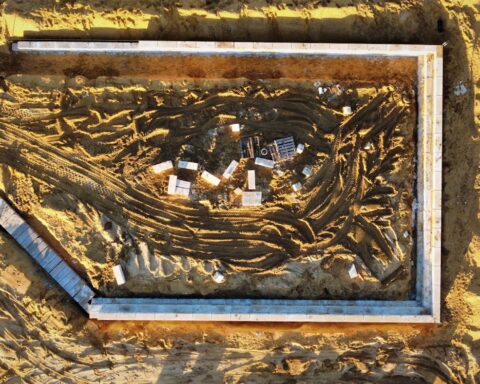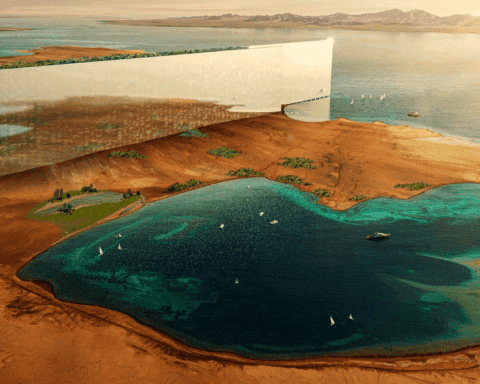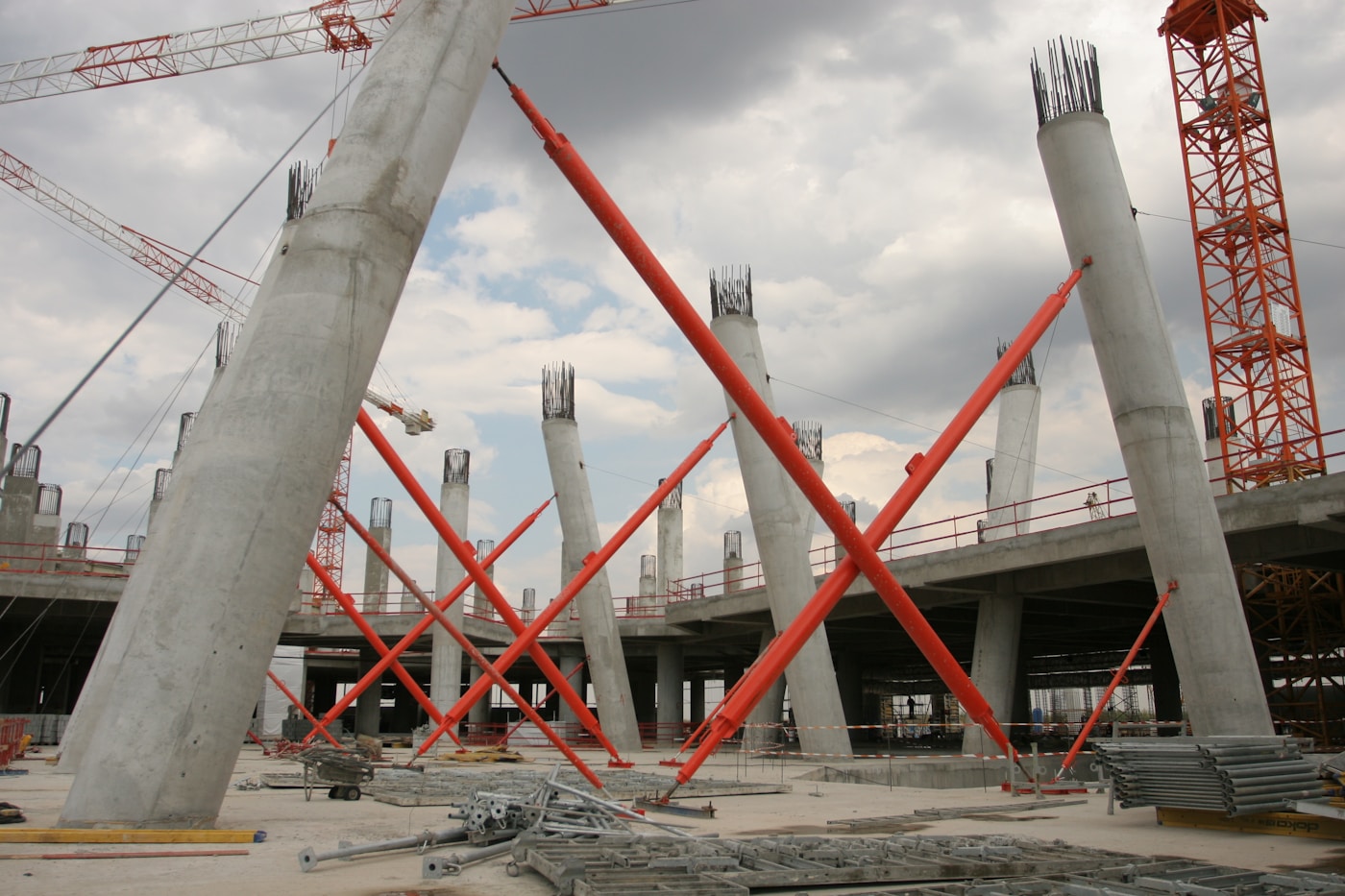

RIYADH — NEOM has terminated three major construction contracts at its Trojena mountain resort worth a combined $6 billion in the space of two weeks, marking the most significant wave of cancellations to hit Saudi Arabia’s flagship megaproject since the Public Investment Fund began reviewing giga-project spending in 2024. Italian contractor Webuild confirmed on March 25 that NEOM exercised termination for convenience on its $4.7 billion dam and lake contract, effective March 29. Malaysian steel specialist Eversendai said its structural steel contract for the Trojena ski village was terminated on March 26. South Korean firm Hyundai Engineering and Construction received formal notice on March 12 ending a roughly $1 billion tunnelling contract at the heart of The Line.
The terminations, which follow Saudi Arabia’s loss of the 2029 Asian Winter Games and a broader restructuring that has broken NEOM into at least five separate entities, signal that the Kingdom is accelerating its retreat from the most ambitious and logistically challenging components of the $500 billion project. Riyadh is redirecting capital toward infrastructure with clearer returns, including preparations for the 2034 FIFA World Cup, Expo 2030 in Riyadh, and investments in artificial intelligence and advanced manufacturing.
Table of Contents
- What Contracts Did NEOM Cancel at Trojena?
- Webuild’s $4.7 Billion Dam and Lake Contract
- Eversendai’s Structural Steel Contract for the Ski Village
- Hyundai’s $1 Billion Tunnel Contract for The Line
- Why Did NEOM Cancel These Contracts?
- What Happened to the 2029 Asian Winter Games?
- Where Is Saudi Arabia Spending Instead?
- What Does This Mean for Trojena’s Future?
- Frequently Asked Questions
What Contracts Did NEOM Cancel at Trojena?
NEOM cancelled three separate construction contracts at its Trojena mountain destination between March 12 and March 29, 2026. The combined value of the terminated agreements exceeds $6 billion, according to filings and statements from the affected contractors. All three terminations were classified as “termination for convenience,” meaning the cancellations were driven by the client’s strategic decisions rather than contractor performance failures.
The largest cancellation was Webuild’s $4.7 billion contract to build three dams and a freshwater lake, which was approximately 30 percent complete at the time of termination. The second was Eversendai Corporation’s structural steel contract for the Trojena ski village, awarded in March 2024 and terminated effective March 26. The third was a roughly $1 billion tunnelling package awarded to a consortium led by Hyundai Engineering and Construction, Samsung C&T, and Greece-based Archirodon, covering over 28 kilometres of underground rail infrastructure for The Line.
Each of the three contractors confirmed that NEOM has committed to reimbursing accrued costs, demobilisation expenses, and early termination fees. Webuild stated that the company would be “unharmed” by the termination, while Hyundai said there had been “no financial loss for the company to date.” Eversendai said it was preparing documentation for commercial claims covering termination and demobilisation costs.
The terminations follow a pattern of contract cancellations and scope reductions that have accelerated since the Public Investment Fund ordered a minimum 20 percent spending cut across more than 100 of its portfolio companies in early 2025, according to reporting on the PIF’s spending cuts. Some budgets were reduced by as much as 60 percent, and the sovereign wealth fund recorded an $8 billion write-down on its giga-project investments at the end of 2024, according to CNBC.
The Middle East briefing 3,000+ readers start their day with.
One email. Every weekday morning. Free.
Webuild’s $4.7 Billion Dam and Lake Contract
The largest of the three cancelled contracts belonged to Webuild, the Italian construction group that was building a system of three dams designed to feed a 2.8-kilometre freshwater lake at Trojena. The contract, valued at approximately SR20 billion ($4.7 billion to $5 billion depending on exchange rate calculations), was awarded in January 2024 as part of a broader infrastructure development package for the mountain destination.
Webuild confirmed in a filing that NEOM exercised termination for convenience, effective March 29, 2026. At the time of cancellation, approximately 30 percent of the construction work had been completed. The remaining project backlog stood at approximately 2.8 billion euros ($3.2 billion), according to the company.
The scope of the contract extended beyond the dams themselves. It included the central artificial lake, earthworks, reinforced concrete structures, water control systems, and an architectural structure known as “The Bow,” all designed to support Trojena’s planned hospitality and winter sports facilities. The freshwater lake was central to Trojena’s concept as a year-round mountain tourism destination, with plans for water sports, lakeside hotels, and a cooling system for the surrounding built environment.
NEOM attributed the termination to “strategic reprioritisation and alignment with Vision 2030,” telling Construction Review Online that the giga-project now prioritises infrastructure delivering “direct economic and social impact,” including housing, healthcare, and event facilities for Expo 2030 and the 2034 FIFA World Cup.
Webuild stated that discussions were ongoing regarding compensation, liabilities, and the possible retendering of unfinished sections. The company said it expected to be fully compensated for all accrued costs and early termination expenses, including site disengagement and demobilisation activities. Webuild’s share price fell 2.3 percent on the Milan exchange following the announcement, according to Bloomberg data.
Eversendai’s Structural Steel Contract for the Ski Village
Malaysian structural steel specialist Eversendai Corporation Berhad received termination notice from NEOM for its contract to deliver structural steelwork at the Trojena ski village. The termination took effect on March 26, 2026, less than two years after the contract was awarded in March 2024. The contract value was not publicly disclosed, but Eversendai had been executing the work in partnership with Saudi Arabia’s Al Bawani Company.
Eversendai attributed the cancellation directly to the regional security situation, stating in a filing: “We believe this has happened due to the current geopolitical situation in the Middle East.” The company claimed it had “fully delivered the project as per the contractual obligations with no compromise to safety and quality” through the notice date.
The Trojena ski village was designed as an outdoor winter sports facility at an elevation of approximately 2,600 metres in the Tabuk region of northwest Saudi Arabia, where temperatures can drop to near-freezing during winter months. The structural steelwork was intended to form the frame of the resort’s ski facilities, including lifts, viewing platforms, and support structures for artificial snow-making systems.
Eversendai said it was preparing documentation for commercial claims covering termination and demobilisation costs, which it expected NEOM to cover under the terms of the contract. The company operates across the Middle East and Southeast Asia and has previously worked on landmark projects including the Burj Khalifa in Dubai and the Merdeka 118 tower in Kuala Lumpur.
The ski village cancellation carries additional symbolic weight because Trojena was originally designed as the centrepiece of Saudi Arabia’s bid to host the 2029 Asian Winter Games, an event that was intended to demonstrate the Kingdom’s transformation from a conservative oil state into a global entertainment and tourism destination under Crown Prince Mohammed bin Salman’s Vision 2030 programme.
Hyundai’s $1 Billion Tunnel Contract for The Line
The third contract termination involved a roughly $1 billion tunnelling package at The Line, NEOM’s 170-kilometre linear city. Hyundai Engineering and Construction, part of a consortium with Samsung C&T and Greece-based Archirodon, received formal notice of termination on March 12, 2026. The contract covered the delivery of over 28 kilometres of underground infrastructure, including separate tunnels for high-speed passenger and freight rail beneath the mirrored city.
Hyundai’s share of the contract was approximately $540 million, according to the company’s disclosure. In a statement, Hyundai said: “The contract termination is due to the client’s business restructuring. There has been no financial loss for the company to date.” The company added that specific settlement terms had been withheld from disclosure due to confidentiality clauses.
The tunnel was considered foundational to The Line’s vision of a car-free city where residents would travel by high-speed rail beneath the surface while living and working in a pair of parallel mirrored towers stretching 170 kilometres through the desert. Construction on The Line has been suspended since September 2025, with only 2.4 kilometres of foundation work completed, according to a comprehensive review of NEOM’s progress. The population target for 2030 has been slashed from 1.5 million to fewer than 300,000, and the 170-kilometre vision has been deferred to a multi-decade timeline, with 2045 now cited as a possible full completion date.
The tunnel cancellation was announced approximately two weeks before the Trojena contracts were terminated, suggesting that NEOM’s restructuring is proceeding in waves rather than as a single coordinated event. Earlier in March, reporting revealed that NEOM had been broken into at least five separate entities, with components transferred to Aramco, the Ministry of Sport, and Red Sea Global as the PIF pivoted toward artificial intelligence, mining, and logistics.
Why Did NEOM Cancel These Contracts?
The contract cancellations reflect at least three converging pressures on Saudi Arabia’s megaproject programme: fiscal constraints driven by lower-than-expected oil revenues, execution challenges that inflated costs and extended timelines, and the regional security crisis triggered by the 2026 Iran war.
The PIF’s $8 billion write-down on giga-project investments at the end of 2024 signalled that Riyadh had acknowledged the gap between NEOM’s original ambitions and its achievable scope, according to CNBC. The sovereign wealth fund, which manages roughly $925 billion in assets, ordered deep spending cuts across more than 100 portfolio companies in 2025, mandating a minimum 20 percent reduction in annual spending. Some NEOM-related budgets were cut by as much as 60 percent, according to AGBI.
Execution challenges compounded the fiscal pressure. Trojena’s three-dam system required engineering solutions that had never been attempted at that scale in a desert mountain environment, including a desalination-to-snow pipeline and water retention systems designed to maintain a freshwater lake at 2,600 metres elevation in one of the driest regions on earth. The complexity of these systems contributed to construction delays that ultimately prevented Trojena from meeting the 2029 Asian Winter Games deadline, according to the Olympic Council of Asia.
The Iran war, which began on February 28, 2026, with US and Israeli strikes on Iranian nuclear and military facilities, added a new dimension to the calculus. Eversendai explicitly cited “the current geopolitical situation in the Middle East” as the reason for its contract termination. While NEOM’s official statements focused on “strategic reprioritisation,” multiple analysts have noted that the war has forced Saudi Arabia to redirect resources toward defence and economic stabilisation. The Kingdom’s eastern oil infrastructure has come under sustained Iranian drone and missile attack, and the war has accelerated the Kingdom’s economic diversification timeline while simultaneously draining the resources needed to fund it.
Oil prices have been volatile, trading between $99 and $126 per barrel since the conflict began, but the closure of the Strait of Hormuz has disrupted Saudi Arabia’s ability to export crude from its eastern terminals, creating a revenue squeeze even as prices remain elevated. OPEC’s Joint Ministerial Monitoring Committee confirmed in March that no output increases were planned before the third quarter of 2026.
What Happened to the 2029 Asian Winter Games?
The Olympic Council of Asia awarded the 2029 Asian Winter Games to Saudi Arabia’s Trojena resort at its 41st General Assembly in Phnom Penh, Cambodia, on October 4, 2022. The decision was celebrated as a landmark moment for Vision 2030, with Saudi officials describing Trojena as a destination that would prove the Kingdom could build a winter sports facility in the desert.
By August 2025, reports emerged that Trojena was suffering from significant construction delays and increasing budget deficits. The complexity of the desalination-to-snow pipeline and the three-dam freshwater lake system failed to meet strict operational thresholds required by the OCA for hosting international sporting events, according to multiple industry sources cited by Dezeen.
On January 24, 2026, the Olympic Council of Asia formally announced that the Games would be postponed to a later date. Within two weeks, on February 5, Almaty, Kazakhstan, was declared the new host city. The Host City Contract was signed during a ceremony in Milan, one of the host cities of the ongoing Winter Olympics. Almaty previously hosted the Asian Winter Games in 2011 and was chosen in large part because its winter sports venues were already built and operational, eliminating the construction risk that had undermined Trojena’s candidacy.
The loss of the Winter Games removed the single most important deadline driving Trojena’s construction timeline. Without the pressure of a fixed international event date, NEOM had less incentive to maintain the accelerated building schedule that had been driving costs upward. The subsequent contract terminations suggest that once the Games were relocated, NEOM moved to reassess every major commitment at the site.
Where Is Saudi Arabia Spending Instead?
Saudi Arabia is redirecting capital from NEOM’s most speculative components toward infrastructure projects with clearer timelines and measurable economic returns. Three priorities have emerged since the restructuring began, according to government statements and PIF disclosures.
The 2034 FIFA World Cup, which Saudi Arabia was awarded in December 2024, requires the construction of at least 11 new stadiums and extensive transportation infrastructure across Riyadh, Jeddah, and other cities. The Ministry of Sport has taken over responsibility for some NEOM components that align with the World Cup programme, according to AGBI.
Expo 2030 in Riyadh represents a second hard deadline that demands immediate capital allocation. The exposition site requires purpose-built pavilions, transit links, and hospitality infrastructure, all of which must be completed before the event opens.
The third priority is artificial intelligence and technology infrastructure. A $5 billion data centre partnership with DataVolt, announced in early 2026, signals the PIF’s pivot toward digital infrastructure. The fund has also increased allocations to mining — where Ma’aden’s $110 billion expansion programme is the centrepiece — logistics, and advanced manufacturing, sectors that generate revenue and employment more predictably than tourism megaprojects in remote desert locations.
NEOM’s green hydrogen plant at Oxagon, which is approximately 80 percent complete according to the project’s own reporting, appears to have survived the restructuring. The facility represents one of the few NEOM components that aligns with international demand and existing commercial agreements, including supply contracts with Asian and European buyers seeking decarbonised fuel sources. Riyadh has spent over $50 billion building foundational infrastructure across the NEOM site, according to NEOM deputy CEO Rayan Fayez’s statement at the World Economic Forum in Davos in February 2025, and Saudi officials have emphasised that this investment will not be abandoned.
What Does This Mean for Trojena’s Future?
NEOM has stated that it “remains committed to completing the lake and resort facilities under revised execution plans,” according to Construction Review Online, but the scope and timeline of any future development at Trojena remain unclear. The cancellation of the dam, steel, and tunnel contracts removes the core infrastructure that was designed to make Trojena function as a year-round mountain tourism destination.
Without the three-dam freshwater lake, the centrepiece of Trojena’s master plan disappears. Without the structural steelwork for the ski village, the winter sports facilities cannot be built. And without the underground tunnel network, The Line’s connection to Trojena and its high-speed rail system cannot be completed as originally designed.
NEOM suggested that future contractor engagement may favour alternative delivery models, including public-private partnerships, rather than the massive fixed-price contracts that defined the project’s first phase. This approach would shift financial risk away from the PIF and toward private investors, but it would also likely result in a slower, more incremental development that bears little resemblance to the original Trojena vision presented in 2022.
The contract cancellations are likely to have a chilling effect on international contractors considering bids for Saudi megaproject work. Webuild, Hyundai, and Eversendai were all well-established firms that had committed significant resources to the Trojena and Line projects, only to see their contracts terminated before completion. While all three firms indicated they expected full compensation, the reputational cost of large-scale project cancellations and the uncertainty they create in the regional construction market may make future contractors more cautious about committing to Saudi giga-project work without stronger contractual protections.
For Crown Prince Mohammed bin Salman, the Trojena cancellations represent the latest in a series of concessions to reality that have defined the Saudi royal family’s management of Vision 2030 since 2024. The programme’s ambitions have not been formally abandoned, but the gap between the original 2017 announcements and the projects that are actually being built continues to widen.
Frequently Asked Questions
How much are the cancelled NEOM Trojena contracts worth?
The three terminated contracts are worth a combined total of approximately $6 billion. The largest is Webuild’s $4.7 billion dam and lake contract, followed by Hyundai’s roughly $1 billion tunnel contract and Eversendai’s structural steel contract for the ski village, the value of which was not publicly disclosed.
Is Trojena completely cancelled?
NEOM has not formally cancelled the Trojena project as a whole. The company said it remains committed to completing the lake and resort facilities under revised execution plans, potentially using alternative delivery models such as public-private partnerships. However, the cancellation of the dam, steel, and tunnel contracts removes the core infrastructure needed to realise the original vision.
Why did Saudi Arabia lose the 2029 Asian Winter Games?
The Olympic Council of Asia relocated the 2029 Asian Winter Games from Trojena to Almaty, Kazakhstan, in February 2026 after construction delays and budget deficits made it clear that the Trojena sports complex would not be completed in time. Almaty was chosen because its existing winter sports venues required minimal additional construction.
Will the affected contractors be compensated?
All three contractors indicated they expected full compensation from NEOM. Webuild said it would be “unharmed” by the termination and that NEOM would reimburse all accrued costs and early termination expenses. Hyundai said there had been no financial loss. Eversendai was preparing commercial claims for termination and demobilisation costs.
What is Saudi Arabia building instead of Trojena?
Saudi Arabia is redirecting megaproject capital toward the 2034 FIFA World Cup stadium programme, Expo 2030 facilities in Riyadh, and technology infrastructure including a $5 billion data centre partnership with DataVolt. NEOM’s green hydrogen plant at Oxagon, which is 80 percent complete, has survived the restructuring and continues toward completion. PIF’s 2026-2030 strategy, formally published in April 2026, made the Trojena cancellation look like a preview — scrapping The Line entirely and redirecting capital to Humain AI, which now represents the fund’s single largest strategic bet.