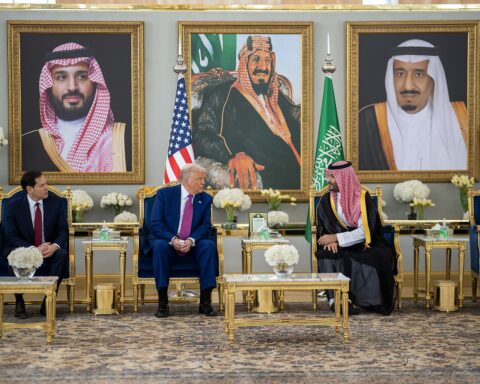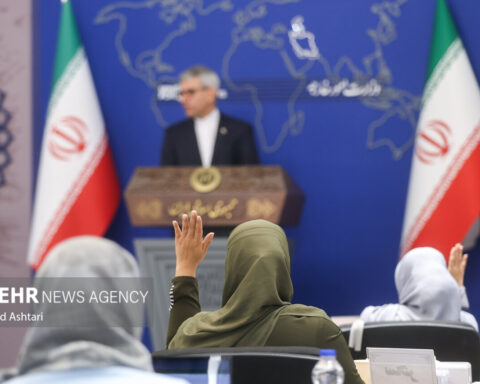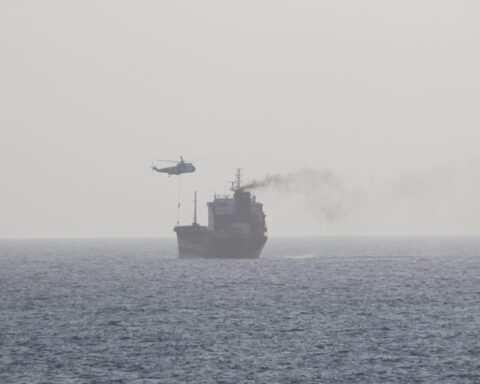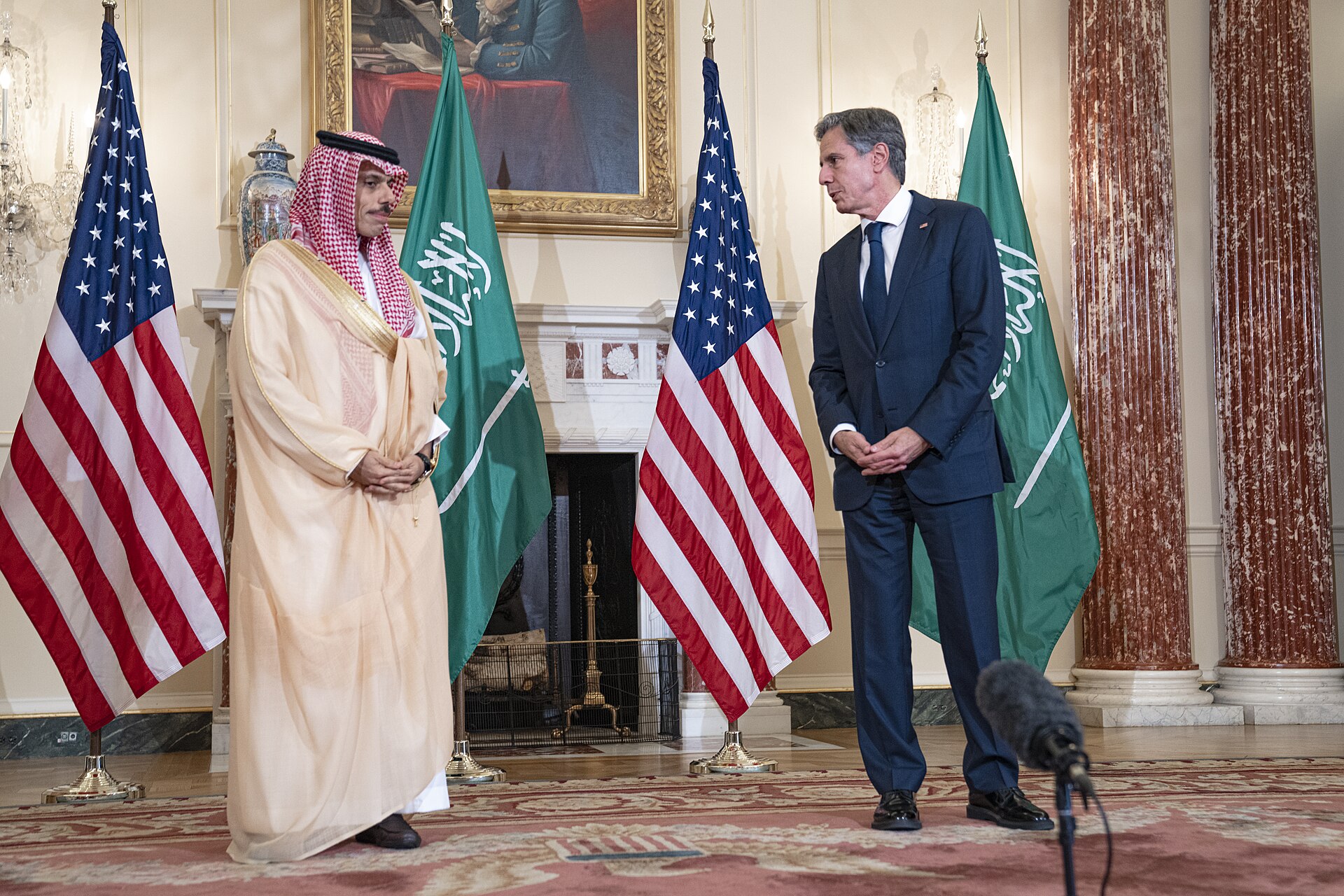

PARIS — Saudi Foreign Minister Prince Faisal bin Farhan held five bilateral meetings in 48 hours at the G7 Foreign Ministers Meeting near Paris on March 26–27, pressing Europe’s most powerful governments and India for concrete security commitments as his country absorbs the economic toll of Iran’s Strait of Hormuz blockade without firing a single shot. He left with expressions of solidarity, condemnation of Iranian strikes, and no warships.
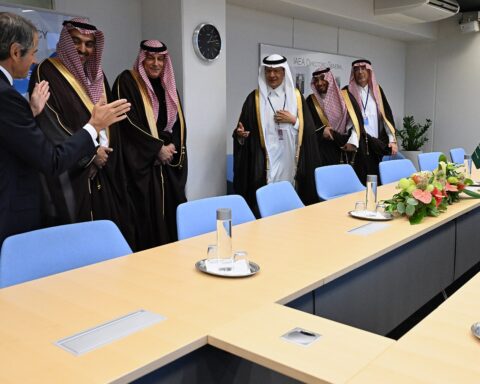
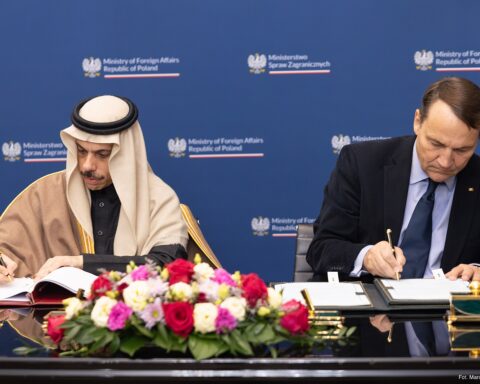
The bilateral blitz at Abbaye des Vaux-de-Cernay marked Riyadh’s most intensive diplomatic push since the Iran war began on February 28. Prince Faisal met separately with French Foreign Minister Jean-Noël Barrot, UK Foreign Secretary Yvette Cooper, German Foreign Minister Johann Wadephul, Italian Foreign Minister Antonio Tajani, and Indian External Affairs Minister S. Jaishankar, according to Asharq Al-Awsat and France’s Ministry for Europe and Foreign Affairs. The meetings ran parallel to a G7 plenary session that produced a joint statement calling for “immediate cessation of attacks against civilians and civilian infrastructures” and the restoration of “safe and toll free freedom of navigation in the Strait of Hormuz” — but deferred any naval deployment until after the war ends.
Table of Contents
- Why Did Saudi Arabia Go to the G7?
- France: Solidarity Without Ships
- What Did Saudi Arabia and India Discuss at the G7?
- The European Three: Cooper, Wadephul, and Tajani
- How Does Iran’s Hormuz Toll Booth Shape Saudi Diplomacy?
- Did Saudi Arabia Get Anything Concrete From the G7?
- Frequently Asked Questions
Why Did Saudi Arabia Go to the G7?
Saudi Arabia attended the G7 Foreign Ministers Meeting as an invited non-member — a diplomatic status that carries weight precisely because it is selective. The invitation signals that France, which holds the 2026 G7 presidency, considers Riyadh central to resolving the Iran crisis. The Kingdom’s presence also serves a blunter purpose: forcing the world’s richest democracies to look at the damage while they discuss it.
One month into the war, Saudi Arabia has absorbed more than 600 Iranian missile and drone strikes on its territory, according to Saudi government tallies reported by Arab News. It has refused to fire a single retaliatory shot, even as Crown Prince Mohammed bin Salman opened King Fahd Air Base in Taif to American forces. Riyadh expelled the Iranian military attaché and four embassy staff on March 21. Prince Faisal himself declared on March 19 that Saudi Arabia “reserves the right to take military action against Iran,” according to the Times of Israel — a statement that moved the Kingdom onto a formal war footing without crossing the threshold into combat.
The economic cost is staggering. Iran closed the Strait of Hormuz on March 2 using IRGC Navy assets, choking approximately 15 million barrels per day of crude shipments that normally transit the waterway, according to Bloomberg. Saudi Arabia has rerouted exports through its 1,200-kilometre East-West Pipeline to the Red Sea port of Yanbu, but Bloomberg reported on March 25 that Yanbu exports have reached only a five-day rolling average of 3.66 million barrels per day — roughly half of pre-crisis export volumes.
Aramco has said the pipeline can move up to 5 million barrels per day for export, according to World Oil, but even at full capacity the Kingdom loses significant revenue. Goldman Sachs warned that if the war continues through April, Saudi Arabia faces a 3% GDP contraction.
The Middle East briefing 3,000+ readers start their day with.
One email. Every weekday morning. Free.
Prince Faisal arrived in France carrying this ledger of restraint and loss. His task was straightforward: convert sympathy into security guarantees.

France: Solidarity Without Ships
The first and most substantive bilateral was with French Foreign Minister Jean-Noël Barrot on March 26, according to France’s Ministry for Europe and Foreign Affairs. France is Saudi Arabia’s second-largest arms supplier, and the relationship carries commercial, military, and intelligence dimensions that make the Paris meeting the most consequential stop on Prince Faisal’s schedule.
The French readout was unusually direct. Barrot “reiterated France’s very strong condemnation of Iran’s attacks on its neighbours and signalled France’s wholehearted solidarity with the Kingdom of Saudi Arabia,” the MEAE statement said. The ministers discussed “the ongoing war in the Middle East, marked by strikes carried out against Iran by Israel and the United States, and missile and drone attacks carried out by Tehran in several countries of the region, particularly Saudi Arabia.”
Two elements of the French statement deserve close reading. First, France explicitly named Saudi Arabia as a target of Iranian aggression — language that goes beyond the generic G7 communiqué, which referenced “regional partners” without specifying which ones. Second, France pledged “readiness to support freedom of navigation in the Strait of Hormuz” but qualified it with the phrase “when conditions allow and with its partners.” That caveat aligns France with the G7’s broader post-war naval force pledge rather than any immediate deployment.
France has deployed the carrier strike group led by the Charles de Gaulle to the eastern Mediterranean, and French naval frigates have conducted patrols near the Gulf of Oman. Paris has not committed to active escort operations through Hormuz during the conflict. For Riyadh, the French meeting produced the strongest bilateral language of the summit — and still no ships.
The two ministers also discussed Lebanon, with France emphasising “the necessity of supporting Lebanese authorities against sovereignty-challenging forces,” according to the MEAE statement — a reference to Hezbollah’s continued influence. This matters for Saudi Arabia because any post-war settlement involving Iran will inevitably touch its proxy network across the Levant.
What Did Saudi Arabia and India Discuss at the G7?
Prince Faisal met Indian External Affairs Minister S. Jaishankar on March 27, and the meeting carries more strategic tension than its anodyne readout suggests. Asharq Al-Awsat reported that the two ministers “reviewed bilateral relations and ways to strengthen them in various fields” and “discussed the latest regional and international developments.” Jaishankar described the meeting as “pleasing,” according to India’s Tribune newspaper. Saudi Ambassador to France Fahad Al-Ruwaily and Director General of the Foreign Minister’s Office Waleed Al-Ismail attended.
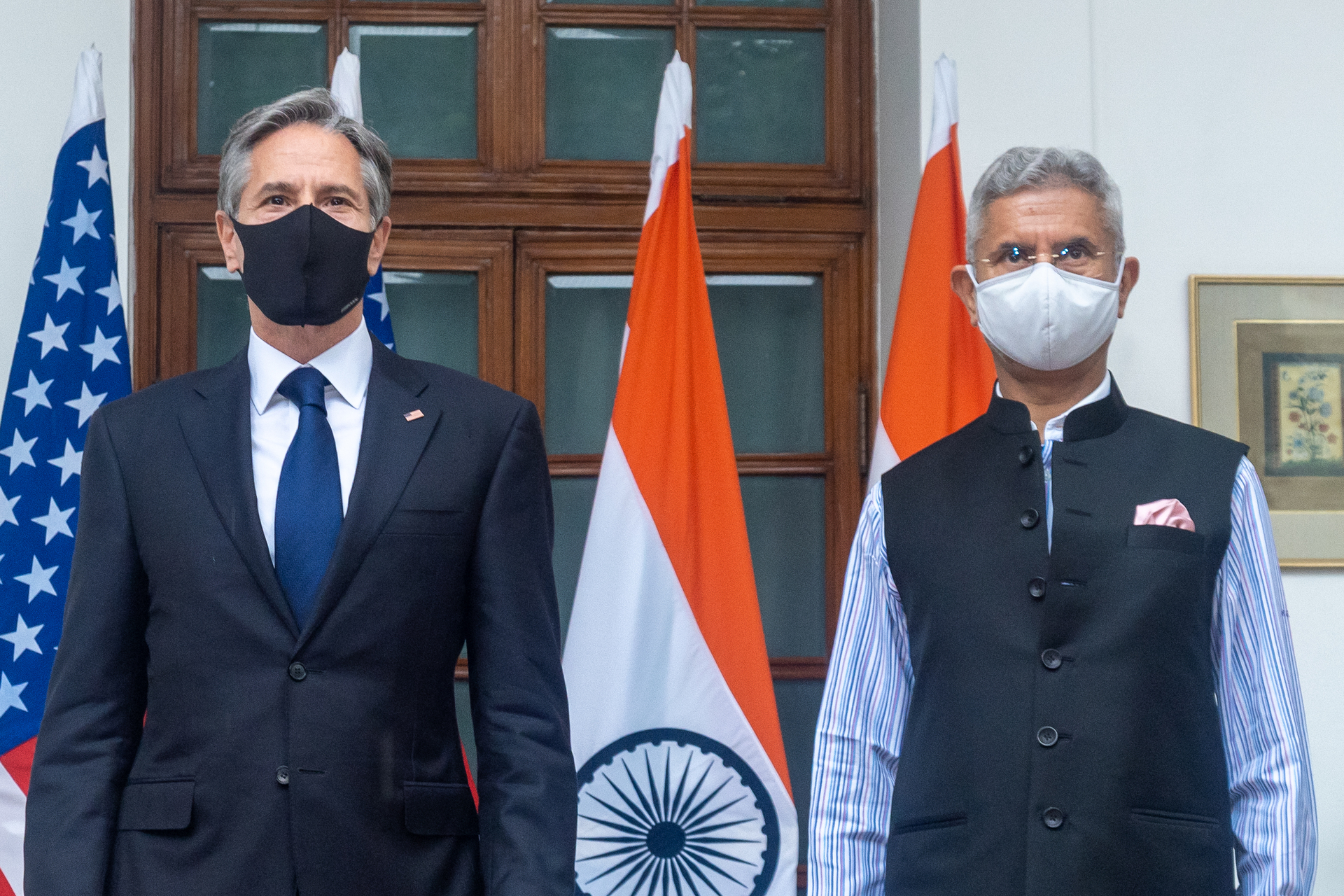
The diplomatic pleasantries obscure a sharp asymmetry. India is on Iran’s approved list for Strait of Hormuz transit. Indian ships sail through the same waterway that Saudi exports cannot cross.
Iran’s Foreign Minister Abbas Araghchi declared in early March that Tehran would permit passage for “friendly nations including China, Russia, India, Iraq, and Pakistan,” according to WION News and India TV News. Two Indian LPG carriers — the Shivalik and Nanda Devi, chartered by Indian Oil Corp and operated by Shipping Corporation of India — transited Hormuz around March 13-14, according to Defense News. Jaishankar acknowledged the diplomatic back-channel, telling reporters: “I am at the moment engaged in talking to them, and my talking has yielded some results,” as reported by WION News.
India imports roughly 53% of its oil from the Middle East, including approximately 2.6 million barrels per day from Gulf states before the crisis, according to Kpler data cited by CNBC. Saudi Arabia is among India’s largest suppliers. New Delhi’s ability to secure Iranian permission for its tankers to transit Hormuz while Saudi crude sits stranded on the wrong side of the blockade creates a paradox: one of Saudi Arabia’s biggest customers can buy oil from the Kingdom only if it arrives via the Yanbu bypass, while the same customer can import from other Gulf producers through the strait.
Jaishankar told the G7 forum that he emphasised “the critical importance of freedom of navigation for global economic security,” according to The Tribune. He also promoted the India-Middle East-Europe Economic Corridor (IMEC) as a strategic connectivity initiative. India has not endorsed the G7 call for a post-war naval force at Hormuz, and New Delhi has dispatched destroyers to escort tankers only in the Gulf of Oman — not through the strait itself.
For Riyadh, the India bilateral raised an uncomfortable question: can Saudi Arabia rely on a major energy customer that has secured its own supply line through separate negotiations with Iran? The meeting’s coded language about “bilateral relations” and “common interest” almost certainly papered over this tension.
The European Three: Cooper, Wadephul, and Tajani
Prince Faisal held separate meetings with UK Foreign Secretary Yvette Cooper, German Foreign Minister Johann Wadephul, and Italian Foreign Minister Antonio Tajani on March 27, according to Asharq Al-Awsat. He also met EU foreign policy chief Kaja Kallas. The meetings collectively represent Saudi Arabia’s attempt to lock in European diplomatic support from the continent’s three largest economies plus the EU institutional framework.
United Kingdom
Cooper’s position at the G7 was cautious. She told journalists that the UK supports “defensive action” in the Iran conflict but has “taken a different approach on the offensive action,” according to Foreign Policy magazine. The UK operates HMS Juffair, a naval support facility in Bahrain that serves as the Royal Navy’s Gulf headquarters. British warships have conducted freedom-of-navigation operations in the region, but London has not committed additional naval assets to escort commercial shipping through Hormuz during the active conflict.
For Saudi Arabia, the UK bilateral carries historical weight. Britain was the dominant Gulf security power before American supremacy, and the relationship retains a military-to-military depth — including the joint Typhoon programme and the Saudi-British Defence Cooperation Agreement — that makes London a natural partner for post-war Gulf security architecture. But Cooper’s careful distinction between “defensive” and “offensive” action signals that the Starmer government will not be drawn into the war, even rhetorically.
Germany
Wadephul is Germany’s new foreign minister following the February 2025 coalition change. His meeting with Prince Faisal was among his first major bilateral encounters at the G7 level. Germany is Europe’s largest energy consumer and faces significant exposure to Gulf energy disruption — a vulnerability that gives Riyadh bargaining power in the conversation.
Berlin has maintained restrictive arms export policies toward Saudi Arabia since the Khashoggi affair in 2018, but the Iran war has reopened the discussion. The US approved $16.5 billion in arms sales to the UAE and $8 billion to Kuwait in recent weeks, according to the Pentagon, though no new Saudi-specific deal has been announced at the G7.
Italy
Tajani’s meeting with Prince Faisal adds a Mediterranean security dimension. Italy maintains a naval presence in the region and has participated in previous multinational maritime operations. Rome’s interest in Gulf stability is partly commercial — Italy’s ENI has significant upstream operations in the Middle East — and partly strategic, given the Mediterranean’s exposure to any disruption of Red Sea shipping routes. With Houthi forces threatening to close the Bab al-Mandab strait on March 28, Italy’s interest in Gulf security extends to protecting the southern approach to its own waters.
How Does Iran’s Hormuz Toll Booth Shape Saudi Diplomacy?
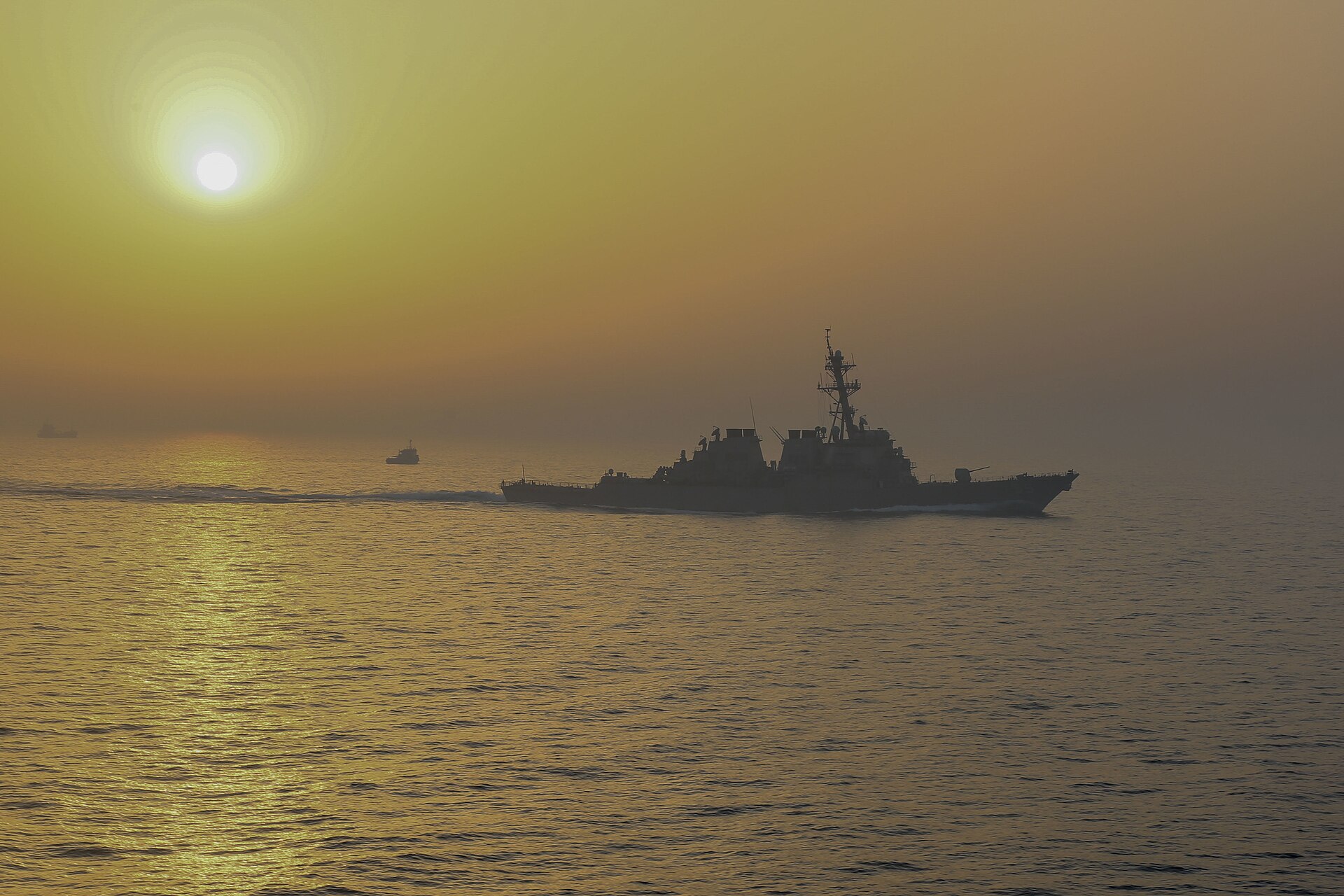
Iran’s selective enforcement of the Hormuz blockade has created a two-tier maritime system that directly shapes Saudi Arabia’s diplomatic calculations. Tehran operates what amounts to a toll booth on the world’s most important oil chokepoint: approved nations pay $2 million per transit in Chinese yuan, while “enemy nations” — including Saudi Arabia — are blocked entirely, according to reporting on Iran’s $2 million transit fee.
The approved list — China, Russia, India, Iraq, Pakistan, Malaysia, and Thailand — reads like a roster of nations Iran considers either allied or non-threatening. The excluded list includes Saudi Arabia, the UAE, Israel, and effectively any vessel carrying cargo to or from the United States. The system gives Tehran enormous coercive power: it can reward diplomatic compliance and punish opposition, country by country, ship by ship.
For Prince Faisal’s bilateral offensive at the G7, this toll-booth dynamic created a specific problem with each counterpart. France, the UK, Germany, and Italy are all G7 members whose commercial vessels face unpredictable treatment at Hormuz. Their shared interest in restoring free navigation is real. But none of them depends on Hormuz as directly as Saudi Arabia, whose crude exports from the eastern coast remain entirely blocked. India, by contrast, has already solved its Hormuz problem through bilateral negotiation with Tehran — making the Jaishankar meeting diplomatically cordial but strategically awkward.
The G7 joint statement, issued from Abbaye des Vaux-de-Cernay, “reiterated the absolute necessity to permanently restore safe and toll free freedom of navigation in the Strait of Hormuz, consistent with UNSC Resolution 2817 and the Law of the Sea,” according to the UK government’s published text. The phrase “toll free” directly targets Iran’s yuan-denominated transit fee. But the statement offered no mechanism or timeline for enforcement. Secretary of State Marco Rubio told G7 allies the war would continue “another two to four weeks,” according to Foreign Policy — meaning any post-war naval force remains at least that far away.
The UNHRC unanimously condemned Iranian attacks on Gulf states on March 25 with more than 100 co-sponsors, according to the UN Human Rights Council, providing Riyadh with multilateral validation. But Prince Faisal needs warships, not resolutions. The six Arab nations that invoked Article 51 self-defense rights earlier in March are still waiting for the G7 to convert words into escorts.
Did Saudi Arabia Get Anything Concrete From the G7?
The honest answer is: condemnation, solidarity, and a promise of future action. No government that Prince Faisal met with committed new military assets during the active conflict. The pattern across all five bilaterals was consistent — warm language, shared concern, and deferred timelines.
France produced the strongest statement, explicitly naming Saudi Arabia as a victim of Iranian aggression and pledging solidarity. But Paris qualified its Hormuz commitment with “when conditions allow.” The UK drew a line between defensive and offensive action. Germany and Italy offered diplomatic engagement without military specifics. India secured its own Hormuz access through Tehran and had little incentive to push for a broader reopening that would benefit rival suppliers.
President Trump, speaking from Washington, voiced frustration at the broader G7 response. “NATO has done absolutely nothing” regarding the Strait of Hormuz, Trump said, according to Foreign Policy, before suggesting potential withdrawal of US security commitments: “We’re always going to be there — at least, we were. I don’t know about anymore.” That ambiguity does not help Riyadh.
Rubio’s two-to-four-week timeline puts any post-war Hormuz force deployment in late April at the earliest. Goldman Sachs’ warning of a 3% Saudi GDP contraction assumes the war runs that long, placing the economic damage squarely in the gap between G7 promises and their execution.
What Saudi Arabia achieved at the G7 was less tangible but not insignificant. Being in the room as a non-G7 invitee placed Riyadh at the centre of the conversation about Gulf security. The bilateral meetings ensured that each major European power and India heard Saudi Arabia’s grievance directly, from the Kingdom’s top diplomat. France’s explicit naming of Saudi Arabia in its statement sets a rhetorical floor that other capitals may now feel pressure to match.
But rhetoric without deployment leaves Saudi Arabia in the same position it entered the summit: absorbing punishment, rerouting oil through a pipeline that can handle roughly half its export capacity, and relying on restraint as its primary diplomatic asset. Prince Faisal demonstrated that Riyadh can work the G7 corridors with skill. Days later, the Saudi FM joined his Turkish, Egyptian, and Pakistani counterparts for a parallel diplomatic track in Islamabad aimed at building a de-escalation mechanism outside the G7 framework. The question is whether skill alone can keep the Kingdom safe while the clock runs toward April 6 and Iran recalculates its targeting calculus.
Frequently Asked Questions
Was Saudi Arabia formally invited to the G7 Foreign Ministers Meeting?
Yes. The G7 presidency rotates annually, and France used its 2026 chairmanship to invite Saudi Arabia as an outreach partner — a discretionary status extended to non-members the host considers essential to the agenda. Saudi Arabia has attended G7-adjacent sessions before, but this marks the first invitation since the Iran crisis began. The Kingdom’s presence alongside India placed two major Gulf energy stakeholders in the room with the seven largest advanced economies simultaneously.
Has India formally endorsed Iran’s Hormuz transit system?
No. India has avoided any public statement recognising Iran’s toll-booth regime as lawful under the United Nations Convention on the Law of the Sea (UNCLOS), which guarantees transit passage through international straits without coastal-state fees or permits. New Delhi’s approach has been pragmatic rather than principled — securing passage through quiet diplomacy while maintaining that the strait should be open to all. The distinction matters legally: if India were to formally accept Tehran’s transit-fee framework, it would set a precedent that could be applied to other chokepoints, including the Malacca Strait through which much of India’s own trade flows.
Which G7 member has the largest naval presence near the Strait of Hormuz?
The United States, by a wide margin. The Fifth Fleet headquarters in Bahrain and carrier strike groups in the Arabian Sea give Washington a permanent force posture that no European navy can match. Among the three absent G7 members not discussed in the bilaterals above, Japan stands out: despite importing roughly 90% of its crude oil from the Middle East, according to Japan’s Agency for Natural Resources and Energy, Tokyo has limited its contribution to intelligence-sharing arrangements rather than active patrols — a gap that leaves Asia’s second-largest economy exposed if the blockade persists.
What arms deals were announced at the G7 related to Gulf security?
No new Saudi-specific arms deals were announced at the G7. The absence is notable because the Kingdom’s existing air-defence inventory — primarily Patriot PAC-3 and a limited number of THAAD batteries — has been under sustained use since February 28. Interceptor stocks are a classified but finite resource, and sustained Iranian missile and drone volleys accelerate depletion. Any future Saudi arms package would likely prioritise replenishment of interceptor missiles and additional integrated air and missile defence systems, a procurement timeline that runs on months, not weeks.
How much Saudi oil currently reaches global markets?
Roughly half of pre-crisis volumes, constrained by pipeline throughput rather than production capacity. Saudi Arabia raised production by 340,000 barrels per day to 10.34 million barrels per day in February and notified OPEC of an additional 782,000 barrels per day increase, according to OPEC and Reuters. The bottleneck is the East-West Pipeline to Yanbu — not the wellhead. Even if Aramco produces at maximum capacity, it can only export what the pipeline delivers to the Red Sea, leaving millions of barrels per day stranded unless Hormuz reopens or alternative export routes are built. For a comprehensive accounting of how this oil disruption fits into the broader war ledger, see the one-month war balance sheet for Saudi Arabia.