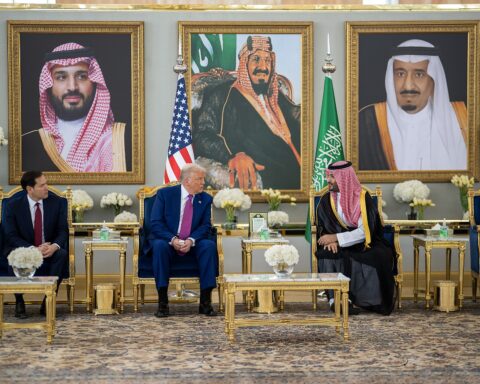
RIYADH — KLM Royal Dutch Airlines extended its suspension of flights to Riyadh and Dammam through July 12, 2026, the airline confirmed in a statement dated May 26, marking at least the fourth extension of a grounding first imposed on March 1 when the Iran war shut Gulf airspace to European carriers. KLM’s Dubai service remains suspended through August 2.
The July 12 cutoff places European aviation’s return to Saudi Arabia eleven days after Riyadh Air’s scheduled July 1 public launch on the Riyadh–London Heathrow route — the same corridor KLM will not fly. It runs past the June 7 OPEC+ JMMC meeting and past any plausible window for a Round 6 Iran nuclear signing, which has no confirmed date or venue. Lufthansa Group, Europe’s largest airline conglomerate, has extended its own Saudi suspensions five months further — through October 24.
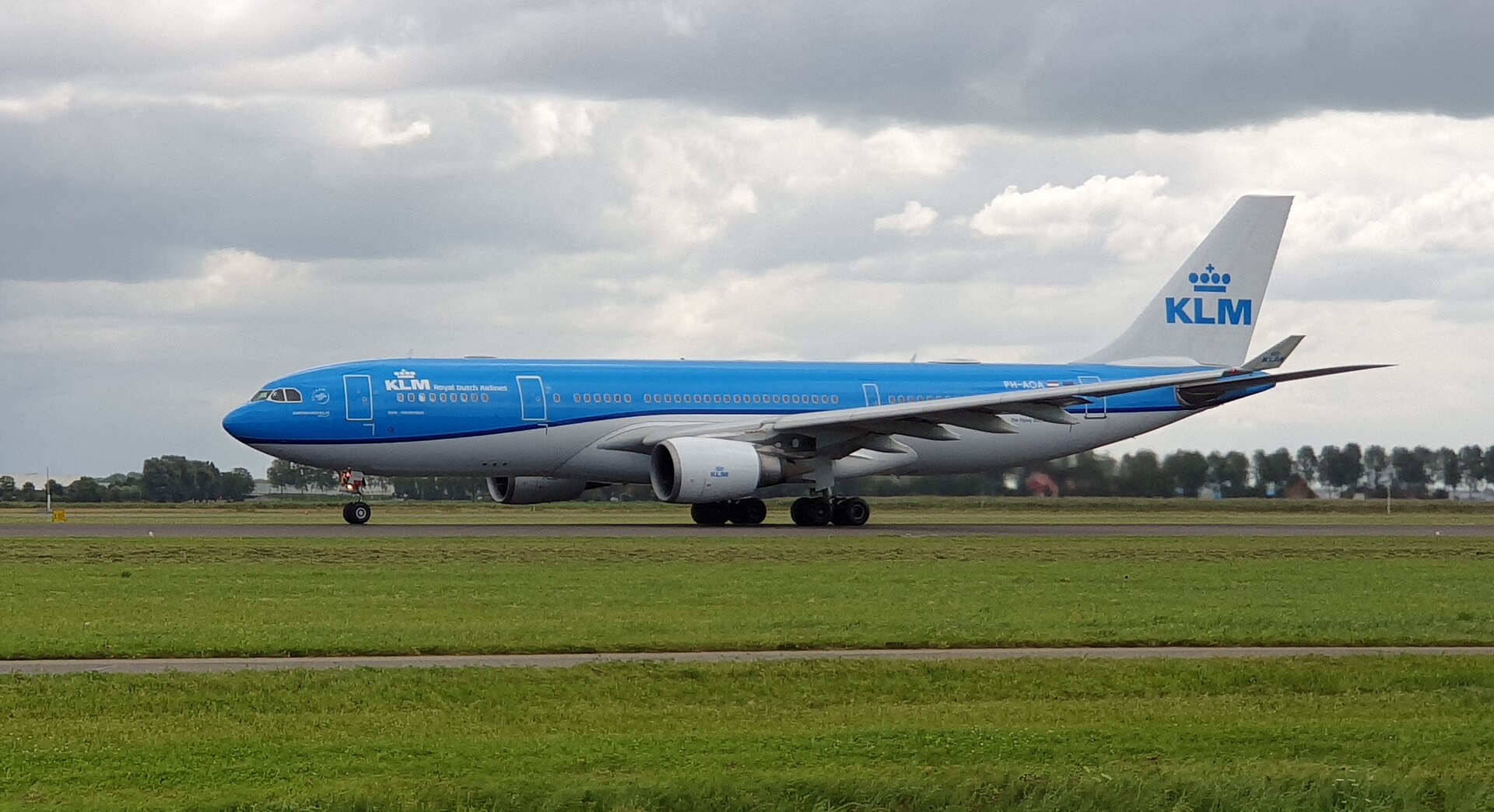
Table of Contents
What Does KLM’s July 12 Date Forecast?
KLM’s Amsterdam–Riyadh–Dammam–Amsterdam route operated four times weekly — Monday, Tuesday, Thursday, Saturday — on an Airbus A330-200 configured for 264 passengers: 18 in Business Class, 246 in Economy. At four rotations per week, the route supplied roughly 1,056 seats in each direction. It has been dark since March 1 — 133 days by the time the current suspension expires on July 12.
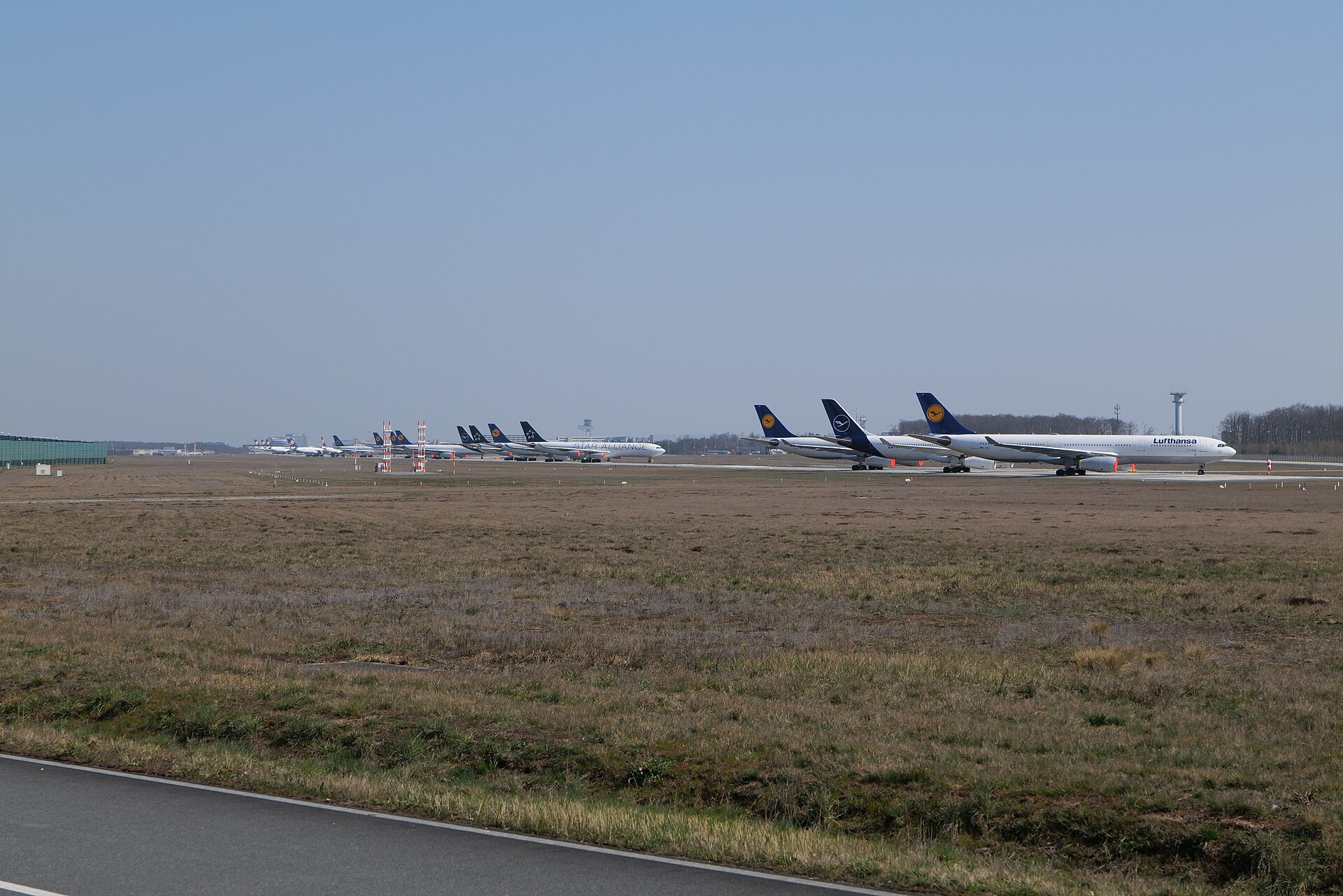
KLM is not alone. Lufthansa Group — Lufthansa, Swiss, Austrian Airlines, Brussels Airlines, and Edelweiss — suspended flights to eight Middle East destinations including Riyadh and Dammam through October 24, 2026, citing ongoing airspace risks over Iran and Iraq and elevated war-risk premiums. British Airways suspended its Dubai service through May 31 and listed a conditional return on July 1 at one daily flight, contingent on the European aviation regulator EASA easing its conflict zone bulletin. BA’s Abu Dhabi suspension remains indefinite.
Air France listed a shorter Riyadh suspension horizon — through May 12 — in mid-May airline advisories. That timeline predates the CENTCOM strikes on Iranian missile launch sites on May 25–26, the second kinetic action since the April ceasefire.
| Carrier / Group | Saudi Arabia Status | Dubai Status | Regulator |
|---|---|---|---|
| KLM | Suspended through July 12 | Suspended through August 2 | EASA |
| Lufthansa Group (5 brands) | Suspended through October 24 | Suspended through September 13 | EASA |
| British Airways | Not announced | Conditional July 1 (1x daily) | UK CAA |
| Air France | Under review (post-strikes) | Under review | EASA |
| Emirates | Operating | Operating (96% of network) | UAE GCAA |
The dates describe divergent risk horizons across Europe’s flag carriers. KLM sees six more weeks of unacceptable risk on Saudi routes. Lufthansa sees five months. British Airways, for Abu Dhabi, declines to name a date at all.
The Middle East briefing 3,000+ readers start their day with.
One email. Every weekday morning. Free.
The Regulatory Instrument Grounding European Airlines
Behind every European carrier’s Gulf suspension sits a single document: EASA Conflict Zone Information Bulletin CZIB 2026-03, first issued after U.S.-Israeli strikes on Iran on February 28, 2026. The bulletin covers all altitudes across eleven countries: Bahrain, Iran, Iraq, Israel, Jordan, Kuwait, Lebanon, Oman, Qatar, Saudi Arabia, and the UAE.
“The resulting military conflict created high risks not only to the airspace of Iran but also to that of neighbouring States hosting U.S. military bases or otherwise affected by the hostilities and associated military activities, including interceptions.”
EASA, CZIB 2026-03 documentation
The CZIB has been revised at least eleven times since February. After Iran’s May 4 missile and drone attack on the UAE, further extensions were described by aviation analysts as all but certain. The bulletin creates a binding asymmetry: European carriers cannot operate Gulf routes while it remains active, and their war-risk insurers will not cover them regardless of what Gulf states’ own civil aviation authorities declare safe.
War-risk insurance premiums for aircraft operating in the Gulf region remain 50–500% above pre-conflict levels, according to aviation industry data compiled by airtraveler.club. European carriers need three simultaneous conditions to resume: EASA lifting or modifying the CZIB, war-risk insurers restoring affordable coverage, and a period of sustained regional stability. The CENTCOM strikes of May 25–26 on Iranian missile launch sites — the second military action since the ceasefire — directly undercut the third.
The IRGC maintains high alert across its air force and air-defense units, which EASA identifies as creating “an increased likelihood of misidentification within FIR Tehran.” The core threat to commercial aviation is not a declared airspace closure or an intentional targeting risk. It is an air-defense network operating at wartime posture in airspace that commercial aircraft would need to transit or fly adjacent to.
Who Is Still Flying Gulf Routes?
Emirates, operating under the UAE General Civil Aviation Authority rather than EASA, restored 96% of its global network after UAE airspace restrictions were lifted on May 2 — 137 destinations, over 1,300 weekly flights. The airline deployed twelve additional Boeing 777 and A380 aircraft on European routes since April to absorb demand stranded by grounded European competitors.
The competitive effects are quantifiable. Average Dubai–London fares rose 34% from April to May 2026 as European competition vanished from the route, according to Skift. Emirates president Tim Clark framed European carriers’ absence as a structural self-inflicted wound that Gulf airlines are capitalizing on.
The asymmetry is regulatory, not physical. An Emirates A380 and a KLM A330 fly through the same threat environment over the same water. One is grounded by its regulator. The other added a dozen widebodies to the route.
With European flag carriers absent from both Riyadh and Dammam, Saudi Arabia’s inbound European connectivity now depends entirely on Gulf-based carriers operating under their own national regulators — and on a regional airspace and security architecture that Saudi Arabia had no role in designing.
“KLM is continuously monitoring the situation and will provide updates as soon as information about future flights becomes available. Safety remains our top priority and flights will not resume until the airspace is confirmed safe for civil aviation.”
KLM corporate statement, May 26, 2026
Can Riyadh Air Launch Into Airspace Its Partners Won’t Enter?
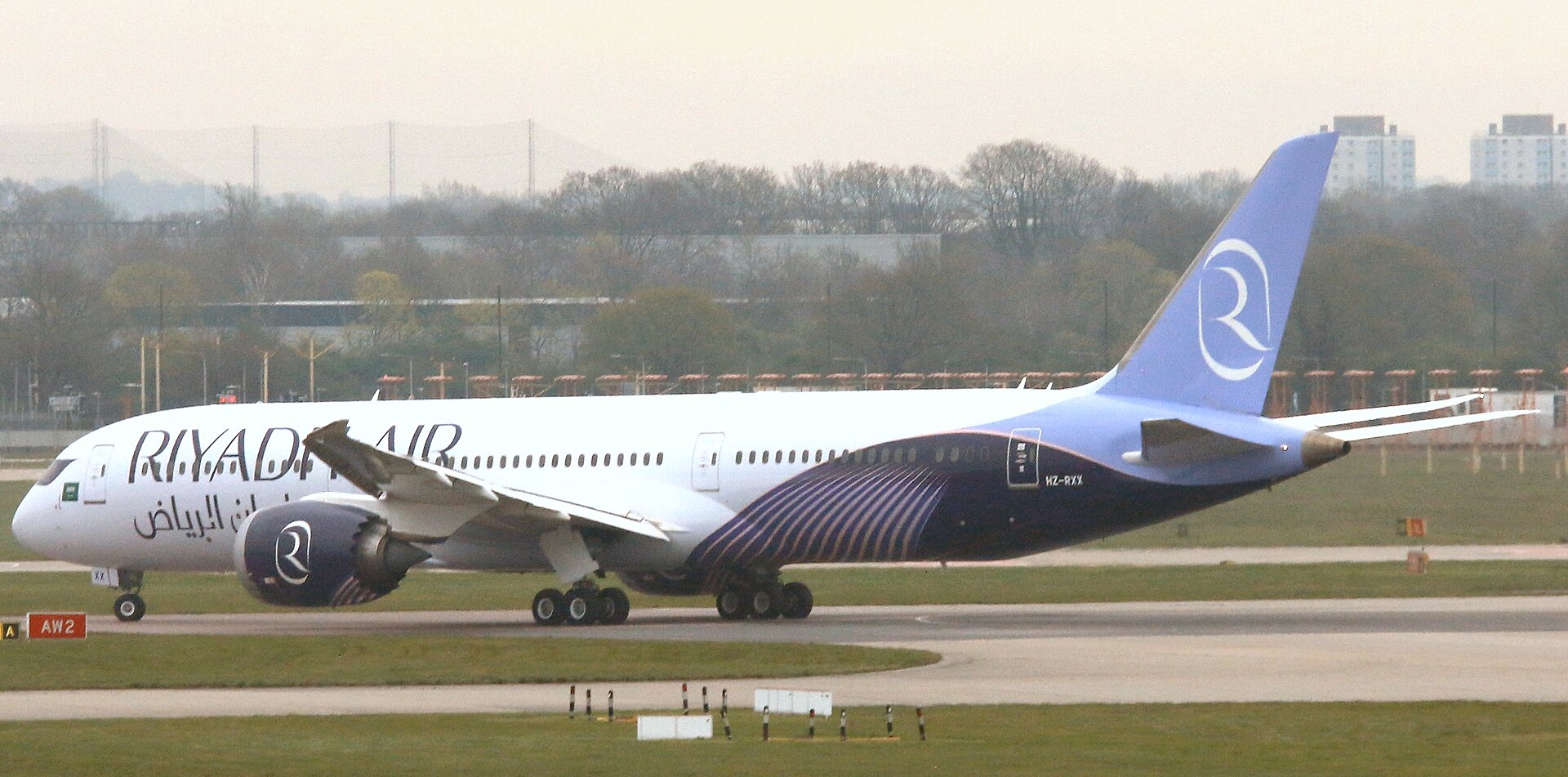
Riyadh Air, the PIF-backed carrier that anchors one of Vision 2030’s surviving flagship investments, has set July 1, 2026, as its formal public launch date for Riyadh–London Heathrow service using a Boeing 787-9. Bookings opened May 19. The launch had already been delayed approximately six months from original targets due to aircraft certification issues before the war imposed a second layer of operational disruption.
On July 1, Riyadh Air plans to begin commercial service on a route that KLM will not resume for another eleven days and that Lufthansa will not touch for nearly four more months. The airline launches into a competitive environment where its Gulf-based peers operate freely while every potential European codeshare and interline partner is grounded.
The war is adding approximately $7,500 per hour in unbudgeted fuel and crew costs per long-haul rotation, according to enterpriseam.com, due to rerouting around restricted airspace. Iran shut down FIR Tehran to all commercial transit on February 28 under an emergency NOTAM, forcing Europe–Gulf and Europe–Asia routes to divert over Central Asia or the Arabian Sea and adding two to five hours of block time per flight.
Saudi Arabia’s General Authority of Civil Aviation targets 330 million annual passengers by 2030, up from approximately 140.9 million in 2025, backed by $100 billion in public and private investment. King Salman International Airport in Riyadh is under construction with a 120-million-passenger capacity target. GACA’s strategy explicitly identifies European traffic as a core connectivity pillar — the same traffic that European regulators have determined cannot safely reach Saudi airspace.
The 330-million passenger target and the $100 billion aviation plan were designed for an operating environment in which European carriers competed for Gulf routes. The same week KLM extended its suspension, NEOM disclosed the cancellation of its EUR 1.4 billion high-speed rail link between Oxagon and The Line — another Vision 2030 infrastructure program quietly revised downward under wartime conditions.
MH17 and Dutch Institutional Memory
KLM is not an ordinary carrier when it comes to conflict-zone risk. Malaysia Airlines Flight 17, a Boeing 777, was shot down over eastern Ukraine on July 17, 2014, killing all 298 people aboard — 196 of them Dutch nationals. The Dutch Safety Board produced a dedicated follow-up investigation on commercial flights over conflict zones, and its recommendations fed directly into the EASA framework that now grounds KLM’s Gulf service.
KLM’s four successive extensions of its Gulf suspension reflect that institutional memory. The airline’s parent company, Air France–KLM, operates under both French and Dutch regulatory oversight. But it is the Dutch half that carries the specific institutional weight of MH17 — the event that, more than any other, drove European regulators toward the precautionary posture embodied in EASA’s conflict zone bulletins.
EASA’s Ukraine conflict zone bulletin, CZIB-2022-01, issued after Russia’s February 2022 invasion, has been continuously extended for more than four years and remains active. Once EASA classifies airspace as a conflict zone, the designation has historically persisted for years, not months. The Gulf CZIB is three months old.
Background and Context
The war’s diplomatic track has not produced conditions for EASA to reconsider. Iran’s chief negotiator Araghchi left Doha on May 25 without signing a nuclear agreement, with a $24 billion frozen-assets sequencing deadlock unresolved. Trump told his cabinet on May 27 that any deal would include “no sanctions, no money, no nothing” for Iran — eliminating the sanctions-relief framework that had been the basis for five rounds of talks.
Saudi Arabia has been excluded from all five rounds of U.S.-Iran nuclear negotiations over 106 days. The kingdom’s aviation infrastructure — its passenger targets, its new flag carrier, its airport construction — depends on an airspace environment whose safety is determined in negotiations Riyadh does not attend, under a regulatory framework Riyadh does not control, assessed by a European agency that examines the same Gulf airspace Saudi Arabia’s own GACA has cleared and reaches the opposite conclusion.
Brent crude’s decline below $100 in late May on Iran deal optimism added fiscal strain to a Saudi government already running a record $33.5 billion first-quarter deficit. The aviation investment program assumes revenue from European traffic that remains, by European regulatory determination, grounded.
Frequently Asked Questions
When will KLM resume flights to Saudi Arabia?
KLM’s current suspension runs through July 12, 2026, for Riyadh and Dammam. The airline has extended the suspension at least four times since the original March 1 grounding, and each extension has set a new date rather than a firm commitment to resume. KLM’s Saudi routes were a relatively recent addition to its network — the Riyadh–Dammam service launched in 2019 — which lowers the commercial urgency to resume compared with longer-established European hub routes. The EASA Ukraine conflict zone bulletin, issued in February 2022, remains active after four years, suggesting Gulf airspace restrictions could follow a similar multi-year arc.
Are any European airlines currently flying to Saudi Arabia?
No major European carrier operates scheduled service to Saudi Arabia as of May 28, 2026. KLM is suspended through July 12, Lufthansa Group through October 24, and British Airways has not announced Saudi resumption plans. Saudi Arabia’s inbound European connectivity now depends on Gulf carriers — Emirates, Qatar Airways, Etihad — and on non-EASA carriers such as Turkish Airlines, which operates under Turkey’s Directorate General of Civil Aviation and is not subject to the European conflict zone bulletin.
What makes EASA’s conflict zone bulletin binding if it is technically advisory?
EASA classifies CZIB 2026-03 as an information bulletin rather than a mandatory directive. In practice, European war-risk insurance underwriters treat it as dispositive: insurers will not cover aircraft operating on routes the bulletin identifies as high-risk, and no European carrier can fly commercially without war-risk coverage. The insurance mechanism transforms an advisory bulletin into a de facto grounding order. Even if a carrier’s management judged the operational risk acceptable, its insurers would refuse coverage, making each flight commercially and legally impossible to operate.
How does KLM’s suspension affect Riyadh Air’s July 1 launch?
Riyadh Air, regulated by Saudi Arabia’s GACA rather than EASA, is not bound by the European bulletin and can operate its Riyadh–London Heathrow service as planned on July 1. The airline’s pre-war business model, however, assumed a connected European aviation ecosystem in which interline agreements, codeshare partnerships, and onward connections through European hubs would feed traffic into its network. With no European carrier able to offer reciprocal service to Saudi Arabia, Riyadh Air launches into a one-directional connectivity environment — it can fly to London, but its natural European partner airlines cannot fly back.
Why is the July 12 date relevant beyond aviation?
Aviation risk assessments are actuarial, not political. Airline regulators and war-risk insurers set resumption dates based on forward models of conflict probability, ceasefire durability, and escalation patterns — the same variables that shape diplomatic timelines. A July 12 date means European aviation’s risk models forecast that the Gulf will not achieve sustained stability before mid-July. That window extends past the June 7 OPEC+ JMMC, where Saudi Arabia faces a 3.41-million-barrel-per-day quota gap from Hormuz-blocked exports, and past any realistic Round 6 nuclear signing. The airlines are not making a political statement. They are pricing risk.