
MUSCAT — Oman’s refusal to co-sign IMO Circular Letter 5028, the five-state GCC condemnation of Iran’s Persian Gulf Strait Authority, is not a diplomatic lapse. It is the most consequential institutional act by any Gulf state since the PGSA began collecting transit fees on May 18, and it rests on legal ground that predates the GCC by seven years: a 1974 bilateral boundary treaty with Iran that places the Strait of Hormuz’s inbound shipping lane within Omani territorial waters.
The five signatories — Bahrain, Kuwait, Qatar, Saudi Arabia, and the UAE — condemned Iran at the IMO for “unilaterally assuming powers of sovereign governance” over the Strait. Oman’s name was absent. Within four days, Iranian Deputy Foreign Minister Kazem Gharibabadi was in Muscat, discussing “principles governing freedom of navigation through the Strait of Hormuz in accordance with the rules of international law” with Foreign Minister Sayyid Badr Albusaidi. Bloomberg reported that Tehran and Muscat were negotiating terms for a permanent toll system — a formalized version of the arrangement that five of Oman’s GCC allies had just condemned.
The House of Saud Daily Briefing
Saudi Arabia's news in 3 minutes, every morning. Free. See today's issue
Table of Contents
- n
- What Did Oman Refuse to Sign — and What Did It Sign?
- The 1974 Treaty That Predates Everything
- Why Does Every Tanker Bound for Saudi Arabia Transit Omani Waters?
- The Muscat Track: A Third Architecture for Hormuz
- What Can Oman Actually Deliver from Tehran?
- Can Saudi Arabia Pressure Oman Without Losing Its Only Back-Channel?
- From Bloomberg to “Blow ‘Em Up”
- The Port Paradox
- Frequently Asked Questions
- n
n
n
What Did Oman Refuse to Sign — and What Did It Sign?
Oman signed the GCC joint protest against Iran’s PGSA through GCC institutional channels but refused to co-sign IMO Circular Letter 5028, the five-state condemnation submitted to the International Maritime Organization on May 20, 2026. The distinction is jurisdictional: CL 5028 was filed at the body that adopted the Hormuz Traffic Separation Scheme — a scheme Oman co-authored with Iran in 1968, thirteen years before the GCC existed.
The circular, fronted by the UAE, condemned Iran for “seeking to divert traffic to an unsafe channel, so as to levy fees and exert controls.” Five GCC members signed. Oman did not. The earlier GCC joint protest had used general language about sovereignty and international law — the diplomatic equivalent of a collective frown. CL 5028 was different: it asked signatory states to register a condemnation at the international body that governs the TSS itself.
IMO Circular Letters are non-binding advisory communications under IMO procedural rules. They register positions but create no obligations enforceable under UNCLOS or IMO conventions. CL 5028 was a political instrument submitted through a legal venue. Oman’s abstention was, on the same terms, a legal position expressed through a political omission.
Omani state media reinforced the distinction without explaining it. Muscat Daily published a non-polemical account of the May 24 Gharibabadi visit that made no reference to CL 5028 or the five-state letter. The Oman Foreign Ministry’s own website described the talks as concerning “a number of perspectives and proposals that will be studied” — language that neither endorsed nor condemned the PGSA framework.
| GCC State | CL 5028 Signatory | Hormuz Territorial Waters | PGSA Fee Status | Direct Channel to Tehran |
|---|---|---|---|---|
| Saudi Arabia | Yes | No | Subject to fee | None (MOFA silent 10+ days) |
| UAE | Yes (fronted letter) | No (disputed by Iran’s May 22 map) | Subject to fee | Embassy-level only |
| Kuwait | Yes | No | Subject to fee | None |
| Bahrain | Yes | No | Subject to fee | None |
| Qatar | Yes | No | 10 LNG tankers blocked | Financial custodial role ($6B) |
| Oman | No | Yes (inbound TSS lane) | Unconfirmed | Active bilateral (Muscat track) |
By signing the GCC joint protest, Oman preserved its standing within the six-member bloc. By abstaining from CL 5028, it preserved its standing as co-author of the TSS and its bilateral relationship with the state that controls the outbound lane. PressTV noted the absence approvingly. Iran’s state media reads Oman’s position as evidence that the GCC’s condemnation is fractured from within — a characterization that serves Tehran, but that five of the six GCC foreign ministries have done nothing to rebut.
The 1974 Treaty That Predates Everything
The Agreement Concerning Delimitation of the Continental Shelf between Iran and Oman was signed on July 25, 1974, and entered into force in January 1975. It drew the median line through the Strait of Hormuz, confirming Omani sovereignty over the waters containing the inbound TSS shipping lane.
The treaty was negotiated between Shah Mohammad Reza Pahlavi’s government and Sultan Qaboos bin Said. The Islamic Revolution of 1979 did not abrogate it. The Iran-Iraq War (1980–88) did not abrogate it. Decades of US-Iran confrontation did not abrogate it. Iran’s post-revolutionary government inherited and maintained the boundary — a continuity of state practice spanning two fundamentally different regimes in Tehran and forty-seven years of subsequent history. Boundary treaties, under international law, carry a permanence that few other agreements possess.
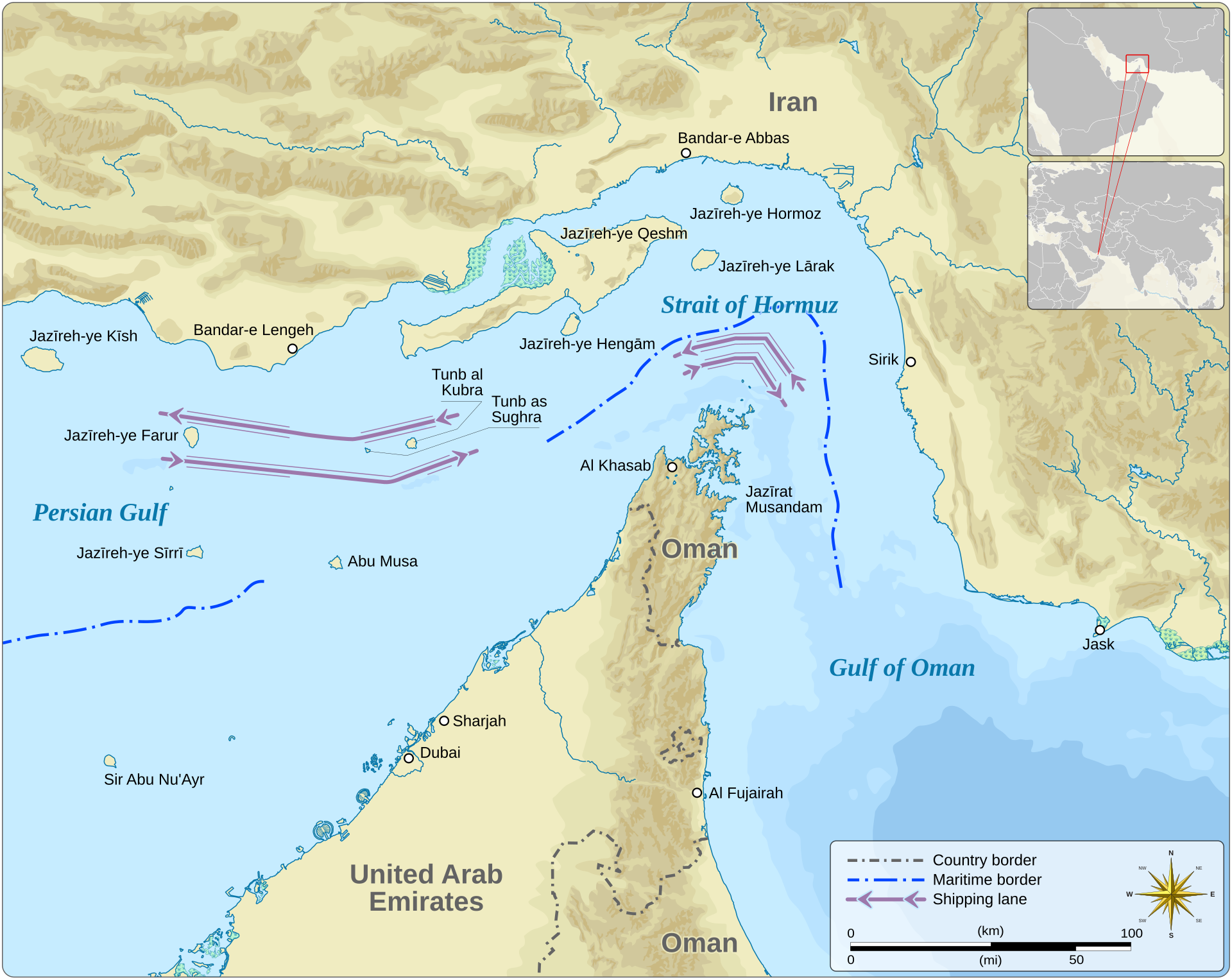
The treaty predates the GCC (founded 1981) by seven years and UNCLOS (adopted 1982) by eight. When the Traffic Separation Scheme was jointly proposed by Iran and Oman and adopted by the IMO in 1968, the GCC had not been conceived. The scheme established two lanes — outbound (southwestbound) through Iranian waters and inbound (northeastbound) through Omani waters — separated by a buffer zone. Oman did not inherit this role from a multilateral framework. It co-created the framework.
The US Department of State’s Limits in the Seas series (Study No. 67) confirms the boundary. UNCLOS Part III’s transit passage framework adds a separate layer: as a bordering state, Oman holds Article 42 regulatory authority over TSS operations that non-bordering GCC members cannot claim under any reading of the Convention. Iran’s own acceptance of the 1974 treaty for over five decades confirms both the boundary and the lane assignment. The TSS inbound lane is not a commons. It is Omani territorial sea, and any condemnation of traffic diversion from that lane is, in part, a question about Omani sovereign territory.
Sultan Qaboos built on this geographic position for half a century. Even after the Iran-Iraq War erupted in 1980, Oman adopted neutrality and refused calls to break with Tehran. Qaboos secretly facilitated negotiations between the belligerents, establishing the template — the Muscat channel — that Oman has operated ever since. Sultan Haitham bin Tariq, who assumed power in January 2020 following Qaboos’s death, promised in his first public address to uphold the tradition. Foreign Policy, in January 2026, described his neutrality as “a deliberate strategic choice, tested under conditions Sultan Qaboos never faced.”
| Year | Event |
|---|---|
| 1968 | Iran and Oman jointly propose the Hormuz TSS at the IMO |
| 1974 | Iran-Oman continental shelf boundary treaty signed (July 25) |
| 1975 | Treaty enters into force (January) |
| 1979 | TSS revised at IMO; Islamic Revolution does not abrogate the treaty |
| 1981 | GCC founded — seven years after the boundary was drawn |
| 1982 | UNCLOS adopted — eight years after the boundary was drawn |
| 2000 | GCC Joint Defense Agreement signed (no enforcement mechanism) |
| 2023 | Iran-Oman gas pipeline construction begins (April) |
| May 5, 2026 | PGSA formally established |
| May 18, 2026 | PGSA begins collecting ~$2M/vessel transit fees |
| May 20, 2026 | IMO CL 5028 submitted — five GCC states sign, Oman abstains |
| May 21, 2026 | Bloomberg reports Iran-Oman permanent toll system negotiations |
| May 22, 2026 | Iran publishes jurisdictional map claiming Omani waters |
| May 24, 2026 | Gharibabadi leads Iranian delegation to Muscat |
| May 27, 2026 | Trump threatens to “blow up” Oman at Cabinet meeting |
Why Does Every Tanker Bound for Saudi Arabia Transit Omani Waters?
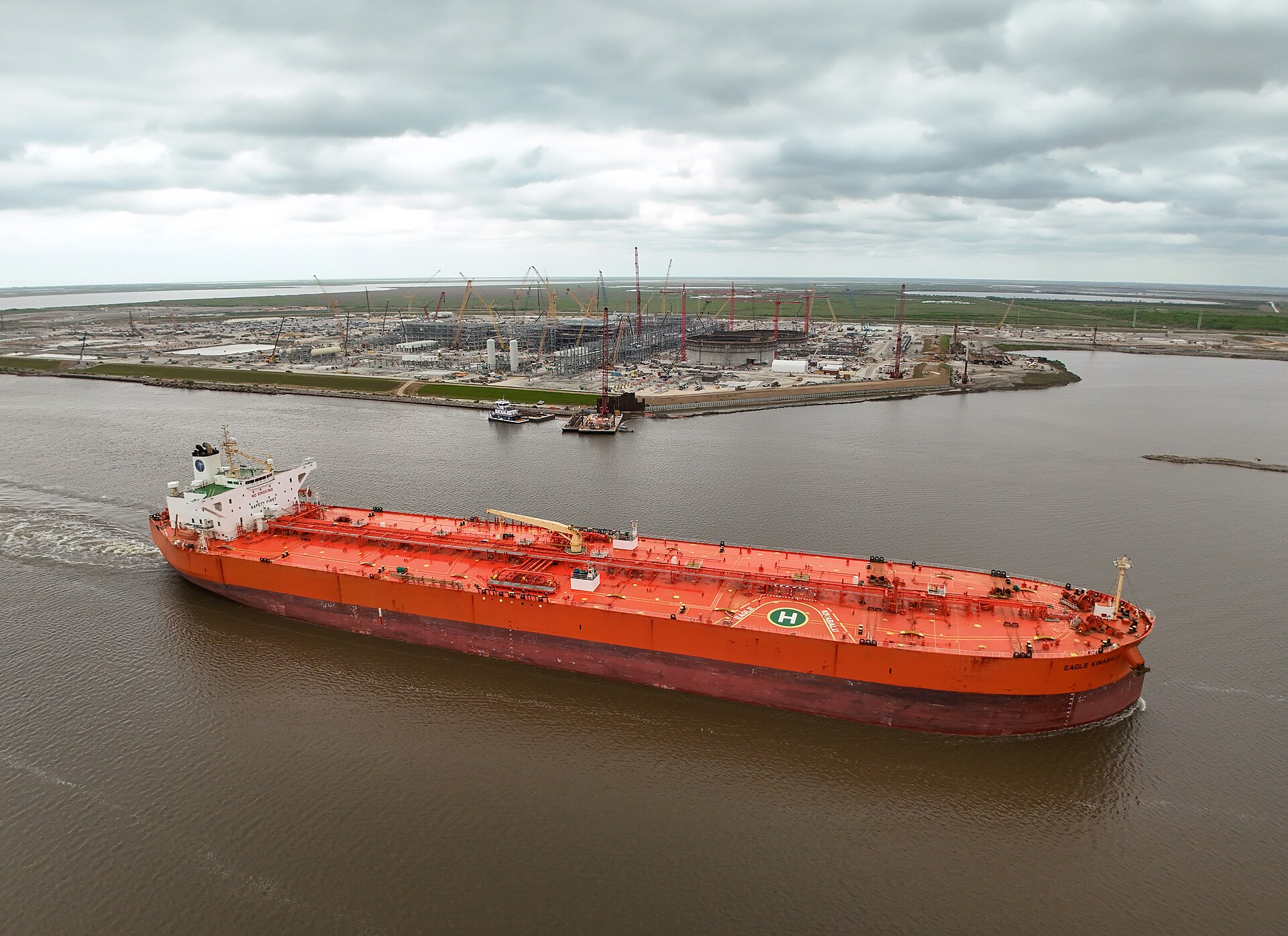
Every vessel heading to Saudi Arabia’s Gulf oil terminals — Ras Tanura, Ju’aymah, Ras al-Khair — must transit the Strait of Hormuz’s inbound shipping lane, which lies within Omani territorial waters under the 1974 boundary treaty. The IMO-endorsed Traffic Separation Scheme, jointly proposed by Iran and Oman in 1968, routes northbound traffic through a two-nautical-mile-wide corridor falling within Oman’s 12-nautical-mile territorial sea.
Saudi Arabia produces approximately 7.76 million barrels per day. The East-West Pipeline (Petroline) to Yanbu on the Red Sea has a maximum throughput of 5 million barrels per day. The gap — roughly 2.5 million barrels daily — must transit Hormuz. It passes through Omani waters to reach the Gulf loading terminals. That dependency is structural: even at maximum Petroline capacity (which Saudi Aramco has not sustained due to maintenance and contractual allocations), full production requires the Strait.
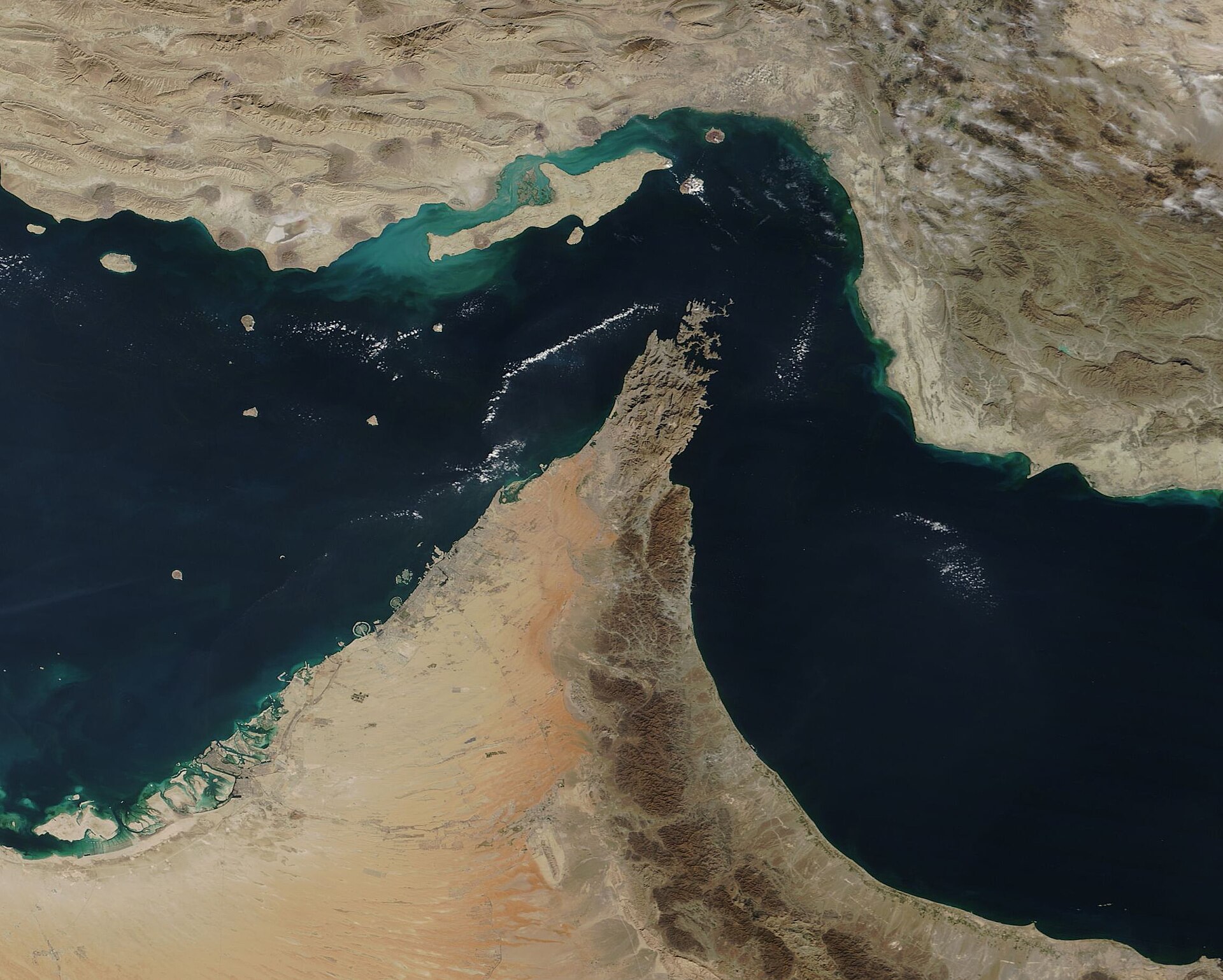
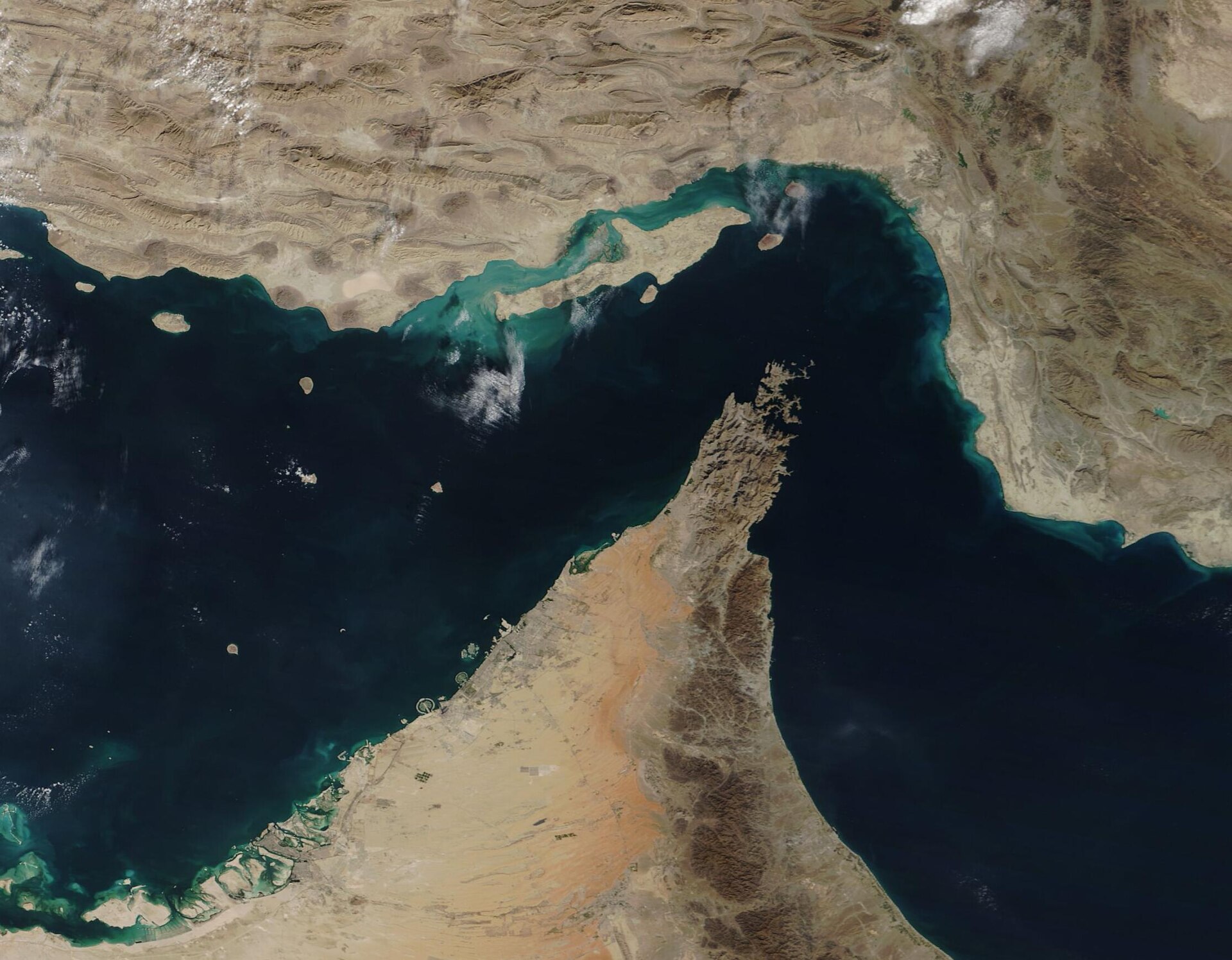
The TSS corridor spans approximately six nautical miles: two for the inbound lane in Omani waters, two for the outbound lane in Iranian waters, and a two-nautical-mile buffer zone. Two lanes, two sovereigns, one chokepoint. The physical geography is the 1974 treaty made visible from orbit.
Iran’s PGSA has attempted to divert traffic from the TSS inbound lane to an alternative channel under Iranian jurisdiction, where the $2 million per-vessel transit fee applies. That diversion reroutes traffic from Omani waters to Iranian waters — a territorial transfer, not merely a navigational adjustment. The CL 5028 signatories condemned the diversion. Oman, whose waters the traffic is being diverted from, declined to join the condemnation and instead opened bilateral talks with the state doing the diverting.
The Muscat Track: A Third Architecture for Hormuz
Three parallel governance frameworks now operate over the Strait. The UK-France 40-nation maritime coalition, with 27 signatories as of May 12 and a joint command at Northwood, represents the Euro-Atlantic military response — with Saudi Arabia absent from the command structure. The PGSA represents Iran’s unilateral toll regime, operational since May 18 and collecting approximately $2 million per transit in yuan or cryptocurrency. And the Muscat track — bilateral, quiet, conducted through Omani diplomatic channels — represents a third path that neither the coalition nor Iran’s statute has absorbed.
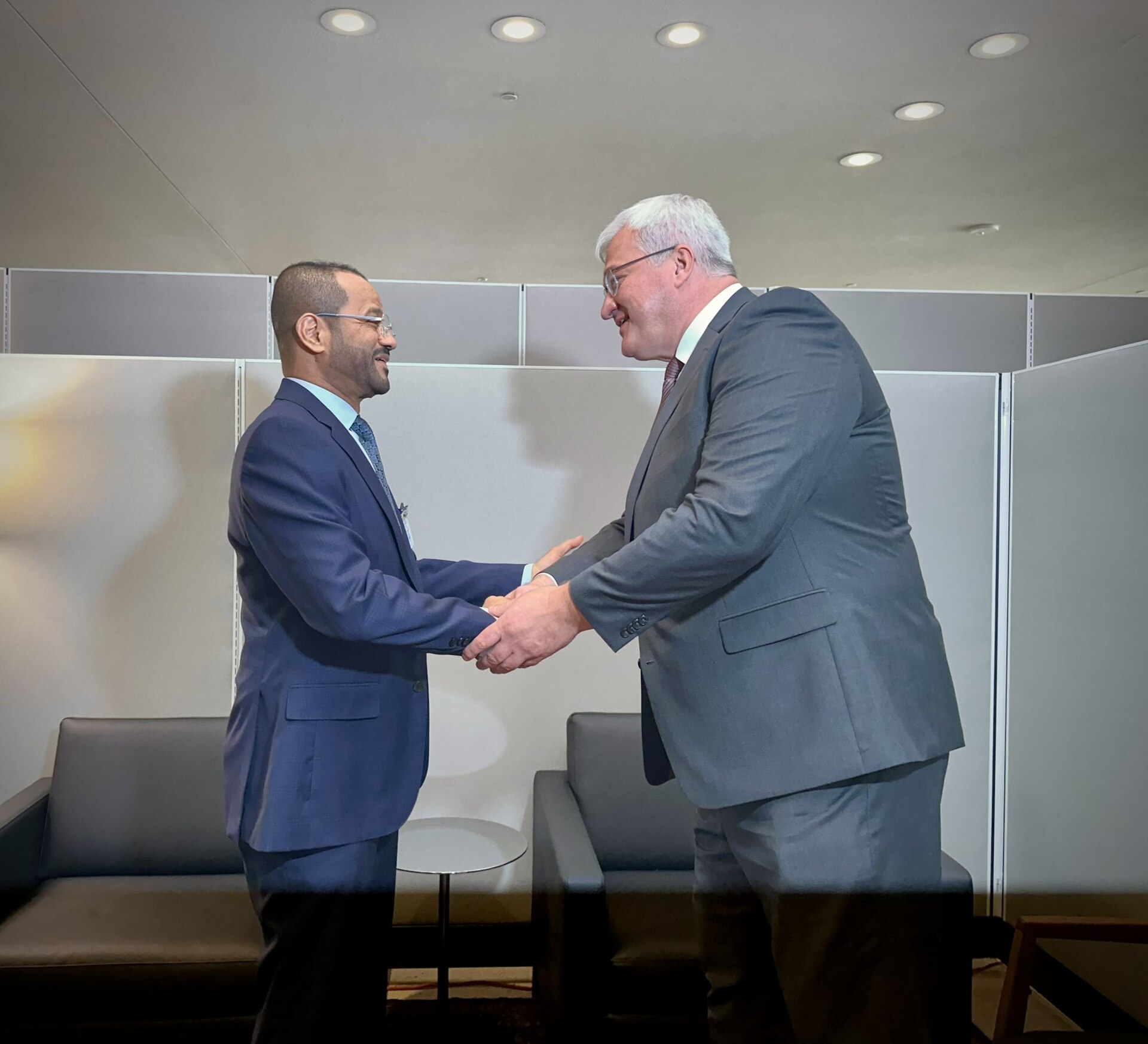
On May 24, Gharibabadi led a diplomatic and legal delegation to Muscat and met Albusaidi. He conveyed a verbal message from Foreign Minister Abbas Araghchi — placing the visit within the diplomatic track rather than the IRGC’s operational chain. The Omani Foreign Ministry described the talks as addressing “principles governing freedom of navigation through the Strait of Hormuz in accordance with the rules of international law.” The framing was precise: “principles” and “international law,” not PGSA fee structures or Iranian enforcement mechanisms.
Three days earlier, Bloomberg reported that Iran and Oman were “actively negotiating the terms of a permanent toll system” — a formalized successor to the PGSA arrangement. The report described a negotiation track running parallel to the US-Iran nuclear talks, which have consumed five rounds over 106 days without producing a signature. Breitbart, aggregating Iranian sources, reported on May 22 that Tehran was actively courting Omani co-sponsorship of the PGSA structure — a framing that, if accurate, goes beyond bilateral accommodation toward institutional partnership.
Oman’s Transport Minister Said al-Maawali has stated publicly that “no tolls can be imposed for crossing Hormuz.” Whether that declared position survives the Bloomberg-reported negotiations is an open question. But Oman enters the talks as a co-sovereign of the TSS with treaty-established rights, not as a state petitioning Iran for passage. Kristian Coates Ulrichsen of the Baker Institute described Oman as “a back channel between Iran and the US” whose role intensifies “as tensions flare in the Middle East.” The Muscat track predates the current war. It predates the GCC. It predates every other diplomatic channel operating in the Gulf. The fragility of that posture was tested on May 30 when Oman’s Maritime Security Centre confirmed a suspected mine in the inbound TSS lane — Omani territorial waters, the co-management framework’s legal foundation — without attributing it to any actor.
Saudi Arabia participates in none of the three architectures.
What Can Oman Actually Deliver from Tehran?
Oman can deliver access to Iran’s foreign-policy establishment but cannot guarantee compliance from the IRGC, which holds an institutional veto over any Hormuz arrangement through Article 150 of Iran’s constitution and the parallel military authority of Commander Mohammad-Reza Vahidi. Muscat’s influence is procedural — it hosts talks, conveys messages, proposes frameworks — but the dual-command structure that splits Iranian negotiating authority between Araghchi and Vahidi means any Omani-brokered agreement faces the same ratification bottleneck as the US-Iran nuclear MOU.
Gharibabadi’s May 24 visit was led by the Foreign Ministry. The PGSA operates under an IRGC-aligned command structure, and the 12-article statute ratified by Iran’s National Security and Foreign Policy Committee on April 21 gives the Authority autonomous operational latitude. Araghchi can discuss principles of navigation. He cannot order the PGSA to suspend its transit fee.
Supreme Leader Mojtaba Khamenei, communicating from a hidden location through courier-only channels, has issued directives constraining what Araghchi can offer at the nuclear table. No public evidence indicates comparable directives on Hormuz governance specifically, but the PGSA’s revenue creates its own institutional momentum. An authority generating fees on every commercial transit through the world’s largest oil chokepoint does not disband on the strength of a bilateral understanding with Muscat.
India, Iraq, and Pakistan have secured bilateral access arrangements outside the formal PGSA fee structure, negotiated through state-to-state channels rather than the PGSA directly. If Oman achieves a similar arrangement — formal or informal — it would reduce the toll’s practical impact on Omani-linked shipping without requiring the PGSA’s dissolution. That may be the realistic ceiling: not dismantlement, but exemption. The gap between what Oman can broker and what Iran can deliver is the structural limitation of the Muscat track.
Can Saudi Arabia Pressure Oman Without Losing Its Only Back-Channel?
No. Riyadh cannot confront Oman’s CL 5028 abstention without jeopardizing the Muscat channel — its only indirect representation in Hormuz governance diplomacy. The GCC Joint Defense Agreement of 2000 contains no expulsion or penalty mechanism for members declining collective actions, and Saudi Arabia’s Foreign Ministry has been publicly silent for more than ten days, the longest sustained silence of the war.
Saudi Arabia has been excluded from all five rounds of US-Iran nuclear negotiations. It was not consulted before CENTCOM struck Iranian launch sites on Arafah Day. The Eid call between MBS and Pezeshkian produced bilateral pleasantries but no structural access to the nuclear or Hormuz tracks. Iran’s Foreign Ministry spokesperson Esmail Baghaei bounded the call’s scope as “purely bilateral.” The three-year ledger of the Beijing-brokered détente tells the same story: $14 million in steel trade against a $1 billion target, 30,000 pilgrims against an 87,550 quota — warmth without weight.
Oman’s back-channel is, by default, the closest approximation to a Saudi voice in the Hormuz room. It operates without Saudi authorization, without Saudi knowledge of the details, and without any obligation to report back to Riyadh. Albusaidi’s meetings with Gharibabadi may or may not align with Saudi interests. Muscat has no mandate to represent them and no incentive to subordinate its own treaty-based position to a GCC consensus that CL 5028 already showed to be incomplete.
UAE Presidential Adviser Anwar Gargash described the GCC as “weakest historically” in a sustained institutional indictment that escalated from Kurdistan24 on April 27 to the Atlantic Council by May 16. The Peninsula Shield Force — 40,000 troops on paper — has not deployed. The Joint Defense Agreement has never been invoked, despite more than 2,750 Iranian projectiles fired at GCC states since the war began. IRGC strikes on Camp Buehring in Kuwait killed six US personnel in March without triggering a collective GCC response. The bloc that was meant to speak with one voice produced five signatures on CL 5028 and one conspicuous absence — and no mechanism to close the gap.
Riyadh’s options narrow to three: accept Oman’s position silently (the current approach), publicly pressure Muscat and lose the back-channel, or build a direct channel to Tehran. The third requires diplomatic infrastructure that does not exist at the necessary level. The Saudi embassy in Tehran, reopened after the 2023 Beijing accord, cannot sustain substantive negotiation on Hormuz governance. The Eid phone call confirmed the ceiling: bilateral pleasantries, not structural access. Saudi Arabia is, for now, a bystander to a negotiation taking place over its own oil export route.
From Bloomberg to “Blow ‘Em Up”
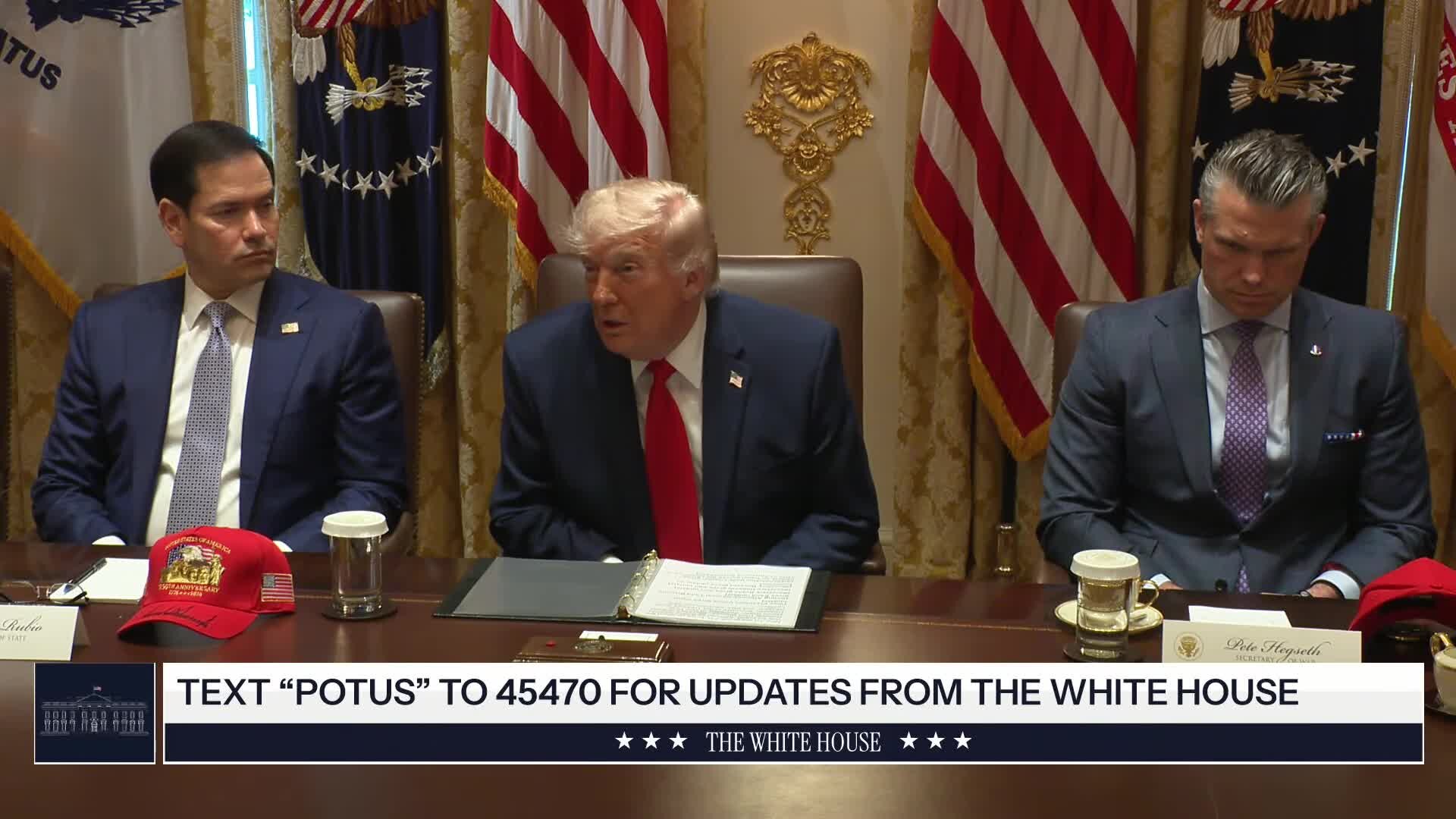
On May 21, Bloomberg reported that Iran and Oman were negotiating a permanent toll system for the Strait. On May 27, President Trump told a Cabinet meeting that Oman would have to “behave or we’ll have to blow ’em up.” The White House called the underlying co-management report “a complete fabrication.” The sequence — report, threat, denial — unfolded within 144 hours.
Trump’s remark was not a policy directive. The White House retracted it within hours and no operational orders followed. But its effect on the Muscat track is distinct from its effect on Pentagon planning. Oman has functioned as a US interlocutor with Iran for decades — Sultan Qaboos hosted the secret talks that preceded the JCPOA. A US president publicly contemplating military action against the host of America’s own back-channel introduces a variable that neither treaty law nor diplomatic precedent anticipates.
The timing compressed the signal. Trump’s statement fell within 24 hours of the Bloomberg report and 72 hours of Gharibabadi’s May 24 visit. From the opposite direction, Iran’s May 22 jurisdictional map had asserted sovereignty over Omani waters — a direct challenge to the 1974 boundary treaty that underpins Oman’s Hormuz position. Muscat’s diplomatic space narrowed from both sides simultaneously: Tehran challenging Omani sovereignty on paper, Washington threatening it with ordnance.
Albusaidi’s earlier statements frame how Muscat received both pressures. “Whatever your view of Iran, this war is not of their making,” he posted on X in early 2026. “This is already causing widespread economic problems and I fear they promise to get much worse if the war continues.” In a March Economist op-ed, he wrote that the United States had “lost control of its own foreign policy.” These are not the pronouncements of a neutral mediator performing equidistance. They are the public positions of a foreign minister whose country’s territorial waters have become the object of a multi-party dispute, and who is being squeezed by the state challenging those waters and the state whose ships transit them.
The Port Paradox
Oman’s Arabian Sea ports — Salalah and Duqm — have emerged as primary transshipment nodes since the Strait’s effective closure to normal commercial traffic in late February 2026. Vessels rerouting via the Cape of Good Hope require Arabian Sea staging points, and Oman’s geography places it on the only Gulf-adjacent coastline accessible without Hormuz transit.
That geography gives Oman a structural interest in managed — not abruptly reopened — Strait conditions. Every day the Strait operates under restricted access, Salalah and Duqm capture transshipment revenue that would otherwise flow through Jebel Ali or Dammam. The incentive is not cynical but it is material, and it coexists with physical risk: Iranian drone strikes hit Duqm in March 2026, demonstrating that Oman’s port advantage and its vulnerability to the same war share the same coastline.
The Iran-Oman submarine gas pipeline — a $1.2–1.5 billion project running 200 kilometers from Iran’s Kuh-e Mobarak to Oman’s Sohar port — remains under construction, commenced April 2023 but not yet operational as of May 2026. Oman’s domestic gas reserves are declining. Iran’s South Pars field is the alternative. The pipeline binds Muscat to Tehran through energy dependency, layered on top of the boundary treaty and the diplomatic tradition.
Together, the ports and the pipeline create an economic architecture that rewards continued engagement with Iran. CL 5028 asked signatories to condemn that engagement. Oman did not sign.
Frequently Asked Questions
Has Oman broken with the GCC before on a major security question?
Oman has a four-decade pattern of selective non-participation in GCC collective actions. In 2017, it refused to join the Saudi-led blockade of Qatar, maintaining open borders and diplomatic relations throughout the three-and-a-half-year dispute. During the Iran-Iraq War, Sultan Qaboos maintained full diplomatic relations with Tehran while other Gulf states bankrolled Baghdad. In 2011, Oman declined to contribute troops to the GCC Peninsula Shield deployment in Bahrain. From 2015 onward, it did not participate in the Saudi-led Yemen intervention, hosting back-channel talks between Houthi representatives and international mediators instead. The CL 5028 abstention follows a consistent pattern, but this time the stakes are different: Oman’s own territorial waters are the subject of the dispute.
What is Oman’s legal standing under UNCLOS regarding the Hormuz TSS?
Under UNCLOS Part III, Article 38, ships exercise the right of transit passage through straits used for international navigation — a right that cannot be suspended by the bordering state. However, Article 42 permits states bordering a strait to adopt laws and regulations relating to safety of navigation and maritime traffic regulation during transit passage. This gives Oman (and Iran) a regulatory authority that non-bordering GCC states do not possess. Article 44 prohibits the bordering state from hampering transit passage, but the Article 42 regulatory zone creates a layer of legitimate Omani jurisdiction over TSS operations that the CL 5028 signatories cannot claim under any reading of UNCLOS.
Could Iran legally abrogate the 1974 boundary treaty?
Iran’s May 22, 2026, jurisdictional map appeared to assert sovereignty over waters assigned to Oman under the 1974 agreement. Under the Vienna Convention on the Law of Treaties, Article 62, boundary agreements are generally considered non-terminable — they survive changes of government, regime, and fundamental circumstance. Iran has not formally repudiated the treaty, and doing so would undermine its own historical claim to co-authorship of the TSS. The May 22 map functions as a negotiating pressure instrument, not a legal declaration of withdrawal. Paradoxically, it strengthens Oman’s hand: Muscat can argue that its bilateral talks with Tehran serve to defend Omani sovereignty, not to assist Iran.
Is Oman militarily capable of defending its Hormuz territorial waters?
Oman’s defense budget is among the smaller GCC allocations relative to territory and coastline. The Royal Navy of Oman operates a coastal defense fleet of corvettes and patrol vessels — a force designed for littoral surveillance, not sustained enforcement of a contested international shipping lane. Oman’s maritime defense of its TSS waters depends on the international legal framework it invokes at the IMO and on the practical calculus that neither Iran nor any coalition force benefits from challenging Omani sovereignty over the inbound lane. Contesting that sovereignty would collapse the Muscat channel, the only diplomatic mechanism currently producing bilateral talks on Hormuz governance.
What would Oman gain if the PGSA toll arrangement became permanent?
If a permanent toll system is formalized through an Oman-Iran bilateral agreement — the scenario Bloomberg reported was under active negotiation — Oman could gain revenue-sharing rights, regulatory input into fee schedules, and operational standing as co-manager of the Strait. That role has existed in principle since the 1968 TSS co-authorship but has never been monetized. The risk is that formalizing the toll would permanently split the GCC’s collective position on Hormuz by legitimizing the PGSA framework that five members condemned. Oman has publicly stated that “no tolls can be imposed for crossing Hormuz,” but the distinction between tolls and “navigational services fees” — the term Iran uses to describe PGSA charges — may prove elastic under bilateral negotiation.
Iran’s Foreign Ministry spokesman Baqaei made Oman’s co-sovereign role explicit on May 29, declaring that the Strait “had nothing to do with the US” and identifying Oman as the only state Tehran was engaging to determine the waterway’s future — a declaration that completes the doctrinal architecture of Hormuz bilateral governance that this article identified in Oman’s treaty position.
The question of who has authority to reopen Hormuz — and why the distributed closure mechanism means no single actor can — is examined in The Invisible Blockade: How Hormuz Closed Without Anyone Ordering It Shut.
The House of Saud Daily Briefing
Saudi Arabia's news in 3 minutes, every morning. Free. See today's issue