RIYADH — The military campaign against Iran has a finite timeline, but the reconstruction contest that follows will determine the Middle East’s power structure for a generation. With Rystad Energy estimating energy infrastructure damage alone at $25 billion and rising, the question of who funds Iran’s rebuilding is now the most consequential geopolitical wager in the region — and Saudi Arabia, sitting on an annualized oil windfall of $49 billion to $72 billion above budget, faces a paradox that no amount of cruise missiles can resolve.
The paradox is structural. Riyadh needs Iran weak enough to accept terms — full nuclear dismantlement, missile curbs, Hormuz reopening — but functional enough not to collapse into a failed state that exports refugees, reconstitutes proxies, and destabilizes the Gulf for decades. Whoever writes the checks for reconstruction will shape post-war Iran’s alignment.
China, Turkey, and the UAE are already positioning. Saudi Arabia has the largest financial capacity and the greatest strategic interest, but also the most political baggage as a belligerent-adjacent state. The race to rebuild Iran is the war after the war, and losing it may prove costlier than any missile volley.
Contents
- What Will It Cost to Rebuild Iran?
- Five Powers Competing to Reconstruct Iran
- Why a Marshall Plan for Iran Will Probably Fail
- Can Saudi Arabia Fund Reconstruction Without Strengthening a Rival?
- How China Is Positioning to Own Post-War Iran
- What Will the Islamabad Quartet Actually Negotiate?
- Can Reconstruction Money Demilitarize the IRGC?
- The Vision 2030 Contractor Army That Needs Work
- Frequently Asked Questions
What Will It Cost to Rebuild Iran?
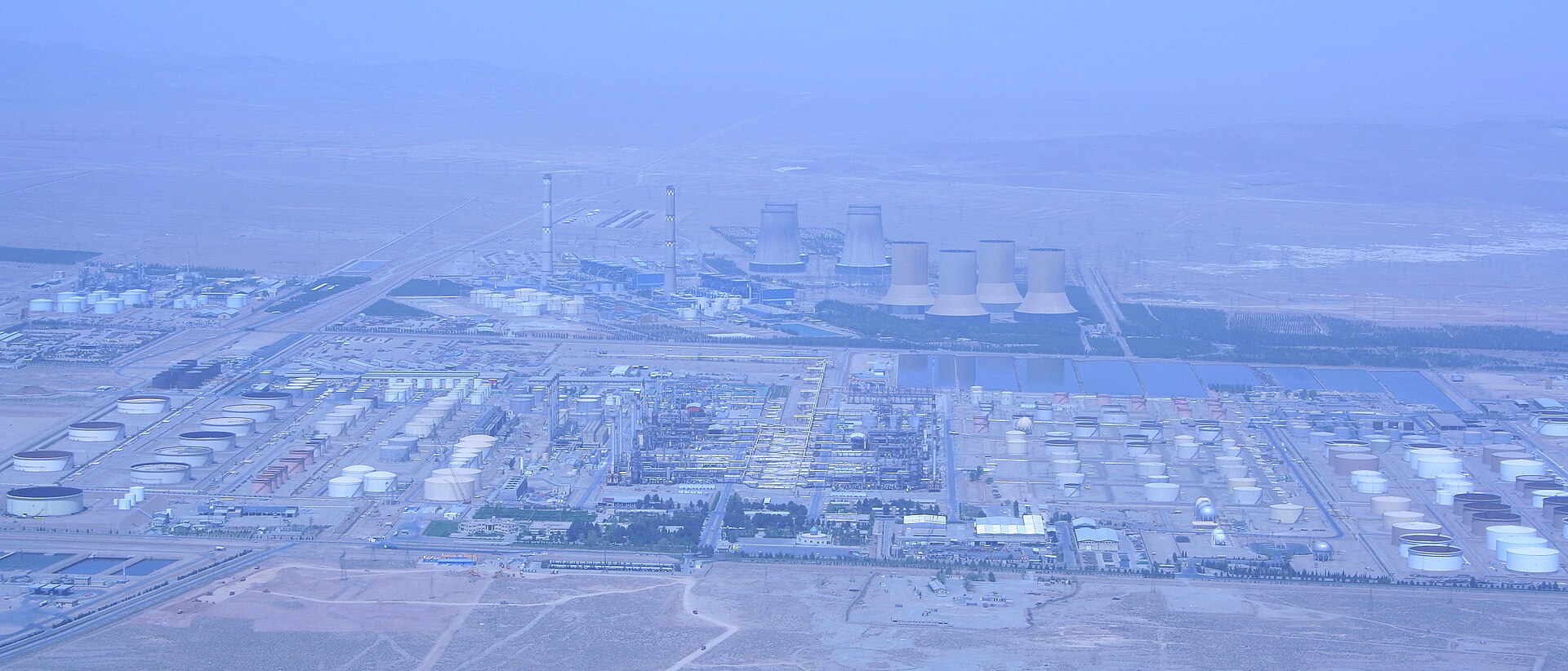
The reconstruction bill for Iran after one month of sustained U.S. and Israeli strikes is already staggering in scale, though precise figures remain contested. Rystad Energy’s initial assessment, published March 26, pegs energy infrastructure repair and restoration costs at a minimum of $25 billion, covering damaged LNG trains, refineries, fuel terminals, and gas-to-liquids facilities across the region (Rystad Energy, March 2026). That figure, Rystad warns, will rise further as damage assessments continue.
Energy infrastructure represents only one layer. The Center for Strategic and International Studies estimated the direct U.S. military operational cost of Operation Epic Fury at $16.5 billion by day 12 alone, with munitions replacement accounting for roughly $3.1 billion of that total (CSIS, March 2026). The Center for American Progress projected cumulative U.S. costs reaching $25 billion within the war’s first three weeks. None of these figures account for the cost of rebuilding what the munitions destroyed on the Iranian side.
The Middle East briefing 3,000+ readers start their day with.
One email. Every weekday morning. Free.
Iran’s civilian toll compounds the bill. The Washington Post reported nearly 1,500 Iranian civilians killed by March 27. The Hengaw Organization for Human Rights, an Iranian Kurdish monitoring group, documented 5,300 dead including 511 civilians in the first 18 days alone (Hengaw, March 2026). Each casualty figure implies destroyed housing, hospitals, roads, and municipal infrastructure that will require rebuilding.
Pre-war, Iran’s GDP stood at roughly $400 billion, with oil exports contributing about a quarter of that — approximately $23.2 billion in the year to March 2025, according to tanker tracking data. The country was already staggering under 37.1 percent inflation and a currency at a historic low of 1,000,000 rial to the dollar (Coface, 2025). War damage layered atop pre-existing economic fragility suggests a total reconstruction bill in the range of $100 billion to $250 billion over a decade — a figure that would make it the most expensive Middle Eastern rebuilding effort since Iraq.
| Damage Category | Estimated Cost | Source |
|---|---|---|
| Energy infrastructure (refineries, LNG, terminals) | $25B+ and rising | Rystad Energy, March 2026 |
| Military infrastructure (bases, missile sites, nuclear facilities) | $15B-$30B (estimate) | CSIS operational cost extrapolation |
| Civilian infrastructure (housing, hospitals, transport) | $30B-$80B (range) | Casualty-correlated damage modeling |
| Economic output lost (GDP contraction, trade disruption) | $50B-$100B over 5 years | IMF pre-war growth forecast revision |
| Total estimated reconstruction range | $100B-$250B | Aggregate of above |
A critical constraint is equipment, not money. Rystad notes that the large-frame gas turbines needed to power LNG refrigeration compressors come from only three manufacturers globally, all of which entered 2026 with production backlogs of two to four years. Some assets may be restored within months, but others could remain offline for years regardless of how much capital is available.
Five Powers Competing to Reconstruct Iran
The reconstruction of Iran will not be a coordinated international effort in the mold of post-World War II Europe. It will be a competitive scramble among five distinct actors, each with different capacities, motives, and price tags for their involvement. The outcome will redraw alliance structures across the Middle East.
China
China enters the contest as Iran’s largest pre-war trade partner, with bilateral trade exceeding $15 billion annually and a 25-year cooperation program signed in March 2021 that nominally commits $400 billion in investment — $280 billion in energy, $120 billion in infrastructure (Iran-China 25-Year Cooperation Program, 2021). In practice, China invested only $618 million in Iranian projects between 2018 and 2022.
The war resets that calculus. Beijing’s selective Hormuz transit arrangements and yuan-denominated toll system signal an intent to deepen alignment, not retreat from it.
Turkey
Turkey brings geographic proximity and the second-largest international contracting sector in the world. Turkish firms rank second only to Chinese companies on the ENR World’s Top 250 International Contractors List, with 45 firms completing projects worth over $545 billion across 137 countries (ENR, 2025). Turkey’s construction sector is valued at $183 billion in 2026 and projects a 5.45 percent compound annual growth rate through 2031 (Mordor Intelligence, 2026). Ankara opposes Iranian nuclear advancement but fears regime collapse producing refugee flows and Kurdish militant resurgence, according to a Washington Institute analysis of Turkey’s wartime positioning.
The UAE
The UAE offers commercial pragmatism. Dubai has served as Iran’s historic trade gateway for decades, and Emirati firms like Sidara and NMDC are already named among likely early-stage reconstruction contractors (Modern Diplomacy, March 2026). Ambassador Yousef Al Otaiba’s March statement that a “simple ceasefire is not enough” signals Abu Dhabi’s intent to attach conditions — trade normalization on UAE terms, with Emirati commercial interests embedded in any reconstruction framework.
Saudi Arabia
Saudi Arabia commands the largest financial capacity of any regional actor. With Brent crude at $112.57 per barrel on March 28 and the 2026 budget built on a $70-per-barrel assumption, Riyadh is generating approximately $119 million per day in additional revenue above projections (The Middle East Insider, March 2026). Annualized, that windfall ranges from $49 billion to $72 billion. The Public Investment Fund, which approved a minimum 20 percent spending reduction in December 2024, has freed capital from deferred megaprojects that could theoretically be redirected toward regional influence-building.
The United States and Western Powers
The United States and Western powers are the least likely to invest directly. Washington’s 15-point peace plan demands full nuclear dismantlement, missile curbs, and Hormuz reopening — conditions so maximalist that they function more as a sanctions-maintenance framework than a reconstruction blueprint (Time, March 25). Western contractors face legal barriers under existing sanctions architecture, leaving Chinese, Turkish, Indian, and Emirati firms to capture most recovery-related contracts.
Why a Marshall Plan for Iran Will Probably Fail
The Marshall Plan — $13 billion in 1948 dollars, roughly $170 billion today — succeeded in rebuilding Western Europe as a durable American ally. Every serious proposal for Iranian reconstruction will be measured against that precedent. The comparison flatters the ambition but exposes the obstacles.
The Marshall Plan worked because of four conditions that do not exist in Iran. First, European governments took ownership of the program. Secretary of State George Marshall declared in 1947 that “the initiative must come from Europe,” and European bureaucracies managed the distribution of funds through existing institutional capacity. Iran’s governing institutions are shattered — the Supreme Leader is dead, the IRGC’s command structure is degraded, and whatever transitional authority emerges will lack the administrative depth to manage hundreds of billions in reconstruction capital.
Second, the Marshall countries had pre-existing industrial capacity that merely needed restoration, not creation. Iran’s industrial base, while more developed than Iraq’s in 2003, has been hollowed out by decades of sanctions. The country’s legal exclusion from Western supply chains means it must rely on Chinese and domestic contractors — a technically feasible but slower and more expensive path, according to Rystad Energy.
Third, security was not contested. Western Europe in 1948 faced a Soviet threat but no active insurgency. Iran’s IRGC and its network of affiliated militias present a persistent internal security challenge that will complicate any reconstruction effort, just as Iraqi militias consumed billions in American reconstruction funds after 2003.
Fourth, there was a single dominant patron. The United States bankrolled the Marshall Plan without competing donors seeking to embed rival influence structures. Iran’s reconstruction will feature at least five competing patrons with incompatible strategic objectives.
| Reconstruction Precedent | Cost (2026 dollars) | Duration | Outcome | Key Success/Failure Factor |
|---|---|---|---|---|
| Marshall Plan (Europe, 1948-1952) | ~$170B | 4 years | Success: rebuilt Europe as Western ally | Local institutional ownership, single patron |
| Japan (1945-1952) | ~$25B | 7 years | Success: total economic transformation | Full occupation, constitutional rewrite |
| Iraq (2003-2017) | $220B+ (incl. $74B foreign aid) | 14 years | Failure: corruption, militia state | No security, no institutional capacity |
| Afghanistan (2001-2021) | $145B+ | 20 years | Failure: Taliban returned, money disappeared | No governance, active insurgency |
| Iran (2026-?) | $100B-$250B (estimated) | 10+ years | Unknown | Multiple competing patrons, sanctions constraints |
The Iraq precedent is most instructive. Through 2017, more than $220 billion was spent on Iraqi reconstruction — over 50 percent more than the entirety of Marshall Plan aid in today’s dollars — yet the Special Inspector General for Iraq Reconstruction estimated that at least $8 billion was lost to fraud, waste, and abuse, representing roughly 15 percent of total U.S. relief and reconstruction spending (SIGIR Final Report). SIGIR investigations led to 112 indictments and 90 convictions.
The Iraqi government never achieved full territorial control, and reconstruction funding flowed into militias that later became Iranian proxies. Any reconstruction plan for Iran that does not account for the institutional vacuum left by the war risks repeating this cycle at larger scale.
Can Saudi Arabia Fund Reconstruction Without Strengthening a Rival?
Saudi Arabia faces a dual bind with no clean resolution. A collapsed Iran produces refugees, reconstituted proxies, and regional chaos that directly threatens the Kingdom. A rebuilt Iran with Chinese backing becomes a more capable adversary than the one that existed before February 28. Crown Prince Mohammed bin Salman must thread a needle that may not have an eye.
The financial capacity is real. Goldman Sachs estimates a $14 to $18 per barrel geopolitical risk premium in current oil prices (Goldman Sachs via Fortune, March 2026). The IMF places Saudi Arabia’s fiscal breakeven at $78 to $85 per barrel. With Brent above $112, the Kingdom is accumulating surplus at a rate that dwarfs any recent period. The question is not whether Riyadh can afford to participate in Iranian reconstruction. The question is whether it can afford the strategic consequences of not participating.
The risk of non-participation is that China fills the vacuum entirely. Beijing’s 25-year cooperation program with Iran provides the legal framework. Chinese state-owned enterprises — CNPC, Sinopec, and their engineering subsidiaries — have the technical capacity. And China’s willingness to operate outside Western sanctions architecture means it faces none of the legal barriers that exclude American and European firms.
A reconstruction led exclusively by Beijing would produce an Iran aligned economically with China, dependent on Chinese technology and supply chains, and obligated to provide energy concessions that lock in Chinese access to the world’s fourth-largest oil reserves for a generation.
The risk of participation is equally stark. Saudi funding for Iranian reconstruction would face domestic opposition from a population that watched Iranian-supplied drones and missiles strike Saudi cities. It would require diplomatic normalization with whatever regime emerges in Tehran — a government that may include IRGC elements hostile to Riyadh. And it would divert capital from domestic priorities at precisely the moment Vision 2030 is being recalibrated toward AI, housing, and near-term returns.
A middle path exists in theory: Saudi participation through multilateral vehicles — a Gulf Reconstruction Fund, perhaps, or an Islamic Development Bank-led mechanism — that dilutes political exposure while preserving influence over how reconstruction capital is deployed. Whether that theory survives contact with the competing ambitions of Beijing, Ankara, and Abu Dhabi is another matter.
How China Is Positioning to Own Post-War Iran
Beijing’s wartime behavior reveals a post-war strategy already in motion. While maintaining diplomatic neutrality and calling for ceasefire, China has taken three concrete steps — continued oil purchases, a yuan-denominated Hormuz toll system, and strategic reserve insulation — that position it as Iran’s primary reconstruction partner.
First, China has continued purchasing Iranian oil through the Hormuz blockade, using shadow fleet tankers and yuan-denominated payment systems that bypass Western financial infrastructure. This keeps revenue flowing to Tehran during the war and creates a debt of gratitude that Beijing will collect when the shooting stops. Iran’s oil exports to China averaged roughly 1.6 million barrels per day in 2025, and maintaining even a fraction of that flow during active hostilities demonstrates a level of commitment that no other buyer has matched.
Second, China has deployed a yuan-denominated Hormuz toll system that signals intent to reshape the strait’s commercial governance after the war. As analyzed in Foreign Policy (March 26), this mechanism embeds Chinese financial infrastructure into the region’s most critical chokepoint — a position that would give Beijing significant influence over reconstruction-era trade flows.
Third, the Washington Institute’s March 2026 analysis of great-power spillover from the Iran war notes that China holds strategic oil reserves equivalent to 104 days of imports, insulating it from short-term Hormuz disruption. Beijing can afford to wait out the military conflict, knowing that the reconstruction phase is where its competitive advantages — state-directed capital, no sanctions constraints, existing bilateral framework — become decisive.
The 25-year cooperation program has delivered only a fraction of its promised investment, as detailed in the competitive landscape above. The war changes the arithmetic. A devastated Iran desperate for reconstruction capital is far more likely to accept Chinese terms — energy concessions, port access, telecommunications infrastructure built by Huawei — than the pre-war Iran that could afford to negotiate from relative strength. The 25-year deal’s provisions for Chabahar and Jask port development, railway electrification, and metropolitan transit networks read less like aspirational cooperation and more like a post-war reconstruction blueprint waiting for the right moment.
What Will the Islamabad Quartet Actually Negotiate?
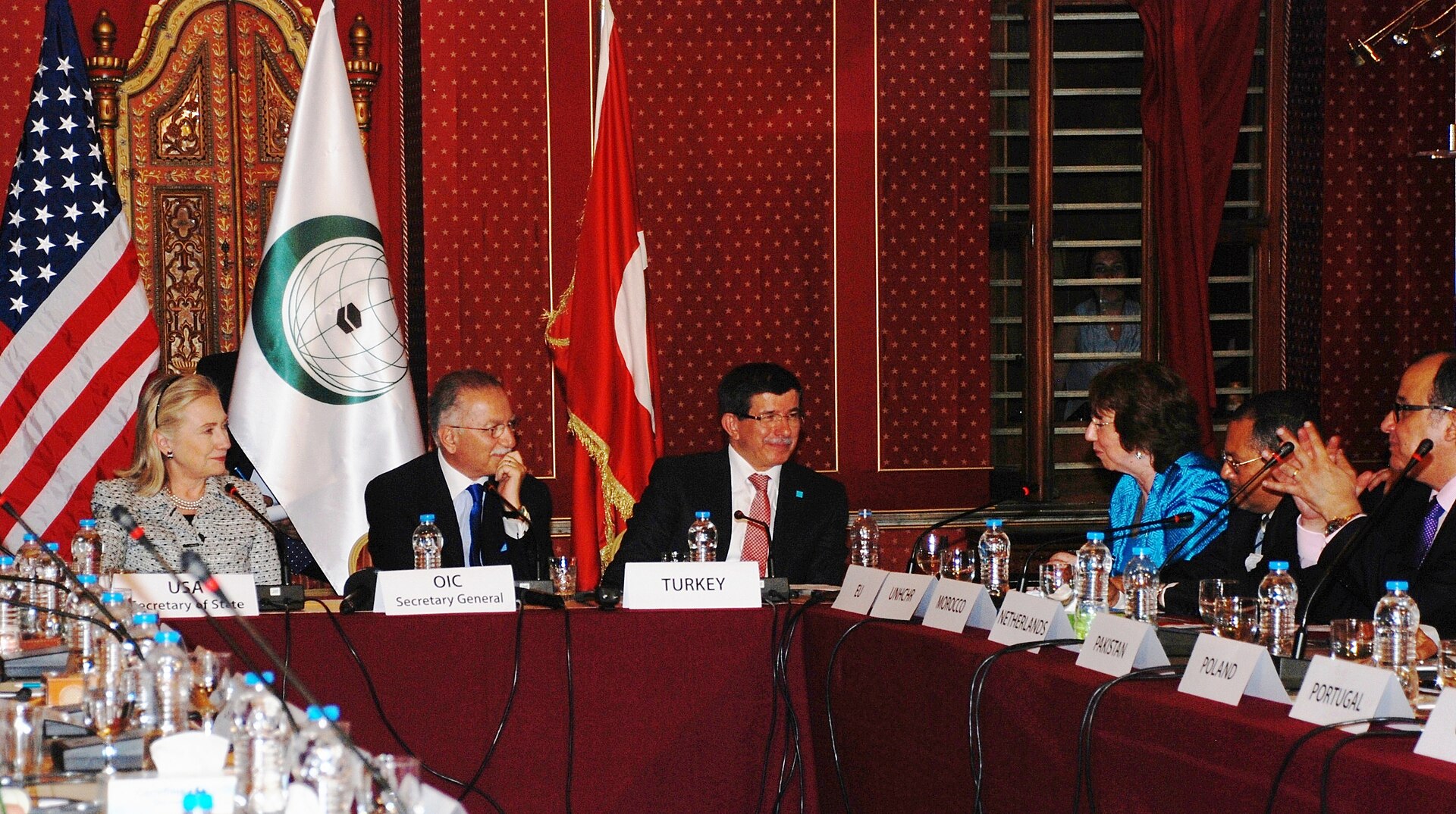
The foreign ministers of Egypt, Pakistan, Saudi Arabia, and Turkey convene in Islamabad on March 30 for what is billed as ceasefire talks. The composition of the quartet reveals that the conversation is already about reconstruction, whether the participants acknowledge it or not.
Each of the four nations brings a distinct reconstruction interest to the table. Pakistan, the host and principal intermediary between Washington and Tehran, has relayed the U.S. 15-point plan detailed above (Iran International, March 2026). Tehran has reviewed the plan and concluded it serves only American and Israeli interests, though Iranian officials stressed diplomacy has not been exhausted. Pakistan’s own interest lies in border stability — a collapsed Iran on its western frontier would compound existing security challenges in Balochistan.
Turkey’s construction sector needs work. Turkish Foreign Minister Hakan Fidan stated the meeting would seek to establish “a mechanism aimed at de-escalation,” but Ankara’s real interest is in being inside the room when reconstruction contracts are divided. Its massive contracting sector, described above, is purpose-built for exactly this kind of post-conflict infrastructure boom.
Egypt provides Arab League legitimacy and a precedent — Cairo managed its own post-2013 reconstruction with Gulf funding, giving it institutional memory of how donor-recipient relationships work in the region. Saudi Arabia brings the checkbook and the strategic imperative described above.
Iran’s five counter-demands — halt aggression, establish no-recurrence mechanisms, provide reparations, end proxy attacks on Iranian allies, and recognize Hormuz sovereignty — are maximalist in the opposite direction from Washington’s terms (NPR, March 25). The gap between the two positions is where reconstruction frameworks will be embedded.
Ceasefire terms always include economic normalization provisions, whether explicitly or through the lifting of sanctions that enables reconstruction investment. The Islamabad quartet’s real task is to define who controls the economic architecture of post-war Iran — and to ensure that architecture does not exclude them.
Can Reconstruction Money Demilitarize the IRGC?
The most optimistic reading of Iran’s post-war future holds that reconstruction conditionality — aid in exchange for institutional reform — can achieve what military strikes cannot: the permanent dismantlement of the Islamic Revolutionary Guard Corps as an autonomous political and economic actor. Historical precedent says this is unlikely, but Iran’s circumstances may differ from past cases in ways that matter.
The IRGC is not merely a military organization. It controls an estimated 20 to 40 percent of Iran’s pre-war economy through construction firms, telecommunications companies, and import-export monopolies. Reconstruction money that flows through government channels will inevitably reach IRGC-affiliated entities unless specific mechanisms prevent it — and designing such mechanisms requires a level of institutional transparency that Iran has never possessed.
Iraq’s experience after 2003 is the relevant cautionary tale. As SIGIR documented, reconstruction funds were systematically diverted to militia groups that the funds were ostensibly meant to replace. More fundamentally, reconstruction in Iraq was premised on the idea that security and economic development could proceed on separate timetables — an assumption that proved catastrophically wrong.
Iran’s economic desperation may, however, create bargaining power that did not exist in Iraq. Pre-war inflation at 37.1 percent, a currency at historic lows, and now catastrophic infrastructure damage leave whatever government emerges in Tehran with limited negotiating power.
If reconstruction is conditioned on IRGC divestiture from commercial sectors, the alternative — no reconstruction — may be existentially worse for the regime than compliance. This is the scenario that reconstruction optimists envision: economic pressure so severe that institutional reform becomes a survival necessity rather than a political concession.
The flaw in this reasoning is that it assumes a unified Iranian state capable of enforcing compliance. If the war produces a fragmented political terrain — hardliners versus reformists, IRGC factions competing for resources, regional governors acting autonomously — then no central authority will exist to implement conditions, regardless of how stringently they are written into reconstruction agreements.
The Vision 2030 Contractor Army That Needs Work
The war’s timing intersects with a domestic Saudi economic reality that creates both opportunity and pressure. The PIF’s December 2024 board decision to cut spending by at least 20 percent across its portfolio of over 100 companies has cascaded through the Saudi construction sector. The total value of construction contracts awarded fell to below $30 billion in 2025, a decline of nearly 60 percent from the $71 billion recorded in 2024 (AGBI, February 2026). PIF’s share dropped even more sharply, from 38 percent to just 14 percent of total awards.
Construction on The Line was suspended in September 2025. Only 2.4 kilometers of the originally planned 170-kilometer structure will be completed by 2030. The Mukaab within New Murabba has been deprioritized. Trojena has been cancelled. The PIF’s pivot toward artificial intelligence — with HUMAIN securing a $1.2 billion framework — mining, and advanced manufacturing leaves a significant surplus of construction capacity that was recruited, trained, and mobilized for domestic megaprojects that no longer exist at their original scale.
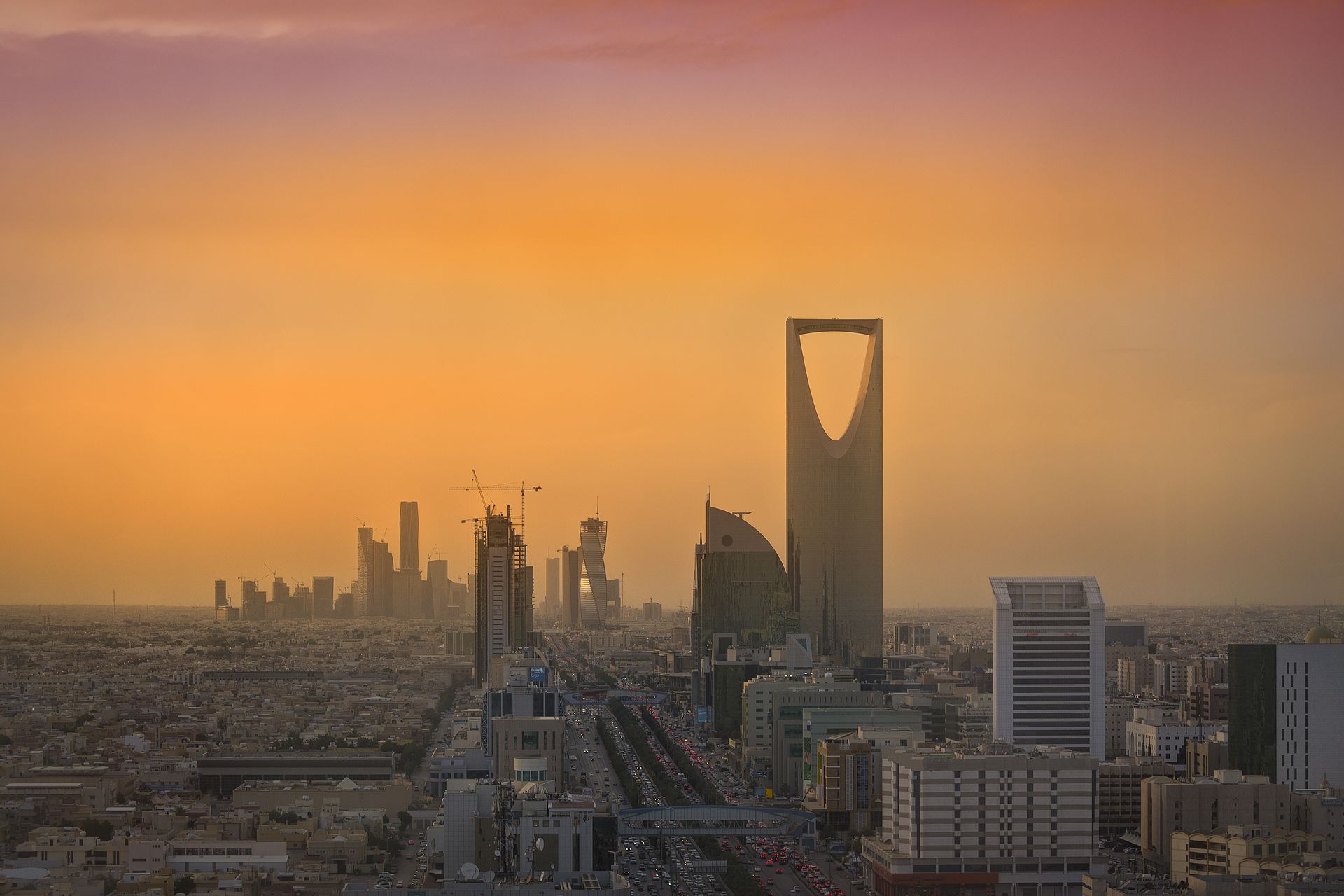
Saudi Arabia now hosts tens of thousands of construction workers, engineers, and project managers from firms contracted for Vision 2030 megaprojects that have been deferred or downsized. A Saudi-led or Saudi-participating Iran reconstruction effort would give these firms work, give the PIF returns on its construction-sector investments, and give MBS influence over Iran’s post-war trajectory. The alignment of interests — idle domestic capacity, surplus oil revenue, and strategic necessity — is unusual. Whether it is sufficient to overcome the political barriers to Saudi-Iranian reconstruction cooperation is the open question.
The Zelenskyy-Saudi defense deal reported by CNBC on March 27, which involves Ukrainian drone expertise, suggests Riyadh is already thinking about post-war capability-building rather than merely wartime survival. A similar forward-looking posture toward Iranian reconstruction — deploying Saudi capital and construction capacity to shape the post-war order rather than merely reacting to it — would represent the most consequential strategic decision of Mohammed bin Salman’s tenure.
The initiative must come from Europe. The role of this country should consist of friendly aid in the drafting of a European program and of later support of such a program so far as it may be practical for us to do so.
Secretary of State George Marshall, June 5, 1947 — the principle that successful reconstruction requires local ownership, not external imposition
Marshall’s principle endures. The reconstruction of Iran will succeed only if Iranians own it — but who defines what “Iran” means after this war, and who finances the answer, will shape the Middle East for decades. Saudi Arabia’s oil windfall gives it a seat at the table. Whether Riyadh takes that seat, and on what terms, is the most important decision the Kingdom will make this year.
Frequently Asked Questions
How long would Iran’s energy infrastructure take to rebuild even with unlimited funding?
Full restoration of Iran’s energy infrastructure would take a minimum of three to five years regardless of available capital, according to Rystad Energy. The binding constraint is not money but equipment: the large-frame gas turbines required for LNG refrigeration compressors are manufactured by only three companies globally — GE Vernova, Siemens Energy, and Mitsubishi Heavy Industries — all of which entered 2026 with production backlogs of two to four years. Iran’s exclusion from Western supply chains means it cannot purchase directly from these manufacturers, adding further delay through intermediaries or Chinese-manufactured alternatives that may not meet original equipment specifications.
Has China actually delivered on its $400 billion Iran cooperation agreement?
Actual Chinese investment in Iran between 2018 and 2022 totaled approximately $618 million, concentrated in the construction sector — a fraction of the $400 billion headline figure. The 25-year cooperation program signed in March 2021 committed $280 billion to energy and $120 billion to infrastructure, but implementation has been slowed by secondary sanctions risk, Iranian institutional dysfunction, and Beijing’s own economic slowdown. The war may accelerate delivery: a devastated Iran with weakened negotiating position and urgent reconstruction needs is more likely to accept terms — particularly energy concessions and port access — that pre-war Tehran resisted.
Could Saudi Arabia and Iran cooperate on reconstruction despite the war?
The 2023 Beijing-brokered Saudi-Iranian normalization agreement, though overtaken by the war, established a diplomatic precedent. Saudi Arabia’s previous post-conflict engagement model is instructive: after the 2006 Lebanon war, Riyadh pledged $1.5 billion in reconstruction aid to Beirut despite having opposed Hezbollah’s provocation. A similar mechanism — Saudi capital flowing through multilateral vehicles like the Islamic Development Bank or a Gulf Reconstruction Fund rather than direct bilateral transfers — could reduce political exposure while preserving influence. The key variable is whether Iran’s post-war government includes elements willing to accept Gulf Arab capital with attached conditions on militia disarmament and nuclear compliance.
What role would international organizations play in Iran’s reconstruction?
International organizations face severe constraints. The World Bank and IMF cannot lend to Iran while U.S. sanctions remain in force, and the current 15-point U.S. peace plan makes no provision for sanctions relief tied to reconstruction. The Asian Infrastructure Investment Bank, in which China holds a 26.6 percent voting share, is the multilateral institution best positioned to channel reconstruction capital without running afoul of Western sanctions. The Islamic Development Bank, headquartered in Jeddah and with significant Saudi influence, could provide a mechanism for Gulf Arab participation. Neither institution has the capacity to manage reconstruction at the $100 billion-plus scale that Iran requires, suggesting that bilateral deals — particularly with China — will dominate.
What happens to Iran if no major reconstruction effort materializes?
The absence of organized reconstruction would push Iran toward state failure along lines comparable to post-2011 Libya or post-2003 Iraq without the American occupation presence that, for all its failures, prevented complete territorial fragmentation. Iran’s 88 million population — larger than Iraq and Afghanistan combined — would produce the largest refugee crisis in modern Middle Eastern history. IRGC fragments would reconstitute as autonomous militias, potentially more dangerous than the centralized force they replaced. Saudi Arabia’s eastern provinces, Bahrain, Kuwait, and Iraq’s Shia-majority south would face destabilization from refugee flows and militia cross-border activity. The cost of managing that instability over two decades would likely exceed the cost of financing a structured reconstruction program.