FOUND
{“content”: “
Table of Contents
n
- n
- The Bottleneck Has Migrated to Washington
- What Does the MOU Actually Say About Hormuz u2014 and Who Gets to Decide?
- The IRGC Is Writing Its Own MOU While Trump Waits
- Why Do Republican Hawks Hold Sway Over a Deal They Cannot Formally Block?
- The Cotton Letter, Eleven Years Later
- Every Day of Delay Is a Day the PGSA Entrenches
- What Happens to Brent If the MOU Collapses u2014 and What Happens If It Succeeds?
- Saudi Arabia’s Fiscal Position in the Delay Window
- The Pezeshkianu2013Mojtaba Circuit and the Signing Authority Gap
- Frequently Asked Questions
- n
n
The Middle East briefing 3,000+ readers start their day with.
One email. Every weekday morning. Free.
n
n
n
n
n
n
n
n
n
n
n
n
n
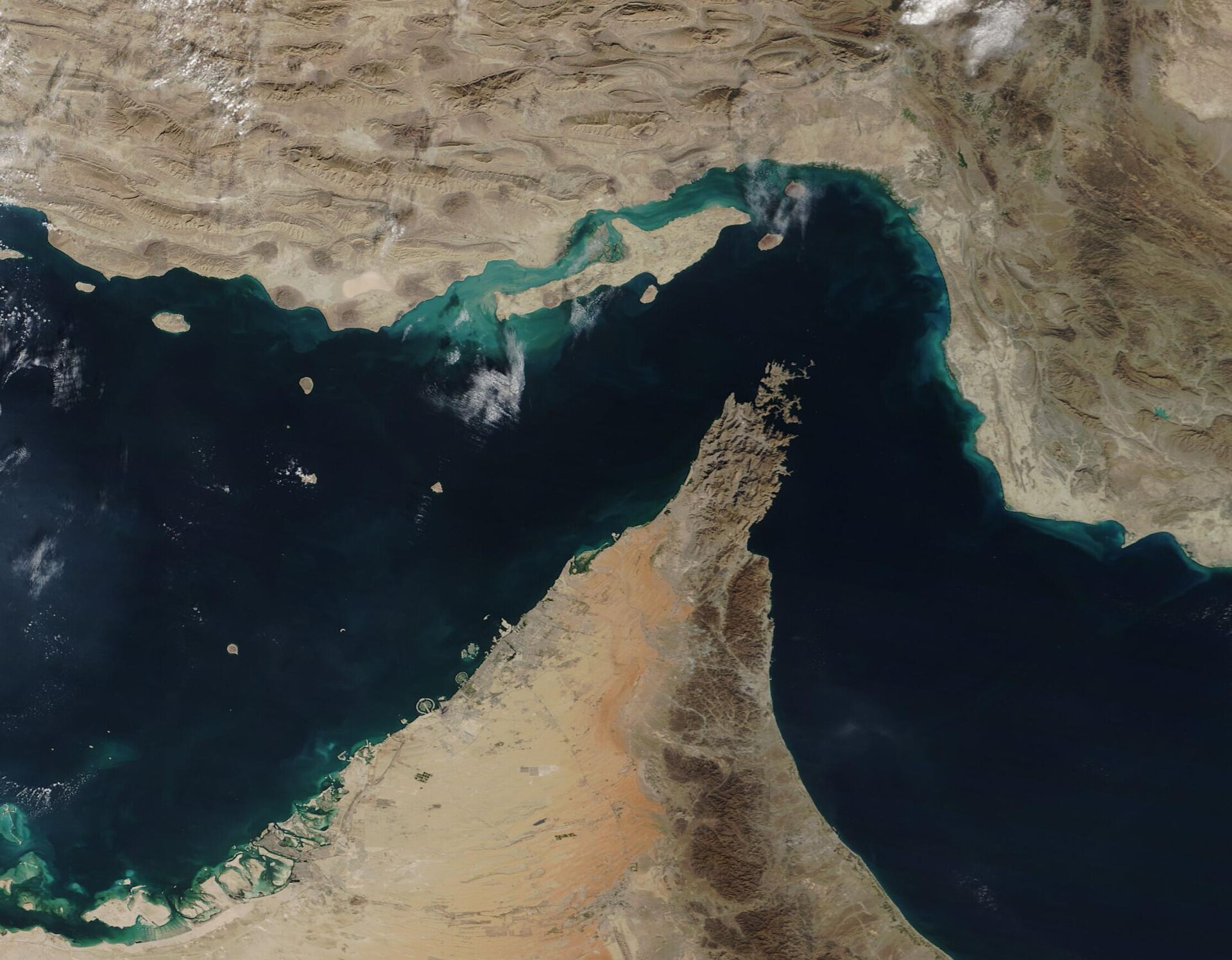
WASHINGTON u2014 The 60-day memorandum of understanding between US and Iranian negotiators was agreed on May 28, 2026. Trump has not signed it. Vice President JD Vance told CBS News the same day that “we’re not there yet, but we’re very close,” adding it was “hard to say exactly when, or if, the president’s going to sign the MOU.” The bottleneck that stalled the Iran deal has completed a full migration u2014 from Araghchi’s $24 billion sequencing demand, through the IRGC’s constitutional veto apparatus, to a domestic political calculation inside the West Wing about how Republican hawks will receive a text that promises “unrestricted” Hormuz transit while IRGC-affiliated Fars News reports the same draft places the Strait “under Iran’s management.”
n
That gap u2014 between negotiator agreement and presidential signature u2014 is the interval in which deals die. It is also the interval in which the IRGC has room to harden the draft language, the Persian Gulf Security Authority continues collecting approximately $2 million per transit in Chinese yuan, and Saudi Arabia absorbs the fiscal cost of a Hormuz architecture it did not negotiate and cannot exit. Every additional day of Trump’s pause is a day Iran’s military establishment uses to entrench facts on the water that the MOU was designed to reverse. That cost registered publicly for the first time on May 29, when MBS used the Mina Palace Eid reception to thank Saudi generals for their “efforts to defend the country” u2014 the first royal acknowledgment of an undeclared combat role conducted while the MOU clock runs.
n
The Bottleneck Has Migrated to Washington
n
Three weeks ago, the obstacle to the MOU was Iranian. Araghchi’s delegation returned from Doha on May 25 without signing, the departure framed by Iran International as a sequencing deadlock over $24 billion in frozen assets u2014 $12 billion at signing, $12 billion within a 60-day window. The White House blamed Tehran. Tasnim blamed Washington. The structure of the disagreement was bilateral and comprehensible: money first or Hormuz first.
n
By May 28, Axios reported the text had been agreed. The sequencing language was resolved. The Hormuz provisions were drafted. And the deal sat unsigned u2014 not because Iran’s Supreme National Security Council had rejected it, and not because Araghchi’s team had walked away, but because “the president relayed to the mediators that he wants a couple of days to think about it.”
n
Vance’s CBS appearance the same day was calibrated to signal proximity without commitment. “Going back and forth on a couple of language points,” he said u2014 a phrase that could describe a genuine textual dispute or a holding pattern while the White House counted Republican votes. The distinction matters because the two scenarios produce different IRGC responses. A language dispute invites counter-drafting. A domestic political delay invites the kind of public hardening that makes language disputes permanent.
n
What Does the MOU Actually Say About Hormuz u2014 and Who Gets to Decide?
n
The Axios reporting from May 24 and May 28 describes the MOU’s Hormuz provisions as requiring “unrestricted” transit u2014 no tolls, no harassment, no Iranian interference u2014 with all mines removed within 30 days. The White House treats this as definitive, calling the Iranian state TV version of the text “a complete fabrication.”
n
Fars News Agency, which operates under IRGC editorial direction, reported on May 28 that “the Strait of Hormuz would remain under Iran’s management” according to the latest draft. This is not a misreading of the same text. It is a competing text u2014 or a competing interpretation designed to function as a text. The act of releasing a divergent version into Iranian domestic media before the US president signs creates a public record that constrains what any Iranian signatory can later concede without appearing to have surrendered.
n
Iran’s civilian Foreign Ministry offered a third formulation. The FM spokesman described the PGSA’s toll mechanism as providing “specialized services” rather than “extortion” u2014 language designed to preserve the authority’s institutional existence without formally defending the $2 million per-transit fee. This is the Araghchi track’s compromise position: the PGSA survives as an entity but its coercive toll function is recharacterized as voluntary service provision. Whether the US text’s “unrestricted” language permits that reading is precisely the ambiguity that Trump’s delay leaves unresolved.
n
Three versions of the same draft u2014 “unrestricted passage,” “under Iran’s management,” and “specialized services” u2014 now circulate simultaneously. In arms-control history, when the text is agreed but the leader hasn’t signed, competing factions publish the version that serves their institutional interests. Iranian state TV’s release of its own MOU text on May 28 is a textbook instance of this mechanic.
n
The IRGC Is Writing Its Own MOU While Trump Waits
n
The constitutional split between Iran’s Foreign Ministry and the IRGC is not factional u2014 it is structural, embedded in Articles 150 and 176 of the Iranian constitution and traceable to the Iran-Iraq War. The Foreign Ministry negotiates. The IRGC retains an institutional kill-switch through the Supreme National Security Council, whose confirmation is required for any binding agreement. Since March 1, 2026, the IRGC commander has held that kill-switch with particular force.
n
Former IRGC commander-in-chief Mohammad Ali Jafari stated in late May that “no further negotiations would take place unless Iran’s conditions were met.” Tasnim characterized US deal reporting as “propaganda by American media justifying Trump’s retreat from his recent hostile action.” These are not negotiating positions. They are public commitments that raise the cost of any IRGC retreat from the “under Iran’s management” formulation.
n
Trump’s “couple of days” pause creates the operational space for this hardening. Each day without a US signature is a day the IRGC faction can push its version of the Hormuz text deeper into Iranian institutional memory u2014 through Tasnim editorials, through Fars reporting, through Jafari’s public statements. By the time Trump decides whether to sign, the text he agreed to may no longer be the text Iran’s security establishment considers operative. The Araghchi track claims readiness; the IRGC track is building a public record that makes Araghchi’s concessions retractable.
n
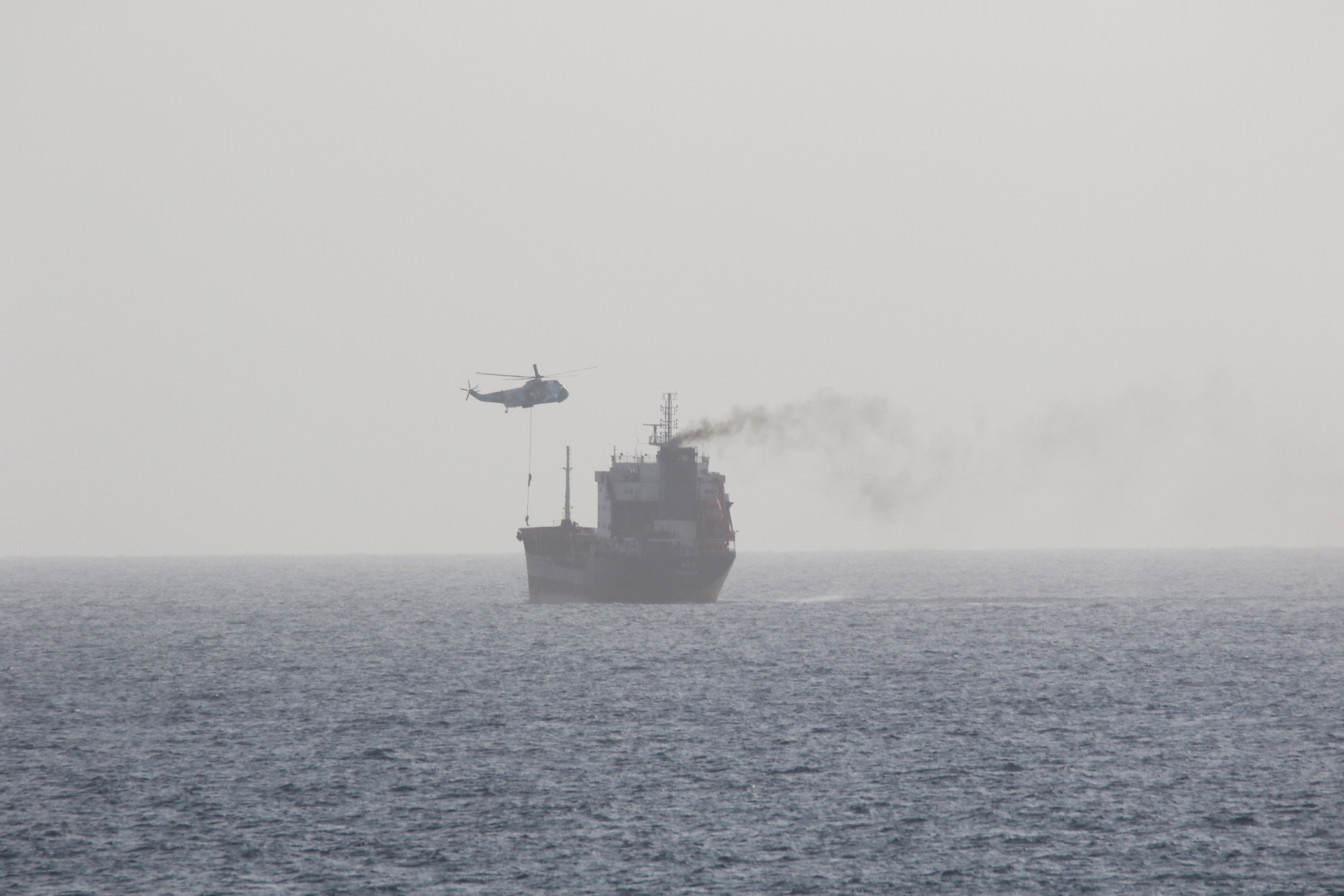
President Pezeshkian reportedly described the IRGC’s approach to escalating tensions with Gulf states as “madness” and requested an urgent meeting with Mojtaba Khamenei to press for a halt. The request itself reveals the power distribution: the elected president cannot order the IRGC to stop. He must petition the Supreme Leader’s son, who communicates by courier from a hidden location, to intervene in a chain of command that runs parallel to the civilian government.
n
n
Why Do Republican Hawks Hold Sway Over a Deal They Cannot Formally Block?
n
The MOU’s 60-day structure was designed to avoid triggering the Iran Nuclear Agreement Review Act, the 30-day congressional review mechanism established in 2015. An MOU is not a treaty. It does not require Senate ratification. Republican hawks cannot formally block it. Their influence is entirely atmospheric u2014 and it is working.
n
The roster of public opposition assembled within 72 hours of the Axios leak is a catalogue of Republican foreign-policy infrastructure. Ted Cruz: “If the result of all that is to be an Iranian regime u2014 still run by Islamists who chant ‘death to America’ u2014 now receiving billions of dollars, being able to enrich uranium and develop nuclear weapons, and having effective control over the Strait of Hormuz, then that outcome would be a disastrous mistake.” Roger Wicker, chair of the Senate Armed Services Committee: “The rumored 60-day ceasefire u2014 with the belief that Iran will ever engage in good faith u2014 would be a disaster.” Lindsey Graham: “Iran will be perceived as being a dominant force requiring a diplomatic solution.” Mike Pompeo: “Not remotely America First.”
n
Trump responded to the criticism by telling Fortune on May 24: “Don’t listen to the losers.” The White House Communications Director, Steven Cheung, responded to Pompeo specifically: “Mike Pompeo has no idea what the f* he’s talking about. He should shut his stupid mouth and leave the real work to the professionals.”
n
Pompeo’s framing was precise enough to sting. He compared the deal to “the Wendy Sherman-Robert Malley-Ben Rhodes playbook: Pay the IRGC to build a WMD program and terrorize the world.” For a president who built his foreign-policy brand on repudiating the Obama-era JCPOA, being compared to its architects is the one charge that penetrates. The MOU’s structure u2014 executive agreement, no congressional vote, frozen-asset release, Hormuz concessions u2014 maps onto JCPOA criticisms that Trump himself made from 2015 through his 2018 withdrawal.
n
The political pressure carries a second dimension beyond the JCPOA parallel. While Trump was absorbing Republican criticism of the MOUu2019s nuclear language, he was simultaneously offering Israelu2019s government private commitments that exceed anything the MOU contains u2014 including assurances of full Iranian nuclear dismantlement. Trumpu2019s private commitments to Netanyahu exceed the MOUu2019s nuclear language in ways that may be structurally irreconcilable with any text Iran could ratify.
n
The opposition includes Cruz, Graham, Wicker, Cotton, and Pompeo. These are not backbenchers. Cotton chairs the Senate Intelligence Committee. Wicker chairs Armed Services. Cruz sits on Foreign Relations. Their collective weight does not create a legal obstacle. It creates a political environment in which signing carries a domestic cost that Trump is visibly calculating u2014 and that calculation is the delay.
n
The Cotton Letter, Eleven Years Later
n
In March 2015, Tom Cotton led 47 Republican senators in an open letter to Iranian leadership warning that any executive nuclear agreement not approved by Congress would be “nothing more than an executive agreement” that a future president could revoke “with the stroke of a pen.” The letter was addressed to Tehran but aimed at the White House. It did not stop the JCPOA. Obama secured the deal via executive agreement over bipartisan opposition; Senate Democrats filibustered a disapproval resolution 58-42.
n
The same Tom Cotton now chairs the Senate Intelligence Committee. The same structural argument applies: the 2026 MOU is an executive agreement, not a treaty, and a future president u2014 or even this president, mid-term u2014 can revoke it unilaterally. Trump withdrew from the JCPOA in 2018 on precisely this basis. Iranian hardliners cite this history as evidence that any US executive agreement is structurally unreliable. They are not wrong about the mechanism, even if their conclusions serve a different agenda.
n
The 2015 Cotton letter did not kill the JCPOA, but it shaped its afterlife. Iranian hardliners used it for years as proof that the US negotiating position was institutionally unstable u2014 that the executive could commit but the system could not deliver. The 2026 MOU faces the same vulnerability from the same senator, amplified by the fact that Trump himself proved Cotton’s 2015 thesis correct when he withdrew from the JCPOA three years after it was signed. The IRGC does not need to read American domestic politics with particular sophistication to notice this pattern. On June 1, Tehran operationalized that reading: Iran’s coordinated June 1 signaling strategy used the MOU suspension, a Kuwait missile strike, and a Hormuz threat simultaneously — a message calibrated to raise the Senate bloc’s political exposure, not to move Trump.
n
| Dimension | JCPOA (2015) | MOU (2026) |
|---|---|---|
| Legal mechanism | Executive agreement (no Senate ratification) | Executive agreement (no Senate ratification) |
| Congressional review | INARA 30-day review; disapproval resolution filibustered 58-42 | 60-day structure designed to avoid triggering INARA |
| Lead Republican opponent | Tom Cotton (freshman senator, 47-senator letter) | Tom Cotton (Senate Intelligence Committee chair) |
| Frozen-asset release | ~$100B in sanctions relief (contested figure) | $24B ($12B at signing + $12B at 60 days) |
| Hormuz provisions | Not addressed | Central u2014 “unrestricted” vs. “under Iran’s management” |
| Survival | Revoked by Trump, May 2018 | Unsigned as of May 29, 2026 |
n
n
Every Day of Delay Is a Day the PGSA Entrenches
n
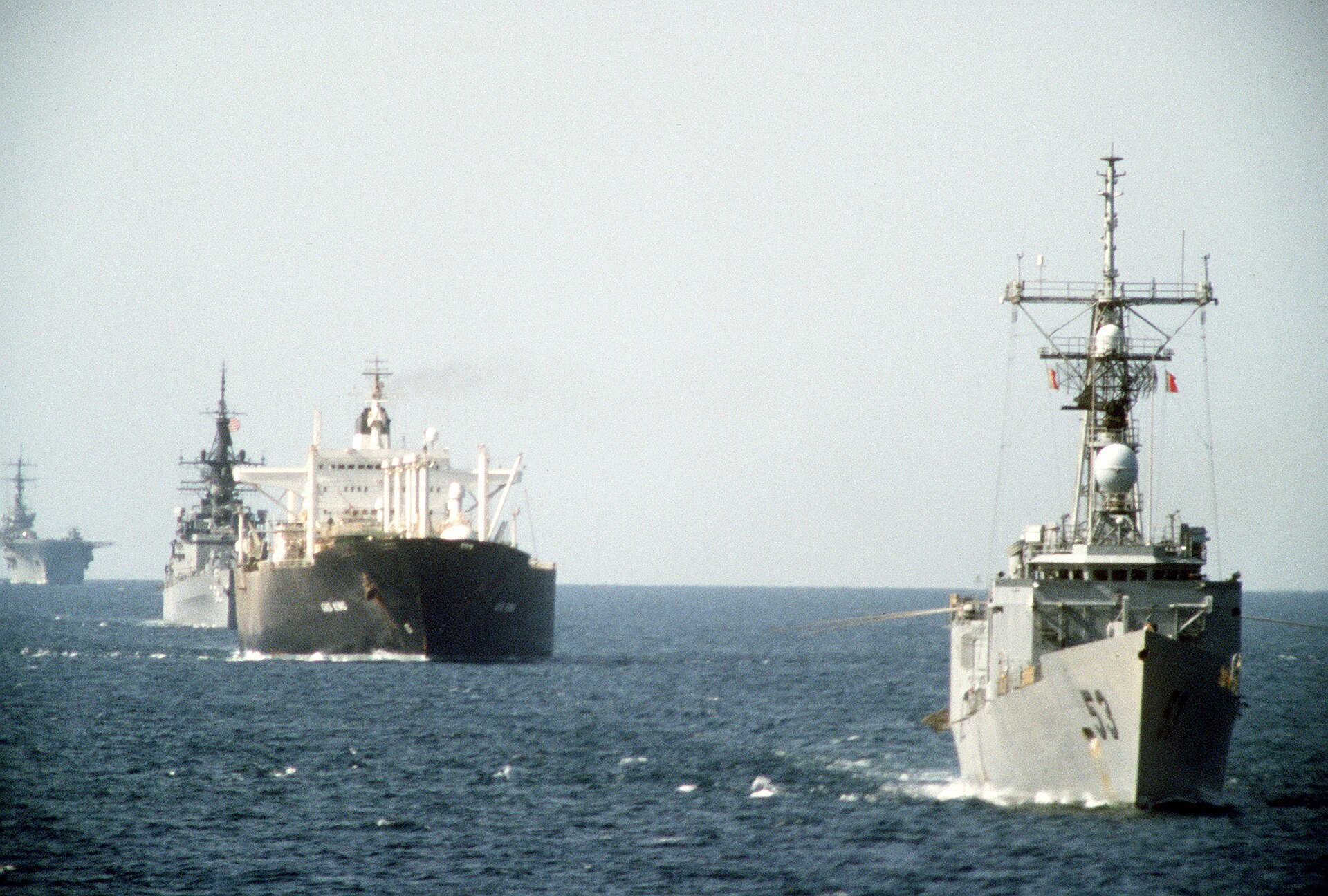
The Persian Gulf Security Authority was established on May 18, 2026 u2014 ten days before the MOU text was agreed, built during the negotiating process, not before it. The PGSA is a hedge institution: if the MOU succeeds, it was a bargaining chip that served its purpose; if the MOU fails, it becomes the permanent Hormuz governance architecture.
n
OFAC first warned on May 1 that payments to the PGSA exposed non-US firms to secondary sanctions risk. By May 27-28, the PGSA was formally designated as a Specially Designated National under counterterrorism authorities, linked to the IRGC. The SDN designation raises compliance costs for any vessel operator whose financial chain touches US-correspondent banking u2014 but it does not automatically terminate PGSA operations. Vessels with no US financial exposure, particularly those settling in Chinese yuan, can continue transiting under PGSA terms.
n
The toll rate u2014 approximately $2 million per transit, with no official published tariff u2014 represents a revenue stream that accrues to the IRGC’s institutional budget with each day the MOU remains unsigned. The MOU’s “unrestricted” language would be the formal termination mechanism for the PGSA toll function, but no transition clause has appeared in public reporting. The gap between SDN designation and MOU signature is a gap in which the PGSA collects revenue, builds institutional capacity, and establishes operational precedents that become harder to reverse with each passing week. On May 29, Chevron CEO Mike Wirth confirmed to Bloomberg Surveillance that there had been unreported kinetic activity at Hormuz this week u2014 the Chevron CEO’s confirmation of unreported Hormuz attacks this week is precisely the category of incident that accumulates in the actuarial record regardless of whether any MOU is signed.
n
The OFAC designation and the MOU were designed to work in sequence: sanctions pressure forces compliance; the MOU provides the off-ramp. Trump’s delay breaks that sequence. The SDN designation is active but the off-ramp is not. Vessel operators face sanctions risk for paying the PGSA but have no alternative governance framework for Hormuz transit. The result is not a blockade u2014 it is a compliance-driven closure that requires no Iranian order to shut the Strait. The morning after the Situation Room produced no decision, Hegseth told reporters at the Shangri-La Dialogue that the naval blockade was “very much still in place” u2014 confirming the MOU’s proportional-lifting mechanism had not been triggered and that the PGSA remained the operative governance reality on the water.
n
n
What Happens to Brent If the MOU Collapses u2014 and What Happens If It Succeeds?
n
Brent closed at $96.57 on May 28. Goldman Sachs has modeled the divergence: sustained Hormuz closure holds Brent above $100; a signed MOU followed by reopening pushes the benchmark toward the $80-90 range. The spread between those scenarios u2014 roughly $10-20 per barrel u2014 is repriced daily in futures markets that have already begun treating the MOU as a probabilistic event rather than a certainty.
n
For Saudi Arabia, both outcomes are painful. The kingdom’s fiscal breakeven u2014 including PIF capital requirements u2014 sits at $108-111 per barrel according to Bloomberg Economics. Brent at $96.57 means the deficit widens regardless of Hormuz status. A successful MOU that pushes Brent toward $80-90 would accelerate the fiscal deterioration. A failed MOU that sustains Brent above $100 keeps the deficit narrower but preserves the PGSA architecture and Saudi Arabia’s structural exclusion from whatever governance replaces it.
n
Saudi Q1 2026 deficit reached SAR 126 billion u2014 194% of the full-year target. Goldman Sachs projects a 6.6% GDP deficit for the full year. A kingdom running a deficit at 194% of plan does not have the fiscal space to subsidize alternative transit routes, absorb PGSA toll costs for its own exports, or finance the kind of naval presence that would give it weight in Hormuz governance. By May 29, Brent’s close at $91.37 had breached the Bloomberg $94 consolidated breakeven for the first time, and the NDMC’s “90% complete” borrowing programme u2014 designed for a $44 billion deficit u2014 now faces an actual shortfall that Goldman estimates at $80u201390 billion: the full mechanics are in Saudi Arabia’s borrowed budget crisis.
n
| Scenario | Brent Range | Saudi Fiscal Gap (vs. $108-111 breakeven) | Hormuz Status |
|---|---|---|---|
| MOU signed, Hormuz reopens | $80-90/bbl (Goldman est.) | -$18 to -$31/bbl | PGSA dissolved; “unrestricted” transit |
| Current (MOU unsigned) | $96-99/bbl | -$9 to -$15/bbl | PGSA active; compliance-driven partial closure |
| MOU collapses, closure sustained | $100+/bbl (Goldman floor) | -$8 to -$11/bbl | PGSA permanent; SDN designation active |
n
n
Saudi Arabia’s Fiscal Position in the Delay Window
n
The delay window u2014 the days or weeks between negotiator agreement and presidential signature u2014 imposes a specific cost structure on Saudi Arabia that differs from the cost of either a signed or collapsed MOU. In this interval, the kingdom faces the full operational cost of the PGSA (transit fees on Saudi-origin crude that must pass through Hormuz), the full fiscal cost of sub-breakeven Brent, and zero influence over the outcome. Saudi Arabia was not party to the negotiations, is not mentioned in the Axios-reported text, and has no mechanism to accelerate or influence Trump’s signing decision. The paradox runs deeper than exclusion: at $91 Brent, Saudi Arabia cannot fiscally afford the deal it is publicly demanding, because the post-deal oil price the kingdom would inherit sits $28–46 below its $108–111 breakeven.
n
The East-West Pipeline (Petroline) carries approximately 5 million barrels per day of theoretical capacity, but Saudi production sits at 7.76 million barrels per day u2014 leaving roughly 2.5 million barrels per day Hormuz-dependent. Those barrels either pay the PGSA toll, risk OFAC secondary sanctions exposure for the receiving refinery, or do not ship. The delay window forces Saudi Aramco and its customers to make daily compliance decisions in an environment where the rules may change within 48 hours or may not change for weeks.
n
On May 30, Hegseth told the Shangri-La Dialogue that the United States wants “partners, not protectorates” and named the Gulf States as model allies. Saudi Arabia, spending 7.1 percent of GDP on defense and absorbing the delay window’s full fiscal cost, has no voice in the MOU negotiations, no seat in the Northwood coalition, and no emergency interceptor waiver. Hegseth’s doctrine named it a model partner while every structural indicator places it outside the architectures that will determine the war’s outcome. Saudi Arabia’s one visible move in the delay window was the May 31 MBS-Macron call, in which Riyadh used French diplomatic infrastructure u2014 the coalition co-lead with a Tehran channel and an $8 billion defense relationship u2014 to carry the Hormuz position Saudi Arabia cannot place in any negotiating room directly.
n
The UK-France 40-nation Hormuz coalition, with 27 signatories as of May 12 and political leadership from Healey and Vautrin, offers a naval alternative to the PGSA u2014 but Saudi Arabia is absent from the Northwood command structure. The PGSA and the coalition represent two competing Hormuz governance frameworks. Saudi Arabia participates in neither. The delay window extends the duration of this dual exclusion without providing any indication of when or whether it will resolve.
n
Saudi MOFA has been silent for more than ten days through this period u2014 through CENTCOM strikes launched from Saudi soil, through the PGSA SDN designation, through the MOU agreement and Trump’s refusal to sign. The ministry’s last public statement on the Iran negotiations was a May 20 endorsement of Trump’s “decision to give diplomacy a chance” u2014 a record analyzed in Saudi Arabia Endorsed Iran Diplomacy Then Went Silent on the War. Saudi Arabia cannot endorse a deal it was excluded from, cannot criticize a deal that might lower oil prices it needs, and cannot pressure an American president whose signature is the only path to dissolving the PGSA. The delay window is the worst of all configurations for a kingdom that needs either clarity or influence and currently has neither. Trump’s Abraham Accords demands add a further layer: the normalization obstacle is dynastic, not diplomatic u2014 MBS privately indicated he would recognize Israel today, but the treaty pen belongs to King Salman under Article 70, a succession dependency that cannot be bridged by any amount of pressure from Washington.
n
The Pezeshkianu2013Mojtaba Circuit and the Signing Authority Gap
n
Even if Trump signs tomorrow, the MOU faces a parallel signing-authority problem on the Iranian side. Mojtaba Khamenei u2014 the Supreme Leader’s son, who communicates by courier from a hidden location u2014 holds effective veto power through the Supreme National Security Council’s Article 176 confirmation requirement. Araghchi can negotiate. Ghalibaf can travel to Doha. Pezeshkian can describe the IRGC’s escalation as “madness.” None of them can bind Iran without Mojtaba’s approval, and Mojtaba has not approved. Saudi Arabia has built bilateral channels to every Iranian official involved in these negotiations except Mojtaba himself u2014 a structural gap that defines why Riyadh cannot reach the one man whose signature the MOU requires.
n
The JCPOA precedent is instructive. Iran’s Supreme National Security Council endorsed the 2015 deal within eight days of its announcement u2014 a pace that reflected Khamenei senior’s willingness to let Zarif deliver. The 2026 MOU has been in substantive negotiation for 44 days with no SNSC endorsement. Twenty-seven hardline MPs have refused to endorse the negotiating team. A parliamentary bill invoking NPT withdrawal passed triple-urgency status before being frozen on February 28. The institutional resistance to any deal that constrains Hormuz authority is deeper and more formally organized than the factional opposition Zarif faced in 2015.
n
Compounding that resistance is a verification gap that the MOU’s drafters have not publicly addressed: the verification gap underlying Trump’s removal demand means the baseline figure anchoring Phase 1 u2014 440.9 kg of 60%-enriched uranium u2014 has not been physically confirmed by any inspector since June 13, 2025.
n
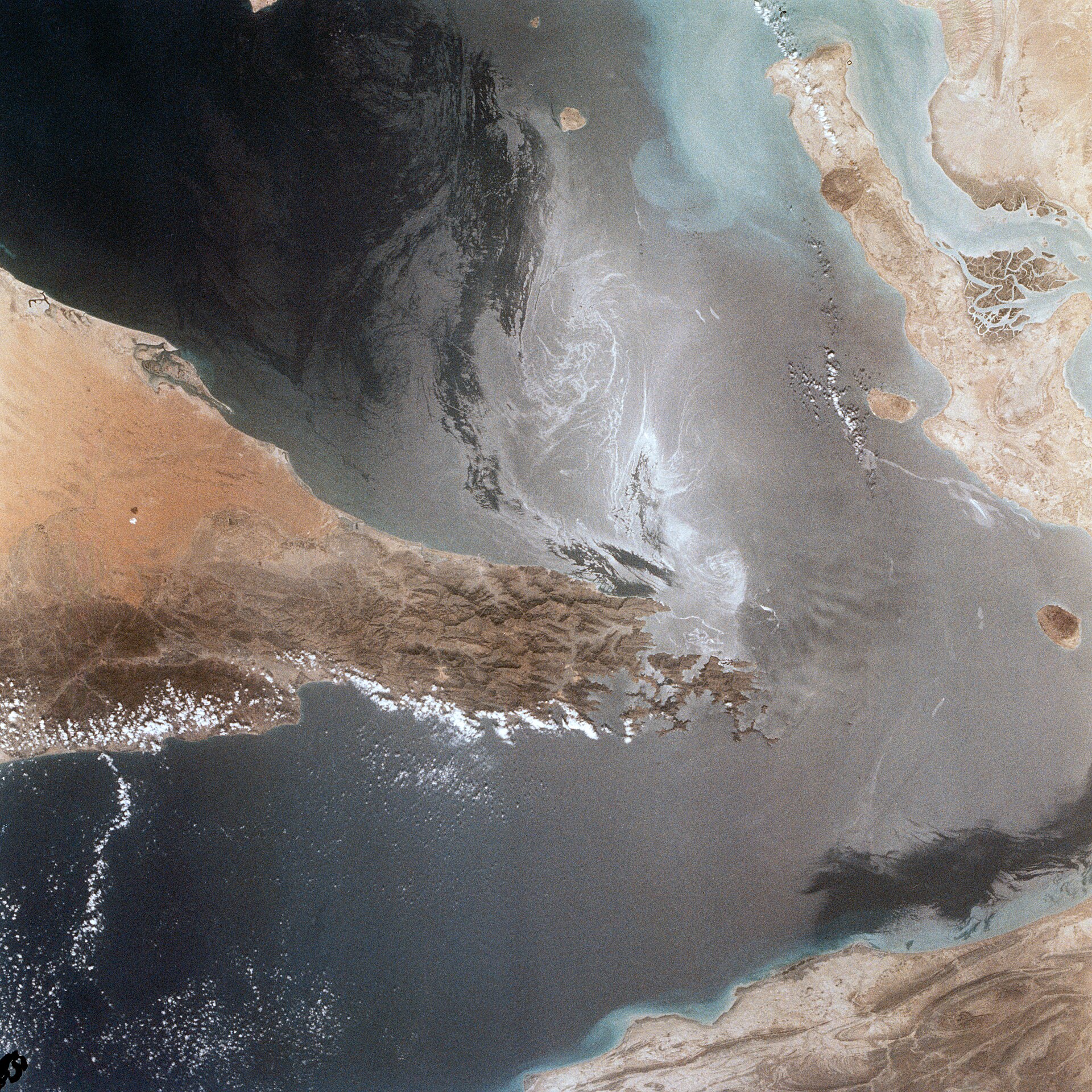
Trump’s delay and Mojtaba’s silence create a double signing-authority gap. The deal is agreed at the negotiator level and unsigned at the decision-maker level on both sides. The IRGC’s kinetic actions near Hormuz u2014 including opening fire on four vessels on May 28, the same day the MOU was reported agreed u2014 are institutional signals from a military establishment demonstrating operational control over the Strait before any civilian text attempts to constrain it.
n
n
The Camp David II precedent from 2000 u2014 the most studied example of the gap between negotiator agreement and leader signature u2014 produced a second intifada. The analogy is imperfect but the structural lesson is precise: the interval between “agreed” and “signed” is not a pause. It is an active period in which opponents of the deal work to make it unsignable. Trump’s “couple of days” and Mojtaba’s courier-speed communications operate on fundamentally different timescales, and neither is synchronized with the IRGC’s operational tempo in the Strait.
n
Velayati u2014 senior advisor to the Supreme Leader, operating above the Foreign Ministry chain u2014 stated on May 28 that “papers and signatures are not guarantees. The objective guarantee for preserving any agreement is the Strait of Hormuz.” The sentence is a constitutional claim: whatever Araghchi signs, the IRGC’s physical control of the waterway is the enforcement mechanism Iran trusts. On May 28, while the MOU sat unsigned, the IRGC opened fire on four vessels near Hormuz.
n
Frequently Asked Questions
n
Has the US-Iran MOU been signed?
n
No. As of May 29, 2026, negotiators from both sides agreed on a 60-day MOU text, but Trump has not signed it. Vance stated on May 28 that the administration was “going back and forth on a couple of language points.” On the Iranian side, the Supreme National Security Council u2014 which requires Mojtaba Khamenei’s confirmation under Article 176 u2014 has not endorsed the draft either. The JCPOA in 2015 received SNSC endorsement within eight days; the 2026 MOU has been in negotiation for 44 days without it. Both signatures are structurally independent u2014 one side signing does not compel the other u2014 meaning the deal requires two separate political decisions that are currently stalled for entirely different reasons.
n
What is the PGSA and why does the SDN designation not shut it down?
n
The Persian Gulf Security Authority was established on May 18, 2026, as an IRGC-linked body that charges vessels transiting the Strait of Hormuz. OFAC designated it as a Specially Designated National on May 27-28 under counterterrorism authorities. However, SDN designations operate through the US financial system u2014 they freeze US-nexus assets and prohibit transactions through US-correspondent banks. Vessels and operators with no US financial exposure, particularly those settling fees in Chinese yuan, can continue paying the PGSA without triggering US sanctions. The designation raises compliance costs but does not physically prevent toll collection. Only the MOU’s “unrestricted passage” clause would formally terminate the PGSA’s toll function, and that clause is unsigned.
n
Could Congress block the MOU even though it is not a treaty?
n
Not directly. The MOU is structured as an executive agreement, avoiding the two-thirds Senate ratification threshold required for treaties. The 60-day timeframe was designed to sidestep the Iran Nuclear Agreement Review Act’s 30-day congressional review window. However, Congress retains indirect power through appropriations riders, sanctions legislation that could contradict MOU terms, and the political pressure visible in the Cruz-Graham-Wicker-Cotton opposition. The 2015 JCPOA survived a congressional disapproval resolution only because Senate Democrats filibustered it 58-42. Republicans currently hold the Senate, and the MOU lacks an equivalent Democratic firewall. The structural vulnerability is identical to what Cotton warned Iran about in his 2015 letter u2014 and Trump proved correct in 2018 when he withdrew from the JCPOA unilaterally.
n
Why is Saudi Arabia silent on the MOU?
n
Saudi MOFA has not issued a public statement for more than ten days u2014 a period spanning CENTCOM strikes launched from Saudi soil, the PGSA SDN designation, and the MOU agreement itself. The silence reflects a structural impossibility: endorsing the deal risks accelerating Brent’s decline toward $80-90 (Goldman’s post-reopening estimate), deepening a deficit already at 194% of target. Opposing the deal risks antagonizing Washington while the Oman compliance channel and the UK-France coalition proceed without Saudi participation. The kingdom was excluded from all five rounds of US-Iran negotiations over 106 days and has no seat in either competing Hormuz governance architecture u2014 the PGSA or the Northwood-based coalition. Silence is the only position that avoids committing to an outcome Saudi Arabia cannot influence.
n
What did Iran’s state TV release and why does the White House call it a fabrication?
n
Iranian state television broadcast what it described as the MOU text on May 28 u2014 the same day Axios reported the deal was agreed but unsigned. The White House responded: “This report from Iranian controlled media is not true and the MOU they ‘released’ is a complete fabrication.” The released text reportedly described Hormuz as remaining “under Iran’s management,” directly contradicting the US characterization of “unrestricted” passage. Whether the Iranian version is a fabrication, an earlier draft, or a parallel text reflecting IRGC input is not publicly verifiable. What is verifiable is the function: releasing a competing version into public circulation before the US president signs creates a domestic baseline in Iran that constrains future concessions. If Iranian media consumers believe the signed text preserves Iranian Hormuz management, any subsequent concession on that point becomes a political liability for Araghchi’s negotiating team. The release is an act of domestic position-building regardless of the text’s authenticity.
n
The toughened MOU text that Trump sent back on May 31 u2014 with Phase 2 nuclear requirements folded into Phase 1 u2014 extends the delay he created in Washington into the 72-hour courier network on the Iranian side. The toughened text making the delay longer: how each new round of US amendments resets the courier clock to the bunker where Mojtaba Khamenei receives paper by motorcycle u2014 and why the IRGC has more time to harden its own draft with each revision cycle.
n”}