
RIYADH — Saudi air defenses intercepted seven Iranian ballistic missiles and ten attack drones over the Riyadh region on the morning of April 5, 2026, in the second deliberate strike on the Saudi capital timed to coincide with a diplomatic gathering in thirty-six hours before President Trump’s ultimatum to Tehran expires. Debris from one interception struck residential homes in Al-Kharj Governorate, injuring two people. There were no fatalities.
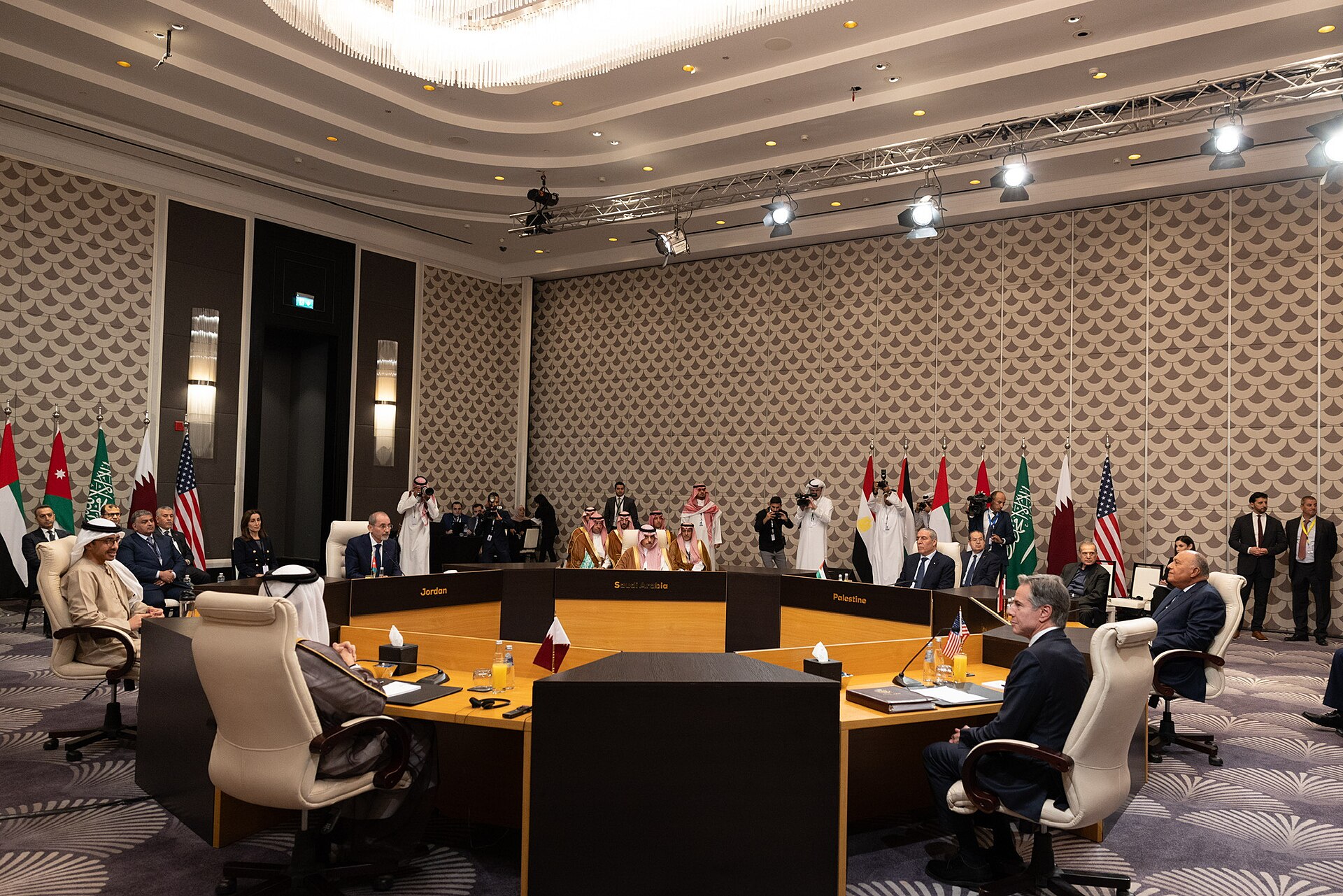
The attack came as foreign ministers of Egypt, Turkey, Pakistan, and Saudi Arabia were convening a back-channel quadrilateral aimed at opening communication with Iran — the same pattern Iran established on March 18, when eight ballistic missiles hit Riyadh during a foreign ministers’ meeting in the capital. One day before the April 5 salvo, Gen. Ali Abdollahi Aliabadi of Iran’s Armed Forces announced that Tehran’s military doctrine had “changed from defensive to offensive.” Iran’s foreign minister, Abbas Araghchi, had declared three days earlier: “At present there is no negotiation.”
Table of Contents
- The Intercept: Seven Missiles, Ten Drones, Two Statements
- Al-Kharj Takes the Debris Again
- Why Does Iran Keep Striking Riyadh During Diplomatic Gatherings?
- The Riyadh Targeting Pattern Since Day One
- Can Saudi Arabia Sustain This Intercept Rate?
- 36 Hours to Trump’s Deadline
- Background: Five Weeks of Iranian Strikes
- Frequently Asked Questions
The Intercept: Seven Missiles, Ten Drones, Two Statements
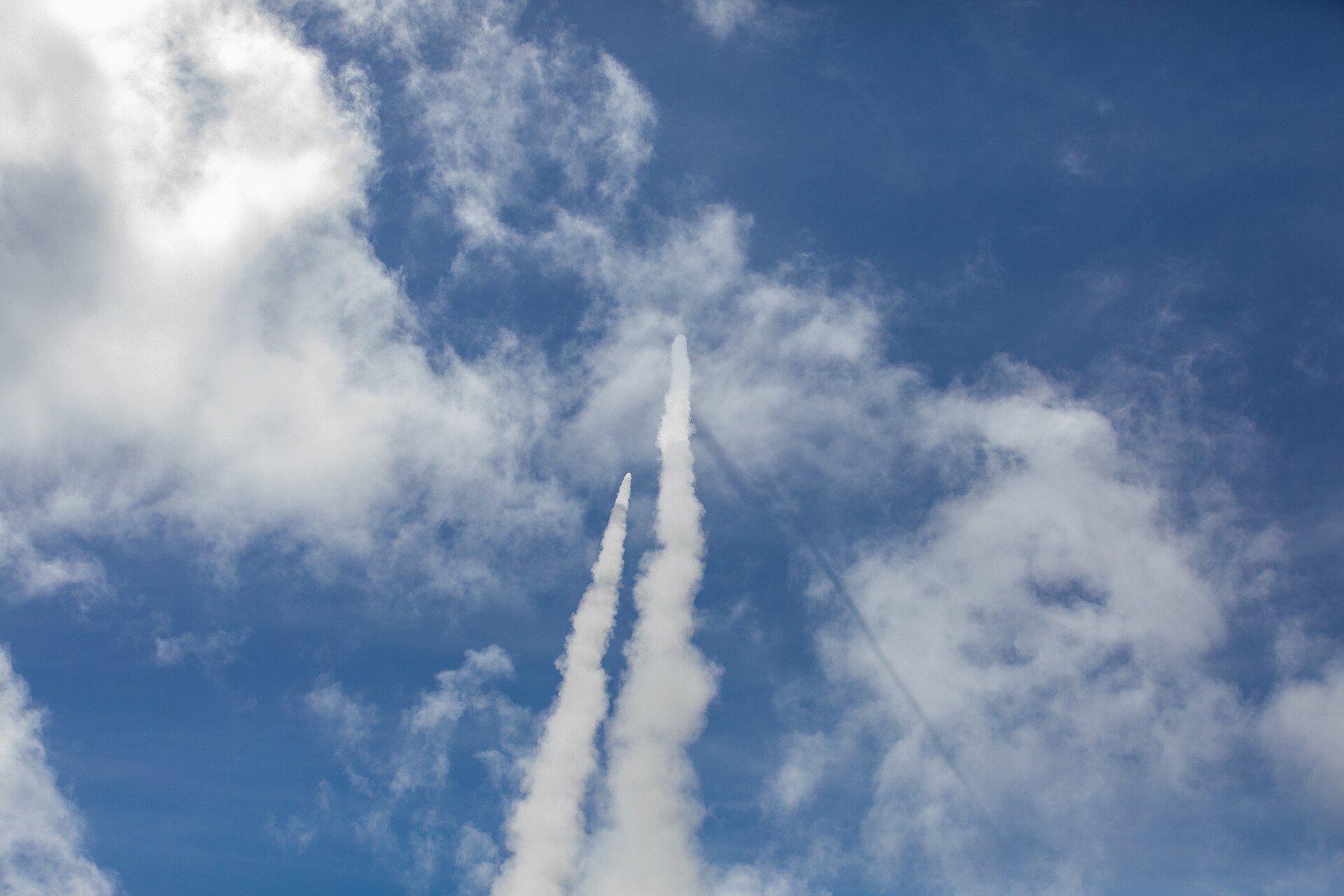
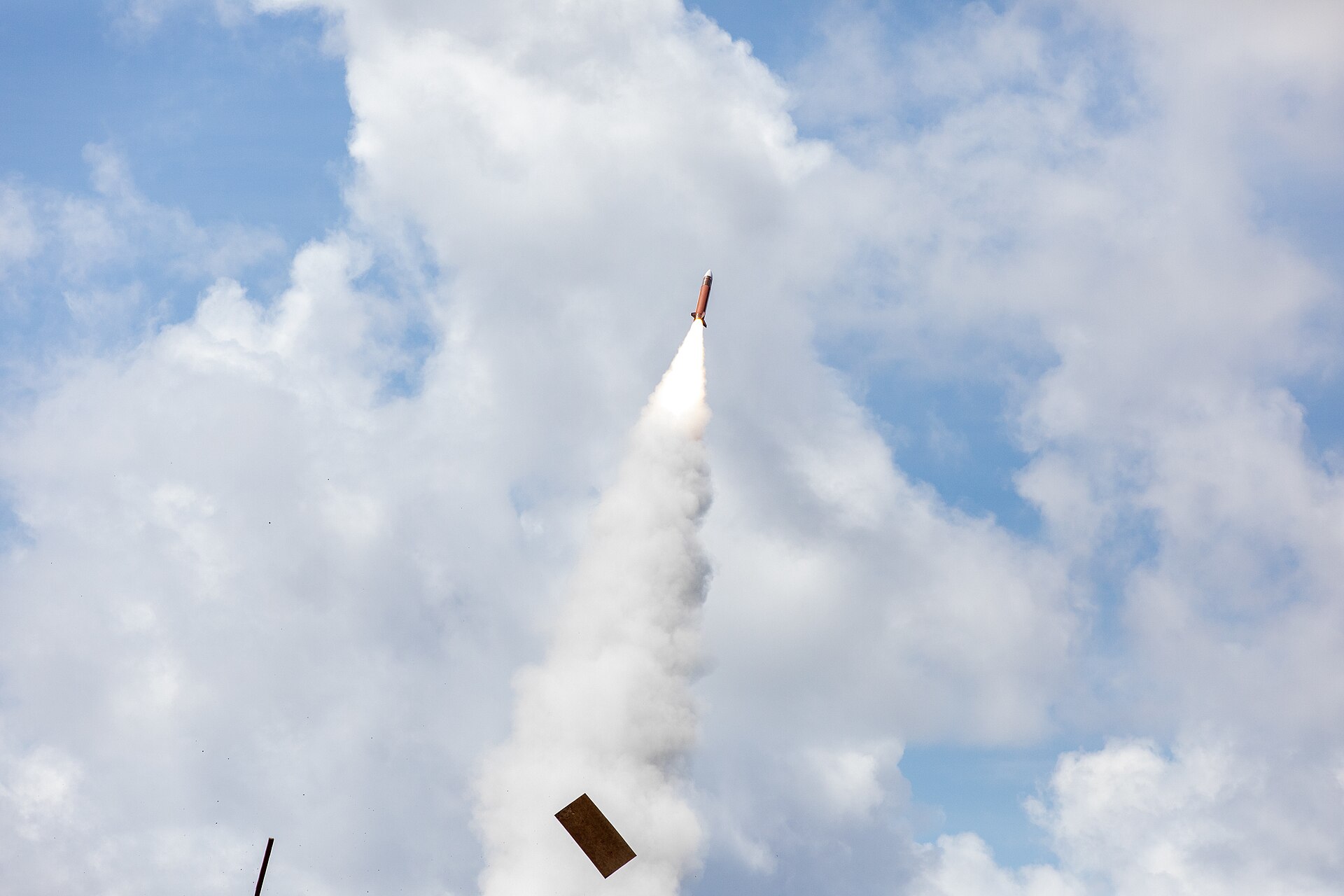
Maj. Gen. Turki Al-Malki, the Saudi Ministry of Defense spokesman, issued two statements in rapid succession on the morning of April 5. The first confirmed that “four ballistic missiles launched toward the Riyadh Region were intercepted and destroyed.” The second, released shortly after, reported “an additional three ballistic missiles,” bringing the total to seven. Ten drones were also destroyed, according to Asharq Al-Awsat, which carried both statements.
The sequential announcement — four, then three — suggests the missiles arrived in at least two waves, a tactic Iran has employed repeatedly since the conflict began on February 28. On March 18, Iran fired eight missiles at Riyadh in two waves of four, according to Reuters. The wave structure is designed to test whether Saudi Patriot batteries can reload and reacquire between salvos.
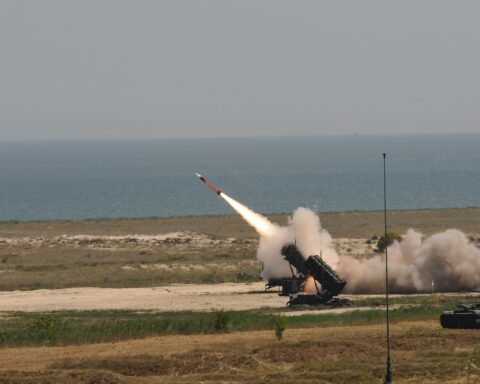
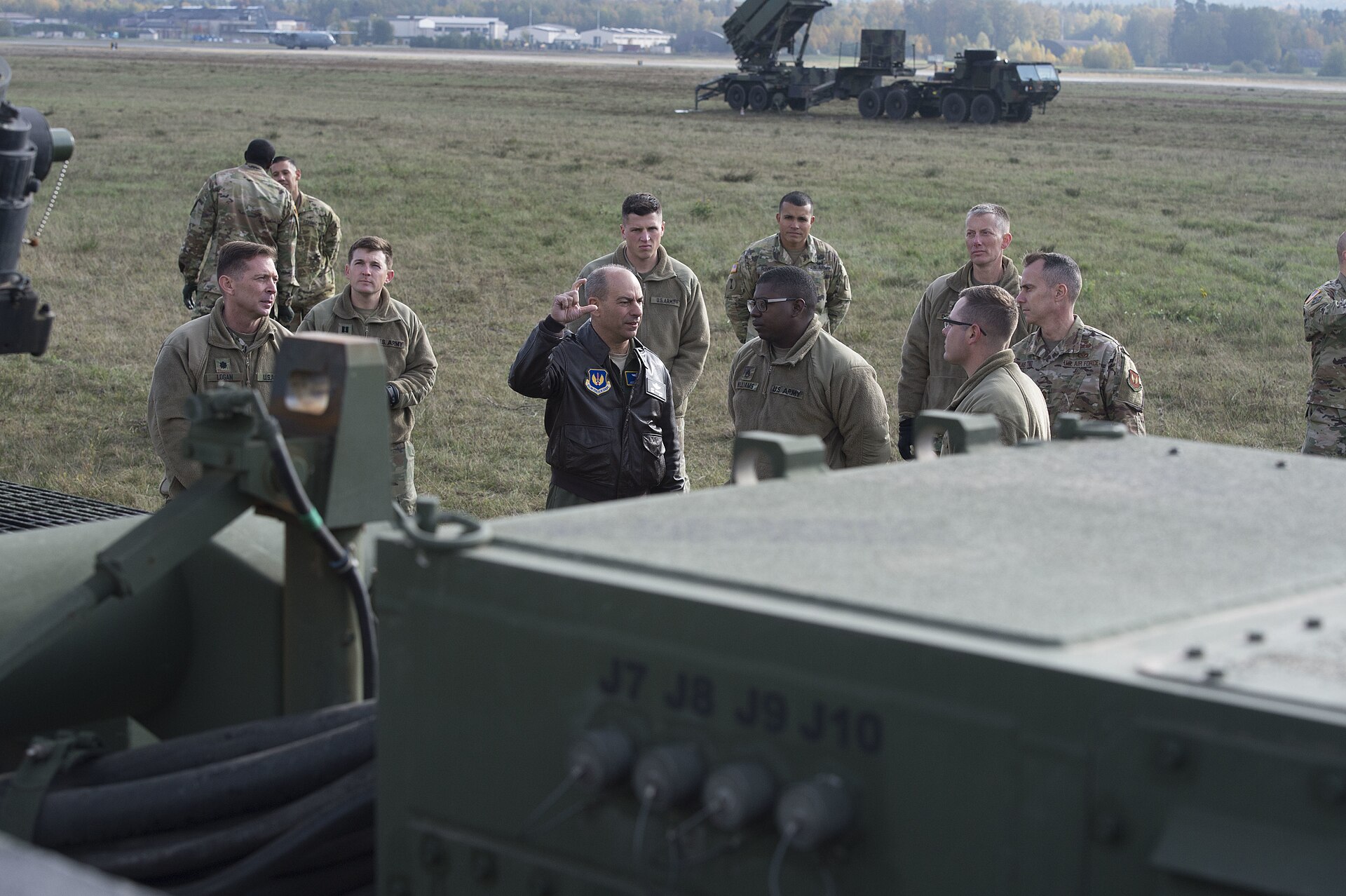
Saudi Patriot batteries have maintained an 85 to 90 percent intercept rate against Iranian ballistic missiles throughout the conflict, a figure derived from official Saudi reporting. The April 5 result — seven for seven — sits at the top of that range. Whether the intercepts were achieved by Saudi-operated PAC-3 batteries alone or with support from Greek-operated Patriot units now deployed in the Kingdom has not been disclosed.
Al-Kharj Takes the Debris Again
Debris from one interception fell on residential homes in Al-Kharj Governorate, approximately 77 kilometers south of central Riyadh. Saudi Civil Defense responded. Two people sustained minor injuries, according to Saudi Gazette. No fatalities were reported.
The Middle East briefing 3,000+ readers start their day with.
One email. Every weekday morning. Free.
Al-Kharj has become a recurring impact zone — not because Iran is targeting it directly, but because the geometry of ballistic missile defense means interceptors engage incoming warheads along the threat axis, and debris falls beyond the defended area. As House of Saud reported previously, Iran has effectively turned Saudi Arabia’s own air defense shield into a secondary weapon: every successful intercept produces debris that falls somewhere, and Al-Kharj’s position south of Riyadh places it under the footprint.
On March 18, the first Riyadh salvo produced debris that injured four Asian workers, also in areas south of the capital. The pattern is consistent. Successful defense does not mean zero consequences on the ground.
Why Does Iran Keep Striking Riyadh During Diplomatic Gatherings?
The March 18 salvo arrived while foreign ministers were meeting in Riyadh. The April 5 salvo arrived as Egypt, Turkey, Pakistan, and Saudi Arabia attempted to organize a back-channel to Tehran. The coincidence has occurred twice in eighteen days. It is not a coincidence.
Iran’s target selection throughout this war has followed a discernible logic. Approximately 70 percent of all Saudi-reported intercepts have targeted the Eastern Province or specific oil facilities, according to CSIS analysis from March 20. Strikes on Riyadh — the political capital, not the energy heartland — are a smaller share of the total, but they have escalated at moments of diplomatic activity. The message is aimed not at refineries but at the seat of governance.
Hamidreza Azizi, an Iran analyst at Carnegie, has described Iran’s approach as a doctrine of “punishment, through the actual use of missiles and drones and the targeting of critical infrastructure, to raise the cost of not only the current war but also any future attacks.” The Riyadh strikes extend this doctrine from the economic to the political: the target is the capital’s sense of security, the ability to host diplomacy under normal conditions.
The IRGC has not claimed responsibility for the April 5 attack specifically. This follows a pattern. Iran claims strikes on military installations — Prince Sultan Air Base, US personnel sites — while maintaining ambiguity about salvos directed at the capital itself. After the US Embassy strike on February 28, which destroyed three floors including what multiple reports identified as a CIA station, the IRGC issued a statement claiming “this incident has absolutely no connection to the Armed Forces of the Islamic Republic of Iran” and blamed Israel. The statement added: “The target list of the Armed Forces of the Islamic Republic of Iran has been clearly defined in advance.”
The deniability is strategic. By officially framing Riyadh strikes as aimed at US military targets within the capital, Iran gives itself room to deny targeting Saudi governance directly — even as missiles arrive during Saudi-hosted diplomatic sessions.
The Riyadh Targeting Pattern Since Day One
Iran struck Riyadh from the first hours of the conflict. On February 28, missiles hit King Fahd Air Base, King Salman Headquarters, and the US Embassy compound. The embassy fire burned for half a day, according to Al Jazeera.
| Date | Missiles at Riyadh | Intercepted | Casualties | Context |
|---|---|---|---|---|
| Feb. 28 | Multiple (count unclear) | Partial | US Embassy fire; CIA station destroyed | War opens — first day of strikes |
| Mar. 18 | 8 (two waves of 4) | All reported intercepted | 4 workers injured (debris) | Foreign ministers’ meeting in Riyadh |
| Mar. 27 | 6 | 2 intercepted; 4 fell in Gulf/desert | 29 US servicemen wounded (PSAB) | Prince Sultan Air Base targeted |
| Mar. 31 | 4 | All intercepted | None reported | 02:10 local time |
| Apr. 5 | 7 (+ 10 drones) | All intercepted | 2 minor injuries (debris, Al-Kharj) | Quadrilateral back-channel convening |
The table reveals an escalation in frequency. Four Riyadh-directed ballistic salvos in the eighteen days between March 18 and April 5 — compared to what appears to have been one confirmed strike in the first seventeen days. The Foundation for Defense of Democracies documented approximately 90 incidents in the March 28 to April 1 window alone, noting “greater accuracy, repeatedly hitting airports, energy infrastructure, ports, and telecommunications hubs.” Riyadh is part of that accuracy surge.
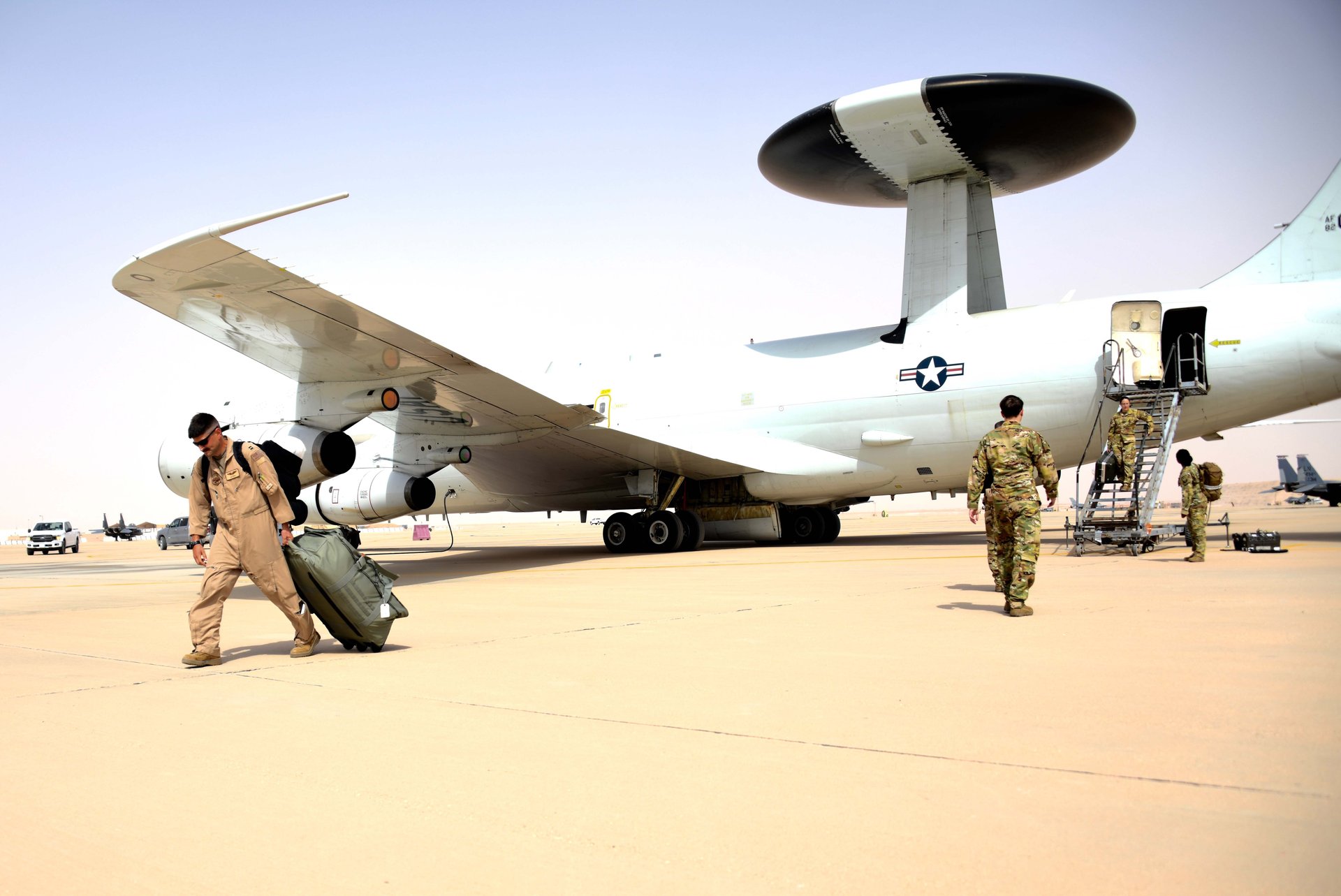
The March 27 strike on Prince Sultan Air Base — located near Al-Kharj, in the greater Riyadh region — was the most consequential. At least one E-3 Sentry AWACS aircraft was destroyed and 29 US servicemen were wounded, according to Anadolu Agency. That strike targeted US military assets explicitly. The April 5 strike, by contrast, was directed at the Riyadh urban area, a different kind of signal.
Can Saudi Arabia Sustain This Intercept Rate?
Every successful intercept consumes ammunition that is expensive, finite, and slow to replace. A single PAC-3 MSE interceptor costs approximately $4.2 million, according to Defense Express and DSCA data. An Iranian attack drone costs roughly $35,000 — a ratio of approximately 120 to 1.
The United States approved the sale of 730 PAC-3 MSE interceptors to Saudi Arabia on January 30, 2026, in a $9 billion package announced through the Defense Security Cooperation Agency. House of Saud analysis estimated that 300 to 450 interceptors were consumed in the first eleven days of the conflict alone.
Michael Ratney, a senior adviser at CSIS, has described the asymmetry directly: Iran uses “cheap yet accurate weapons that are both difficult and expensive to counter,” giving Iran “escalation dominance.” Ratney warned that Saudi economic transformation “still largely depends” on protecting energy infrastructure from this kind of sustained campaign.
Azizi, the Carnegie analyst, framed the logic from Tehran’s perspective: Iran is “trying to sustain pressure over time — militarily, politically, and economically — in order to alter the adversary’s cost-benefit calculation.” The April 5 attack was seventeen projectiles. At 85 to 90 percent intercept rates, those seventeen projectiles may have consumed ten to fourteen PAC-3 interceptors — somewhere between $42 million and $59 million in a single morning.
“The lesson of this war is that dialogue on its own is not enough if it is not backed by credible deterrence, stronger air and missile defense, and clearer consequences for attacks on civilian and economic infrastructure.”
Abdulaziz Sager, Gulf Research Center, in the Christian Science Monitor, April 1, 2026
Mona Yacoubian, CSIS’s director of the Middle East Program, has characterized Iran’s campaign as “an extortion scheme on a grand scale” targeting “the post-oil economic model that the Gulf states have spent a decade building.” The interceptor math is part of that scheme. Iran does not need to penetrate Saudi defenses consistently. It needs to make defense more expensive than the damage it is trying to prevent.
36 Hours to Trump’s Deadline
The April 5 salvo lands within a specific countdown. On April 4, President Trump issued a 48-hour ultimatum: Iran must reopen the Strait of Hormuz or face strikes on its power grid and desalination infrastructure, according to the Washington Times and CBS News. That deadline expires at approximately 8 PM Eastern time on April 6.
As House of Saud reported on the Saudi decision window, the deadline creates a three-way pressure point. Saudi Arabia must calibrate its response to the Riyadh strike while the Trump administration is deciding whether to escalate against Iran directly. The quadrilateral back-channel — the same one Iran disrupted with the April 5 missiles — was an attempt to create diplomatic space before the deadline arrives.
Iran’s response to the deadline has been consistent. Araghchi’s “at present there is no negotiation” statement on April 2 was followed by Gen. Aliabadi’s doctrine-shift announcement on April 4 and the seven-missile salvo on April 5. Tehran appears to be answering the deadline through battlefield action rather than diplomatic channels.
Mohammed Alhamed, a Saudi geopolitical analyst, told the Christian Science Monitor: “Iran fighting Saudi Arabia does [threaten global energy markets]. Everyone should pray that Saudi Arabia does not join the war.” The statement, made April 1, preceded the doctrine shift and the latest salvo by four days. The question of Saudi restraint — how long Riyadh absorbs strikes on its capital without a direct military response — is now measured in hours rather than weeks.
Background: Five Weeks of Iranian Strikes
The conflict began on February 28, 2026, when Iran launched the first coordinated missile and drone strikes against Saudi Arabia and US military installations in the Gulf. In the thirty-six days since, Iran has fired approximately 750 missiles and drones at targets across Saudi Arabia, the UAE, Kuwait, and Bahrain, according to the Christian Science Monitor.
The campaign has hit oil infrastructure, military bases, commercial buildings, and telecommunications hubs. Iran struck the Oracle Building in Dubai and the Habshan gas plant on April 4, crossing what House of Saud described as the GCC commercial targeting threshold. The IRGC struck a container ship at Bahrain’s port, extending the war into harbor infrastructure. PressTV has claimed that Iran’s Fattah-2 hypersonic missile — with a range of 1,500 kilometers and a terminal speed of Mach 13 to 15 — is “nearly impossible to intercept,” though Saudi intercept rates have not yet confirmed that assessment.
Iran’s Sejjil-2 solid-fueled medium-range ballistic missile, with a range of 2,000 to 2,500 kilometers and speeds exceeding 17,000 kilometers per hour, has been among the weapons used against Riyadh. The solid-fuel design allows launches within minutes, reducing the warning time available to Saudi and allied air defense crews, according to Interesting Engineering.
The involvement of NATO member states in Saudi air defense — Greece operating Patriot batteries, with reports of broader alliance support — has added a layer of complexity. The war is being fought above Saudi cities by a multinational defense network that does not formally exist under any alliance framework.
Frequently Asked Questions
What types of Iranian missiles have been used against Riyadh specifically?
Iran has deployed multiple missile types against the Riyadh region. The Sejjil-2, a solid-fueled medium-range ballistic missile with a range of 2,000 to 2,500 kilometers, has been confirmed in use. Iran has also claimed operational deployment of the Fattah-2, a hypersonic missile with terminal speeds of Mach 13 to 15, though independent confirmation of its use against Riyadh specifically is limited. The April 5 attack also included ten drones — likely Shahed-series one-way attack munitions — suggesting Iran is combining missile and drone waves to saturate defenses.
How does the April 5 attack compare in scale to other strikes during this conflict?
The April 5 salvo of seven missiles and ten drones directed at Riyadh was mid-range by the standards of this war. Iran fired a record 79-projectile barrage at the UAE on April 4, and the cumulative total through late March was 439 drones and at least 36 ballistic missiles, according to Arab News tallies at that time. The Riyadh-directed strikes have been smaller than Eastern Province salvos but are increasing in frequency — four confirmed Riyadh attacks in eighteen days between March 18 and April 5.
What air defense systems protect Riyadh?
Riyadh is defended by a layered system that includes Patriot PAC-3 batteries (both Saudi-operated and, reportedly, Greek-operated units), the Terminal High Altitude Area Defense system (THAAD) operated by US forces, and shorter-range point-defense systems. Saudi Arabia also operates Shahine and Crotale systems for lower-tier threats. The Kingdom has been pursuing domestic and bilateral air defense development outside the US supply chain, as House of Saud has previously reported.
Has Saudi Arabia retaliated militarily against Iran?
Saudi Arabia has not conducted direct offensive strikes against Iranian territory as of April 5. The Kingdom has participated in defensive operations and has supported the US-led coalition, but Riyadh has maintained a posture of absorbing strikes while pursuing diplomatic alternatives. The quadrilateral back-channel convening on April 5 — disrupted by the morning salvo — was the most recent example of that posture. Whether it survives the Trump deadline and the escalating strike frequency is the central question of the next 36 hours.
What happens if PAC-3 interceptor stockpiles run out before resupply arrives?
The $9 billion DSCA-approved sale of 730 PAC-3 MSE interceptors was announced on January 30, 2026, but this was a future contracted sale — production and delivery timelines for Patriot interceptors typically run 18 to 36 months from contract to delivery. Lockheed Martin produces PAC-3 MSE interceptors at its facility in Camden, Arkansas, at a rate that defense analysts estimate at approximately 500 per year across all customers globally. If consumption rates from the first eleven days of war (300 to 450 interceptors) are sustained, existing stockpiles face depletion well before new production can deliver. The gap would need to be filled by transfers from US military stocks or allied inventories — a decision with its own political and strategic costs. That calculus has already started producing refusals: Poland’s refusal to transfer Patriot batteries to the Gulf, announced publicly by Warsaw’s defense minister on March 31, closed one of the few ready NATO transfer routes available.
The April 5 salvo over Riyadh proved to be a precursor. On April 6, Iran escalated to the April 6 GCC-wide barrage — simultaneous strikes against Saudi Arabia, Kuwait, and the UAE in a single operational window, totaling more than 130 intercepted objects, as PAC-3 stocks fell to 14 percent of pre-war levels.
Saudi Arabia’s Ministry of Defense released a cumulative accounting on April 7: Saudi Arabia’s PAC-3 MSE stockpile has fallen 86 percent since March 3, with 894 total threats intercepted — 799 drones, 86 ballistic missiles, and 9 cruise missiles — at a rate that leaves roughly two to three weeks of PAC-3 coverage remaining.