
RIYADH — On April 2, 2026, Saudi Foreign Minister Prince Faisal bin Farhan held telephone calls with Russia’s Sergey Lavrov, China’s Wang Yi, and Japan’s Motegi Toshimitsu — all on the same day. Crown Prince Mohammed bin Salman separately spoke with Vladimir Putin. No major outlet has treated these four conversations as what they plainly were: a single, coordinated diplomatic operation executed in a 24-hour window, four days before President Trump’s April 6 deadline for Iran to reopen the Strait of Hormuz.
Each call was reported in isolation — by the Russian MFA, by Xinhua, by Japan’s MOFA, by Qatar News Agency. Analyzed together, they reveal a deliberate sequence in which Riyadh established visible contact with Washington’s three principal strategic competitors on the eve of the most consequential US military deadline since the 2003 Iraq invasion. The simultaneity was the message. Every readout was designed to be read — by foreign ministries, by traders, and above all by the White House.
Table of Contents
- Four Calls, One Day
- What Each Call Was Calibrated to Say
- Why Did Riyadh Contact All Three on the Same Day?
- Who Benefits from the Iran War and Who Needs It to End?
- Hedging as Theatre
- How Does the China-Pakistan Five-Point Plan Serve Saudi Interests?
- Japan, the Forgotten Stakeholder
- What Did Washington See on April 2?
- The Rehearsal from Ukraine to Iran
- Frequently Asked Questions
Four Calls, One Day
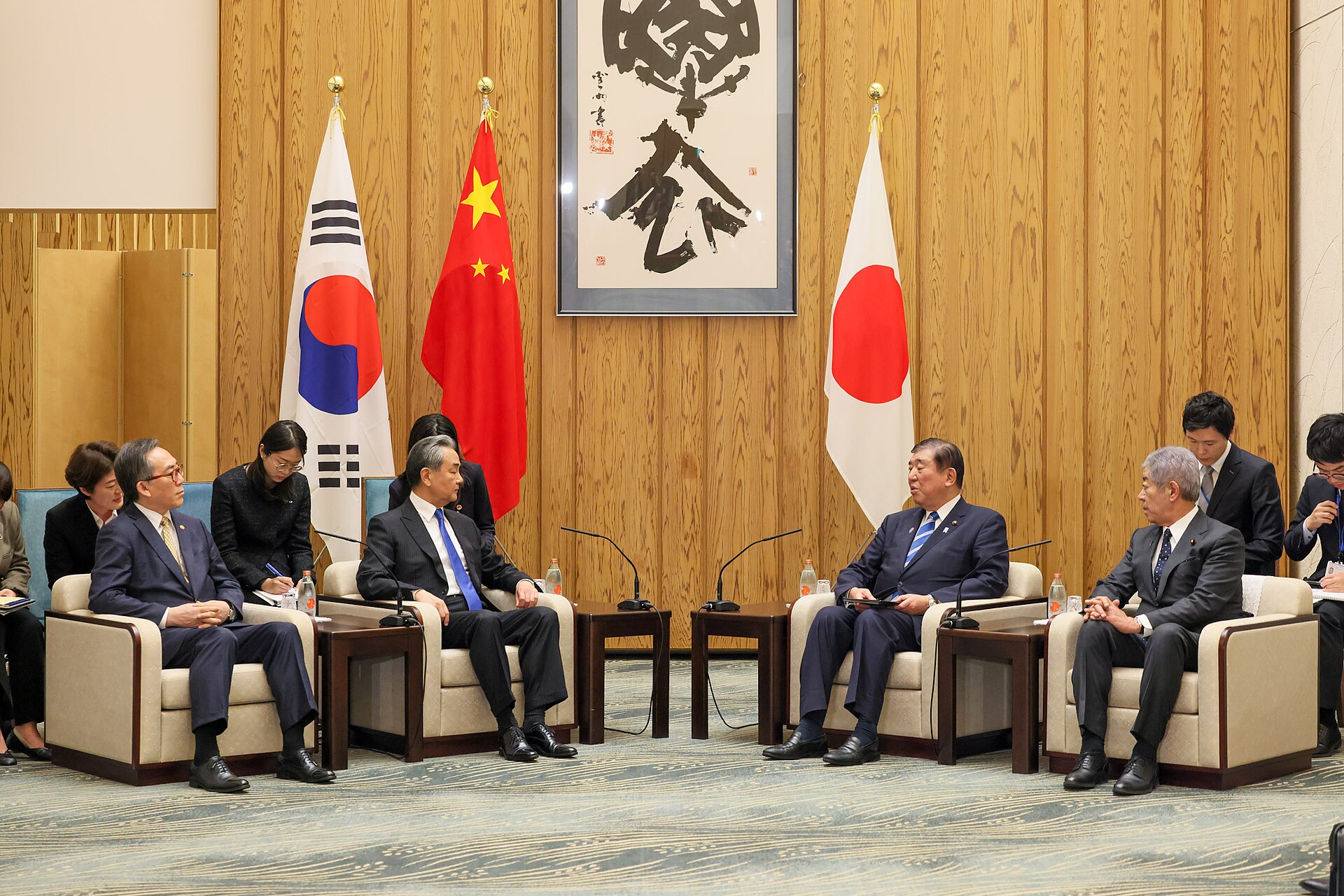
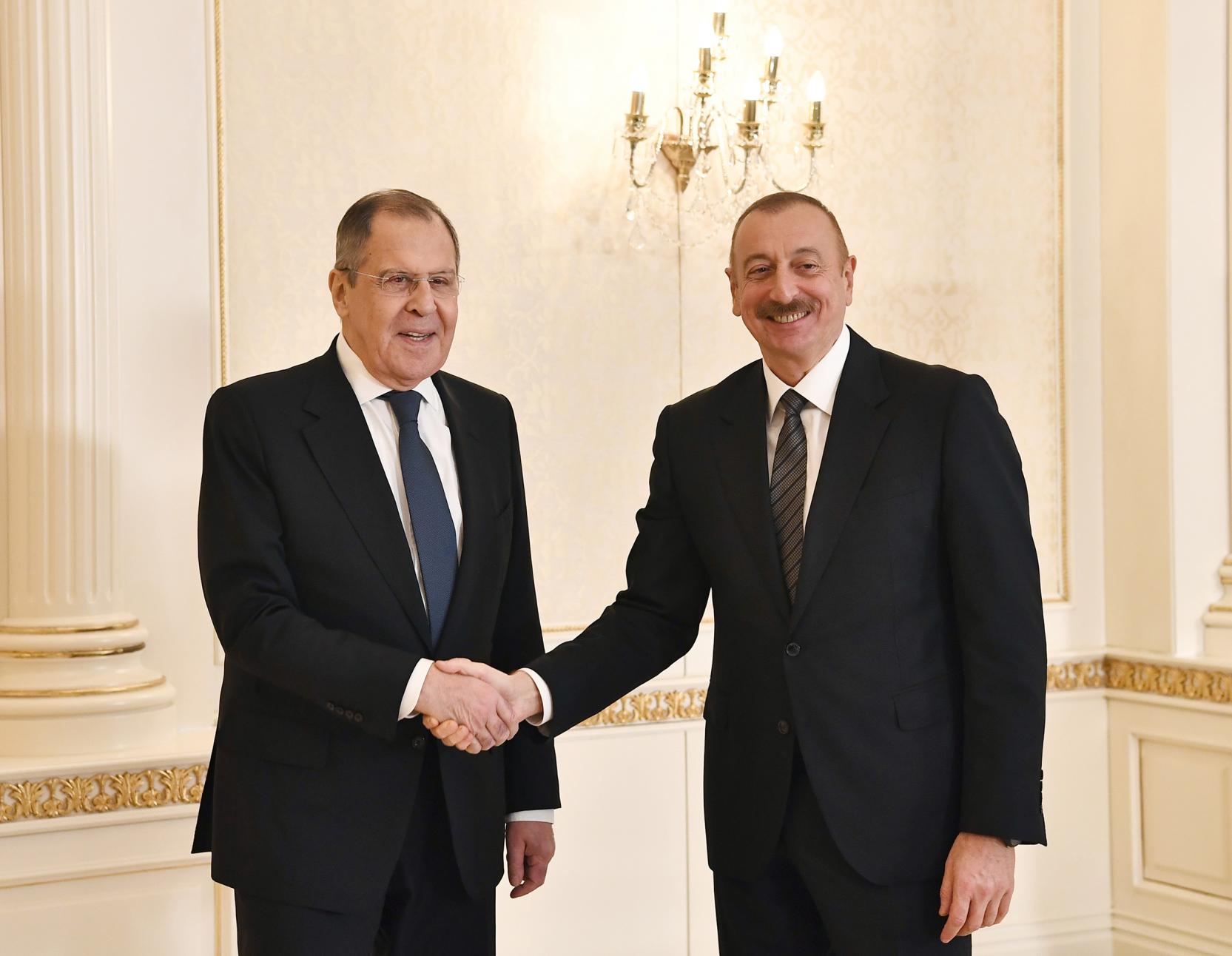
The sequence on April 2 was as follows. Prince Faisal spoke with Lavrov. Both expressed, in the Russian MFA’s language, “serious concern over the continuing deterioration of the military and political situation in the Persian Gulf region” and “reaffirmed the need to step up political and diplomatic efforts to find a peaceful resolution to the violent crisis in the Middle East, based on international law.” They also expressed “a firm commitment to maintaining close foreign policy coordination between Moscow and Riyadh, particularly at the United Nations.” The Russian readout noted that 2026 marks the centenary of diplomatic relations between the two countries — a detail that performs the function of normalizing elevated contact frequency.
On the same day, Putin and MBS held a separate call. The Kremlin readout covered conflict resolution, OPEC+ coordination, and bilateral relations. Both leaders expressed “satisfaction with the high level of Russian-Saudi cooperation.” The energy market — and specifically “the importance of joint efforts by OPEC Plus countries” — was foregrounded. This dual-track pattern, head of state plus foreign minister on the same day, replicated the format of the March 2 calls, when Lavrov and Faisal also spoke on the same day that Putin and MBS spoke.
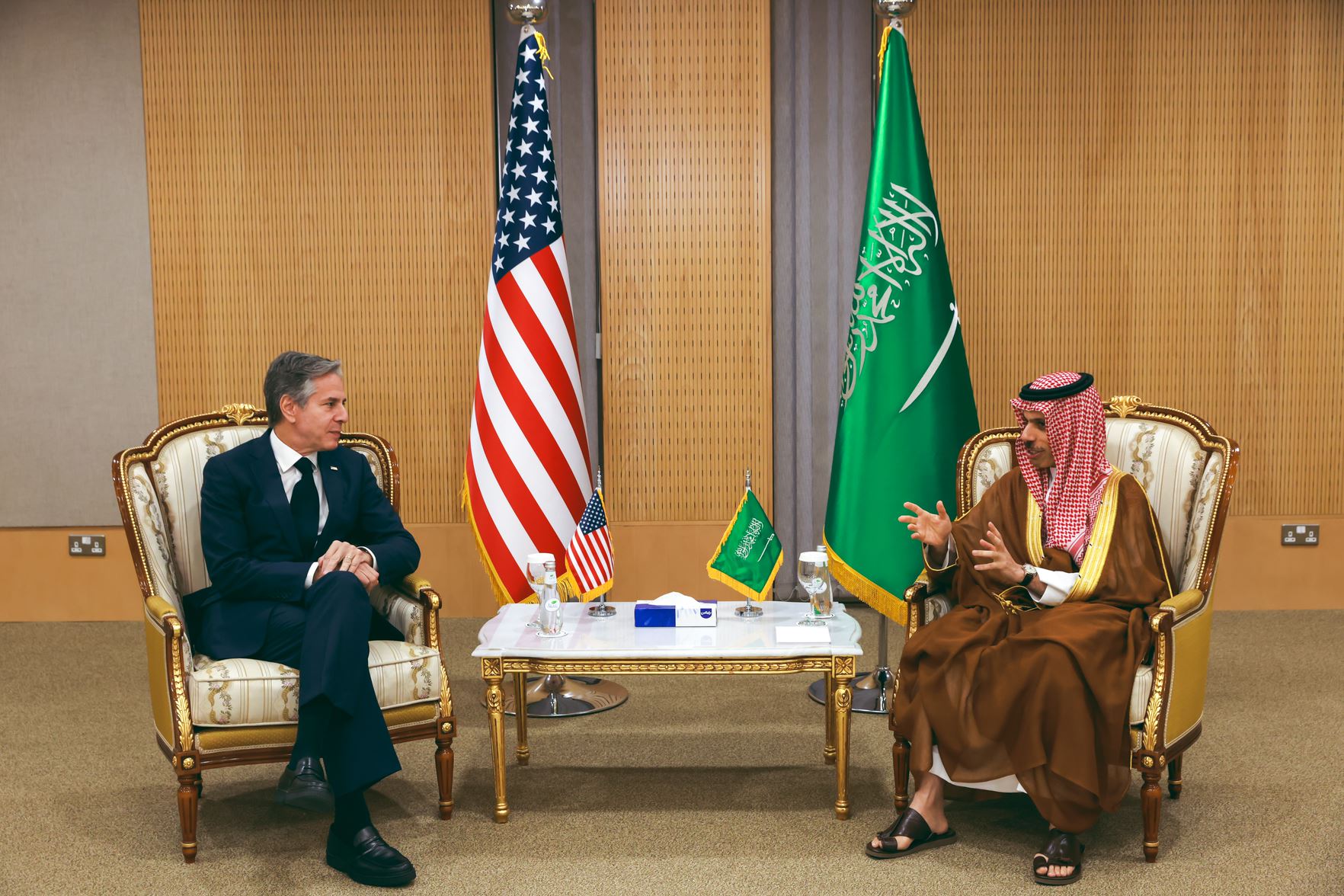
Prince Faisal then spoke with Wang Yi. The Chinese foreign minister told Faisal that “halting the fighting was the most urgent matter” and that “the issue of navigation through the Strait of Hormuz is a spillover effect of the current conflicts.” Wang used the call to present the China-Pakistan joint five-point initiative for restoring peace and stability in the Gulf. He warned against UN Security Council actions that could “escalate confrontations” or “legitimize unauthorized military operations.” Xinhua and Global Times reported that Faisal “briefed Wang on the latest developments of the Middle East situation” — casting Saudi Arabia in a receptive rather than initiating role.
Finally, Motegi Toshimitsu called Faisal for a 20-minute conversation beginning at 6:50 p.m. Japan time. Motegi “expressed his sympathy over the expanding damage in Saudi Arabia caused by Iranian attacks,” praised Faisal’s “personal efforts toward a diplomatic resolution through mediation,” and expressed “his appreciation for Saudi Arabia’s utmost efforts to ensure energy supply to the market, despite the de facto closure of the Strait of Hormuz.” Both ministers “shared the importance of ensuring the safety of navigation in the Strait of Hormuz and the Bab el-Mandeb Strait.” Japan’s MOFA simultaneously convened an “Online Meeting of Foreign Ministers on the Strait of Hormuz” with European counterparts, signaling “readiness to contribute” to keeping the strait open.
The Middle East briefing 3,000+ readers start their day with.
One email. Every weekday morning. Free.
What Each Call Was Calibrated to Say
The calls were not interchangeable. Each was tailored to the receiving party’s primary exposure to the Iran war, and each readout was written for a different audience. The structural differences are worth laying out.
| Call | Partner’s Core Interest | Key Language in Readout | Intended Signal |
|---|---|---|---|
| Lavrov-Faisal + Putin-MBS | OPEC+ cohesion, UN coordination, bilateral anniversary | “Joint efforts by OPEC Plus countries”; “close foreign policy coordination at the United Nations” | Energy partnership intact; Russia’s UN veto relevant |
| Wang Yi-Faisal | Hormuz navigation, peace architecture, UNSC positioning | “Spillover effect of the current conflicts”; “should not legitimize unauthorized military operations” | China’s peace plan received; UNSC alternative to US-led action |
| Motegi-Faisal | Crude supply security, Hormuz + Bab el-Mandeb freedom of navigation | “Utmost efforts to ensure energy supply”; “safety of navigation in the Strait of Hormuz and the Bab el-Mandeb Strait” | Saudi Arabia as reliable supplier despite war damage |
Russia received reassurance about OPEC+ solidarity and a platform for its preferred UN-centric framing. China received a venue to promote its five-point peace plan and language opposing Security Council authorization of military action — a direct counter to the US-UK draft resolution circulating that week. Japan received explicit gratitude and a commitment to supply continuity — language Tokyo could present to its own public as evidence that the lifeline remained open.
None of the three calls contained identical language. None of the three readouts addressed the same primary concern. The calibration was precise enough to suggest advance preparation, not improvisation.
Why Did Riyadh Contact All Three on the Same Day?
Riyadh executed the calls on April 2 because the April 6 deadline made the window calculable. By generating simultaneous readouts from Moscow, Beijing, and Tokyo four days before Washington’s ultimatum expired, Saudi Arabia created a visible diplomatic record — proof of independent channels — precisely when the White House was making its final escalation decisions.
On April 2, the Trump administration had not yet issued its formal 48-hour ultimatum to Iran — that came on April 4 — but the April 6 deadline was already public. Saudi Arabia was operating inside what this publication has called a 36-hour decision window: the period in which Riyadh needed to clarify, to itself and to every relevant capital, what its position would be if Washington escalated.
Michael Ratney, former US Ambassador to Saudi Arabia and now Senior Adviser at CSIS, has argued that Riyadh fears escalation would invite devastating Iranian retaliation against energy infrastructure, has not explicitly committed to military action, and seeks US clarity rather than abandonment.
The April 2 calls converted that private calculus into a public signal. By placing three calls to three different great-power counterparts — and ensuring that each counterpart’s official media apparatus would publish a readout within hours — Riyadh established, on the record, that it had functioning channels to every capital capable of complicating a US-led escalation. The message to Washington was embedded in the fact of the calls, not in anything said during them: Saudi Arabia has options, and it is willing to be seen exercising them.
The calls were also embedded within a broader 48-hour diplomatic sprint. On April 1, Prince Faisal spoke with Kuwait’s foreign minister. On April 2, Saudi Arabia joined an eight-country joint foreign minister statement — with Turkey, Egypt, Indonesia, Jordan, Pakistan, Qatar, and the UAE — condemning Israeli actions. The great-power calls were threaded into a larger fabric of activity, making them appear routine rather than orchestrated. That appearance of routine was itself part of the design.
Who Benefits from the Iran War and Who Needs It to End?
Among Saudi Arabia’s April 2 interlocutors, Russia alone benefits from the war’s continuation: higher oil prices and constrained Gulf supply translate directly into Moscow’s budget revenues. China and Japan are economically harmed by supply disruption. Saudi Arabia itself is harmed but partially insulated by the East-West pipeline routing exports through Yanbu rather than the Strait of Hormuz.
That partial insulation has fed a harder Saudi war calculus than Riyadh’s public statements acknowledge. The New York Times confirmed in early April that MBS privately urged Trump to deploy US ground forces into Iran to seize its energy infrastructure — framing the air campaign as a “historic opportunity” for regime change. The April 2 great-power outreach should be read against that backdrop: Riyadh was simultaneously lobbying Washington for escalation and hedging against its consequences by cultivating Russia, China, and Japan.
In the first 15 days of March 2026, Moscow earned approximately EUR 372 million per day from oil exports — roughly 14 percent above February averages. Carnegie Endowment projects that Russia could receive between USD 45 billion and USD 151 billion in additional budget revenues in 2026, depending on the war’s duration. The crisis has also strengthened Russia’s bargaining position with China and India, both of which have increased purchases of Russian crude as Gulf supply tightened. Carnegie’s assessment is blunt: “Moscow is likely to become a key beneficiary of these changes.”
China’s exposure runs in the opposite direction. Beijing imported 78.639 million tons of Saudi crude in 2024, and Saudi Arabia remains its largest Gulf trading partner. The de facto Hormuz closure has disrupted Chinese supply chains and contributed to Brent crude reaching USD 112 per barrel by April 3 — an approximately 80 percent year-to-date gain. China’s interest in ending the war is economic, immediate, and measurable.
Japan’s exposure is existential. Its crude dependency on the Middle East — and on Saudi Arabia specifically — makes the Hormuz closure an economic emergency of a different order from anything Tokyo has faced in the postwar period. Motegi’s April 2 call, with its emphasis on both Hormuz and Bab el-Mandeb, reflected the fact that Japan’s LNG routes run through both chokepoints.
| Country | Primary Exposure | Key Data Point | Net Position |
|---|---|---|---|
| Russia | Oil export windfall | EUR 372M/day in March 2026 oil exports (+14% vs. Feb.) | Beneficiary |
| China | Supply chain disruption, crude imports | 78.639M tons Saudi crude imported in 2024 | Harmed |
| Japan | Energy supply dependency | 94% of crude from Middle East; 39% from Saudi Arabia | Existentially harmed |
| Saudi Arabia | Infrastructure damage, export disruption | 7M bbl/day via East-West pipeline to Yanbu (bypassing Hormuz) | Harmed but partially hedged |
The Putin-MBS call’s emphasis on OPEC+ coordination papers over this tension. Russia profits from the war that is destroying Saudi energy infrastructure. Saudi Arabia’s East-West pipeline, delivering 7 million barrels per day to Yanbu, provides partial insulation from the Hormuz closure — but the pipeline’s existence does not restore the roughly 8 million barrels per day of global supply lost since hostilities began, a figure representing approximately 8 percent of world demand. Russia and Saudi Arabia are OPEC+ partners whose material interests, in the specific context of this war, diverge sharply.
Hedging as Theatre
The standard frame for Saudi multi-alignment is “hedging” — maintaining relationships with multiple great powers to reduce dependence on any one. Chatham House, in a March 2025 assessment, described Saudi Arabia and Turkey as states that “continue to seek close relations with the US but also are committed to securing their freedom of manoeuvre — in part, by diversifying their foreign policy through partnerships with China and Russia.” Saudi Arabia’s goals, Chatham House concluded, “rest on managing multipolarity.”
What happened on April 2 was something more specific. Hedging as a private strategy requires no public demonstration. You hedge by signing defense agreements quietly, by joining a CBDC trial that receives limited press coverage — as Saudi Arabia did when it entered China’s mBridge central bank digital currency pilot in June 2024 — or by negotiating a defense deal with Ukraine that serves as a quiet counterweight to Washington. These are structural hedges. They accumulate weight without announcing it.
The April 2 calls were the opposite: hedging performed as theatre, with Washington in the audience. Three readouts, published within hours, each from a capital that occupies a different position in Washington’s threat matrix. Moscow, which the US considers its primary geopolitical adversary. Beijing, which the US considers its primary long-term strategic competitor. Tokyo, Washington’s most important ally in the Indo-Pacific — included not as a competitor but as a witness, a responsible power whose presence in the sequence lent the entire exercise an air of multilateral seriousness rather than defiance.
Saudi Arabia will have to live in the region and with its neighbors, long after President Trump has declared ‘mission accomplished.’
— Michael Ratney, Senior Adviser, Middle East Program, CSIS; former US Ambassador to Saudi Arabia
The Peterson Institute for International Economics has argued that both Russia and China are “winning the war in Iran” — Russia through its energy windfall, China through its positioning as an alternative peacemaker while the US appears “uninterested” in diplomacy. Riyadh’s April 2 choreography placed Saudi Arabia visibly alongside both of these winners, at the precise moment when Washington was preparing to issue its ultimatum. The Major Non-NATO Ally designation Trump had granted Saudi Arabia weeks earlier was not repudiated — it was contextualised.
How Does the China-Pakistan Five-Point Plan Serve Saudi Interests?
Saudi Arabia does not need the China-Pakistan plan to succeed. It needs the plan to exist. A visible Chinese peace initiative — regardless of its content — creates a diplomatic alternative that Riyadh can gesture toward when pressed by Washington to choose between escalation and acquiescence. It provides cover for the position Saudi Arabia actually holds: that the war should end through negotiation, that the Strait of Hormuz should reopen, and that Saudi territory should not become a staging ground for American strikes on Iran.
Wang Yi used the April 2 call to present the China-Pakistan five-point initiative for Gulf peace and stability. A former senior US diplomat, quoted by AP, described the plan as “performative” and compared it to China’s 2023 twelve-point Ukraine proposal — “filled with platitudes but never acted on.” The comparison is accurate on its own terms and irrelevant to why the plan matters in Riyadh.
Beijing’s framing of the call reinforced this utility. Chinese state media cast Saudi Arabia as the party that “briefed Wang on the latest developments” — positioning Riyadh as a supportive partner rather than a supplicant. For Riyadh, this framing is acceptable precisely because it preserves Saudi agency. Saudi Arabia is not adopting the Chinese plan; it is receiving it, publicly, at a moment when the act of reception sends its own message.
Wang’s warning against Security Council actions that could “legitimize unauthorized military operations” aligned with Saudi Arabia’s own reluctance to see UN authorization for expanded US strikes. The subsequent collapse of Pakistan-led mediation efforts only increased the value of maintaining this Chinese diplomatic track — not as a pathway to peace, but as proof that pathways beyond Washington’s exist.
Japan, the Forgotten Stakeholder
The Motegi-Faisal call has received the least analytical attention of the three, and it may have been the most operationally consequential. Japan’s 94 percent dependence on Middle Eastern crude and 39 percent dependence on Saudi crude specifically make the Iran war an energy emergency without parallel in Tokyo’s postwar experience. The March 11 release of 80 million barrels from strategic reserves — 45 days of supply — was a crisis measure, not a policy choice.
Motegi’s language was specific where the others were diplomatic. He expressed “sympathy over the expanding damage in Saudi Arabia caused by Iranian attacks” — an explicit acknowledgment of Saudi Arabia as a victim of Iranian aggression, language neither Moscow nor Beijing employed. He praised Faisal’s “personal efforts toward a diplomatic resolution through mediation” — conferring individual credit in a way that Japanese diplomatic protocol reserves for genuine recognition. And he expressed appreciation for Saudi Arabia’s “utmost efforts to ensure energy supply to the market, despite the de facto closure of the Strait of Hormuz.”
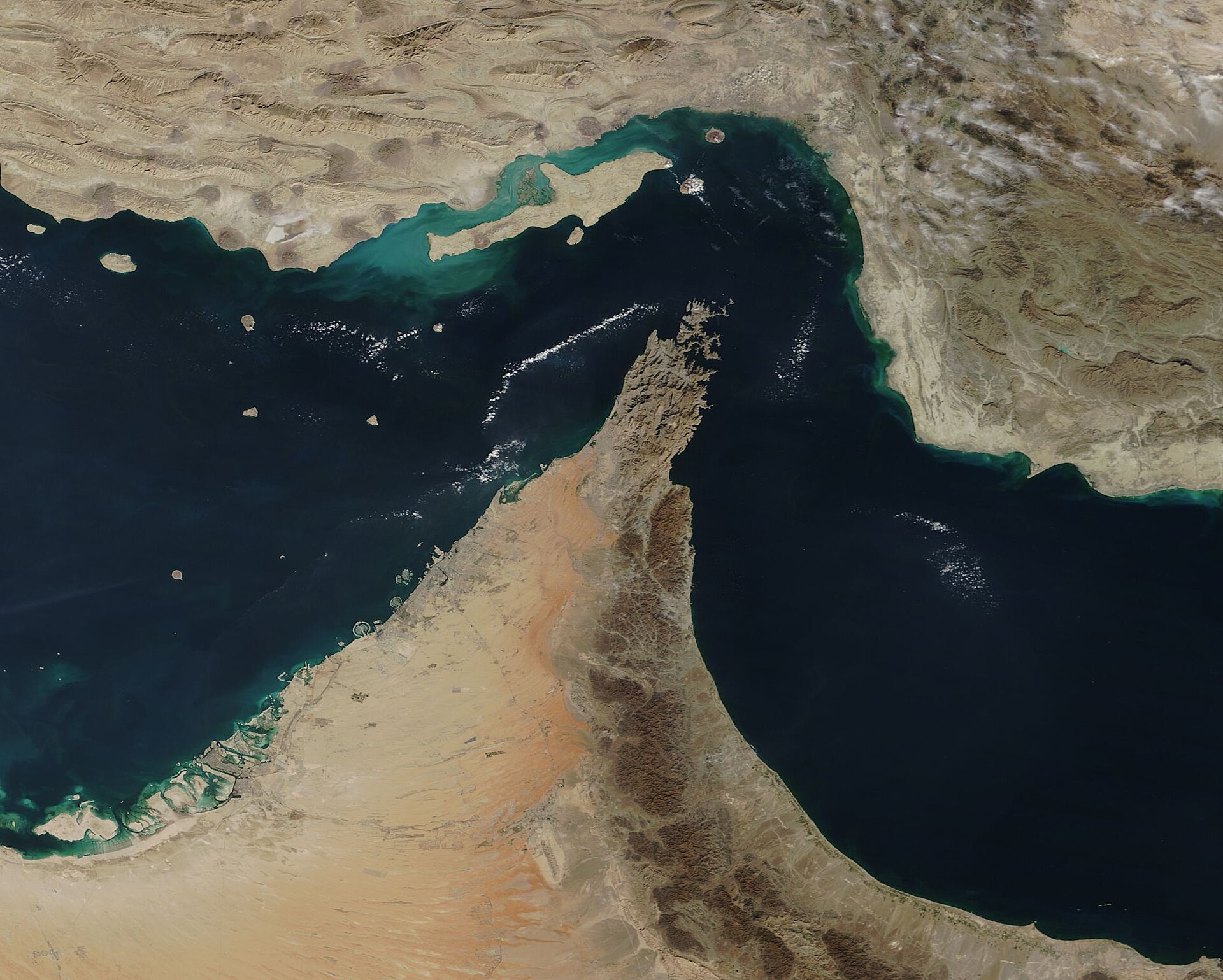
That final phrase — “despite the de facto closure of the Strait of Hormuz” — was the most direct public acknowledgment by a major economy’s foreign minister that Hormuz was effectively shut. It was also, implicitly, an acknowledgment of the East-West pipeline’s role: if Saudi Arabia was still supplying the market “despite” the closure, the supply was flowing through Yanbu, not through the Gulf.
Japan’s simultaneous convening of the “Online Meeting of Foreign Ministers on the Strait of Hormuz” — with European participation — revealed a second function of the Motegi-Faisal call. Tokyo was building its own coalition around Hormuz freedom of navigation, and the bilateral call with Riyadh established Saudi Arabia as a willing participant in that effort. European leaders were already queuing at Saudi Arabia’s door; Japan’s inclusion in the April 2 sequence broadened the queue to the Pacific.
What Did Washington See on April 2?
The question is not whether the White House noticed the calls — readouts from the Russian MFA, Xinhua, and Japan’s MOFA are monitored in real time by the State Department’s Operations Center. The question is what the calls communicated in aggregate.
First, they communicated that Riyadh had independent diplomatic channels to every power that could complicate a US-led escalation. Russia holds a Security Council veto. China holds a second veto and a competing peace plan. Japan, as an American ally, could publicly express reservations about escalation without being dismissed as an adversary.
Second, they communicated that Saudi Arabia’s pre-war guarantee to Iran — the January 28 assurance from MBS to Iranian President Pezeshkian that Saudi territory and airspace would not be used for attacks — remained the operative framework. None of the April 2 readouts contained language suggesting Saudi Arabia was moving toward a more permissive posture on US basing or overflight.
Third, they communicated sequencing. By executing the calls four days before the April 6 deadline, Riyadh ensured that the readouts would circulate through Washington’s policy apparatus during the 72 hours when the administration was making its final decisions. The eventual shelving of the Hormuz ultimatum cannot be attributed to the April 2 calls alone — the rescue of a downed American weapons systems officer reshaped the narrative — but the calls established the diplomatic terrain on which the ultimatum would have had to operate.
Chatham House’s assessment of MBS applies directly here: “MBS clearly sees an opportunity to use crisis diplomacy to rid himself of reputational stains, and by demonstrating his utility to President Trump, MBS hopes that Saudi Arabia can become a trusted interlocutor for the U.S.” The April 2 calls were consistent with this reading — but with an addendum. The utility MBS was demonstrating was not obedience. It was optionality.
The Rehearsal from Ukraine to Iran
Saudi Arabia’s April 2 great-power choreography did not emerge from a vacuum. It was prefigured by Riyadh’s role as host and facilitator for the US-Russia Ukraine talks in February 2025, when Secretary of State Rubio called Saudi Arabia’s contribution “indispensable.” That earlier episode established MBS as a figure capable of convening adversaries — a role that converts geographic position and resource wealth into diplomatic currency.
The deeper precedent is the March 2023 Beijing-brokered Saudi-Iran rapprochement. Carnegie Endowment concluded that the agreement’s driving force was Saudi Arabia’s “loss of confidence in any US commitment to shared regional security concerns” — a loss of confidence dating to the 2019 Abqaiq attack, which struck the heart of Saudi oil production and elicited no American military response. The 2023 deal demonstrated that Riyadh was willing to conduct consequential diplomacy through Beijing when Washington’s attention was elsewhere.
The April 2 calls were a wartime application of this same doctrine: not a single bet on one alternative partner, but a simultaneous demonstration of relationships with all of them. The 2023 Beijing deal was bilateral. The February 2025 Riyadh talks were trilateral. The April 2 sequence was omnidirectional — four calls to four capitals representing four different structural positions in the global order, all within 24 hours, all generating their own public readouts.
The progression reveals a Saudi diplomatic apparatus that has become increasingly confident in managing multiple great-power relationships simultaneously. Whether that confidence is warranted — whether Riyadh can sustain the posture of equidistance when the war demands choices — is a question the April 6 deadline was designed to force. That the deadline was subsequently shelved may have temporarily relieved the pressure. It did not resolve the underlying tension.
Frequently Asked Questions
Did Saudi Arabia initiate all four April 2 calls, or were some incoming?
The readouts do not specify who initiated each call, and diplomatic protocol typically obscures this. The Japan MOFA readout provides the most operational detail — noting the call began at 6:50 p.m. Japan time and lasted 20 minutes — but does not name the initiating party. The Russian MFA readout uses reciprocal language (“the sides discussed”), while the Chinese readout frames Saudi Arabia as briefing Wang Yi, which could suggest a Saudi-initiated call. What matters analytically is not who dialed whom but that all four calls were scheduled, staffed with talking points, and followed by coordinated readout publication within the same 24-hour cycle — a pattern consistent with advance planning by at least one party, most likely Riyadh’s MFA given that Prince Faisal was the common participant in all three FM-level calls.
Has Saudi Arabia conducted a similar multi-capital diplomatic blitz before?
The closest precedent is the 48-hour period surrounding the March 2 calls, when Faisal spoke with Lavrov and MBS spoke with Putin on the same day — but that was limited to Russia. The April 2 sequence expanded the pattern to three great-power counterparts simultaneously. During the 2019 Abqaiq crisis, Saudi diplomatic outreach was primarily channeled through Washington and the UN; the absence of a comparable multi-vector response in 2019 reflects how substantially Riyadh’s diplomatic toolkit has expanded since the 2023 Beijing-brokered rapprochement with Iran. Saudi Arabia’s hosting of the February 2025 Ukraine talks served as a trial run for managing multiple great-power relationships under pressure, though in a facilitation rather than principal role.
How does the April 2 diplomatic sequence affect OPEC+ decision-making?
The Putin-MBS call explicitly addressed OPEC+ coordination, with the Kremlin readout noting “the importance of joint efforts by OPEC Plus countries” on energy market stabilization. However, Russia’s and Saudi Arabia’s OPEC+ interests have diverged sharply since the war began — Moscow profits from the high-price, constrained-supply environment created by the war, while Saudi Arabia’s export infrastructure has sustained Iranian missile damage. The April 5 OPEC+ meeting — three days after the calls — was the immediate decision point. Saudi Arabia entered that meeting having publicly demonstrated alignment with Russia while privately holding a contradictory position: Riyadh needs lower prices and restored supply to protect downstream relationships with Japan and China, while Russia profits from the status quo.
What role does the mBridge CBDC trial play in Saudi-Chinese economic integration?
Saudi Arabia joined China’s mBridge central bank digital currency pilot in June 2024, a move that received limited Western press coverage but represented a structural step toward yuan-denominated oil pricing. The mBridge platform, coordinated by the Bank for International Settlements Innovation Hub with central banks from China, the UAE, Thailand, and Hong Kong, enables cross-border payments without routing through the US dollar-based SWIFT system. In the context of the April 2 calls, the mBridge participation provides economic infrastructure beneath the diplomatic signals: Saudi Arabia is not merely talking to Beijing but building payment rails that could, over time, reduce the dollar’s role in the Kingdom’s largest bilateral trade relationship. Alternative settlement mechanisms for even a fraction of Saudi Arabia’s crude exports to China — its single largest trading partner — would represent a measurable shift in petrochemical currency flows.
Did the April 2 calls produce any concrete agreements or joint statements?
No. None of the four calls resulted in a joint communique, signed agreement, or binding commitment. The Russia-Saudi calls produced language about “maintaining close foreign policy coordination” and OPEC+ cooperation. The China call produced Saudi reception of the five-point peace plan without an endorsement. The Japan call produced shared language on Hormuz and Bab el-Mandeb navigation safety without a joint mechanism. The absence of concrete outcomes is consistent with the calls’ actual function: they were designed to generate visible diplomatic contact, not to negotiate specific deliverables. The readouts were the product. Prince Faisal’s role in orchestrating that great-power signalling directly supported the Islamabad back-channel running in parallel — a track that came closer to producing a Vance-Iran meeting than was publicly known, as the account of two aborted Vance flights and Saudi Arabia’s structural mediation role makes clear. The same Islamabad presence that anchored the great-power signalling also produced a formal outcome: Riyadh left the March 29 quadrilateral as a named co-guarantor of the ceasefire framework — a designation carrying contradictions that are the subject of the analysis of Saudi Arabia’s ceasefire co-guarantor role.