
RIYADH — President Donald Trump on Saturday shelved his April 6 ultimatum to reopen the Strait of Hormuz after Iran confirmed it had received a US proposal transmitted through Pakistani intermediaries, the third postponement of a deadline that Washington first set on March 22 and has never enforced. Hours earlier, US Special Operations forces extracted a downed F-15E weapons systems officer from inside Iranian territory — a rescue Trump called “one of the most daring Search and Rescue Operations in U.S. History” — giving the White House a domestic victory to pair with the diplomatic climbdown.
The stand-down leaves Saudi Arabia in a worse position than a clear confrontation would have. Iran’s Hormuz toll law, which has passed the Majlis and awaits Guardian Council review, remains operative. Tehran has been collecting approximately $2 million per vessel — payable in yuan or cryptocurrency — since mid-March, before any formal enactment. No international legal body has challenged the regime, and the OPEC+ decision hours earlier to triple its planned May output increase to 411,000 barrels per day now reads less as market management than as hedging against indefinite disruption.
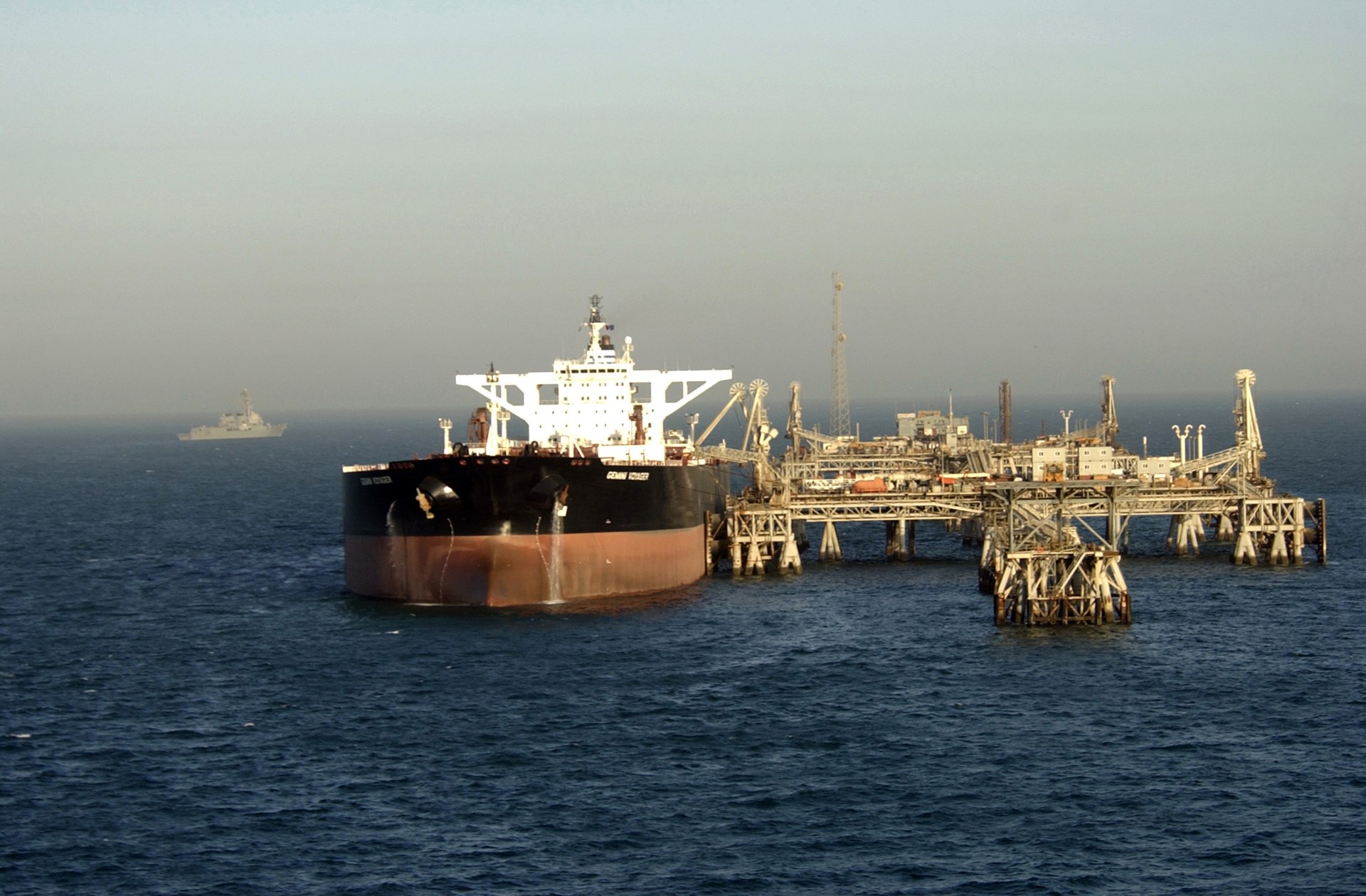
Table of Contents
The Third Postponement and What Pakistan Carried
Trump set a Hormuz deadline for March 22-23, stood down, extended to April 6, and shelved it again on April 5 after a senior Iranian Foreign Ministry official told CBS News that Tehran had “received points from the U.S. through mediators and they are being reviewed.” Trump posted that “VERY GOOD AND PRODUCTIVE CONVERSATIONS REGARDING A COMPLETE AND TOTAL RESOLUTION OF OUR HOSTILITIES” were underway. The ultimatum expired without a single enforcement action.
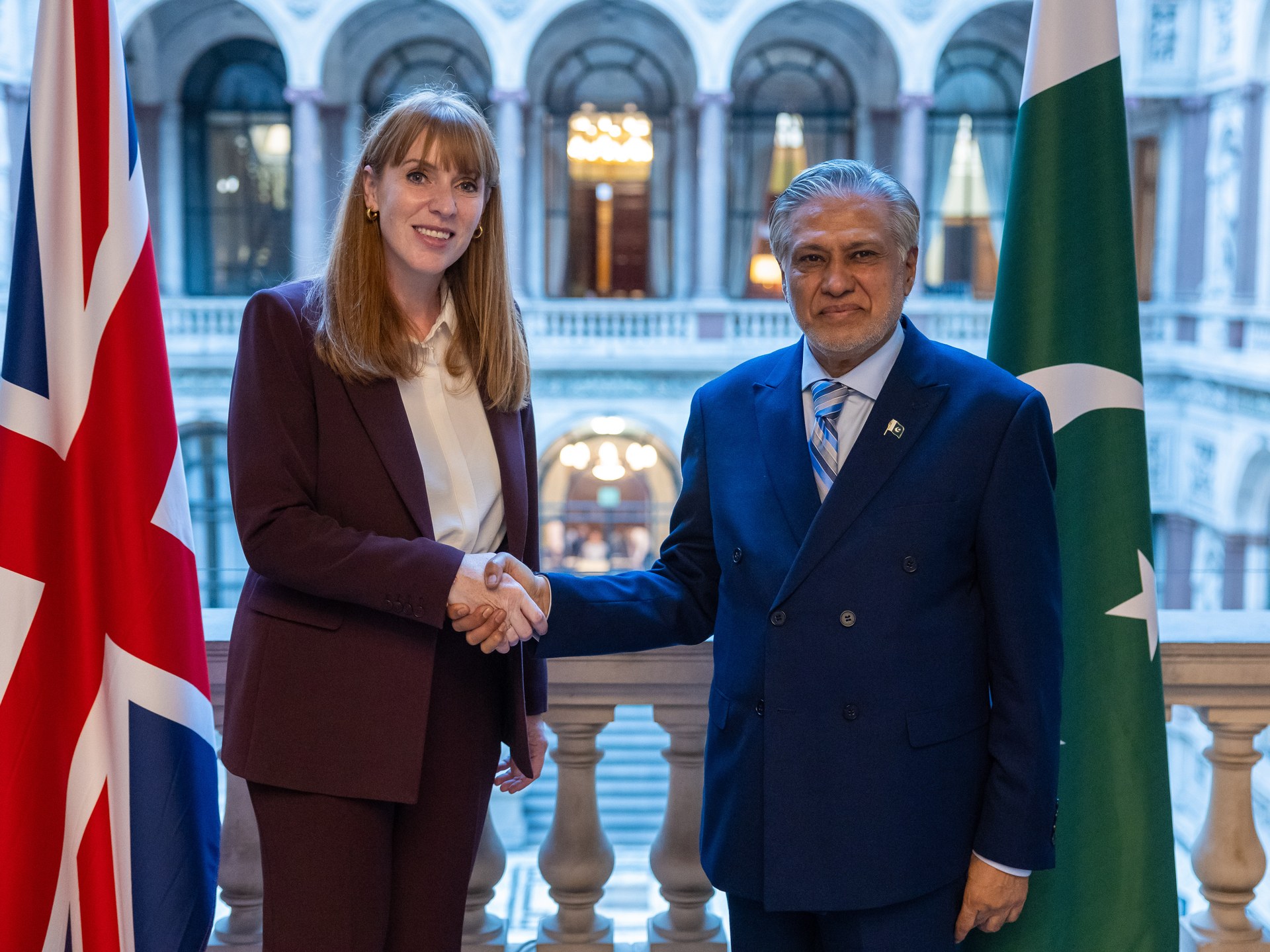
Pakistan served as the primary transmission channel. Foreign Minister Ishaq Dar confirmed publicly that “US-Iran indirect talks are taking place through messages being relayed by Pakistan,” with Turkey and Egypt also providing support, according to Tribune India and IranIntl. The content of those messages is partially known: US special envoy Steve Witkoff presented what IranIntl described as “a 15-point action list that forms the framework for a peace deal.” Iran’s response, per Al Jazeera, was to call it “maximalist, unreasonable” and issue five counter-conditions including war reparations and sovereignty over Hormuz.
The gap between those positions is not a negotiating distance. It is two countries describing different conflicts. Witkoff’s framework presumes Iran will concede on the strait; Tehran’s counter-conditions presume Washington will accept Iranian control of it. Pakistan’s mediation channel transmitted the words. Whether it can bridge the substance is a different question.
How a Colonel’s Rescue Changed the Calculus
The WSO — a Colonel — had been evading capture inside Iran for more than 24 hours using survival, evasion, resistance, and escape training when US Special Operations forces launched the extraction on April 5. Two Black Hawk helicopters took small-arms fire during the operation but remained airworthy. All personnel were exfiltrated safely, according to Axios and Al Jazeera. Trump announced: “We got him, safe and sound.”
The Middle East briefing 3,000+ readers start their day with.
One email. Every weekday morning. Free.
The rescue gave the White House something the ultimatum never could: a completed action with a clean outcome. A president who had threatened to reopen Hormuz by force three times without following through now had footage-ready proof of military capability inside Iranian airspace. The timing — hours before the deadline expired — allowed Trump to shift the public frame from an ultimatum shelved to an officer saved. RedState and other outlets ran the extraction as the lead over the diplomatic stand-down.
For Riyadh, the rescue is peripheral. The Colonel is home. The strait is not open. The F-15E that went down is one of several US aircraft losses in the conflict — including the A-10 Warthog loss — that have complicated Washington’s ability to frame the campaign as low-cost. Saudi planners watching three ultimatums dissolve into mediator channels and SERE rescues are drawing their own conclusions about American follow-through. Iran has built a parallel claim of 12 US aircraft destroyed since April 3 — including the C-130s and helicopters that American forces deliberately destroyed to deny capture — that functions as diplomatic pressure ahead of the April 7 deadline.
Why Has No One Challenged Iran’s Toll Regime?
Iran’s Hormuz toll law has passed the full Majlis vote and awaits Guardian Council review and presidential signature, according to Turkiye Today and Anadolu Agency. But the legal formality is secondary to the operational fact: Tehran has been collecting tolls since mid-March, weeks before the legislation completed its parliamentary journey. The rate — approximately $2 million per vessel, paid in yuan or cryptocurrency per Bloomberg and NPR — is already the price of Hormuz transit.
No challenge has been filed at the International Court of Justice, the International Tribunal for the Law of the Sea, or the International Maritime Organization. NPR reported that the United States has framed Hormuz as a military rather than legal question, effectively ceding the juridical space. The absence of a legal challenge is not an oversight. It is a strategic choice: filing at the ICJ or ITLOS would require acknowledging Iranian state authority over the toll mechanism, which Washington refuses to do, while simultaneously admitting that military action — threatened three times — has not resolved it.
The result is a toll regime that operates without international legal sanction or international legal opposition. Iran has carved out exemptions for what it calls “friendly nations” — China, Russia, India, Iraq, Pakistan, Japan, Malaysia, Bangladesh, Thailand, and the Philippines, which on April 2 secured the first country-specific toll-free agreement, per Philstar and The National. US and Israeli vessels are categorically barred. The exemption list is a geopolitical map disguised as a tariff schedule.
Weekly Hormuz transits reached their highest level since the war began as of April 4, according to Bloomberg’s tracker. French and Japanese-owned ships made their first crossings. Vessels are navigating a new coastal route hugging the Oman coastline — a route that exists because Iran and Oman were, as of April 2, drafting a joint Hormuz monitoring protocol that could lend Omani legitimacy to Iranian strait management, per CNBC.
The OPEC+ Hike as Duration Strategy
The OPEC+ decision on April 5 to raise May output by 411,000 bpd — triple the planned increment of approximately 137,000 bpd — was reported by Saudi Gazette and OilPrice.com as a market-calming measure. Eight members participated: Saudi Arabia, Russia, Iraq, UAE, Kuwait, Kazakhstan, Algeria, and Oman. Brent crude sat at approximately $112 per barrel. IEA Executive Director Fatih Birol had already called the Hormuz disruption “the largest supply disruption in the history of the global oil market.”
Read against the ultimatum’s collapse, the production hike changes meaning. Saudi Arabia’s deployment of its oil reserves at triple the scheduled rate is not a response to a crisis nearing resolution — it is preparation for one without an end date. Three deadlines have passed. No negotiating framework exists that both sides accept. The toll regime operates daily. A tripled output increase under these conditions is a statement about timeline, not price.
The arithmetic reinforces this. At peak disruption, 2,190 vessels were trapped in the Arabian Gulf, including more than 320 oil and gas tankers, according to Arab News. An additional 411,000 bpd routed through alternative infrastructure does not replace the approximately 20 million bpd that transited Hormuz before the war began. It buys time. Saudi Arabia’s decision window before the April 6 deadline assumed the deadline would produce a binary outcome. The window is now open-ended.
Saudi Arabia’s Infrastructure Ceiling
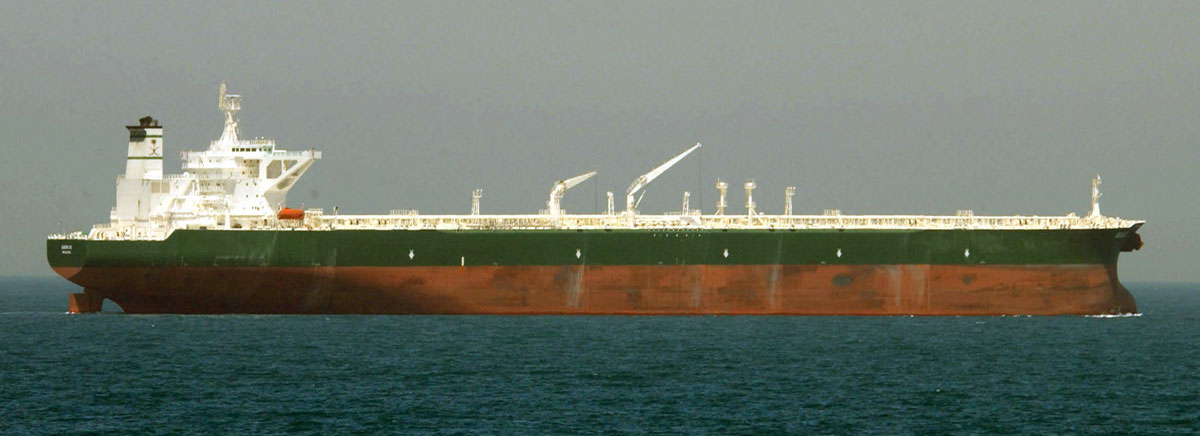
The East-West Petroline — 1,200 kilometres from Abqaiq to Yanbu — has been running at maximum capacity since March 11, 2026. Bloomberg and Horn Review noted that this fulfils the pipeline’s original 1980s strategic design: it was built during the Iran-Iraq War precisely for a Hormuz closure scenario. It had never before operated at full capacity for an extended period.
The numbers define the constraint. The Petroline’s maximum throughput is 7 million bpd. Approximately 5 million bpd is exported as crude via Yanbu; 700,000 to 900,000 bpd moves as refined products, per Bloomberg and Fortune reporting from March 28. Pre-war Hormuz volumes were approximately 20 million bpd. The Petroline replaces roughly a third of that flow — for Saudi production alone, with nothing for Iraq, Kuwait, Qatar, or UAE volumes that also depend on the strait. A granular breakdown of the 7 million bpd throughput, port loading constraints, grade limitations, and Saudi fiscal arithmetic under bypass conditions is in Saudi Arabia’s East-West Pipeline Bypass Routes 7 Million Barrels Through Yanbu.
Gulf states are now evaluating permanent Hormuz bypass infrastructure, according to Al Jazeera and ENR. The word “permanent” is the shift. Before the third ultimatum collapsed, bypass planning assumed a temporary disruption with an American-enforced endpoint. The planning horizon has changed. If Iran’s toll regime persists — collecting revenue, granting exemptions, building an Omani co-management framework — then bypass infrastructure is not contingency planning. It is national strategy for a rearranged maritime order.
Saudi Arabia’s infrastructure calculus is also more aggressive than the bypass planning alone suggests. Reporting confirmed by multiple outlets in early April 2026 shows that MBS privately lobbied Trump for US ground troops to seize Iranian oilfields — which would, if executed, resolve the Hormuz problem by placing Iran’s export infrastructure under direct US-Saudi control rather than rerouting around it.
Who Speaks for Iran?
Iran’s public messaging on April 5 ran in two directions simultaneously. Foreign Minister Araghchi confirmed contact with US envoy Witkoff but denied formal negotiations, per CBS News. Tehran’s state media declared that Trump had “retreated out of fear of Iran’s response,” according to Al Jazeera. President Pezeshkian told EU Council President António Costa on March 31 that Iran possesses “the necessary will to end this conflict, provided that essential conditions are met, especially the guarantees required to prevent repetition of the aggression,” per Euronews.
The question is whether Pezeshkian’s words carry operational weight. Reporting from The Levant Files and Daily Sabah indicates that an IRGC “military council” has assumed de facto decision-making authority in Tehran since Mojtaba Khamenei became Supreme Leader in March. The council has reportedly cut off Pezeshkian from the Supreme Leader’s office. If accurate, the president’s negotiation signals — including the message to Costa — cannot be verified as having IRGC backing.
We possess the necessary will to end this conflict, provided that essential conditions are met, especially the guarantees required to prevent repetition of the aggression.
— President Masoud Pezeshkian to EU Council President António Costa, March 31, 2026, via Euronews
For Saudi Arabia, this bifurcation is the core problem. A negotiating partner whose civilian leadership may not control the military apparatus that operates the toll regime, mans the strait defences, and shot down the aircraft whose WSO was just rescued is not a negotiating partner in any functional sense. Riyadh can read Pezeshkian’s statements. It cannot assess whether the IRGC military council reads them the same way.
Background: 36 Days of Hormuz Crisis
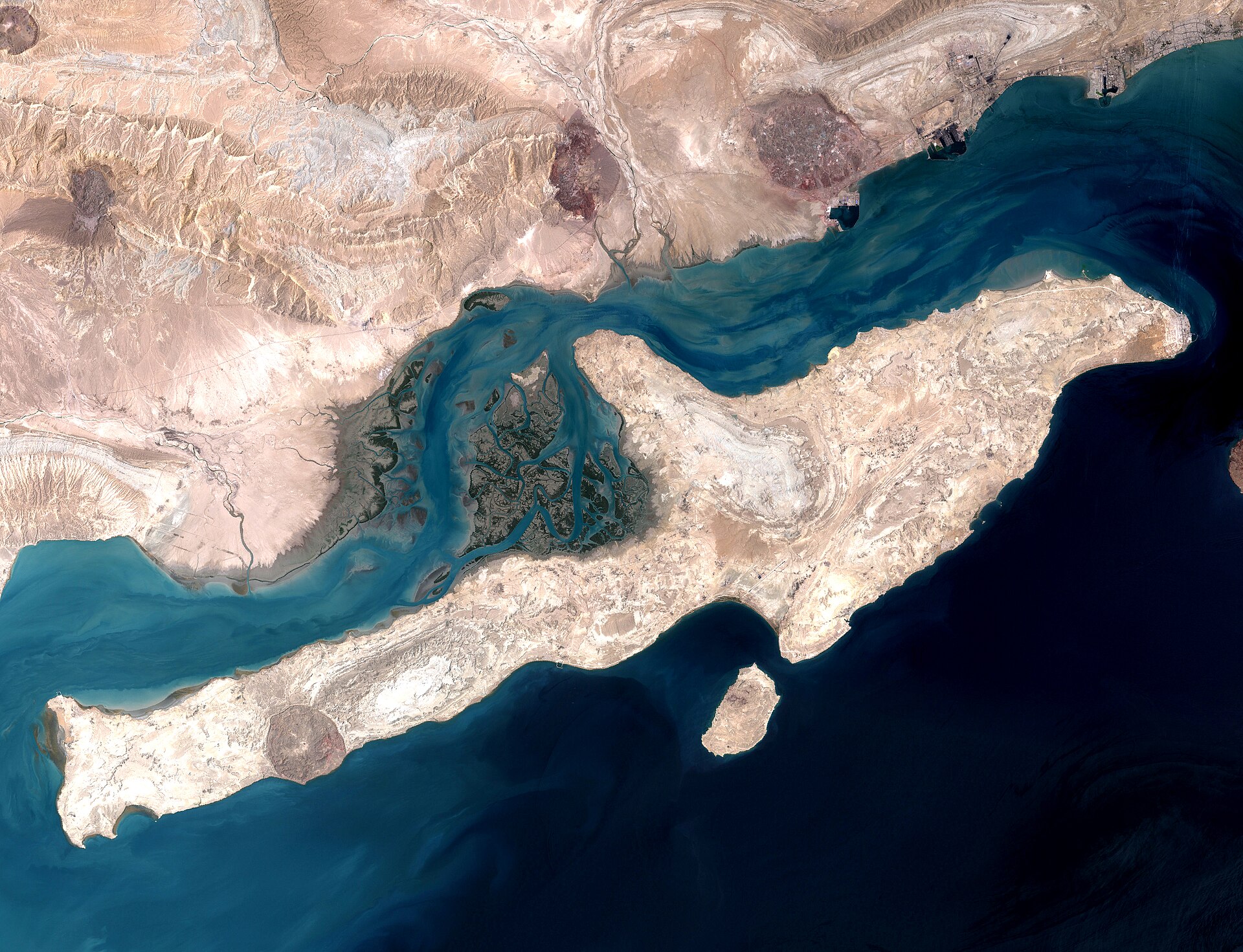
The Petroline has been at capacity for 25 days. Iran has been collecting tolls for approximately three weeks. The “friendly nations” exemption list now covers ten countries. Weekly transit volumes are rising — not because the crisis is easing but because shipping companies are paying the toll and using the Omani coastal route. The strait is not closed. It is not open. It is priced.
Saudi Arabia entered this phase expecting American enforcement to define the timeline. Three deadlines later, the timeline is undefined. The OPEC+ tripled hike, the Petroline at capacity, and the emerging Gulf discussion about permanent bypass infrastructure are not responses to a single weekend’s events. They are adaptations to a condition that no party — Washington, Tehran, or Riyadh — has demonstrated the ability or willingness to resolve.
Frequently Asked Questions
What happens to vessels that refuse to pay Iran’s Hormuz toll?
Iran has categorically barred US and Israeli-flagged vessels from transit regardless of payment. For other non-exempt ships, the operational enforcement mechanism remains opaque, but the toll has been collected since mid-March with apparent compliance from commercial shippers. The new Oman coastal route, which keeps vessels closer to Omani territorial waters, appears to be the standard transit path, and the Iran-Oman monitoring protocol under discussion as of April 2 could formalise enforcement procedures. No vessel has publicly reported being turned back for non-payment since the route stabilised in late March.
How does this conflict compare to the 1980s Tanker War in scale?
IEA Executive Director Fatih Birol has called it “the largest supply disruption in the history of the global oil market,” exceeding the 1980s Tanker War, the 1973 oil embargo, and the 1990 Iraqi invasion of Kuwait. The 1980s Tanker War saw approximately 550 attacks on vessels over eight years. The current crisis trapped more than 2,190 vessels — including 320-plus oil and gas tankers — within weeks. The Petroline’s activation at full capacity mirrors its original Iran-Iraq War purpose, but the toll regime adds a financial extraction mechanism that the 1980s conflict lacked.
Could Saudi Arabia increase Petroline capacity beyond 7 million bpd?
The 7 million bpd figure represents the engineered maximum of the existing 1,200-km pipeline system from Abqaiq to Yanbu. Expanding capacity would require either additional parallel pipeline construction or significant pumping station upgrades — projects measured in years, not months. Gulf states are evaluating new permanent bypass infrastructure according to Al Jazeera and ENR, but any new pipeline or port facility would face the same multi-year construction timeline. In the interim, the 7 million bpd ceiling is fixed.
What are Iran’s five counter-conditions to the Witkoff framework?
Iran described the US 15-point action list as “maximalist, unreasonable” and responded with five counter-conditions that include war reparations and sovereignty over Hormuz, according to IranIntl and Al Jazeera. The full list has not been published, but the two known demands — reparations and Hormuz sovereignty — represent positions that no US administration has accepted in any prior negotiation. The gap between a framework premised on Iranian concession of the strait and counter-conditions premised on Iranian ownership of it reflects fundamentally incompatible war aims rather than a negotiable spread.
Why did the Philippines receive the first country-specific toll exemption?
The Philippines secured its exemption on April 2, becoming the first country with a bilateral toll-free arrangement distinct from Iran’s broader “friendly nations” list. Approximately 300,000 Filipino workers are employed in Gulf states, and Philippine-flagged vessels carry significant cargo volumes through the strait. Manila has maintained diplomatic relations with Tehran throughout the conflict and did not join any US-led coalition statements on Hormuz. The exemption may also reflect Iran’s interest in demonstrating that its toll regime can accommodate bilateral arrangements — a model that converts the strait from an international waterway into a network of negotiated bilateral transit agreements. That franchise architecture — and what Iraq’s April 4 exemption signals about the strait’s post-war governance — is analysed in Iran Is Not Blockading Hormuz — It Is Franchising It.