NEW YORK — Iran’s demand that five Arab states pay reparations for enabling US-Israeli strikes is not a legal claim with any realistic enforcement path. It is a diplomatic instrument designed to force Saudi Arabia, the UAE, Bahrain, Qatar, and Jordan into a public reckoning with what they did — or didn’t do — during the first 45 days of the war, at the precise moment when ceasefire negotiations require all parties to pretend the question doesn’t exist.
Ambassador Amir Saeid Iravani delivered the letter to UN Secretary-General António Guterres on April 14, lodging it simultaneously with the Security Council. The timing is not incidental. The US naval blockade of Iranian ports took effect the previous day. The Islamabad ceasefire framework expires April 22. Hajj arrivals begin April 18, raising the political cost of any kinetic escalation. Iran chose the narrowest window available — five days — to inject a legal claim into the UN record that no subsequent agreement can fully erase.
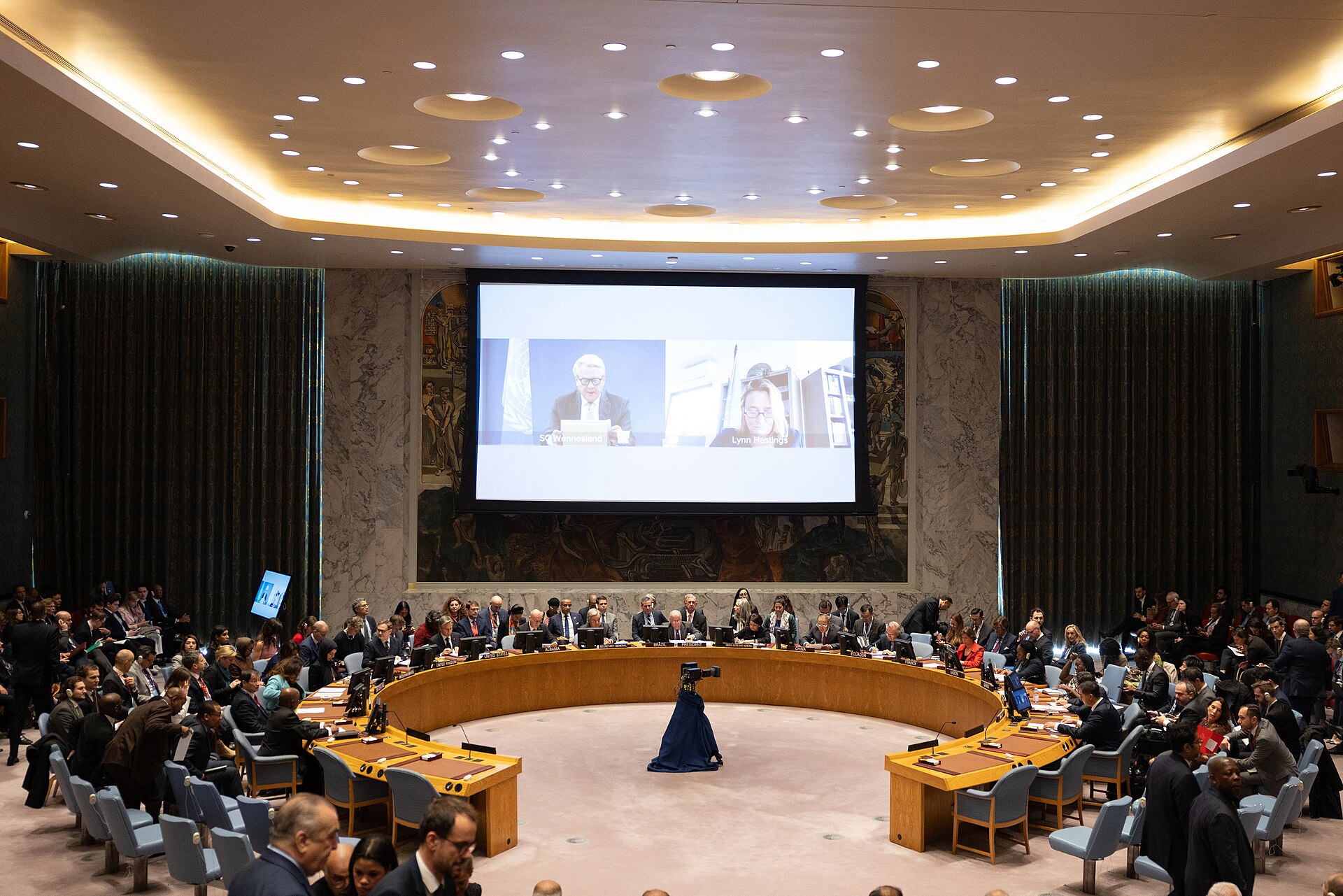
Table of Contents
- What Iran’s Letter Actually Says
- Where Does Co-Belligerency Begin?
- The Taif Contradiction
- Can Iran Enforce a Compensation Claim Against Saudi Arabia?
- The UNCC Precedent and Why It Doesn’t Apply
- The UAE Broke First
- Why Has Saudi Arabia Said Nothing?
- What Does Iran Gain From a Claim It Cannot Win?
- The Five-Day Window
- FAQ
What Iran’s Letter Actually Says
Iravani’s letter names Saudi Arabia, Bahrain, Qatar, the UAE, and Jordan — five of the six states that jointly invoked Article 51 of the UN Charter on March 26. Kuwait, the sixth signatory, is conspicuously absent from some formulations of the demand, though Iranian state media has included it in broader coverage. The letter charges that the five states “committed internationally wrongful acts” by “allowing their territories to be used by aggressors” and demands they “fully compensate the Islamic Republic of Iran for all damages, including paying reparations for all material and moral damages resulting from their internationally wrongful acts.”
The stronger charge comes in the next clause. Iran alleges that “in some instances, unlawful armed attacks against civilian targets inside Iran have been carried out directly by those states” — language that moves beyond passive basing into active operational participation. No evidence is cited. No specific state is identified as having launched direct attacks. The allegation sits in the letter as an assertion, unsubstantiated but now formally on the UN record.
No dollar amount appears in the demand itself. Iranian government spokesperson Fatemeh Mohajerani separately stated that total damage from US-Israeli strikes stands at approximately $270 billion, describing this as “initial and very approximate calculations.” First Vice President Mohammad Reza Aref added that “the pursuit of compensation for damages caused by strikes on Iran is the non-negotiable right of our people. Those who fueled this fire cannot expect to remain shielded from its costs.” The gap between the formal letter — measured, lawyerly, addressed to the Secretary-General — and the domestic rhetoric is itself revealing.
Where Does Co-Belligerency Begin?
The legal architecture of Iran’s claim rests on a question that international humanitarian law has never cleanly resolved: when does hosting a foreign military base make a state a party to the conflict that base supports? Iran’s answer draws on UN General Assembly Resolution 3314 (1974), Article 3(f), which defines as aggression “the action of a State in allowing its territory, which it has placed at the disposal of another State, to be used by that other State for perpetrating an act of aggression against a third State.” The provision was drafted during the Cold War to address precisely this kind of arrangement — forward-deployed forces operating from allied territory against a third country.
The Middle East briefing 3,000+ readers start their day with.
One email. Every weekday morning. Free.
Hesham Alghannam, director of the Security Research Centre at Naif Arab University for Security Sciences and a Fulbright Global Scholar, identified three structural problems with Iran’s reading. Writing in Al Jazeera on March 7, he argued that Article 3(f) addresses “active launching of an attack,” not passive base-hosting; that Resolution 3314 assists the Security Council in determining aggression rather than authorizing unilateral punishment by individual states; and that “the mere presence of foreign military bases in Gulf states would not in itself constitute an armed attack.” Alghannam drew a distinction between “passive hosting” and “active participation” — only a state “actively launching, coordinating, or enabling military strikes against a third party” crosses the co-belligerency threshold.
Adil Ahmad Haque, Distinguished Professor of Law at Rutgers and executive editor of Just Security, reached a similar conclusion from a different direction. In his March 2 analysis, Haque noted that “the Gulf States have not attacked Iran, and they insist that no attacks against Iran have originated from U.S. bases on their territory.” Under the framework Haque applied, a state becomes complicit only if it affirmatively allows its territory to be used to perpetrate aggression — and “it appears that the Gulf States had not allowed their territory to be used in this way.” Gulf states, Haque argued, retain full Article 51 rights to collective self-defense against Iran’s strikes. Iran’s attacks on their territory constitute legally “misdirected self-defense.”
The Hague Convention V of 1907 — the foundational text on wartime neutrality — requires that a neutral power “must not allow any of the acts referred to in Articles 2 to 4 to occur on its territory,” including the movement of troops, convoys of munitions, and the formation of combatant corps. But Article 10 also holds that a neutral power that resists violations of its neutrality by force “cannot be regarded as” performing a hostile act. The Convention was drafted for a world of declared wars between sovereign states, not one of pre-existing Status of Forces Agreements, collective self-defense invocations, and UN Charter frameworks that exist in tension with 119-year-old Hague law.
The Taif Contradiction
The legal arguments defending Gulf state neutrality collide with a specific fact. Saudi Arabia opened King Fahd Air Base in Taif to US offensive strike operations against Iran. Saudi Foreign Minister Prince Faisal bin Farhan had stated on February 28, the day the war began, that “the Kingdom had confirmed that it would not allow its airspace and territory to be used to target Iran.” The Taif decision came after that statement.
The distinction matters because Alghannam’s “passive hosting” defense and Haque’s analysis both depend on the premise that Gulf states did not affirmatively authorize attacks on Iran from their territory. If Taif was used for offensive strike sorties — and the evidence reported by multiple outlets indicates it was — then at least one of the five named states crossed Alghannam’s own line between hosting and enabling. Haque acknowledged this boundary: Gulf states bear no legal liability for hosting US bases “provided they didn’t affirmatively authorize US attacks on Iran from their territory.” The Taif opening appears to be precisely such an authorization.
Prince Faisal’s March 27 statement at the G7 foreign ministers summit, delivered the day after the Article 51 invocation, went further. Saudi Arabia and its partners, he said, possessed “very significant capacities and capabilities that they could bring to bear should they choose to do so.” Analysts described it as the most explicit Saudi threat of direct military force against Iran in the history of the bilateral relationship. The statement did not address the contradiction with February 28.
| Date | Statement / Action | Source |
|---|---|---|
| Feb 28 | FM states Kingdom will not allow territory to target Iran | Saudi MFA |
| Early March | King Fahd Air Base (Taif) opened to US offensive operations | Multiple outlets |
| Mar 26 | Joint Article 51 invocation with five Arab states | Saudi Press Agency |
| Mar 27 | FM warns of “very significant capacities” at G7 summit | G7 FM communiqué |
| Apr 14 | No response to Iran’s compensation demand | — |
Can Iran Enforce a Compensation Claim Against Saudi Arabia?
No. Iran has no viable enforcement mechanism for compensation against any of the five named states. The obstacles are structural, not tactical, and Iran’s own diplomats almost certainly understand this. The demand is calibrated for a different purpose than collection.
The International Court of Justice requires consent from both parties. Saudi Arabia has not accepted compulsory ICJ jurisdiction under the Optional Clause of Article 36(2) of the ICJ Statute. Neither have the UAE, Bahrain, Kuwait, Qatar, or Jordan. Iran itself filed a declaration in June 2023, but restricted it to disputes concerning jurisdictional immunities of state property — a provision so narrow it would not cover a reparations claim of this nature. No bilateral treaty between Iran and any of the five states contains a compromissory clause that would grant the ICJ jurisdiction. Iran cannot drag Saudi Arabia before the court unilaterally.
Iran has experience with ICJ litigation that ended in failure. The Oil Platforms case (Iran v. United States), filed in 1992 under the 1955 Treaty of Amity, took eleven years. The court dismissed the claims of both states in 2003. That case at least had a treaty hook — the Amity treaty’s compromissory clause. No comparable instrument exists between Iran and the GCC states.
The UN Security Council route is foreclosed by veto. Any mechanism resembling the UN Compensation Commission — the body that administered $52.4 billion in Gulf War I claims against Iraq — would require a Chapter VII resolution. The United States would veto any such resolution directed at its Gulf allies. Russia and China, who abstained on Resolution 2817 and vetoed the Bahrain-co-drafted Hormuz security resolution, would not support Chapter VII action against Iran’s targets either, but for the opposite reason: they see the Gulf states as complicit in US aggression.
The UNCC Precedent and Why It Doesn’t Apply
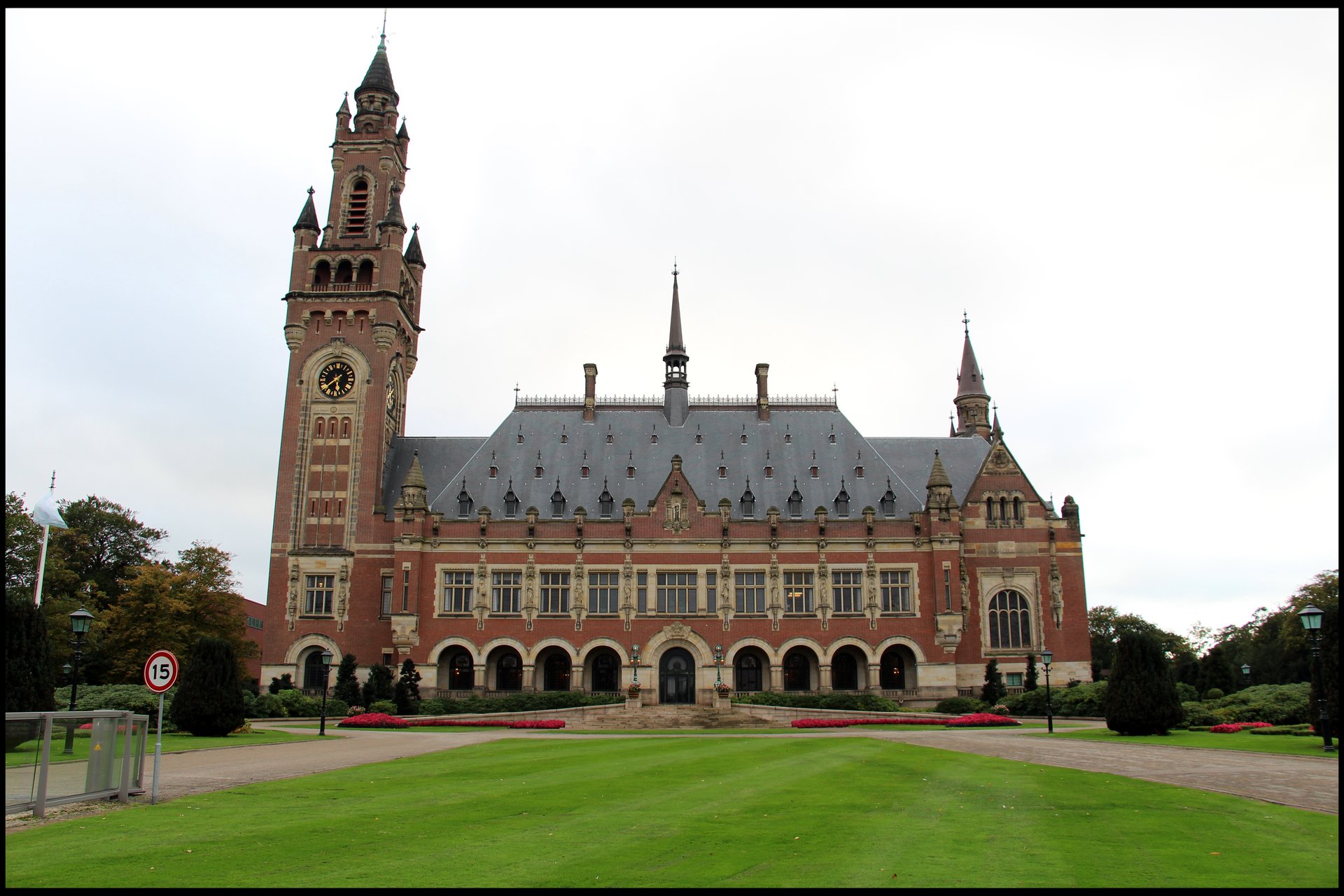
Iran’s compensation demand invites comparison with the only successful mass-reparations program in modern Middle Eastern history. The UN Compensation Commission, created by Security Council Resolution 687 in April 1991, processed 2,686,131 claims with an asserted value of approximately $352.5 billion. It awarded $52.4 billion to 1,543,619 successful claimants — governments, corporations, and individuals who suffered losses from Iraq’s invasion and occupation of Kuwait. Iraq completed its final payment in February 2022, thirty-one years after the program began, funded by a levy on Iraqi oil exports that started at 30 percent and was eventually reduced to 5 percent.
Saudi Arabia and Kuwait themselves received $243 million from the UNCC specifically for environmental damage caused by Iraq’s destruction of Kuwaiti oil wells. Kuwait — named in some versions of Iran’s current demand — spent 32 years on the receiving end of the only compensation mechanism that has ever worked in this region. Kuwaiti officials understand better than anyone that the mechanism required Chapter VII authorization from a Security Council united against the aggressor. That unity does not exist today in any configuration that would benefit Iran.
The structural difference is dispositive. The UNCC functioned because the Security Council had determined under Chapter VII that Iraq committed aggression, because the Council created a mandatory payment mechanism, and because Iraq’s oil revenues provided an enforceable funding source. Iran cannot secure a Chapter VII determination against Saudi Arabia. It cannot create a mandatory mechanism. And it has no lever to compel payment from states whose sovereign assets it cannot reach. The UNCC is not a precedent Iran can use — it is a catalogue of every structural requirement Iran cannot meet.
| Element | UNCC (Iraq/Kuwait) | Iran 2026 Demand |
|---|---|---|
| UNSC Chapter VII authorization | Yes (Res. 687) | Not obtainable (US veto) |
| Aggressor determination | Council consensus | No consensus possible |
| Mandatory payment mechanism | Oil-export levy (30%→5%) | None |
| Claims processed | 2,686,131 | No mechanism exists |
| Total awarded | $52.4 billion | No amount specified |
| Duration | 31 years | N/A |
| ICJ jurisdiction over respondent | N/A (SC mechanism) | No (no Optional Clause acceptance) |
The UAE Broke First
The GCC response to Iran’s war has not been uniform, and Iran’s compensation demand lands on a fault line that was already visible. On April 9 — five days before Iravani’s letter — the UAE issued its own counter-demand, formally declaring Iran “fully liable for damages and reparations” for 2,819 missiles and drones fired at Gulf states over 40 days, citing approximately $6 billion in direct economic damage. No other GCC member endorsed the UAE’s language or joined its counter-claim.
The UAE has consistently adopted the most forward posture among the Gulf states. It joined the US-led Hormuz coalition while Saudi Arabia stayed out. It used the phrase “fully liable for damages and reparations” — legal language with specific meaning under the International Law Commission’s Articles on State Responsibility — while Riyadh said nothing. The contrast is structural, not accidental. Abu Dhabi absorbed the highest number of Iranian attacks among the Gulf states and chose confrontation. Riyadh absorbed fewer attacks and chose silence.
Qatar, named in both Iran’s demand and the Article 51 invocation, responded on April 14 by denying it held any talks with Iran over payments. Qatari Foreign Ministry spokesperson Majed Al-Ansari stated there was “a high level of coordination with Pakistan and the United States” and that demands were “being raised through these channels.” The denial itself was notable — it suggested Iran may have been probing individual GCC members for bilateral arrangements outside the UN framework, and Qatar wanted that on the record.
Why Has Saudi Arabia Said Nothing?
Saudi Arabia’s silence on Iran’s compensation demand is consistent with a pattern that has defined Riyadh’s posture throughout the war. The Kingdom said nothing about the US blockade of Hormuz. It has not publicly addressed the Taif basing arrangement. It has not responded to Iran’s co-belligerency allegations. The silence is itself a position, and Iran’s demand is designed to make that position untenable.
The dilemma Iran has constructed is precise. If Saudi Arabia publicly contests its co-belligerent status, it must explain what Taif was — and what it wasn’t. Any detailed defense of the Kingdom’s neutrality would require disclosing the terms under which US forces operated from Saudi territory, the nature of the operations conducted, and the command-and-control arrangements that governed them. This is information Riyadh has no interest in making public, especially while the Islamabad ceasefire framework remains active and the Kingdom’s role as a potential guarantor depends on maintaining ambiguity about the depth of its participation.
If Saudi Arabia stays silent, Iran’s characterization hardens in the UN documentary record. Letters to the Secretary-General are archived. They are cited in subsequent proceedings, referenced in General Assembly debates, and available to any future tribunal or claims commission that might be constituted under different political circumstances. The letter does not need to produce a judgment this year. It needs to exist in twenty years, when the political alignment may look different and the question of what Saudi Arabia did during the Iran war may be adjudicated in forums that do not yet exist.
What Does Iran Gain From a Claim It Cannot Win?
The compensation demand operates on at least four levels, none of which require actual payment. First, it poisons the neutrality frame. Every Gulf state that participated in the Article 51 invocation presented itself as a victim of Iranian aggression exercising self-defense rights. Iran’s letter reframes them as co-aggressors — and the reframing is now part of the permanent UN record regardless of whether any court ever rules on the merits.
Second, it injects a bargaining position into the ceasefire negotiations. Foreign Minister Araghchi had already stated publicly that “reparations will be paid” and framed compensation as a pre-condition for any ceasefire — embedding the demand in the active negotiating track, not deferring it to a post-war judicial process. Araghchi called Saudi Arabia’s foreign minister on blockade day, April 13, the same day CENTCOM’s blockade took effect. The compensation letter arrived the next morning. The sequencing was not coincidental.
Third, Iran is building what amounts to a post-war litigation architecture. The letter to Guterres, paired with the $270 billion damage estimate from Mohajerani, establishes a documented claim that can be activated in multiple forums: a future General Assembly resolution establishing a compensation commission (non-binding but politically significant), bilateral negotiations where reparations serve as a bargaining chip, or domestic legislation authorizing asset seizures. An Iranian parliamentary National Security Commission member has already suggested that if reparations go unpaid, Iran would “detain hostile vessels in the Persian Gulf and sell them.”
Fourth, the demand fractures GCC cohesion at the moment it matters most. The UAE counter-demanded. Qatar denied bilateral talks. Saudi Arabia said nothing. Jordan — the only non-Gulf state named — has its own domestic politics around the basing question. Iran filed one letter and produced five different responses (or non-responses), each revealing a different calculation about exposure, liability, and alignment.
The Five-Day Window
The timing of Iran’s demand maps onto the narrowest operational window of the war. The US blockade of Iranian ports took effect April 13. Hajj arrivals begin April 18, after which any military escalation by Iran against Saudi territory would strike a country hosting millions of Muslim pilgrims — a political threshold even the IRGC has historically respected. The Islamabad ceasefire framework expires April 22. Iran had five days, April 13 through 17, in which the blockade was active, the ceasefire was still nominally in force, and Hajj had not yet imposed its own constraints.
Iran chose to spend that window filing paper, not firing missiles. The letter to Guterres is a legal instrument timed as a diplomatic weapon — lodged during the only period when its framing cannot be dismissed as post-war score-settling. By embedding the co-belligerency allegation in the UN record while the war is still technically active, Iran ensures the claim has a different procedural status than a complaint filed after hostilities end. It becomes part of the conflict’s documentary record, not an afterthought.
The Iranian declaration of a permanent mechanism for Hormuz, the parliamentary threats to seize Gulf shipping, and the compensation demand all arrived within 72 hours of each other. Iran is constructing its post-war position while the war is still on, using the five-day window to establish facts — legal, diplomatic, documentary — that will outlast whatever ceasefire eventually takes hold. No collection mechanism exists. The UN record does.
| Date | Action | Target |
|---|---|---|
| Apr 13 | US naval blockade takes effect | Iranian ports |
| Apr 13 | Araghchi calls Saudi FM Prince Faisal | Saudi Arabia |
| Apr 13 | Parliamentary threat to seize Gulf vessels | GCC shipping |
| Apr 14 | Iravani letter to Guterres | Five Arab states |
| Apr 14 | $270B damage estimate released | International media |
| Apr 18 | Hajj arrivals begin (constraint) | All parties |
| Apr 22 | Islamabad ceasefire expires | All parties |
FAQ
Has Iran ever successfully collected war reparations from another state?
Iran has pursued but never collected reparations through international adjudication. The Oil Platforms case (Iran v. United States, 1992–2003) was the most sustained effort — filed under the 1955 Treaty of Amity’s compromissory clause after the US Navy destroyed Iranian oil platforms during the Tanker War. After eleven years of litigation, the ICJ dismissed the claims of both states in 2003, finding that neither had proved its case. Iran also pursued claims against Iraq for the 1980–88 war through the UN Secretary-General’s office, but the Iran-Iraq Claims Settlement Declaration never produced a functioning tribunal. The $270 billion figure cited by Tehran for the current conflict would dwarf any previous demand in the ICJ’s history; the largest ICJ reparations award to date came in DRC v. Uganda (2022), itself orders of magnitude below what Iran is asserting.
Could Iran take the case to the International Criminal Court instead?
The ICC prosecutes individuals for war crimes, crimes against humanity, and genocide — it does not adjudicate state-to-state compensation claims. Iran is not a party to the Rome Statute. Saudi Arabia, the UAE, Bahrain, Qatar, Kuwait, and Jordan are also not parties. The ICC could only assert jurisdiction through a UN Security Council referral under Chapter VII, which faces the same veto problem as the compensation mechanism. Even if jurisdiction were somehow established, the ICC has no mandate to order reparations from states — only from convicted individuals to their victims, through the Trust Fund for Victims established under Article 79 of the Rome Statute.
What is the “non-belligerency” status Iran is targeting?
Non-belligerency is a historical category — not a formal legal status under the UN Charter — used to describe states that provide material or logistical support to one side in a conflict while declining direct combat participation. Fascist Italy adopted it toward Germany from September 1939 to June 1940, and Franco’s Spain maintained it throughout World War II while sending the Blue Division to the Eastern Front. The European Journal of International Law has noted that the concept occupies a grey zone: it offers no recognized protective shield under modern international humanitarian law, and a state’s claim to neutrality can be vitiated by the scale of support it provides. Iran’s demand targets this grey zone because the Gulf states’ Article 51 invocation, pre-existing SOFA agreements, and Taif basing arrangement place them in precisely the non-belligerent category — beyond neutrality but short of declared co-belligerency.
Does UNSC Resolution 2817 help or hurt Iran’s claim?
Resolution 2817, adopted March 11 with 13 votes and abstentions from China and Russia, condemned Iran’s “egregious attacks” on Gulf neighbors and affirmed the attacked states’ right to collective self-defense under Article 51. For Iran’s compensation claim, the resolution cuts both ways. It formally establishes that Gulf states were victims of Iranian attacks — which strengthens their self-defense posture but also documents their active participation in a collective security framework directed against Iran. China and Russia abstained specifically because the resolution omitted any reference to the preceding US-Israeli strikes that triggered the conflict, leaving a textual record that Iran characterizes as one-sided. Iran rejected 2817 as “manifestly unjust” and “legally untenable,” but the resolution’s existence in the UN record means any future tribunal would confront a Security Council text that identifies Iran — not the Gulf states — as the aggressor.
Why did Iran omit a specific dollar amount from the UN letter?
The omission is almost certainly deliberate and serves multiple functions. Specifying an amount — even the $270 billion figure Mohajerani cited domestically — would invite immediate scrutiny of methodology, create a ceiling that becomes the starting point for any negotiation, and expose Iran to embarrassment if the figure proved indefensible under standard damage-assessment frameworks used by bodies like the UNCC. By leaving the amount open, Iran preserves the claim’s flexibility: it can be scaled up or down depending on the forum, the counterparty, and the political context. The UNCC itself took years to process individual claims through detailed verification; Iran’s undifferentiated demand against five states simultaneously suggests the letter’s purpose is establishing the principle of liability, not quantifying damages for collection.