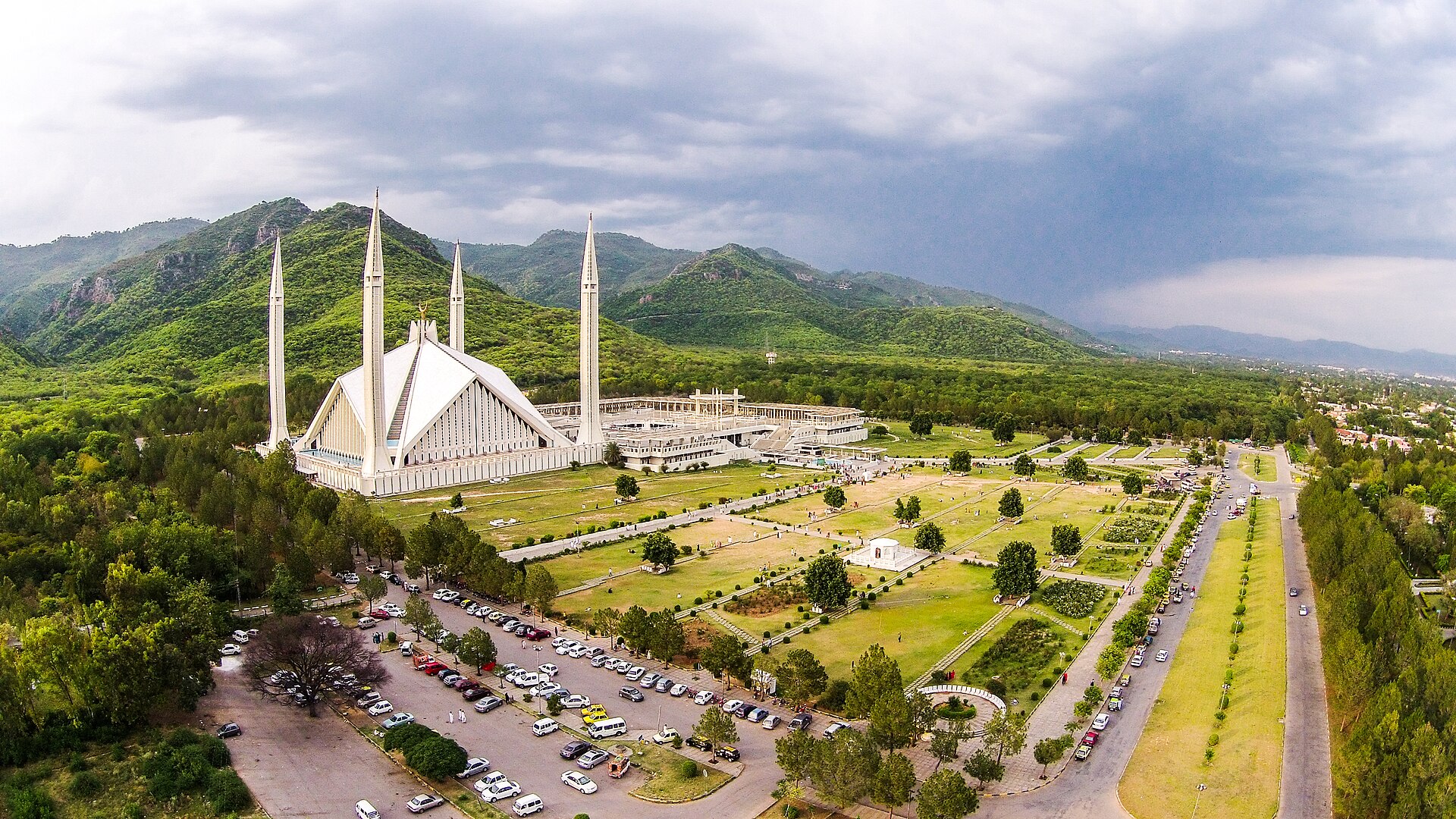
ISLAMABAD — Iran’s Islamic Revolutionary Guard Corps struck at least eight Saudi energy facilities across a 48-hour window ending April 10, killing one Saudi industrial security worker and knocking an estimated 600,000 barrels per day offline, while a 71-member Iranian delegation was simultaneously arriving in Pakistan’s capital for the first direct US-Iran negotiations since 1979. Kuwait’s foreign ministry responded the next day with what amounts to the first formal GCC condemnation of post-ceasefire Iranian attacks, naming “the Islamic Republic of Iran and its proxies” by name — a level of diplomatic specificity that Saudi Arabia, the country absorbing the heaviest strikes, has so far refused to match.
The juxtaposition is not incidental. Iran’s civilian president, Masoud Pezeshkian, confronted the commanders responsible — IRGC Secretary Vahidi and General Abdollahi — on April 4, telling them their policies “had destroyed any remaining chance of a ceasefire” and were steering Iran toward “a huge catastrophe,” according to two sources close to the presidential office cited by Iran International. They kept firing. The strikes that hit Saudi energy infrastructure on April 9 and 10 came five to six days after that confrontation, a timeline that tells you everything about who actually controls Iran’s war machine.
Table of Contents
What Was Hit and What It Costs
The Saudi Press Agency, via Al Jazeera on April 9, confirmed attacks on facilities in Riyadh, the Eastern Province, and Yanbu, describing “continued attacks causing reduced supply, slowing recovery, and contributing to increased volatility in the oil market.” The statement did not name Iran. The Saudi energy ministry confirmed one Saudi national from industrial security personnel killed and seven others injured across the targeted sites.
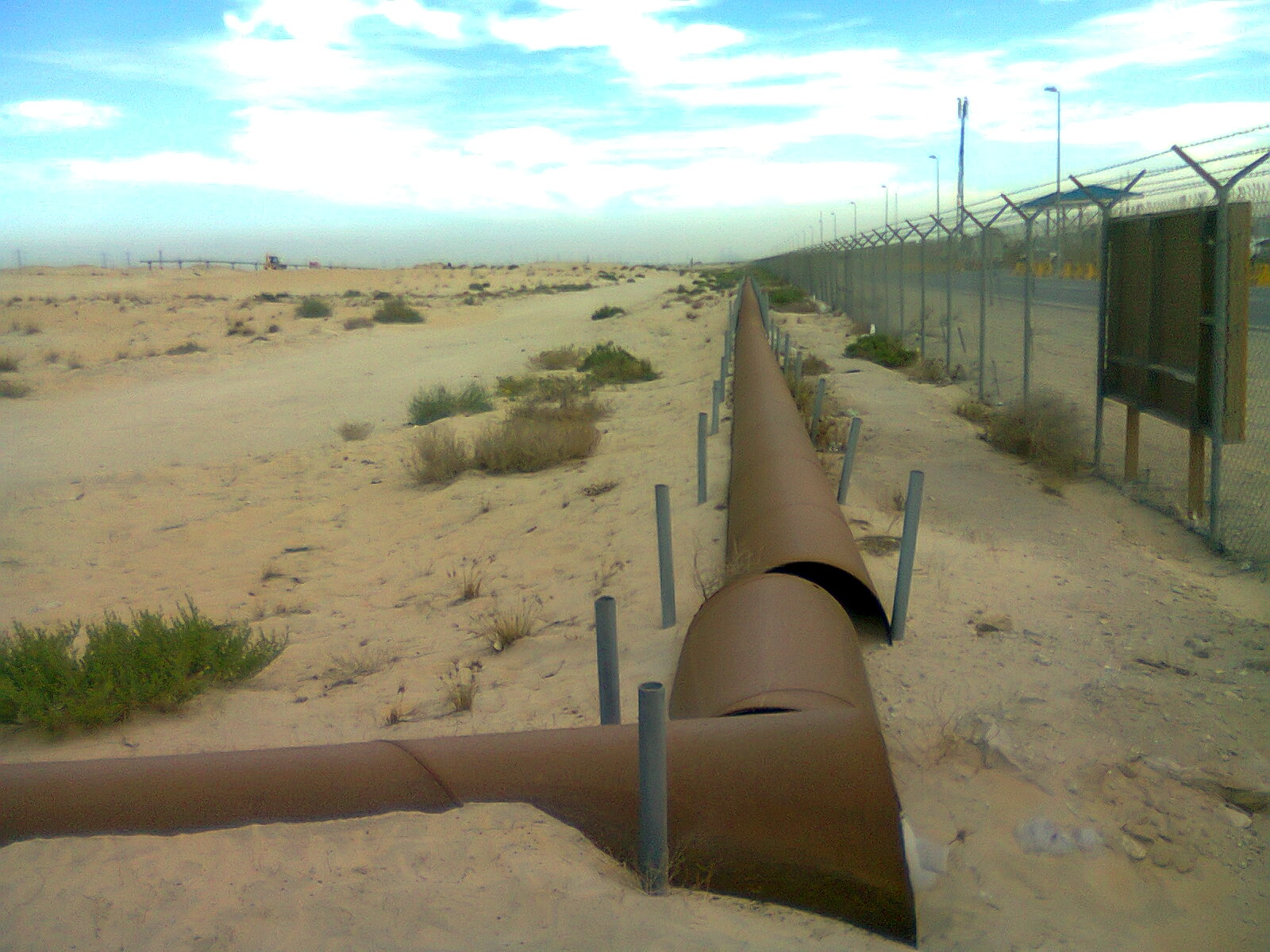
The target list reads like a strategic audit of Saudi Arabia’s export architecture. The East-West Pipeline, struck on April 8, lost an estimated 700,000 barrels per day of throughput — roughly 10% of Saudi pre-conflict crude exports, according to JPMorgan’s assessment reported by World Oil. Manifa offshore lost 300,000 bpd. Khurais, Saudi Arabia’s second-largest onshore field, lost another 300,000 bpd. The SATORP refinery at Jubail, a joint venture with TotalEnergies processing 460,000 bpd, was taken fully offline as a safety precaution after a strike on the night of April 7-8. TotalEnergies confirmed “no casualties were reported” and said “an assessment of the consequences for the refinery’s operations is currently underway.”
That was not the end of the list. Ras Tanura refinery, the SAMREF refinery at Yanbu (the second pipeline-fed facility to be hit in a week), a Riyadh refinery, and the Ju’aymah LPG and NGL terminal all sustained damage. JPMorgan assessed the combined East-West Pipeline and field damage as “a measurable supply shock.” The Saudi Press Agency’s official confirmed capacity reduction is 600,000 barrels per day. That figure is lower than the sum of the facility-level estimates above — the JPMorgan and Al Jazeera figures for individual fields reflect gross throughput assessments, while the SPA number represents confirmed net crude production lost after partial field output and switching are accounted for. The two methodologies measure different things. The SPA figure is the official baseline; the facility estimates are the ceiling.
| Facility | Location | Impact | Source |
|---|---|---|---|
| East-West Pipeline pumping station | Cross-country | −700,000 bpd throughput | JPMorgan / World Oil |
| Manifa offshore | Eastern Province | −300,000 bpd | Al Jazeera, April 9 |
| Khurais onshore | Eastern Province | −300,000 bpd | Al Jazeera, April 9 |
| SATORP Jubail refinery | Jubail | 460,000 bpd offline (precautionary) | TotalEnergies / OilPrice.com |
| Ras Tanura refinery | Eastern Province | Damage confirmed, capacity TBC | World Oil, April 10 |
| SAMREF Yanbu refinery | Yanbu | Damage confirmed | OilPrice.com, April 10 |
| Riyadh refinery | Riyadh | Operations halted | SPA / Al Jazeera |
| Ju’aymah LPG/NGL | Eastern Province | Damage confirmed | World Oil, April 10 |
The SAMREF Yanbu strike deserves separate attention. The East-West Pipeline to Yanbu is Saudi Arabia’s only meaningful bypass around the Strait of Hormuz, running at an emergency capacity of 7 million bpd under Aramco CEO Amin Nasser’s direction. Hitting both the pipeline and the refinery it feeds within the same week suggests the IRGC understands exactly what it is targeting: not just Saudi production, but Saudi Arabia’s last independent export route.
The Middle East briefing 3,000+ readers start their day with.
One email. Every weekday morning. Free.
Why Did Kuwait Speak Before Saudi Arabia?
Kuwait’s foreign ministry statement on April 10 was remarkable for what it said and for the diplomatic void it exposed. The statement condemned “the heinous attacks launched by the Islamic Republic of Iran and its proxies, including factions, militias, and armed groups loyal to it, via drones that targeted several vital facilities in the State of Kuwait, on the evening of Thursday, 9 April 2026.” It called the strikes “a flagrant violation of the sovereignty of the State of Kuwait and its airspace, and a blatant breach of international law, international humanitarian law, and the United Nations Charter.”
The language was unambiguous. Kuwait named Iran. Kuwait named its proxies. Kuwait invoked international law, humanitarian law, and the UN Charter in a single sentence — the diplomatic equivalent of throwing the entire bookshelf. The ministry went further, stating that the “continuation of these brazen attacks…against the State of Kuwait and the countries of the region undermines the regional and international efforts that have recently borne fruit with the announcement of a ceasefire.” The damage was real: a Kuwait National Guard site sustained material damage, and National Guard Chief Sheikh Mubarak Hamoud Al-Jaber Al-Sabah personally inspected the site and ordered “swift restoration,” according to Arab Times Online.
The continuation of these brazen attacks…against the State of Kuwait and the countries of the region undermines the regional and international efforts that have recently borne fruit with the announcement of a ceasefire.
Kuwait Ministry of Foreign Affairs, April 10, 2026
Kuwait had already intercepted 28 Iranian drones on April 8 alone — the first hours after the ceasefire was announced. The UAE intercepted 35 drones and missiles in the same post-ceasefire window. Qatar intercepted seven. Yet it was Kuwait, not Saudi Arabia and not the UAE, that formally named Iran as the attacker. Saudi Arabia’s energy ministry statement, issued through the Saudi Press Agency, confirmed the strikes and their impact but did not identify who was responsible. That silence, set against Kuwait’s explicit condemnation, tells you where each country sits in relation to the Islamabad talks.
The Authorization Ceiling: Who Controls the IRGC?
The Soufan Center’s IntelBrief, published April 9, framed the core question precisely: “Whether the continued attacks are a result of the decentralized nature of the IRGC command and control, or whether these strikes have been the result of cells within the IRGC that disagree with the ceasefire agreement, is unclear.” The answer, based on the structural evidence, is that the distinction may not matter. The IRGC’s 31 independent provincial corps, each with autonomous logistics, intelligence, and Basij militia components, were restructured in September 2008 specifically to operate without central authorization, according to RFERL reporting and a March 2026 analysis by BusinessToday India.
This is the authorization ceiling problem that has defined every phase of this conflict. Supreme Leader Khamenei has been absent from public view for over 40 days, with the Times of London reporting a memo suggesting he is “unconscious in Qom.” The Supreme National Security Council is run by Zolghadr, who is under both US and EU sanctions. President Pezeshkian confronted Vahidi and Abdollahi on April 4, and strikes continued through April 10. The civilian government in Tehran can send a delegation to Islamabad. It cannot order the IRGC’s provincial corps to stop launching drones at Saudi refineries.
The IRGC itself has maintained categorical denial of all post-ceasefire attacks. “As of this hour during the ceasefire, the armed forces of the Islamic Republic of Iran have absolutely not launched any projectiles towards any country,” an IRGC spokesperson told Tasnim News Agency, adding that “if these reports published by the media are true, without a doubt it is the work of the Zionist enemy or America.” The denial was consistent across multiple outlets from April 8 through April 10, even as Al Bawaba reported on April 10 that coordinated drone attacks struck Saudi Arabia, Kuwait, and the UAE “just as US and Iranian delegations opened Pakistan-brokered ceasefire talks in Islamabad.”
Can Talks Succeed While the Bombs Still Fall?
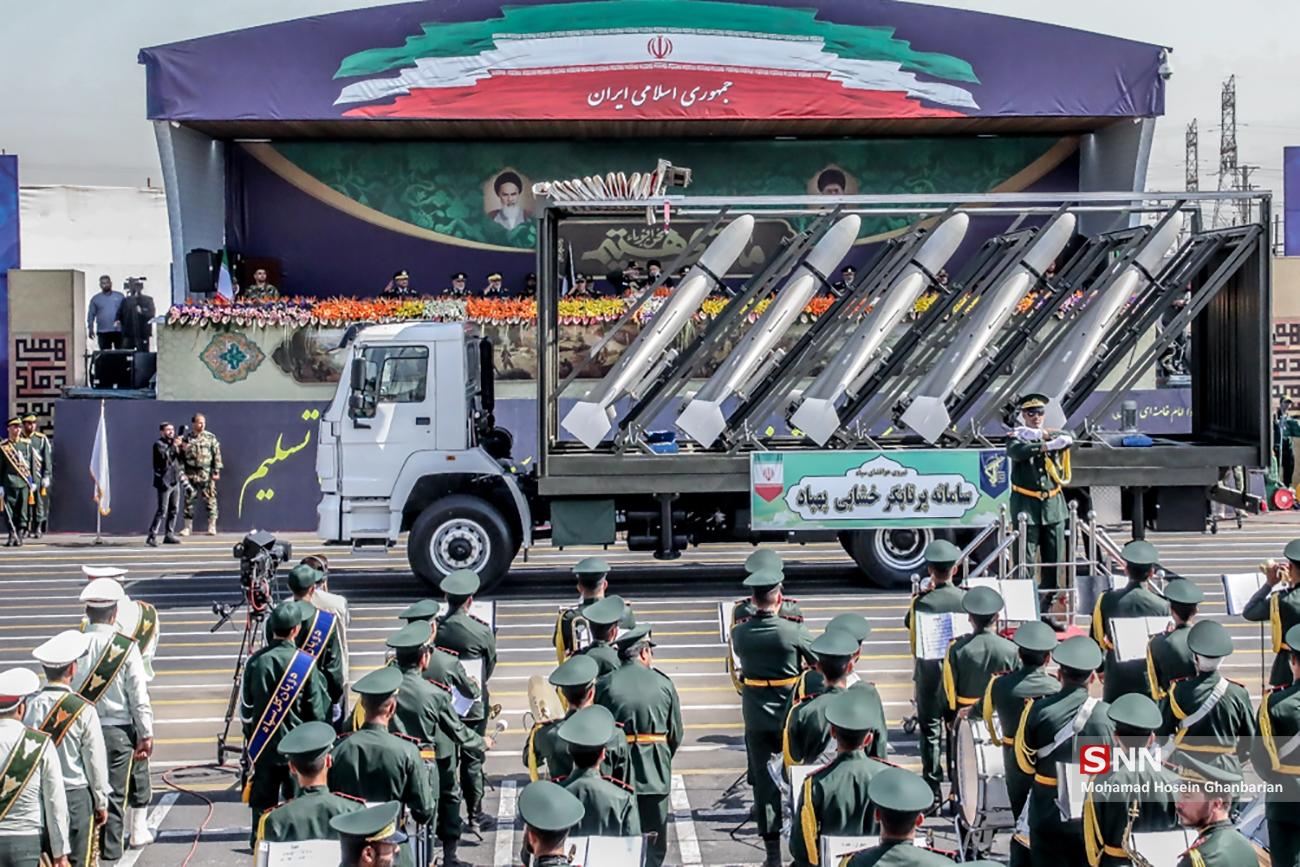
The Islamabad proximity talks formally opened on April 11 at the Serena Hotel, according to Bloomberg. The US delegation was led by Vice President JD Vance, joined by special envoy Steve Witkoff and senior advisor Jared Kushner. Iran’s 71-member delegation was led by Parliament Speaker Mohammad Bagher Ghalibaf and Foreign Minister Abbas Araghchi. Ghalibaf, who commanded the IRGC Aerospace Force from 1997 to 2000, arrived with a pointed framing. “We have goodwill, but we do not trust,” he told the Times of Israel on April 10. He also stated that three of the ceasefire’s ten clauses “have been violated” by the United States, making bilateral negotiations “unreasonable.”
Vance responded through NBC News: “Don’t try to play the US in peace talks.” The exchange captures the structural contradiction of the Islamabad format. Iran’s civilian negotiators are in the room. The IRGC commanders who control the weapons are not. Vahidi, the man Pezeshkian confronted on April 4, was not part of the 71-member delegation. An unnamed Iranian parliamentarian told NBC that “Vahidi is in charge.” The SNSC’s own post-ceasefire statement declared that “negotiations are continuation of the battlefield” — a formulation that explicitly frames the Islamabad talks as a parallel front in the war, not a path out of it.
Diplomats in Islamabad told Al Bawaba that the strikes “could undermine early negotiations.” That understates the problem. The strikes did not merely coincide with the talks; they ran through the exact days when the proximity format was being established and the delegations were arriving. If the IRGC can hit eight Saudi energy facilities while Iran’s parliament speaker is shaking hands in Islamabad, then any ceasefire that emerges from these talks has no enforcement mechanism against the institution doing the actual fighting.
Saudi Arabia’s Calculated Silence
Saudi Arabia’s refusal to name Iran in its April 9 statement is not an intelligence failure — the kingdom knows exactly who is launching drones at its refineries. It is a diplomatic calculation. Crown Prince Mohammed bin Salman is trying to preserve what remains of the negotiating channel, and publicly naming Iran as the attacker while talks are opening in Islamabad would functionally end that channel. The problem is that this silence comes at a cost. Saudi Arabia has been excluded from the Islamabad bilateral despite having served as a ceasefire co-guarantor during the March 29-30 round. The kingdom absorbed strikes on eight energy facilities in a single week, lost 600,000 bpd of production capacity, and suffered a casualty — and it is not at the table where the terms of its own protection are being negotiated.
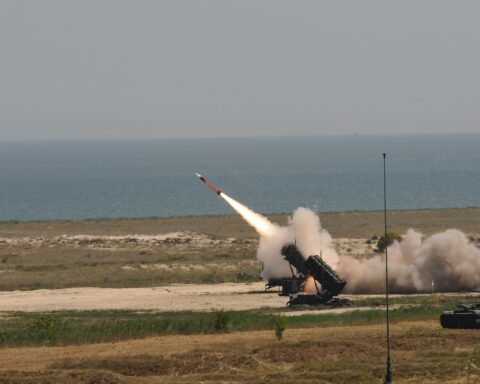
The PAC-3 interceptor stockpile adds a material dimension to this silence. Saudi Arabia’s Patriot missile reserves stand at roughly 400 rounds, down 86% from an estimated 2,800 pre-war, according to House of Saud’s analysis. Lockheed Martin’s Camden, Arkansas facility produces 620 rounds per year. Poland refused a Patriot transfer request on March 31. Every drone the IRGC sends — whether authorized by Tehran or not — depletes a stockpile that cannot be replenished at the rate it is being consumed. MBS’s silence buys diplomatic space, but the air defense math works against him regardless of what anyone says in Islamabad.
Kuwait’s willingness to name Iran publicly reflects a country that has no seat at the Islamabad table and therefore no diplomatic channel to protect. The GCC fracture this reveals is not ideological — it is structural. Countries with something to negotiate stay quiet. Countries without a seat at the table speak.
Background: The IRGC’s Diplomatic-Strike Pattern
The April 9-10 strikes are not the first time IRGC attacks have coincided with diplomatic milestones. The East-West Pipeline pumping station was struck on April 8, the same day the ceasefire was formally announced. The SABIC industrial complex at Jubail was hit on April 7, the day of Trump’s original deadline. The IRGC published a chart on February 28 marking standard Hormuz shipping lanes as a “danger zone,” the same day the Islamabad talks format was first proposed.
The Soufan Center and multiple regional analysts have identified the pattern as either deliberate sabotage of diplomatic processes or evidence that the IRGC’s decentralized command structure makes ceasefire compliance structurally impossible. The distinction matters for what comes next. If the strikes are deliberate policy, then the Islamabad talks are negotiating with one half of a government while the other half wages war. If they are the result of autonomous IRGC corps acting without authorization, then no agreement signed in Islamabad can be enforced against the forces doing the actual fighting — which is precisely what the ceasefire enforcement analysis has identified as the core structural problem since the ceasefire was announced.
Iran International reported through two sources close to the presidential office that Pezeshkian explicitly accused Vahidi and Abdollahi of “acting unilaterally and driving escalation through attacks on regional countries, especially against infrastructure.” Six days later, the IRGC hit eight Saudi energy facilities. The question is whether anyone at the Serena Hotel can deliver what they promise.
FAQ
What is the current status of the Islamabad talks as of April 11?
The proximity talks formally opened at the Serena Hotel in Islamabad on April 11, 2026, according to Bloomberg. The format is indirect — the US and Iranian delegations are not in the same room but communicate through Pakistani mediators. The ceasefire that the talks are meant to formalize expires on April 22, giving negotiators 11 days. No IRGC military representative is part of Iran’s 71-member delegation, which is led by civilian officials Ghalibaf and Araghchi.
Has any other GCC state besides Kuwait formally named Iran for post-ceasefire strikes?
As of April 11, Kuwait remains the only GCC member state to formally name “the Islamic Republic of Iran and its proxies” in an official foreign ministry condemnation of post-ceasefire attacks. The UAE intercepted 35 drones and missiles on April 8 and Qatar intercepted seven, but neither has issued a comparable diplomatic statement naming Iran. Saudi Arabia confirmed strike damage and casualties through the Saudi Press Agency but did not identify the attacker in its official communications.
How do these strikes compare to the 2019 Abqaiq-Khurais attack?
The September 2019 attack on Abqaiq and Khurais temporarily removed 5.7 million bpd from global supply — the single largest supply disruption in oil market history. The April 2026 strikes are smaller in individual scale (600,000 bpd confirmed offline) but distributed across eight facilities rather than two, and they come atop cumulative damage from six weeks of war. The 2019 attack was a one-off shock; the 2026 campaign is attritional, degrading Saudi capacity across multiple nodes simultaneously while the kingdom’s air defense stockpile declines.
What legal framework governs ceasefire enforcement in this conflict?
There is no binding enforcement mechanism. The ceasefire announced on April 8 was brokered by Pakistan and does not have UN Security Council backing — a Russian-Chinese veto bloc has blocked all Chapter VII resolutions on the conflict. The Islamabad Accord format relies on Pakistani mediation and voluntary compliance. Iran’s SNSC has publicly stated that “negotiations are continuation of the battlefield,” and the IRGC’s 31 autonomous provincial corps operate without requiring central authorization to fire, making enforcement dependent on an internal Iranian command structure that the civilian government has publicly admitted it cannot control.
What is Saudi Arabia’s remaining air defense capacity?
House of Saud’s analysis estimates Saudi Arabia’s PAC-3 Missile Segment Enhancement (MSE) stockpile at approximately 400 rounds, down 86% from an estimated 2,800 pre-war. Lockheed Martin’s sole production facility in Camden, Arkansas manufactures roughly 620 rounds per year. Poland rejected a Saudi request for Patriot battery transfer on March 31. At current rates of interception — Saudi forces have intercepted 799 drones and 95 missiles since March 3, according to the Saudi Defense Ministry — the remaining stockpile represents weeks, not months, of continued defense at wartime tempo.