
WASHINGTON — Trump on Saturday demanded edits to the Iran MOU specifying “how the U.S. gets the material and the timing” for removing Iran’s highly enriched uranium — a stockpile whose last verified figure, 440.9 kilograms of 60%-enriched uranium hexafluoride (enough for nine to ten nuclear weapons), was recorded by the IAEA on June 13, 2025, and which has not been inspected, counted, or accessed by any international monitor in the ninety-one days since Iran terminated all verification on the first day of the war. The demand is not a language problem but a physics problem, because the MOU was built to defer nuclear issues to a Phase 2 that does not yet exist, and by folding removal mechanics and timelines into Phase 1 conditions, Trump has converted a signable ceasefire framework into a document that must answer a question no one in Washington, Vienna, or the global nonproliferation community can currently answer: how to physically extract hundreds of kilograms of volatile uranium hexafluoride from sealed underground tunnels at Isfahan, 500 miles from any coast, through IRGC-controlled territory, out of a country whose supreme leader has directed that every gram stays.
Table of Contents
- What Did Trump Actually Request?
- The 91-Day Verification Blackout
- Why Can’t the Stockpile Simply Be Removed?
- How Did Phase 2 End Up in Phase 1?
- The JCPOA Precedent Does Not Apply
- Who Has Authority Over What the IRGC Guards?
- The Verification Circular Dependency
- What Would the Senate Accept?
- The Cost of Every Unsigned Day
- Frequently Asked Questions
What Did Trump Actually Request?
The edit request, reported by Axios on May 31, asks for two things: specifics on how the United States physically obtains Iran’s enriched uranium, and a timeline for doing so. A senior US official described it as having “launched another round of back-and-forth that could last several days,” which means the MOU — unsigned on Day 91 of a conflict that has already destroyed two MQ-9 Reapers at Ali Al Salem, wounded five Americans, and driven Brent crude from its $114.97 May 4 peak to $91 — is now further from signature than it was when Trump’s Situation Room meeting ended without a decision on May 29.
This is Trump’s second round of edits; the first, on Hormuz-reopening language, was already in progress. But the uranium request is qualitatively different because it asks for operational specifics — logistics, custody chains, verification protocols, physical transport — that belong to a negotiation that has not started, for material whose quantity is unknown, in facilities whose current condition is unverifiable. The Times of Israel reported the same day that Trump privately told Netanyahu the final deal would require “full dismantlement” of Iran’s nuclear program and all HEU removed from the country — terms that go far beyond what the MOU draft contains and that Iran has categorically rejected at every level of its government.
The Axios draft text, first reported on May 24, commits Iran to “negotiate over” HEU removal — a phrase deliberately chosen to mean something less than a removal commitment, because the US negotiating team understood that binding removal logistics could not be specified in an initial agreement. Trump’s edit request asks for precisely what his own negotiators designed the document to avoid: a binding answer to an open question.
The 91-Day Verification Blackout
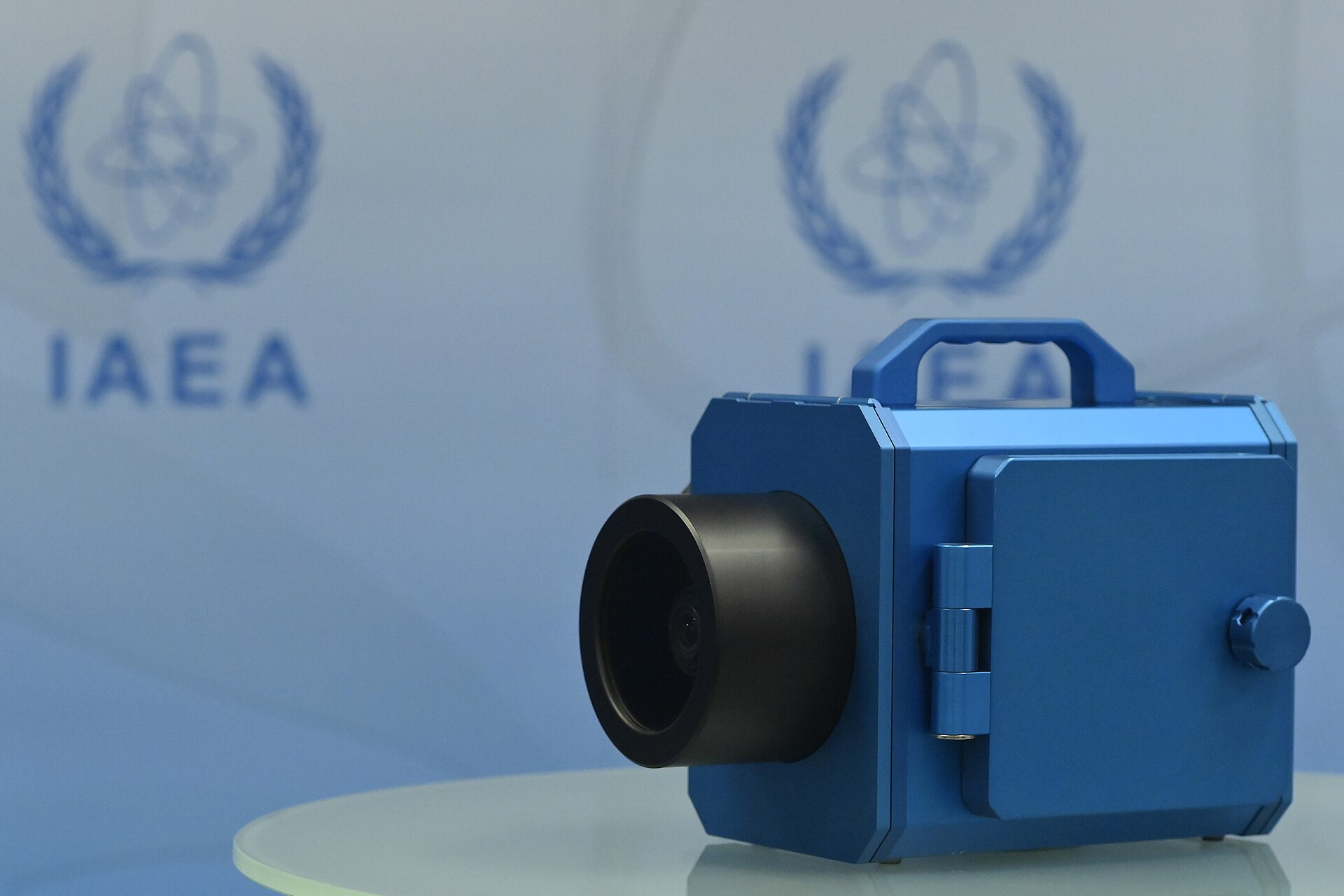
The IAEA’s last verified stockpile figure — 440.9 kg of uranium enriched to 60%, contained in approximately 26 to 52 canisters of uranium hexafluoride, each weighing about 50 kilograms when full — was recorded on June 13, 2025, in the agency’s quarterly report GOV/2025/50. The total enriched uranium stockpile across all enrichment levels was 9,874.9 kg as of the same report — nearly ten metric tons of material at various stages of enrichment, which is why David Albright of the Institute for Science and International Security has argued that any credible deal must address the full inventory, not merely the fraction enriched to 60%.
The structural implications of that ninety-three-day gap — including what it means for Trump’s removal demand — are examined in the IAEA’s 93-day verification blackout: the loss of IAEA continuity of knowledge makes every figure in the MOU’s Phase 1 sequencing formally unverifiable.
The Middle East briefing 3,000+ readers start their day with.
One email. Every weekday morning. Free.
“Must remove all 10 tons of enriched uranium, not just highly enriched stockpile.”David Albright, Institute for Science and International Security
What is known is that Iran terminated all IAEA monitoring on February 28, 2026 — the first day of the conflict — and the agency’s subsequent report, GOV/2026/8, warned of a “loss of continuity of knowledge” that “needs to be addressed with the utmost urgency.” That continuity is now ninety-one days broken, and every number Trump’s edit request implicitly relies on is a guess built from an eleven-month-old snapshot overlaid onto a country that has been at war for three months. The IAEA cannot say how much material exists, whether enrichment has continued at facilities it has never visited, or whether US strikes destroyed stockpiles or merely scattered them into more dispersed, harder-to-locate positions.
This means any “remove X kilograms by Y date” language that Trump’s edits produce will be anchored to a number — 440.9 kg — that functions as a floor, not a count. The actual stockpile could be 500 kg, 600 kg, or something else entirely, and no one outside Iran’s nuclear establishment knows, because the instrument designed to answer that question has been locked out since the war’s first day.
Why Can’t the Stockpile Simply Be Removed?
The 440.9 kg (at minimum) sits in the Isfahan underground complex, a facility that the Bulletin of Atomic Scientists reported in March 2026 had seen HEU moved deeper underground before the June 2025 US strikes even began — meaning Iran was preparing for exactly this kind of demand before the first missile was fired. Isfahan is, as nonproliferation expert Joe Cirincione has described it, located in the geographic center of a country at war: the material cannot be reached by sea, by air over contested skies, or by land without traversing hundreds of miles of IRGC-controlled territory.
“[Isfahan is] 500 miles from the coast, 800 miles from any staging area. Getting canisters too close together could trigger a chain reaction and explosion. Piercing one releases highly volatile, toxic gas.”Joe Cirincione, nonproliferation expert
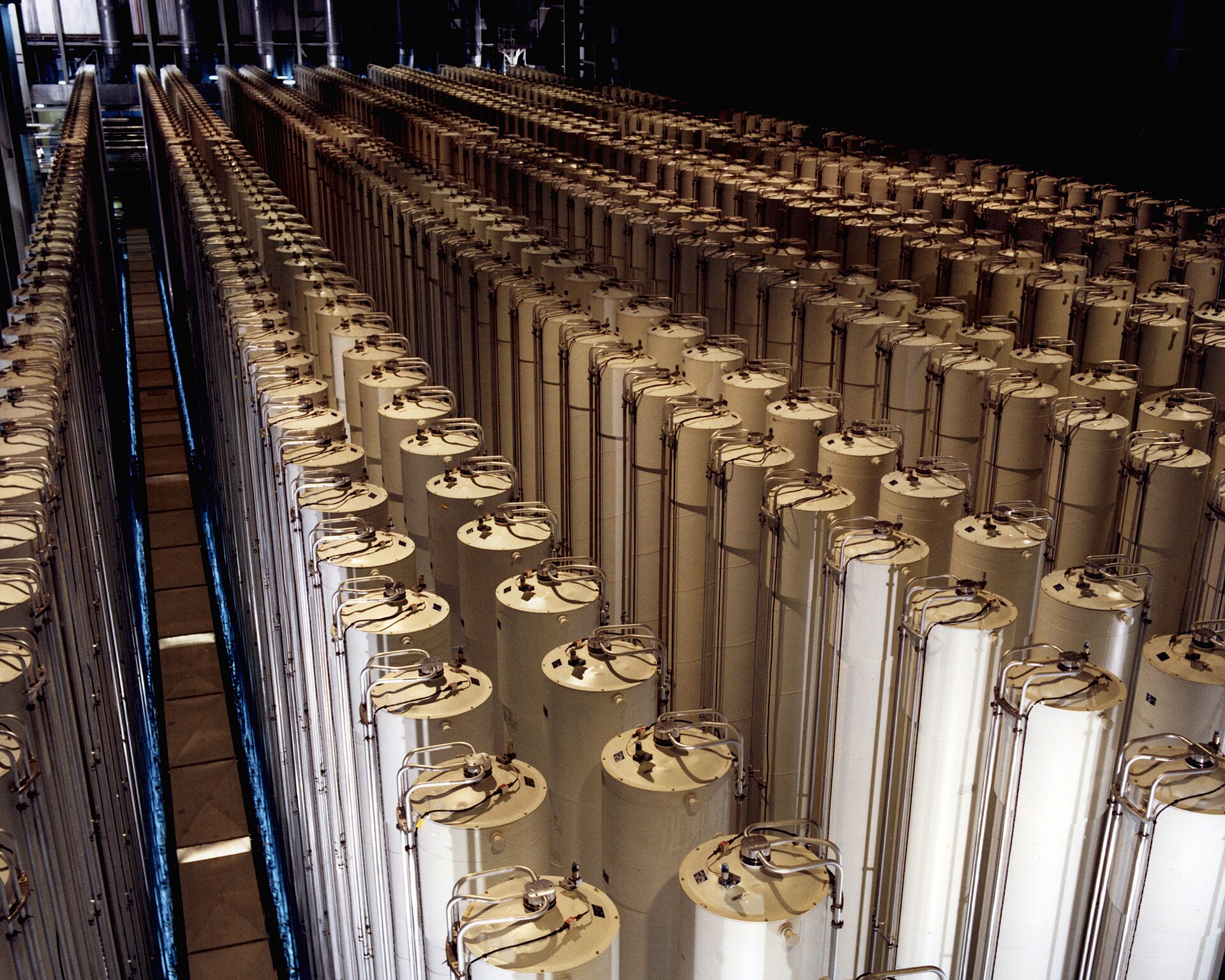
CBS News’ 60 Minutes reported in April 2026 that securing the Isfahan facility alone would require “thousands of US troops” and heavy earth-moving equipment because the tunnels have been sealed with dirt and concrete — a military operation, not a diplomatic handover, and one whose duration would be measured in months rather than the days a Phase 1 timeline might contemplate. Albright’s preferred method — “remove it from Iran in special military planes and then downblend it” — assumes air access to a country whose skies are contested, ground access to a facility whose entrances are sealed, and a custodial chain for material so dangerous that, as he warned, “safety issues become paramount” if a single canister is damaged in transit.
The material itself — uranium hexafluoride in pressurized canisters — is not inert cargo that can be trucked to an airfield and flown out on a transport plane. UF6 is volatile, toxic, and reactive with moisture; the canisters must be spaced to prevent criticality; and any breach during overland transport across an active conflict zone would release a cloud of hydrofluoric acid and radioactive uranium compounds. This is a logistics challenge that militaries train years to execute under controlled conditions, and Trump is asking for it to be specified in a paragraph of a diplomatic framework that was designed to avoid specifying it.
How Did Phase 2 End Up in Phase 1?
The MOU’s two-phase architecture was not an oversight or a weakness — it was a design choice made precisely because the nuclear file is unsolvable in an initial agreement. Phase 1 was scoped to be achievable: Hormuz opens, mines are removed, the US blockade lifts, and negotiations begin within a sixty-day window. Phase 2 — where HEU disposal, enrichment limits, and verification protocols would actually be hammered out — was left deliberately unwritten because those questions require answers that do not yet exist: How much material is there? Where is it now? What condition are the facilities in? Can the IAEA access them safely?
Trump’s edit request inverts this logic by demanding that Phase 1 specify “how the US gets the material and the timing” — operational details that Phase 2 was created to negotiate. This is not a matter of adding a paragraph or tightening language; it requires Phase 1 to contain binding logistics for a military-scale removal operation targeting material whose quantity, location, and condition are unknown, in a country whose supreme leader has directed that it stays, guarded by a force whose constitutional authority supersedes the negotiating government’s ability to bind it. The result is that Phase 1 can no longer function as a framework for beginning talks — it must now function as a completed nuclear agreement, which is the one thing every party, including the US negotiating team that became the signing bottleneck, understood it could not be.
Kelsey Davenport of the Arms Control Association warned in April 2026 that “U.S. Negotiators Were Ill-Prepared for Serious Nuclear Talks With Iran” — an assessment that Trump’s edit request validates by asking those same negotiators to answer, within a ceasefire framework, technical questions that the JCPOA took two years and six world powers to address, and that the current situation makes harder, not easier, than 2015.
The JCPOA Precedent Does Not Apply
The closest historical precedent — the only one — is the 2015 JCPOA, under which Iran shipped approximately 11,000 kilograms of low-enriched uranium at 3.67% to Russia in December 2015, roughly two and a half months after Adoption Day. That transfer is sometimes cited as proof that Iran will voluntarily export nuclear material under a political agreement, but the comparison collapses on contact with the actual chemistry, the actual geography, and the actual politics of 2026.
| Dimension | JCPOA (2015) | Current (2026) |
|---|---|---|
| Material | LEU at 3.67% — reactor fuel, no weapons utility | HEU at 60% — 564 SWU from weapons-grade (~1% of enrichment already done) |
| Quantity | 11,000 kg | 440.9 kg verified (91 days stale; true figure unknown) |
| Time to weapons-grade | Months to years of additional enrichment | “Days to a few weeks” (Arms Control Association) |
| Context | Peacetime, full diplomatic engagement | Active conflict, 91-day IAEA blackout |
| Verification | Full IAEA access throughout | Zero IAEA access since February 28 |
| Destination | Russia (Iran’s strategic partner) | United States (Iran’s active adversary) |
| Facility access | Open, inspected, monitored | Sealed underground tunnels, entrances blocked |
| Supreme leader position | Authorized transfer via fatwa | Directive: all HEU must remain in Iran |
There is no historical precedent for the voluntary transfer of 60%-enriched uranium hexafluoride under a political agreement, in wartime, from sealed underground facilities, to a country conducting active strikes on the transferring nation’s territory. The JCPOA shipped reactor fuel to an ally in peacetime with full verification — a transaction so different in kind from what Trump is requesting that citing it as precedent is like citing a domestic house move as proof that an underwater salvage operation is achievable because both involve relocating objects.
The enrichment gap alone should end the comparison: 3.67% uranium requires tens of thousands of additional separative work units to become weapons-usable, which is why the IAEA treated LEU export as a confidence-building measure rather than a disarmament step. The 60% material requires only a fraction of that remaining work to reach weapons-grade — achievable in days to weeks with Iran’s existing centrifuge infrastructure. The JCPOA moved material that was years from being dangerous; Trump is demanding a plan for material that is weeks from being a weapon.
Who Has Authority Over What the IRGC Guards?
Even if the physics were solvable and the logistics were achievable, the question of who in Iran could authorize the release of HEU from IRGC-controlled facilities has no clear answer — and every institutional road to the Iran deal runs through figures that diplomats cannot reach. Iran’s constitution, under Articles 150 and 176, gives the IRGC command authority over military assets that is structurally independent of the civilian government, which means Foreign Minister Araghchi, who is conducting the MOU negotiations, cannot bind the IRGC to release material from facilities under IRGC control any more than a foreign minister could order a separate country’s military to disarm.
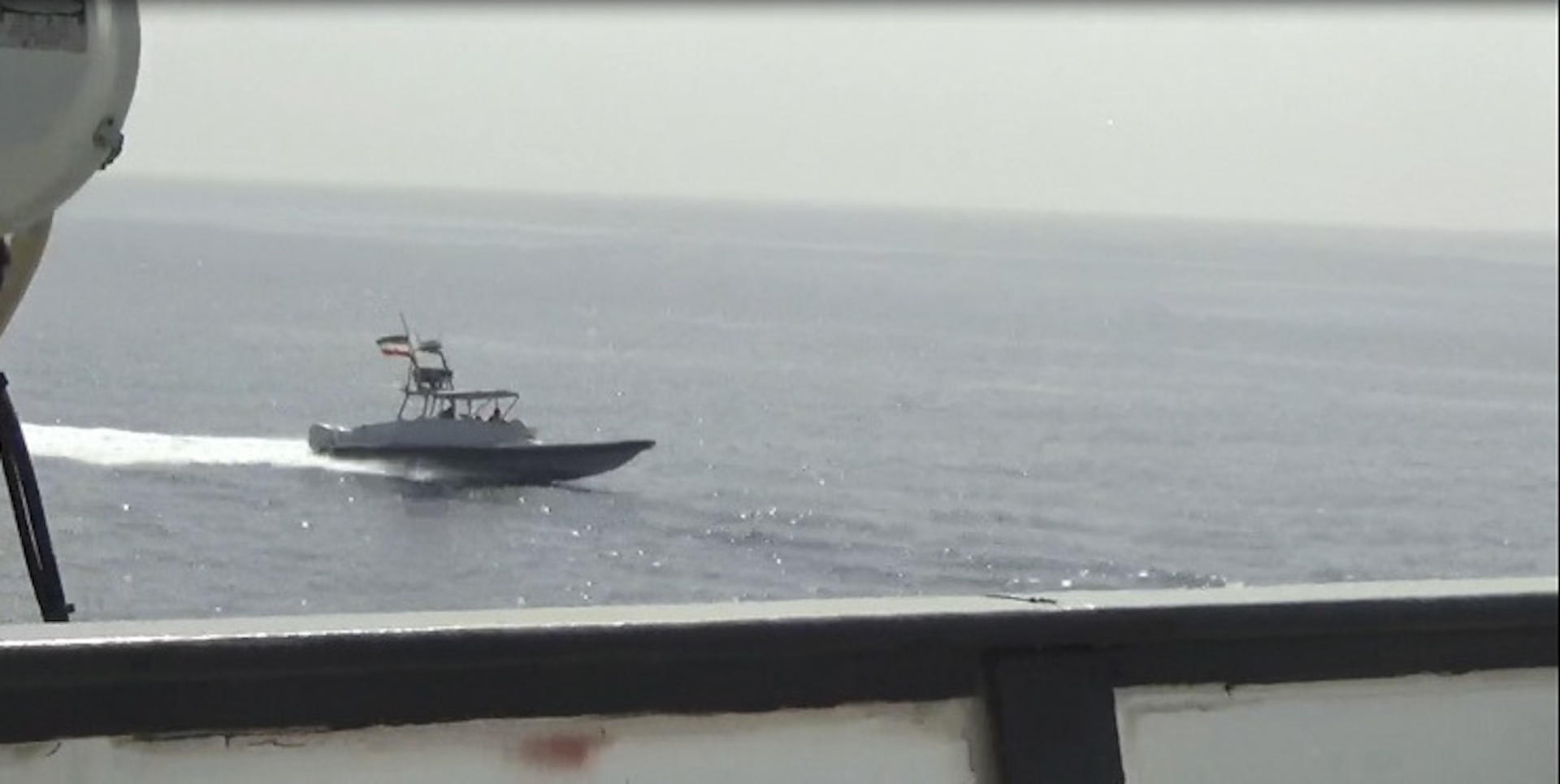
The IRGC underscored this point on May 30 by declaring Hormuz a “vast operational area” — asserting governance over the strait regardless of any diplomatic agreement — and opened fire on four vessels near Hormuz on May 28 in what amounted to a kinetic demonstration that the IRGC operates on its own timetable, not the foreign ministry’s. If the IRGC claims operational authority over a waterway that Phase 1 is designed to reopen, the notion that it would voluntarily surrender custody of the country’s most strategically valuable nuclear material because a foreign minister signed a document is not a diplomatic assumption — it is a fantasy built on a misunderstanding of who controls what in the Islamic Republic.
Two senior Iranian sources told Reuters that Khamenei issued a directive that Iran’s HEU must remain inside the country, on the grounds that transferring it abroad leaves Iran permanently defenseless against future American or Israeli strikes — a rationale that the war itself has only strengthened, because the strikes Iran has absorbed since February 28 are exactly the scenario Khamenei’s directive was designed to address. Araghchi has publicly hardened this into a non-negotiable position, but even if he reversed course tomorrow, the IRGC’s constitutional authority over the facilities where the material sits would make his reversal meaningless without a separate, parallel authorization from a command structure that answers to the supreme leader, not the president or the foreign ministry.
The Verification Circular Dependency
There is a structural paradox at the center of Trump’s demand that no amount of drafting can resolve: any commitment to “remove X kilograms by Y date” requires knowing how much material exists, which requires IAEA verification, which requires access to Iranian facilities, which is itself a Phase 2 negotiating item. The MOU’s Phase 2 is where IAEA access would be restored — it is, by design, a negotiating objective, not a precondition — but without IAEA access, no removal timeline can be anchored to a verified baseline, because the June 2025 figure of 440.9 kg is a minimum estimate from a different era, not a current inventory.
Iran could have enriched an additional 130 kg since the blackout began, based on pre-war production rates; it could have lost material to US strikes; it could have dispersed canisters to locations the IAEA has never catalogued. The verification mechanism needed to make any removal commitment implementable is subject to the same negotiation that the removal commitment is supposed to enable — a dependency loop that makes any specific number written into Phase 1 unverifiable by definition, not because of bad faith on either side but because the instrument designed to verify nuclear claims has been offline for ninety-one days and its restoration is itself a subject of the negotiation.
This is not a gap that better negotiators could close or that sharper language could paper over; it is a structural feature of demanding binding commitments about material whose quantity is unknown, in facilities whose condition is unverifiable, under an inspection regime that has been dark since the war’s first day and whose reactivation depends on the success of the very agreement that Trump is refusing to sign without those binding commitments already in place.
What Would the Senate Accept?
Even if Trump’s edit request produced language that Iran somehow accepted — language specifying how, when, and where HEU would be removed — that language would arrive in a Senate whose opening position makes the MOU look like a concession speech. S.Res.212, introduced by Senators Britt, Graham, and Cotton, requires “complete dismantlement and destruction of Iran’s entire nuclear program,” zero enrichment capability, and full implementation of the IAEA Additional Protocol — a standard so far beyond the MOU’s “negotiate over removal” framing that no conceivable edit to the current draft could satisfy it.
But Trump’s demanded edits do not move the MOU closer to the Senate’s position — they create a different problem entirely, because any specific removal timeline written into Phase 1 would immediately be tested against a 91-day-stale verification baseline, an unverifiable stockpile figure, and a supreme leader directive that contradicts the commitment, giving Senate opponents grounds to reject the document not for being too weak but for being built on numbers that no institution on earth can confirm. The Cotton letter precedent from 2015 — in which forty-seven senators warned Iran that any agreement not submitted as a treaty could be revoked by the next president — established that Senate opposition to Iran agreements is structural, not contingent on specific language.
Trump’s edit request appears designed to satisfy domestic critics who have demanded that the MOU address nuclear issues directly, but the physics that makes the edits unanswerable is the same physics that will make any resulting language indefensible in a committee hearing where senators can simply ask: “How do you know there are 440 kilograms when the IAEA hasn’t been inside an Iranian facility in three months?”
The Cost of Every Unsigned Day
Every day the MOU remains unsigned, the Iran-administered Persian Gulf Shipping Authority collects approximately $2 million per transit from vessels passing through Hormuz — revenue that flows without any agreement, verification, or concession, and that the OFAC SDN designation of the PGSA on May 28 has not stopped but merely complicated by forcing shippers into a compliance binary between paying Iran and accessing US financial markets. Iran has simultaneously told the United States to leave Hormuz entirely and begun building a permanent toll architecture with Oman that will outlast any MOU, functioning as a revenue stream that costs Iran nothing to maintain and that every day of delay entrenches further into the maritime insurance and routing systems that govern global shipping.
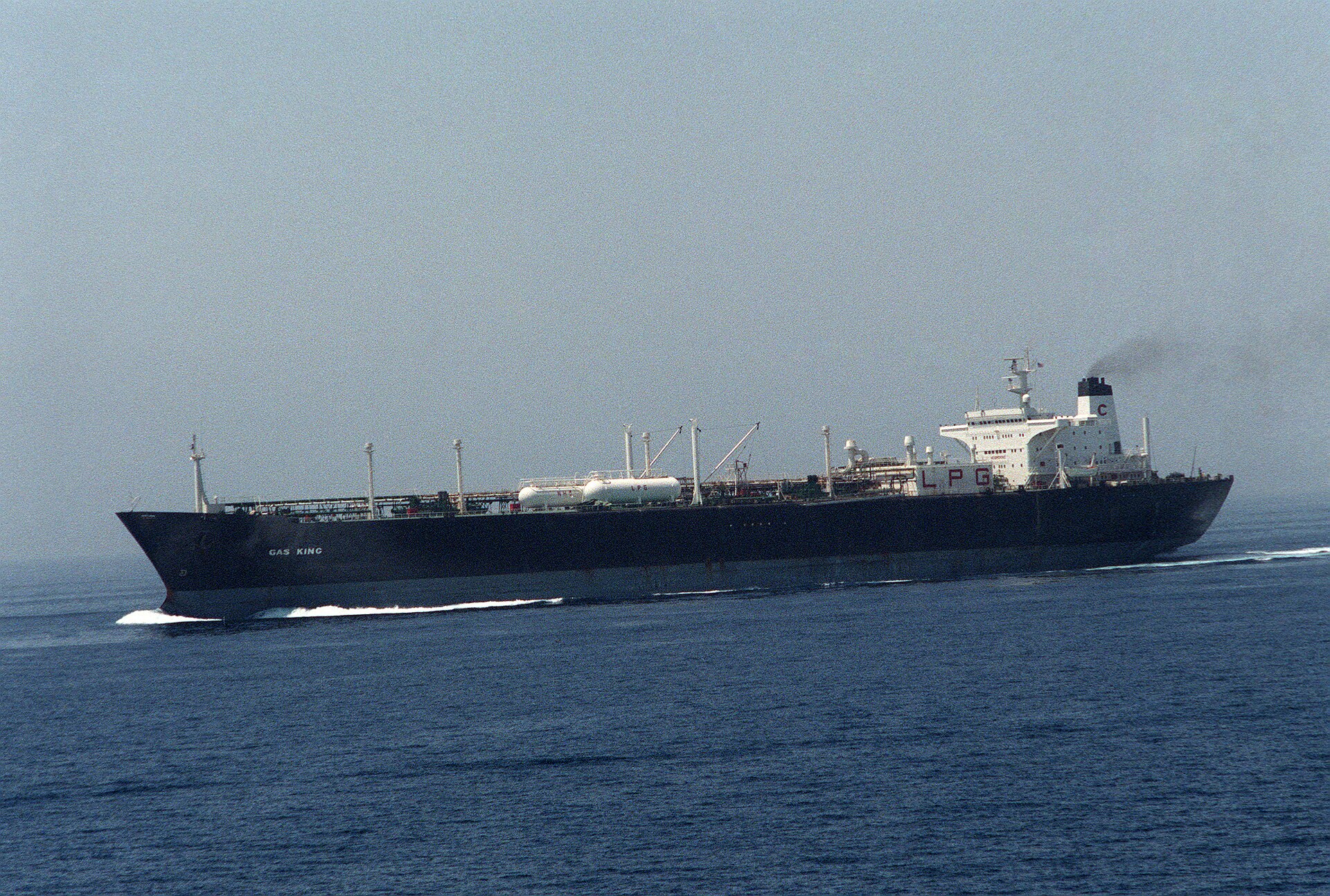
Saudi Arabia bears the heaviest cost of delay: Brent closed at $91 on May 29, roughly $17–20 below the $108–111 PIF-inclusive breakeven, translating to approximately $150–180 million per day in below-breakeven fiscal shortfall at current production levels. Aramco’s quarterly dividend of $21.89 billion — payable June 9, eligibility June 1 — now exceeds the company’s Q1 free cash flow of $18.6 billion, and PIF liquid cash has fallen to $15 billion, a six-year low, which means the kingdom is funding a state-finance loop that runs at a loss while the MOU’s Phase 1 — which would theoretically reopen Hormuz and support oil prices — remains unsigned because Trump has asked it to answer questions about uranium that belong to a Phase 2 that does not exist.
Meanwhile, the IRGC continues to assert operational authority over Hormuz regardless of any agreement, Khamenei’s directive that HEU stays in Iran remains in force, the IAEA’s verification blackout continues into another day, and the stockpile that Trump wants a removal plan for grows larger or smaller or stays the same — and the fact that no one outside Iran can say which of those three is happening is itself the answer to the question Trump asked on Saturday morning, written not in diplomatic language but in the physics of enrichment, the geography of Isfahan, and the ninety-one days of silence from a monitoring agency that used to be able to count.
Frequently Asked Questions
Did Iran offer to surrender its HEU before the conflict began?
Yes — and the offer was rejected. Joe Cirincione reported on his Substack that before the war, Iran proposed giving up its entire HEU stockpile and suspending enrichment for three to five years, a package that Cirincione said Britain’s national security advisor privately described as “surprisingly generous.” Trump rejected it, and the offer was withdrawn when hostilities began on February 28. The pre-war diplomatic context that enabled that offer — IAEA access, verified stockpile figures, a foreign ministry empowered to negotiate — no longer exists, which means the concession Iran once volunteered is now being demanded under conditions that make it physically harder, institutionally more constrained, and strategically more dangerous for Tehran to deliver.
How fast was the stockpile growing before the IAEA was expelled?
The growth rate was accelerating, not steady. In the reporting period ending May 17, 2025, Iran added 133.8 kg of 60%-enriched uranium in a single quarter — a pace that the IAEA flagged as a sharp increase from prior periods. By June 13, the stockpile had grown another 32.3 kg to 440.9 kg, suggesting continued rapid enrichment. If the pre-blackout pace held through the ninety-one days since February 28, the stockpile could now exceed 570 kg — but this projection assumes no disruption from US strikes and no expansion of enrichment capacity at undeclared sites, either of which could make the actual figure higher or lower than any projection, and neither of which can be determined without the IAEA access that Iran terminated on Day 1.
How much material would actually need to be removed under expert recommendations?
Far more than the 440.9 kg under discussion. David Albright of ISIS has argued that the full 9,874.9 kg enriched inventory must be addressed — of which the HEU at 60% represents less than 5% by mass. The remaining 9,434 kg at lower enrichment levels is not weapons-grade, but it represents an enormous latent enrichment capacity: Iran could re-enrich lower-grade material to 60% far faster than starting from natural uranium, which means leaving 95% of the stockpile in place while removing 5% addresses the headline number without solving the underlying proliferation risk. Trump’s edit request focuses on the high-enriched fraction, but the physics of enrichment makes that lower-grade remainder the reload capacity for any future breakout attempt.
Hours after Trump made this demand, the IAEA published its Board of Governors report noting Iran holds a “record” stockpile of HEU — a figure the agency can only project, not physically verify, because inspectors have been barred since February 28. Trump simultaneously told Fox News that Iran has “agreed” to forgo nuclear weapons. Why the IAEA record stockpile and Trump’s “agreed” declaration are mutually incompatible.