Brent at $96 After a Declared Blockade Is the Price of Disbelief
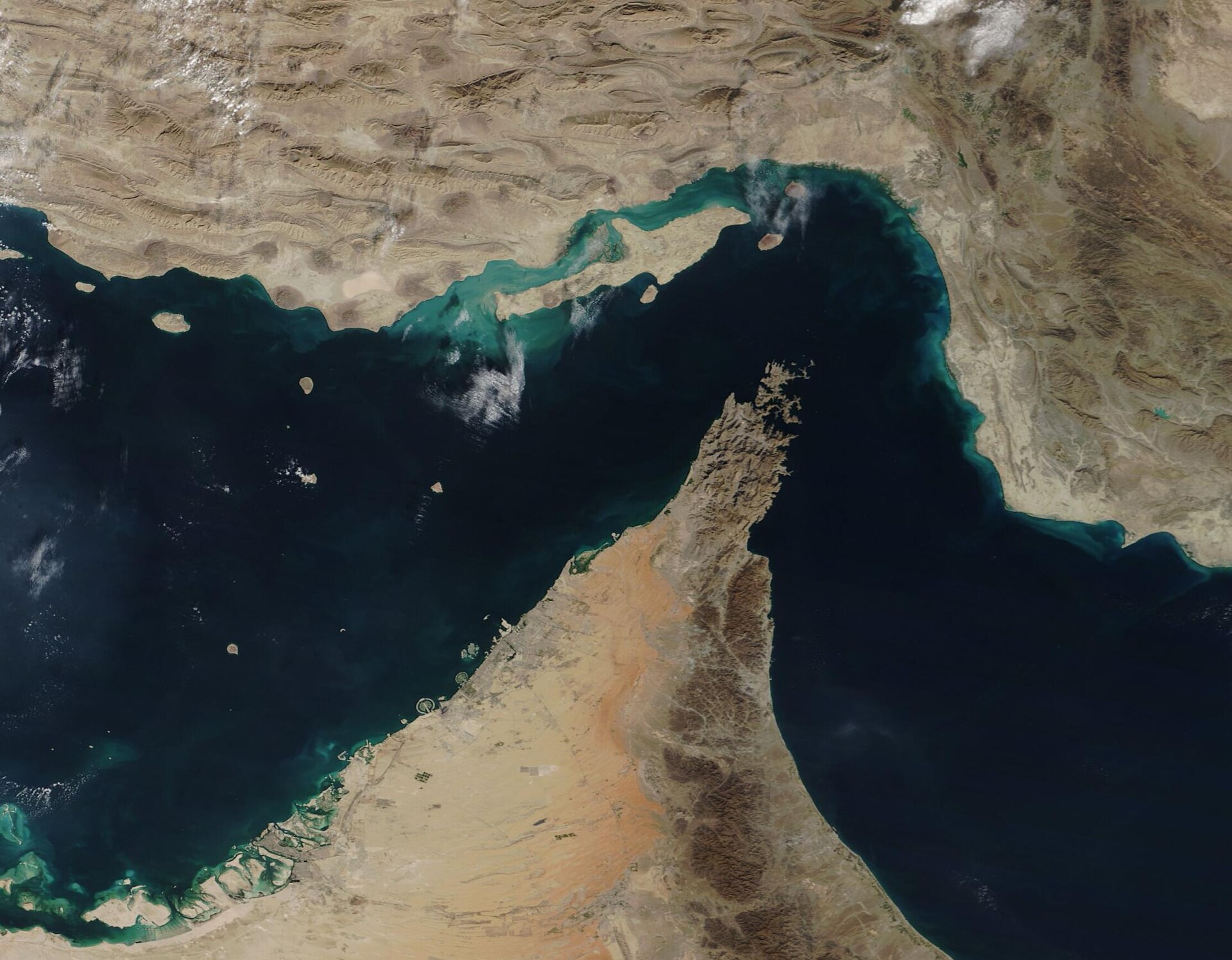
DHAHRAN — The United States Navy has declared a blockade of the Strait of Hormuz, and Brent crude closed the week at $96 a barrel — a 6% rise that, in any rational market, would represent the single most mispriced asset on earth. The non-spike is the story, because the three assumptions baked into that $96 handle — that the blockade will not be enforced, that diplomacy will reverse it within weeks, or that Saudi Arabia’s Yanbu bypass can absorb the shortfall — are all, on the available evidence, wrong.
What makes this particular credibility trap so destructive for Riyadh is its binary structure: if Trump enforces the blockade, throughput collapses and Brent surges past $120, hammering American consumers and making the war politically unsurvivable in Washington; if Trump retreats, deterrence dies, the IRGC is emboldened, and Saudi Arabia’s security guarantor has publicly flinched. Saudi Arabia’s fiscal break-even sits at $108 a barrel on a PIF-inclusive basis, which means that at $96 the Kingdom is bleeding $12 to $17 per barrel on every unit it manages to export — through a pipeline system that structurally cannot replace the volumes Hormuz carried before the war began.
Table of Contents
- Brent at $96 After a Declared Blockade Is the Price of Disbelief
- The Three Assumptions in $96 — and Why All Three Are Wrong
- Why Is Physical Crude $38 Above Futures?
- The Yanbu Ceiling Saudi Arabia Cannot Raise
- What Happens If Trump Enforces the Blockade?
- What Happens If Trump Retreats?
- Saudi Arabia’s Fiscal Position at $96
- Fifty-One Days and No Mine Clearance Ships
- Why Does Resolution Not Mean Recovery?
- Frequently Asked Questions
The Three Assumptions in $96 — and Why All Three Are Wrong
A $96 barrel of Brent after a declared naval blockade of the world’s most important chokepoint contains, implicitly, three bets. The first is that the blockade will not be enforced — that Trump’s Truth Social post declaring “the United States Navy, the Finest in the World, will begin the process of BLOCKADING any and all Ships trying to enter, or leave, the Strait of Hormuz” was rhetoric, not operational reality. The second is that diplomacy will produce a reversal fast enough that supply disruption remains temporary. The third is that Saudi Arabia’s East-West Pipeline to Yanbu provides a functional bypass, rendering the strait’s closure a logistical inconvenience rather than a supply catastrophe.
The evidence for assumption one is not nothing — a Greek-flagged Suezmax tanker, the Pola, disabled its AIS and transited Hormuz during the blockade period, delivering cargo to the UAE, which suggests enforcement is not yet airtight. But selective leakage is not the same as open passage, and the IRGC declared on April 11 that it holds “full authority to manage the Strait of Hormuz” and that “any attempt by military vessels to pass through will be dealt with severely.” When USS Frank E. Peterson and USS Michael Murphy transited on April 11, the IRGC issued what it called a “last warning” — CENTCOM says the transit completed, Bloomberg’s sources say the destroyers turned back, and the contested outcome itself tells you everything about the enforcement environment.
The second assumption, that diplomacy is close, collapsed in Islamabad. Vice President Vance emerged from the talks saying “we have not reached an agreement, and I think that’s bad news for Iran much more than for the USA,” while Ghalibaf, the Iranian parliamentary speaker who brought a 71-member delegation and an IRGC Aerospace Force pedigree, offered only that “the U.S. has understood Iran’s logic and principles and it’s time for them to decide whether they can earn our trust or not.” Felipe Elink Schuurman, CEO of Sparta Commodities, was blunter: “I strongly believe we are way past the point where a quick satisfactory resolution is possible. This is the kind of conflict that will drag out for months.”
The third assumption — Yanbu as adequate bypass — is the one the market most desperately wants to believe, and the one that fails most completely on the numbers. That failure deserves its own section.
The Middle East briefing 3,000+ readers start their day with.
One email. Every weekday morning. Free.
Why Is Physical Crude $38 Above Futures?
The single most telling data point in global oil markets right now is not the Brent futures price, it is the gap between that price and what refiners are actually paying for physical barrels. Physical Dubai crude surged to $38 a barrel above futures prices during the same period that Brent futures retreated below $100 from a $119 spike — a divergence so extreme it suggests the paper market and the physical market are, functionally, pricing two different commodities. Futures traders are pricing expectations about diplomatic outcomes and headline risk; physical buyers are pricing whether a tanker will arrive at their refinery in four weeks.
Sparta Commodities’ Schuurman put it in terms that should have moved markets more than they did: “Physical product markets aren’t a meme like crude futures have now been turned into via Trump; either there will be supply or no supply and prices will reflect that.” The implication is that $96 Brent is not a measure of genuine supply conditions, it is a measure of traders betting on resolution — a bet the physical market, where actual barrels change hands, is emphatically refusing to make. Sushant Gupta, Wood Mackenzie’s VP for Asia Pacific refining, confirmed the physical-side stress: “Asian refiners will struggle to fulfil crude buying requirements for April, leading to run cuts across the region.”
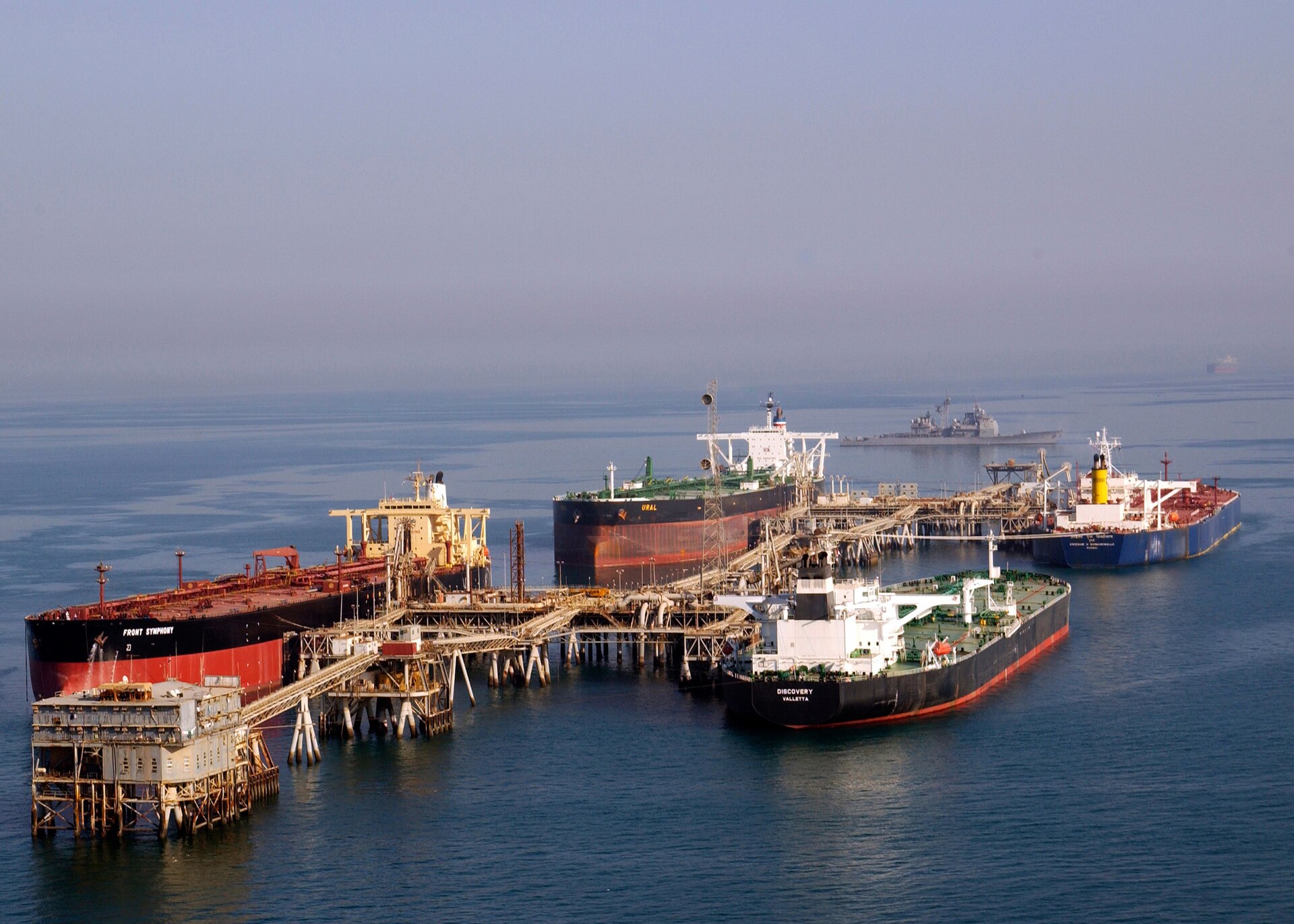
The $38 premium is, in effect, the market’s confession that $96 futures is the wrong number. When physical and paper prices diverge this violently, history suggests the paper market eventually capitulates upward — the only question is whether that correction arrives gradually or in a single session that reprices everything at once.
The Yanbu Ceiling Saudi Arabia Cannot Raise
The East-West Pipeline to Yanbu is the asset on which Saudi Arabia’s entire war-era export strategy depends, and its constraints are not speculative — they are documented, measured, and structural. Aramco CEO Amin Nasser has confirmed the pipeline’s export-available capacity at 5 million barrels per day. The IEA measured peak loading at Yanbu on March 9 at 5.9 million bpd, a figure that represents absolute maximum throughput including stored inventory drawdowns and operational surge that cannot be sustained indefinitely. The sustained average since March 1, according to Vortexa and Kpler tracking data, has been 2.5 to 3 million bpd, with a single week near March 23 reaching approximately 4.6 million bpd described as “near capacity.”
Pre-war, Saudi Arabia exported 7 to 7.5 million barrels per day through Hormuz. The arithmetic is unforgiving: even at Yanbu’s theoretical peak of 5.9 million bpd, the structural bypass shortfall is 1.1 to 1.6 million bpd. At the sustained average, the gap widens to 4 to 5 million bpd — volumes that simply do not reach the market through any existing infrastructure. Aditya Saraswat at Rystad Energy was cautious about the higher loadings: “It remains unclear whether this situation can be sustained over the long term.” Andrew Logan, an independent energy researcher, was more direct, calling the Red Sea pipeline route one that would “only marginally offset the deficit caused by the closure of the Strait of Hormuz.”
The scope question — whether CENTCOM’s port-specific interdiction actually preserves a commercial corridor for Saudi crude — is the subject of a separate analysis in The Blockade Has a Loophole. The IRGC Does Not.: the legal exemption exists on paper, but the IRGC’s autonomous patrol commanders have no obligation to honour it.
| Metric | Volume (M bpd) | Source |
|---|---|---|
| Pre-war Hormuz throughput | 7.0 – 7.5 | Sparta Commodities |
| East-West Pipeline capacity (Nasser) | 5.0 | Aramco CEO |
| Yanbu peak loading (March 9) | 5.9 | IEA |
| Yanbu sustained average (since March 1) | 2.5 – 3.0 | Vortexa / Kpler |
| Yanbu week of March 23 (“near capacity”) | ~4.6 | Kpler / Reuters |
| Structural shortfall at peak | 1.1 – 1.6 | Calculated |
| Structural shortfall at sustained avg | 4.0 – 5.0 | Calculated |
There is also the cost dimension that the bypass-is-enough narrative ignores entirely. Yanbu-to-Asia VLCC routes cost $12 million more per voyage than US Gulf Coast routes and $17 million more than West Asian alternatives, according to Rystad data — a freight penalty that compounds on every cargo and lands, in the end, on Asian buyers already paying a record $19.50 per barrel OSP premium that Aramco set when Brent was at $109, not $96. OPEC+ approved a May output hike of 206,000 bpd before the blockade, but if Hormuz is closed, those additional barrels have no route to market that Yanbu isn’t already straining to provide. The revenue consequence of the Yanbu ceiling — how $102 Brent generates the same daily income as $75 with full Hormuz access — is the central argument of “The Price Saudi Arabia Cannot Collect.”
What Happens If Trump Enforces the Blockade?
If the US Navy moves from declaration to enforcement — intercepting commercial vessels, establishing exclusion zones, boarding or turning back tankers — the supply mathematics that Goldman Sachs and JPMorgan have published become operative. Goldman’s scenario modeling, published April 9, projects Brent above $100 throughout 2026 if Hormuz remains closed for one additional month, rising to $120 per barrel in Q3 and $115 in Q4. “We continue to see the risks to our price forecast as skewed to the upside,” Goldman wrote, a formulation that in investment-bank parlance means they think their already-elevated numbers may still be too low. JPMorgan went further, calling prices “headed to $120-$130 per barrel in the very near term” with the possibility of an “overshoot toward $150 per barrel” if the strait remains shut through mid-May.
Wood Mackenzie’s assessment sits at the extreme end: “$200 per barrel is not outside the realms of possibility in 2026.” Kevin Book at CSIS quantified the missing volume: “A Strait of Hormuz shutdown is a big deal — global supplies are falling roughly 20 million barrels per day short.” Against that shortfall, the ING analysts Warren Patterson and Ewa Manthey calculated that emergency reserve releases can provide a maximum of 3.3 million barrels per day globally, which they noted is “far short of the supply losses we are seeing from the Persian Gulf.”
Enforcement also means confronting the mine problem directly — and mine clearance, even under the most optimistic scenario, is not a days-long operation. The clearance timeline, the decommissioned clearance fleet, and the IRGC’s explicit claim that it cannot locate its own mines are all examined in the section below, but the headline finding is that enforcement does not come with an exit ramp measured in days. It comes with one measured in months.
| Institution | Scenario | Price Projection | Date Published |
|---|---|---|---|
| Goldman Sachs | Closed 1 additional month | >$100 Brent through 2026 | April 9 |
| Goldman Sachs | Extended closure | $120 Q3 / $115 Q4 | April 9 |
| JPMorgan | Near-term | $120 – $130 | April 3 |
| JPMorgan | Shut through mid-May | Overshoot toward $150 | April 3 |
| Wood Mackenzie | Extended disruption | Up to $200 | April 2026 |
What Happens If Trump Retreats?
The retreat scenario is the one markets appear to be pricing, and it is, for Saudi Arabia, almost as damaging as the enforcement scenario — just on a different timeline. If the blockade declaration is walked back, softened into a “monitoring operation,” or simply not enforced beyond the initial Truth Social post, the IRGC has already demonstrated what that permissiveness looks like in practice. Sparta Commodities documented 26 IRGC-vetting vessel transits in a two-week pre-blockade window, a selective-access architecture that generates toll revenue and positions Iran, not the United States, as the entity controlling passage through the strait.
Sen. Mark Warner captured the retreat dilemma with unusual clarity: “I have no idea, other than the idea that he could interdict at both ends of the strait, how he’s going to get it reopened, how we are going to get ships through.” The shipping analyst assessment — that control of Hormuz “is still very much in the hands of the Iranians” — reflects the operational reality that a declaration without sustained enforcement transfers the credibility deficit from Iran to the United States. For Riyadh, the implications compound: the Kingdom’s security architecture is built on the premise that the US Navy guarantees freedom of navigation in the Gulf, and a blockade declaration followed by a retreat is a public demonstration that this guarantee no longer functions.
The IRGC’s April 11 declaration of “full authority to manage the Strait” was timed, not coincidentally, to the same window as the Islamabad talks — a parallel messaging track that says, in effect, diplomatic outcomes are irrelevant to operational control. The Tanker War of 1987-88, which required 30-plus US warships under Operation Earnest Will, offers a partial precedent, but the comparison breaks in Iran’s favor: in the 1980s, Iran was selectively attacking ships, not controlling the entire strait through a combination of mines, vetting authority, and toll collection infrastructure. The 2026 architecture is more complete.
Saudi Arabia’s Fiscal Position at $96
Saudi Arabia entered this war already running deficits. The pre-war fiscal trajectory showed a 5.3% of GDP deficit in 2025 — approximately $65 billion — with public debt-to-GDP at 38% and a record $25 billion in sovereign bond issuance projected for 2026. The war has made all of these numbers worse. Q1 2026 produced the largest quarterly budget deficit since 2020, according to Bloomberg, and Non-Oil PMI fell to 48.8 in March — the first contraction since August 2020, a measure of how deeply the war has penetrated the non-oil economy that Vision 2030 was supposed to make the center of Saudi growth.
At $96 Brent, with a PIF-inclusive fiscal break-even at $108, the Kingdom is losing $12 to $17 on every barrel. Goldman Sachs projects a war-adjusted 2026 deficit of 6.6% of GDP, double the official 3.3% forecast; Deutsche Bank, Emirates NBD, and Abu Dhabi Commercial Bank all cluster in the 5 to 5.3% range. Tim Callen, the former IMF Mission Chief to Saudi Arabia, said the revenue projections “were very optimistic” even before the blockade declaration. Monica Malik, Chief Economist at Abu Dhabi Commercial Bank, acknowledged that higher production volumes would help but added: “There will be the benefit of higher production… But that’s not going to make up for it all.”

SAMA’s foreign reserves — $415 billion at end-2024, representing 15 months of import cover and 187% of the IMF’s reserve adequacy metric — provide a cushion, but a cushion is not a solution. Raad Alkadiri at CSIS framed the structural problem: “OPEC+’s market management task this year just got a lot more difficult at a time when fiscal pressure on key producers, including Saudi Arabia, is growing sharply.” The May OSP of +$19.50 per barrel for Arab Light to Asia is now $13 to $17 underwater relative to spot — a pricing decision that compresses Aramco’s margin while squeezing Asian buyers who are simultaneously dealing with run cuts and the freight penalties detailed above, making every Saudi barrel more expensive than the alternatives. The question hanging over Aramco’s June OSP, due around May 5, is whether Riyadh can sustain record-high pricing to a buyer base that is already cutting refinery runs because it cannot source enough physical crude.
That question is now overlaid by a blockade timeline anchored to November: a full analysis of the Yanbu ceiling as a structural revenue trap shows how Brent above $100 still leaves Saudi Arabia below its fiscal break-even when export volumes are constrained to the Red Sea corridor.
Fifty-One Days and No Mine Clearance Ships
The mine problem is the blockade’s hidden clock, the variable that turns a political crisis into a physical infrastructure problem with its own timeline regardless of what diplomats agree. Iran’s claim that it “doesn’t remember where all the mines are and cannot disable them” is transparent information warfare — a way of saying that even if Tehran agrees to a ceasefire, the strait does not reopen on the day the agreement is signed. Using the benchmark from Kuwait in 1991, when coalition forces cleared a substantially smaller area, the minimum clearance timeline is approximately 51 days, and that estimate assumes mine countermeasure assets that the United States no longer has in the region.
The four Avenger-class MCM ships that provided this capability from Bahrain were decommissioned in September 2025, and their notional replacements — three Littoral Combat Ships operating from Asia — represent a degraded capability at greater distance. The Suez Canal precedents are instructive in a way that should alarm anyone pricing a quick resolution: the 1956 closure lasted five months, and the 1967 closure lasted eight years. Nobody is projecting an eight-year Hormuz closure, but the assumption embedded in $96 Brent — that this resolves in weeks — has no historical support and no operational basis given the current mine threat and the absent clearance fleet.
Even the 51-day estimate assumes uncontested clearance operations in waters where the IRGC has declared “full authority” and warned that military vessels will “be dealt with severely.” Mine clearance under fire is a categorically different operation from mine clearance under ceasefire, and the distinction is one that $96 Brent appears not to have considered at all.
Why Does Resolution Not Mean Recovery?
The most dangerous assumption in the $96 price is not about whether the blockade will be enforced or walked back — it is the assumption that resolution, whenever it arrives, means supply normalizes quickly. June Goh, Sparta Commodities’ senior oil market analyst, estimated that “other sources of crude will take one to two months to arrive into our region,” and that the overall timeline for supply chain normalization after an unconditional Hormuz reopening would be “at least three to six months.” That estimate covers not just the physical transit of oil but the unwinding of the logistical disruptions — the 70-plus empty VLCCs idling off Singapore on four-week voyage cycles, the 800-plus vessels trapped in holding patterns, the refinery run cuts across Asia that cannot be reversed overnight.
Schuurman at Sparta Commodities reinforced the point from the commercial side: Iran’s selective-access architecture — the vetting system, the toll collection apparatus, the mine threat — does not simply switch off when a ceasefire is declared. These are infrastructure, not postures, and they have their own decommissioning timelines that are independent of whatever text diplomats produce in Islamabad or Doha or wherever the next round of talks convenes.
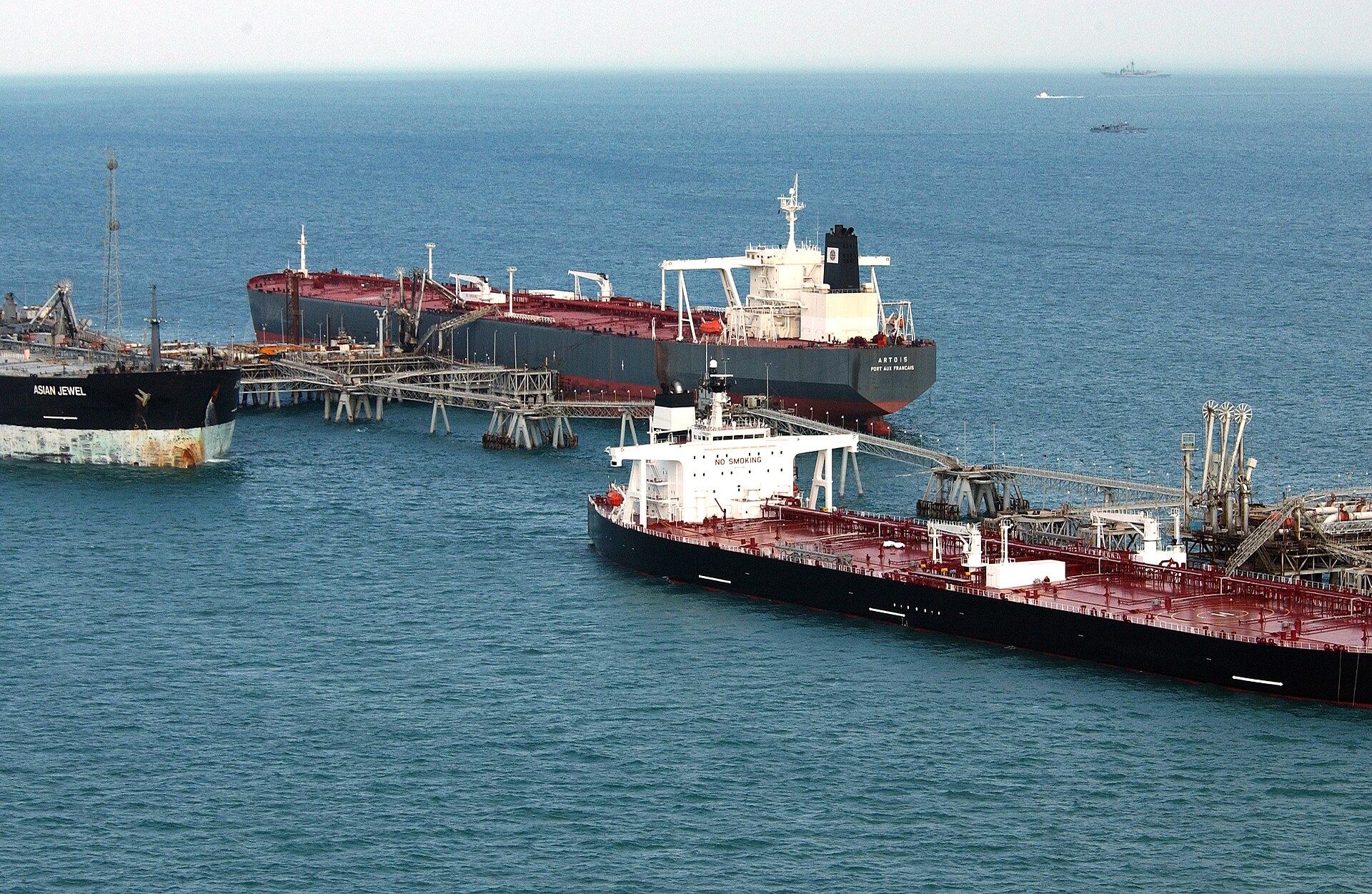
The post-ceasefire throughput data already illustrates this: 15 to 20 ships per day were transiting Hormuz in the ceasefire’s early days versus 138 per day pre-war, according to Windward tracking data. The gap between declaration and operational reality — between a ceasefire on paper and oil flowing at pre-war volumes — is measured in months, not days, and every one of those months is a month in which Saudi Arabia exports below its pre-war capacity, collects revenue below its fiscal break-even, and draws down reserves that are finite however large they appear on a balance sheet. The $3.7 billion Sadara debt grace period expires June 15, a fixed date that does not move because diplomats are still talking.
Frequently Asked Questions
Why did oil prices only rise 6% after a US blockade declaration?
Futures markets are pricing the probability of enforcement and diplomatic reversal rather than the physical supply impact. The $38-per-barrel premium on physical Dubai crude over futures reveals that actual buyers paying for real barrels are pricing a far more severe disruption than the paper market suggests. This divergence has historically resolved with futures capitulating upward toward physical prices, not the reverse — the 2019 Abqaiq attack saw a similar initial futures underreaction before physical tightness forced a correction. The question is timing, not direction.
Can strategic petroleum reserves offset a Hormuz closure?
ING analysts calculated maximum global SPR release capacity at 3.3 million barrels per day, while CSIS’s Kevin Book estimated the Hormuz-related supply shortfall at approximately 20 million bpd. The 6:1 gap between available reserves and missing supply means SPR releases function as a psychological tool — signaling government willingness to act — rather than a physical substitute for Hormuz throughput. The US SPR itself sits at roughly 370 million barrels after years of drawdowns, enough to cover the US share of the shortfall for weeks, not months. Japan’s reserves are larger relative to consumption but face the same constraint: release rates, not stockpile size, determine effectiveness.
What would Saudi Arabia need oil prices to reach to balance its war-era budget?
The PIF-inclusive fiscal break-even of $108 per barrel was calculated before the blockade added military spending, emergency procurement costs, and the economic drag of a Non-Oil PMI in contraction territory. Goldman Sachs’s war-adjusted deficit projection of 6.6% of GDP implies the effective break-even may have drifted higher — possibly toward $115-120, though no institution has published a revised war-era break-even estimate incorporating the full cost of PAC-3 depletion (at $3.9 million per interceptor round, the expenditure runs into the billions) and emergency arms procurement. The $25 billion sovereign bond issuance projected for 2026 was planned before the war and may need to increase.
How does the 2026 Hormuz crisis compare to the 1987-88 Tanker War?
Operation Earnest Will deployed more than 30 warships and succeeded in keeping Gulf oil flowing, but the 1987-88 threat was qualitatively different. Iran was selectively attacking tankers — a harassment strategy that disrupted shipping routes without controlling the strait itself. Contemporary assessments from 1987-88 noted that the Tanker War had yet to significantly curtail Gulf oil exports or substantially increase world oil prices — a dynamic that contrasts sharply with 2026 conditions. In 2026, the IRGC operates a comprehensive access-control system combining mines, vetting authority, a toll collection apparatus processing $2 million per VLCC transit, and an explicit declaration of “full authority to manage the Strait.” Escort convoys worked against selective attacks; they do not work against a mined channel controlled by an adversary who claims not to know where the mines are.
When will the OPEC+ May output increase reach the market?
The 206,000 bpd increase approved for May was decided before the blockade declaration, and its physical impact depends entirely on export route availability. Saudi Arabia’s additional barrels would need to flow through Yanbu, which is already operating at or near its sustained capacity ceiling. UAE, Kuwait, and Iraqi barrels — which constitute the bulk of OPEC+ members affected by Hormuz — have no equivalent bypass infrastructure and cannot reach the market while the strait remains restricted. The output increase, in practice, is an accounting exercise until the export infrastructure question is resolved, making it the first OPEC+ production decision in the cartel’s history that may be physically undeliverable on the scheduled date.
A further complication for Asian crude supply: OFAC’s General License U authorizing Indian purchases of Iranian crude expires April 19, one week after the blockade declaration. Indian refiners covered under the licence face an automatic policy shift with no transition mechanism, adding a demand-side disruption to the existing supply blockage.