
FOUND
Length: 28823 -> 29122
“
DHAHRAN u2014 Brent crude crossed $100 a barrel on April 12 for the first time since the war began, hours after President Trump declared a US Navy blockade of the Strait of Hormuz. For Saudi Arabia, the price level should represent vindication u2014 the fiscal break-even that Riyadh has chased since February. It does not. At $102 Brent and roughly 5 million barrels per day of constrained export capacity through Yanbu, the Kingdom is generating approximately the same daily revenue it earned at $75 with full Hormuz access. The windfall is a mirage: the price went up, the volume went down, and the war is consuming the difference.
n
Table of Contents
n
- n
- The Revenue Math That Haunts Riyadh
- Why Yanbu Cannot Replace Hormuz
- What the War Costs While the Price Rises
- How Did Aramco’s OSP Become a Liability?
- Who Is Actually Capturing the $100 Windfall?
- What Happens if Brent Stays Above $100?
- The 1990 Precedent, Reversed
- Can Saudi Arabia Close the Deficit at Any Price?
- Frequently Asked Questions
The Middle East briefing 3,000+ readers start their day with.
One email. Every weekday morning. Free.
- n
n
n
n
n
n
n
n
n
n
n
n
n
The Revenue Math That Haunts Riyadh
n
The arithmetic is simple enough to fit on a napkin, and damning enough that no one in the Ministry of Finance wants to write it down. Before the war, Saudi Arabia exported approximately 6.7 million barrels per day at an average Brent price near $75. Daily crude revenue: roughly $502 million. On April 12, with Brent at $102 and crude exports constrained to approximately 5 million barrels per day through the Red Sea corridor, daily revenue came to roughly $510 million.
n
The delta is near zero u2014 an $8 million daily improvement on a pre-war baseline, before accounting for war expenditure, PIF commitments, the underwater May OSP position, or the collective GCC infrastructure war damage that UN agencies have begun assessing. A 36 percent price increase absorbed by a 25 percent volume decline leaves Riyadh running in place.
n
The PIF-inclusive fiscal break-even u2014 the number that actually matters, because it captures the sovereign wealth fund’s $71 billion in committed disbursements alongside central government spending u2014 sits at $108 to $111 per barrel, according to Bloomberg Economics. At $102, Saudi Arabia remains $6 to $9 below that threshold. At 5 million barrels per day of exports, the shortfall translates to $30 to $45 million per day in revenue below fiscal balance. Goldman Sachs has revised its war-adjusted 2026 fiscal deficit estimate to 6.6 percent of GDP, double the official 3.3 percent forecast published in December. Deutsche Bank, Emirates NBD, and Abu Dhabi Commercial Bank cluster at 5.0 to 5.3 percent u2014 less alarming, but still well above anything Riyadh budgeted for.
n
n
Why Yanbu Cannot Replace Hormuz
n
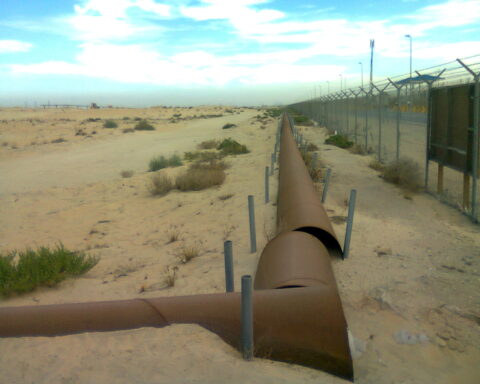
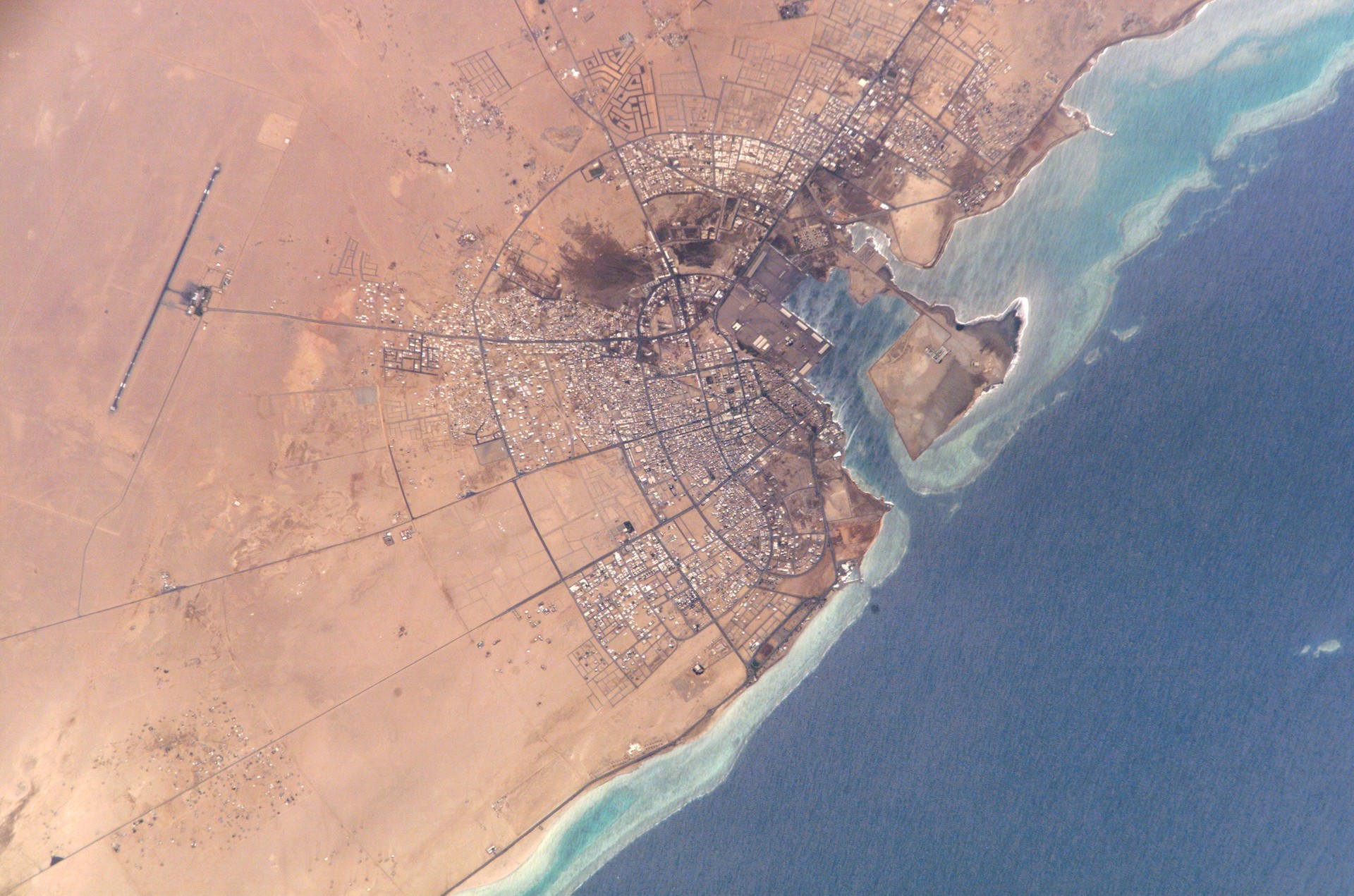
The East-West Pipeline u2014 the 1,200-kilometer artery connecting the Eastern Province oil fields to the Red Sea port of Yanbu u2014 reached its full design capacity of 7 million barrels per day by late March, Aramco CEO Amin Nasser confirmed on the company’s March 10 earnings call. Bloomberg verified the milestone by March 28. The pipeline is doing everything it was built to do. The problem is what sits at the other end.
n
Of the 7 million barrels per day flowing west, roughly 2 million are consumed by domestic Red Sea refineries u2014 SAMREF (the Saudi Aramco Mobil joint venture, struck by IRGC missiles on April 3), Yanbu Aramco Sinopec Refining, and the Yanbu refinery complex. What remains for crude export is approximately 5 million barrels per day, with refined product shipments adding another 900,000 barrels per day. Argus Media pegged the effective crude export ceiling at 5 to 5.9 million barrels per day as of April.
n
Pre-war Saudi crude exports via Hormuz averaged 6.3 million barrels per day in 2025 and surged to 7.1 million barrels per day in February 2026, according to Argus and Arab Center DC. Jim Krane, a researcher at Rice University’s Baker Institute, calculated 5.43 million barrels per day of crude transiting Hormuz specifically in 2025. Standard Chartered estimated total Hormuz disruption offline supply at 7.4 to 8.2 million barrels per day across all Gulf producers, with Saudi Arabia’s component at 2.0 to 2.5 million barrels per day.
n
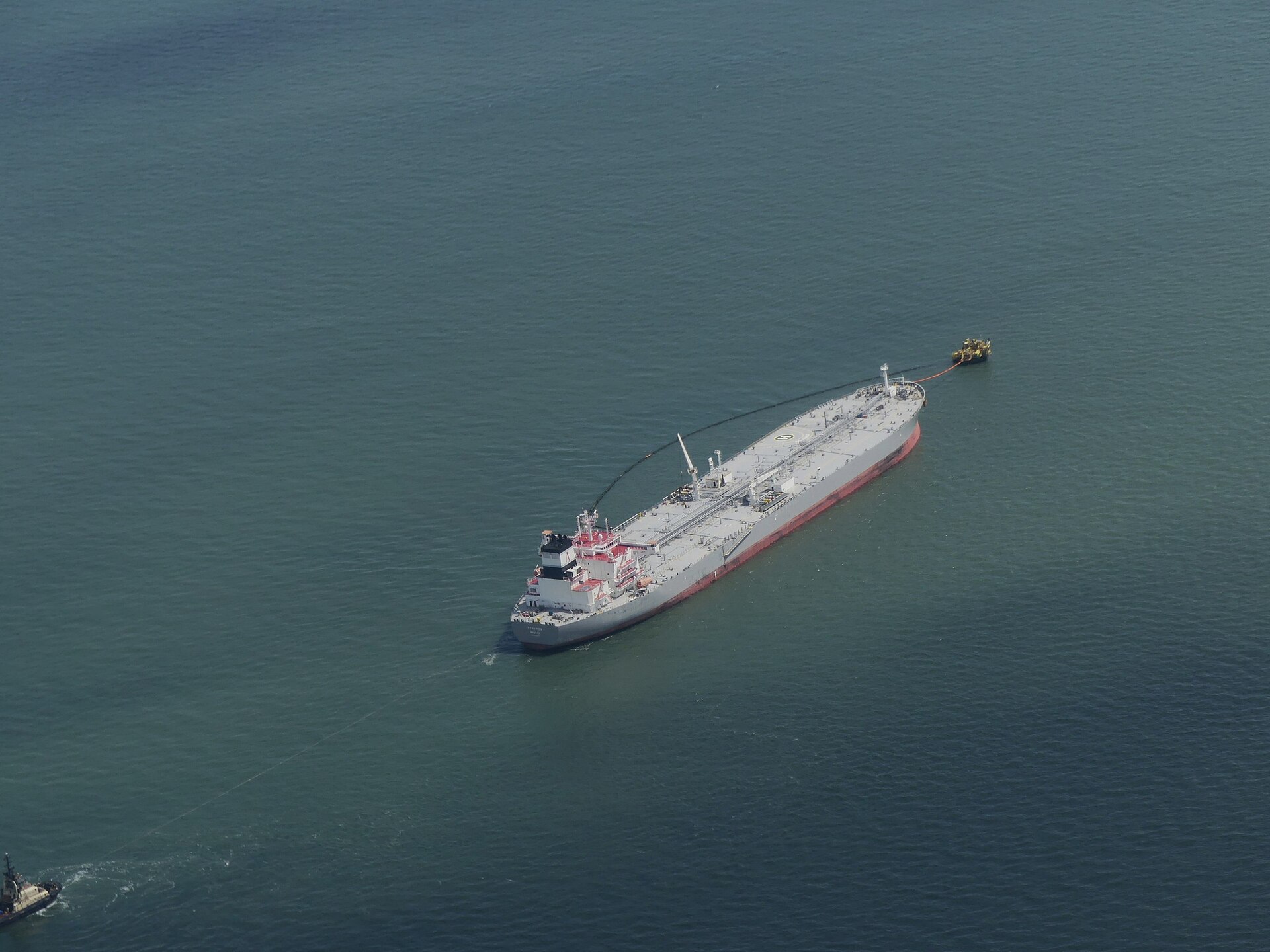
The structural bypass gap u2014 the difference between what Hormuz carried and what Yanbu can ship u2014 ranges from 1.1 to 2.1 million barrels per day. That gap does not shrink with higher prices. It does not shrink with the pipeline running at full capacity. It is a function of berth space, loading infrastructure, and tanker logistics that cannot be expanded during a war. In March, Yanbu handled 47 VLCC loadings u2014 four times the pre-war average of 11 to 12 per month. The port is already operating at a pace that was never designed to be sustained.
n
And the VLCCs leaving Yanbu cannot transit the Suez Canal. They route south through the Bab el-Mandeb strait, where Houthi forces u2014 Iran’s most reliable proxy in the current theater u2014 have been interdicting commercial shipping since late 2023. The alternative route is around the Cape of Good Hope, adding 10 to 14 days and $3 to $5 million per voyage in fuel and insurance costs. Saudi Arabia’s bypass pipeline delivers crude from one contested waterway to the approaches of another.
n
What the War Costs While the Price Rises
n
Revenue is one side of the ledger. The expenditure side has been accelerating since March 3, when the first IRGC drone salvos arrived over the Eastern Province, and it has not paused for the ceasefire.
n
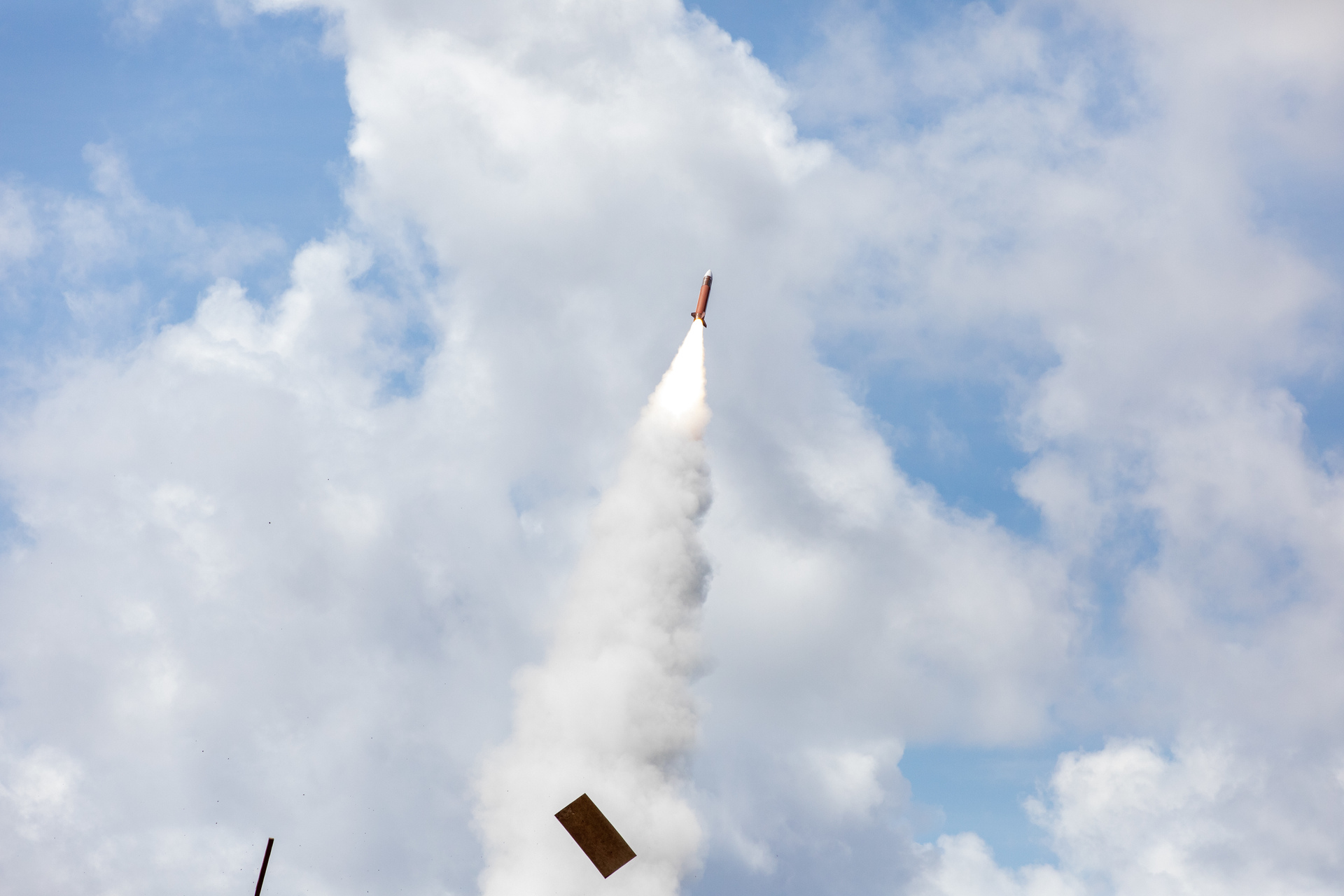
Between March 3 and April 7, Saudi air defenses intercepted 799 drones and 95 ballistic missiles u2014 894 targets in 35 days. The PAC-3 Missile Segment Enhanced interceptor, the backbone of the Kingdom’s terminal defense, costs $3.9 million per round. Pre-war Saudi inventories stood at approximately 2,800 rounds. After five weeks of combat, an estimated 400 remain u2014 an 86 percent drawdown that cannot be replenished at anything approaching war tempo.
n
Replenishment is not coming. The Lockheed Martin facility in Camden, Arkansas produces 620 PAC-3 MSE rounds per year u2014 meaning full restocking at peacetime production rates would take nearly four years. Poland, which operates its own Patriot batteries, refused a Saudi request to transfer interceptor stocks on March 31.
n
The $16.5 billion in emergency US arms sales authorized since the war began went primarily to the UAE, Kuwait, and Jordan u2014 not to Saudi Arabia. Riyadh is buying its own defense at retail prices in a seller’s market, competing for production slots against every NATO ally accelerating procurement after watching Gulf air defenses burn through American-made munitions at a rate the US industrial base cannot match.
n
On the ground, Pakistan deployed 13,000 troops and up to 18 combat aircraft to the Saudi Eastern Province under the September 2025 Saudi-Pakistan Mutual Defense Agreement, confirmed April 11. The financial architecture supporting this deployment includes a $5 billion Saudi-Qatari package to Islamabad due before June 2026, on top of an existing $1 billion loan already disbursed. Total Saudi financial exposure to Pakistan’s military commitment: approximately $6 billion u2014 a figure that buys deterrence but not the ability to export more oil.
n
Sadara Chemical, the $20 billion Aramco-Dow joint venture in Jubail, has shuttered all 26 production units. Its $3.7 billion debt cliff arrives on June 15. SABIC declared force majeure on March 26-27 and suffered a debris fire from intercepted missile fragments on April 7. The petrochemical complex that was supposed to be the downstream jewel of Vision 2030’s industrial diversification is dark, its debt clock running, its insurance claims mounting. On April 8, SABIC filed a formal war-damage disclosure on the Tadawul exchange stating it cannot estimate when production will resume u2014 the first such legally-binding war-loss filing by a listed Saudi company since the conflict began.
n
n
How Did Aramco’s OSP Become a Liability?
n
Saudi Aramco set its May 2026 Official Selling Price for Arab Light crude to Asia at a premium of $19.50 per barrel above the Oman/Dubai benchmark. The price was established when Brent was trading near $109, in the immediate aftermath of the IRGC’s April 3 strikes on Ras Tanura and Yanbu. Bloomberg’s survey of traders had expected a premium of $40 per barrel u2014 the market was willing to pay panic pricing, and Aramco left approximately $20.50 per barrel on the table.
n
The restraint was deliberate, a market-share preservation play echoing the December 2024 strategy when Aramco cut prices to defend volume against Iraqi and Russian discounting. But the timing has curdled. Brent has since fallen from $109 to $91-95 in the pre-blockade correction, then rebounded to $102 on the blockade announcement. The May OSP, benchmarked at the war’s price peak, sits $11 to $15 above the spot price at which Asian refiners can source alternative barrels. It is the widest inversion on record.
n
Asian buyers who lifted May cargoes at the $19.50 premium are paying $91 to $94 per barrel for crude they could source from Iraq, the UAE, or Russia at $80 to $85. The incentive to reduce Saudi liftings is overwhelming. Saudi crude exports to Asia already fell 38.6 percent in a single month u2014 from 7.108 million barrels per day in February to 4.355 million barrels per day in March, according to Argus Media. The May OSP guarantees that the April-loading figures will be worse.
n
Aramco is caught between two bad options. Cut the June OSP and concede that the May pricing was an error u2014 damaging the benchmark’s credibility and inviting buyers to delay liftings in anticipation of further cuts. Or hold the premium and watch volumes erode further as Asian refiners redirect procurement to every non-Saudi source available. The company chose restraint in May and got punished by the market’s collapse beneath it. Choosing aggression would have captured more revenue at the peak but would have accelerated the customer flight that is already underway.
n
Who Is Actually Capturing the $100 Windfall?
n
Iran is. The country that caused the war is the country profiting from it, and the mechanism is straightforward.
n
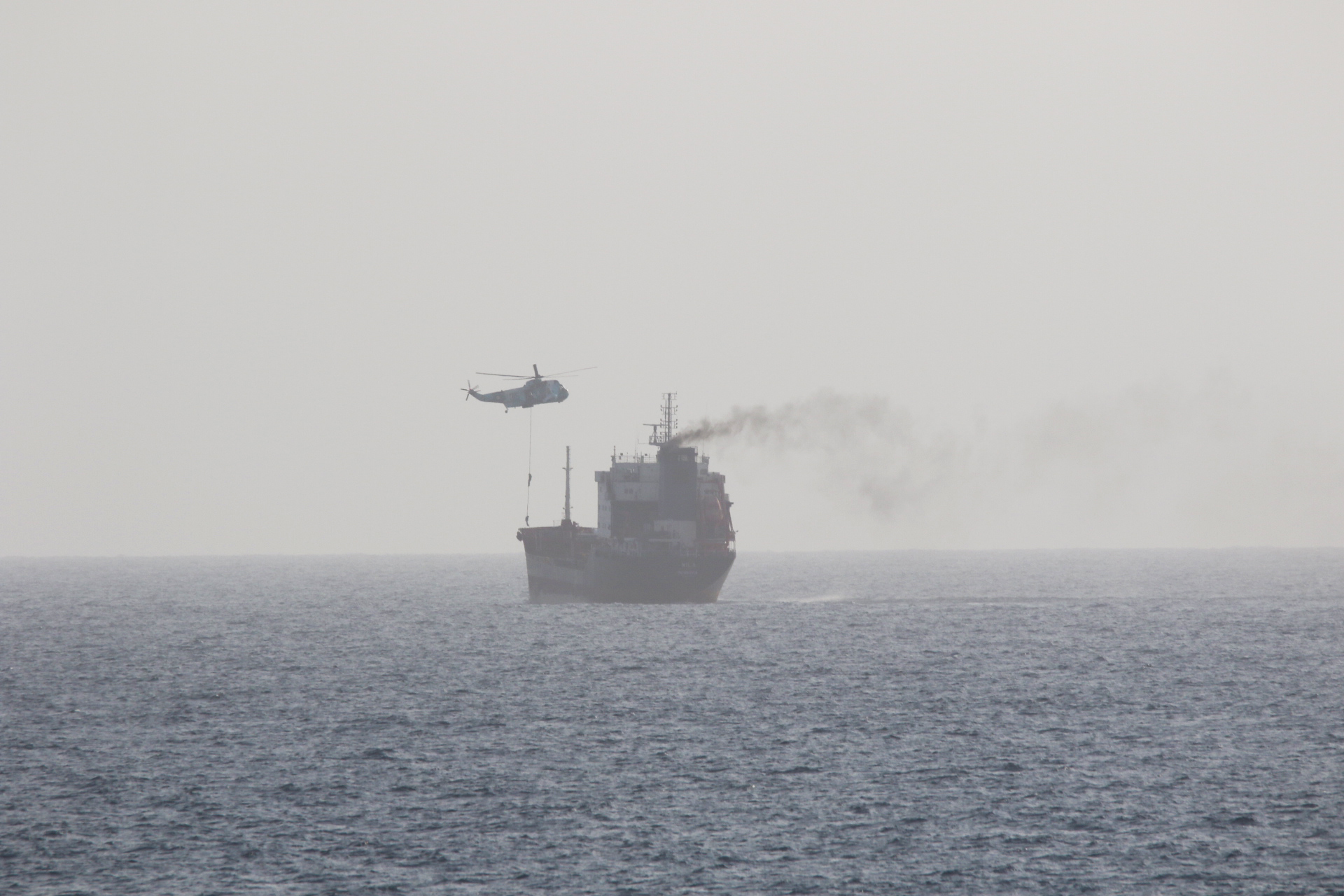
Iranian crude exports averaged approximately 1.6 million barrels per day in March 2026, generating roughly $139 million per day. The Iranian Light discount to Brent has compressed from over $10 per barrel pre-conflict to $2.10 per barrel u2014 the narrowest spread in years. Buyers who would normally demand steep discounts for the sanctions risk and logistics complexity of Iranian crude are paying near-parity because alternative barrels are scarce and Iranian supply is one of the few that does not need to transit the strait it controls.
n
Richard Nephew, a former State Department deputy envoy for Iran now at Columbia University’s Center on Global Energy Policy, told Yahoo Finance: “The Trump Administration is practically begging Iran to sell oil.” The comment captures a structural absurdity: the US blockade of Hormuz, designed to pressure Iran, has simultaneously eliminated the Gulf competition that used to undercut Iranian pricing. Saudi Arabia, Kuwait, and the UAE cannot ship enough to fill Asian demand. Iran can u2014 and is charging for it.
n
The revenue asymmetry is compounding. Saudi Arabia spends $3.9 million per interceptor to defend infrastructure that Iran targets for $20,000 to $50,000 per drone. Iran earns $139 million per day from crude exports while its military expenditure u2014 distributed across the IRGC’s self-funding architecture, with operational costs borne by proxy networks u2014 is a fraction of the Saudi defense bill. Iran’s 2026 military budget from oil revenue stands at $12.4 billion; Saudi Arabia has spent a third of that on PAC-3 rounds alone in five weeks.
n
n
What Happens if Brent Stays Above $100?
n
Goldman Sachs modeled the scenario in an April note: if Hormuz remains closed for another month beyond April, Brent stays above $100 throughout 2026, rising to $120 per barrel in Q3 and settling at $115 in Q4. “We continue to see the risks to our price forecast as skewed to the upside,” the bank wrote. JP Morgan’s upside case is $120 per barrel if the closure extends to July.
n
For Saudi Arabia, sustained $100-plus Brent is not the rescue it appears to be. The Goldman scenario assumes continued supply disruption u2014 which means continued Hormuz closure, which means continued Yanbu-only exports, which means the volume constraint persists alongside the price. At $120 Brent and 5 million barrels per day, daily revenue would reach approximately $600 million u2014 finally exceeding the pre-war $502 million baseline by a meaningful margin. But $120 also triggers demand destruction. The International Energy Agency’s demand elasticity models suggest that sustained $110-plus pricing reduces global consumption by 1.5 to 2.0 million barrels per day within two quarters. Saudi Arabia would be earning more per barrel on fewer barrels sold into a shrinking market.
n
The ceasefire expires on April 22 u2014 nine days from the blockade declaration. There is no extension mechanism. Windward, the maritime intelligence firm, assessed on April 12 that “coordination with Iranian armed forces is still required for all transits. The strait has not reopened u2014 it is in a supervised pause.” If the ceasefire collapses and the blockade hardens, Goldman’s $120 scenario moves from upside risk to base case. If the ceasefire holds and Hormuz gradually reopens, prices fall and the entire fiscal calculus resets u2014 but the $3.49 billion in expended interceptors, the $6 billion Pakistan commitment, the Sadara debt cliff, and the SABIC force majeure do not disappear from the balance sheet.
n
Rystad Energy estimated that Gulf shut-ins could reduce regional crude output by up to 70 percent if the conflict drags. The same note calculated that oil companies globally stand to earn an additional $63 billion in 2026 if prices average $100. The beneficiaries are producers with unimpeded export routes u2014 US shale, Brazilian deepwater, Guyana, West African exporters. Not Saudi Arabia, which sits on the largest spare capacity in the world and cannot move it to market.
n
The 1990 Precedent, Reversed
n
In August 1990, when Iraq invaded Kuwait and oil prices spiked from $17 to $36 per barrel, Saudi Arabia did what Saudi Arabia has always done in a crisis: it opened the taps. Production surged from 5.1 million barrels per day to 8.5 million barrels per day. The Kingdom captured the full windfall u2014 higher prices on expanded volume u2014 and financed the coalition war effort largely from the surplus. The 1990 template has been the foundation of Saudi strategic energy doctrine for 35 years: in a supply crisis, Saudi Arabia compensates with volume, earns the premium, and emerges as the indispensable producer.
n
The 2026 war is the structural inversion of that template. The price spike is comparable in scale u2014 $75 to $102 is a 36 percent increase, against 1990’s 112 percent u2014 but the volume response is running in the opposite direction. Where Saudi Arabia once expanded output by 67 percent to meet a supply crisis, this time exports have fallen by more than a third in a single month. The pipeline is at capacity. The refinery complex consumes 2 million barrels per day before a single export barrel reaches a tanker. The Kingdom cannot ramp. It can only watch the price rise and calculate what it would be earning if it could ship.
n
Iraq in 1990 is the darker precedent. Saddam Hussein’s invasion triggered the price spike, but UN sanctions meant Iraq could not export a single barrel to monetize it. Iraq started the war, caused the price increase, and captured none of the revenue. Saudi Arabia in 2026 did not start the war, is physically constrained rather than legally sanctioned, and is capturing some revenue u2014 but the structural position is closer to Iraq’s than to its own 1990 experience. The country with the largest reserves and the most sophisticated export infrastructure is functionally a price-taker, volume-constrained, watching others collect the premium that its own geography makes impossible to reach.
n
Can Saudi Arabia Close the Deficit at Any Price?
n
The IMF’s central-government-only fiscal break-even for Saudi Arabia in 2026 is $86.60 per barrel. At $102 Brent, the Kingdom clears that threshold by $15.40 u2014 a comfortable margin if central government spending were the only commitment. It is not. The PIF’s disbursement schedule, the NEOM and Diriyah Gate construction pipelines (even after The Line’s formal suspension and the PIF’s $8 billion write-down), the $5 billion Pakistan military deployment package, and the sovereign debt service on $24 billion in international bonds issued since 2024 push the effective break-even into the $108 to $111 range established by Bloomberg Economics.
n
The deficit arithmetic at constrained volume is unforgiving. At 5 million barrels per day and $102 Brent, annualized crude revenue is approximately $186 billion. At 6.7 million barrels per day and $102 Brent, it would be approximately $249 billion u2014 a $63 billion annual gap that the price increase cannot close because the volume constraint is structural, not cyclical. The pipeline is at capacity. Yanbu’s berths are at capacity. The tanker fleet routing through Bab el-Mandeb is at the limit of what insurers will underwrite at current war-risk premiums.
n
Goldman’s 6.6 percent deficit-to-GDP projection implies a fiscal gap of approximately $73 billion against Saudi Arabia’s roughly $1.1 trillion nominal GDP. The official budget assumed a $44 billion deficit at $75 Brent with full export access. The war has doubled the deficit while increasing the oil price by a third u2014 a sentence that should not make mathematical sense but does, because the volume constraint converts a price windfall into an accounting identity where more expensive oil generates no additional revenue.
n
| Scenario | Brent ($/bbl) | Export Volume (M bpd) | Annual Revenue ($B) | vs. Break-Even ($108-111) |
|---|---|---|---|---|
| Pre-war baseline | $75 | 6.7 | ~$183 | Below u2014 deficit budgeted |
| Current (April 13) | $102 | ~5.0 | ~$186 | $6-9/bbl below PIF-inclusive |
| Goldman sustained | $120 | ~5.0 | ~$219 | Clears threshold u2014 if volume holds |
| Full Hormuz restored | $102 | 6.7 | ~$249 | Clears by wide margin |
| Full Hormuz + pre-war price | $75 | 7.1 | ~$194 | Below u2014 but war costs absent |
n
n
The table exposes the paradox in its starkest form. The only scenario that comfortably clears the PIF-inclusive break-even is $120 Brent at constrained volume u2014 the Goldman upside case u2014 or $102 Brent at restored Hormuz volume. The first requires the war to intensify. The second requires it to end. Saudi Arabia’s fiscal balance depends on one of two outcomes that are mutually exclusive.
n

n
The UAE’s decision to join the US Hormuz coalition on April 12 u2014 the same day Brent crossed $100 u2014 adds a geopolitical layer to the fiscal trap. Abu Dhabi’s Fujairah terminal and the Habshan-Fujairah pipeline give the UAE an export route that bypasses Hormuz entirely, with capacity that Saudi Arabia’s Yanbu infrastructure cannot match on a per-barrel-of-spare-capacity basis. The GCC is splitting along a line defined not by politics but by pipeline geography: producers with bypass capacity versus those without it. Saudi Arabia, the largest producer and the architect of OPEC+ coordination, falls on the wrong side.
n
The market’s initial disbelief at Brent’s trajectory u2014 the lag between the blockade announcement and the price breach of $100 u2014 reflected a bet that the ceasefire would hold and Hormuz would reopen before the supply deficit became structural. Nine days remain on that bet. Every day the strait stays in its “supervised pause,” the volume constraint hardens, the Yanbu bottleneck tightens, and the gap between the price Saudi Arabia sees on its screens and the revenue it can actually collect widens.
n
MBS is watching $102 Brent. The number that matters is not the price. It is the 5 million barrels per day that leave Yanbu, the 2 million that never reach a tanker, and the $63 billion annual revenue gap between what the Kingdom earns and what it would earn if the strait it can see from the Eastern Province were open. The war gave Saudi Arabia the price it needed and took away the volume to collect it.
n
Frequently Asked Questions
n
Why can’t Saudi Arabia build additional export capacity at Yanbu to close the gap?
n
Yanbu’s port infrastructure u2014 berth space, single-point mooring buoys, and vapor recovery systems u2014 was designed for a throughput of roughly 5 to 6 million barrels per day of crude loading. Expanding berth capacity requires dredging, new mooring installations, and pipeline laterals that take 18 to 24 months under peacetime construction timelines. The port handled 47 VLCC loadings in March 2026 against a pre-war baseline of 11 to 12 per month, meaning the existing infrastructure is already operating at three to four times its intended tempo. The bottleneck is physical, not managerial u2014 more concrete and steel, not better scheduling.
n
Could Saudi Arabia redirect exports through the UAE’s Fujairah terminal?
n
Technically, Saudi crude could flow via the Abu Dhabi Crude Oil Pipeline (ADCOP) system to Fujairah, but the pipeline is owned by ADNOC and operates at near-full capacity serving UAE production. The ADCOP’s design capacity is 1.5 million barrels per day, and it currently handles 1.2 to 1.4 million barrels per day of Emirati crude. There is no interconnection between Saudi eastern fields and the ADCOP network. Building one would require crossing Qatari or Omani territory u2014 a geopolitical and engineering challenge that makes Yanbu expansion look simple by comparison.
n
What is the Sadara debt cliff and why does it matter for the fiscal picture?
n
Sadara Chemical Company, the $20 billion joint venture between Aramco (65 percent) and Dow Chemical (35 percent), financed its construction with $14.8 billion in project finance debt, of which $3.7 billion matures or requires covenant compliance by June 15, 2026. With all 26 production units shut since late March due to IRGC strikes on Eastern Province infrastructure, Sadara has zero revenue to service the debt. A default would trigger cross-default clauses affecting Aramco’s broader project finance portfolio and could impair up to $8 billion in related credit facilities across the Jubail industrial complex, according to Moody’s sovereign exposure assessments.
n
How does the Bab el-Mandeb threat affect Yanbu exports specifically?
n
VLCCs loading at Yanbu must transit the Bab el-Mandeb strait at the southern end of the Red Sea to reach Asian markets. Houthi forces have conducted over 100 attacks on commercial shipping in the strait since November 2023, and war-risk insurance premiums for Red Sea transits have risen to 1.5 to 2.0 percent of hull value u2014 roughly $1.5 to $3 million per VLCC voyage. Several major tanker operators, including Frontline and Euronav, have restricted Red Sea transits entirely, reducing the available tonnage willing to load at Yanbu. The alternative Cape of Good Hope routing adds 3,500 nautical miles, 10 to 14 days of voyage time, and an estimated $4 to $5 million in additional fuel and charter costs per voyage u2014 all of which erode the revenue that the $102 price is supposed to deliver.
n
Has Saudi Arabia drawn down its foreign reserves to cover the deficit?
n
SAMA (the Saudi Central Bank) reported foreign reserve assets of $434 billion as of February 2026, down from $451 billion in January u2014 a $17 billion monthly drawdown that predates the worst of the war’s fiscal impact. At the Goldman-projected 6.6 percent deficit-to-GDP rate, the implied annual drawdown is $73 billion, which would bring reserves to approximately $360 billion by year-end if sustained. The Kingdom has historically treated the $350 billion level as an informal floor u2014 the point at which reserve adequacy ratios begin to concern rating agencies. At the current burn rate, that floor is approximately 12 months away, though international bond issuance (Saudi Arabia raised $12 billion in January 2026) provides an alternative to reserve drawdown.
n”