
WASHINGTON — The US Treasury’s General License U — a 30-day authorization permitting Indian refineries to purchase Iranian crude oil — expires at 12:01 a.m. EDT on April 19, seven days after President Trump declared a naval blockade of the Strait of Hormuz targeting any vessel that has paid transit fees to Iran. The simultaneous existence of an active oil-purchase license and an active naval blockade against the same country’s oil exports is, as of April 12, the central unresolved contradiction in US Iran policy.
The expiry date falls one day after India’s 175,025 registered Hajj pilgrims begin arriving in Saudi Arabia under a bilateral Haj Agreement — a diplomatic calendar collision that compresses Washington’s decision window into a week where New Delhi, Riyadh, and Tehran are all watching the same clock. Renewal would confirm the blockade as a coercive instrument rather than a revenue siege. Non-renewal would expose Indian state refiners to secondary sanctions at the worst possible moment in India-Saudi relations.
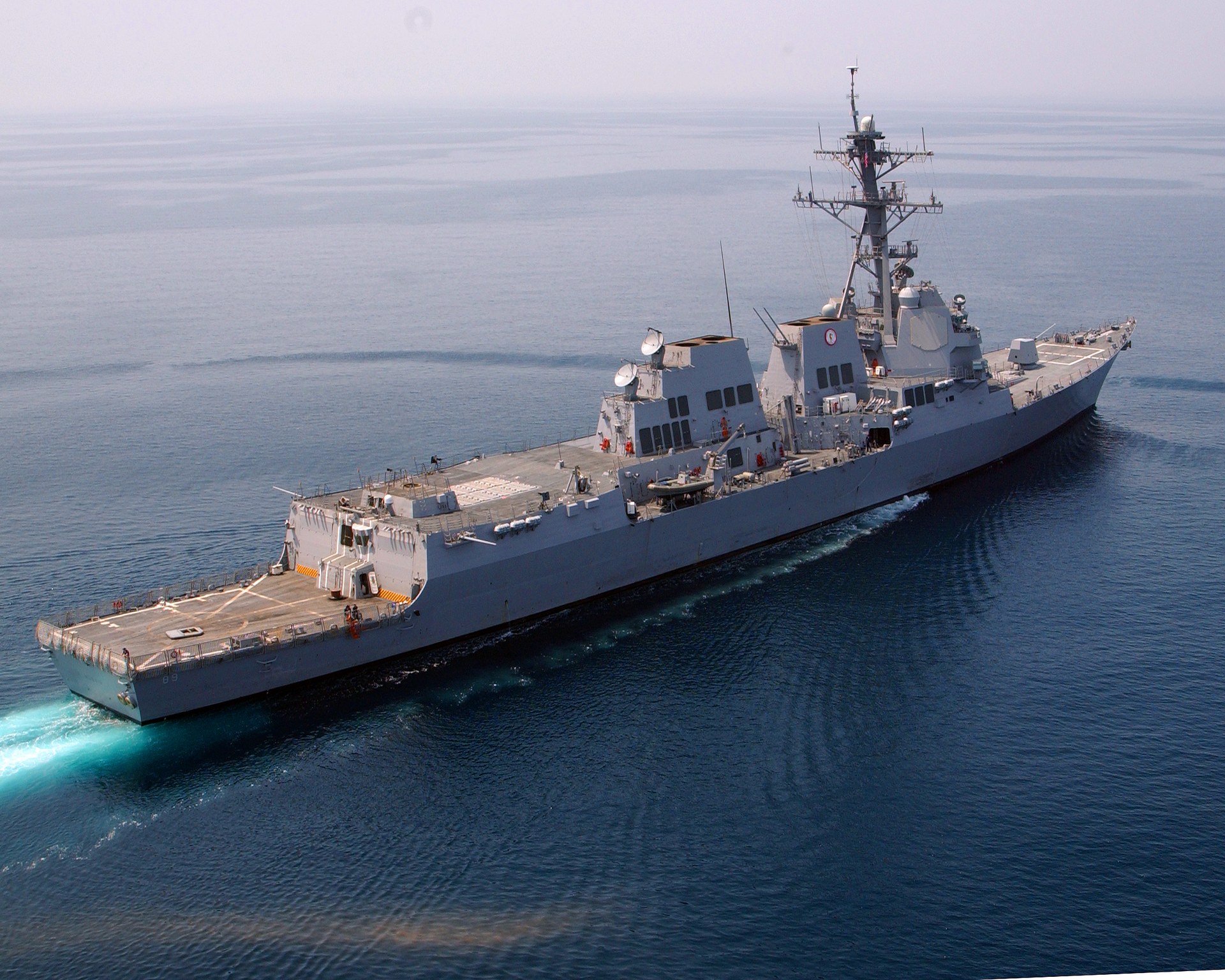
Table of Contents
What GL U Actually Authorizes
GL U, issued March 20, 2026, authorizes “all transactions ordinarily incident and necessary to the sale, delivery, or offloading of crude oil or petroleum products of Iranian origin loaded on any vessel on or before 12:01 a.m. EDT, March 20, 2026.” The authorization window runs exactly 30 days — March 20 through April 19. It covers ancillary services including bunkering, crewing, vessel management, insurance, classification, salvage, and port services. It excludes Cuba, North Korea, and Russian-occupied Ukraine. It does not exclude China, though OFAC issued individual authorizations only to Indian buyers — IOC, BPCL, HPCL, and Reliance — effectively redirecting Iranian barrels from Chinese independent refiners to Indian ones.
Treasury Secretary Scott Bessent, announcing the license on CNBC March 20, stated it would bring “approximately 140 million barrels” to global markets. He framed it as wartime market management: “In essence, we will be using the Iranian barrels against Tehran to keep the price down as we continue Operation Epic Fury.” He added that Iran would “have difficulty accessing any revenue generated.”
That claim has no legal basis in the license text. GL U contains no escrow mechanism, no volume cap, no payment restrictions, and no revenue-intercept provision. Baker McKenzie’s Global Sanctions and Export Controls team confirmed the license explicitly authorizes importation of Iranian crude into the United States itself — a detail that received little attention at the time but becomes relevant when the same administration declares a blockade of Iranian oil shipments 23 days later.
The contradiction with the administration’s own National Security Presidential Memorandum 2 is direct. NSPM-2 directed the Secretary of State to “implement a robust and continual campaign … to drive Iran’s export of oil to zero.” GL U authorized 140 million barrels of those exports.
The Middle East briefing 3,000+ readers start their day with.
One email. Every weekday morning. Free.
How Does a Blockade Coexist with an Oil License?
Trump’s April 12 declaration on Truth Social stated: “Effective immediately, the United States Navy, the Finest in the World, will begin the process of BLOCKADING any and all Ships trying to enter, or leave, the Strait of Hormuz.” The declaration specified the Navy would “seek and interdict every vessel in International Waters that has paid a toll to Iran.”
GL U explicitly authorizes the transactions associated with Iranian crude transits — including the port services, bunkering, and vessel management that constitute paying an Iranian toll. A VLCC carrying Iranian crude under GL U authorization, having paid Iran’s $1-per-barrel transit fee, is simultaneously a lawful transaction under US Treasury rules and a blockade target under the presidential declaration.
Roxanna Vigil, a CFR International Affairs Fellow in National Security, wrote in April that the waivers had “turned Iran and Russia from price-takers into price-setters” rather than depressing prices. The Iranian crude reaching India under GL U was priced $6-8 per barrel above prevailing spot — the opposite of Bessent’s stated objective. Vigil noted the arrangement gave “Tehran a windfall to fund the very war machine it is fighting against.”
Mark Nevitt, a retired Navy JAG officer and Associate Professor at Emory Law, wrote in Just Security that Iran’s toll violates UNCLOS Article 26 as it is “neither linked to any service nor applied without discrimination.” His legal framework invalidates Iran’s transit charges — but also constrains US authority to interdict vessels that paid those tolls while GL U remains active, since the license authorizes the very transactions the blockade targets.
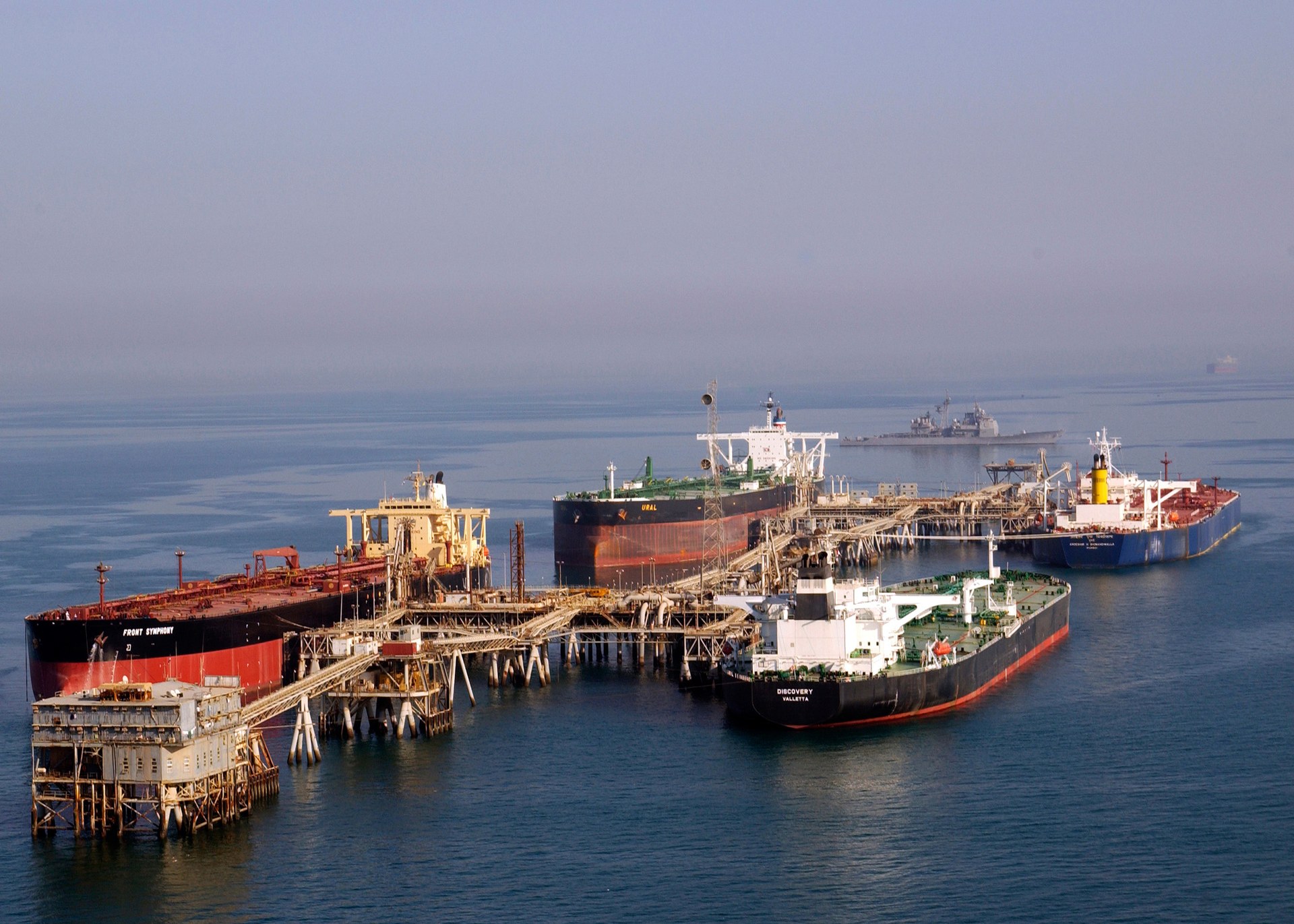
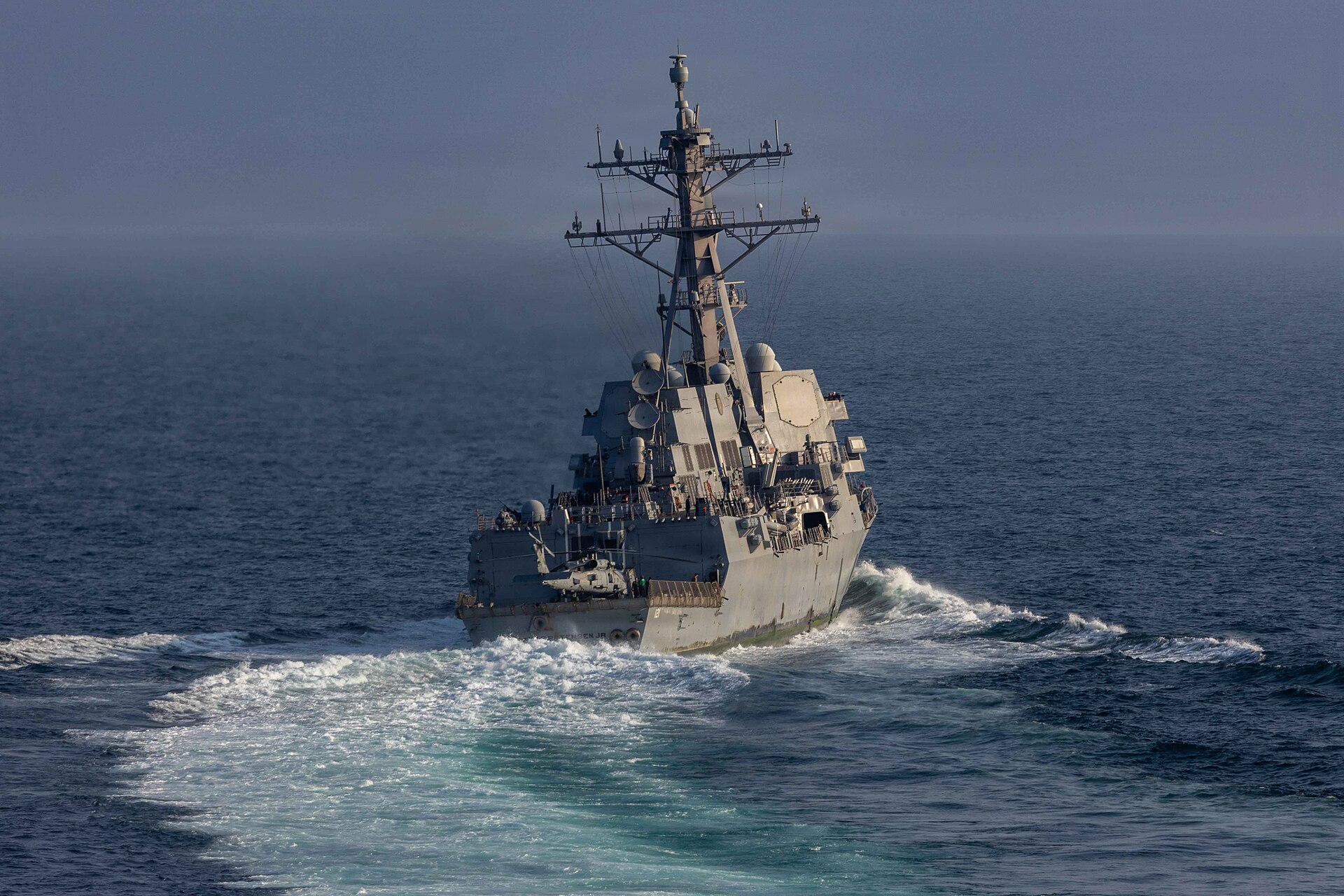
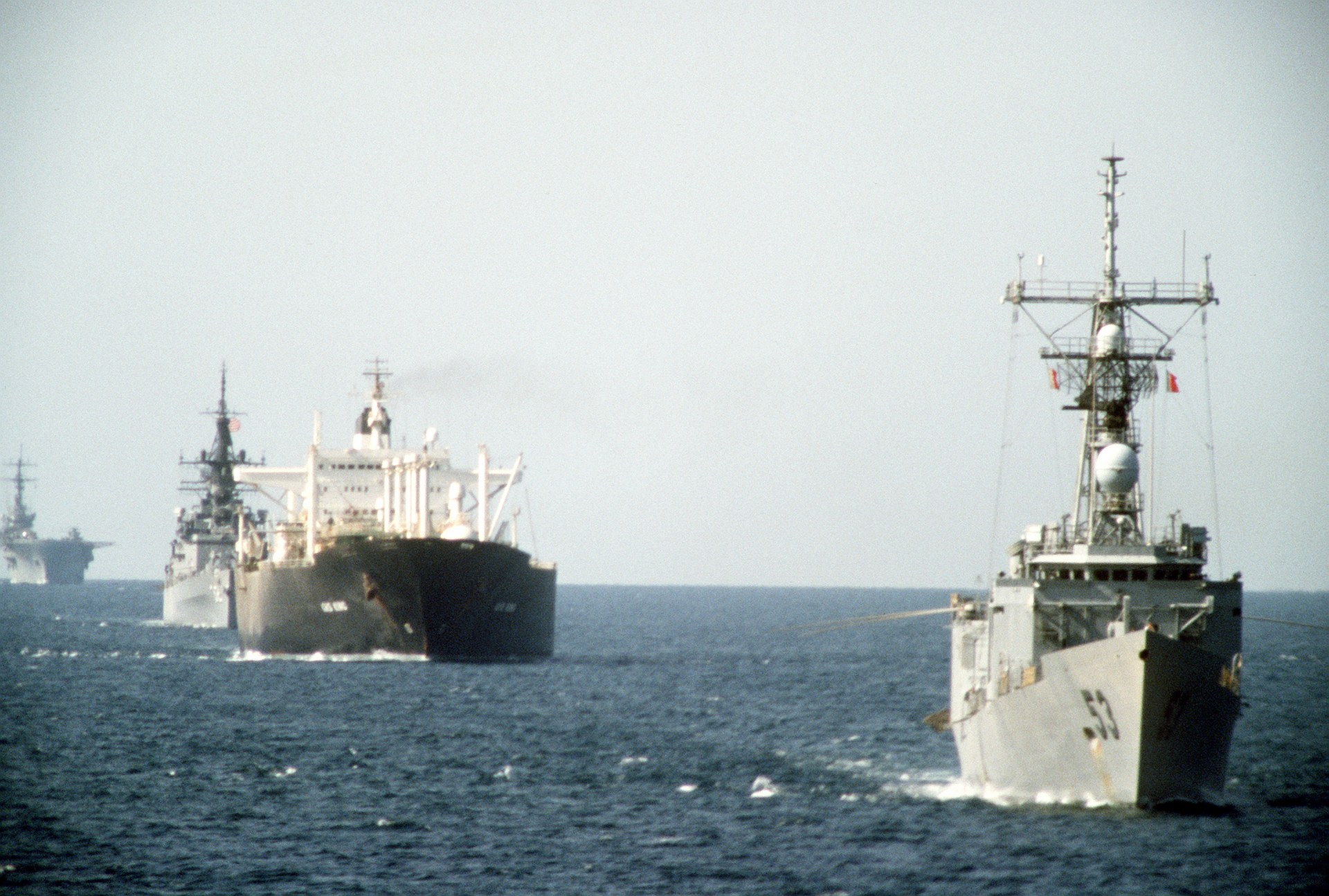
Retired Admiral James Stavridis, writing in Fortune on April 12, described the blockade’s logistics: two aircraft carrier strike groups, 12 destroyers and frigates outside the Persian Gulf, six additional US warships inside, plus UAE and Saudi naval assets. “This is a big task, and it’s a big gamble,” Stavridis wrote. The strait, he noted, is an Iranian “kill box” with anti-ship missiles, drones, fast-attack boats, and mines. The IRGC’s authority over the strait — declared unilaterally on April 5 and again on April 10 — remains operationally intact regardless of the ceasefire.
The legal question is not abstract. The Pacific Bravo, a VLCC carrying approximately 2 million barrels of Iranian heavy crude, was confirmed en route to MRPL Mangalore as of early April. If it transits Hormuz after April 12 but before April 19, it is covered by GL U. If it arrives in Indian waters after April 19, the cargo’s legal status depends on whether the loading occurred before the March 20 cutoff — which GL U’s text requires. The blockade declaration makes no reference to GL U.
The Indian Refiner Split
Two million barrels of Iranian crude have reached India since March 20, according to TankerTrackers and Iran International. Four Reliance tankers — Kaviz, Lenore, Felicity, and Hedy — each carrying up to 2 million barrels, received a “special one-time exemption” from India’s shipping ministry for the Sikka port in Gujarat, citing the “emergency created by the closure of the Strait of Hormuz.”
But the split among Indian refiners is sharp. IOC and BPCL — state-owned, US-listed — “largely stayed on the sidelines,” Bloomberg reported. The 30-day window was insufficient for state companies to obtain documentation and arrange standard credit terms. Reliance, private and operating the Jamnagar complex (the world’s largest refinery at 1.24 million barrels per day), moved forward. MRPL and CPCL, subsidiaries not directly US exchange-listed, are the active state-sector buyers.
Even Reliance hedged. Despite receiving government authorization for four Iranian tankers at Sikka, the company stated on April 12 that it was “not certain [it] would process Iranian oil, as it wants to ensure that transactions are sanctions-compliant and are in line with Indian rules.” The compliance trap in live operation: the government authorized the physical arrival; the refiner remains undecided because the post-April 19 sanctions posture is unknown.
India’s Ministry of External Affairs stated on April 4: “Indian refiners have secured their crude oil requirements, including from Iran; and there is no payment hurdle for Iranian crude imports.” The statement made no reference to April 19 or post-expiry scenarios. That documented public position creates secondary-sanction exposure for India’s government if GL U lapses without renewal — New Delhi will have officially endorsed transactions that Washington retroactively declined to authorize going forward.
Then there is Nayara Energy, the Vadinar refinery (approximately 400,000 bpd capacity) that is 49.13% owned by Rosneft. Already subject to EU sanctions, Nayara has not been directly designated by OFAC, but any Iranian crude transaction would stack Russia-nexus and Iran-nexus secondary sanctions risk in a single cargo. The refinery’s maintenance shutdown, originally scheduled for Q1 2026, was rescheduled to February-April 2026 after European contractors refused to engage — a compliance cascade already in progress before GL U existed.
Can Saudi Arabia Absorb India’s Iranian Barrels?
Saudi Arabia’s market share in Indian crude imports dropped from 16% to 11% — a loss of five percentage points — since GL U was issued, according to Bloomberg data. If the license lapses and India must replace 300,000-450,000 bpd of Iranian supply, Saudi Arabia is the natural substitute. But the infrastructure math does not cooperate.
The East-West Pipeline restored to full capacity at 7 million bpd as of April 12, according to the Saudi Energy Ministry. But Yanbu port terminals on the Red Sea coast can load only 4.0-4.5 million bpd — a structural ceiling approximately 2.5-3 million bpd below pipeline throughput. Actual Yanbu exports in late March reached 4.4 million bpd, already near the port’s physical limit.
| Constraint | Capacity | Current utilization | Available headroom |
|---|---|---|---|
| East-West Pipeline | 7.0M bpd | ~7.0M bpd (full) | ~0 |
| Yanbu port loading | 4.0-4.5M bpd | ~4.4M bpd | ~0-100K bpd |
| Khurais field (offline) | 1.2M bpd design | 0 bpd (struck) | -300K bpd lost |
| Manifa field (partial) | ~900K bpd design | Partially restored | -300K bpd net loss |
| Ras Tanura (Hormuz-dependent) | ~6-7M bpd | Blockade-constrained | Unknown |
Khurais, struck in an IRGC attack, remains offline — 300,000 bpd lost. Manifa is partially restored but still down approximately 300,000 bpd. Combined declared production loss: 600,000 bpd from field attacks alone. Saudi Arabia’s pre-war eastern terminal complex at Ras Tanura handled 6-7 million bpd but sits on the Persian Gulf coast — the same waters the US is now blockading and the IRGC claims authority over.
The arithmetic: India needs 300,000-450,000 bpd of replacement crude if GL U lapses. Yanbu has perhaps 100,000 bpd of spare loading capacity. Ras Tanura’s availability depends on Hormuz’s legal vacuum — the same vacuum the blockade is supposed to resolve. Saudi production is down 600,000 bpd from attacks. The market-share recovery is real in theory and severely constrained in practice.
A comprehensive breakdown of the four structural constraints that prevent Saudi Arabia from filling the gap — Yanbu’s berth ceiling, bilateral rationing, the Aramco OSP formula, and the benchmark distortion — sets out why the supply vacuum may remain unfilled even after the blockade eliminates Iran and Russia from the Asian market.
Aramco’s May Official Selling Price, set at a record +$19.50 per barrel for Arab Light to Asia, was calibrated when Brent crude jumped to $109. Post-blockade, Brent is near $101. The OSP is now approximately $8 underwater. The June OSP repricing window opens around May 5 — by which point GL U will have either been renewed or lapsed, and India’s crude purchasing decisions for Q3 will already be in motion.
The Hajj Calendar Problem
India’s 175,025 registered Hajj pilgrims begin arriving in Saudi Arabia on April 18 — one day before GL U expires. The bilateral Haj Agreement between New Delhi and Riyadh governs the logistics, security, and diplomatic arrangements for what is India’s largest annual consular operation in the Kingdom.
The two dates were set independently — GL U’s 30-day window from March 20 and the Hajj calendar from Islamic lunar dating. But the diplomatic overlay is real. India and Saudi Arabia will be engaged in intensive bilateral logistics on the same day Washington decides whether to maintain or revoke India’s authorization to buy Iranian crude. A non-renewal announcement on April 19, while 175,025 Indian citizens are arriving in Saudi Arabia, converts a sanctions-policy decision into a bilateral incident.
Saudi Arabia’s interest is not ambiguous. Every barrel India diverts from Iran to Saudi suppliers strengthens Riyadh’s market position in its second-largest Asian customer. But Riyadh cannot supply those barrels at current infrastructure capacity, and an Indian diplomatic irritant during Hajj — the event over which Saudi Arabia exercises custodianship as a matter of state identity — would be poorly timed.

April 19: Renewal, Lapse, or Something Else?
Renewal extends the contradiction. GL U active alongside a naval blockade means Washington is simultaneously licensing and interdicting Iranian crude. The price-depression rationale — Bessent’s original justification — has failed on its own terms: Iranian crude reached India at $6-8 per barrel above spot, and India’s crude basket surged from $69 per barrel in February to $113 in March. Chinese independent refiners, excluded from GL U authorizations, are now paying $1.50-2 per barrel premiums above Brent — the opposite of forcing China to pay market price, as Bessent claimed on Fox News.
Lapse exposes India. The 2019 precedent is instructive: when Pompeo-era waivers expired on May 2, 2019, India required a multi-month wind-down. IOC cut Iranian imports from 9 million to 6 million tons in 2019/20. That phase-out had a 180-day warning period. GL U provides 30 days with no wind-down provision — a hard cliff. Indian state refiners who moved slowly under GL U would face immediate secondary-sanction exposure on any cargo in transit after April 19.
“Washington should rely on already established mechanisms to limit revenue flows to both Tehran and Moscow.”Maia Nikoladze and Daniel Fried, Atlantic Council, April 2026
The Atlantic Council’s Nikoladze and Fried recommended against both clean renewal and clean lapse, arguing for “already established mechanisms” — a formulation that implies structured pressure maintenance rather than the binary GL U created. A modified renewal — narrower scope, named vessels only, escrow requirement — would be a third option, but OFAC has not signaled any such instrument.
The UCO Bank question hangs over all three scenarios. The rupee-rial payment mechanism, devised after 2012 to route 45% of Indian oil company settlements with Iran in rupees outside the dollar system, was the infrastructure that made India’s return to Iranian crude operationally possible. OFAC enforcement actions intensified in October-November 2025, with 8-10 Indian nationals sanctioned and 9-10 companies — including RN Ship Management and TR6 Petro India — designated. UCO Bank’s 2026 compliance posture for Iranian crude settlements has not been publicly confirmed. If GL U lapses and UCO Bank’s rupee-rial channel remains open, the payment infrastructure outlasts the authorization — a secondary-sanctions tripwire with no automatic shutoff.
Background
GL U marked India’s first purchase of Iranian crude since May 2019, when the last Pompeo-era waiver expired. India was Iran’s largest oil customer from 2016-2019, importing up to 450,000 bpd at peak. The seven-year gap ended on March 20, 2026, when Treasury issued GL U as part of Operation Epic Fury’s market-management strategy.
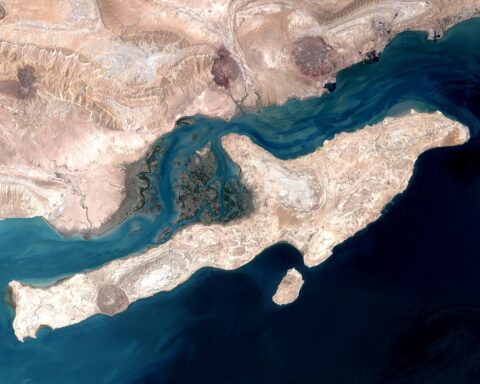
Operation Epic Fury, the US-led military campaign against Iran, began February 28, 2026. The campaign has included strikes on Kharg Island (Iran’s primary oil export terminal, handling 90%+ of crude exports), military targets across Iranian territory, and — as of April 12 — a declared naval blockade of the Strait of Hormuz. Iran’s IRGC declared “full authority to manage the Strait” on April 5 and April 10, while Araghchi negotiated in Islamabad.
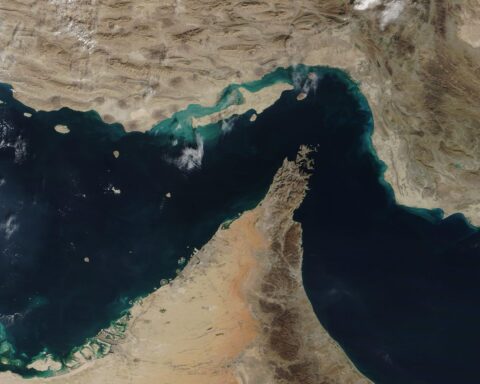
The Strait of Hormuz handles approximately 20% of global oil trade in peacetime. Pre-war traffic averaged 138 vessels per day. Post-ceasefire throughput has fallen to 15-20 ships per 24 hours, according to Windward maritime intelligence. Approximately 800 vessels remain trapped in the Gulf. Iran’s Parliament passed a transit-fee bill on March 31, and the IRGC has been collecting $1 per barrel ($2 million per VLCC) via Kunlun Bank and USDT on the Tron blockchain.
Frequently Asked Questions
What happens to Iranian crude cargoes physically in transit on April 19?
GL U’s text authorizes transactions for crude “loaded on any vessel on or before 12:01 a.m. EDT, March 20, 2026.” The loading-date cutoff is March 20, not the expiry date. Cargoes loaded before March 20 and still in transit on April 19 are covered regardless of arrival date — the 30-day window applies to the completion of transactions, not the loading. Cargoes loaded after March 20 were never covered by GL U in the first place. The ambiguity lies in ancillary transactions (insurance renewals, port fees, bunkering) that may extend past April 19 for covered cargoes.
Could OFAC issue a wind-down license to replace GL U?
Yes. OFAC has issued wind-down authorizations in past sanctions transitions — typically 90-180 days allowing orderly exit from authorized transactions. The 2018 Iran waivers included a 180-day wind-down. No wind-down instrument has been announced for GL U. If OFAC issues one between now and April 19, it would signal non-renewal of GL U itself while preventing an abrupt compliance cliff for Indian refiners. As of April 12, OFAC has made no public statement on post-April 19 plans.
How does the blockade affect non-Iranian crude shipments to India?
Trump’s declaration targets vessels that “paid a toll to Iran,” not all Hormuz traffic. But operational ambiguity is wide: a Saudi VLCC loaded at Ras Tanura transits the same strait and may have paid Iranian-demanded fees to ensure passage. The blockade order does not distinguish between Iranian crude carriers and third-country vessels that paid transit fees under duress. Stavridis’s logistics estimate — two carrier strike groups, 18+ warships — implies boarding and inspection operations that would slow all traffic, not just Iranian-linked cargoes.
What is India’s crude import exposure if both GL U and Hormuz access are lost simultaneously?
India imports approximately 4.5-5 million bpd, of which 60-65% transits the Strait of Hormuz from Gulf suppliers. Iranian barrels under GL U represented a small fraction — roughly 2 million barrels total since March 20, against daily consumption of 5.5 million bpd. The larger Indian exposure is not Iranian crude specifically but Gulf crude broadly: Saudi, Iraqi, Kuwaiti, and UAE barrels that all exit through Hormuz. India’s strategic petroleum reserve holds approximately 39 days of import cover. Indian refiners have been increasing West African and US crude purchases since March, but tanker rates on those routes have tripled.
Has India faced US secondary sanctions before over Iranian oil purchases?
Not directly on sovereign entities. The 2018-2019 waiver regime shielded India from secondary sanctions through a Significant Reduction Exception (SRE) — India reduced Iranian imports enough to qualify. The SRE required documented reduction commitments over successive 180-day periods; GL U carries no equivalent reduction obligation. OFAC did sanction individual Indian nationals and companies in October-November 2025 for Iran-related oil trading — but those cases involved the shadow fleet and payment networks operating outside any authorization. The distinction between government-authorized purchases under GL U and the sanctioned shadow-fleet operations is legally clear but politically blurred, as the same rupee-rial payment infrastructure serves both.