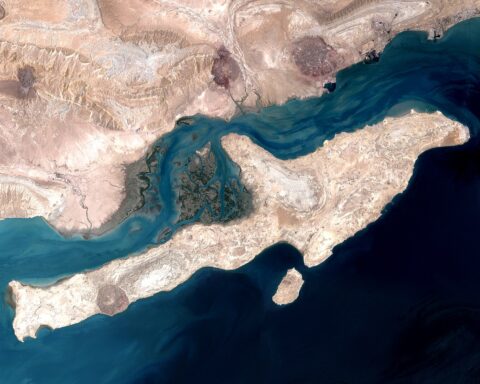
MUSCAT — Iran launched drone strikes against a US military support vessel and the Port of Salalah in Oman on April 20, 2026, marking the first confirmed Iranian kinetic action explicitly claimed near Omani territory and the first retaliation since the USS Spruance seized the Iranian-flagged cargo vessel Touska in the Gulf of Oman on April 19. The strikes came 48 hours before the April 22 ceasefire expiry, targeting the sole remaining US-Iran diplomatic back-channel at its most vulnerable moment.
IRGC spokesperson Ebrahim Zolfaghari, speaking for the Khatam al-Anbiya Central Headquarters, confirmed that Iranian forces hit “a support vessel of the aggressor American army” located “at a considerable distance from the port of Salalah in Oman,” according to Al Jazeera. Two drones simultaneously struck the Port of Salalah itself, injuring one expatriate worker and causing minor damage to a port crane, Anadolu Agency and Argus Media reported. Brent crude for June delivery jumped as much as 7.9% on the day, settling approximately 5.63% higher at $95.48 per barrel, according to CNBC.
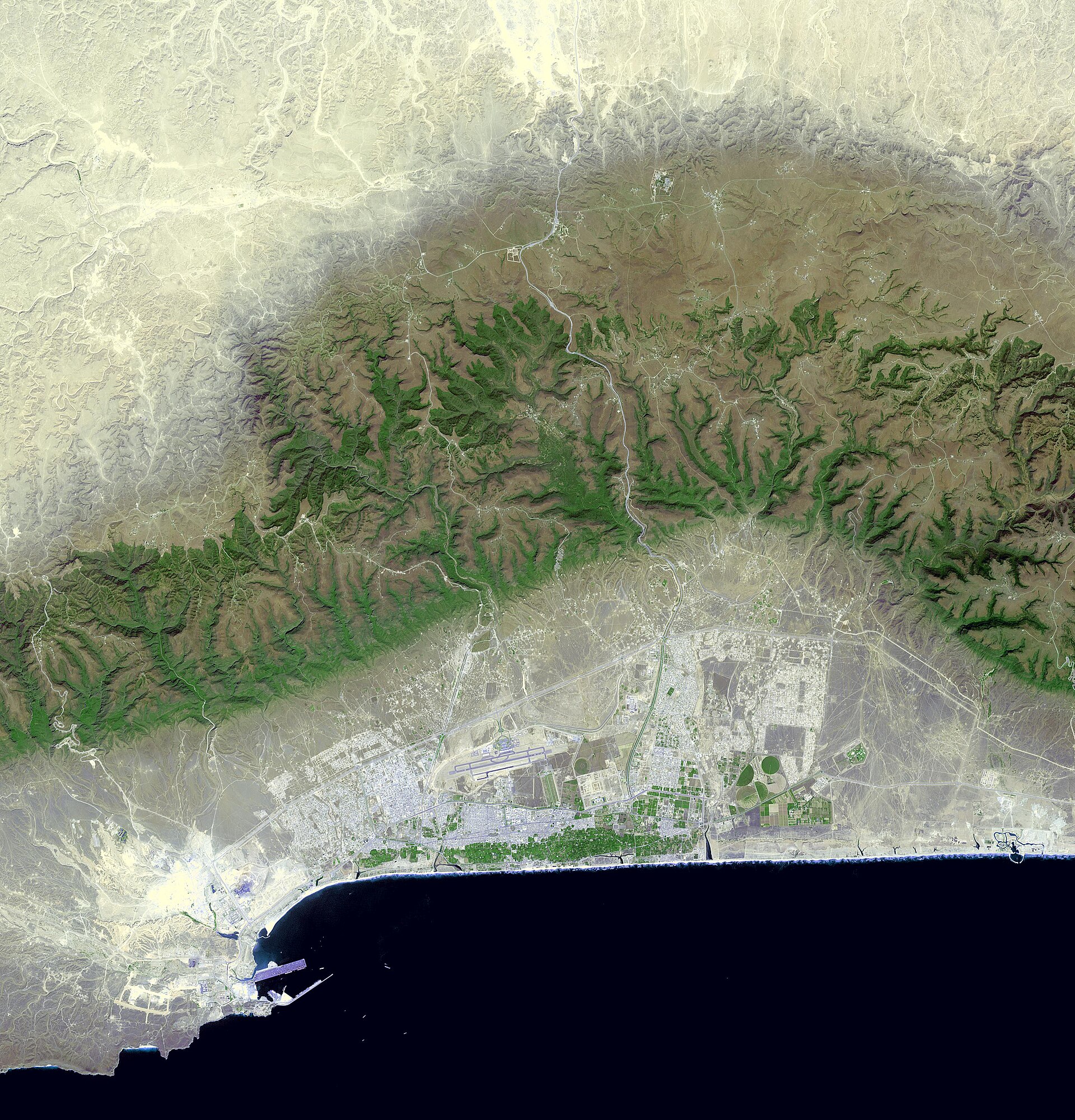
Table of Contents
The Touska Seizure: ‘Blowing a Hole in the Engine Room’
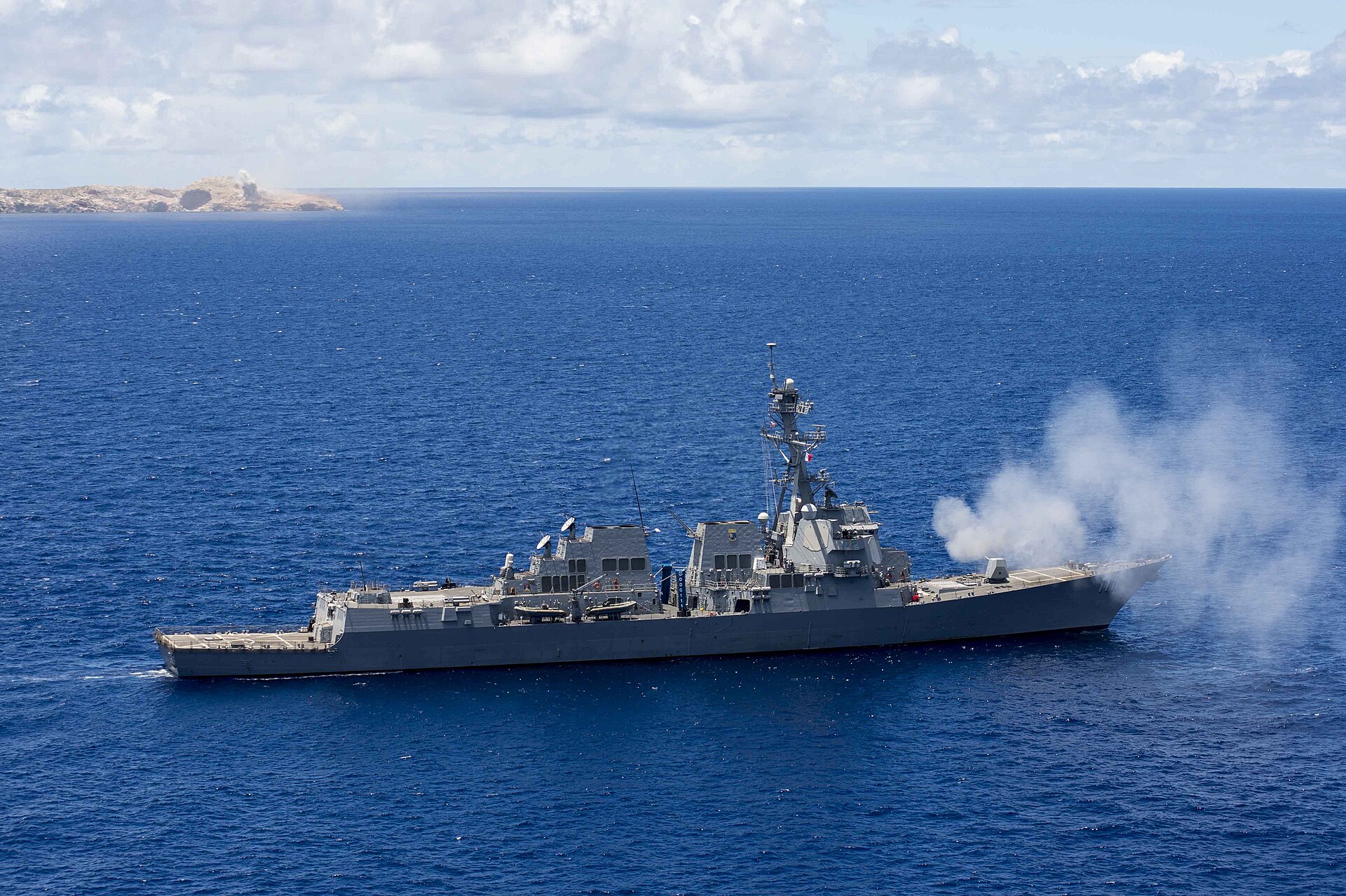
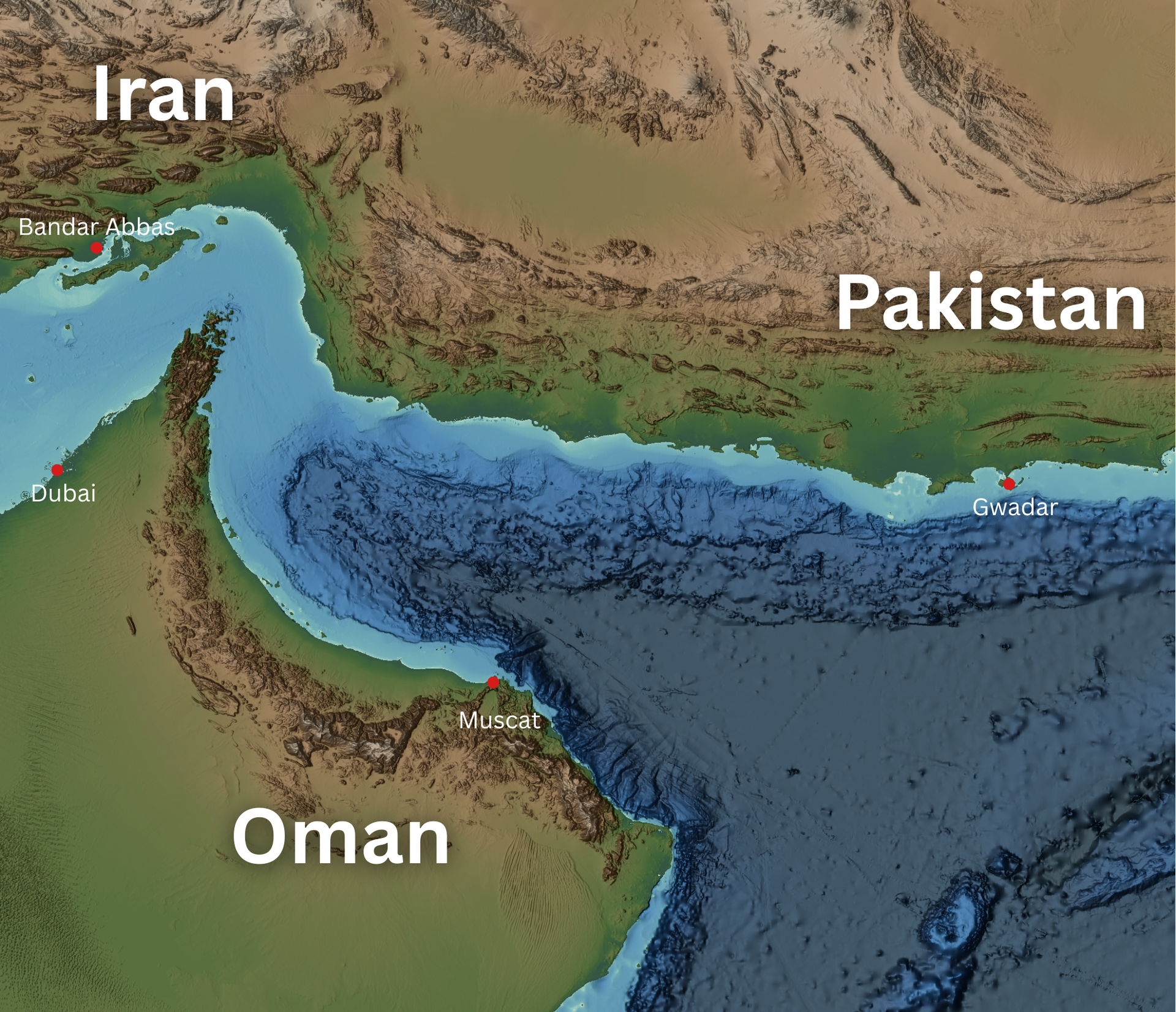
The April 20 strikes followed a rapid escalation cycle that began with the USS Spruance’s interception of the Touska on April 19. The Arleigh Burke-class guided-missile destroyer DDG-111 intercepted the Iranian-flagged cargo vessel in the northern Arabian Sea as it transited from China to Bandar Abbas, according to CENTCOM. The Touska was headed to an Iranian port in violation of the US naval blockade imposed on April 13.
After a six-hour standoff during which the Touska’s crew refused to comply with orders to stop, the Spruance fired into the vessel’s engine room, disabling propulsion. US Marines from the 31st Marine Expeditionary Unit then boarded and took custody of the ship, CNN and the Daily Caller reported, citing CENTCOM.
President Trump posted a public account of the incident on Truth Social within hours.
The U.S. Navy Guided Missile Destroyer USS SPRUANCE intercepted the TOUSKA in the Gulf of Oman, and gave them fair warning to stop. The crew refused to listen, so our Navy ship stopped them right in their tracks by blowing a hole in the engineroom.
The HOS Daily BriefThe Middle East briefing 3,000+ readers start their day with.
One email. Every weekday morning. Free.
— Donald Trump, Truth Social, April 19, 2026, via NBC News
Khatam al-Anbiya — Iran’s highest joint operational command — issued a formal retaliation warning the same day, before the drone strikes materialized. The statement, carried by Tasnim and state television, called the boarding “armed piracy” and accused the United States of “violating the ceasefire and committing maritime banditry by opening fire on one of Iran’s commercial vessels in Omani waters.”
Zolfaghari delivered the warning directly: “We warn that the Armed Forces of the Islamic Republic of Iran will soon respond to and retaliate against this armed piracy by the US military,” according to Tasnim.
What Hit Salalah — and What Iran Said About It
The April 20 operation involved at least two distinct target sets. The primary target, according to Khatam al-Anbiya’s post-strike statement carried by Al Jazeera, was a US military support vessel positioned off the Omani coast. Zolfaghari specified the vessel was “at a considerable distance from the port of Salalah in Oman” — a formulation that simultaneously confirmed the geographic location and attempted to establish distance from Omani sovereign infrastructure.
Two additional drones struck the Port of Salalah directly, according to Anadolu Agency and Argus Media. Port operations were disrupted but not suspended — a contrast with the March 11, 2026, strike that forced a full operational halt, according to Bloomberg.
The Khatam al-Anbiya statement included a line that had no operational content but carried diplomatic weight: “The national sovereignty of the brotherly and friendly country of Oman is respected by Islamic Iran,” according to Gulistaannewstv, citing the IRGC statement. The formula appeared in the same communiqué confirming strikes in Omani waters and at a port inside Omani territory.
Iran’s framing positioned the operation as a response to American escalation, not an offensive action. Khatam al-Anbiya stated that Iranian forces “subsequently attacked some US military vessels” after the Touska seizure, according to Haaretz, citing an Iran Army statement on April 20. The command structure placed responsibility on the US for initiating the cycle: the Touska boarding constituted the ceasefire breach, and Iran’s strikes constituted the reply.
Why Did Iran Shift From Denial to Explicit Claim?
The April 20 strikes broke a pattern that had held since the first confirmed Salalah attack in March. When drones hit Salalah port on March 11, setting fire to two fuel storage tanks and suspending operations, Iran denied responsibility. Iranian officials called the strikes “very suspicious” and promised an investigation, declining to attribute them to any Iranian force. Follow-on strikes on March 13 — which killed two people in Oman — and additional attacks on March 18-19 and March 28 followed the same template: no Iranian claim, no acknowledgment.
On April 20, Khatam al-Anbiya explicitly named “the port of Salalah in Oman” in its strike confirmation. Zolfaghari used the port as a geographic reference point for the vessel hit. The “considerable distance” qualifier served as diplomatic cover, but the naming itself represented a departure. Iran’s top military command had moved from denial to calibrated acknowledgment in a public statement carried by Al Jazeera and Tasnim.
The shift corresponded to a change in Iran’s stated justification framework. The March strikes occurred during active hostilities with no specific triggering event attributed to the US in Omani waters. The April 20 strikes followed the Touska seizure — which Iran placed geographically “in the waters of the Sea of Oman” and legally under Omani jurisdictional proximity. By claiming the retaliation, Khatam al-Anbiya could frame the operation as a response to an American act committed in or near Omani territory, rather than an unprovoked attack on a neutral state.
The Foundation for Defense of Democracies had flagged this tension in a March 13, 2026, analysis headlined “Oman Is Under Fire From an Iranian Regime It Sought To Befriend.” The April 20 strikes confirmed the structural contradiction the FDD identified: Oman’s diplomatic role as Iran’s closest Gulf interlocutor offered no protection against Iranian military operations targeting US assets on or near Omani soil.
The Oman Back-Channel Under Fire
Oman has functioned as the sole continuous Iran-US diplomatic back-channel throughout the conflict that began February 28, 2026. Foreign Minister Badr Al-Busaidi maintained contact with both Washington and Tehran, working to de-escalate and keep both parties at the negotiating table. Oman-Iran talks at the undersecretary level on April 4, confirmed on the Omani Foreign Ministry website, discussed Hormuz transit options — establishing that the back-channel was operationally active 16 days before the April 20 strikes.
The Irish Times reported on April 19 — the day before the drone strikes — that Iran was “studying fresh US proposals,” a detail that suggested the Oman channel remained alive and carrying traffic. Within 24 hours, Iranian drones struck the port city that serves as Oman’s primary southern logistics hub and a key node in US naval support operations.
Oman had been the only GCC state untouched by Iranian military operations during the April 7-8 ceasefire period. Saudi Arabia’s Eastern Province took seven ballistic missiles on April 7. Bahrain’s airspace had been closed since February 28. The King Fahd Causeway was shut for hours on April 7. Oman’s exemption from the target list tracked its diplomatic status.
The April 20 strike ended that exemption — though Iran’s rhetorical framework attempted to preserve it. The “brotherly and friendly country” formula, delivered in the same statement confirming strikes at Salalah’s coordinates, represented what amounted to a diplomatic paradox: Iran struck Omani territory while insisting it respected Omani sovereignty. The qualifier “considerable distance” was the mechanism for holding both positions simultaneously.
Iran has now conducted at least 22 confirmed ship attacks since February 28, with the April 20 vessel strike adding to 21 previously confirmed incidents. The Salalah port hit marked at minimum the fifth confirmed attack on the port itself since the conflict began.
Can the Islamabad Talks Survive April 20?
US Special Envoy Steve Witkoff and senior adviser Jared Kushner were flying to Islamabad on April 20 for a second round of US-Iran talks, according to Axios. The travel proceeded even as Iran had not publicly confirmed attendance. Tehran formally rejected a second round on April 19, citing “excessive demands” and the US naval blockade as evidence of American bad faith — a position Iran’s Foreign Ministry characterized as a “media game” designed to create the appearance of negotiations while the blockade continued.
Trump accused Iran of violating the ceasefire in a Truth Social post on April 20 but confirmed that US negotiators would still travel to Islamabad, according to NBC News and Al Jazeera. The decision to proceed despite active Iranian strikes against US military assets and an allied port created a visible gap between the military and diplomatic tracks.
The ceasefire expires April 22 — two days after the strikes. No extension mechanism exists, according to the Soufan Center’s analysis of the ceasefire framework. The first round of face-to-face talks in Islamabad, held April 11, saw Vice President Vance and Iranian Parliament Speaker Ghalibaf meet directly — the first such US-Iran engagement since 1979. That round ended with Vance walking out after what Iranian sources described as a dispute over delegation composition, with Khatam al-Anbiya’s authorization ceiling — the structural limit on what Iranian civilian negotiators can actually commit to — remaining unresolved.
The CENTCOM deployment of A-10 Warthogs and Apache helicopters over the Strait of Hormuz in the days preceding the Touska seizure had already raised the operational tempo. The Spruance’s boarding on April 19 converted the blockade from a declaratory posture to a kinetic enforcement action. Iran’s drone retaliation on April 20 then converted the Iranian response from rhetorical to kinetic. Both sides crossed escalatory thresholds within a 24-hour window, 48 hours before the ceasefire’s expiration.
Background: Salalah’s Role in US Military Logistics
US military access to Salalah is governed by the 1980 US-Oman Defense Agreement, expanded under a 2019 update. Salalah functions as a material processing center for USCENTCOM and US Naval Forces Central Command (USNAVCENT) logistics operations, according to AGSI and Stratfor analysis. The port handles aggregation, trans-shipment, short-term storage, and delivery for visiting US Navy vessels operating in the Arabian Sea and Gulf of Oman.
The port’s dual-use status — commercial shipping hub and US military logistics node — makes it structurally similar to the arrangement at Duqm, Oman’s other major port with US military access. But Salalah’s proximity to the Gulf of Oman and the Arabian Sea shipping lanes gives it a more direct role in supporting naval operations related to the Hormuz blockade and convoy escort missions.
Oman’s defense relationship with the United States coexists with its diplomatic relationship with Iran — an arrangement that has defined Omani foreign policy since Sultan Qaboos formalized it in the 1970s and that Sultan Haitham bin Tariq has maintained since 2020. The April 20 strikes tested whether that dual positioning can survive direct Iranian military action against a facility that serves both roles.
The broader conflict entered its 52nd day on April 20. Iran launched its initial strikes on US and Saudi targets on February 28, 2026. The Salalah strikes added Oman to the list of GCC states directly affected by Iranian military operations — leaving no Gulf Cooperation Council member untouched.
FAQ
What is the Touska and why was it seized?
The Touska is an Iranian-flagged cargo vessel that was transiting from China to the Iranian port of Bandar Abbas when the USS Spruance (DDG-111) intercepted it in the Gulf of Oman on April 19, 2026. CENTCOM stated the vessel was violating the US naval blockade on Iranian ports, imposed on April 13. After a six-hour standoff, the Spruance fired into the Touska’s engine room to disable it, and Marines boarded to take custody. It was the first forcible boarding under the blockade.
How many times has Salalah been struck during the conflict?
At least five confirmed times. The March 11 strike set fire to two fuel tanks and halted port operations (Bloomberg). A March 13 follow-on killed two people in Oman. Additional strikes occurred March 18-19 and March 28. The April 20 attack was the first in which Iran’s military command explicitly named Salalah in its strike confirmation rather than denying involvement.
What is Khatam al-Anbiya and why does it matter?
Khatam al-Anbiya Central Headquarters is Iran’s highest joint military operational command, overseeing coordination between the regular armed forces and the IRGC. Its public statements carry the weight of Iran’s combined military establishment. The fact that Khatam al-Anbiya — not the IRGC Navy or a subordinate unit — issued both the retaliation warning on April 19 and the strike confirmation on April 20 indicates the operation was authorized at the top of Iran’s military command structure. The command is led by Major General Abdolrahim Mousavi, the Chief of Staff of Iran’s Armed Forces.
Does Oman have air defenses capable of intercepting drones?
Oman operates a limited integrated air defense network compared to Saudi Arabia or the UAE. Its primary short-range systems are Rapier and Mistral platforms. Salalah’s location — roughly 1,000 kilometers from Muscat and closer to Yemen’s border than to the Omani capital — places it at the periphery of Oman’s defense coverage. Oman has not publicly disclosed whether any interception was attempted on April 20.
What happens if the ceasefire expires on April 22 without renewal?
The ceasefire framework, brokered through Pakistan’s mediation in Islamabad, contains no automatic extension mechanism, according to the Soufan Center. If it lapses without a new agreement, both sides revert to the pre-ceasefire posture. For Iran, that means the IRGC Navy’s “full authority” declaration over the Strait of Hormuz — issued April 5 and reaffirmed April 10 — would no longer be constrained even nominally by ceasefire terms. For the US, the naval blockade on Iranian ports would continue regardless, as it was imposed unilaterally on April 13, outside the ceasefire framework. The Hajj pilgrimage season, with 1.2-1.5 million pilgrims in Saudi Arabia, begins overlapping the expiry window, raising the threshold for major kinetic escalation near holy sites.