Table of Contents
- Why Is CENTCOM Flying A-10 Warthogs Over the Strait of Hormuz?
- What Does the A-10 Deployment Signal to IRGC Commanders?
- How Many Vessels Has the US Blockade Turned Back?
- Why Did IRGC Gunboats Fire on Pre-Cleared Indian Tankers?
- Apache Helicopters and the 72-Hour Window
- How Has Iran Responded to Operation Epic Fury?
- The Saudi Throughput Gap
- Frequently Asked Questions
MANAMA — The United States Central Command has deployed A-10C Thunderbolt IIs and AH-64 Apache helicopters over the Strait of Hormuz as part of Operation Epic Fury, turning back 23 vessels since the naval blockade began on April 13 and releasing combat footage of the aircraft in action — a deliberate display of coercive force 72 hours before the April 22 ceasefire expires. The operation has destroyed more than 120 Iranian naval vessels and 44 mine-laying watercraft since February 28, according to Gen. Dan Caine, Chairman of the Joint Chiefs of Staff.
The decision to publicly name the operation, release imagery, and fly the slowest attack aircraft in the US inventory at low altitude over contested waters is itself the signal. CENTCOM is choosing legibility — the unmistakable presence of an aircraft audible and visible to every IRGC fast-boat crew in the strait — over the stealth options that could accomplish the same kinetic mission from altitude. The signal appears to be failing at the small-unit level: on April 18, IRGC gunboats fired on two Indian-flagged tankers with no prior radio warning, despite pre-issued transit clearances, suggesting the message is not reaching the commanders it was designed to coerce.
Why Is CENTCOM Flying A-10 Warthogs Over the Strait of Hormuz?
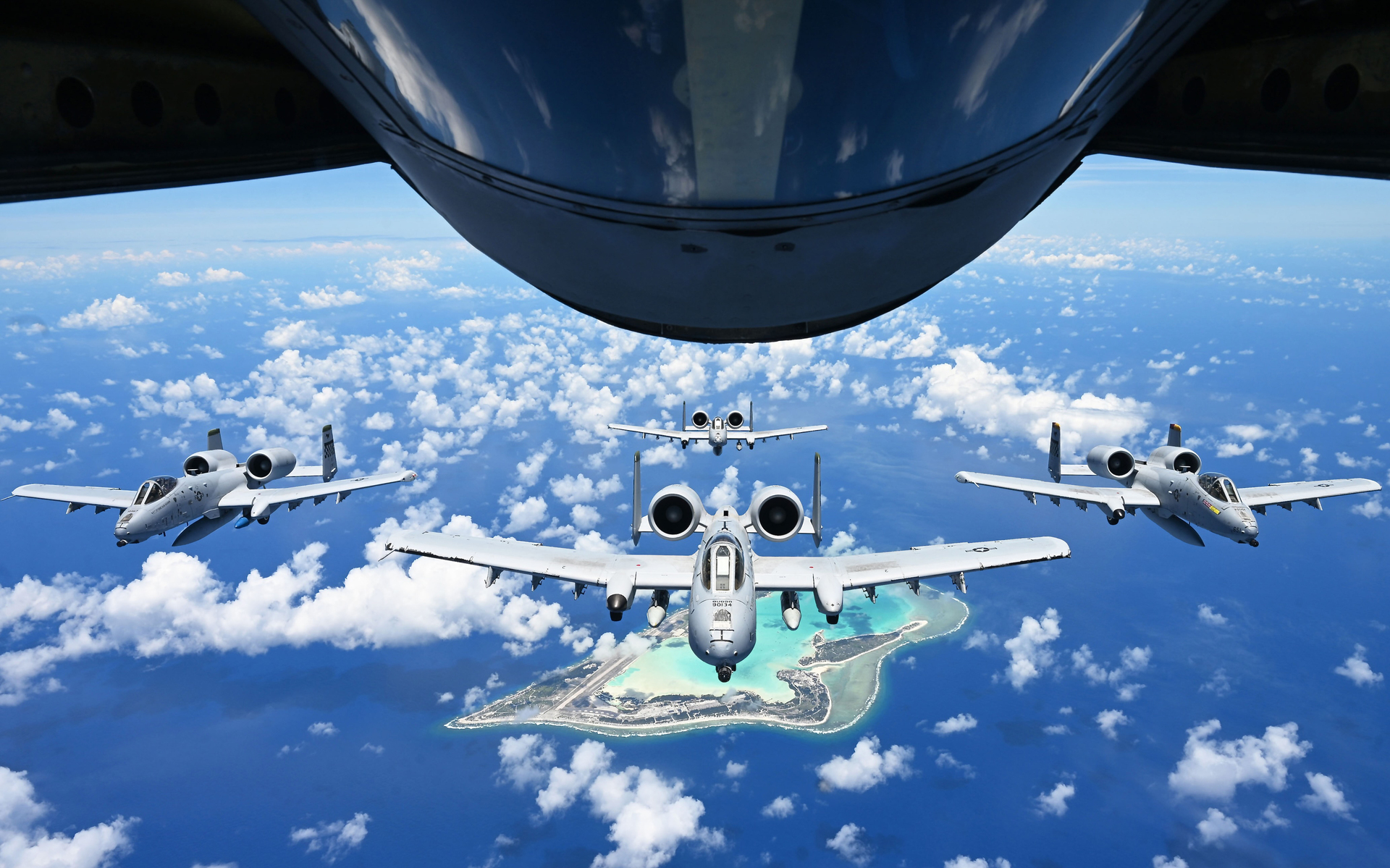
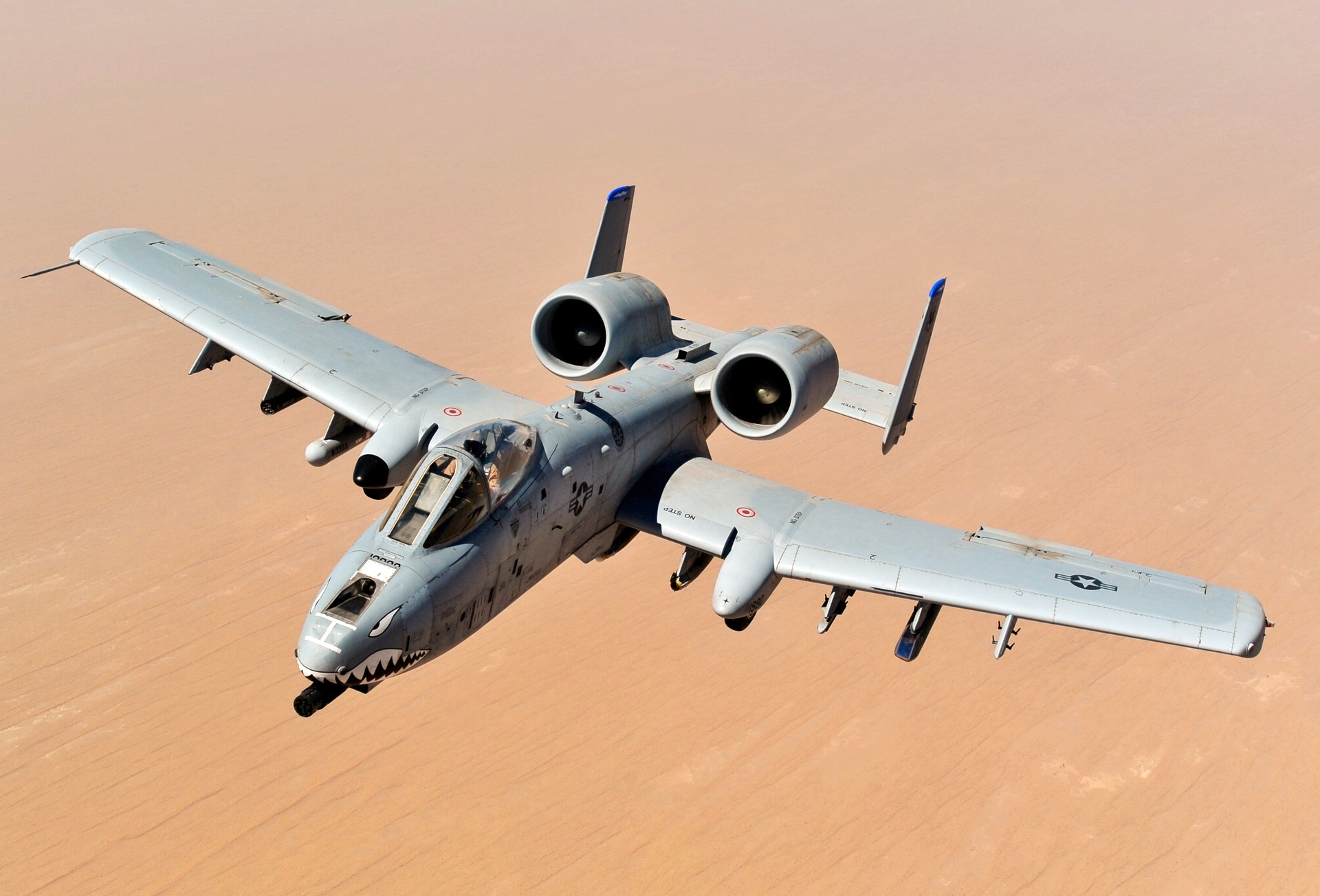
CENTCOM assigned the A-10C Thunderbolt II to a maritime interdiction role against IRGC fast-attack craft in the Strait of Hormuz beginning in late February 2026 — the first operational deployment of the aircraft in a Gulf maritime combat mission. The 75th Expeditionary Fighter Squadron, operating 30 A-10s in theater (12 original plus 18 reinforcements), has been hunting Iranian naval assets since the opening days of Operation Epic Fury.
“The Warthog is now in the fight across the southern flank and is hunting and killing fast attack watercraft in the Strait of Hormuz,” Gen. Caine said at a Pentagon briefing on March 19, 2026, according to Air Force Times. On March 15, CENTCOM released the first official imagery of A-10Cs conducting aerial refueling in support of the campaign — the first public visuals of the aircraft in Hormuz operations.
The A-10C carries a 30mm GAU-8/A Avenger cannon firing 3,900 rounds per minute, AGM-65 Maverick air-to-surface missiles, and APKWS laser-guided rockets. Its titanium cockpit armor allows it to absorb small-arms fire and sustain flight on one engine with partial hydraulics. At least one A-10 sustained hostile fire during a pilot recovery operation around April 3, according to SOF News.
The aircraft has only one prior maritime combat precedent. In March 2011, A-10s operating alongside a Navy P-3C and USS Barry struck the Libyan coast guard vessel Vittoria and associated watercraft off the Libyan coast, according to Air & Space Forces Magazine. The Gulf fast-boat hunting role is entirely new — no A-10 had engaged surface targets in the Persian Gulf before 2026.
The Middle East briefing 3,000+ readers start their day with.
One email. Every weekday morning. Free.
But the mission was rehearsed, not improvised. In September 2023, two A-10s engaged simulated surface threats in the Gulf of Oman alongside USS Stethem, an Arleigh Burke-class destroyer, according to Air Force Times. In February 2026, weeks before the war began, A-10s trained with USS Santa Barbara, a Freedom-class littoral combat ship, in Arabian Gulf exercises, according to Air & Space Forces Magazine. CENTCOM had been preparing this capability for at least two and a half years.
What Does the A-10 Deployment Signal to IRGC Commanders?
The A-10 is the slowest fixed-wing attack aircraft in the US inventory. It flies low, it flies loud, and at 500 feet above the water it is unmistakable to any crew on a fast-attack boat. That is the point. A stealth aircraft at altitude could deliver the same ordnance with less risk to the pilot and zero visual signature. CENTCOM chose the opposite: maximum visibility, maximum noise, maximum psychological presence.
This is legibility signaling — a posture designed to ensure the adversary cannot claim ignorance of the threat overhead. Every IRGC small-boat commander in the strait can see and hear the aircraft that has already erased more than 120 vessels from their inventory. The choice to release footage and name the operation publicly reinforces the message: the US wants Iran’s military leadership to know exactly what is above them and what it has already done.
Adm. Brad Cooper, the CENTCOM commander, framed the campaign in attritional terms. “We will continue to rapidly deplete Iran’s ability to threaten freedom of navigation in and around the Strait of Hormuz,” Cooper said, according to Air Force Times. CENTCOM’s own statement emphasized the A-10’s loiter capability: “The A-10 Thunderbolt II can loiter for hours, standing by and ready to execute a mission whenever needed.”
The A-10’s operational endurance — extended by aerial refueling — means it can maintain a persistent, visible presence over the strait in a way that faster, higher-altitude aircraft cannot. For an IRGC fast-boat crew, the calculation is straightforward: the aircraft above you has already killed dozens of vessels identical to yours, and it is not leaving.
How Many Vessels Has the US Blockade Turned Back?
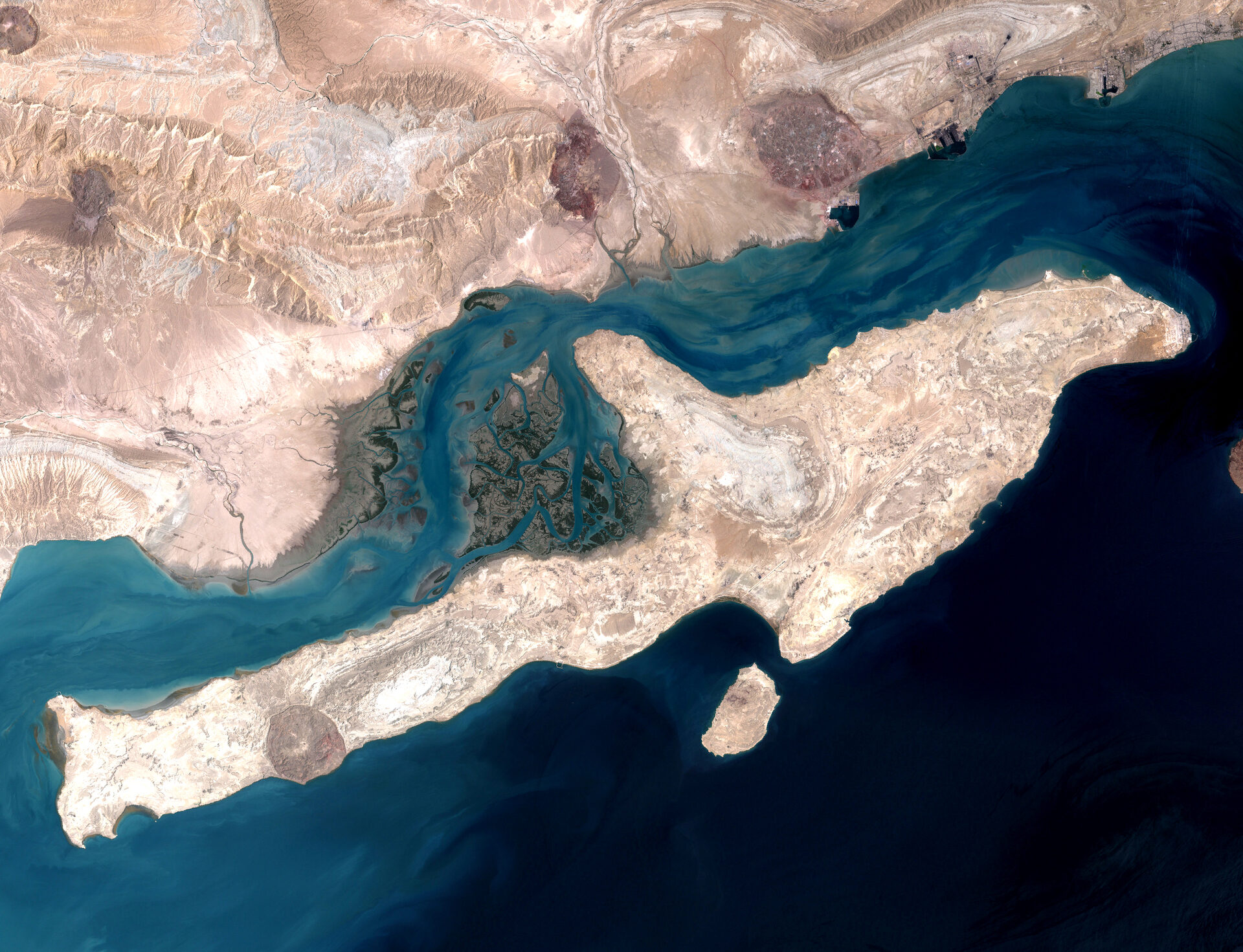
CENTCOM confirmed that 23 vessels had been turned back since the blockade began on April 13, as of April 18, according to Military.com. The pace of diversions is accelerating: Gen. Caine reported 13 vessels turned back in the first 72 hours at an April 16 Pentagon briefing. “So far 13 ships have made the wise choice of turning around,” Caine said, according to Townhall.
The blockade targets Iranian ports and coastline specifically, not all transit through the strait. “This blockade applies to all ships regardless of nationality heading into or from Iranian ports,” Caine stated at the same briefing, according to Stars and Stripes. CENTCOM confirmed separately that vessels transiting to non-Iranian ports remain permitted, according to CNBC.
The enforcement posture is explicit. “Any ship that would cross the blockade would result in our sailors executing pre-planned tactics designed to bring the force to that ship — if need be, board the ship and take her over,” Caine said, according to Stars and Stripes. More than 10,000 sailors, Marines, and airmen, over a dozen ships, and dozens of aircraft are executing the mission, Caine added at the April 16 briefing, according to Townhall.
The 23-vessel diversion figure carries a significance beyond its immediate operational impact. The United States is now exercising de facto transit management authority in the Strait of Hormuz — deciding which vessels pass and which turn back. This is the same function Iran’s toll regime claimed when it began issuing permits and demanding payment in March. Two authorities now assert control over the same water, with neither recognizing the other’s jurisdiction.
That standoff reached a new threshold on April 19, when USS Spruance fired on and boarded the Iranian-flagged container ship TOUSKA in the Gulf of Oman — the blockade’s first physical seizure of an Iranian vessel. The pre-planned boarding tactics Gen. Caine described were executed for the first time.
Secretary Pete Hegseth framed the blockade as the moderate option. “If Iran chooses poorly, then they will have a blockade and bombs dropping on infrastructure, power and energy,” Hegseth said at the April 16 Pentagon briefing, according to Stars and Stripes. “This blockade is the polite way this can go,” he added, according to Townhall.
Why Did IRGC Gunboats Fire on Pre-Cleared Indian Tankers?
On April 18, IRGC gunboats fired on the Indian-flagged VLCC Sanmar Herald, carrying two million barrels of Iraqi crude, and the Jag Arnav with no prior radio warning, forcing both vessels to reverse course despite pre-issued transit clearances, according to NBC News and Iran International. TankerTrackers.com reported that “audio recordings indicated IRGC gunboats fired during the encounter as the ships were redirected westward,” according to Iran International.
India summoned Iran’s ambassador Mohammad Fathali; Foreign Secretary Vikram Misri conveyed “deep concern” over the attacks on Indian-flagged vessels.
The incident exposes the central failure of CENTCOM’s legibility campaign. The A-10s were operating in theater. The blockade force was deployed. The message had been delivered publicly, repeatedly, and with released footage. And IRGC small-boat crews fired on pre-cleared tankers anyway.
The likely explanation is structural. IRGC Navy Commander Alireza Tangsiri was killed on March 30, 2026, according to FDD and Al Jazeera. No successor has been named in the 20 days since — the longest command vacancy in the IRGC Navy’s history. A 2008 decentralization reform distributed operational autonomy across 31 semi-autonomous corps precisely to survive leadership losses, but the same decentralization means small-unit commanders can act without central authorization or coordination.
The result is a force that attacks pre-cleared vessels, fires without warning, and contradicts its own government’s diplomatic commitments. Not because it received orders to do so. Because no one with authority is issuing orders at all. Between March 1 and April 18, 31 confirmed or claimed IRGC attacks on vessels have been documented, according to TankerTrackers.com and the United Kingdom Maritime Trade Operations incident log. One tugboat was sunk, 16 merchant ships damaged (seven abandoned), and 12 seafarers killed or missing.
CENTCOM’s signal is reaching the political leadership in Tehran. It is not reaching the boat crews in the strait. That gap — between strategic communication and tactical behavior — is the most dangerous variable in the 72 hours before the ceasefire expires.
Apache Helicopters and the 72-Hour Window
On April 18, CENTCOM released images of AH-64 Apache helicopters patrolling the Strait of Hormuz as Iran reimposed transit restrictions, according to The Aviationist. The Apache deployment adds a rotary-wing layer to the fixed-wing A-10 patrols — the helicopter can operate closer to the water, hover over suspect vessels, and engage small boats in confined waters where fixed-wing aircraft have less flexibility.
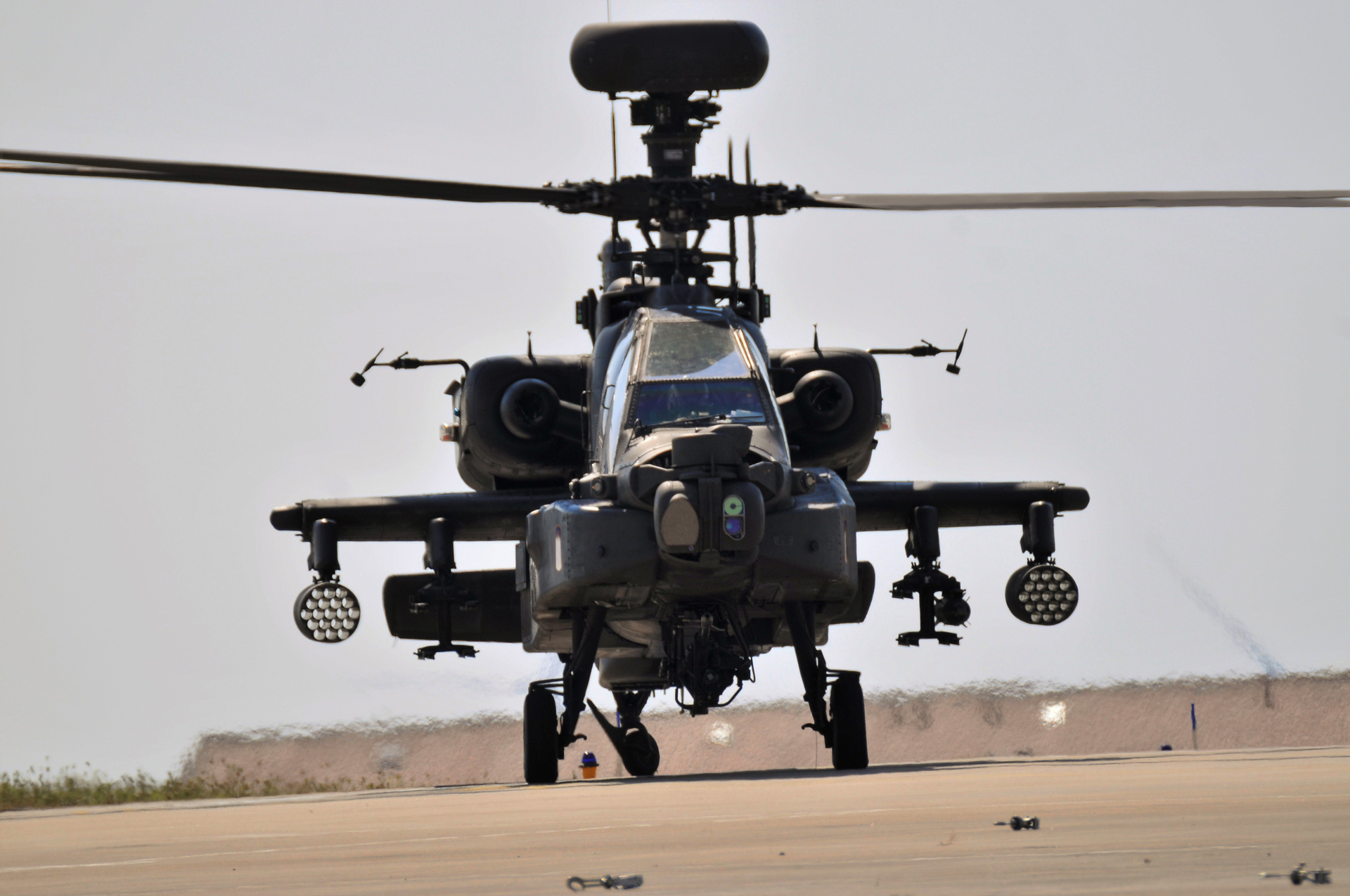
The timing is not incidental. The ceasefire expires on April 22, with no extension mechanism in place. Gen. Caine’s April 16 statement left no ambiguity about post-ceasefire readiness: “The United States joint force remains postured and ready to resume major combat operations at literally a moment’s notice,” according to Townhall.
The 72-hour window between the Apache imagery release and ceasefire expiry coincides with the opening of the Hajj arrival period. April 18 is the date the Makkah Umrah cordon seals and international pilgrim arrivals begin, raising the threshold for kinetic escalation. Indonesia’s 221,000 pilgrims begin their first departure on April 22 — the same day the ceasefire expires.
The blockade’s coercive logic depends on compression. Can Kasapoglu of the Hudson Institute assessed that “given Iran’s reliance on the strait and the regime’s dependence on hydrocarbon revenues, a successful blockade could significantly intensify pressure on Iran’s leadership,” though he cautioned that “the move carries clear escalation risks,” according to a Hudson Institute analysis published April 13.
The A-10 fleet’s continued relevance has been validated by the conflict. The FY2026 National Defense Authorization Act blocked Air Force plans to retire the aircraft, mandating a minimum inventory of 103 A-10s through September 30, 2026, according to 19FortyFive. A three-year operational extension through 2029 was subsequently granted based on battlefield effectiveness in the Hormuz campaign, according to Air & Space Forces Magazine.
How Has Iran Responded to Operation Epic Fury?
Iran’s joint military command, Khatam al-Anbiya, issued a statement on April 18 asserting that “control of the Strait of Hormuz has returned to its previous state…under strict management and control,” according to Euronews and Military.com. The statement accused the United States of “piracy and maritime blockades” and claimed Iran had “agreed to allow a limited number of oil tankers and commercial vessels to pass through the Strait of Hormuz in a controlled manner,” which the US had violated.
Iranian Foreign Ministry spokesman Esmaeil Baqaei called the naval blockade “a violation of the ceasefire,” according to Euronews. Mohammad Bagher Ghalibaf, the Parliament Speaker and former IRGC Aerospace Force commander (1997-2000), issued a direct warning: “With the continuation of the blockade, the Strait of Hormuz will not remain open,” according to Euronews.
The Tasnim News Agency, an IRGC-aligned outlet, had previously criticized Foreign Minister Araghchi for “various ambiguities about the conditions for passage, its details, and its mechanisms.” The IRGC Navy’s institutional position, conveyed through unnamed spokespeople, was more absolute: “Every breach of promise by America will be met with a fitting response. As long as the passage of vessels from Iranian origin to Iranian destination remains under threat, the status of the Strait of Hormuz will remain in its previous state,” according to CNBC.
The gap between Tehran’s political statements and the IRGC’s operational behavior remains the defining feature of the crisis. Iran’s government frames the blockade as a ceasefire violation. The IRGC fires on vessels that Iran’s own government cleared for transit. The authorization ceiling — President Pezeshkian’s inability to command the IRGC under Article 110 of Iran’s constitution — means the political leadership can make diplomatic commitments it has no mechanism to enforce.
Meanwhile, 150 or more tankers remain anchored outside the Strait of Hormuz, according to TankerTrackers.com, and tanker traffic through the waterway has fallen by approximately 70 percent from pre-war levels, according to Kpler vessel tracking data. Brent crude traded at $97-99 intraday on April 19, recovering from the $90 level seen after Araghchi’s brief opening declaration on April 16-17.
The Saudi Throughput Gap
For Saudi Arabia, the blockade creates a structural problem that military operations alone cannot solve. The East-West Pipeline’s Yanbu terminal on the Red Sea coast has a practical loading ceiling of 4 to 5.9 million barrels per day, according to industry assessments. Pre-war Saudi exports through the Strait of Hormuz totalled 7 to 7.5 million barrels per day. The gap — 1.1 to 1.6 million barrels per day — represents throughput that cannot be replaced regardless of how effectively CENTCOM enforces the blockade or how many vessels it turns back.
Saudi March production fell to 7.25 million barrels per day, according to the International Energy Agency, down from 10.4 million barrels per day in February — a 30 percent collapse. The IEA called it “the largest disruption on record.” Asian exports dropped 38.6 percent, according to tanker tracking firm Kpler. Every day that the strait remains contested, Saudi Arabia loses revenue it cannot recover through alternative routes.
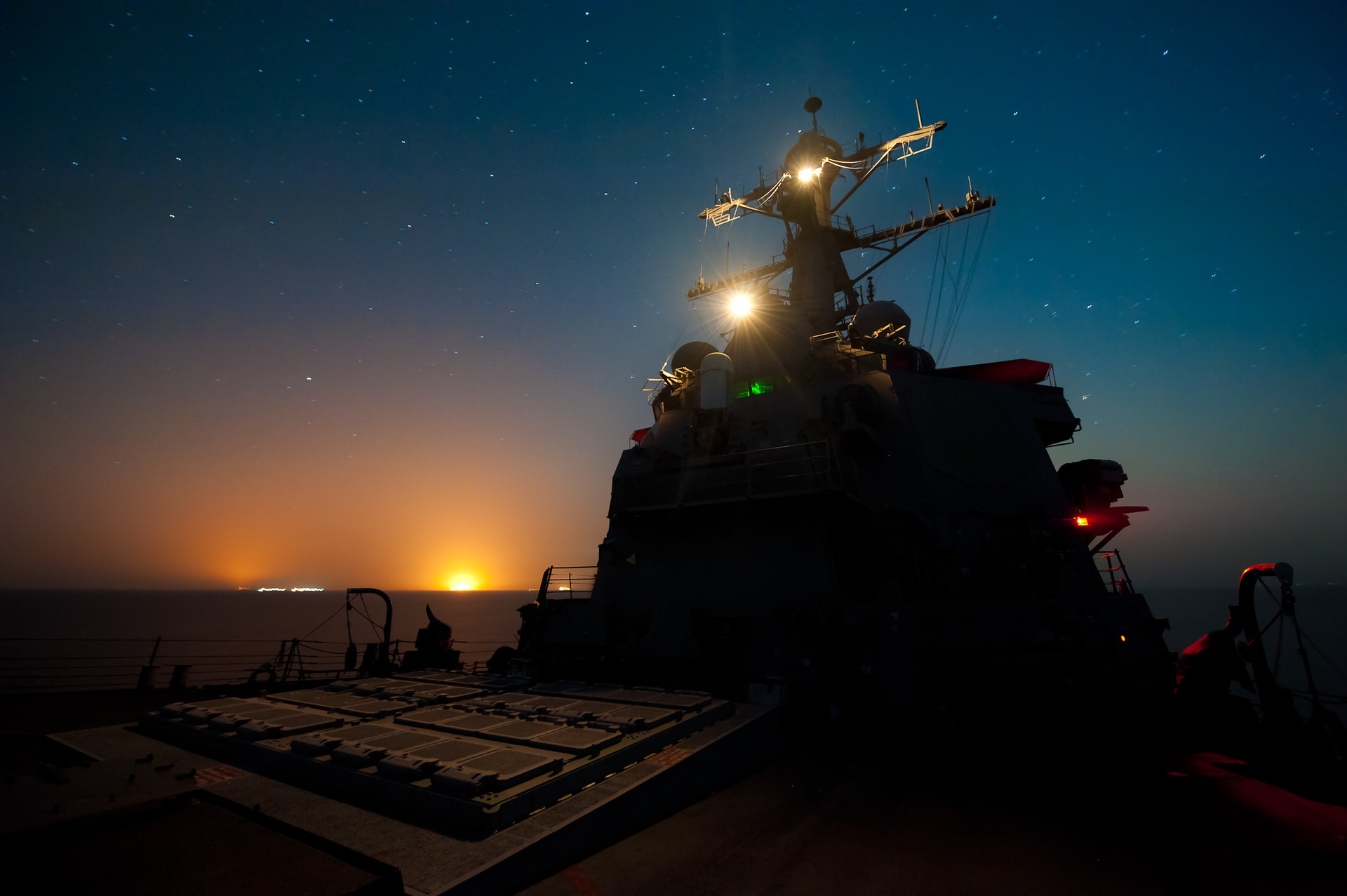
The US blockade and the IRGC’s competing toll regime have created a situation in which two hostile authorities claim jurisdiction over the same 21-mile-wide waterway, and neither has achieved uncontested control. CENTCOM has turned back 23 vessels. The IRGC has attacked 31. The A-10s fly overhead. The gunboats fire below. And the ceasefire expires in 72 hours.
Frequently Asked Questions
What is the 75th Expeditionary Fighter Squadron?
The 75th Expeditionary Fighter Squadron is the A-10C unit assigned to Operation Epic Fury in the Strait of Hormuz. The squadron’s parent unit, the 75th Fighter Squadron based at Moody Air Force Base, Georgia, deployed to the Middle East in early 2026 and was augmented from 12 to 30 aircraft as the maritime interdiction mission expanded. The unit operates under CENTCOM’s air component command for Gulf operations.
Has the A-10 ever been used in naval combat before 2026?
Only once. In March 2011, during NATO’s intervention in Libya, A-10s struck the Libyan coast guard vessel Vittoria and associated watercraft alongside a Navy P-3C maritime patrol aircraft and USS Barry. The 2011 engagement was a single operation against a static coastal target. The sustained fast-boat hunting campaign in the Strait of Hormuz has no precedent in the aircraft’s 50-year operational history.
What happens if the April 22 ceasefire expires without renewal?
No formal extension mechanism exists within the current ceasefire framework, according to the Soufan Center. If the ceasefire lapses, CENTCOM has stated it is “postured and ready to resume major combat operations at literally a moment’s notice.” The expiry coincides with the beginning of Indonesia’s Hajj pilgrim departures (221,000 pilgrims), creating competing pressures between military escalation and the protection of pilgrims transiting through Gulf airspace and waterways.
Why has Iran not named a replacement for IRGC Navy Commander Tangsiri?
Tangsiri was killed on March 30, 2026, and no successor has been publicly announced as of April 19 — a 20-day vacancy. Supreme Leader Khamenei, who holds sole authority to appoint senior IRGC commanders under Article 110 of the constitution, has been publicly absent for over 49 days. The vacancy coincides with Mojtaba Khamenei’s reported audio-only participation in decision-making, raising questions about whether the appointment authority itself is functional.
Can the US blockade legally target non-Iranian-flagged vessels?
CENTCOM has framed the blockade as applying to vessels heading to or from Iranian ports, regardless of flag state. Gen. Caine explicitly stated it “applies to all ships regardless of nationality.” International law scholars note that blockades under the law of armed conflict require formal declaration, notification to neutral states, and proportionality. Iran has characterized the blockade as a ceasefire violation, while the US treats it as an enforcement action within an ongoing military operation.