Table of Contents
- What Did the IRGC Navy Broadcast on Channel 16?
- The Sequence: Tweet, Market Crash, Override
- Why Does VHF Channel 16 Matter?
- The Sanmar Herald and the Two Command Loops
- Who Speaks for Iran’s Hormuz Policy?
- Khamenei’s Name Without Khamenei’s Voice
- The Embassy Damage Control
- What Does This Mean for the Islamabad Talks?
- The Precedent: Khomeini’s 1988 Ceasefire Broadcast, Inverted
- Frequently Asked Questions
TEHRAN — For fifty days, the authorization ceiling — the structural gap between Iran’s elected civilian government and the IRGC’s operational command over the Strait of Hormuz — existed as an analytical inference, pieced together from contradictory statements, leaked negotiating positions, and the observable distance between what Tehran’s diplomats promised and what happened to ships. On April 18, the IRGC Navy broadcast it on VHF Channel 16, the international maritime distress frequency monitored by every commercial vessel, coast guard station, and naval intelligence unit in the Persian Gulf. The message, transmitted by an IRGC patrol unit identifying itself as “Iranian Sepandavi,” was unambiguous: “The Strait of Hormuz is still closed. We will open it by the order of our leader, Imam Khamenei, not by the tweets of some idiot.” The broadcast arrived less than 36 hours after Foreign Minister Araghchi declared Hormuz “completely open” — an announcement that triggered a 10%-plus drop in Brent crude and a celebratory Truth Social post from Donald Trump. The authorization ceiling is no longer something analysts argue about. It has an audio recording.
What Did the IRGC Navy Broadcast on Channel 16?
On April 18, an IRGC Navy unit transmitted on VHF Channel 16 a message that opened: “In the Persian Gulf and the Gulf of Oman, this is Iranian Sepandavi calling on Channel 16.” What followed was a direct repudiation of Foreign Minister Araghchi’s April 17 declaration that the Strait of Hormuz was open to commercial traffic. The verbatim language, first documented by maritime intelligence monitor The Hormuz Letter and captured in audio recordings by TankerTrackers.com: “The Strait of Hormuz is still closed. We will open it by the order of our leader, Imam Khamenei, not by the tweets of some idiot.”
The broadcast continued: “If you want to pass through the strait, you must ask permission from Iranian Sepa navy. All vessels that have a connection to our enemies will be targeted if they try to pass the Strait of Hormuz.” The unit identifier — “Sepandavi” — is consistent with a named IRGC Navy operational patrol unit, not a rogue sailor with a radio. This was institutional communication, delivered through the one channel guaranteed to reach every relevant audience simultaneously.
The original audio poster noted, “I cannot verify this audio.” No Western government has publicly authenticated the recording. But the operational facts that followed — ships fired upon, Indian tankers forced back, the strait re-closed by IRGC formal statement — are not contingent on the broadcast’s exact attribution. The IRGC’s actions said the same thing the radio did.
The Sequence: Tweet, Market Crash, Override
The timeline is precise enough to reconstruct. On April 17, Araghchi posted on X: “In line with the ceasefire in Lebanon, the passage for all commercial vessels through Strait of Hormuz is declared completely open for the remaining period of ceasefire, on the coordinated route as already announced by Ports and Maritime Organisation of the Islamic Rep. of Iran.” Al Jazeera reported the statement; global markets responded. Brent crude fell more than 10%. Trump posted on Truth Social that it was “a great and brilliant day for the world.”
Within one hour of Araghchi’s tweet, IRGC-aligned media opened fire. Tasnim News Agency called it a “bad and incomplete tweet by Araghchi and incorrect ambiguity-creation regarding the reopening of the Strait of Hormuz.” Mehr News Agency wrote that Araghchi “provided the best opportunity for Trump to go beyond reality, declare himself the winner of the war and celebrate victory.” This pattern — Tasnim, Fars, and Mehr publishing coordinated attacks on Araghchi’s Hormuz statements — was identical to the April 17 reversal documented in the previous cycle.
The Middle East briefing 3,000+ readers start their day with.
One email. Every weekday morning. Free.
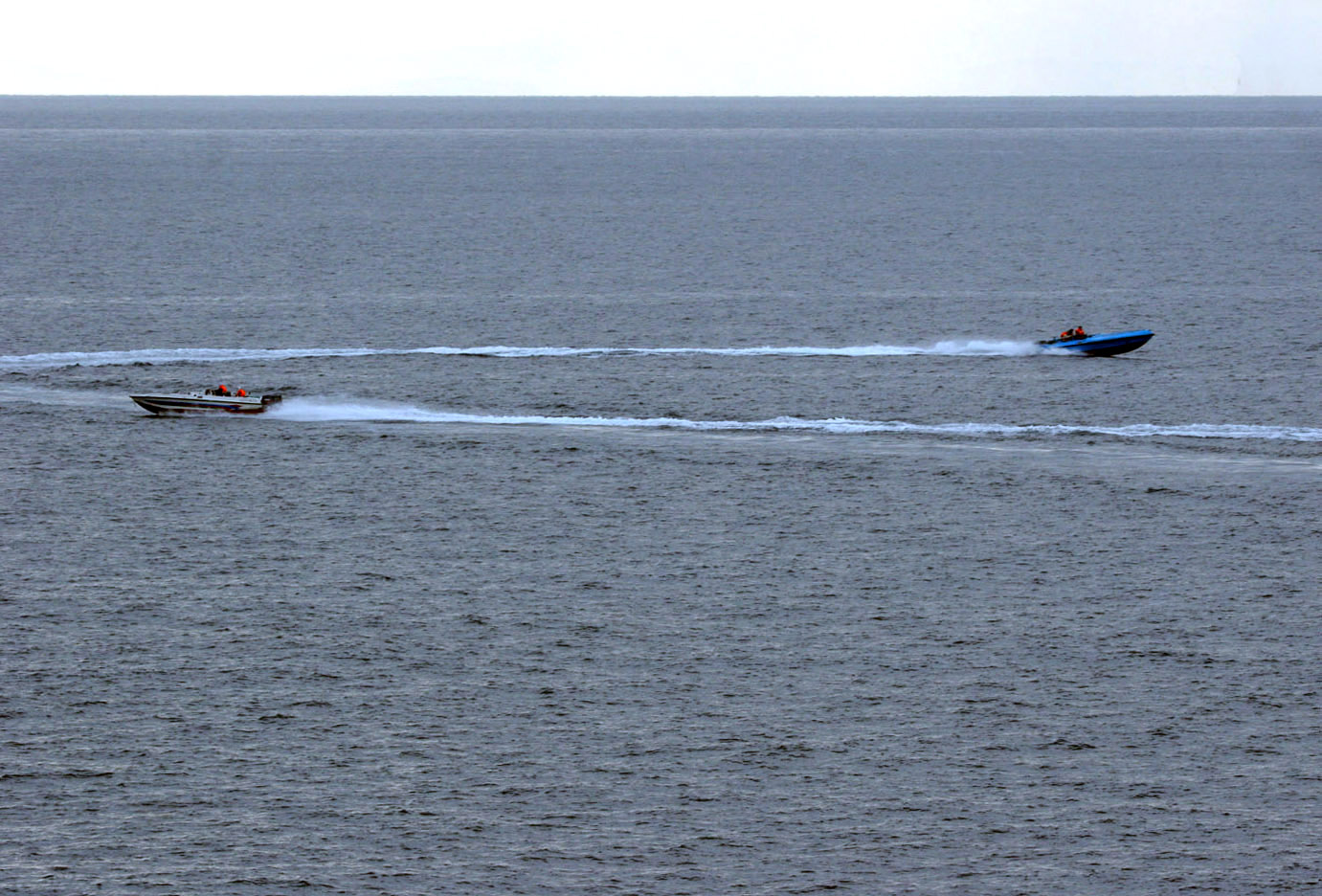
The media attack preceded the operational override. Less than 18 hours after Araghchi’s tweet, IRGC gunboats fired on a commercial tanker 20 nautical miles northeast of Oman — without issuing the standard VHF Channel 16 challenge that Iran’s own permit system nominally requires. Two IRGC fast boats engaged before radio contact. The permit system and operational command were not communicating.
By the evening of April 18, the IRGC Navy issued a formal closure statement via Xinhua and other outlets: “Due to the violation of the ceasefire conditions, and as the American adversary has not lifted the naval blockade on Iranian vessels and ports, the Strait of Hormuz has been closed as of this evening until this blockade is removed.” Araghchi’s tweet had a shelf life of roughly 24 hours.
| Event | Approximate Time | Source |
|---|---|---|
| Araghchi tweets Hormuz “completely open” | April 17 | Al Jazeera |
| Tasnim/Mehr/Fars attack Araghchi’s tweet | Within 1 hour of tweet | Iran International |
| Brent crude drops 10%+ | April 17 trading session | Fortune/multiple |
| Trump celebrates on Truth Social | April 17 | Fortune |
| IRGC gunboats fire on tanker without VHF challenge | <18 hours after tweet | The Defense News |
| Three ships with IRGC transit clearance fired upon | April 18 | The Defense News |
| IRGC Navy Channel 16 broadcast (“some idiot”) | April 18 | The Hormuz Letter / TankerTrackers.com |
| IRGC formal closure statement | Evening, April 18 | Xinhua/multiple |
| Indian tankers forced back west | April 18-19 | Multiple |
Why Does VHF Channel 16 Matter?
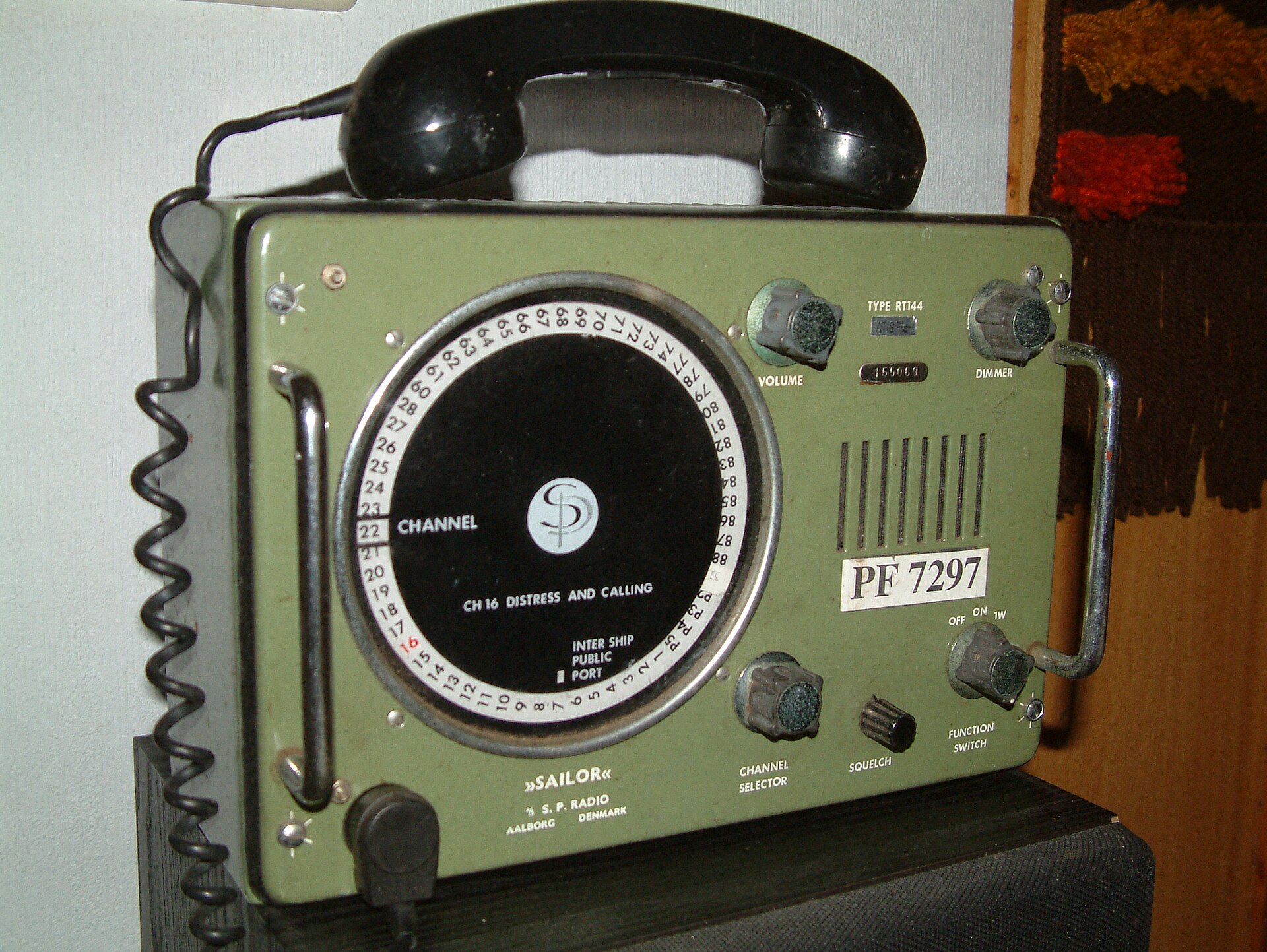
Under the International Convention for the Safety of Life at Sea (SOLAS), every GMDSS-equipped commercial vessel is legally required to monitor VHF Channel 16 continuously. It is the international maritime distress, safety, and calling frequency — the one radio channel guaranteed to be heard by every ship, coast guard station, and naval platform in range. The US Fifth Fleet monitors it. The Royal Navy monitors it. The Indian Navy’s Hormuz patrol monitors it. Every commercial maritime intelligence service monitors it. Every tanker captain transiting the strait monitors it.
Broadcasting on Channel 16 is not a press conference. It is not a planted story in a sympathetic outlet. It is the maritime equivalent of walking into the UN General Assembly and speaking at the podium — except attendance is not optional. The IRGC Navy’s decision to transmit its repudiation of Araghchi on this frequency was a choice to ensure that the message reached its intended audience in real time, without mediation, and without the possibility of being ignored or filtered through diplomatic channels.
This is what separates the April 18 broadcast from every previous instance of the authorization ceiling. When Pezeshkian named Vahidi and Abdollahi as ceasefire wreckers on April 4, that was a domestic political statement. When Tasnim attacked Araghchi’s tweet, that was factional media. When the IRGC Navy broadcasts on Channel 16 that the Foreign Minister is “some idiot” whose tweets do not determine Hormuz access, that is an operational communication to every maritime actor in the theater.
The Sanmar Herald and the Two Command Loops
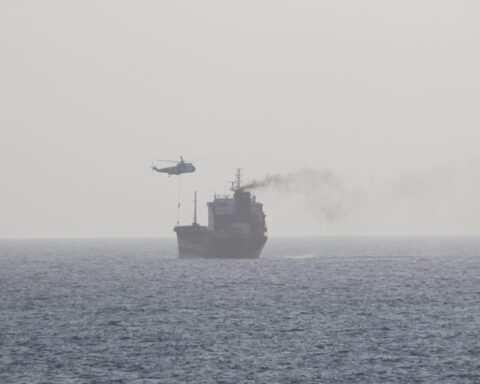
The broadcast was not the only Channel 16 transmission that day. TankerTrackers.com captured audio of the master of the VLCC Sanmar Herald — a very large crude carrier — begging the IRGC Navy on Channel 16 to allow passage. The captain stated that the vessel had received formal clearance through the IRGC’s own permit system, the administrative apparatus that Iran established to regulate Hormuz transit. The IRGC Navy unit refused.
This is the operational proof of the two command loops. The IRGC’s permit system — run through the Ports and Maritime Organisation that Araghchi referenced in his tweet — issued transit clearances. The IRGC Navy’s operational patrols ignored those clearances. On April 18, three separate ships that had received formal IRGC transit approval were subsequently fired upon, according to The Defense News. The bureaucracy that issues permits and the gunboats that control the strait were operating on different instructions.
Two Indian vessels, including an Indian-flagged VLCC carrying 2 million barrels of Iraqi oil, were forced back west out of the strait. India summoned the Iranian ambassador. The cargo was not Iranian. The vessel was not American-linked. It was Iraqi crude on an Indian ship — precisely the kind of neutral commercial traffic that Araghchi’s tweet had declared free to transit.
The Sanmar Herald incident strips away every possible reading of the IRGC override as “miscommunication.” The captain was on Channel 16, citing the IRGC’s own paperwork, and the IRGC Navy still said no. Two systems, one strait, zero coordination.
Who Speaks for Iran’s Hormuz Policy?
The Institute for the Study of War (ISW) offered the clearest institutional assessment: “The IRGC appears to be controlling Iranian decision-making instead of Iranian political officials.” The same analysis noted that “the IRGC’s decision to interfere with international shipping and act in contradiction to Araghchi’s statement reflects broader divisions within the Iranian regime.” Saeid Golkar, professor at the University of Tennessee at Chattanooga, framed the dynamic in terms of the absent arbiter: “Because the main arbitrator is gone, the fight between different factions has started.”
The “main arbitrator” is Supreme Leader Ali Khamenei, who has been absent from public life for over 40 days. Mojtaba Khamenei has been running Iran’s operational decision-making through audio-only channels, but Mojtaba does not carry the constitutional authority of Article 110, which vests supreme command of the armed forces — including the IRGC — in the Supreme Leader personally. The Channel 16 broadcast invoked “our leader, Imam Khamenei” to justify defiance of Araghchi. It claimed Khamenei’s authority while Khamenei himself has not spoken publicly since early March.
Gregory Brew of the Eurasia Group offered a dissenting reading, characterizing the disagreement as “evidence of miscommunication, not serious divisions.” This framing requires accepting that an IRGC Navy patrol unit broadcasting on the international distress frequency that the Foreign Minister’s tweets are irrelevant — while simultaneously firing on ships that hold IRGC-issued permits — constitutes a failure of internal memos rather than a structural condition. The operational evidence does not support that reading.
Ali Hashem, reporting from Tehran for Al Jazeera, described the broader logic: Iran uses “the Strait of Hormuz…as the only space for engagement…showing their leverage.” But “showing their leverage” assumes a unified actor deciding when and how to deploy it. What April 18 demonstrated is that the coercive instrument is being operated by commanders who have not cleared that use with the civilians negotiating its terms.
Khamenei’s Name Without Khamenei’s Voice
The most consequential phrase in the broadcast is not “some idiot.” It is “by the order of our leader, Imam Khamenei.” The IRGC Navy unit claimed that only Khamenei can authorize the reopening of Hormuz. This invocation of supreme authority would carry weight if Khamenei were publicly active, issuing orders, and visibly in command. He is not. He has been absent for over 40 days. His last public address predates the conflict’s current phase.
The IRGC is using Khamenei’s name to fill a vacuum that Khamenei’s absence created. Under Article 176 of Iran’s constitution, the Supreme National Security Council — chaired by the president but dominated by IRGC appointees — coordinates defense and security policy. Under Article 110, the Supreme Leader holds supreme command of the armed forces and the final word on war and peace. With Khamenei inaccessible and Mojtaba operating only through audio relays, the IRGC has claimed the authority of Article 110 without the person of Article 110 being available to confirm or deny it.
This is not a hypothetical concern. The IRGC Navy declared “full authority to manage the Strait” on April 5 and April 10, both times while Araghchi was actively engaged in negotiations at Islamabad. IRGC Navy commander Alireza Tangsiri was killed in an Israeli strike at Bandar Abbas on March 30. No named successor has been publicly announced in the nineteen days since. The April 18 broadcast came under anonymous institutional authority — the “Joint Military Command” rubric — not from any named officer. The 2008 IRGC structural reform distributed operational autonomy precisely to survive leadership decapitation. It is working as designed, but the design assumes Khamenei is available to set boundaries. He is not.
Roya Izadi, writing in the Journal of Democracy from the University of Rhode Island, has documented the trajectory. The IRGC publicly criticized Pezeshkian and forced him to rescind a public apology — a prior instance of uniformed command overriding civilian authority in full public view. Izadi’s survey data shows that Iranian public support for IRGC political involvement increased approximately 35 percentage points following the 2024 military confrontation. The institutional conditions for the IRGC to claim supreme decision-making authority exist independently of any individual commander’s intentions.
The Embassy Damage Control
Tehran’s diplomatic response to the broadcast was telling in what it contested and what it did not. The Iranian Embassy in South Africa posted on X: “You idiot, he meant your Idiot President, Trump. Just google ‘idiot’ — you’ll understand who it is.” The embassy’s position — reported by Tribune India via ANI — was that the “some idiot” referred to Trump, not Araghchi.
This reading does not survive contact with the broadcast’s full text. The IRGC message said the strait would not be opened “by the tweets of some idiot.” Araghchi’s announcement was a tweet. Trump’s Truth Social celebration was a response to Araghchi’s tweet. The operational context — ships fired upon, the strait re-closed, Araghchi’s policy reversed — left no ambiguity about whose policy the IRGC was rejecting. The embassy’s intervention was damage control, not clarification.
IRNA’s formal rejection statement cited “Washington’s excessive demands, unrealistic expectations, constant shifts in stance, repeated contradictions, and the ongoing naval blockade” — making no mention of IRGC-Foreign Ministry friction. This came roughly 14 hours after Ghalibaf told RFE/RL that talks had produced “progress” with “many gaps and some fundamental points” remaining. PressTV framed the override as natural policy evolution. The institutional line was to deny the fracture while the audio circulated on maritime intelligence channels.
Ghalibaf’s own position illustrates the incoherence. A former IRGC Aerospace Force commander (1997-2000), now Parliament Speaker, he told international media that negotiations were making progress on the same day that an IRGC Navy patrol unit was broadcasting on Channel 16 that negotiations were irrelevant. Ghalibaf occupies both sides of the authorization ceiling simultaneously — a political figure who validates the IRGC’s operational prerogatives while representing Iran’s negotiating posture to foreign audiences. On April 20, less than 48 hours before ceasefire expiry, he escalated further: Ghalibaf’s “new cards” warning — issued alongside IRGC Aerospace Force commander Mousavi’s claim of accelerated missile replenishment — is analyzed against Saudi Arabia’s 400 remaining PAC-3 interceptors here.
What Does This Mean for the Islamabad Talks?
Steve Witkoff and Jared Kushner are leading the US delegation arriving in Islamabad on Monday, April 20, for a second round of talks. The ceasefire expires Tuesday night, April 21-22. As of April 19, Iran had not confirmed its delegation’s composition or attendance. IRNA’s statement rejecting participation in a new round cited the naval blockade and “Washington’s excessive demands.” The first round — a 300-member US delegation facing a 70-member Iranian delegation over 21 hours — produced no deal.
Kushner’s return to Islamabad arrives into a negotiating environment that the Channel 16 broadcast has structurally altered. The question is no longer whether Araghchi can deliver a Hormuz commitment. The IRGC has publicly stated, on the frequency monitored by every relevant party, that Araghchi’s commitments do not bind operational command. Any ceasefire framework that relies on Foreign Ministry assurances about Hormuz access must now account for the IRGC’s demonstrated capacity and stated willingness to override those assurances within hours.
Saudi Arabia has no seat at the table but holds an indirect veto through the structural consequences of any deal that fails to guarantee Hormuz transit. Mohammed bin Salman has pre-positioned Saudi exports through the Yanbu bypass, but the 1.1-1.6 million barrels per day gap between Yanbu capacity and pre-war Hormuz throughput means any Hormuz deal that does not hold is a Saudi fiscal problem within weeks.
The deeper structural issue is that the Channel 16 broadcast has made the authorization ceiling a matter of public record for every government involved. Before April 18, the IRGC-civilian split was something analysts argued about and diplomats could diplomatically decline to acknowledge. Now, any negotiator sitting across from Iran’s delegation knows — because the IRGC told them directly, on open radio — that the person across the table may not control the outcome.
| Negotiating Factor | Before Channel 16 Broadcast | After Channel 16 Broadcast |
|---|---|---|
| Araghchi’s Hormuz commitments | Accepted at face value by markets (Brent -10%) | Contradicted within 24 hours by operations and broadcast |
| Authorization ceiling | Analytical inference from conflicting statements | Audio recording on international distress frequency |
| IRGC permit system | Assumed to represent unified command | Three permit-holding ships fired upon April 18 |
| Khamenei’s role | Absent but authority presumed delegated | Invoked by name by IRGC to override civilian FM |
| Ceasefire enforcement mechanism | Civilian government assurances | No mechanism — civilian assurances publicly nullified |
The Precedent: Khomeini’s 1988 Ceasefire Broadcast, Inverted
There is one historical precedent for a Supreme Leader using broadcast communication to set the terms of Iranian compliance with a ceasefire: Ruhollah Khomeini’s July 1988 radio address accepting UN Security Council Resolution 598, ending the Iran-Iraq War. Khomeini compared it to “drinking poison” — but the statement was unambiguous, delivered in his own voice, and backed by the full authority of the office. The IRGC complied. It was the one moment in the Islamic Republic’s history when the Supreme Leader directly addressed the armed forces and the nation to authorize institutional compliance with a diplomatic settlement.
The IRGC’s Channel 16 broadcast inverts that model. Instead of a Supreme Leader’s voice authorizing compliance, the broadcast invokes a Supreme Leader’s name to authorize defiance. “We will open it by the order of our leader, Imam Khamenei” implies that Khamenei has ordered the strait closed — or at minimum, has not ordered it opened. But Khamenei has not spoken publicly in over 40 days. The IRGC is claiming the authority of a voice that is not audible.
In 1988, the broadcast came from the top down: Khomeini spoke, the IRGC obeyed. In 2026, the broadcast comes from the operational level up: a patrol unit speaks, invokes the Supreme Leader, and the Foreign Minister’s policy collapses. The institutional architecture of the Islamic Republic contains no mechanism for resolving this inversion short of Khamenei himself appearing and issuing a directive — or the IRGC’s internal chain of command deciding, independently, to comply with a diplomatic framework it has publicly repudiated.
With Tangsiri dead and no named successor nineteen days on, there is no individual IRGC Navy commander for negotiators to engage, pressure, or extract commitments from. The 2008 structural reform — distributing operational autonomy across commands to survive decapitation strikes — means the institution functions without a public face. The “Iranian Sepandavi” unit speaks for the IRGC Navy’s Hormuz operations. Who commands “Iranian Sepandavi” is not public information.
Brent crude sat at roughly $97-98 per barrel on April 19, recovering from the 10%-plus crash triggered by Araghchi’s tweet two days earlier. That recovery is the market pricing in what the Channel 16 broadcast made explicit: Araghchi does not control Hormuz. The brief moment when traders believed otherwise cost anyone who sold at the bottom a double-digit percentage move in 48 hours. The next time a senior Iranian official tweets about Hormuz, the market will price the authorization ceiling before it prices the announcement.
Frequently Asked Questions
Has any government officially authenticated the Channel 16 recording?
No Western government had publicly authenticated the recording as of April 19. The Hormuz Letter and TankerTrackers.com documented the audio, with the original poster noting it could not be independently verified. But the authentication framing may be the wrong question. Under SOLAS, every naval vessel monitoring Channel 16 is required to log transmissions on the international distress frequency; US Fifth Fleet, UK Royal Navy, and Indian Navy units in the theater would each hold their own operational records of Channel 16 traffic from April 18. Government silence on authentication is not the same as government ignorance of the content. No official government statement has denied the broadcast took place — the Iranian Embassy in South Africa contested only the target of the “idiot” reference.
What is the “Sepandavi” unit referenced in the broadcast?
The broadcast opened with the identifier “Iranian Sepandavi” on Channel 16, consistent with a named IRGC Navy patrol unit operating in the Hormuz corridor. IRGC Navy operational units use institutional identifiers in maritime communications; this is standard practice, not indicative of a rogue individual. The IRGC Navy’s 2008 restructuring created distributed operational units with broad tactical autonomy — a design feature intended to maintain operational capability even after leadership losses. With IRGC Navy commander Tangsiri and intelligence chief Rezaei killed in an Israeli strike at Bandar Abbas on March 30, and no publicly named successor nineteen days later, these decentralized units are operating under the “Joint Military Command” rubric rather than individual command authority.
How does India’s response affect the broader diplomatic picture?
India summoned the Iranian ambassador after two Indian vessels — including an Indian-flagged VLCC carrying 2 million barrels of Iraqi crude — were forced back west out of the Strait on April 18-19. This is diplomatically consequential because India has been one of Iran’s few remaining oil trade partners, having resumed Iranian crude purchases under OFAC General License U (which expired April 19). Indian refiners had settled recent Iranian crude purchases in yuan via ICICI Bank Shanghai. The IRGC’s decision to fire on Indian-flagged vessels carrying non-Iranian cargo — Iraqi crude, which Iran has no stated reason to block — alienates one of the few governments still willing to transact with Tehran. New Delhi’s diplomatic protest targeted Iran as a unified actor; the Sanmar Herald audio, in which the captain cited IRGC-issued permits that IRGC gunboats ignored, suggests India may be protesting to the wrong address.
Could the ceasefire be extended beyond April 22?
The current ceasefire contains no formal extension mechanism, as the Soufan Center has noted. Extension would require a new agreement — and Turkey and Pakistan are already running a joint back-channel past the deadline, with FM Fidan publicly signalling optimism at the Antalya Diplomacy Forum while Munir continues shuttling between Tehran and Islamabad. That back-channel, however, runs into the same problem the Islamabad Monday talks are nominally intended to produce. But IRNA’s April 19 statement rejected Iranian participation in a new round, citing the US naval blockade and “Washington’s excessive demands.” The IRNA statement — describing the US delegation’s arrival as competing diplomatic performances as ceasefire expiry approached rather than a genuine negotiating presence — makes the Channel 16 precedent the operative frame: Foreign Ministry communications and IRGC operational commands are running on separate tracks, and the Islamabad table may be empty in all the ways that matter. Even if Iran sends a delegation, the Channel 16 broadcast has established that any Foreign Ministry commitment on Hormuz may be operationally irrelevant. A ceasefire extension that lacks IRGC buy-in — and the IRGC has publicly stated its conditions (blockade removal, Khamenei’s direct order) — would be a diplomatic document without operational content. The Hajj cordon sealed on April 18, with Indonesia’s 221,000 pilgrims departing April 22 — the same day the ceasefire expires — raising the humanitarian and political cost of any resumption of hostilities.
What is the IRGC’s stated condition for reopening Hormuz?
The formal IRGC closure statement, issued via Xinhua on April 18, conditioned reopening on the US lifting its naval blockade of Iranian vessels and ports. The Channel 16 broadcast stated a different condition: “We will open it by the order of our leader, Imam Khamenei.” The first is a reciprocal military demand, theoretically negotiable. The second raises a practical question the article’s 1988 precedent illuminates: in 1988, Khomeini delivered his ceasefire authorization via a national radio address — an unambiguous, first-person, public directive. There is no known mechanism in the Islamic Republic’s constitutional architecture for a Khamenei order to be delivered through an audio-only intermediary and still carry the legal weight of an Article 110 supreme command directive. If Mojtaba Khamenei relays an authorization order, IRGC patrol units are under no institutional obligation to treat it as binding on Hormuz operations — and may claim, plausibly, that only a direct public Supreme Leader broadcast would satisfy the Channel 16 standard the IRGC itself established. By April 20, only 16 vessels crossed the strait in a single day — the lowest daily count of the war.