ISLAMABAD — Saudi Arabia signed a $3 billion deposit rollover with Pakistan’s central bank on April 17, the same day Field Marshal Asim Munir flew home from Tehran after sitting across the table from the IRGC commander accused of wrecking the ceasefire. The timing was not coincidence — it was the financial signature on a diplomatic operation that Riyadh is running from outside the negotiating room.
The rollover, signed on the sidelines of the World Bank-IMF Spring Meetings in Washington, extended the maturity of an existing Saudi deposit at the State Bank of Pakistan. It landed inside a 72-hour sequence — Munir meets Major General Ali Abdollahi at Khatam al-Anbiya headquarters on April 16, the rollover is signed on April 17, the Makkah cordon seals on April 18 — that amounts to a masterclass in managing a war Saudi Arabia cannot fight and a peace process it cannot join.
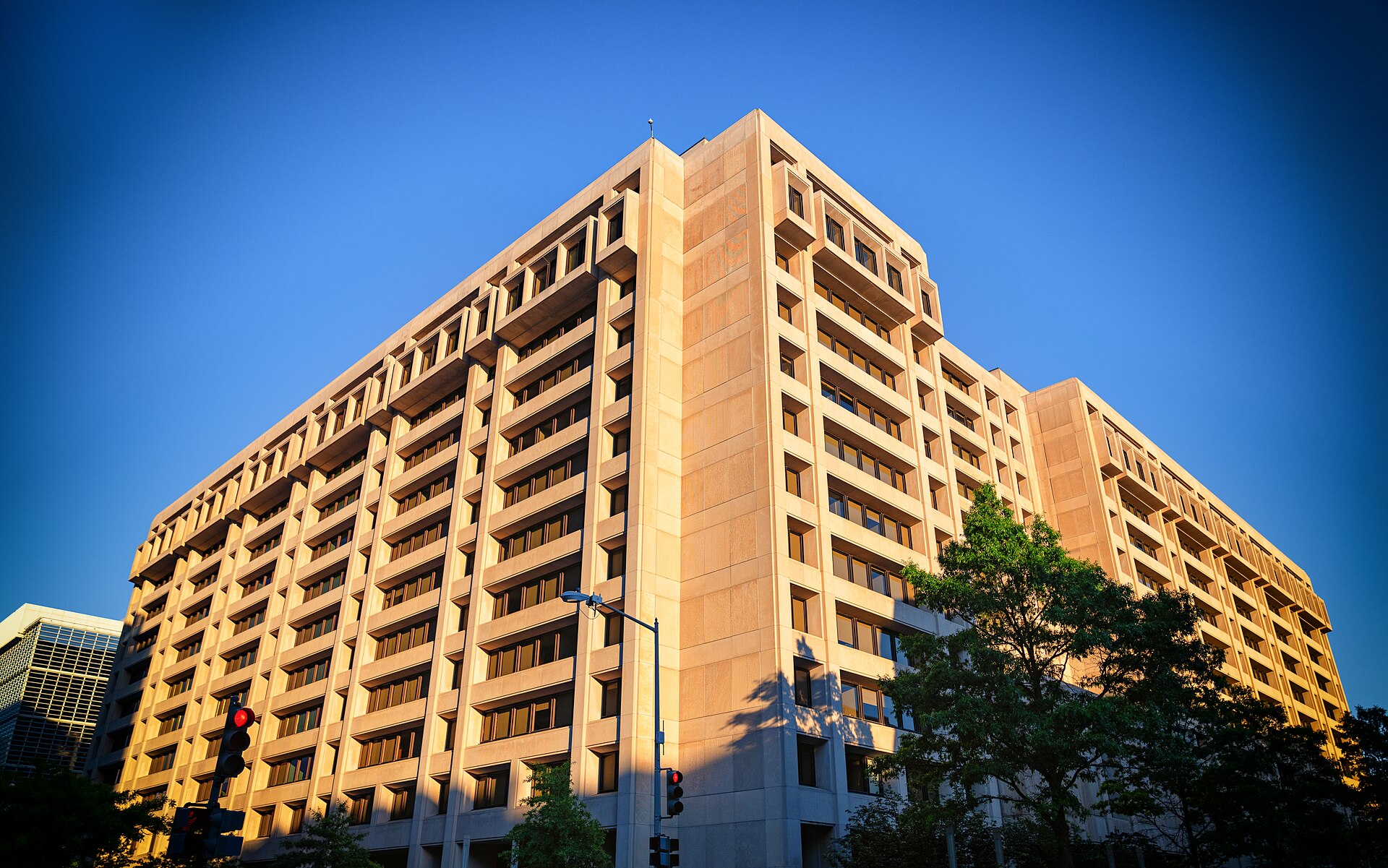
Table of Contents
- The 72-Hour Sequence
- How Much Does Pakistan Owe Saudi Arabia?
- The Munir-Abdollahi Meeting
- Why Does Saudi Arabia Use Deposits Instead of Loans?
- The UAE Counter-Signal
- What Happens to Pakistan’s Reserves Without Saudi Support?
- Three Roles, One Country
- The Remittance Dimension
- Does Saudi Financial Support Buy Ceasefire Outcomes?
- The Table and the Treasurer
The 72-Hour Sequence
Start with the calendar, because the calendar tells the story that the communiqués don’t. On April 15, the State Bank of Pakistan received $2 billion — the first tranche of a fresh $3 billion Saudi deposit — one day before Prime Minister Shehbaz Sharif sat down with Mohammed bin Salman in Jeddah. On April 16, Munir landed in Tehran for the first visit by a foreign military leader since the April 8 ceasefire, and met President Pezeshkian, Parliament Speaker Ghalibaf, Foreign Minister Araghchi, and Abdollahi. On April 17, Saudi Fund for Development CEO Sultan bin Abdul Rahman Al-Marshad and SBP Governor Jameel Ahmad signed the $3 billion rollover in Washington, witnessed by Finance Minister Muhammad Aurangzeb and Pakistan’s U.S. ambassador.
On April 18, the Makkah cordon sealed for Hajj — an act that raises the threshold for any military escalation on the Arabian Peninsula to nearly prohibitive levels. On April 19, Vice President J.D. Vance returned to Islamabad for a second round of talks. Saudi Arabia had no seat in that room. It did not need one. The money was already in the account, the field marshal had already delivered the message, and the commander Pezeshkian himself accused of sabotaging the ceasefire had already shaken Munir’s hand.
The Saudi Finance Minister Mohammed Al-Jadaan had visited Islamabad around April 10-11, the same day Pakistani fighter jets arrived at King Abdulaziz airbase under the Saudi-Pakistan Mutual Defence Agreement. Financial architecture and military deployment moved on the same clock. That is not how countries behave when they are merely extending a loan facility. That is how they behave when the loan facility is the instrument.
How Much Does Pakistan Owe Saudi Arabia?
The combined package signed in the April 15-17 window amounts to $8 billion in Saudi financial commitments — $3 billion in new deposits (of which $2 billion arrived immediately), plus the extension of the existing $5 billion deposit through 2028, of which the April 17 rollover formalised the latest tranche. The extension removes the annual-rollover requirement that previously gave Riyadh a yearly veto over Pakistan’s reserve position. When you add Qatar’s contributions and other Gulf sovereign facilities, Pakistan’s total Gulf exposure during the ceasefire window runs upward of $11-13 billion.
The Middle East briefing 3,000+ readers start their day with.
One email. Every weekday morning. Free.
| Component | Amount | Date | Significance |
|---|---|---|---|
| Fresh Saudi deposit (tranche 1) | $2 billion | April 15 | Received day before Jeddah summit |
| Fresh Saudi deposit (tranche 2) | $1 billion | Pending | Remaining portion of new $3B commitment |
| Existing deposit rollover | $3 billion | April 17 | Signed day after Munir-Abdollahi meeting |
| Extended deposit (to 2028) | $5 billion | April 15 | Removes annual rollover leverage |
| UAE deposit (due this month) | $3.5 billion | April 2026 | Repayment demanded — counter-signal |
Finance Minister Aurangzeb called the Saudi support “vital for reinforcing Pakistan’s external account and strengthening foreign exchange reserves.” That is the kind of language finance ministers use when they are describing oxygen, not a favour. The Pakistani Finance Ministry’s broader statement was more revealing: “The international community was particularly recognising Pakistan’s recent diplomatic and facilitative role.” Translation: the money followed the mediation, and everyone in the room knew it.
The Munir-Abdollahi Meeting
Field Marshal Munir’s April 16 visit to Tehran was the first by a foreign military leader since the war’s ceasefire, and the meeting with Abdollahi at Khatam al-Anbiya Central Headquarters was its most consequential appointment. Abdollahi commands the IRGC’s joint operations hub — the same man President Pezeshkian publicly named on April 4 alongside SNSC Secretary Vahidi as the officials who sabotaged the Islamabad Accord. Pezeshkian accused them of “deviation from the delegation’s mandate,” language that amounts to calling your own military commander a treaty wrecker on the record.
Munir met this man anyway. Abdollahi’s response was courtesy dressed as defiance: he acknowledged “Pakistan’s diplomatic stance during recent tensions” and “expressed gratitude,” then pivoted to emphasis that Iran’s forces “remain vigilant and prepared to respond to potential escalation.” No commitments were made. Iran treated Munir as a transmission belt, not a pressure mechanism — a channel through which messages could pass but through which no binding force could travel. The IRGC’s self-declared “full authority” over the Strait of Hormuz remained intact.
The meeting’s value was not in what Abdollahi conceded — he conceded nothing — but in what it allowed Munir to report back to both Riyadh and Washington. He had sat across the table from the IRGC’s operational commander and taken the temperature. That intelligence, delivered to MBS the day before the rollover was signed and to Vance’s team before the vice president’s return to Islamabad, was worth more than the $3 billion that followed it. Saudi Arabia was not paying for compliance. It was paying for access to the room where compliance gets decided.
Why Does Saudi Arabia Use Deposits Instead of Loans?
Saudi Arabia uses central bank deposits rather than formal loans because deposits carry no published conditionality, move in days rather than months, and embed the political expectations in the bilateral relationship rather than the paperwork — making them precise instruments for rewarding allied behaviour without creating a public record of demands. The International Institute for Strategic Studies identified six defining features of Gulf bailout diplomacy in a 2023 study, and all six are present in the April 2026 package: speed; no formal conditionality; relationship-building rather than policy purchase; signaling to third parties; expectation of reciprocity; and maintenance of dependency through rolling facilities. Until this month, Saudi Arabia held an annual veto over Pakistan’s reserve position through the rollover mechanism.
The 2028 extension is counterintuitive: it loosened one form of leverage while tightening another. By removing the annual rollover, Saudi Arabia gave up the ability to threaten Pakistan with a sudden withdrawal every twelve months. But it replaced that with something more durable: an $8 billion commitment that makes Pakistan’s entire macroeconomic stability contingent on the relationship’s health over a multi-year horizon. Short-term coercion was traded for structural dependency. The leash got longer, but it did not come off.
This pattern has precedent. In July 2023, Saudi Arabia deposited $2 billion at the SBP the day before a key IMF board meeting at which Pakistan needed external financial support to unlock a $3 billion bailout. In 2018, Riyadh pledged a $6 billion package — $3 billion deposit plus $3 billion in deferred oil payments — coinciding with another IMF-pressure moment. In 1991, Gulf states led by Saudi Arabia rewarded Pakistan, Egypt, and Morocco financially for military cooperation in expelling Iraq from Kuwait. The mechanism is old. What is new is its application to a live war in which Saudi Arabia is simultaneously a target, a beneficiary of energy disruption, and the silent architect of the mediation.
The UAE Counter-Signal
Abu Dhabi’s behaviour during the same window tells the story from the other direction. The UAE is demanding repayment of $3.5 billion from Pakistan this month — a demand that Defence Security Asia reported is “partly reflecting frustration over Pakistan’s carefully neutral position.” Saudi Arabia and the UAE, normally aligned on Gulf financial strategy, are sending opposite signals: Riyadh is rewarding Pakistan for the same neutrality that Abu Dhabi is punishing.
The split matters because it reveals the limits of what money can buy. Saudi Arabia needs Pakistan’s mediation channel to Iran and is willing to pay to keep it open. The UAE, which has maintained its own backchannel to Tehran since before the war and was not invited to the SMDA framework, sees Pakistan’s neutrality as a cost rather than an asset. The $3.5 billion demand arriving simultaneously with $8 billion in Saudi commitments means Pakistan’s net Gulf position is being reshaped by two competing principals with different theories of how this war ends. Islamabad must navigate both without losing either.
Pakistan is not a random venue or a desperate substitute. It is one of the few states that can speak credibly, if differently, to Washington, Tehran, Beijing, Riyadh, and other Gulf capitals.
Rabia Akhtar, Belfer Center for Science and International Affairs
Akhtar’s assessment captures Pakistan’s self-image. The financial data captures the constraint on that self-image. A mediator whose reserves depend on one party’s deposits is not a neutral mediator. It is an aligned mediator with access to the other side — which, in this war, may be more useful than neutrality anyway.
What Happens to Pakistan’s Reserves Without Saudi Support?
Pakistan’s foreign exchange reserves stood at approximately $16.4 billion as of March 27, 2026. The IMF has mandated a reserve target of $18 billion by June. Without the Saudi deposits, Pakistan’s reserves would fall to an estimated $11.5-12.9 billion — below the IMF’s floor and into territory that would trigger programme review, possible suspension, and a currency crisis that would make the 2022-2023 episode look mild by comparison. Pakistan received $3.8 billion in remittances in March 2026 alone, but remittances cover imports, not reserve requirements. The structural gap is real.
| Metric | Figure | Source |
|---|---|---|
| Pakistan FX reserves (March 27) | ~$16.4 billion | SBP |
| IMF reserve target (June 2026) | $18 billion | IMF programme |
| Reserves without Saudi deposits | $11.5-12.9 billion | Defence Security Asia / The National |
| March 2026 remittances | $3.8 billion | Pakistan Observer |
| Saudi share of remittances | 23.5% ($7.4B FY2024) | SDPI |
| Pakistanis employed in Saudi Arabia | 1.94 million | Pakistan Gulf Economist |
| Gulf remittances as share of total | ~44% (Saudi + UAE) | SDPI |
The extension of the existing $5 billion deposit through 2028 removes the annual cliff-edge, but it also crystallises the dependency. Pakistan cannot reach the IMF’s June target without Saudi money. It cannot sustain its reserve position through the ceasefire window — let alone beyond it — without the relationship remaining intact. Every diplomatic move Munir makes in Tehran, every message he carries between Abdollahi and MBS, every assurance he offers Vance, carries this arithmetic in its back pocket.
Three Roles, One Country
Pakistan holds three simultaneous structural roles in this war that no other state occupies. It has been Iran’s protecting power in Washington since 1992 — thirty-four years running Tehran’s interests section at the Pakistani embassy, handling consular services and back-channel communication for a country with no diplomatic presence in the United States. It is Saudi Arabia’s SMDA treaty ally since September 17, 2025, a mutual defence agreement signed eight days after Israeli airstrikes on Doha, committing both nations to treat aggression against one as aggression against both. And since April 8, it has been the sole enforcement mechanism for a ceasefire that has no enforcement clause.
Sina Azodi of George Washington University noted that Pakistan’s fighter jet deployment to King Abdulaziz airbase “targets Israel more than Iran” in deterrence signaling terms — an observation that captures the contortions required to simultaneously defend Saudi airspace and mediate with the country that has been attacking Saudi energy infrastructure. Azeema Cheema of Verso Consulting was more direct: “The invocation of the SMDA is the price of significant restraint shown by the Saudis.” The restraint in question is Saudi Arabia’s decision not to retaliate directly against Iran, outsourcing its military response to an American-led campaign while using Pakistan as both shield and intermediary.
Umer Karim of the King Faisal Center for Research and Islamic Studies warned that Pakistan “may have to get fully involved in the conflict” if hostilities restart — a scenario in which the three roles collapse into mutual exclusion. You cannot be Iran’s protecting power, Saudi Arabia’s treaty ally, and a neutral mediator if the ceasefire fails and the SMDA is formally invoked. The $8 billion buys time against that collapse, but it does not prevent it.
The Remittance Dimension
The deposit facility is the visible architecture. The remittance pipeline is the invisible one, and it runs deeper. Saudi Arabia accounts for approximately 23.5% of Pakistan’s total remittance inflows — $7.4 billion in fiscal year 2024. Combined with the UAE, Gulf remittances comprise roughly 44% of all money sent home by overseas Pakistanis, a flow that finances an estimated 60% of Pakistan’s imports and represents about 10% of GDP. Nearly five million Pakistani workers are employed across the Gulf states, with 1.94 million in Saudi Arabia alone.
These numbers mean that Saudi Arabia’s influence over Pakistan operates on two channels simultaneously. The sovereign channel — deposits, rollovers, oil facilities — is visible, negotiated between heads of state, and can be activated or withdrawn with a signature. The remittance channel is diffuse, operates through millions of individual employment relationships, and cannot be turned off without causing a humanitarian crisis on both sides. Saudi Arabia needs Pakistani labour as much as Pakistan needs Saudi employment, but the asymmetry is in the consequences of disruption: Saudi Arabia would face labour shortages; Pakistan would face a balance-of-payments emergency.
PM Sharif’s choice of language at the April 16 Jeddah summit — “lauding Saudi Arabia’s exemplary patience” — was not the vocabulary of an equal partner. It was the vocabulary of a debtor acknowledging restraint by a creditor who could have called the debt. The word “patience” did real work in that sentence. It acknowledged that Saudi Arabia had grounds for impatience — with Pakistan’s neutrality, with the pace of mediation, with the IRGC’s continued attacks on Saudi infrastructure — and chose forbearance instead. Sharif was thanking MBS not for what he gave, but for what he chose not to take away.
Does Saudi Financial Support Buy Ceasefire Outcomes?
The honest answer is: probably not, at least not directly. Eric Alter of Asia Times observed that “Pakistan, like Qatar and Turkey before it, had access but not leverage,” and that “no mediator, however unified and capable, can manufacture a settlement from parties who have not yet decided that peace costs less than continued fighting.” Kaitlyn Hashem of the Stimson Center was blunter: “Pakistan’s initiative is undermined by its own political limitations vis-à-vis both Iran and the United States.” The structural limitations of Pakistan’s enforcement role do not disappear because Saudi Arabia signs a cheque. Yet both Turkey and Pakistan are treating the April 22 date as a threshold rather than a terminal point — FM Fidan has publicly signalled optimism and Munir is operating a joint back-channel aimed at extension.
What the money does buy is continuation of the channel. Without Saudi financial support, Pakistan’s economic position deteriorates to the point where domestic political pressure — from the IMF, from currency markets, from the 27th Constitutional Amendment’s concentration of diplomatic authority in Munir’s hands rather than elected government — could force Islamabad to abandon the mediation role entirely. The $8 billion does not purchase Iranian compliance. It purchases Pakistani presence at the table through the ceasefire expiry on April 22, through Vance’s return visit, and potentially through whatever comes after.
Rabia Akhtar drew the distinction precisely: “Mediation is not the same as enforcement. Pakistan’s comparative advantage lies not in coercive power, but in access, strategic literacy, and the ability to communicate hard truths to all sides.” Saudi Arabia is funding the access, not the outcome. Whether Munir’s hard truths land with Abdollahi or bounce off the IRGC’s institutional defiance is beyond Riyadh’s financial reach. But keeping the messenger solvent — that is within reach, and that is what the April 17 signature accomplished.
The IRGC-aligned Tasnim News Agency has already suggested the United States is “trying to sow division within Iran by proposing secret talks with only part of its political establishment” — framing the Pakistan channel as illegitimate from Tehran’s perspective. Abdollahi’s response to Munir was courtesy, not concession. He thanked Pakistan and emphasised military readiness. Iran treated the visit as a formality to be endured, not a pressure point to be addressed. The Saudi request to lift the blockade it originally supported adds another layer of complexity to a diplomatic picture in which every actor’s stated position differs from its operational one.
The Table and the Treasurer
Saudi Arabia was excluded from the April 10 Islamabad bilateral talks. It has no formal role in the ceasefire framework. It is not a signatory to any of the competing peace proposals — neither the Islamabad Accord’s immediate 15-20 day MOU nor the Witkoff 45-day phased framework. MBS did not fly to Tehran. He did not call Khamenei, who has been absent from public decision-making for over 50 days. He did not address the authorization ceiling that prevents any Iranian official below Khamenei from making binding commitments.
What he did was write cheques, dispatch his finance minister, host the Pakistani prime minister, time a $3 billion rollover to land the day after his field marshal met the IRGC’s operational commander, and seal Makkah’s cordon the day after that. Defence Security Asia’s assessment — that “financial leverage increasingly determines Pakistan’s diplomatic positioning on issues ranging from Iran to future security cooperation with Gulf monarchies” — captures the mechanism without overstating its power. Saudi Arabia cannot buy a ceasefire. But it can buy the conditions under which a ceasefire remains possible.
The IISS framework identifies the core feature of Gulf bailout diplomacy as the absence of formal conditionality — the conditions are in the relationship, not the paperwork. There is no clause in the April 17 agreement that says Pakistan must mediate with Iran. There does not need to be. The $5 billion deposit extended through 2028, the $3 billion fresh commitment, the 1.94 million Pakistani workers in the Kingdom, the 23.5% remittance share, the SMDA’s mutual defence clause — these are the conditions. They are not written in the loan terms because they are written in everything else.
Sharif called it “exemplary patience.” The financial calendar calls it something more precise: an $8 billion down payment on a ceasefire Saudi Arabia cannot attend, cannot enforce, and cannot afford to let fail — delivered through the only country that can walk into both the IRGC’s headquarters and the IMF’s boardroom in the same week.
Frequently Asked Questions
How does the 2026 Saudi deposit compare to previous Pakistan bailouts?
The $8 billion combined commitment is the largest single-window Saudi financial package to Pakistan on record. The 2018 package was $6 billion ($3 billion deposit plus $3 billion deferred oil payments), while the July 2023 deposit was $2 billion. The 1991 Gulf War rewards to Pakistan were structured differently — as debt forgiveness and grants rather than central bank deposits. The 2026 package is also the first to coincide with an active mutual defence treaty between the two countries, making the financial and military dimensions formally linked in a way previous packages were not.
Can Pakistan lose the Saudi deposits if mediation fails?
The extension through 2028 removes the annual rollover mechanism, which previously gave Saudi Arabia a yearly decision point. However, sovereign deposits can be recalled under extraordinary circumstances, and the IISS framework emphasises that the absence of formal conditionality does not mean the absence of expectations. The 2028 extension reduces short-term coercive potential but increases long-term dependency — Pakistan’s entire reserve position through the IMF programme window now depends on the deposits remaining in place. A complete diplomatic breakdown between Riyadh and Islamabad remains the theoretical trigger, though it is difficult to construct a scenario in which both sides would benefit from that outcome.
What role does the 27th Constitutional Amendment play in Pakistan’s mediation?
Pakistan’s 27th Constitutional Amendment, passed in late 2025, concentrated foreign policy and national security authority in the military establishment rather than elected civilian government. This means the ceasefire diplomacy is operationally Munir’s mission, not Prime Minister Sharif’s or Foreign Minister Dar’s. The amendment made Pakistan’s military chief the de facto diplomatic interlocutor for both sides of the conflict — an unusual arrangement that gives Saudi Arabia a single point of contact for coordinating financial support with diplomatic action, but also means Pakistan’s mediation role rests on one individual’s credibility rather than institutional consensus.
Why did Saudi Arabia sign the rollover in Washington rather than Riyadh?
The signing took place on the sidelines of the World Bank-IMF Spring Meetings, where Pakistan’s Finance Minister Aurangzeb was already present seeking broader multilateral support. The Washington venue served multiple purposes: it signaled to the IMF that Pakistan’s reserve position had external backing (relevant to the June $18 billion target), it demonstrated Saudi-Pakistan alignment to American officials days before Vance’s return to Islamabad, and it allowed the Saudi Fund for Development CEO to sign without the political visibility that a Riyadh or Islamabad ceremony would attract. The quiet venue matched the quiet mechanism — financial support that operates through relationship rather than declaration.
Why the April 22 expiry date is now a political fiction — and who benefits from keeping it alive — is examined in The Ceasefire Already Ended — Trump’s Deadline Is for Everyone Else.
How does the UAE’s $3.5 billion demand affect the ceasefire?
The UAE’s simultaneous demand for repayment creates a fiscal squeeze that partially offsets Saudi generosity — Pakistan’s net Gulf position improves by roughly $4.5-5.5 billion rather than $8 billion. More consequentially, it signals a split in Gulf financial strategy: Abu Dhabi punishing the neutrality that Riyadh is rewarding. For the ceasefire, this means Pakistan faces competing financial incentives from two Gulf capitals with different views on the war’s endgame, constraining Islamabad’s room to manoeuvre in ways that neither the Saudi deposits nor the UAE demand fully capture on their own.